Category Archives: Foreign policy

In Cambodia Racist Rhetoric Brings Death Threats to Human Rights Activist

Opposition protesters from Cambodia's National Rescue Party gather in downtown Phnom Penh, December 2013.  Image: Vicky Han

Opposition protesters from Cambodia’s National Rescue Party gather in downtown Phnom Penh, December 2013. Image: Vicky Han

PHNOM PENH – Cambodia, a nation once traumatised by the ‘Killing Fields’ of the Pol Pot regime in the 1970s, has come a long way since then in rebuilding  the nation from year zero including the holding of elections, and the  creation of a multi-party system.

But the recent flood of hate-mail and death-threats sent to Mr Ou Virak, the president of CCHR (The Cambodian Centre for Human Rights) in the capital Phnom Penh, points to a society still dangerously divided over ethnic and racial issues.

 Attacks on human rights activists in Cambodia and around the world mostly come from the agents and the guardians of the status quo – the police, army, militias, and from private security companies deployed by major corporations seeking to block workers rights. Continue reading →

1 Comment

Filed under Cambodia, Current Events, Foreign policy, GMS, Governance, SLIDER, Vietnam

China Sea Territory Disputes (source: Money Morning, NPR, google news)

0912ChinaSeaTerritory2

Leave a Comment

Filed under Brunei, China, Foreign policy, Malaysia, Myanmar/Burma, Philippines, USA, Vietnam, VISUALS, water

The Growing Transport Network and Dams on in the Greater Mekong Subregion

Map2ab

Leave a Comment

Filed under ASEAN, Current Events, Foreign policy, GMS, VISUALS, water

Missed Opportunity? Barack Obama Cancels Southeast Asia Trip

obama

Earlier this week US President Barack Obama cancelled his historic visits to Malaysia and the Philippines but made good on his promise to attend regional leadership meetings in the coming days where key trade agreements and hard power deals are likely be negotiated and fortified.  However, domestic pressures over the budget crisis and government shutdown in Washington have caused the President to scrap his trip entirely.

Will Obama’s absence be a game-changer for regional relations and the US’s strategic pivot to the Asia Pacific?  Will Tea Party-infused political brinkmanship in the US offer Chinese president Xi Jinping, also attending the summits, a golden opportunity to expand China’s regional footprint?

Obama’s strategic “pivot” and return to the Asia Pacific, by and large, has utilized Southeast Asian states as a springboard in developing a program of political and economic laurels that open up Southeast Asian markets for foreign direct investment and international trade.  From a 1,000 foot view, the US pivot looks similar to China’s foreign policy to Southeast Asia, thus the US’s program both complements and competes with China’s regional rise.  It is important to remember that due to its proximity to Southeast Asia and its fast-tracked economic expansion, China’s investment and trade volumes with Southeast Asia will always exceed that of the United States.  However another hard reality is that US power in Southeast Asia, both soft and hard, will always eclipse that of China’s.  It will take major restructuring in the US (for the worse) and in China (for the better) to reverse this relationship.  Despite the best efforts of the Tea Party in the US and potentially of an equally challenging New Left movement down the road, the status quo in terms of the channels that express US military, economic, and cultural power in Southeast Asia are unlikely to weaken.  For China, we are uncertain of Xi Jinping’s economic reform platform likely to unfold at year’s end, but we can be assured that his platform will focus on strengthening China’s domestic economy first, with foreign policy and other considerations taking a backseat.

In terms of soft power choices between China and the US, the consistent preference of Southeast Asians is to side with the US or at the very least, against China.  Wealthy Southeast Asians, like the Chinese, send their children to top US universities for robust skilling; Southeast Asians, like Americans, go to China to learn Mandarin. Middle income consumers in Thailand, Vietnam, and Malaysia refuse to purchase Chinese made smart phones (and their apps and operating  systems), those who have the means to purchase cars in Laos choose Japanese Toyotas or refurbished Korean used cars, and with the Chinese mainland’s crowding out of the Hong Kong and Taiwan entertainment industries, no one in Southeast Asia listens to new music or watches new films coming out of China. Continue reading →

1 Comment

Filed under ASEAN, Current Events, Foreign policy, Regional Relations, SLIDER, USA

China & Southeast Asia: Unbalanced Development in the Greater Mekong Subregion

By Xiangming Chen and Curtis Stone

Integrating with Southeast Asia is a key component of China’s multi-pronged regionalisation around its borders as its global rise continues. Below, Xiangming Chen and Curtis Stone consider the ambition of China’s ‘Go Southwest’ strategy to extend its economic interests and influence into Southeast Asia, and explore how China’s regional assertion reinforces the larger trend of new spatial configurations in light of increasing globalisation. The authors show how simultaneous globalisation and regionalisation unleashes a dual process of de-bordering and re-bordering where the traditional barrier role of borders is yielding more to that of bridges, as small, marginal, and remote border cities and towns become larger centers of trade and tourism. This article examines China’s effort to engage Southeast Asia and many of China’s footprints within and beyond the cities of the Greater Mekong Subregion (GMS). Inter-country and intra-regional trade provides the starting point for examining the extent of economic integration in the GMS, and also its unbalanced development.

Going Southwest

In a coffee shop in central Vientiane on a hot summer day in 2012, two young Chinese businessmen from northwestern China, sipping ice-cold Latte, talked about the prospect of a new venture to explore copper in the mountains of northern Laos: ‘If we make $100 and they [Laotians] get $5, they should be happy’. On the outskirts of Yunnan’s capital city of Kunming, China’s fourth largest airport behind Beijing, Shanghai, and Guangzhou (also the world’s fifth largest airport in occupied area), Changshui International Airport, which is expected to have flown 38 million passengers by 2020 and 65 million by 2040, was opened with much fanfare in June 2012. While seemingly disparate, this pair of anecdotes reveals the ambition of China’s ‘Go Southwest’ strategy to extend its economic interests and influence into Southeast Asia.

Integrating with Southeast Asia is a key component of China’s multi-pronged regionalisation around its borders as its global rise continues. China’s regional assertion reinforces a larger trend of new spatial configuration as an inherent part of increasing globalisation driven by China. This simultaneous globalisation and regionalisation unleashes a dual process of de-bordering and re-bordering where the traditional barrier role of borders is yielding more to that of bridges (Chen). As a result, once small, marginal, and remote border cities and towns have become larger and lively centers of trade, tourism, and other flows. China’s effort to engage Southeast Asia leaves many striking footprints within and beyond the cities of the Asian Development Bank (ADB) facilitated Greater Mekong Subregion (GMS), which was launched in 1992 and consists of China’s Yunnan Province (with the later addition of Guangxi Zhuang Auto-nomous Region), Cambodia, Laos, Myanmar, Thailand, and Vietnam.

Trade with the GMS Countries

Inter-country and intra-regional trade provides the starting point for examining the extent of economic integration in the GMS as well as its unbalanced development. China’s trade with each of the GMS countries has grown since 1990, most rapidly since 2000 (see Figure 1). Given the size of their economies, Thailand, followed by Vietnam, led the smaller GMS countries in trade with China. However, the total volume of China-Myanmar trade rose by $5.9 billion from 2001 to 2011, while China-Laos trade increased by $1.2 billion (Figure 1). Much of China’s growing trade with Myanmar and Laos occurred through cooperation across international boundaries. The role of Yunnan and its capital city of Kunming in China-GMS trade cannot be understated. Yunnan’s GDP skyrocketed from $33 billion in 2000 to $160 billion in 2012, and the province aims to double that to $320 billion by 2017 through even stronger cross-border economic and trade ties. Kunming acts as the origin and core of economic activities that reach into the bordering countries of Laos, Myanmar, Vietnam, and beyond.

Table

Continue reading →

1 Comment

Filed under ASEAN, Cambodia, China, Current Events, Economic development, Energy, Foreign policy, GMS, Governance, Mekong River, Myanmar/Burma, Regional Relations, Thailand, Uncategorized, Vietnam, water

Is there state complicity in the attacks on Myanmar Muslims communities?

The government of Myanmar’s President Thein Sein, so active in its efforts to assure Western audiences that the new Myanmar will never return to the dark days of the previous ruling military junta, has so far failed to display any commitment to ending the brutal spiral of attacks on Muslim communities, carried out in town after town by suspiciously well-organized Buddhist gangs.

Thein Sein’s periodic appeals for ”an end to communal violence” are less than convincing given the absence of any government measures or plan to stem the flood anti-Muslim propaganda being freely disseminated under the noses of the authorities.

Leaflets and magazines denigrating Muslims are being churned out every day across the country.

The monk Wirathu has spread a perniciously xenophobic version of Theravada Buddhism through inflammatory sermons directed against a Muslim minority that comprises only 5% of the population in this predominantly Buddhist nation of 60 million

Extremist Buddhist monks led by the publicity hungry U Wirathu, are preaching a brand of pure Buddhist nation-state and hatred of Islam, that cause consternation and disgust  among the true devotees of peace non-violence and the path of the Lord Buddha.
Muslim shops and homes in Lashio in Shan state were the most recent victims of a Buddhist motorbike gang in June. Shan researcher Sai Latt commented  “the government and the police are not doing anything at all to clamp down on extremist hate propaganda against Muslims.” Continue reading →

2 Comments

Filed under Current Events, Economic development, Foreign policy, Governance, Myanmar/Burma, Regional Relations

China needs to change its energy strategy in the Mekong region

This op-ed was first published at ChinaDialogue and thethirdpole.net on 7/16.

 Mekong bridge

At the end of this year cars and container trucks loaded with goods from China and Thailand will finally be able to drive across a multi-lane bridge spanning the Mekong River (known as the Lancang in China). The bridge will connect Chiang Rai province in Thailand to Bokeo province in Laos, effectively linking China’s highways stretching south from Beijing and Shanghai to those coming north from Singapore, Kuala Lumpur and Bangkok.

Funded by equal investment from the Chinese and Thai government, the completion of the bridge, which took ten years of planning and two years to build, is not without controversy. For many years Thailand held back investment due to an uneven distribution of benefits between China, Laos and Thailand. Also on the Thai side, the NGO Rak Chiang Khong claim the bridge negatively impacts the local Golden Triangle economy and will ruin Mekong fisheries.

The Golden Triangle Bridge serves to highlight the challenges facing China, as the country’s new leadership attempts to balance its slowing and volatile economy and deliver domestic stability by maintaining peaceful economic relations with its neighbours.

China’s regional strategy

“In 2012 China’s growth in trade and outward investment with the five other Mekong countries of Myanmar, Laos, Thailand, Cambodia, and Vietnam surpassed its trade and investment growth in ASEANcountries,” said Xu Ningning, chairman of the Greater Mekong Subregion (GMS) Business Council. “Greater growth rates will continue with increases in regional cooperation and win-win investment opportunities.”

For the past three years China’s GMS provinces of Yunnan and Guangxi have posted growth rates of 12-15%, the highest of China’s localities, and arguably China’s economic rise has also helped deliver high growth rates among Mekong countries.

The end of the Cold War in the 1990s created a favourable environment for China to develop its economic cooperation strategies toward the Mekong region. The blurring and opening of once inviolable borders encouraged traders on both sides of the China-Southeast Asia frontier to appeal to local and national governments for better conditions for trade and migration. The Chinese government responded with twenty years of state-led trade liberalisation and investment policies to promote regional cooperation in state and private sectors.

China’s economic cooperation strategies towards its four Mekong neighbours has dovetailed nicely into a strategy that fits China’s current development needs. Liu Jinxin, a policy analyst and logistics expert says, “Unlike the US which leads the world in finance and IT, both high-value service-oriented industries, China is the world’s factory, producing goods to drive the growth of its growing middle class and serving export markets around the world. To survive, the Chinese ‘factory’ needs inputs like energy and raw materials.” Continue reading →

1 Comment

Filed under ASEAN, China, Current Events, Economic development, Energy, Environment and sustainability, Food, Foreign policy, GMS, Governance, Laos, Mekong River, Myanmar/Burma, Sustainability and Resource Management, Thailand, Vietnam, water

The Code of Conduct for the South China Sea: A Waiting Game

On June 30, 2013, following the China-ASEAN Foreign Ministers’ Meeting held in Bandar Seri Begawan, capital of Brunei, China released a joint-statement with ASEAN in a post-meeting press conference, indicating that they have agreed to hold “official consultations” on a proposed Code of Conduct (CoC) to govern South China Sea “naval actions”. All parties agreed to move forward with consultations in upcoming meetings to be held in China during September later this year.

Misleadingly or mistakenly billed as a significant paradigm shift by many English language news outlets, this development should not have come as a surprise to anyone. As early as November 2012, China already issued a joint statement with ASEAN at the 15th ASEAN-China Summit in Phnom Penh, Cambodia, marking the 10th anniversary of the Declaration on the Conduct of Parties in the South China Sea (DOC) and agreeing to “keep momentum of dialogue” in moving towards a formal Code of Conduct (COC).  China also reiterated this commitment in April this year, following the 19th China-ASEAN Senior Officials’ Consultation.

For the casual observer, keeping track of the ins-and-outs of numerous ASEAN-China agreements and cryptic diplomatic sparring over South China Sea (SCS) disputes can be daunting. News reporting differs greatly depending on its country of origin and the same story can be told in a hundred different ways leaving entirely different impressions of what happened. The following is a breakdown of the important historical, political, and legal considerations necessary to understand what the Code of Conduct for the SCS is, why it is important, and how it may eventually come about. Continue reading →

2 Comments

Filed under ASEAN, Brunei, Cambodia, China, Current Events, Energy, Foreign policy, Indonesia, Laos, Malaysia, Myanmar/Burma, Philippines, Regional Relations, Singapore, Thailand, Vietnam, water

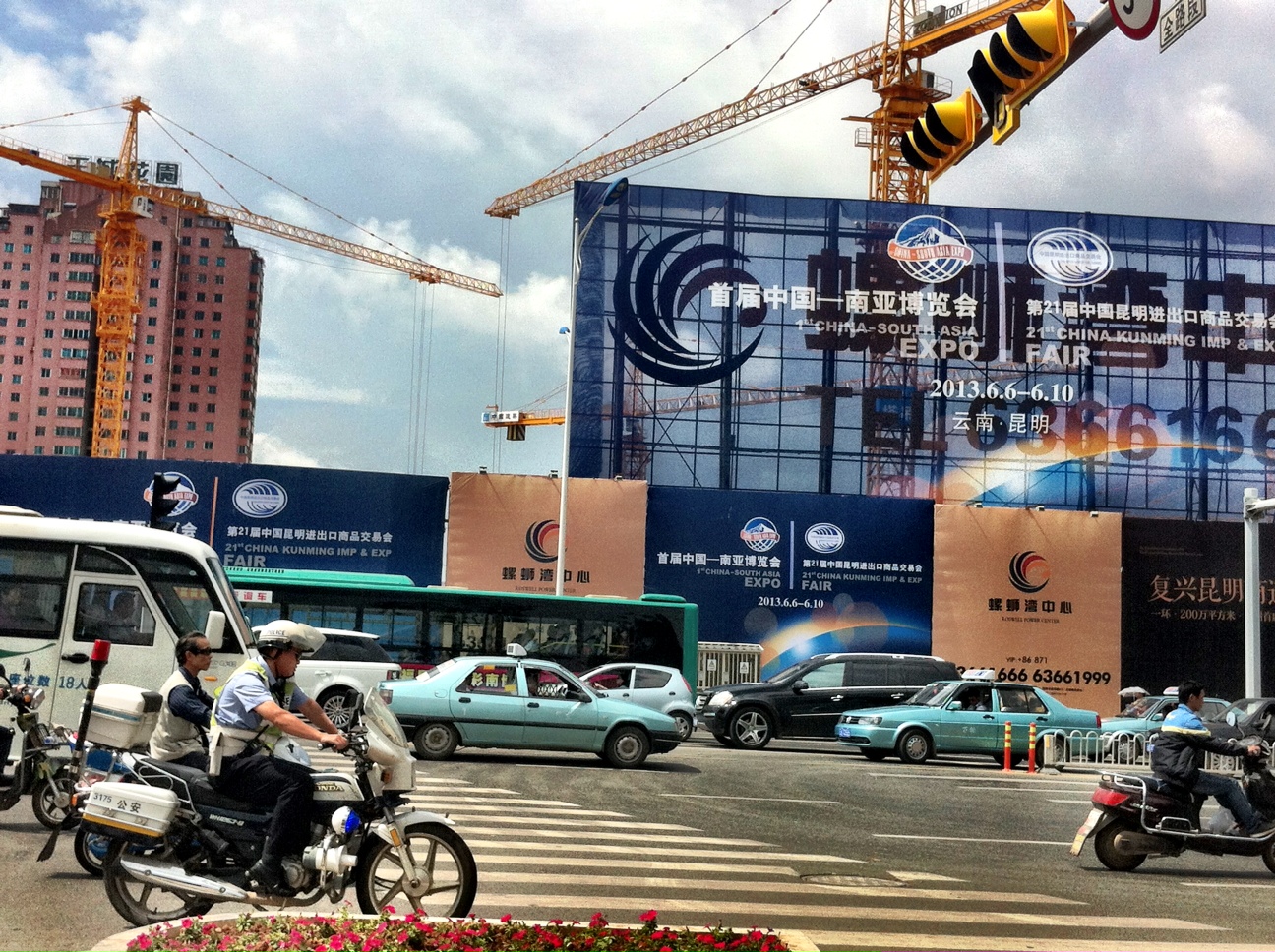
What’s at Stake for the China-South Asia Expo?

expo

The China-South Asia Expo opened without a hitch yesterday in Kunming despite online calls for a continuation of environmental protests outside of the Expo’s opening ceremony site.  It seems protesters decided to stay home due to a combination of sticks and carrots offered by local authorities.  On June 3, Kunming’s mayor announced the release of key environmental impact assessment data concerning the construction of a PetroChina oil refinery and PX chemical plant side project scheduled for construction 40 km from the city’s downtown area.  Also, the excessive presence of armed and unarmed public security officers lining the city’s streets and manning the Expo site also likely turned protesters away.

What is the rationale behind the excessive security measures?  What’s really at stake at the 1st China-South Asia Expo?

The Expo, a combination trade fair and high level forum for investment and trade promotion discussions between China, Southeast Asia, and now South Asia, is part of China’s “Bridgehead Construction” strategy to establish Kunming and Yunnan province as a gateway between China and its neighbors to the south and west.  A smoothly running Expo not only will seal multilateral agreements and high-value business deals that will streamline regional trade and investment, but it will also guarantee the continuation of soft-budget infrastructure development projects sponsored by Beijing to Kunming and Yunnan province that are part and parcel of the “Bridgehead” strategy.

Continue reading →

3 Comments

Filed under China, Current Events, Economic development, Energy, Environment and sustainability, Foreign policy, GMS, Laos, Myanmar/Burma, Vietnam

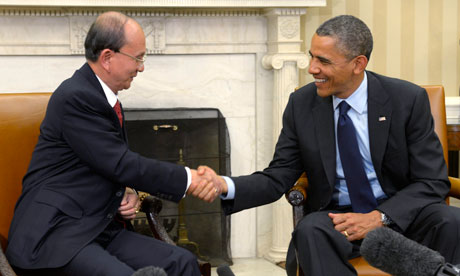
Mr. Thein Sein Goes to Washington… Mr. Abe Goes to Naypidaw

This past week saw big foreign policy news from Myanmar (Burma). Just days after meeting with US President Obama in Washington, Burmese President Thein Sein returned to Naypidaw to meet with Japanese Prime Minister Shinzo Abe. Both visits saw improvements in Burma’s respective relations with the two countries, but which of the two relationships remain closer? From whom did Burma gain the most, and vice versa? The clear answer is Japan.

President Thein Sein visited Washington at the beginning of last week, becoming the first Burmese leader to visit the US since Ne Win in 1966. The visit was a largely symbolic one, lacking many of the tangible economic benefits that are usually associated with these sort of state visits. Aside from agreements to strengthen bilateral trade relations with two US agencies, most of Myanmar’s benefits can be found in the language of US officials. Before the President arrived, US Press Secretary Jay Carney referred to the country as Myanmar, not Burma. Myanmar is the name used by the military junta since 1989, while Burma is an appellation preferred by opponents of the regime. President Obama also referred to the country as ‘Myanmar’ and while it does not mark an official policy change, it does reflect a change in attitude.

During his meeting with President Thein Sein, Obama raised the perennial issue of human rights, but at the same time expressed strong support for the leader. Also of note, US Senator Mitch McConnell, a long-time champion of sanctions against Myanmar, said he was no longer in support of continued sanctions against the country, paving the way for smoother relations in the future. The Burmese president’s visit to the US came without multi-million dollar contracts and major US investment in the country will have to wait, but Thein Sein’s visit did represent a further thawing of the relationship, and offers hope for the future.

Continue reading →

2 Comments

Filed under China, Current Events, Economic development, Foreign policy, Myanmar/Burma, Regional Relations