Category Archives: SLIDER

Regional Roundup for Week of 2.21.16

EXSE FOCUS

Missiles Deployed on Disputed South China Sea Island, Officials Say-NYT

The Pentagon has evidence that China has deployed surface-to-air missiles on one of the Paracel Islands in the South China Sea, a U.S. official said. Taiwan’s Defense Ministry issued a statement on Wednesday, also saying that antiaircraft missiles were present on the island. Tensions over the sea have been inflamed by China’s extensive effort to build artificial islands there, intending to bolster its claim to sovereignty over most of the sea and the many reefs and islets in it.

Related: Chinese Missiles in South China Sea Underscore a Growing Conflict Risk-NYT

Related: Beijing’s missile move in South China Sea could make US think twice about getting too close-The Guardian

Related: Beijing accuses US of ‘ulterior motives in hyping up’ South China Sea missile move-The Guardian

Will ASEAN Remain Central to US Asia Policy?-The Diplomat

ASEAN centrality, or stuck in the middle? When U.S. President Barack Obama hosts leaders from the ten countries of the Association of Southeast Asian Nations (ASEAN) on Monday and Tuesday, he will symbolically reinforce the concept of ASEAN centrality—traditionally the idea that the group’s diverse states should economically integrate and gradually develop a collective voice in the world. But other kinds of centrality will also be apparent as observers and officials confront regional security issues in which two of ASEAN’s strongest suitors, the United States and China, are on opposing sides./Graham Webster is on the money here when he says that the US-ASEAN Summit, especially in the context of greater US involvement in the region, is locking in the next administration to at least continue the US commitment to SE Asia. Any reversal of ‘the Pivot’ would cause great disillusionment among ASEAN members about the intentions and limits of American power in the Pacific. The US is already fighting an uphill battle of maintaining influence in SE Asia opposite to China. To abandon the project when US relations with countries like Vietnam and the Philippines are at historic highs might to irreparable damage to the American image in the region.

Related: Obama Unveils New ASEAN Economic Initiative at Sunnylands Summit-The Diplomat

Top Leadership at Asian Infrastructure Investment Bank Continues to Shape Up-The Diplomat

The China-led Asian Infrastructure Investment Bank recently added five vice presidents. Since its doors officially opened for business in mid-January with the first meeting of its board of governors, the China-led Asian Infrastructure Investment Bank (AIIB) has been quick to get down to business. The development bank, the newest on the scene in Asia and a friendly competitor to the Asian Development Bank (ADB) and the World Bank, is looking to get its first loans off the ground to support infrastructure development across Asia.//Look for the first AIIB loans to be announced soon. Will they be for railways in Thailand (see below) or for an infrastructure project in Laos or Myanmar? Our bet’s on Laos. 

Thailand bets on China-led AIIB to finance massive infrastructure needs-East by Southeast

Will China’s AIIB-backed ‘railway diplomacy’ be enough to jumpstart Thailand’s lagging economy? On January 26, Thailand’s cabinet approved a budget of 52.82 billion baht (US$1.47 billion) to join the China-led Asian Infrastructure Investment Bank (AIIB). Thailand will hold around a 1.43 percent share of the bank with payments beginning in five installments of 2.112 billion baht (US$58.90 million) due by the end of 2019. “As the country [has] aggressive plans to improve its much needed infrastructures, the AIIB would offer great opportunities in terms of more loan availability” explains Nithi Kaveevivitchai, a research economist at the Bank of Ayudhya.

Beware ASEAN’s Coming Economic Gloom-The Diplomat

Regional economic prospects are dimming in Southeast Asia, with unemployment expected to rise and increasing concerns over job security preoccupying many – with Malaysians in particular being the hardest hit – a survey by the Financial Times has found.

China’s Silk Road revival steams ahead as cargo train arrives in Iran-The Guardian

Goods travel 6,462 miles in 14 days as part of efforts to resurrect ancient trade route connecting east with Europe. A long-distance cargo train has travelled from China to Iran as part of an attempted revival of the ancient Silk Road, a trans-Asian trade route connecting the east to Europe and the Mediterranean Sea. The 32-container train, which arrived in Tehran on Monday, took 14 days to complete the 6,462 mile (10,399km) journey from China’s eastern Zhejiang province through Kazakhstanand Turkmenistan – one month less than the sea route from Shanghai to the Iranian port of Bandar Abbas.// Much is riding on OBOR. But if transport times can be cut by that much for goods, the investment may be worth it. How much will that cost savings be passed on to the consumer?

SUSTAINABILITY AND RESOURCE MANAGEMENT

Xinjiang Region of China Bans Glacier Tourism, Citing Risk to Ecosystem-NYT

Glaciologists in China and elsewhere have said for years that climate change is the main cause of glacier erosion, which threatens the water sources of much of humanity. Officials in the far western region say that tourism is harming the fragile glaciers and that they should be observed from a distance. The Xinjiang government announced this month that it was banning tourism on glaciers across the region, which is one-sixth of the Chinese land mass.//A prudent decision by the regional government. The challenge of mitigating environmental damage caused by tourism is one that is faced across the region. Is this a decision that will be mirrored in other sites around China?

Bhutan Should Come Clean on Hydropower Megaplan-The Diplomat

Environmentalists are concerned about the nation’s secretive hydropower plans. The tiny nation of Bhutan might enjoy world renown for its environmental record, but it is overlooking concerns being raised by environmentalists over the country’s plans to construct large hydropower plants to generate 10,000 megawatts of surplus electricity for export to India. Climate Action Tracker, an independent group, rated Bhutan’s pledged contribution to the 2015 UN Climate Change Conference in Paris as “sufficient,” a rating accorded to just five countries. Soon thereafter, the carbon comparator tool of the Energy and Climate Intelligence Unit praised Bhutan for being an unparalleled carbon sink, absorbing three times more carbon dioxide emissions than it produces.

The Vanishing Lakes of Phnom Penh-The Diplomat

Cambodia’s capital was once home to 2 flourishing lakeside communities. Commercial land development changed everything. Luc Forsyth and Gareth Bright have set out on a journey to follow the Mekong river from sea to source. The Diplomat will be sharing some of the stories they’ve found along the way. For more about the project, check out the whole series here.//The destruction of urban wetlands is a familiar tale throughout SE Asia. See the sordid story of Vientiane’s That Luang Marsh as another example. In Phnom Penh, while Boon Kok Lake is being developed for condos and shopping, the building plans aren’t what doomed it. A boom in the urban population caused more sewage to be filtered through the lake to the point where the stench was unbearable. The utility of the lake as a place to fish for the city’s poor, however, is now gone. 

Why Reducing Ivory Demand in China Will Not Curb Poaching in Africa-The China File

“When the buying stops, the killing can too,” reads the popular slogan that WildAid uses in its anti-ivory campaign to raise awareness in China. WildAid, along with most Western environmentalists, contend that curbing demand in China for ivory is the key factor to help save the African elephant from extinction. Damien Mander disagrees. Mander is the founder of the International Anti-Poaching Foundation and a leader in a new movement that is militarizing the fight against illegal wildlife poaching in southern Africa.

CHINA

U.N. Rights Official Urges China to Release Detained Lawyers-NYT

Zeid Ra’ad al-Hussein, the high commissioner for human rights, expressed concern over a “very worrying pattern” of arrests and disappearances. The Chinese authorities have arrested more than 250 lawyers, legal assistants and activists in a crackdown that began in July.

China Telescope to Displace 9,000 Villagers in Hunt for Extraterrestrials-NYT

Thousands of villagers in Guizhou Province will relocate to make room for a $184 million telescope to detect signs of alien life and gather other data about space. The telescope will be 500 meters, or 1,640 feet, in diameter, making it by far the largest instrument of its kind in the world. The government hopes to complete it by September. Officials plan to give each person the equivalent of $1,800 for housing compensation, the report said. Guizhou is one of China’s poorest provinces.//If aliens land in China, these villagers should be first in line to meet them as part of the compensation plan. That being said, under-compensation is a huge problem in SW China, where the economic value of the environment villagers live in is often ignored. See our series on relocation in Sichuan’s Yalong River valley for more. 

Related: China’s giant telescope represents its big ambitions for science-The Guardian

Lung Cancer Deaths Soar in China’s Steel Country, Report Says-NYT

Researchers say the cause of the fourfold rise since the 1970s in Hebei Province, a steel-making center, is probably air pollution. Hebei’s air pollution is among the worst, if not the worst, in China. China is the world’s top steel producer, accounting for about half the world’s output, and Hebei is far and away China’s biggest steel maker, according to official figures. Satellite photos of northern China regularly show a miasma of smog centered on the province, home in 2013, to the six most polluted cities in the country, according to Greenpeace.

Steel is suffering like coal once did: but Cameron will not oppose China– The Guardian

America has imposed massive tariffs, but Britain’s courtship of Beijing may leave British steelmakers with no protection. A historic industry is plunged into peril as the life is slowly squeezed from it by slowing demand and a flood of cheap imports as the government merely stands by. Sound familiar? It is the grim reality facing British steelmaking. But to anyone with a sense of recent industrial history it is unlikely to come as a surprise; this was also how Britain’s once mighty coal industry was snuffed out during the late 1980s.

200 Kunming officials punished for corruption-Go Kunming

Chinese president Xi Jinping’s wide-ranging campaign against corruption shows no signs of slowing down, and the Kunming municipal government is nowhere near immune. A report released over the weekend states some 200 low-level Spring City members of the Communist Party faced at least some form of “disciplinary action” in 2015. The majority of cases involved fraud or embezzlement, and many came about due to citizen complaints. The Municipal Commission for Discipline (MCD) received nearly 6,000 tips via often anonymous emails, letters and phone calls last year concerning graft, an increase of 48 percent over 2014. The government report did not list any offender names or their individual punishments.//”Hunting tigers and swatting flies” as saying goes. Xi’s anti-corruption campaign has utterly devastated Yunnan’s officialdom.

SOUTHEAST ASIA

As Demographics in Cambodia Shift, Youth Seek Political Change-NYT

Two-thirds of the population is under 30, and that generation has outgrown the authoritarian style and patronage system of Prime Minister Hun Sen. The opposition nearly won the election, but protests over the vote led to a government crackdown. By November, the political battle had come down to a single standoff: the government threatened to arrest the opposition leader, Sam Rainsy, if he set foot in Cambodia again. Mr. Sam Rainsy, who was traveling abroad, vowed to return. For many Cambodians, the 2013 election was the biggest opportunity yet to break out of that rut. Youth like Ms. Thy Sovantha were a central part of that hope, as a demographic shift gave them a larger say than ever before.//The upcoming election could be Hun Sen’s last. But, he is one of, if not the most savvy politicians in the region and while it is tempting to count him out, Hun Sen always seems to have another trick up his sleeve. 

Bangkok bombing suspect was tortured into confessing, says lawyer– The Guardian

A Chinese ethnic Uighur man arrested in Thailand over a bombing that killed 20 people in Bangkok last year has denied charges of murder or involvement in the attack, retracting an earlier confession that his lawyer said was a result of torture. Adem Karadag, also known as Bilal Mohammed, is due to appear at a military court on Tuesday along with a second suspect, Yusufu Mieraili, to formally hear the charges. Police said both men had confessed to having a role in the 17 August explosion.//It’s unlikely that either suspect will receive a fair trial. This is a case that Beijing will want settled quickly and quietly, and with billions of baht on the table in loans, the junta in Bangkok will hesitate to do much that would anger their closest ally.

Salween Farmers Demand Government Accountability for Land Confiscation-The Irrawaddy Magazine

RANGOON — Participants at a land rights seminar in Mon State urged the incoming National League for Democracy (NLD)-led government to address past practices of land confiscation with a special court dedicated to the issue. Mon State’s Salween Eastern Farmers and Land Users Seminar was held in Moulmein for two days, from February 14-15, with over 90 representatives participating from five Mon State townships and one Tenasserim Division township, all selected for their locations east of the Salween River. Also present were Moulmein-based farmers’ organizations and civil society groups focused on land rights. At the seminar, it was demanded that farmers should be able to bring land rights cases to a special court when conflicts over ownership occur. Participants also called on the government to create a policy that would give land users the right to own land rather than simply being allowed to work on it.

This week’s news digest was compiled by Brooke Rose with added analysis by William Feinberg. 

1 Comment

Filed under NEWS DIGEST, SLIDER

Thailand bets on China-led AIIB to finance massive infrastructure needs

Will China's AIIB-backed 'railway diplomacy' be enough to jumpstart Thailand's lagging economy?

Will China’s AIIB-backed ‘railway diplomacy’ be enough to jumpstart Thailand’s lagging economy?

On January 26, Thailand’s cabinet approved a budget of 52.82 billion baht (US$1.47 billion) to join the China-led Asian Infrastructure Investment Bank (AIIB).

Thailand will hold around a 1.43 percent share of the bank with payments beginning in five installments of 2.112 billion baht (US$58.90 million) due by the end of 2019.

“As the country [has] aggressive plans to improve its much needed infrastructures, the AIIB would offer great opportunities in terms of more loan availability” explains Nithi Kaveevivitchai, a research economist at the Bank of Ayudhya.

Thailand’s junta is attempting to revive the country’s flailing economy with an ambitious spending program of over US$100 billion that would include large-scale infrastructure upgrades for the country’s railways and roads, as well as air and seaports. Being one of the fifty-seven founding members of the AIIB, Thailand could potentially receive cheaper loan rates and more flexible lending conditions from the Beijing-based bank, compared against the US-led World Bank or the Japan-led Asian Development Bank.

The Thai government foresees it will benefit from intensified diplomatic rivalries between China and Japan. During a speech in April 2015, Thailand’s energy minister Narongchai Akrasanee, cannily asserted that “one thing we have learned is that if we welcome the Chinese, the Japanese will come running.”

Support for the AIIB in Thailand has not been unanimous, however. Kasit Piromya, a former foreign minister and current advisor to the Democratic Party of Thailand, criticized the creation of the AIIB as “part of China’s global strategy to dominate” and argued at the Asian Financial Forum that “China will be dictating terms and that will further weaken the Asean community.”

Since seizing power, Thailand’s military generals have instead sought to deepen political and economic ties to China, which is now the country’s largest trading partner. “It has been analyzed that any related projects that could benefit the supply chain network and trading routes between the ASEAN region and China would receive great attention from the AIIB,” assesses Nithi Kaveevivitchai.

The Sino-Thai railway link, which aims to transform Bangkok into the hub of China’s ambitious Pan-Asia Railway Network, appears to be a particularly likely candidate for an AIIB infrastructure loan. After months of bumpy negotiations – during which Beijing insisted on downgrading the railway from high-speed to medium-speed – the project saw a breakthrough in January 2016 when China agreed to Thailand’s demand that it slash its interest rate from 2.5% to 2%.

The Chinese government had long insisted on a 2.5% rate, arguing that Thailand was now an upper-middle income country, notes Mr. Nithi.

“Whether [the] AIIB will be used to fund this project is still too early to say… it could be seen as a good alternative for funding, especially if the development bank can offer a more competitive lending rate,” he adds.

The railway is currently facing further uncertainties due to its estimated budget of 500 billion baht (US$13.08 billion) and the Thai government is asking China to take more financial responsibility for the project.

Thai Deputy Prime Minister Somkid Jatusripitak told the Nation (Thailand) on February 5 that “Thailand was requesting that China be responsible for civil construction and related work for the 800km-plus railway track instead of just providing trains, rolling stock and related equipment, as the scheme is mutually beneficial so profits should not be the only factor for consideration.”

In addition to issues of cost, critics in Thailand have asked whether the project is actually beneficial to the country, which has no mass goods in need of rail transit.

In parallel to the Sino-Thai railway link, Thai and Japanese authorities recently announced they have launched on a trial basis a train-delivery service using 12-foot long containers at Nong Pla Duk Junction in Ratchaburi province.The aim would be to eventually connect the junction to the Dawei deep-sea port in Myanmar, where Thailand has been developing a special economic zone (SEZ) with Naypyidaw since 2012. The long-delayed project was recently joined by Japan in 2015 and has the ambitious aim to become the gateway for the Mekong region to the Indian Ocean. China, however, has also expressed interest in creating a Dawei rail link, intimating a likely point of competition in the future. 

While it remains too early to be seen whether Minister Narongchai will be proven right, using the AIIB to expedite rail infrastructure loans could significantly help China  secure its fragile ascendancy over Japan in terms of ‘railway diplomacy’, as the two countries continue to compete for contracts across Southeast Asia.

6 Comments

Filed under ASEAN, China, Economic development, Regional Relations, SLIDER, Thailand

Clouds Gathering as Obama Hosts Southeast Asian Leaders at Sunnylands

ASEAN leaders gather for a family photo with U.S. President Barack Obama (5th L) after a US-ASEAN meeting at the ASEAN Summit in Kuala Lumpur, Malaysia November 21, 2015. REUTERS/Jonathan Ernst TPX IMAGES OF THE DAY

Photo courtesy aseanmp.org

On Monday and Tuesday, February 15-16, President Obama will host eight leaders and two senior alternates from the 10-country Association of Southeast Asian (ASEAN) at Sunnylands, the former estate of Walter and Leonore Annenberg in Rancho Mirage, CA.

The Sunnylands summit will be an historic development in US-ASEAN relations and a significant testament to the positive impact of the Obama administration’s Rebalance to the Asia-Pacific and its broad all-of-government reengagement with ASEAN. But amidst the bonhomie many if not most of the leaders are likely to have more questions than answers about future US initiatives towards the region.

Obama and most Presidents since Dwight Eisenhower have used the Sunnylands conference center for retreats and to host high-level foreign visitors.  Obama hosted Chinese president Xi Jinping at Sunnylands in 2013.

But even as relations with ASEAN have never been stronger, clouds are gathering over arguably the world’s most successful developing region. The most serious are blowing from China, which has followed an erratic course almost since Xi Jinping became Asia’s “man-in-a-hurry” since he took office in March 2013.

Since 2000 the ASEAN countries have averaged GDP growth of more than 5 percent, though per capita income and living standards still vary widely.   McKinsey & Company judged ASEAN collectively to rank the lowest among the world’s largest economies in GDP growth volatility from 2000-2013.

Still, economic cooperation has generally not lived up to the hopes and aspirations of most member countries.  Over nearly five decades the rhetorical bar regarding intra-ASEAN trade and investment has always been set significantly higher than actual performance.

At the time of the initiation of the ASEAN Economic Community in 2015, the ten countries were still trading much more with the rest of the world than with one other, especially if trade figures are adjusted to separate intraregional trade among Japanese and Chinese corporate shipments of parts and components for their regional supply chains.

Relations with the US have been warm throughout ASEAN’s expansion and evolution, though US preoccupation with the Middle East after 9/11 and the invasion of Iraq created significant anxiety in some capitals about the strength of American interest and staying power.   Relations have been on the upswing since the beginning of the Obama administration, though some important moves such as the Rebalance to Southeast Asia and closer engagement with Vietnam had bureaucratic if not high level political roots in the last year or so of the George W. Bush administration.

To date, nervousness about China’s increasingly assertive efforts to solidify its claim to nearly 90 percent of the South China Sea—including parts of the 200 nautical mile Exclusive Economic Zones (EEZs) of five ASEAN countries—has been the single most important reason for the positive reception in the region to the US military rebalancing to East Asia and the US’s its broader political and economic reengagement with Southeast Asia.

China’s effort to create a modern mare nostrum in the South China Sea through bullying and the deployment of overwhelming numbers of maritime police vessels, Coast Guard and PLA warships remain a continuing threat to regional peace and stability and drive other claimants closer to the US, but in recent months China’s fast slowing economy and unsettling blunders by the Central Bank have created even more imminent dangers to both to ASEAN economies  and regional stability.

The main reason has been China’s emergence little more than five years ago as the single largest market for ASEAN exports of commodities and manufactured goods. Chinese imports and fast growing American investment were twin engines of growth that supported ASEAN throughout the global recession.

Now China’s rapidly slowing growth and questions about its financial stability are imposing a serious and unexpected drag on ASEAN’s largest economies, where massive Chinese investment in mines as well as deforestation in order to create rubber and oil palm plantations and transportation infrastructure have left communities adrift in a wasteland of environmental devastation.

The falling Yuan and the Xi administration’s surprisingly clumsy handling of its financial turmoil have shaken investor confidence throughout the world.  China’s economic slowdown is likely to continue until policymakers finally make well recognized but politically difficult reforms and the economy purges itself of excess capacity and non-performing debt.  Meanwhile, the rapid fall in imports of commodities coupled with a weak and still tenuous recovery of the global economy pose a serious short and medium threat to the wellbeing of most of the ASEAN countries.

Several non-military moves of the Obama administration, including the 2009 Lower Mekong Initiative (LMI) and the Trans-Pacific Partnership (TPP), have been strongly welcomed by the relevant countries—Cambodia, Laos, Myanmar, Thailand and Vietnam in the case of the LMI and Brunei, Singapore, Malaysia, and Vietnam in the case of the TPP talks. But Thailand and one or more other countries have reason for concern that their own exports and attractiveness to multi-national investors will suffer as a consequence.

How Washington responds to the situation in the South China Sea and its overall policy towards Beijing are certain to be high on the list of talking points for the ASEAN leaders, as will a range of multilateral and bilateral development and capacity building programs under the framework of the new US-ASEAN Strategic Partnership and the LMI.

Equally if not more important will be the TPP agreement and its uncertain fate in Congress. If approved by Congress, the far-reaching agreement  will almost certainly have significant economic, financial and even domestic political impacts on both the four ASEAN signatories, as well as the six who are not. Non-signatory ASEAN countries as well as China will be disadvantaged by restrictions on third party content.  The most likely short-term disadvantage will fall on Thailand, the largest ASEAN economy after Indonesia, because of its deep integration in regional supply chains and geographic centrality astride major regional transportation networks.

In addition TPP discussions and the South China Sea tensions, concern that ISIS is establishing a foothold in the region and the best means to counter its recruitment efforts and the establishment of terrorist cells will be high on the Sunnylands agenda.  Economic and security concerns, particularly those where the root cause emanates from China, continue to drive several ASEAN states closer to the US, openly in the case of Vietnam and the Philippines and quietly in the case of Malaysia and Indonesia. It is unsurprising that these issues will drive the conversation at Sunnylands. The Obama administration and ASEAN would also be wise to begin give equal weight to conversations on climate change resilience and energy governance, two areas which ASEAN countries are lagging but are beginning to articulate the need for external partnerships.


2 Comments

Filed under ASEAN, China, Current Events, SLIDER, South China Seas, USA

Regional Roundup for Week of 2.14.16

Happy Lunar New Year from ExSE! There seems a bit of controversy over the naming of this festival once popularly known as Chinese New Year – the issue is that the name’s lack of inclusivity. The US government is now calling it Lunar New Year in its public pronouncements and press releases. Rightfully so, perhaps, given that that holiday is celebrated in Mongolia, Korea,Vietnam, Taiwan, Vietnam, and Singapore and not called Chinese New Year in the home languages of those countries. But in Chinese, it’s also not popularly called Chinese New Year  – or at least uses of other forms translated as simply New Year or Spring Festival greatly outweigh the use of Chinese New Year in both the official media and vernacular uses. And as far as I know, even though the holiday falls on the occasion of the new moon marking the beginning of spring, not a single country out there uses the word Lunar New Year in its vernacular labeling of the holiday. Correct me  if I’m wrong. It’s all quite confusing. So Happy Spring Festival everyone!

Tomorrow Barack Obama will host leaders of Southeast Asian countries at the first historic US-ASEAN Summit. This is a significant step in the key strategic relationship emerging between the US and ASEAN. And both blocs have China to thank for it. In other words, for the US-ASEAN relationship, China’s regional missteps and economic woes are gifts that keep on giving.

EXSE FOCUS

 Obama’s Sunnylands Summit: Does ASEAN Really Matter? – The Diplomat OK, OK, I get the symbolism, but it is a measure of how devalued the language of diplomacy can be that US President Barack Obama would hold an unprecedented summit at Sunnylands in California with ten heads of state whose countries comprise the Association of Southeast Asian Nations (ASEAN) to talk of a “strategic partnership.”

Related: Time for a New US-ASEAN Human Rights Dialogue – The Diplomat

            Related: U.S. Drawing Southeast Asia Closer With California Summit – NYT

 US President Barack Obama likely to promote virtues of TPP – and independence from China – during summit with Southeast Asian leaders – The South China Morning Post A summit next week between Southeast Asian leaders and President Barack Obama is unlikely to deliver any big economic prizes, but will allow the American side to press the advantages of joining a Pacific trade pact that doesn’t include China. The meetings at Rancho Mirage in California set for Monday and Tuesday will be the first summit of its kind for the 10-member Association of Southeast Asian Nations on US soil. Its special nature is intended to show the Obama administration’s commitment to countering growing Chinese influence in a region that is home to 620 million people and a US$2.6 trillion economy.

The Elephant in the US-ASEAN Room: Democracy – Asia Unbound Next week, at a summit in California, President Obama will meet the ten leaders of countries in the Association of Southeast Asian Nations (ASEAN), the most important regional group in Asia. The event, the first-ever US-ASEAN summit on American soil, is being touted by the White House as a sign of the importance of Southeast Asia. After all, the Obama administration has made relations with Southeast Asia a centerpiece of “the pivot,” or “rebalance to Asia,” a national security strategy that entails shifting American military, economic, and diplomatic resources to the Pacific Rim. There are indeed important reasons for holding the U.S.-ASEAN summit. Tensions are rising between several Southeast Asian nations and China, in part because of Beijing’s increasingly assertive actions in Asian seas.

Related: The Dark Heart of ASEAN – Project Syndicate

Related: Burma’s Outgoing President Cancels Visit to US-ASEAN Summit Next Week – The Irrawaddy

 The Future of US Foreign Policy: American Leadership In Asia – The Diplomat The Rebalance authors Mercy Kuo and Angie Tang regularly engage subject-matter experts, policy practitioners and strategic thinkers across the globe for their diverse insights into the U.S. rebalance to Asia. This conversation with Richard Fontaine – President of the Center for a New American Security (CNAS), former Senior Advisor and Senior Fellow at CNAS from 2009-2012, previously foreign policy advisor to Senator John McCain and at the State Department, National Security Council and Senate Foreign Relations Committee, and co-author of An Intensified Approach to Combating Islamic State – is the 31st in “The Rebalance Insight Series.”

 Requiem for a river: Can one of the world’s great waterways survive its development? – The Economist GUO, the driver, pulls his car to a merciful halt high above a crevasse: time for a cigarette, and after seven hours of shuddering along narrow, twisting roads, time for his passengers to check that their fillings remain in place. Lighting up, he steps out of the car and dons a cloth cap and jacket: sunny, early-summer days are still brisk 3,500 metres above sea level. Mr Guo is an impish little dumpling of a man, bald, brown-toothed and jolly. He is also an anomaly: a Shanghainese in northern Yunnan who opted to stay with his local bride rather than return to his booming hometown.//ExSE co-founder Brian Eyler gets a mention in this article which draws heavily from his 9/2015 blogpost on Cizhong and the Wunonglong dam. This article also mentions the heavy lifters working effectively on the policy side to promote sustainable solutions to the trouble of hydropower development on the Mekong.  Kudos for the Economist for choosing the Mekong as a highlight issue in the run-up to the Sunnylands meeting.

 Can China Jump-Start Its Maritime Silk Road in 2016? – The Diplomat According to the director of China’s State Oceanic Administration, China has big plans for the 21st Century Maritime Silk Road (MSR) in 2016. Xinhua cited SOA chief Wang Hong as saying that China will advance the MSR with an action plan this year. Wang also spoke of establishing “a China-ASEAN maritime cooperation center and a platform to boost maritime cooperation in East Asia,” according to Xinhua.

 80 Percent of Zero: China’s Phantom South China Sea Claims – The Diplomat Baudelaire said the devil’s best trick was convincing us he did not exist. China’s best trick might be convincing us its claims over the South China Sea do exist. Official rhetoric about its “indisputable sovereignty over the South China Sea islands” certainly sounds like a definitive Chinese position. And, of course, China occupies many islands in the area, its Coast Guard chases off foreign fishing vessels, and massive Chinese land reclamation projects provide new, persistent regional presence. But with the notable exception of the Paracel islands between Hainan Island and Vietnam, China has made no valid legal claim over the South China Sea.


REGIONAL RELATIONS

Decision in Philippines v. China Expected in May 2016 – The Diplomat Plus, updates on U.S.-India patrols, Asian defense spending rises, and more. Weekend security links.

US decides on next ambassador to Burma – DVB The U.S. Senate unanimously confirmed President Barack Obama’s nominee to be ambassador to Burma on Tuesday, after the administration assured lawmakers it would not rush to ease sanctions as the country moves from decades of military rule. The Senate voted 90-0 to confirm career diplomat Scot Marciel to the post in Burma, also known as Myanmar. Currently the principal deputy assistant secretary in the State Department’s Bureau of East Asian and Pacific Affairs, Marciel has also been ambassador to Indonesia and served in Vietnam, the Philippines, Brazil and Turkey.

US urges China-Taiwan talks amid uncertainty after election – The Jakarta Post The Obama administration says it is urging China and Taiwan to maintain dialogue amid concern that the election of an independence-leaning party on the island could heighten tensions in one of Asia’s security hotspots. A House foreign affairs panel on Asia examined the implications for Washington of the January election that throws new uncertainty over the relationship between democratic Taiwan and the communist mainland, which claims the island as its own territory, to be recovered by force if necessary.

US-India Patrols in the South China Sea? Maybe Not Just Yet – The Diplomat Early on Wednesday, Reuters published an interesting exclusive, suggesting that the United States and Indian navies are considering the idea of jointly conducting patrols in the South China Sea. It isn’t explicit if the idea under consideration is a bilateral U.S.-India freedom of navigation patrol, which would require Indian and U.S. vessels to challenge excessive maritime claims, or simply a bilateral passing exercise or other less contentious patrol. Both India and the United States support freedom of navigation, globally and in the South China Sea.
Related: US and India risk angering Beijing as they consider joint naval patrols in the South China Sea – The South China Morning Post


SUSTAINABILITY AND RESOURCE MANAGEMENT

How Mekong women hone science skills – SciDevNet [MANILA] Every two weeks, Somkhith Bouridam of the National University of Laos and her assistant, Palamy Changleuxay, participate in a conference call on a project to help countries across the Lower Mekong region use satellite imagery to cope with climate change and food insecurity. The five-year project called SERVIR-Mekong is being implemented by universities in Cambodia, Laos, Myanmar, Thailand and Vietnam along with the Bangkok-based non-profit Asian Disaster Preparedness Center (ADPC).

What a New Vietnam-Russia Deal Says About the Mekong’s Future – The Diplomat It is potentially an unusual business transaction. While the prospect of a Vietnamese company taking over a Russian group in of itself is unusual, the buyout of a strategic stake in a major fish distributor is also a reflection of changing attitudes to the management of the Mekong River.

Southeast Asia facing severe drought – Southeast Asia Globe With weather experts still assessing whether this year’s El Niño is the most extreme on record, its effects are being felt across the world, not least in Southeast Asia, where prolonged drought conditions are gripping most countries. The current El Niño – a cycle of extreme weather conditions caused by warmer than average sea temperatures in the Pacific – has been of concern to governments and agencies since December 2014 when the current ocean warming began.

China’s Uphill Battle Against the Ivory Trade – The Diplomat On January 13, in his New Year policy address, Hong Kong’s Chief Executive CY Leung announced a plan to ban ivory trade within the region. Zhang Li, secretary general of the China Committee for the Wildlife Conservation Society (WCS), professor at Beijing Normal University and an expert on elephants, hopes that mainland China will keep pace and enact a national ban on ivory trading, as promised by President Xi Jinping on his inaugural visit to the U.S. in September.

Qinghai Lake Activists Confront Chinese, Tibetan Poachers – Radio Free Asia On Feb. 12, a group of activist volunteers were attacked by poachers at a place called Chik Nga Chik after they had gone to check on reports of fishing in the lake, an area resident told RFA’s Tibetan Service on Friday. The poachers, who wore head coverings to conceal their identity, were later identified as Tibetans, RFA’s source said, speaking on condition of anonymity. “It is really sad when some Tibetans try to protect rare fish in the lake, while others try to take those fish,” the source said. Incidents of illegal fishing have increased in recent years around Qinghai Lake, also called Kokonor, with local Tibetans stepping up monitoring activities in response, sources told RFA in earlier reports.


CHINA

Taiwan Blocks Leader of Uyghur Organization From Attending Conference – Radio Free Asia Taiwanese authorities have prevented the executive chairman of an international Uyghur organization from participating in a human rights conference to be held in Taiwan later this month, the World Uyghur Congress (WUC) said Friday. Dolkun Isa, WUC’s executive chairman, will not be able to attend the Asia Pacific Religious Freedom Forum on Feb. 18-21 because of likely pressure from Chinese authorities, the Munich, Germany-based organization of exiled Uyghur groups said in a statement. “It is a true shame that a democratic country such as Taiwan should be so influenced by the will of the Chinese government,” the statement said. “China has consistently maintained that human rights defenders—and those supporting the Uyghur community in particular—should be treated like criminals.”

 China Says Its Students, Even Those Abroad, Need More ‘Patriotic Education’ – NYT BEIJING – Chinese students, already immersed in classes and textbooks that promote nationalist loyalty to the Communist Party as a bedrock value, must be made even more patriotic and devoted to the party, even when they are studying in universities abroad, according to a new directive sent to education officials. //China already does this for students at home. Take required Marxist readings at the university level, for example. How probable will it be to successfully enforce this for Chinese students overseas? Furthermore, how will it affect relations with those host countries?

Satellite Images: China Manufactures Land at New Sites in the Paracel Islands – The Diplomat Satellite images show dredging and land filling by China at two new sites in the South China Sea, both in the Amphitrite group of the Paracel Islands, approximately 15 kilometers north-northwest of China’s military base at Woody (Yongxing) Island. Also newly visible is a helicopter base under construction at Duncan Island, another site in the Paracels, suggesting that Beijing may develop a network of bases in the South China Sea to support anti-submarine warfare helicopters, such as its recently deployed ASW Z-18F.

China’s Nuclear Industry Goes Global – The Diplomat A European nuclear plant built and operated by China? Unimaginable, one might say, as China still has to prove to be a reliable partner in operating critical infrastructure, meeting strict safety requirements, and managing the complex technology. Yet, nuclear reactors are about to be built with Chinese participation in the United Kingdom. And that is just the beginning. Chinese power corporations are initiating new projects all over the globe and have the potential to become the next big civil nuclear technology suppliers for several countries (see the map below). As this trend is assuming shape, the next decade will be critical to ensure that Chinese technology is safe and that China adheres to non-proliferation agreements.

Armed Chinese Threaten Lao Banana Workers – Radio Free Asia Armed Chinese guards are forcing Lao workers in the country’s northern Oudomxay province to labor in banana plantations contaminated with dangerous chemicals, local sources tell RFA’s Lao Service. A chief of the Nongbouadeang village in the province’s Houn district told RFA that 50 Lao workers in a Chinese-owned banana plantation in the neighboring village of Nammieng were working under Chinese overseers armed with automatic rifles.

Chinese begin big rush back home on planes, trains and automobiles as new year holiday ends – The South China Morning Post Traffic surged at China’s railway stations, airports and highways on Friday as millions of workers began their journeys back to work after the week-long Lunar New Year holiday. But many were delayed with the arrival of another cold front that brought heavy fog. The China Railway Group said it handled just over 9 million passengers on Friday, 6.9 per cent more than last year as most people travelling home would return to work on Sunday.


SOUTHEAST ASIA

Dateline Irrawaddy: ‘It’s Fair to Say That President U Thein Sein Is Burma’s Reform Icon’ – The Irrawaddy The Irrawaddy speaks with Minister of Information Ye Htut about President Thein Sein’s five-year tenure and the media’s role in the country.

Indonesia to form special TPP team this month – The Jakarta Post The decision whether to join the Trans-Pacific Partnership (TPP) will be arrived at cautiously by first establishing a special committee to review the advantages and disadvantages of joining the US-led trade-pact agreement, an official has said. Office of the Coordinating Economic Minister’s deputy for international economic and financial corporation Rizal Affandi Lukman said the ministry was preparing a decree on the TPP committee. “Hopefully it can be signed soon. Our target is this month,” Rizal told thejakartapost.com in Jakarta on Tuesday. According to Rizal, the team will consist of two layers, namely government officials from relevant ministries, and public figures ranging from experts to chairmen of business associations. They will examine all terms in the trade agreement.

US, Thailand Launch 2016 Cobra Gold Military Exercises Amid Democracy Concerns – The Diplomat On Tuesday, the United States and Thailand kicked off the 2016 iteration of the annual Cobra Gold military exercises – Asia’s largest multinational drill – amid lingering concerns by Washington about its ally’s democratic future. Royal Thai Army Supreme Commander, General Sommai Kaotira, and U.S. Ambassador to Thailand, Glyn Davies, launched the 35th iteration of the annual exercise – which began as a bilateral drill between Washington and Bangkok – at the Royal Thai Navy Command Center in Sattahip district in Chonburi province.

Could improved tax collection strengthen democracy in Cambodia? – Southeast Asia Globe With Cambodia starting to collect more tax, some argue it could increase political accountability in the Kingdom. Cambodia has long been lambasted for not doing enough to collect taxes. In 2006, for example, it collected a little over $600m. In recent years, attempts to levy taxes on ordinary people have been met with protest but the overall amount of tax collected has been rising. The Department of Taxation recently announced that it collected $1.3 billion in 2015, up 21.6% from the previous year. The Department of Customs and Excise – which collects taxes on imports and exports – has yet to release its figures for last year. In 2014, it collected $1.34 billion.

Cambodia’s poverty rate dropping rapidly – Investvine The United Nations hailed Cambodia for its accomplishments in meeting its Millennium Development Goal targets in 2015. In a recent report, the UN calls Cambodia an “early achiever” performing “particularly well” on poverty alleviation. As the Cambodian economy grew on average 7.8 per cent annually from 2004 to 2014, achieving one of the fastest growth rates in the world during this period, some five million people were lifted out of poverty in the period. Cambodia’s poverty rate had been reduced to 14 per cent, down from 53.2 per cent in 2004. At the same time, an increasing number of Cambodians are entering the middle class. In 2016, Cambodia’s economic status will be elevated to the level of a lower-middle income country and the nation will be leaving the league of developing countries. //“Cambodia’s poverty rate had been reduced to 14 per cent, down from 53.2 per cent in 2004.” …based on what established standard for poverty?

The true cost of Laos’ banana plantations – Southeast Asia Globe When Chinese businessmen offered to rent land from impoverished Laotian farmers the deal was too good to turn down. Thousands of hectares of ruined rice paddies and numerous life-threatening illnesses later, the true cost of banana plantations is finally being counted in northern Laos.

This news digest was compiled by Rachel Tritsch with analysis from Rachel Tritsch and Brian Eyler.

Leave a Comment

Filed under NEWS DIGEST, SLIDER

Regional Roundup for Week of 1.31.16

EXSE FOCUS

China G.D.P. Growth at Slowest Pace Since 2009, Data Shows – NYT The economy grew at a 6.8 percent pace in the fourth quarter, official data released Tuesday showed — the slowest expansion since March 2009.

Related: Alibaba Searching for New Revenue Sources – NYT

Related: China’s National Bureau of Statistics Chief Falls Under Corruption Probe – The Diplomat

Related: Yunnan chasing Beijing GDP targets – GoKunming

Related: China’s Fading Factories Weigh on an Already Slowing Economy – NYT // Growth of China’s manufacturing sector instigated mass migration from rural farming to city factories.  The lowering of the national GDP announced last August has the potential to force a second migration for those not competitive enough to make it through the bumpy transition.  Will this cause China’s economy to be dominated by a few or enable more intense ‘capitalistic’ measures amidst those who remain?

Asia Pivot: Does the US Need to ‘Rebalance Harder’? – The Diplomat The Obama White House is realistically out of time to articulate a newly integrated vision for the Asia-Pacific region.

Related: Obama’s Asia Engagement Architecture: A Framework on Which to Build – The Diplomat

Related: EU Eyes Strategic Partnership With ASEAN as New Mission Officially Opens – The Diplomat

Related: US Begins 2016 Asia Outreach With Laos – The Diplomat

Selection of New National Leaders in Laos Indicates Tilt to Vietnam – Radio Free Asia With the selection of new national leaders and the arrests of some old ones, Laos appears to be cementing its ties to Vietnam as it is attempting to blunt Beijing’s push to exert more influence…. // This leadership change brings the potential for a move away from massive dam construction on the Mekong to alternative energy sources.

Related: Laos’s leadership transition raises questions over regional alliances – East by Southeast

Related: Forty years of Lao PDR: what’s next? – New Mandala

REGIONAL RELATIONS

Why the Transatlantic Trade and Investment Partnership Is More Important Than TPP – The Diplomat TTIP will be the West’s last, best opportunity to set global rules as the emerging markets continue to gain ground.

What Does 2016 Hold for China-US Relations in Cyberspace? – The Diplomat Sino-U.S. relations in cyberspace in 2016 will be defined by three key policies.

Related: China and Indonesia: Joint Cyber War Simulations – The Diplomat

Related: China Finally Centralizes Its Space, Cyber, Information Forces – The Diplomat

John Kerry Urges China to Curb North Korea’s Nuclear Pursuits – NYT The secretary of state, in Beijing, warned that if necessary, the United States would take security steps China’s leaders have strongly opposed.

Related: Ahead of Kerry Visit, China Doubles Down on North Korea Position – The Diplomat

The Asian Infrastructure Investment Bank Is Open for Business: What Now? – The Diplomat The China-led bank has opened its doors. Is the AIIB an institution of great consequence in the Asia-Pacific?//In short, yes. The question is what consequences will it have? This article focuses on the US and Japan. Their lack of participation in the bank was to be expected and the country whose actions will have the biggest consequences is that with the most money in the pot – China. What effect will the AIIB have on investment in Southeast Asia? Will the quality of economic aid change because it is coming from a multinational development bank?  

Related: China’s New Development Bank Needs Better Human Rights Protections – ChinaFile

Related: Upholding the Asian Order – Project Syndicate

Vietnam Objects to Chinese Oil Rig in Disputed Waters – NYT While the dispute raised tensions between the neighbors, it did not approach levels seen in 2014, when anti-China demonstrations turned into deadly riots.

Related: US warship sails near island claimed by China in South China Sea – The Guardian

Related: From South China Sea Island, Taiwan’s President Presents ‘Roadmap’ for Peace – The Diplomat

Taiwan’s New Leader Faces a Weak Economy and China’s Might – NYT Tsai Ing-wen, elected Saturday as Taiwan’s first female president, brings what some call a more calm and rational approach to the island’s turbulent politics.

Related: China Largely Shrugs at Shake-Up After Taiwan Elections – NYT

SUSTAINABILITY AND RESOURCE MANAGEMENT

A Conspiracy to Steal Secrets of U.S. Corn – NYT A Chinese national crawled in Iowa fields to get seed corn for a Beijing company.//For those who have read Paolo Bacigalupi’s ‘The Windup Girl’ this story will sound very familiar. 

China’s coal-burning in significant decline, figures show – The Guardian Official data shows coal use fell in 2015 across a wide range of measures as world’s largest polluter continues its transition to clean energy.

Related: China Has Done More About Pollution Than You Think (But It Must Do More) – The Diplomat

Related: China is ‘Rational’ Leader on Climate Change, Says Retired NASA Scientist James Hansen – ChinaFile

Kunming’s Stinky Lake, Beijing’s Saving Winds – ChinaFile Lake Dian in Kunming, the capital of southwest China’s Yunnan province, suffered greatly when, in the 1950s, Chairman Mao Zedong called on the Chinese people to “conquer nature” and reclaim land by filling lakes with soil.//Unfortunately the 1950’s isn’t the only time that Dianchi has suffered the policies of both the central and local governments. The current plans to build illegal housing developments on the shores of the lake is another example of man-made damage to the lake. 

Sharp drop in rubber price forces students out of college in South – NationMultimedia MORE than a hundred students in Trang province were forced to halt their studies as a direct result… // Rubber demand and prices continue to fall, making the large-scale investments of the early 2000s a sore spot for farmers who converted all their land to the once booming industry.

Irrigation Efficiency Key to Meeting Asia’s Growing Food Demands – ADB Across Asia and the Pacific, farmers every day wrestle with a huge challenge—how to meet the growing demand for food in the face of tightening land, water and environmental constraints.

Related: China’s bottled water industry poses new threat to precious resources – The Third Pole

Related: El Niño parches Asia Pacific, destroying crops and drying up water sources – Thanh Nien Daily

Thais turn on Mekong River pumps without consulting regional partners – Southeast Asia Globe  Thailand has begun pumping water from the Mekong River into drought-affected areas in the northeast of the country in a move that could have severe impacts downstream.

Xayaburi Dam Opponents Appeal Against Administrative Court Ruling | The Nation – International Rivers Residents affected by the Xayaburi Dam living in eight provinces along the Mekong River appealed to the Administrative Court Monday against five Thai government agencies that backed the building of the dam.

Mekong River Commission Faces Radical Change – The Diplomat Donors have dropped their funding, forcing a radical restructuring.//A sad turn of events for the moribund organization. It has been hamstrung by its own regulations in the past decade that has left it on the sideline of hydropower debate. Lao meddling in the MRC may be a factor, but more than anything, the MRC failed its own member states by not finding sustainable solutions to development issues in the basin. Many experts in the region have long dismissed the MRC’s potential as a regional broker That being said, a severe loss of funding will affect its ability to produce significant research on the river and its tributaries, something that it’s still quite good at, despite everything else. 

Related: Waking the Green Tiger – ChinaFile

Related: Shifting Sands in the Mekong River – The Diplomat

Cambodia Lags Behind 2020 Power Target – The Diplomat The country is reportedly struggling to achieve its goal of nationwide electrification.//The cost of electricity in Cambodia is among the highest in the world. The country needs cheaper electricity as much as it needs nationwide electrification. 

Related: Hanoi, Ho Chi Minh ordered to switch completely to biofuel – Thanh Nien Daily

Loggers Accused of Destroying Evidence in Cambodia – Radio Free Asia Heaps of lumber were put to the torch this week in Mondulkiri province as logging outfits allegedly attempted to destroy evidence of illegal activity in fear of impending Cambodian government raids…

Related: Hun Sen Creates Committee to Tackle Illegal Timber Trade in Cambodia – Radio Free Asia

CHINA

Chinese-Made Cars Arrive in U.S. Showrooms – NYT There were snickers in 2007 when the Chinese said they would soon be making cars for the United States. It wasn’t soon, but the vehicles have begun to arrive.

Related: So What Would It Mean to ‘Beat China’ on Trade? – NYT

China to Try Canadian on Spying Charges – NYT Kevin Garratt, who ran a cafe near China’s border with North Korea, will be tried on charges of spying and stealing state secrets nearly a year and a half after he and his wife were detained.

Miners in China Are Rescued After 36 Days Underground – NYT The four men were among 29 miners caught when a cavernous gypsum mine in Pingyi County, Shandong Province, collapsed on Dec. 25. Thirteen are still missing.

Is China’s Silk Road Coming to Europe? Not So Fast – The Diplomat China’s attempts to extend the New Silk Road westward have encountered problems.

Related: The ‘Belt and Road Initiative’ Is Not ‘China’s Marshall Plan’. Why Not? – The Diplomat

Related: Xi’s Visit Cements Egypt’s Place on the ‘Belt and Road’ – The Diplomat

3 Rights Advocates Are Sentenced to Prison in China – NYT The advocates were sentenced to terms ranging from two and a half to five years after they were convicted of inciting subversion in the southern city of Guangzhou.

Related: China to Expel Peter Dahlin, Swedish Human Rights Advocate – NYT

Database Tracks ‘Tigers and Flies’ Caught in Xi Jinping’s Corruption Crackdown – NYT ChinaFile has compiled an online visual database of all the corruption cases that have ensnared senior and low-ranking officials since Mr. Xi took power.//A comprehensive and incredibly interesting project. Kudos to ChinaFile. 

Related: China Vows to Keep up Anti-Corruption Efforts in 2016 – The Diplomat

China Considers Larger Role in Afghanistan Peace Process – NYT One reason for China’s engagement is that a stable Afghanistan could become a critical transportation hub and market for Chinese goods.//Interesting. It is probable that as the One Belt, One Road is implemented more deeply, China’s abandonment of its non-interference policy will quicken (in practice, not in rhetoric). As the US knows well, trade routes don’t protect themselves. 

Related: China’s New Era of Diplomacy: Engaging in Syria – The Diplomat

China Deepens Its Footprint in Iran After Lifting of Sanctions – NYT The countries’ strategic pact gives China a western gateway to Middle East markets, and has saved Iran from international isolation and economic ruin.

Related: China’s Balancing Act in Iran – The Diplomat

African Economies, and Hopes for New Era, Are Shaken by China – NYT Plunging prices are revealing how much nations, hailed in recent years as perhaps having outgrown their roots in raw materials, still depend on those commodities.

China’s Marines Conduct First Military Exercises in the Gobi Desert – The Diplomat China’s marines held live-fire drills, including a counterterrorism exercise, in Xinjiang.//The Gobi is certainly an interesting place for marines to conduct exercises. Then again, the Iraq War proved that marines can be called on to operate in deserts for years at a time. 

Related: China’s Comprehensive Counter-Terrorism Law – The Diplomat

China Is Said to Force Closing of Women’s Legal Aid Center – NYT The center opened after Beijing hosted a landmark women’s conference in 1995, and its loss represents another blow to civil society groups in China.//The situation for rights groups in China, both domestic and foreign, is getting worse by the day. 

Related: Couple’s Lawsuit Is First Test for Same-Sex Marriage in China – NYT

China Shutters Uyghur Websites For ‘Harming Ethnic Unity’ – Radio Free Asia Chinese authorities have shut down two websites aimed at the mostly Muslim Uyghur ethnic group in recent weeks, placing their management under investigation for “harming ethnic unity”…

One Child – ChinaFile Now, as China closes the book on the policy after more than three decades, it faces a population grown too old and too male, with a vastly diminished supply of young workers.

China Embraces Craft Beers, and Brewing Giants Take Notice – NYT Chinese consumers are swapping mass-produced local beers for a bevy of imports and locally brewed brands, and a merged Anheuser-Busch InBev-SABMiller aims to capitalize.//A number of ExSE friends are involved in the craft brew industry and is business has indeed been booming. When wealthy Chinese are shouting “干杯” with 45 RMB  IPAs instead of cheap 雪花啤酒, your revenue is going to jump. 

SOUTHEAST ASIA

Asean set for tourism push – Jakarta Post In order to build a real sense of community, Asean will for the first time launch a regional tourism campaign to promote 600 destinations to boost arrivals and income when the regional grouping turns 50 next year. // This move has the potential to greatly benefit Southeast Asia’s economies and could lead to further regional collaboration going forward.

Related: China to support Indonesia as ASEAN hub – Jakarta Post

Vietnam’s Communist Party Gives Old-Guard Leader a New 5-Year Term – NYT The reappointment of Nguyen Phu Trong is unlikely to alter the country’s strategic balance in relations with China and the United States.

Related: Vietnam Faces Last-Minute Maneuvering for Communist Party Leadership – NYT

Kaw Thoo Lei: ‘A Peaceful Land’ – The Diplomat Myanmar’s Karen minority continue to fight for sovereignty over their territory.

Related: Can Suu Kyi Break Myanmar’s Ceasefire Deadlock? – The Diplomat

Related: Myanmar president hails ‘triumph’ of democratic transition in final speech – SCMP

Myanmar police force hundreds from factory area slums as land-grabbing grows rampant – SCMP Hundreds of Myanmar families were left destitute on Tuesday after government workers used mechanical diggers to flatten swathes of Yangon slum housing as the bitter competition for land intensifies in the fast-industrialising city.//Yes, Myanmar now appears to be a democracy. But this political classification will mean nothing if the rights of its most desperate citizens are not respected. Good governance isn’t something that happens once every few years. 

Cambodia’s Hun Many Calls for Stronger US Ties – The Diplomat The son of the country’s premier urges both sides to boost relations in spite of lingering differences.

Related: John Kerry praises Cambodian revival but insists concerns over human rights and democratic process remain – SCMP

Related: Southeast Asian Nations Still Fall Short on Ensuring Basic Freedoms: NGO Reports – Radio Free Asia

An Art Powerhouse From North Korea – NYT The Angkor Panorama Museum is the most ambitious foreign project by the Mansudae Art Studio in Pyongyang, which employs hundreds of North Korean artists. // This is an interesting relationship in spite of the international nuclear focus.  Maybe North Korea just needs to feel a little included in the world…

Wreckage found off Thailand coast is not from missing MH370 plane – The Guardian Malaysian transport ministry says metal panel does not match Boeing 777 and cannot be part of Malaysia Airlines flight MH370, which disappeared in 2014.

Thailand unveils draft of new constitution but authors offer little hope that it will resolve deeply ingrained divisions – SCMP Thailand published a draft constitution on Friday but the official in charge of drawing it up said he feared it would not resolve long-running troubles and critics said it would produce weak civilian government under the sway of the military.//’weak civilian government under the sway of the military’ is likely what it was designed to produce. Grim days ahead for the Kingdom if this constitution is passed.

Violence Flares in Laos – The Diplomat Hmong-government violence…picked up again.

Related: Talking democracy with a Laotian dissident – Southeast Asia Globe Magazine

7 Things to Know About the 2016 Philippine Elections – The Diplomat As the Southeast Asian state prepares to go to the polls later this year, here’s a closer look at what’s at stake.

Singapore’s New Political Reforms: What You Need to Know – The Diplomat The city-state premier has proposed key changes to the electoral system.

Democracy falters in south-east Asia as Malaysia’s PM cleared of corruption – The Guardian The extraordinary decision to drop corruption investigations into Najib Razak, Malaysia’s prime minister, highlights growing concern about lack of democratic accountability in Malaysia and across south-east Asia as a whole.//How does that old adage go again…”Corruption begets corruption”

This week’s new digest was compiled by Julia Zielinski with added analysis by the Julia and William Feinberg. 
1 Comment

Filed under NEWS DIGEST, SLIDER

Laos’s leadership transition raises questions over regional alliances

7109856-3x2-340x227

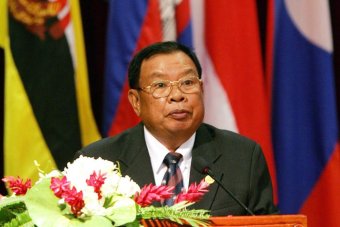
Bounnhang will be the leader of Laos’ ruling Lao People’s Revolutionary Party.

Laos’ Communist Party elected vice-president Bounnhang Vorachit to be its next leader last week, after a vote by the newly formed 10th Party Central Committee.

State media announced on Friday that the congress of the Lao People’s Revolutionary Party, which is held every five years, had selected a new central committee and politburo to lead the country. The 78-year-old Bounnhang is replacing Choummaly Sayasone, 79, as secretary-general and president, who is stepping down after almost a decade in power.

Some observers believe that the change in leadership signifies a tilt away from China and closer to longtime ally Vietnam, as Laos takes on the chairmanship of the Association of Southeast Asian Nations (ASEAN) regional bloc.

The secretive nature of Lao People’s Revolutionary Party, which has ruled the country since 1975, makes its internal politics difficult to understand, but the changes in the politburo offer some indications of a slight shift in the ruling elite.

The choice of Bounnhang, a senior figure of the regime who was a prominent member of the Pathet Lao armed independence movement and has previously acted as prime minister, is an unsurprising one for the single-party state.

However, few expected the departure from the party of Prime Minister Thongsing Thammavong, 71, who had been in the politburo since 1991. Speculation in Laos is rife that his exit from power is linked to the recent arrests for corruption of Central Bank Governor Somphao Sayasith and former Finance Minister Phouphet Khamphounvong.

The 70-year-old Deputy Prime Minister Somsavat Lengsavad was also reported as not having sought re-election to the central committee, where he had been been a politburo member since 2006. Though less highly ranked in the cabinet, he was notable for being the principal pro-Beijing voice within the government.

A fluent Mandarin speaker, Somsavat has shepherded many joint ventures with China and is currently overseeing the controversial Laos-China high-speed rail project, whose ground-breaking ceremony took place in early December 2015.

The 427 km railway would connect the Lao capital to the Chinese border and is expected to cost  US$6.04 billion. A Radio Free Asia (RFA) report from January 4 mentions some government officials as criticizing Somsavat for having accepted a deal unfavorable to Laos, noting that it was not the first “high-cost investment where he gave too much away as collateral for project loans with little or no payoffs for ordinary Lao citizens.“

The railroad has been mired in controversy ever since it was announced in 2010. The project was alleged to have created tensions between Laos and Vietnam, whose “own relations with China were then at a standstill,” explains Ian Baird, a Laos expert and a professor at the University of Wisconsin-Madison.

Bouasone Bouphavanh, the then-prime minister, is believed to have been removed from power and replaced by Thongsing in 2010, due to perceptions that he was favoring Beijing over Hanoi. Soon after, plans were started for a Laos-Vietnam railway, but never formalized.

In recent years, Beijing has vied aggressively for influence in Laos through aid, loans and infrastructure investment.

“China is using its economic interests to get political power” says Baird. “Politically, though, Laos remains much closer to Vietnam. Most of the country’s leaders studied or trained in Vietnam, including Bounnhang. They were already in governmental positions in the 1980s when there were strong enmities between Laos and China, who were then almost at war, with no trade or real relations.”

“What the Lao are doing now is trying to balance between the Vietnamese and Chinese. They want political support from Vietnam and financial support from China…The United States is also getting closer to Laos, but has relatively low investments in the country.”

“Ultimately”, Baird concludes, “I believe that Vietnam has more power than China in Laos.“

Such diplomatic balancing was already visible this week. The Associated Press reported on Monday that Thongsing had assured US. Secretary of State John Kerry that “Laos would help counter China’s assertiveness in the South China Sea.”

Xinhua, meanwhile, detailed a meeting on Tuesday between Bounnhang and Song Tao, a special envoy mandated by Xi Jinping, where the former announced “he was ready to join hands with China to further develop the relations between the two parties and two countries.” Unmentioned publicly by either government was the death of two Chinese nationals in a suspected bomb attack on Sunday in central Laos, though it remains unknown whether they were individually targeted.

As this year’s ASEAN chairman and co-convenor of the upcoming Sunnylands Summit, it is likely that Laos will be trying to strengthen its own position in the regional balance, particularly in light of mounting tensions in the South China Sea.

1 Comment

Filed under ASEAN, China, Laos, Regional Relations, SLIDER, USA, Vietnam

Regional Roundup for Week of 1.18.2016

EXSE FOCUS

Dammed if they don’t: Mekong countries face crucial choice today – Thanh Nien News This region is among the world’s most vulnerable to climate change impacts. Fish harvests, for instance, are already declining due partly to drought in Cambodia’s Tonlé Sap Lake, which supplies the country’s 15 million people with more than a third of their protein. The Mekong Delta and its rich agricultural lands are also under grave threat from rising sea levels, storm inundation and their vulnerability to extreme weather.

The Source of China’s Coal Dependency – NYT As far back as 2000, in an attempt to reduce coal pollution, the government unveiled a plan to replace coal-fired boilers and cooking stoves with electric heating by subsidizing the conversion to electric appliances and electricity rates. Yet 16 years on, only some 310,000 homes in central Beijing have clean heat. This is a small number considering the central district covers an area that’s less than 5 percent of Beijing’s total area and accounts for just a tenth of Beijing’s total population. //China intends to cut coal’s portion of the nation’s energy consumption by almost 2 percent in 2017 – how feasible is this, and will it affect the country’s dependency on other energy sources (e.g., hydropower)?

Southeast Asia burns up the ranks of global polluters – Thanh Nien News As Southeast Asian economies boomed last decade, so did their pollution. The region’s emissions of carbon dioxide grew more rapidly between 1990 and 2010 than any other part of the world, with the Asian Development Bank warning the associated global warming could trigger floods, water shortages and economic losses.

It’s Official: DPP’s Tsai Ing-wen Is Taiwan’s Next President – The Diplomat Taiwan’s Democratic Progressive Party is the opposition no more – the DPP won the presidency in Saturday’s elections in a landslide victory that resets Taiwan’s political landscape.

Related: Taiwan elects first female president – The Guardian

China’s Africa Strategy: Going Global With Infrastructure Investment – The Diplomat The Rebalance authors Mercy Kuo and Angie Tang regularly engage subject-matter experts, policy practitioners and strategic thinkers across the globe for their diverse insights into the U.S. rebalance to Asia.  This conversation with Dr. Lucy Corkin – Adviser at RMB Westport, Research Associate of the Africa-Asia Centre at School of African and Asian Studies (SOAS), University of London, and author of Uncovering African Agency: Angola’s Management of China’s Credit Lines (Ashgate 2013) – is the 27th in “The Rebalance Insight Series.”

Related: Zimbabwe: China’s ‘All-Weather’ Friend in Africa – The Diplomat

In 2016, let’s hope for better trade agreements – and the death of TPP – The Guardian The US concluded secret negotiations on what may turn out to be the worst trade agreement in decades, the so-called Trans-Pacific Partnership (TPP), and now faces an uphill battle for ratification, as all the leading Democratic presidential candidates and many of the Republicans have weighed in against it. The problem is not so much with the agreement’s trade provisions, but with the “investment” chapter, which severely constrains environmental, health, and safety regulation, and even financial regulations with significant macroeconomic impacts.

Eight Predictions for Southeast Asia for 2016: Part 2 – The Diplomat What can we expect for the region in 2016?


REGIONAL RELATIONS

The ASEAN Economic Community: The Force Awakens? – The Diplomat The agreement on the creation of an ASEAN Economic Community signed on November 22 in Kuala Lumpur by the leading nations of Southeast Asia finally entered into force with much fanfare on December 31, heralding the “awakening” of what could be defined as a new Asian power bloc. Almost echoing the European Union’s Common Market of the 1950s, ASEAN seeks to allow for the free movement of goods, services and skilled labor, a major departure from what has been considered since the earliest days of its existence as a political project for peaceful regional integration.

Related: Making ASEAN businesses happen – Investvine

The Storm Beneath the Calm: China’s Regional Relations in 2016 – ChinaFile On the surface, 2015 came to a close in a moment of relative tranquility after a turbulent year for China’s neighborhood. But the calm is misleading: the optics of regional diplomacy have become increasingly detached from the reality of the underlying tensions; this risks obscuring deepening fault lines.

Podcast: China and the West: Hope and Fear in the Age of Asia – CFR Three years into Xi Jinping’s tenure as president of China, the world is still grasping for an understanding of who he is and where he is leading the country. Dutch journalist Fokke Obbema takes us inside China in his terrific new book, China and the West: Hope and Fear in the Age of Asia, to help us consider the often competing and contradictory trends in China’s development and the challenge that the West appears to have in managing its relations with this dynamic—and often unpredictable—power.

China-led Asian infrastructure bank opens for business – The Jakarta Post China-led Asian Infrastructure Investment Bank officially opened for business on Saturday in Beijing after a formal ceremony led by Chinese President Xi Jinping. Representatives from 57 member countries attended the opening ceremony, where China announced it would pledge $50 million to a special fund to prepare less developed countries for infrastructure projects.

Related: Xi Jinping says AIIB to boost Asia infrastructure investment – Thanh Nien News

            Related: President Xi Jinping pledges during opening ceremony for AIIB that China will devote itself to operation of new development bank – The South China Morning Post

 Philippines Pushes for Joint Naval Patrols With US in South China Sea – The Diplomat The Philippines proposed joint naval patrols with the United States in the South China Sea amidst ongoing territorial disputes between Manila and Beijing, The Philippine Star reports. During the U.S.-Philippine 2+2 ministerial consultations (See: “US, Philippines Boost Ties In Ministerial Meeting”), held in Washington D.C. on January 12, the United States committed to maintaining a military presence in the contested sea, according to the Philippine’s Department of National Defense spokesman, Peter Paul Galvez.

Thailand seeks closer Asean intel-sharing – The Nation THAILAND called yesterday for greater cooperation on exchange of intelligence among Asean countries following Thursday’s deadly terrorist attack in Jakarta. Indonesia has identified so-called Islamic State (IS) suicide bombers and gunmen as being behind the siege near a busy shopping district in the Indonesian capital that left seven dead including five attackers. Deputy Prime Minister Prawit Wongsuwan said more intelligence cooperation was urgently needed now that the IS brand of terrorism had entered the Asean region.


SUSTAINABILITY AND RESOURCE MANAGEMENT

Reinvigorating Domestic Demand for Growth and Sustainable Development – The Diplomat Economic and financial stability in Asia is critical as we embark on the new 2030 Agenda for Sustainable Development – a universal and ambitious blueprint that expands the horizons of policymaking to implement the 17 new Sustainable Development Goals, reduce the region’s collective environmental footprint and secure the resources necessary to build the future we want.

Footage of elephants in Cambodia raises hopes for Asian species in the wild – The Guardian Rare footage of an elephant herd roaming through Cambodia’s biggest forest sanctuary has signalled the success of a 14-year conservation programme and raised hopes for the endangered species’ survival. The camera trap footage, taken in the spectacular and remote Cardamom mountains, shows 12 elephants, including young, grazing and lumbering through the forest.

China’s Multipronged Green Development Target – The Diplomat China is a major player in the renewable energy market, especially in the solar power sector. It has committed to generating 150 to 200 GW of electricity from solar power and 250 GW from wind energy by 2020. Renewable energy projects will be funded in part by an increased surcharge on electricity bills of 0.019 yuan per kilowatt-hour. Clean energy producers are to be given priority over coal-fired generators in selling power to distributers and large users, in a change of policy from guaranteeing operating hours for coal fired plants.

Related: No new projects: China’s degraded Yangtze River needs protection, not construction, President Xi Jinping says – The South China Morning Post

China puts green finance high up G20 agenda – China Dialogue China as leader of the G20 this year is being tasked with delivering faster progress on green finance to steer the world towards an environmentally friendly path. China, the UN, G20 and global financial institutions will this year aim to expand a system of green bonds to pay for the US$50 trillion of investment required to meet a 2C climate goal agreed at the Paris climate summit in December. Green bonds will also be needed to fund a huge environmental clean-up following decades of rapid economic growth, particularly in large developing countries.

Roundtable: What are the benefits of China’s ban on new coal mines? – China Dialogue On the final day of 2015, China’s central government said it would suspend the approval of new mines, with the ban starting in 2016, cutting coal’s share of national energy consumption to 62.6% in 2017, down from 64.4% currently. We asked experts on China’s energy and climate polices the following question: How will this ban help China meet its CO2 and renewable energy targets, and reduce other types of pollution from the mining, transportation and use of coal?


CHINA

Navigating China’s New Silk Road – Project Syndicate BEIJING – Since its introduction by Chinese President Xi Jinping in 2013, the “one belt, one road” initiative – an ambitious plan to revitalize the ancient Silk Road overland and maritime trade routes linking East and West – has attracted considerable attention. And for good reason: The project, which involves more than 60 countries and quite a few international organizations, implies unprecedented opportunities – and challenges.

President Xi Jinping pledges to revamp China’s sweeping anti-corruption campaign – The South China Morning Post President Xi Jinping called yesterday for a revamp of the Communist Party’s approach to fighting corruption, while vowing to continue with the highly-publicised campaign. Addressing the annual meeting of the graft-busting agency the Central Commission for Discipline Inspection, Xi said supervision inside the party had to be strengthened, and that cadres needed to look at things from a “political perspective” and be loyal to the party. “We should revamp the structure and institutions and supervision mechanism [for fighting corruption],” CCTV quoted Xi as saying as he outlined the CCDI’s agenda for 2016.

Related: Former top Chinese police official and Zhou Yongkang ally jailed on corruption charges – The South China Morning Post

Xi’s new model army – The Economist CHINA’S biggest military shake-up in a generation began with a deliberate echo of Mao Zedong. Late in 2014 President Xi Jinping went to Gutian, a small town in the south where, 85 years before, Mao had first laid down the doctrine that the People’s Liberation Army (PLA) is the armed force not of the government or the country but of the Communist Party. Mr Xi stressed the same law to the assembled brass: the PLA is still the party’s army; it must uphold its “revolutionary traditions” and maintain absolute loyalty to its political masters. His words were a prelude to sweeping reforms in the PLA that have unfolded in the past month, touching almost every military institution.

Beijing Builds ‘Monster’ Ship for Patrolling the South China Sea – The Diplomat China has finished construction on a second 10,000-ton China Coast Guard (CCG) cutter destined for patrols in the South China Sea, Chinese state media reports. The ship, designated CCG 3901, “has been completed recently and is ready to start protecting China’s maritime rights,” The Global Times announced. A sister ship, the CCG2901, already deployed to the East China Sea in 2015.

Young Chinese feeling on edge about environmental decline – The South China Morning Post A group of university students from southwest China showed how far they were willing to go to raise awareness on environmental protection by taking photos of themselves hanging dangerously from the edge of a building, the West China City Daily reports on Tuesday. The group of 10, all third year students studying Visual Communication Design at the Sichuan University of Science and Engineering in Zigong, took the photos in December last year.


SOUTHEAST ASIA

Islamic State Attack in Indonesia? A Look at the 2016 Jakarta Bombings – The Diplomat On the morning of January 14, a series of explosions and gunfire rocked the Indonesian capital of Jakarta, leaving at least seven dead and more than 20 injured. While it is still early days, the evidence so far suggests that the so-called Islamic State of Iraq and Syria (ISIS) is responsible. Though it is important not to exaggerate the significance of a single event, the attack highlights the growing reach of terrorists into Indonesia – the world’s most populous Muslim country – as well as the rising threat of militancy in Southeast Asia.

Related: Jakarta Attacks Hit Vulnerable Target – The Diplomat

 The Irrawaddy Business Roundup (Jan 16, 2016) – The Irrawaddy The administration of President Thein Sein has given concessions to operate two dry ports to a regional logistics giant, the latest contract to be awarded after the election defeat of the ruling Union Solidarity and Development Party in November. According to a report in the Wall Street Journal, leaders of the National League for Democracy are concerned that projects are being rushed through before power is handed over in the coming months. The opposition party won an overwhelming majority at the polls and is set to lead the next government, which will inherit projects approved by the outgoing administration.

Shan State battles rage in tandem with peace talks – DVB As the second stage in Burma’s lurching peace process began with the Union Peace Conference in Naypyidaw on Tuesday, the absent Ta’ang National Liberation Army marked its 53rd Revolutionary Day with skirmishes against Burmese troops. Fighting in the Kutkai area of northern Shan State broke out on the afternoon of 12 January between the group’s 447/335 Regiment and the Burmese army’s 99th Light Infantry Division, according to a spokesperson for the TNLA.

Haunted by Close Call, Cambodia’s Long-Ruling PM Gears Up for Distant Election – The Irrawaddy PHNOM PENH — Cambodia won’t hold a general election for another two years. But look at Prime Minister Hun Sen, its long-ruling and mercurial strongman, and you’d think one was imminent. Hun Sen’s party narrowly won the last election in 2013 after losing seats to a resurgent opposition that shook his decades-long grip on power. Now, with a familiar mix of guile and ruthlessness, Hun Sen is stepping up attempts to boost his popularity, blunt the opposition and avert a potential disaster in 2018, say analysts.

Who Will Lead Vietnam? – The Diplomat Between January 20 and 28, Vietnam’s ruling Communist Party is scheduled to convene its 12th national congress. The Party congress is to Vietnam in some sense what the presidential election is to the United States: It decides who the country’s next leaders will be.

2 massive Vietnam War bombs found in southern province – Thanh Nien News Military officers in the southern province of Binh Duong on Wednesday successfully moved two general-purpose bombs weighing 226 and 360 kilograms found by locals to a safer place. One bomb, which is an M81, used commonly during the Vietnam War, was found near the bank of the Dong Nai River and the other, an M83, at a construction site.

Rachel Tristch compiled and provided commentary on this week’s news digest.

Leave a Comment

Filed under NEWS DIGEST, SLIDER

Regional Roundup for Week of 1.10.16

East by Southeast is in full gear and ready to dive into 2016. Southeast Asia’s issues are still numerous and complicated, which will give us much to ponder and analyze in the next 12 months. If you want to check out what we’re expecting for 2016 in Southeast Asia, read our predictions here. 

EXSE FOCUS

What’s Old is New Again: Predictions for Southeast Asia 2016-East by Southeast 

Much can change in a year’s time. In January 2015, Singapore’s Lee Kuan Yew was still alive, Aung San Suu Kyi’s future as leader of Myanmar was quite uncertain and East by Southeast was not making any predictions about international affairs in Southeast Asia. But again, much can change in a year’s time. 2016 will be a critical period for geopolitics in the region, as new strategic relationships are formed and existing ones strengthened.

A Preview of China-Southeast Asia Relations in 2016-The Diplomat

China’s ties with the members of the Association of Southeast Asian Nations (ASEAN) remain stable and bilateral cooperation will likely deepen in the coming year. China is likely to accelerate its “One Belt, One Road” (OBOR) strategy, which will inevitably require cooperation with ASEAN countries. Meanwhile, China is willing to keep the South China Sea disputes stable.//China has quite the balancing act to pull off in SE Asia – striking the right foreign relations balance in order to implement OBOR would be hard enough. Doing so while maintaining sovereignty claims in the SCS might prove to be too much to handle. 2016 may be the year that China realizes that it’s over-committed to the SCS. 

Related: China’s 2016 Strategy Towards Southeast Asia-Asia Unbound

Rethinking US Asia Policy: 3 Options Between Appeasement and War-The Diplomat

The unifying theme of U.S. Asia policy has been the maintenance of a stable, liberal regional order. Yet a number of regional trends now militate against that goal: trust among regional neighbors is low; military modernization investments are rampant; territorial nationalism is growing in salience; and China continues to press its peripheral claims in ways that risk inadvertent conflict. The current configuration of U.S. policy does nothing to arrest any of these problems, yet their continuation threatens longstanding U.S. interests in Asia. So what can be done? Today, there’s still time to pursue options that eschew either war posturing on the one hand or unreciprocated conciliation on the other.

China, Laos agree to $500 million railway loan-GoKunming

Following years of inconclusive negotiations, China and Laos have finally hammered out a financing agreement for a railway project connecting Kunming to Vientiane. Although terms of the deal have yet to be made public, representatives of both countries announced this week they are now ready to move forward on the multi-billion dollar endeavor. Negotiations undertaken throughout 2015 hinged on the loan interest rates China offered its smaller, landlocked neighbor. Railway officials in Laos objected to the original figure of three percent interest on a proposed US$500 million line of credit extended by a consortium of Chinese investment banks.


China needs to pave ‘One Belt One Road’ with green finance, say experts-The Third Pole

China’s One Belt, One Road initiative, which aims to further the country’s influence and trade links with almost 60 countries, mainly in Asia and Europe, could be a major source of environmental damage unless projects are backed by green banking, experts have told thethirdpole.net.//…Wouldn’t it be nice. This goes back to the argument of high/low standards for Chinese investment – incorporating green finance would certainly be a big step forward but it’s unlikely because it runs contrary to the trend. China’s investments abroad are typically done no strings attached (keeping in line with China’s principle of non-intervention) and with so many developing countries involved in OBOR, it’s unlikely that a high-standard, green approach will be used. 

REGIONAL RELATIONS

Chinese civilian jet airliners land at disputed South China Sea island – state media-The Guardian

China Daily newspaper says test flight by two planes proves runway on Fiery Cross reef is able to safely handle large aircraft. A pair of Chinese civilian airliners have landed at a newly created island in a disputed section of the South China Sea in a test to see whether its airstrip is up to standard, according to state media. The China Daily newspaper said the jets made the two-hour flight to Fiery Cross reef from Haikou on the southern island province of Hainan on Wednesday.//A travel agent friend of mine has been posting on WeChat about new Haikou to SCS flights that he wants to organize. 

Related: China Defends Airstrip Construction in the South China Sea-The      Diplomat

         Related: South China Sea: The Story of the Tanmen Fishermen-The Diplomat

         Related: Vietnam protests after China lands plane on disputed Spratly islands-The

            Guardian


Everything You Wanted to Know About the USS Lassen‘s FONOP in the South China Sea-The Diplomat

U.S. Defense Secretary Ashton Carter finally comes out with a comprehensive account of the USS Lassen’s FONOP. 56 days. That’s how long it took for a senior U.S. government official to come out on the record and clarify the precise nature of the October 27 freedom of navigation operation undertaken by the USS Lassen in the South China Sea.//Look for more FONOPs this year coming to a reef near you!

Chinese share trading halt sends cold ripples across Asian markets-The Guardian

Asian markets slide to three-month low and currencies falter after China cuts market trading and devalues the yuan. Asian markets fell to a three-month low on Thursday after Chinese shares tumbled more than 7% and triggered a market closure while Beijing accelerated a devaluation of the yuan, raising the spectre of a regional currency war. The MSCI index of Asia-Pacific shares, which provides a rough overview of market performance across the region, dropped 1.4% to its lowest level since September.

Shades of Southeast Asia Among Hong Kong’s Missing Book Sellers-The Diplomat

Five people who are linked to a Chinese book shop in the well-known Causeway Bay shopping precinct have gone missing amid speculation they have been taken by mainland authorities. One is a British citizen another is Swedish-Chinese. The forced disappearance – a euphemism for state-sponsored kidnappings – of critics, political opposition or just plain irritants is another. Nor are those disappearances uncommon in Southeast Asia. The disappearance of agriculturalist and reformer Sombath Somphone in Laos, labor protester Khem Sophathin Cambodia and lawyer Somchai Neelapaijit in Thailand are three of the more notable examples in a region mired in human rights abuses.//As China grows closer to authoritarian Thailand and Lao PDR, disappearances in those countries will increase, especially in Thailand. However, the case of Sombath teaches us that these disappearances will not go ignored, even though it has led to few answers in the Lao activist’s case.  

Where China and the United States Disagree on North Korea-The Diplomat

The recent nuclear test has exposed a deep Sino-U.S. gap over North Korea. The “artificial earthquake” in North Korea caused by its fourth nuclear test has set off geopolitical tremors in U.S.-China relations, exposing the underlying gap between the two countries that has long been papered over by their common rhetorical commitment to Korean denuclearization.

Legacy of unexploded ordnance in Indochina: Whose responsibility? Whose cost?-Mekong Commons

In late November, in Mondulkiri province, Cambodia, a tragically common incident happened. A woman was killed and three of her family members injured by a grenade that remained from the Second Indochina War. The death was the 63rd by unexploded ordinance (UXO) in 2015 in Cambodia, according to the Cambodian Mine Action and Victim Assistance Authority. Forty years have passed since the Second Indochina War, but still hundreds of people in the region die or are injured each year by the unexploded ordnance (UXO) that remains. Many people, especially those who live in the region’s more remote areas, live with daily fear. What is the international community doing about this legacy, and why is it taking so long?//Siem Reap’s Cambodian Landmine Museum and Vientiane’s COPE Center are two places in the region doing important work on UXO issues. 

SUSTAINABILITY AND RESOURCE MANAGEMENT

Beijing air quality improved in 2015 despite pollution alerts, authorities say-The Guardian

Environmental authorities in Beijing say the Chinese capital’s air quality in 2015 was better than the year before despite the city’s first two red alerts for pollution late in the year. China has been setting national and local targets to reduce its notorious air pollution as citizens have become increasingly aware of the health dangers. Beijing’s municipal government has been replacing coal-fired boilers with natural gas-powered facilities, forcing older, more polluting vehicles off the road, and closing or moving factories that are heavy polluters.

What’s in store for China and the environment in 2016?-China Dialogue

This year will see the beginning of China’s 13th Five Year Plan (FYP), and it need to be a good start. That means policymakers will have to apply the central government’s idea of “ecological red lines” when formulating plans, due for completion by June, for the energy sector over this period. There are several key parts of the 13th FYP that the outside world should be watching.

Thailand’s forest rangers step up training in violent ‘blood wood’ war– The Guardian

The forests of the Mekong region have become a battleground as rangers try to stop poachers from driving the Siamese rosewood tree to extinction. It’s dawn in Thailand’s Eastern forest, and the sound of combat boots echoes through the jungle mist at Ta Phraya national park’s headquarters. The stomping boots belong to forest rangers on a counter-poaching tactics course. They are training with Hasadin, a team of elite rangers formed in June 2015, whose mission is to stop the Siamese rosewood tree from being driven to extinction by poachers.

What Is the Value of the Mekong River?-The Diplomat

Putting a value on the Mekong River and measuring the impact it has on the gross domestic product (GDP) of downstream countries has for a long time been a strategic target of bureaucrats and non-governmental organizations seeking to measure and protect the world’s twelfth longest river and its contribution to regional growth. Now scientists with the Mekong River Commission (MRC) have gone much of the way in answering that. According to recent estimates, fisheries alone from the Lower Mekong Basin are valued at a whopping $17 billion a year, contributing three percent to the combined GDP of Vietnam, Cambodia, Laos, and Thailand.//What is the value of assessing the monetary worth of ecological resources? How can this number be used to influence decisions regarding dam construction along the Mekong?

Related: Wonder of the aquatic world under threat from plans for Mekong dams      The Guardian

Severe drought could be the biggest concern for this year-The Nation

Natural disasters and more severe drought brought on by climate change should be one of the biggest concerns for Thailand in 2016, |academics said. “With the weather pattern shifting more than before, seasons and weather will become more unpredictable. This is due to climate change, which will most certainly have the worst effect on our food production as it relies heavily on weather,” Tara Buakamsri, Greenpeace Southeast Asia’s campaign director, said.

CHINA 

Wall St. Slides After Chinese Stocks Plunge-NYT

Global stock markets tumbled on Monday, as further fears about a slowdown in China’s economy reignited concerns about global growth. The selling on Monday started after China released a weak manufacturing report, and continued after the United States did the same. Chinese stocks lost nearly 7 percent of their value, although they appeared to stabilize Tuesday morning. The Standard & Poor’s 500-stock index, the main benchmark for the United States stock market, posted a decline of 1.5 percent, while European stocks fell.//This is a stock plunge that will likely repeat many times in the coming years. China’s slowdown is not finished.

Related: Relatively Stable Trading in Stocks a Day After Sell-Offs-NYT

North Korea’s Hydrogen Bomb Claim Strains Ties With China-NYT

North Korea’s announcement that it had completed a test of the weapon infuriated China, which had recently sought to forge closer ties with its reclusive neighbor. North Korea’s test of a nuclear bomb on Wednesday seemed aimed at antagonizing a familiar adversary, the United States. The army spoke of the need to ward off the “imperialist aggressors,” and a television commentator warned that foreigners were intent on destroying the country’s way of life. But North Korea’s decision had a more surprising target: China, its neighbor and chief ally for six decades, which had recently sought to forge closer ties.

Related: U.S. Prods China on North Korea, Saying Soft Approach Has Failed-NYT

Tibet in Limbo: An Exile’s Account of Citizenship in a World of Nation-States-The Diplomat

The international community needs to address the plight of Tibetan refugees. Tibet is a prime example of this 21st century phenomenon of statelessness in a world of nation-states. In fact, many parallels have been drawn between the troubled Himalayan region and stateless peoples from the Palestinians to the Kurds.

SOUTHEAST ASIA

Cambodia Marks Milestone in UN Peacekeeping Contributions-The Diplomat

It is the tenth year the ASEAN state has sent peacekeepers abroad. According to Cambodian government estimates, since 2006, Cambodia has dispatched 3,372 troops, 108 of whom were female, to join UN peacekeeping operations in Chad, the Central African Republic, Cyprus, Lebanon, Mali, Sudan, South Sudan, and Syria. The country currently has a total of 869 personnel deployed globally, with 853 troops and 16 military experts, according to UN contributor statistics. Like many other contributing states, Cambodia’s involvement in peacekeeping is shaped by various factors, including the pursuit of regional and international recognition.//This is certainly a nice accomplishment for Cambodia – hopefully it will be able to contribute more in the future. 

Thailand, Cambodia Could Finish New Rail Link By End of 2016-The Diplomat

Cambodian local official reaffirms desire to complete railway line within the year. Cambodia and Thailand have long sought to complete a railway line connecting them which would boost tourism and business. For Cambodia, the link would be part of a broader rehabilitation of its rail system, much of which was destroyed during civil war beginning in the 1970s. And for Thailand, it would serve as another project within the current government’s ambitious infrastructure plans.

In Myanmar, A Simple Verdict on a Flawed Election-The Diplomat

Myanmar’s November election—a landslide victory for the National League for Democracy (NLD) – was a procedural success. Turnout was high, the voting process went smoothly, and there was little electoral violence. These are impressive results for a nation ruled under military dictatorship for half a century, until the country began introducing modest democratic reforms over the last few years. The November 8 election, however, has elicited a fair amount of criticism from the international community. And it’s easy to understand why.//This authors are correct – if you’re a Buddhist Bamar living in Yangon, then the November 8 elections were a great achievement for your country. If you’re a impoverished Rohingya trapped in Rakhine state, then Myanmar might not be a country that you want to live in anymore, as evidenced by the thousands who risk their lives to get to Thailand, Indonesia, Malaysia, etc every year. The elections are certainly a laudable achievement from one perspective, but Myanmar has much work to do if it wants to attain ‘national reconciliation’.

Related: Myanmar: Fahrenheit 436-The Diplomat

Former Lao Finance Minister Named in Corruption Probe-Radio Free Asia

Authorities in Laos have taken into custody a former finance minister and four colleagues in connection with a scheme in which private companies cashed government bonds issued in promise of payment for work they never performed, according to a source in the one-party communist state. Phouphet Khamphounvong, Lao finance minister from 2012 to 2014 and formerly a governor of the Bank of the Lao PDR (People’s Democratic Republic), was arrested “at the end of December 2015 while attending a party,” a finance ministry source told RFA’s Lao Service.//Knowing the high levels of endemic corruption present in the Lao government, this arrest is more likely to be about politics than any pursuit of justice for the Lao people. The real questions – what did he do and who did he piss off? 

This week’s news digest was compiled by Brooke Rose, with added analysis by Will Feinberg.

Leave a Comment

Filed under Current Events, NEWS DIGEST, SLIDER

China’s Key Cities: From Local Places to Global Players

China projects a huge and continually growing profile and impact on the world stage. Much of this Chinese influence globally is often anchored to and channeled out by its key cities. Shanghai towers over all these cities in what it stands and functions for China, as the country’s financial and trade centre, largest port (also the world’s top container port), and gateway to China’s huge domestic market. As such, Shanghai gets a lot of attention from the global business community, especially when its stock market tumbled recently and sent shock waves around the world.

Besides Shanghai, a variety of other cities have become more important for China, and the world economy, for that matter. A number of these cities are well known for their significant historic and contemporary economic and cultural roles such as Guangzhou and Xi’an. Other cities have risen from unknown origins to prominent economic centres like Shenzhen. There are also some much less known cities that have grown into new regional hubs with strong global connections. You most likely have not heard about them, names like Ruili and Yiwu.

In this article I take a new look at China’s key cities by focusing on two of their salient features. These cities are drivers of China’s local and regional economic growth. They also serve as bridges to link China’s varied local economies to regional and global markets. I examine both roles in how they play out in similar ways across four very different cities in scale and other dimensions: Shanghai, Chongqing, Yiwu, and Ruili (see their locations on Map 1).


Map1

Map 1: The Location of Four Key Cities in China: Shanghai, Chongqing, Yiwu and Ruili

Shanghai: Leading Nationally and Bridging Globally and Regionally

Shanghai’s transformation has been heavily studied over the past two decades. Yet here is another interesting way to look at how Shanghai itself has changed in leading China’s economic growth and global integration. Compared to all major cities in China, Shanghai has undergone the most striking and sustained shift from manufacturing to services (see Figure 1).

Figure 1: Shares of Agriculture, Industry and Service in Shanghai’s GDP

Figure 1: Shares of Agriculture, Industry and Service in Shanghai’s GDP

During the first half of the 1984-2014 period, Shanghai was more of a manufacturing centre as it was built up to be during the centrally planned era from 1949 to the early 1980s. The second half from the late 1990s saw Shanghai move steadily towards a service economy. This trend not only puts Shanghai’s economic transition ahead of all other manufacturing-oriented cities in China but also places Shanghai on a similar pathway like other global cities as important service hubs.

Shanghai is indeed on track to resemble the economic profile of global cities like New York and London (see Figure 2). As Shanghai’s service sector as a share of GDP has surpassed manufacturing, its high-end or producer services like finance, insurance and real estate (FIRE) have grown faster than low-end services like retails. This shift reflects the faster and greater concentration of international banks in Shanghai, mostly in the Pudong financial district. More than half of the foreign-owned banks and their branches operating in China are registered in Shanghai. The assets of foreign banks in Shanghai accounts for 47.3% of the foreign banks’ total assets in China. Shanghai’s banking dominance today brings back its heyday in the early 1930s when it ranked the world’s third banking centre, only behind New York and London and ahead of Hong Kong and Tokyo.

Figure 2: Shares of Low vs. High-end Services in Shanghai

Figure 2: Shares of Low vs. High-end Services in Shanghai

As Shanghai marches (back) to its historic global city status, it has also been leading and driving the China’s major manufacturing cities in developing stronger services. At the same time, Shanghai plays a growing part in bridging the global economy with the Yangtze River Delta (YRD) region of which it has been the unquestionable hub (Figure 31). With the shedding of manufacturing functions to second-tier YRD cities like Suzhou, with subcontracting ties to even smaller cities, Shanghai has strengthened its position as the regional core by adding more critical and high-value-added functions such as corporate headquarters and R&D centres. By October 2014, Shanghai secured 484 regional headquarters of multinational corporations, of which 24 were Asia-Pacific headquarters, 295 investment companies, and 379 R&D centres.2

Besides being China’s premier international city, Shanghai continues to lead China’s major cities in transitioning towards a service-oriented and advanced local economy. This has also paralleled Shanghai’s stronger role in connecting and integrating the YRD region with the global economy, driving forward one of the world’s largest and most powerful regional economies.

Chongqing: Shanghai of the West

About 2,400 kilometers up the Yangtze River from Shanghai in western China is the city of Chongqing (Map 1). With over 30 million people in its sprawling administrative boundary, Chongqing may be “the largest city in the world that few people know about.” Chongqing drew some global attention in 2012 when Bo Xilai, the then Party secretary of Chongqing Municipality, was sacked and then imprisoned for what the central government labeled as corruption and other criminal activities.

If we take a much longer historical perspective, Chongqing has always loomed large among China’s major cities, even relative to Shanghai. Chongqing had a small concession zone as an inland treaty port after 1891, with a little similarity to Shanghai’s dominant treaty port status after the first Opium War in 1842. But Chongqing was hindered by its position as a mountain city close to the headwaters of Yangtze and languished as a distant backwater.

Chongqing was never cosmopolitan until the outbreak of the war of resisting Japan in 1937 and when the Nationalist government moved its capital to Chongqing in 1938. Being China’s political centre then in the first half of the 1940s propelled Chongqing to the largest financial, aviation and even cultural/fashion centre in interior China, second only to Shanghai.

Chongqing after 1949 was down and up. The uptick phase began during the Cultural Revolution. Concerned about a potential Soviet attack, the central government designated Chongqing as the core of the “Third Front” for hosting the relocated heavy industries from the coast. This turned Chongqing into a “Little Shanghai” that would lead the nation in developing defense-related machinery and ship-building industries. Chongqing ended up receiving 122 enterprises in these industries from Shanghai with a large pool of human talent in engineering and technical professions. In spite or because of this external transfer of resources, Chongqing neglected local advantages as the natural and potentially autonomous hub for the upper Yangtze region in achieving a more balanced development of housing, infrastructure and amenities of city life.

Chongqing got a big boost in 1997 when it was elevated to the fourth central government municipality besides Beijing, Shanghai and Tianjin. It would now cover 82,403 square kilometers and encompass a population of over 30 million. This designation brought about a great deal more autonomy by making it function as a province, and one of the most important ones at that, and thus setting it onto the most remarkable phase of growth and change in its long history.

Starting in 1997, the central government would give Chongqing $240 million as low-interest loans per year for the Three Gorges Dam-affected region, $80 million for building new housing for displaced residents, and refund $85 million from import taxes to Chongqing for Dam-related projects. In addition, Chongqing was allowed to lower enterprise tax for new foreign investment projects from 33% to 24%, or even to 15% if these projects were located in its economic and technological development zones.

The launch of China’s “Go West Campaign” in 2000 moved Chongqing up another notch to finally become the undisputed economic hub for the upper Yangtze region, or the “dragon’s tail” relative to Shanghai as the “dragon’s head” for the YRD. To live up to this ambitious goal, Chongqing unveiled the “One Circle and Two Wings” (see Map 2) master plan in 2007. It would accelerate the pace and spread of urbanisation and economic development from the enlarging urban core into the two largely rural subregions. It called for converting about 10 million rural residents of Chongqing Municipality to urban dwellers by around 20203, through the building up of several secondary cities like Wanzhou.

Map 2: Chongqing’s “One Circle and Two Wings” Development Plan Source: Chongqing Municipal Planning Bureau.

Map 2: Chongqing’s “One Circle and Two Wings” Development Plan
Source: Chongqing Municipal Planning Bureau.

By building up the municipal and transport infrastructure in and around these secondary cities, the municipal government can scale them up and out so they are capable of accommodating more rural people and also pushing some development impulses deeper into the distant and poorer areas of Chongqing’s sprawling regional hinterland. If successful, this strategy will replicate a similar regional bridging role as Shanghai.

Like Shanghai’s global connective functions but from a less advantaged interior position, Chongqing launched the 11,179-kilometer Trans-Eurasia Railway from southwestern China to Duisburg, Germany, through Kazakhstan, Russia, Belarus and Poland in 2011. In 2005, Chongqing also opened seven new international flights to Paris, Vancouver, Los Angeles, Sidney, Melbourne, New Delhi and Mumbai, even though they all connect through Shanghai. As labour and land costs in coastal cities like Shanghai have gone up, Chongqing has benefited by attracting more foreign investors and domestic producers to move inland. Having set up Asia’s largest laptop factory in Chongqing, US computer giant Hewlett Packard has already shipped more than four million notebook computers to Europe by the Chongqing-Duisburg railroad. This was part of the $2.5 billion worth of goods China has shipped on this route since 2011.4

 Yiwu: Relatively Small Yet Very Global

As the megacities of Shanghai and Chongqing continue to garner global attention, little remains known about China’s much smaller cities, although more of them have begun to play similar roles in driving local and regional growth and in fostering beneficial global connections. I start with the story of Yiwu. Few people outside of China have heard about Yiwu and how it has become one of the most globalised cities in China today.

A small rural town of Zhejiang province in the late 1970s and located from 300 kilometers from Shanghai, Yiwu was an early beneficiary of China’s initial wave of decentralisation and economic reform. With a lot of local autonomy, the local government steered local market and global economic forces in jump-starting rapid urban growth through careful planning and flexible policies. Instead of building many factories in spatially distinctive industrial districts like Shenzhen and other coastal cities, Yiwu chose a commercial route and charted a new path to globalise its own local economy.

From the very outset, the local government focused on promoting spatially centralised and specialised markets and vending booths for small merchandise such as handicraft items and hand tools. These commodities found home at thousands of booths amassed in the International Trade Mart (Yiwu Market) located in a huge mall-like structure of 4.7 million square meters built by the local government (see Figure 4). In 1982 there were only 705 booths in this trade centre. Fast forward to 2004 the number of booths shot up to 42,000, which are estimated to reach roughly 65,000 in 2014.

1243754184052

Figure 4: Yiwu’s market has an area of 2.6 million square meters, accommodates 58,000 booths, selling over 400,000 plus goods. Source: http://101.69.178.21/purchaserservice/detail/43511.html

These booths display and sell 300,000 different kinds of merchandise goods in specialised markets for glass gifts, wooden gifts, pencils, office supplies, jewelry, toys, radios, earphones, socks, clothes, etc. Some refer to Yiwu as “The Socks City” because it supplies an enormous amount of socks to the world. In addition, 600 factories around Yiwu make about 60% of the world’s Christmas decorations.6

As small commodity booths grew in numbers and density, they attracted hundreds of thousands Chinese and international buyers and traders. The increase in commercial transactions spurred the expansion of small factories around the region surrounding Yiwu. These factories process and assemble more small merchandise to be sold at and exported from the city’s central mart. This trade-manufacturing relationship, on a much smaller scale, bears some resemblance to the dominant trading and marketing specialisation of Shanghai with backward manufacturing ties to the YRD regional economy (see Figure 3).

The regional integration of Yiwu as a globally connected small merchandise hub has fueled the ten-fold growth of the city’s population from 1990 to around one million today. Among the long-term local residents are approximately 10,000 foreign businessmen from 85 countries working for over 3,000 foreign trading companies. This has earned Yiwu the moniker as “the largest commodity wholesale market in the world” with a market index that is widely regarded as a barometer of prices and performance.

The recent installment of the Yiwu-Madrid Railroad further highlights Yiwu’s extensive global economic reach. Covering 13,500 kilometers, this railroad goes through eight different countries as the world’s longest. It begins from Yiwu through central China, joins the Trans-Eurasia Railway at Kazakhstan, continues on from Germany to France, and finally reaches Madrid. The train takes just three weeks to complete a journey that would take up to six weeks by sea. It is also more environmentally friendly than road transport, which would produce 114 tonnes of CO2 to shift the same volume of cargo, compared with only 44 tonnes produced by the train – a 62% reduction.7 This new rail line expands Yiwu’s global trade in small merchandise by making it easy to export its goods all over Asia and Europe.

Ruili: From a Small Border Town to a Major Gateway to Southeast Asia

The last city takes us back from the coastal region to the southwest, but all the way to the border city of Ruili in Yunnan province (Map 1). A sleepy town on the border with Myanmar through the 1980s, Ruili has since grown into a key city for driving lagged economic development in its border region and bridging the latter with the neighbouring Southeast Asian economies. In this process Ruili has acted a little like Shanghai, albeit on a much smaller scale, and in similar ways as Yiwu but with a smaller scope of local marketing.

The collapse of the Burmese Communist Party at the end of the 1980s was key to opening up border trade between China and Myanmar. The city of Ruili created the Jiagao Border Economic Development Zone in 1991 to facilitate trade with Muse on the Myanmar side. At Ruili’s border trade market, hundreds of petty traders and dealers from Myanmar, Bangladesh, India, Nepal, Pakistan and Thailand selling cotton, jade, bracelets, ivory items and aquatic products. The market however is dominated by Chinese and Myanmar jade traders who converge from local and other places in their respective countries to make jade the central focus of Ruili’s lively border trade.

Ruili’s importance rose much beyond a border market in June 2010 when the city became more regionally linked to China’s strategic plan to develop its vast western region. During 2012-2013, the central and local governments began to execute the “Implementation Scheme of Ruili Experimental Zone” and the “Master Plan of Ruili Experimental Zone” in order to build Ruili up to a regional hub. The Master Plan included 238 projects such as industrial parks and trading centres, which would boost Ruili as a gathering place and gateway for economic activities and flows with the neighbouring Southeast Asian economies including a new oil/gas pipeline from western Myanmar into Yunnan.8

The new infrastructure investment strengthened Ruili’s role as an increasingly open land port. In December 2013, the Ruili Experimental Zone began issuing border passes for cross-border travel, which has facilitated the growth of cross-border tourism, especially Chinese tourists visiting Myanmar. The Experimental Zone also became a testing area for foreign current exchange making Ruili the first city in China to trade Myanmar’s currency of Kyat, and also the first county-level city in Yunnan province to establish a currency exchange centre. As of June 2015, Ruili completed hundreds of business deals amounting to over $160 million.9 The cumulative economic opportunities have raised Ruili’s population from around 10,000 in 1990 to over 150,000 today including temporary migrants.

Parallel to the cross-border economic boom has been the flow of illegal or illicit activities into and through Ruili. This is not surprising considering that the China-Myanmar border zone is infamous for gambling, commercial sex, drugs, and arms trafficking. Official figures show that Ruili has 7,700 people with HIV – the second-highest prevalence incidence rate in China behind a city in Sichuan province – and 53% of the sufferers come from Myanmar.10 Of the approximately 40,000 people from Myanmar entering and leaving Ruili, more than 200 are estimated to be prostitutes, 1.6% of whom may be infected with HIV. There are also around 30,000 people from Myanmar, many of them belonging to the persecuted minority group of Rohingya, living in Ruili, adding to the challenge of local governance. As part of a broader effort to deal with drugs and prostitution and thus maintain social stability, the local government has set up clinics for Myanmese citizens who are infected with HIV or who are drug addicts in Ruili including the provision of methadone treatment (see Figure 5).

Compared to Shanghai, Chongqing and Yiwu, the frontier city of Ruili bordering the less developed economy of Myanmar faces a different balance of opportunities and challenges. These however reflect the transformation of Ruili from a local place to a global city of sort.

Figure3

Figure 3: Regionalised Global-Local Production and Value Chains Into, Through, and Out of Shanghai and the Yangtze River Delta (YRD) Region Source: See Note 1.

A multinational company owns brand names, sets product specifications, subcontracts manufacturing and controls wholesale channels and retail markets. Shanghai (central hub of the YRD) contributes land, some capital, skilled labour, some production equipment, and management expertise; provides some producer services such as accounting, insurance, legal services, custom clearance, shipping logistics and increasingly R&D talent and outputs. Suzhou, Kunshan, and Jiaxing (secondary cities in the YRD) contribute medium-cost land and labour, intermediate inputs, manufacturing expertise, and also finished products to be moved (back) to Shanghai for exports.Wujiang, Qidu and Jiangcun (third-tier cities, fourth-tier towns, fifth-tier villages in the YRD) contribute lowest-cost land and labour, some raw processed materials, and ships parts and components to secondary cities for further assembling or manufacturing.

International Implications

Despite their huge differences in history and population size, these four cities have become both the driving force and bridging agents for their rapid growth, gradual regional integration and increasing global influence. They are no longer local places that they once were, although Shanghai has been global for a much longer time. They show us why they are key cities for China today and in the future. More importantly, these four cities point two critical international implications.

First, to understand what is going on across China and its extensive global impact, we need to understand China’s key cities much better. These cities not only continue to drive and sustain China’s geographically uneven growth but also play a key role in regional integration by creating more varied and largely beneficial global connections. We can no longer only focus on the megacities of Shanghai and Chongqing, although their massive scale and economic power will continue to matter a lot more to China’s and global economy than Yiwu and Ruili. The latter cities, and many more like them, will become more important over time as they catch up in development and help bring forth the lagging regions and generate more global integration.


1

Figure 5: Drug Users from Myanmar Collect Doses of Methadone from a Clinic in Ruili, Yunnan Province, China Source: Photo by Jiang Dong, China Daily, July 10, 2014, p. 7.

Relative to the much larger and more diversified cities like Shanghai and Chongqing, cities such as Yiwu and Ruili face the more difficult choice of how to sustain their growth and play their respective regional or global roles. The narrowly specialised economy makes Yiwu vulnerable to the price volatility in the global economy. Yet diversification beyond Yiwu’s distinctive and entrenched strength is unlikely. The border location may lock Ruili into a developmental path built on border trade unless the city can maximise its gateway position to create wider economic ties with Southeast Asia. These uncertain and contingent conditions will continue to challenge the outside world to better understand these cities.

This article was first published here and is reposted with permission of the author.

References

*I express my gratitude to Yu Xue in Shanghai for her assistance in gathering the most up-to-date data in Figures 1 and 2. This article also draws from some of my collaborative work with former and current students at Trinity College, and research partners in the United States and Shanghai.

1. This figure was adapted from Figure 4 in Xiangming Chen, 2007. “A Tale of Two Regions in China: Rapid Economic Development and Slow Industrial Upgrading in the Pearl River and the Yangtze River Deltas.” International Journal of Comparative Sociology 48 (2-3): 167-201.

2. Ren, Yuan, Jiaming Sun and Jing Gan. 2015. “Shanghai: The Rise and Future of China’s Premier Global City,” Chapter in Research Handbook on Asian Cities, edited by Xiangming Chen, Sarah Moser and Ratoola Kundu (Edward Elgar Publishing, forthcoming).

3. Chen, Xiangming. 2014. “Steering, Speeding, Scaling: China’s Model of Urban Growth and Its Implications for Cities of the Global South.” Pp. 155-172 in The Routledge Handbook on Cities of the Global South, edited by Susan Parnell and Sophie Oldfield. London and New York: Routledge.

4. Chen, Xiangming and Julia Mardeusz. 2015. “China and Europe: Reconnecting Across a New Silk Road,” The European Financial Review (February-March): 5-12.

5. Figure 11.1 in Xiangming Chen, Anthony Orum and Krista Paulsen. 2012.Introduction to Cities: How Place and Space Shape Human Experience. Oxford: Wiley-Blackwell.

6. Burchill, Billy. 2015. “The Diverse Effects of Globalization: Yiwu, China and Hartford, CT.” A senior thesis for the Urban Studies Program, Trinity College, Hartford, Connecticut.

7. Same as Note 6 above.

8. See Chen, Xiangming and Curtis Stone. 2013. “China and Southeast Asia: Unbalanced Development in the Greater Mekong Subregion.” The European Financial Review (August): 7-11.

9. Chen, Xiangming and Curtis Stone, “Relocating the City in Transborder Spaces: Relative Urbanity, Catch-up Development, and Contested Governance in the China-Southeast Asia Borderland.” Chapter under preparation for The SAGE Handbook of Urban Sociology: New Approaches to the Twenty-first Century City, edited by Ricky Burdett and Suzanne Hall (Sage Publishers, forthcoming).

10. Shan Juan. 2014. “Clinic on frontier of AIDS care,” China Daily, July 10, p. 7; extracted from http://usa.chinadaily.com.cn/epaper/2014-07/10/content_17709424.htm.

Leave a Comment

Filed under China, Economic development, Regional Relations, SLIDER, Yunnan Province

What’s Old is New Again: Predictions for Southeast Asia 2016

Will there be more skirmishes in the South China Sea in 2016? Photo: Getty Images

Will there be more skirmishes in the South China Sea in 2016? Photo: Getty Images

Much can change in a year’s time. In January 2015, Singapore’s Lee Kuan Yew was still alive, Aung San Suu Kyi’s future as leader of Myanmar was quite uncertain and East by Southeast was not making any predictions about international affairs in Southeast Asia. But again, much can change in a year’s time.

2016 will be a critical period for geopolitics in the region, as new strategic relationships are formed and existing ones strengthened. Many experts talk of a growing polarization of the region as countries position themselves between the US and China, a trend due in large part to rising tensions in the South China Sea. The conflict will take center stage in 2016. Look for the the Netherlands-based Permanent Court of Arbitration to publish its initial findings on the Philippines’ case against China in the first half of 2016. Despite not ruling on sovereignty issues, the outcome of this case will likely anger China and lead to a more aggressive stance towards the Philippines and other claimants. As the Philippines and Vietnam rely more heavily on the US for security guarantees in the South China Sea, more US flyovers and naval patrols in the contested waters are to be expected. Look for the US Navy to begin to use Vietnam’s Cam Ranh Bay for “maintenance” purposes and to park its ships on a somewhat permanent basis  in the Philippines’ Subic Bay after joint military exercises finish in April 2016.

Conversely, look for the emerging Sino-Thai regional axis to be solidified in 2016. This relationship, despite not bringing much to the languishing Thai economy, will tighten the ruling junta’s grip on power. Thailand’s long drift towards authoritarianism will add further strains on ties with the US, its long-term external security power. Of course, the permanent white elephant in the room in Thailand is the king’s health. With his majesty in poor health, lese majeste cases will continue to multiply as the junta’s concern grows.  His death and the subsequent succession struggle would likely send the country into chaos, even with the army in control. Such a collapse of the Thai political structure would have major repercussions for the region’s stability.

Laos is also in for a tough year ahead. Its chairing of ASEAN will do more to highlight its shortcomings than celebrate its successes. With the opening of Xayaburi Dam, Don Sahong Dam scheduled to break ground in 2016 and preliminary studies beginning on a third Mekong dam at Pak Beng, there will be renewed calls from the international community for Laos to reconsider its hydropower plans for the Mekong River. The landlocked country’s lack of finesse in dealing with the South China Sea conflict will also draw criticism, all punctuated by continuing questions about the kidnapping of Lao activist Sombath Somphone.

In Cambodia, the political impasse between the ruling Cambodia People’s Party and the Cambodia National Rescue Party will continue through the first half of 2016. Expect strongman Hun Sen to find an 11th hour solution paving the way for opposition leader Sam Rainsy to return from self-imposed exile to begin preparing for the 2017 parliamentary elections.

Barring another major fracture in Thai politics, Vietnam’s National Party Congress will mark the region’s most significant political transition in 2016. Nguyen Tan Dung is likely to be selected as Vietnamese Communist Party chairman, with Truong Tan Sang staying on as president or similar role to balance Dung’s reformist tendencies. Dung’s leadership will be key as Vietnam implements the Trans-Pacific Partnership, a painful process that will force Vietnam to learn to run and walk at the same time. Dung’s princeling son, Nguyen Thanh Nhgi, will also be elevated to the Central Committee and has a bright path ahead if his father can lead the country into a new era of high economic growth and balanced relations between the US, China and Russia.

Corruption scandals will continue to keep a stranglehold on Indonesian and Malaysian politics. In Indonesia, President Joko Widodo’s efforts to prop up a sagging economy will be hampered by an unstable cabinet and nagging questions relating to 2015’s Freeport corruption scandal. In Malaysia, Prime Minister Najib Razak will continue to face intense public scrutiny over the 1MDB scandal. It is possible that Najib will use a new national security law to muffle Malaysian civil society’s calls for his resignation.

After refreshingly open elections in 2015, 2016 will be a year of political posturing for Myanmar. As Aung San Suu Kyi and her victorious National League for Democracy take power in early 2016, the military will position itself to retain many of its past privileges. Look for Than Shwe and the other generals to create a formal post in the government for Aung San Suu Kyi, who is legally barred from the presidency, in a bid to define and contain her power as head of the NLD. Those expecting radical change from the NLD government will be disappointed – there will be little structural political reform, the NLD’s foreign policy will be largely similar to Thein Sein’s, and the ethnic reconciliation process will still muddle along. However, look for the new ruling party to permanently shut down the Myitsone hydropower project and consider suspending the Salween river’s cascade of dams in order to push along the ethnic peace process.

Like 2015, this year will see a further intensification of the Rohingya refugee crisis. However, with the world’s eyes adjusted to seeing the plight of refugees, there will be more attention paid to the issue and Aung San Suu Kyi will receive pressure from both Western and Muslim-majority countries to solve the problem of Rohingya persecution in Myanmar. Another ethnic group that came to the forefront last year, China’s Uighur population will also stay in the news in 2016. Increased crackdowns in their home Xinjiang province will force more refugees into Southeast Asia, and lead to a handful of Uighur-related terrorist attacks, both foiled and executed, in Thailand and Indonesia.

The regional economy will see decreased growth in 2016 as a result of slowing growth and structural issues in the Chinese economy. Chinese money will still flow south as the One Belt One Road strategy is rolled out and the Asian Infrastructure Investment Bank officially opens for business. Contrary to some expectations, the AIIB’s first loan recipient will not be Myanmar, but either Laos or Cambodia.

On the other side of the coin, the US-led Trans-Pacific Partnership will begin the ratification process in a number of regional countries this year. Our bets on order of approval are Singapore first, followed by Brunei, Malaysia and Vietnam. Indonesia will likely commit to the TPP by the end of the year while Thailand’s economic struggles under the military junta will push it closer to joining. Much of the US-ASEAN Sunnylands conference in February will be centered on TPP ratification, along with South China Sea issues and counter-terrorism cooperation, and will serve to solidify relations between the US and the bloc. ASEAN leaders will be looking for assurances of American commitment to the region during the next administration and they will likely receive them. Of course the future of the TPP and the US Rebalance to Asia lies in the fate of the US Presidential elections and our prediction is that America’s first woman president will keep the Rebalance at the forefront of her foreign policy – after all it was her idea.

Last but not least, the Asian Economic Community will be the same on January 1, 2017 as it was at the head of this year – a half-baked dream with little hope of success.

To all of the East by Southeast readers and their families, we wish a you happy new year and much joy and success in 2016!

3 Comments

Filed under ASEAN, Brunei, Cambodia, China, Economic development, Foreign policy, Indonesia, Laos, Malaysia, Mekong River, Myanmar/Burma, Philippines, Regional Relations, SLIDER, South China Seas, Thailand, USA, Vietnam