Category Archives: SLIDER

An alternate past/future for Mekong River dams under the UN Watercourses Convention: Part 3

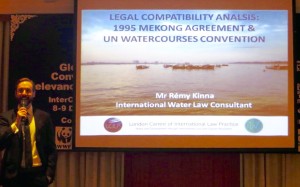
The author presenting at the Mekong River Commissions's PNPCA workshop, February 2016.

The author presenting at the Mekong River Commissions’s PNPCA workshop, February 2016.

This article is the third in a series looking at dams in the Mekong. Part 1 can be accessed here and Part 2 here.

Notification, consultation & negotiation

The following scenario is a simplified alternative history where the basic elements of the Xayaburi Dam dispute discussed in

Part 2 are applied to the United Nations Convention on the Law of the Non-navigational Uses of International Watercourses (UNWC) framework operating alongside both the Agreement on the Cooperation for the Sustainable Development of the Mekong River (Mekong Agreement) and its supplementary Procedures for Notification, Prior Consultation and Agreement (PNPCA). An alternative legal framework and vision for the future of Mekong dam development is thus proposed. This three-piece article concludes with potential next steps for improved transboundary cooperation in the Mekong.

As proposed in the PNPCA and required under the UNWC (Arts. 12-13), Laos would be legally bound to notify potentially impacted riparian states of its plans for the Xayaburi Dam because of the possible significant transboundary impacts this ‘planned measure’ might have on the Mekong River. Hence, Laos’ written submission, complete with available information and any initial Environmental Impact Assessment (EIA) results, would have been directly provided to the other Mekong River Commission (MRC) states’ governments, ideally up to six months prior as stated in the PNPCA, before any construction or permits were obtained (UNWC Arts. 11-12). Under the UNWC, the other riparians would then have had six months to reply in writing during which time Laos could not advance any aspect of the dam project without their consent (Arts. 13(a), 14(b)).

Given the actual voiced concerns, it is most probable that the downstream states of Cambodia and Vietnam would have requested a delay in the project initiation, so further studies could be conducted on the dam’s cross-border impacts. Laos would then have been obliged to extend the reply period by an additional six months (Art. 13(b)). It is also highly probable that these delay requests would have required under the UNWC Article 17(3) for Laos to cease any planning for the dam project, including contract negotiations, clearing land, building roads, or initiating construction. As is their right under the UNWC, Cambodia and Vietnam may have likely replied before the extended deadline with justification for their findings that the dam would cause significant transboundary harm, therefore recommending possible alternatives or improved designs be investigated (Art. 15).

After the six-month extension, if no agreement were reached, Laos and the other states would have officially entered into consultations and negotiations, as required under the UNWC (Art 17(1)), with the primary facilitation forum still being the MRC.

Obligation to cooperate in good faith and exchange information

Laos may have then, as they did, commissioned another EIA, this time investigating cross-border impacts. Ideally this would occur at the outset of the proposal given it is a global due diligence — demonstrating reasonable steps to avoid harm — obligation upon states, endorsed by the ICJ.1 No construction would have been allowed during this study (Art. 17(3)), and all available information and EIA results would have had to have been released to the other states in a timely fashion (Art. 11).

Concurrently, throughout the notification, reply, consultation, and negotiation stages, all states would have cooperated in good faith by adhering strictly to all procedures under the Mekong Agreement and the PNPCA, including the open and timely exchange of available information to work to peacefully settle issues (Art, 17).

All of the above would have been beneficial to Cambodia and Vietnam as potentially impacted states having timely access to all the available data in order to be best informed to meaningfully engage in consultations but also to Laos in terms of fostering political goodwill from its fellow MRC members. It could also have been much more efficient for Laos in seeking to avoid potential project delays – as experienced in reality in relation to the various disputed dam designs and inadequate environmental impact and resettlement studies (see Part 2) – if they could have demonstrated full adherence to all applicable UNWC (and PNPCA) processes. This may have given fewer grounds for process-related disagreements between states, and in-turn diminished the need for retrospective actions such as multiple EIAs and the Pöyry report (see Part 2) to seemingly rectify procedural and information-related gaps.

Dispute resolution 

What if, despite all of these positive improvements, disputes about the project were to still arise? Perhaps, as actually occurred, Cambodia and Vietnam would have disputed the new EIA results saying Laos did not share all project data to which Laos would have responded that these states were unreasonably blocking development of its legitimate hydropower energy potential (see Part 2).

The first step would have been to take the issue to the MRC, but resolution may not have been achieved. Under the Mekong Agreement, the matter would then be referred to bilateral channels to seek a diplomatic solution although under Article 33 of the UNWC a request for mediation would also be possible at this juncture. If resolution were still elusive, a third party fact-finding body could impartially gather and analyse all the available information and then provide its key recommendations (Arts 33(3)-(9)). If the states still failed to reach agreement concerning the Xayaburi Dam, the UNWC would permit any of the dispute parties to seek arbitration by an independent tribunal or to appeal to the ICJ for a final ruling (Art. 33(10); Annex). All dispute parties would consequently be obliged to implement all of the findings from any ruling.

An alternative future vision for Mekong River dams with the UNWC in force

With so many variables, it is impossible to know if any of the Xayaburi Dam issues would have turned out differently from the current reality if the UNWC had been in force between the relevant states. Even having the UNWC and Mekong Agreement with its PNPCA operating collectively is unlikely to resolve all disputes. Nevertheless, the above fictional scenario demonstrates that having both treaties – the UNWC and Mekong Agreement – operating concurrently and complementing each other would certainly improve predictability and transparency by guiding expectations about how states can act regarding project proposals on both the Mekong’s mainstream and tributaries.

Moreover, it would underpin the PNPCA with clearer, legally-binding and largely time-bound sequential procedures, while allowing the MRC to continue to be the primary negotiation forum with additional dispute outlets available through third-parties. Such changes would not only have impacted the Xayaburi Dam proposal process but also the processes for the other ten dam projects currently being planned or built that might harm regional development as a whole.2

Previous academic research examining controversial dam projects on the Mekong mainstream (the Xayaburi Dam in Laos) and its tributaries (the Yali Falls Dam in Vietnam) supports this assertion that having the UNWC in force would have clarified some divisive substantive and procedural, legal elements.3,4 Moreover, many researchers argue that having the UNWC in force in the Mekong would go a long way to ensuring international best practice standards for due diligence and cooperation regarding future hydropower projects, especially regarding the PNPCA framework and Mekong Agreement dispute resolution procedures.5,6,7,8,9,10,11

In sum, the UNWC would provide a strengthened legal foundation of detailed and binding principles and procedures upon which the Lower Mekong Basin states could improve water governance and resolve ongoing conflicts. Accordingly, as a globally-recognised platform, the UNWC would support a balanced and level ‘playing-field’ for all the MRC states to govern the lower basin more equitably, especially between upstream and downstream riparians. In-turn, hopefully many of the major threats to the river and its people might be alleviated via a clearer and compulsory set of rules to abide by for hydropower development.

Revitalising processes for sustainable development that people can believe in: The time is now

As the pace of dam construction rapidly accelerates and as the region’s economies develop, it has become evidently clear that the legal obligations of the Mekong Agreement and the PNPCA urgently need significant clarifying and strengthening to evolve and cope with these and other regional trends.

China is pushing the LMCM as a viable water cooperation platform uniting the Upper-Lower Mekong Basins and was very quick to signify its own strategic position upstream and future importance to Mekong water relations downstream, especially negotiations over water supply, by opening a dam days before the March meeting supposedly in response to Vietnam’s request for increased flows (see Part 1).13,16,17 Portrayed as a symbolic act of goodwill and ‘hydro-diplomacy’, critics dispute China’s supposedly benevolent rationale with some saying it was simply a fortuitously-timed routine exercise and others highlighting that it will have no major benefits downstream, especially in the Mekong Delta where it is needed most.18,19,20,21In November 2015, the Lancang-Mekong Cooperation Mechanism (LMCM) was launched by foreign Ministers from all the Mekong River basin states with the inaugural leaders’ meeting held on 23 March 2016.12,13 Not only is this the first multilateral agreement between all Mekong riparians that incorporates water resources, but China – Asia’s upstream superpower or ‘hydro-hegemon’ – rarely signs treaties or establishes institutions for joint-management of shared rivers.14,15

Despite the LMCM emerging on the regional agenda and seemingly being positioned by China as a legitimate alternative to the Mekong Agreement, MRC member states finally appear to have recognised strengthening the existing PNPCA as a crucial priority. A workshop entitled ‘Dialogue of Lessons Learnt from the Implementation of the PNPCA and Guidelines’ was convened in February 2016 by the MRC Secretariat. Its stated aim was to draw lessons from states’ PNPCA experiences of both the Xayaburi and Don Sahong dams in order to improve the procedures and guidelines.22 One of the workshop’s thematic sessions specifically investigated how guidance from the global water conventions and applicable international case law might support implementing legal ‘best practice’ standards for notification and prior consultation procedures within the PNPCA and its Guidelines.1,11

Additionally, several NGOs, including WWF and IUCN, have led calls for all Mekong basin states to join Vietnam in acceding to the UNWC for enhanced transboundary cooperation on sustainable dam development. Awareness-raising and technical capacity-building events around this goal have increased in recent years.23,24,25,26

A number of legal studies and policy papers have also been produced investigating the role, relevance, and application of the UNWC within the Lower Mekong Basin. One just published in March 2016 by IUCN entitled ‘A window of opportunity for the Mekong Basin: The UN Watercourses Convention as a basis for cooperation’ is a comparative legal analysis of how the UNWC complements the Mekong Agreement.7 Interest in the UNWC is clearly building across the region, and the time is now to seize upon it to improve water cooperation and processes for sustainable river development.

Hopefully the newly appointed MRC CEO – the first national from a riparian state – will see the value added and be bold in encouraging all member states to support and revitalise the Mekong Agreement and PNPCA framework through adoption of the UNWC.27

Just over 21 years since adopting the feted Mekong Agreement, a renewed opportunity has arisen for all the lower basin states to help strengthen water governance across the Mekong River mainstream and its tributaries. Should all MRC states be politically willing to further clarify and make binding their cooperative commitments within and between each other, the UNWC offers the global legal framework with balanced procedures which, operating alongside the Mekong Agreement and PNPCA, could collectively guide an alternative vision for the Mekong’s future sustainable development; one that all the people in this region may be able to believe in once more, as they did back in 1995.

References:

  1. McIntyre, O. (2011). The World Court’s ongoing contribution to international water law: The Pulp Mills Case between Argentina and Uruguay. Water Alternatives, 4(2), 124.
  2. Barron, L. (2015, January 29). Xayaburi redux at Lao meet. The Phnom Penh Post. Available from:http://www.phnompenhpost.com/national/xayaburi-redux-lao-meet
  3. Rieu-Clarke, A. (2015). Notification and consultation procedures under the Mekong Agreement: insights from the Xayaburi controversy. Asian Journal of International Law. 5(1), 143.
  4. Rieu-Clarke, A., & Gooch, G. (2009-2010). Governing the Tributaries of the Mekong-The Contribution of International Law and Institutions to Enhancing Equitable Cooperation Over the Sesan. Pacific McGeorge Global Business & Development Law Journal.22, 193.
  5. Bearden, B.L. (2010). The legal regime of the Mekong River: a look back and some proposals for the way ahead.Water Policy. 12, 798
  6. Bearden, B.L., (2012). Following the proper channels: tributaries in the Mekong legal regime. Water Policy. 14, 991
  7. IUCN. (2016). A window of opportunity for the Mekong Basin: The UN Watercourses Convention as a basis for cooperation (A legal analysis of how the UN Watercourses Convention complements the Mekong Agreement): IUCN. 27pp.
  8. Kinna, R. (2015, November 24). UN Watercourses Convention: Can it revitalise the Mekong Agreement 20 years on? Mekong Commons. Available from: http://www.mekongcommons.org/un-watercourses-convention-can-it-revitalise-mekong-agreement-20-years-on/
  9. Pech, S. (2011). UN Watercourses Convention and Greater Mekong Sub-region. Consultancy paper by Hatfield Consultants. July 2011. Available from: http://www.unwatercoursesconvention.org/images/2012/10/Mekong-and-UNWC.pdf
  10. Van Duyen, N. (2001). The Inadequacies of Environmental Protection Mechanisms in the Mekong River Basin Agreement. Asia Pacific Journal of Environmental Law. 6, 349
  11. Rieu-Clarke, A. (2014). Notification and Consultation on Planned Measures Concerning International Watercourses: Learning Lessons from the Pulp Mills and Kishenganga Cases. Yearbook of International Environmental Law. 24(1), 102.
  12. Biba, S. (2016, February 1). China drives water cooperation with Mekong countries. TheThirdPole.net. Available at: http://www.thethirdpole.net/2016/02/01/china-drives-water-cooperation-with-mekong-countries/
  13. Xinhuanet. (2016, March 24). Commentary: Lancang-Mekong cooperation to boost regional prosperity. Available from: http://news.xinhuanet.com/english/2016-03/24/c_135219925.htm
  14. Chen, H., Rieu-Clarke, A. &Wouters, P. (2013).Exploring China’s transboundary water treaty practice through the prism of the UN Watercourses Convention.Water International. 38(2), 217-230
  15. Waslekar, S. (2016, January 10). Asia’s water can be a source of harmony, not conflict. South China Morning Post.Available from: http://www.scmp.com/comment/insight-opinion/article/1899067/asias-water-can-be-source-harmony-not-conflict
  16. Ganjanakhundee, S. (2016, March 23). China leaves little doubt who is master of the Mekong. The Nation. Available from: http://www.nationmultimedia.com/politics/China-leaves-little-doubt-who-is-master-of-the-Mek-30282244.html
  17. Yee, T.H. (2016, March 22). Beijing sweetens ground for China-led regional initiative. The Straits Times. Available from: http://www.straitstimes.com/asia/se-asia/beijing-sweetens-ground-for-china-led-regional-initiative
  18. Kossov, I. (2016, March 22). No great hopes for China’s Mekong release. The Phnom Penh Post. Available from:http://www.phnompenhpost.com/national/no-great-hopes-chinas-mekong-release
  19. The Mekong Eye. (2016, March 23). NGOs question China’s dam release. Available from:http://www.mekongeye.com/2016/03/24/ngos-question-chinas-dam-release/
  20. The Nation. (2016, March 19). Water diplomacy by China offers drought relief. Available from:http://www.nationmultimedia.com/national/Water-diplomacy-by-China-offers-drought-relief-30281969.html
  21. Zhou, M. (2016, March 23). China and the Mekong Delta: Water Savior or Water Tyrant? The Diplomat. Available from: http://thediplomat.com/2016/03/china-and-the-mekong-delta-water-savior-or-water-tyrant/
  22. MRC. (2016, February 25). MRC Discuss Lessons Learnt from Its Procedure on Water Diplomacy. Available from:http://www.mrcmekong.org/news-and-events/events/mrc-discuss-lessons-learnt-from-its-procedure-on-water-diplomacy/
  23. Brunner, J. (2015, June 24). Why the region needs the UN Watercourses Convention. IUCN. Available athttps://www.iucn.org/news_homepage/news_by_date/?21567/Why-the-region-needs-the-UN-Watercourses-Convention
  24. Goichot, M. (2016, January 14). UN convention could help solve Mekong pact’s weaknesses. Phnom Penh Post. Available from: http://www.phnompenhpost.com/analysis-and-op-ed/un-convention-could-help-solve-mekong-pacts-weaknesses
  25. Kinna, R., Glemet, R., & Brunner, J. (2015, September 29). Reinvigorating the Mekong Spirit.Myanmar Times.Available from: http://www.mmtimes.com/index.php/opinion/16719-reinvigorating-the-mekong-spirit.html
  26. Suy, P. (2015). Group Proposes Signing UN Water Pact. Khmer Times. Available from:http://www.khmertimeskh.com/news/16099/group-proposes-signing-un-water-pact/
  27. MRC. (2016, January 18). First riparian Chief Executive Officer assumes his office today. Available from:http://www.mrcmekong.org/news-and-events/news/first-riparian-chief-executive-officer-assumes-his-office/

Rémy Kinna is an Australian international water law, policy and governance specialist and Principal Consultant with Transboundary Water Law (TWL) Global Consulting (www.transboundarywaterlaw.com) currently based in Phnom Penh, Cambodia. He is an Honorary Research Associate with the Institute of Marine and Environmental Law at the University of Cape Town, South Africa, and an Expert – International Water Law and Policy with the London Centre of International Law Practice’s Centre for International Water Law and Security. Rémy can be contacted via email (remy@transboundarywaterlaw) or found on TwitterAll views and errors remain those of the author and do not represent those of the states, organisations and individuals mentioned in this piece. The author would like to sincerely thank Kathryn Pharr for her editorial work and Dr Alistair Rieu-Clarke for his feedback on an earlier version of this piece.

This article was originally printed here on the World Water Forum website.  It is reposted with permission from the author and the World Water Forum.
1 Comment

Filed under FEATURES, Mekong River, Regional Relations, SLIDER, Uncategorized, water

Regional Roundup for Week of 5.11.2016

LEADERS

Pak Mun Dam: 25 years after World Bank’s loan, problems remains – Mekong Commons. The Pak Mun Dam was constructed on the Mun River, a tributary of the Mekong River, in Ubon Ratchathani Province, Thailand. Preliminary construction of the dam began in mid-1990. The dam was met by intense opposition not only by the local communities but also international and Thai NGOs. In December 1991, the World Bank approved financing for the Thailand’s Third Power System Development Project, which included the construction cost for the Pak Mun Dam. As suspected by the local communities and NGOs, the dam has brought significant negative impacts on the natural and social environment, destroying the local fisheries and leaving the local communities impoverished.//The World Bank’s Pak Mun fish ladders never ever worked – so why should we expect something different from similar efforts at Xayaburi and Don Sahong? It’s not the builder that matters, rather it’s the river and conditions therein that do not change.

Dams, Drought and Disaster Along the Mekong River – International Rivers. The dry months before the monsoon rains arrive are often tough for Cambodian fishermen and farmers. But with rivers drying up and drinking water running out, conditions have rarely been as bad as they are now. Climate change will continue to affect the Mekong Basin region, while future droughts are expected to be exacerbated by a string of major hydropower dam projects.

Duterte says he will “be a dictator” after winning Philippine presidency – Southeast Asia Globe Magazine. Controversial former Davao City mayor Rodrigo Duterte is set to become the next president of the Philippines, after his opponents announced their withdrawal. In his campaign speeches, Duterte, 71, vowed to get tough on law and order, citing his record as mayor of Davao, considered one of the safest cities in the Philippines. While human rights groups have pointed to a rash of extra-judicial killings in the city during his watch, this did nothing to deter voters.//Is Duterte’s rise indicative of the prickly and independent position that Southeast Asian states should be taking? Not to lean too far toward the US, Duterte could be a signal toward Philippine elite seeking to balance both China and the US.

Aung San Suu Kyi Asks U.S. Not to Refer to ‘Rohingya’ – NYTimes. Daw Aung San Suu Kyi, the leader of Myanmar’s first democratically elected government since 1962, advised the United States ambassador to Myanmar against using the term “Rohingya” to describe the persecuted Muslim population that has lived in Myanmar for generations.//A Rohingya by another other name….

Trump Accuses China of ‘Raping’ U.S. – The Associated Press. While campaigning in Indiana, the Republican presidential candidate Donald J. Trump said that the United States cannot continue to allow China to “rape” the country with trade deficits.//The Don is obviously undertrained and underprepared on sexual assault awareness and prevention


REGIONAL RELATIONS

Japan Promises Full Backing of Development Efforts in Burma – The Irrawaddy. Japanese Foreign Minister Fumio Kishida, left, and his Burmese counterpart Aung San Suu Kyi hold a press conference in Naypyidaw on Tuesday. Kishida said that Tokyo pledged its full-tilt support for development efforts in Burma.

U.S. Credibility in the South China Sea. – The Diplomat. China’s growing presence in the South China Sea is raising doubts about the U.S. policy there. China continues to militarize the South China Sea, with the manifest intention of making its claim of sovereignty thereto impossible to change.

Foreign Minister Reaffirms Japan’s Economic Ties to Thailand – The Irrawaddy. Japan’s foreign minister arrived in Bangkok on Sunday aiming to reaffirm economic ties after Japanese investments in Thailand slumped last year, amid political concerns as well as stiff competition emerging from more nimble neighbors.

Thailand preparing to return refugees from Burma. – DVB. The deputy-governor of Thailand’s Tak Province said preparations are underway to repatriate more than 100,000 refugees living in camps along the Thai-Burmese border. Tak Deputy-Governor Suttha Saivanid said the Thai government has been taking steps to repatriate refugees since a new government took office in Burma earlier this month.

China and Myanmar Ease Relations – NYTimes. China’s foreign minister, Wang Yi, met with Myanmar’s foreign minister, Daw Aung San Suu Kyi, in Naypyidaw to congratulate Myanmar’s new government and to build better relations.

Related: Aung San Suu Kyi Moves Closer to Leading Myanmar

Brunei to Get Its First China Bank. – The Diplomat. The Bank of China Hong Kong Limited was granted regulatory approval by Brunei’s Monetary Authority to open a branch in the sultanate, making it the first Chinese financial institution to do so. The move will be read as a sign of Beijing’s growing presence in the country.

Vietnam, Laos Tackle South China Sea, Mekong in Bilateral Meeting – The Diplomat. Both Vietnam and Laos tackle transnational issues pertaining to the South China Sea and the Mekong River during the Lao president’s first overseas trip.

Phnom Penh, Hanoi to Investigate Alleged Attacks Along Border – Cambodia Daily. Cambodia and Vietnam have agreed to create a joint working group to investigate the CNRP-led trip to a disputed border marker in Svay Rieng province late last month, where opposition lawmakers Real Camerin claims it was assaulted by Vietnamese civilians backed by soldiers.


SUSTAINABILITY AND RESOURCE MANAGEMENT

Lao Farmer Still Use Dangerous Herbicide Despite Ban – Radio Free Asia. Farmers in the northern Lao province of Xiangkhouang are using so much of their herbicide paraquat on their crops that questions have been raised about the impact of the chemical on the environment and the government’s ability to control its use.//Taking cues from the Chinese farmers who train them, the Lao farmers use up to 25X the recommended daily application of paraquat, and they do this at risk to their personal health and to consumers. 

Drought is Unlikely to East Its Grip in Laos Anytime Soon – Radio Free Asia. The drought gripping Laos and other Southeast Asian countries will continue unabated for at least a few more weeks as 100-degree temperatures push the rainy season back even further, Laos top weather forecaster told RFA.//Anytime soon refers to this century. Climate change ensures rainy seasons will be starting later each year into the near and distant term.

Mangrove trees to be replanted in Tanjung Piai – The Star Online.  Some 5,000 new mangrove trees will be replanted in the Tanjung Piai National Park to help preserve the wetlands at the southernmost tip of mainland Asia. The new plants were contributed by state-owned investment arm Johor Corporation (JCorp) and the Raja Zarith Sofiah Wildlife Defenders Challenge 2016 programme.

Villagers Pinned Down by Landslides, Floods in Northern Kachin State. – Irrawaddy. Landslides and flooding caused by heavy rains have destroyed hundreds of houses in northern Kachin State’s Chipwi Township, according to sources in the region, with rescue personnel struggling to reach the affected population.//unlike the rest of mainland Southeast Asia, northern Myanmar and China’s Yunnan province have experienced unseasonably high volumes of rain during the end of what typically is the dry season.

Myanmar Villagers Protest Resumption of Copper Mine Production – Radio Free Asia. About 200 villagers on Wednesday protested against a Chinese company that will resume production at the controversial Letpadaung copper mine in northwestern Myanmar’s Sagaing region, a villager said. The large project operated by China’s Wanbao Mining Copper Ltd. Company and Union of Myanmar Economic Holdings Ltd. (UMEHL), a Myanmar army-owned conglomerate, has come under fire by local farmers who have long protested the company’s land takeovers in the area.

Plans for coal-fired power in Asia are ‘disaster for planet’ warns World Bank – The Guardian. Experts have offered stark warnings that proposed power plants in India, China, Vietnam and Indonesia would blow Paris climate deal if it moved ahead.

            Related: Donald Trump’s election would derail Paris climate deal, warns its architect.

            Related: Paris agreement is a strong signal that ‘we will solve climate crisis’, Al Gore says


CHINA

China Panel Rules against Plaintiff in Transgender Job Discrimination Case – NYTimes. A labor arbitration panel in the southwestern Chinese province of Guizhou ruled on Tuesday against a transgender man, the plaintiff and his lawyer said, in what has been described as the country’s first transgender case.

Cultural Revolution Concert fuels China power struggle rumors – The Guardian. With just days to go until the 50th anniversary of Mao Zedong’s devastating Cultural Revolution, a Maoist revival show staged at the nerve centre of Chinese politics has sparked a ferocious political row, fuelling persistent rumours about a struggle for power at the top of the Communist party.

Why China’s nuclear exports may struggle to find a market – China Dialogue. China’s nuclear power industry has eyed up a big push to export its technologies as countries around the world consider low-carbon alternatives to coal.

China May Release Last Known Tiananmen Prisoner in October – NYTimes. A man believed to be the last person still in prison for participating in the 1989 Tiananmen protests is scheduled to be released later this year, a human rights group said.

U.S. Diplomat’s Same-Sex Marriage Causes Stir in China – NYTimes. Hanscom Smith, the United States consul general in Shanghai, married Lu Yingzong in San Francisco. Their photographs generated interest in China, which does not allow same-sex marriage.

China Puts a Tycoon, Ren Zhiqiang, on Probation for Criticizing Policies – NYTimes. Chinese Communist Party officials have put an outspoken property tycoon who is a party member on a one-year probation for writing online comments criticizing President Xi Jinping’s propaganda policies, according to reports published on Monday by Chinese news websites.

Apple loses ‘iphone’ leather goods case in Chinese court – The Guardian. A Chinese court has ruled against Apple in a case over the use of its iPhone trademark, permitting a small maker of ‘iphone’-branded leather handbags to continue selling goods, state media reports.

China’s military appeals to younger generation with ‘kill, kill, kill’ video – The Guardian. China’s military is appealing to the younger generation with a slick new recruitment video featuring aircraft carriers, rocket launchers, tanks and fighter jets, all set to rousing rap-rock soundtrack.


SOUTHEAST ASIA

Thai junta to get its report card – New Mandala. Many have promised to bring Thailand together, but only succeeded in uniting people against them. The increasingly-isolated Thai junta could soon get the measure of their own popularity, Paul Sanderson writes.

United States Urged to Renew Burma Sanctions – The Irrawaddy Magazine. U.S. President Barack Obama should renew the country’s sanctions on Burma in light of ongoing abuses against minority groups, two international human rights groups said on Monday.

Myanmar Villagers Protest Resumption of Copper Mine Production – Radio Free Asia. About 200 villagers protested against a Chinese company that will resume production at a controversial Letpadaung copper mine in northwestern Myanmar’s Sagaing region, a villager said.

Myanmar Buddhist Monk Erects Another Pagoda on Disputed Land – Radio Free Asia. A Buddhist monk and 300 of his supporters erected a pagoda on Monday on the grounds of an Anglican church in eastern Myanmar’s Karen state, adding to religious tensions in the area, a local Anglican bishop said.

Cambodian Opposition Activists Are Denied Aid to Repair Storm-Damaged Homes – Radio Free Asia. Two families living in a storm-hit village in northwestern Cambodia’s Battambang province have been refused government help in repairing their homes, prompting charges by family members that they are being discriminated against because of their affiliation with an opposition political party.

Cambodia Opposition Dismisses Summons of its Lawmakers as Illegal – Radio Free Asia. The opposition Cambodia National Rescue Party (CNRP) on Wednesday dismissed the Phnom Penh court’s summons notice for its deputy leader and two other sitting members of parliament, arguing the move “abused the constitution” by ignoring parliamentary immunity.

Malaysia’s Najib Has Little to Cheer Over Sarawak Triumph – The Diplomat. Victory for the incumbent at Malaysian state elections in Sarawak has been billed by the government-friendly press as a turning point for the embattled Prime Minister Najib Razak. The state poll was won by chief minister Adenan Satem and Najib was quick to claim the credit.

Japan, Philippines to Finalize New Military Aircraft Deal For Five TC-90s – The Diplomat. The Philippine defense chief said Tuesday that he would discuss with his Japanese counterpart the specific terms of the lease of five Japanese surveillance planes as Tokyo and Manila seek to make further progress in their burgeoning security partnership during the 60th anniversary of the establishment of diplomatic ties.

India, Indonesia Kick Off Joint Naval Patrol – The Diplomat. Last week, India and Indonesia began another iteration of their biannual joint naval patrols which will last until May.

Coffee, Kingdoms, and the Peace of Southern Laos – The Diplomat. The area around Pakse, the largest city in southern Laos, is best known for its coffee production and the ruins of an ancient empire.

Leave a Comment

Filed under NEWS DIGEST, SLIDER

An alternate past/future for Mekong River dams under the UN Watercourses Convention: Part 2

Remy 2 mekong 1

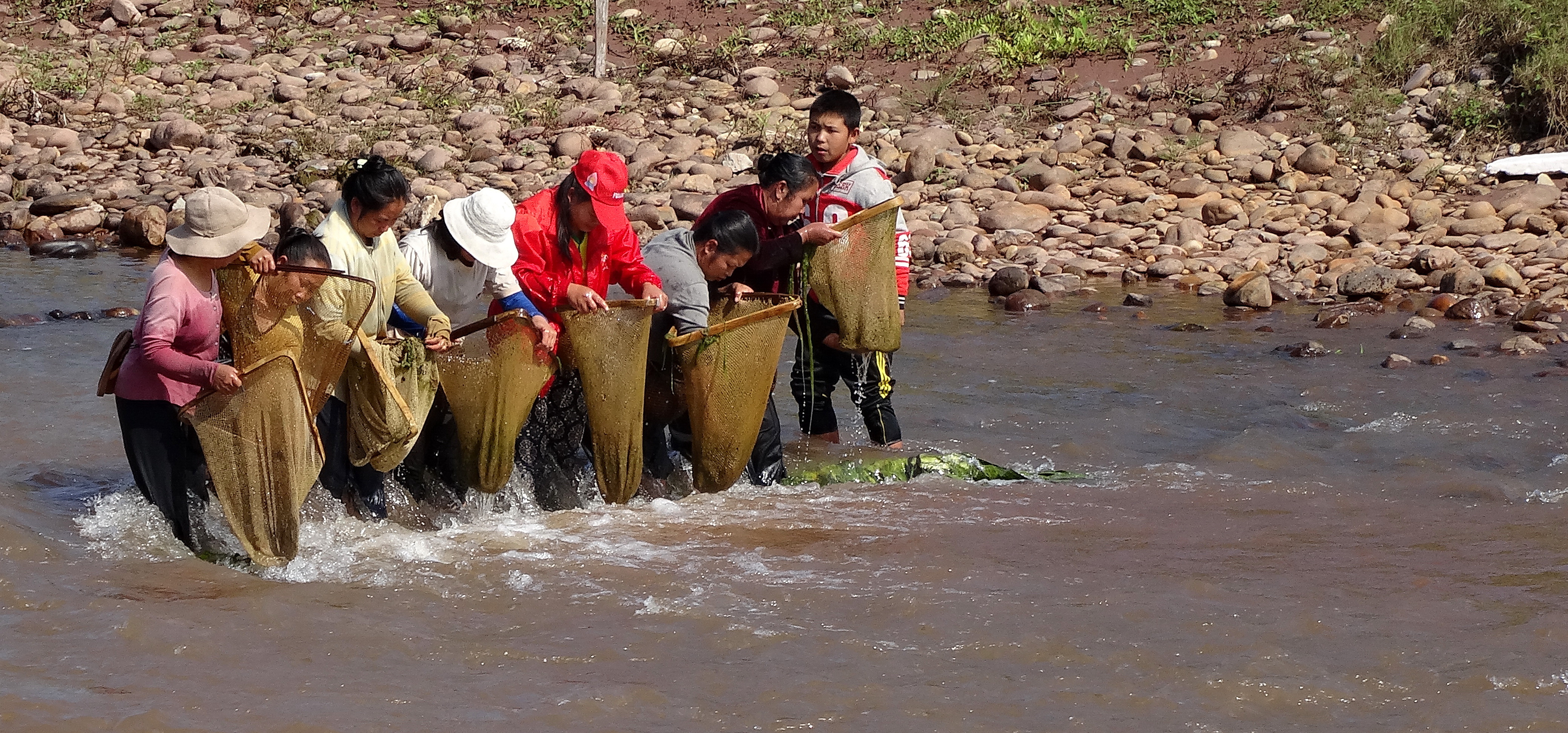
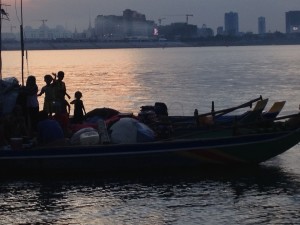
Fishermen on the Mekong. Photo: Remy Kinna

Part 1 of this article discussed the key threats to the Mekong River and its people, specifically hydropower dam construction, before summarising the legal gaps in the Agreement on the Cooperation for the Sustainable Development of the Mekong River (Mekong Agreement) and its supplementary Procedures for Notification, Prior Consultation and Agreement (PNPCA) which together regulate dam development.

Part 2 now investigates the application of the Mekong Agreement and PNPCA to Laos’ Xayaburi Dam project ‘prior consultation’ process, examining the specific contested procedural and legal elements and the role of the Mekong River Commission (MRC). Additionally, Part 2 will explore how these issues would be addressed under the 1997 United Nations Convention on the Law of the Non-navigational Uses of International Watercourses (UNWC): the most authoritative global treaty concerning management of international rivers.

The Xayaburi Dam dispute

The Xayaburi Dam project has received significant regional and global attention. It was the first Lower Mekong mainstream hydropower project submitted to the MRC for prior consultation under the PNPCA. Such a milestone was due in part to China not having signed the Mekong Agreement, thus its dams on the Lancang fall outside the MRC’s purview, while the scope of the prior consultation process does not incorporate projects on Mekong tributaries. The Xayaburi PNPCA process itself has been widely analysed and critiqued, mainly in terms of its inability ‘to reconcile the competing interests of the States concerned’ based on the Xayaburi project proposal1,2.

As highlighted in Part 1, many stakeholders are still deeply concerned about the dam’s impending significant environmental and social impacts3,4. The controversy over the project extends to the MRC’s perceived inability to resolve disputes or to clarify timeframes and requirements regarding the different PNPCA processes. Key aspects of the Xayaburi dispute are separated into their key legal and PNPCA elements below.

Submission for prior consultation and reply

Under the PNPCA’s procedural framework, Laos submitted the Xayaburi Dam project proposal for prior consultation to the MRC on 20 September 2010, and the MRC officially began the consultation process on 22 October 2010, whereby the other MRC states had six months to formally reply with any concerns about the proposal.5 On 14 Feb 2011, Laos released the initial Xayaburi Dam environmental impact assessment (EIA), which had actually been completed six months earlier before the proposal was submitted to the MRC. Due to this timing, there has been criticism that the EIA was not part of the original proposal submission; additionally, the EIA has been criticised for its overall poor quality, particularly its failure to take account of cross-border environmental impacts6. Between 13 and 15 April 2011, Cambodia, Thailand, and Vietnam each submitted formal replies raising concerns and calling for further investigation.

Obligation to cooperate in good faith and exchange information

Under the PNPCA, all states should cooperate in good faith with all potentially affected states and supply to them any available information relevant to a proposed dam project in a timely fashion. The MRC Secretariat’s independent technical review of the Xayaburi Dam released on 24 March 2011 and entitled ‘Prior Consultation Project Review Report’ identified significant gaps and concerns in Laos’ documentation and recommended further collection of baseline data and transboundary impact studies7.

remy 2 2

The author presenting on UNWC in 2016.

Downstream states, international non-government organisations (INGOs), civil society groups, and independent experts additionally claim that Laos’ subsequent releases of Xayaburi project information, especially several EIA-related studies, have been variously incomplete, minimal, sporadic, and inconsistent – such as the Pöyry report discussed below8,9,10. That key project information has been released through media statements and not via direct communication to the other states or through the MRC is an example critics cite to demonstrate Laos has not engaged in the PNPCA process in good faith at all times11,12.

Finally, the PNPCA is silent on whether project implementation is prohibited after submission (while waiting for replies) and during consultation. Nonetheless, eyewitness accounts, press reports, and records from the dam’s construction company indicate that initial implementation began in late 2010 and continued throughout the MRC consultations held in 2011 and years subsequent which critics argue at the very least shows disinterest in following due process as agreed under the Mekong Agreement and PNPCA8,13,14,15. Moreover, all of the actions detailed above when considered individually, even more so collectively, could be construed as directly at odds with the legal principle of states cooperating in good faith at all times, incorporating consultations and negotiations. This principle will be examined in more detail in Part 3.

Consultation & negotiation

A special session of the MRC Joint Committee was convened on 19 April 2011 to address states’ concerns. Cambodia, Thailand, and Vietnam reiterated their apprehensions about the dam project and called for a six-month extension to the standard six-month prior consultation period (which had just ended) in order to conduct broader studies and consultations, but Laos said any concerns would be accommodated without an extension5.

Notwithstanding this assertion, Laos halted implementation and commissioned a Finnish engineering firm, Pöyry to conduct a study in May 2011 regarding whether the Xayaburi complied with the MRC’s dam safety standards and a 2009 report, ‘Preliminary Design Guidance for Proposed Mainstream Dams in the Lower Mekong Basin’ 6,16. However, construction soon resumed with Laos citing Pöyry’s advice that the prior consultation process had been completed; the dam complied with MRC safety standards and guidelines in the 2009 report; and any other necessary design changes could be incorporated at a later stage6,9. These assertions were strongly rebuked by independent experts and INGOs, plus an MRC Secretariat review of the Pöyry report (released in August 2011) contested key technical design elements6,16,17.

A subsequent study by a French consulting company which was commissioned by Laos to build on Pöyry’s report in order to allay dam design and transboundary impact fears was also widely discredited by INGOs18,19. All the while, Cambodia and Vietnam both continued to consistently deny that there had been fulfilment of the prior consultation period and of Laos’ validity in unilaterally proceeding with dam implementation20,21.

Dispute resolution

In April 2011, the MRC Secretariat resolved to determine whether the PNPCA prior consultation period was concluded for the Xayaburi Dam project. The disputed issues could not be resolved via Secretariat-level negotiations, so the states agreed to table a decision, leaving it for the ministers from each member country to come together to debate and hopefully reach a consensus5. Despite preliminary studies and ongoing calls for the MRC to clarify both the status of the Xayaburi consultation period and PNPCA processes generally, these issues still remain largely unresolved22,23,24,25. As of early 2016, the dam is over halfway complete, but updated project designs have yet to be made public26.

UN Watercourses Convention

The UNWC’s clearer processes and regulations stand out in contrast to the results of the Xayaburi project highlighted above. Unlike the Mekong Agreement and its PNPCA, the UNWC clearly defines the rights and responsibilities of all basin states for dams and other projects with possible cross-border impacts and is unequivocally binding on all parties. Moreover, Part III of the UNWC views ‘notification’ and ‘prior consultation’ as sequential stages within a larger process regarding any planned measures. The UNWC does not differentiate between tributary or mainstream projects whereas the PNPCA prior consultation process only applies to mainstream projects. Compulsory procedures under the UNWC include:When Vietnam ratified the UNWC in 2014, as the 35th party, it triggered the UNWC’s entry into force. Though all MRC member states voted for the UNWC adoption in 1997, Vietnam is the only Mekong basin state to accede to the UNWC so far27. Covering all of the generally-accepted principles and procedures of international law for water, the UNWC represents the global ‘rules of the game’ for managing rivers shared by two or more countries. Its central feature is detailed but flexible processes requiring basin states to: cooperate in good faith; prevent pollution and protect ecosystems; notify, negotiate, and consult with each other on projects that can have major impacts to the basin; and try to avoid or peacefully resolve disputes through a variety of forums28.

  • Notification to all states with all available data before planning or building a dam, including EIA results;
  • Six months for reply (plus six months more if requested) during which the dam project is suspended;
  • Six months consultation and, if necessary, negotiation (may ask for additional six months) with no dam construction if requested.

The UNWC is also much clearer on dispute resolution mechanisms. While the Mekong Agreement makes a circular loop permitting states to ultimately ‘agree to disagree’, the UNWC lays out a logical sequence of forums – including direct negotiation and third party mediation or conciliation – that states can essentially choose from to reach a resolution with a clear outcome. If six months after requesting negotiations the states cannot agree through these forums, an independent fact-finding body collects and verifies all available information applicable to the proposed project before providing impartial recommendations to the disputing parties. At any time, a state can apply to a third party to hear the case, including an arbitration tribunal and/or the International Court of Justice (ICJ) in The Hague.

A framework treaty, the UNWC is intended to support, not replace, existing and future basin agreements by filling in legal gaps and clarifying processes. All of which begs the question: what if the Mekong dam processes were clarified and strengthened? What if riparian states had more specific, and binding, expectations for the Xayaburi Dam process?

Part 3 of this article imagines an alternative reality where the UNWC along with the Mekong Agreement and PNPCA are collectively applied to the Xayaburi Dam process. This scenario reveals a potentially different outcome to certain disputed procedural aspects and legal elements. Consequently, a revitalised framework for the future sustainable development of the Mekong River is proposed.

This article was first published here on April 18, 2016 on the Global Water Forum website. It is the 2nd in a 3 part series and is reposted here with permission from the author and the Global Water Forum.

Leave a Comment

Filed under Environment and sustainability, FEATURES, Mekong River, Regional Relations, SLIDER, water

From Savannakhet to Somerset: United by controversial EDF megaprojects

Two controversial energy infrastructure megaprojects located on opposite sides of the world, one in Western Europe and the other in Southeast Asia, are linked in more subtle ways than the most obvious bond i.e. they share the same main project developer. Hinkley Point C (HPC) nuclear power station, proposed to be built in the English county of Somerset and the Nam Theun 2 (NT2) Hydropower Project in operation since 2010 in central Laos are both megaprojects awarded to the French state-owned power utility, Électricité de France (EDF) as the main developer and shareholder in the respective project consortia.

Both projects are touted by their proponents as low-carbon energy alternatives to fossil fuel burning power plants that are designed to economically supply perceived unmet energy demands; both represent the biggest infrastructure projects the respective host nations have built at the time of construction; both projects have considerable externalities not being shouldered by the developers due to taxpayer subsidised risk guarantees; and both are mired in complex multi-stakeholder debates over their socio-economic and environmental sustainability credentials.

Beyond these similarities, both HPC and NT2 share a common pattern of politicisation at the highest levels of government, both at home and abroad, as vested interests clamour for each project to proceed at whatever the cost (both financially and politically). This situation inevitably leads to some serious political and economic distortions and inherent risks that emerge with time, that could have been avoided had less high profile, cheaper, smaller, more accountable, devolved and transparent energy projects been developed. Thus, it might be an interesting exercise to compare these two megaprojects and see if any wider lessons can be drawn from the common linkages discernible, despite the significant physical distance and domestic development context that separates them.

Nam Theun 2 – a dam too far for EDF and the Banks?

As the historically older case, this hydropower project had an extended period of gestation between initial development plans being proposed and eventual construction many decades later. A pre-feasibility study was first conducted in 1986, although basin planners with the multi-lateral river basin organization, the Mekong Committee, had already identified the dam site as holding potential for hydropower generation in the 1960s[1]. With the Indochina War being expedited across Laos (as “the other theatre”) and eventual 1975 regime change in Laos ushering in a one party communist state, geo-political conditions were not conducive for the project to be resurrected until the early 1990s, when the plans were dusted off once more by international actors.

The 39 m high Nam Theun 2 dam under construction in 2008. Much of the work was sub-contracted out to Thai construction companies and the cement was sourced from over 600 kms away in Saraburi, Thailand (Source: International Rivers)

The 39 m high Nam Theun 2 dam under construction in 2008. Much of the work was sub-contracted out to Thai construction companies and the cement was sourced from over 600 kms away in Saraburi, Thailand (Source: International Rivers)

It took ten years in the appraisal and preparatory stage from 1995 before final approval by the World Bank’s Executive Directors in lending countries was granted, thereby rubber-stamping the proposed social and environmental safeguards to mitigate and compensate for project impacts. This approval followed a year long period of “public consultations” and “participatory workshops”, conducted both internationally and domestically (though it was widely acknowledged that no meaningful participation was possible in the Lao context). In no reasonable sense could the developer claim to have gained broad public acceptance or employed a “fair, informed and transparent decision-making process”, according to World Commission on Dams principles, given the depth of opposition expressed by civil society globally.

I attended the Bangkok leg of the “technical consultations” held in August 2004, at which numerous civil society actors and dam-impacted villagers from Thailand, including a handful of impactees from the World Bank-funded Pak Mun dam, gave a series of heartfelt and well-reasoned arguments why it was an ill-conceived idea to build the NT2 dam project. The Pak Mun dam in Northeast Thailand became infamous for the multiple impacts it caused to fisheries and aquatic resources based livelihoods, sparking local protests and wider social conflict that still simmers today. But the Bank officials brushed off the objections with their own technocratic arguments as to why constructing the project was Laos’ only option to deliver it from abject poverty through electricity revenue generated and develop economically based on a rational utilisation and export of its natural resource asset base. At all the other consultations worldwide, voices of opposition outweighed those in support both in terms of numbers and credibility of the arguments presented. However, it was clear the decision to proceed had been taken long before the consultations were held and the World Bank was more interested in issuing a “blank cheque” to the developers, as maintained by David Hales of the Worldwatch Institute who chaired the public workshop on NT2 in Washington in September 2004.

The NT2 Hydropower Company (NTPC) that built, owns and operates NT2 is itself a consortium of three main shareholders, namely EDF International (40 %), the Electricity Generating Public Company of Thailand (EGCO) (35 %), and the government of Lao PDR’s Laos Holding State Enterprise (25 %). NTPC sell 90 % of the power generated from the 1,070 MW installed capacity plant to the Electricity Generating Authority of Thailand (EGAT), with the remainder consumed domestically in Laos.

Construction officially began in November 2005 and NT2 was commissioned in March 2010, having cost about $1.45 billion, with funding derived from multiple sources, including France’s Coface, Sweden’s EKN, Norway’s GIEK, the ADB, Multilateral Investment Guarantee Agency, the World Bank, the French Development Agency, the Export-Import Bank of Thailand, Nordic Investment Bank, nine international banks and seven Thai banks. The Lao government’s equity share in NTPC was financed chiefly by a loan from the European Investment Bank (EIB) and Asian Development Bank (ADB), with the multi-lateral banks providing political risk guarantees to the developers and private lenders, in effect, thus placing the main burden of risk on taxpayers in the contributing countries and into the future, with the Lao people.

Due to its size, prestige and symbolic nature, NT2 neatly embodied for all representatives of the temporarily thwarted dam building industry (domestically and internationally) a significant step towards the realisation of the popular narrative created that Laos could become the “Battery of Asia” or “Kuwait of Southeast Asia”, if the slumbering nation could only maximise the development of its hydropower potential. Technically, the dam project appears to have performed reasonably, but socially and environmentally the dam has been a predictable disaster, with the impacts falling particularly heavily on the downstream riparian people living along the Xe Bang Fai river in Khammouan and Savannaket provinces.

The downstream channel constructed below the power station takes 350 m3/s of turbinated water down to the Xe Bang Fai river, adding significantly to its normal background flows and seriously impacting the aquatic ecology and river-dependent livelihoods (Source: Aurecon Group)

The downstream channel constructed below the power station takes 350 m3/s of turbinated water down to the Xe Bang Fai river, adding significantly to its normal background flows and seriously impacting the aquatic ecology and river-dependent livelihoods (Source: Aurecon Group)

A significant, but invariably overlooked, historical feature of NT2 and the manner in which funding approval was granted by the multi-lateral banks, relates to the highly politicised nature of the campaign pushing for its development,  that included being able to harness the support of national leaders at critical moments. At one point in late 2004, it seemed like commitment was wavering from several crucial parties to backing the project, including some ambivalence on the French and American sides as to whether this was a worthy project to be involved in, given the patently high social and environmental impacts that would result and rising voices of opposition. Seemingly in a carefully calculated bid to sway any doubters of the project’s strategic importance, proponents started playing the “China card”, suggesting that if the Western institutions failed to back it, then China would fill the gap in a trice and takeover the project. This scare tactic seemed to do the trick, because French President Jacques Chirac was understood to have intervened and secured European loans and grants to secure EDF’s central involvement, a fact tacitly acknowledged by the French Ambassador to Laos at the project’s powerhouse construction inauguration ceremony in November 2005. The ceremony was also attended by the Lao Prime Minister, Bounnhang Vorachit and then Thai PM, Thaksin Shinawatra, representing the country likely to benefit most from the project in terms of immediate construction contracts, subsidised imported energy and externalisation of socio-ecological costs. Building large dams in Thailand has been controversial since the early 90s, thanks to an active civil society and relatively free media.

The Nam Theun 2 Hydropower Project (NT2) in central Laos and relative position of Savannakhet, where the bulk of the project’s power leaves Laos for the Thai market (Source: Baird and Quastel, 2015)

The Nam Theun 2 Hydropower Project (NT2) in central Laos and relative position of Savannakhet, where the bulk of the project’s power leaves Laos for the Thai market (Source: Baird and Quastel, 2015)

There were strong suspicions amongst civil society observers and energy analysts that the World Bank doctored its figures and used incorrect assumptions in order to make the economic argument for the dam stack up, prior to final appraisal in March 2005. Civil society critics had always argued that there was no credible economic case for the NT2 project going ahead, above and beyond its poor social and environmental score sheet, as the amount of electricity it was supposed to produce for export could easily be covered by demand side management in the Thai energy market. At least 153 NGOs recorded their opposition to the dam project going ahead during the evaluation phase.

In 2011, the World Bank published a report entitled “Doing a Dam Better: the Lao People’s Democratic Republic and the story of Nam Theun 2”, in which it is claimed the story of NT2’s development would provide “valuable insights and lessons that can be applied in future projects of similar size, scope, and complexity”. It was also held up as “strong evidence” of the Bank’s re-engagement in and commitment to supporting the large hydropower sector, after a decade-long hiatus prior to and after the seminal World Commission on Dams (WCD) report. Thus, the NT2 project fulfilled many functions for the dam lobby, not only in terms of Laos but worldwide, as a harbinger of renewed lending for “high risk, high reward” hydraulic development projects. And sure enough, it did open up a flood of cheap finance, subsidies and externalisation of risk for the ever-thirsty industry across Asia, Africa and Latin America.  The World Bank’s storyline of success with the project has continued since, despite the many reports issued that challenge this stale narrative with compelling evidence, including those from the project’s own Panel of Experts (PoE), but also numerous civil society studies conducted.

The project is expected to generate total revenue of $1.9 billion over the course of its 25 year concession period, of which some 25 % should, in theory, make it into Lao government coffers to help fund rural poverty alleviation programmes. However, because the project’s financial arrangements are so murky, particularly on the Lao government side, there is no guarantee in place that the funds generated will be spent where they were originally intended. Due to a culture of intense secrecy and unaccountability within the heart of Lao state governance, it is uncertain to what extent dividends, taxes and royalties from NT2 have been directed towards social security, education or health programmes. Without an independent audit, suspicions remain that revenues are just co-mingled with other public resources or even mis-appropriated, calling into question any claims by the Banks of a “model project” in water or energy governance. Tellingly, a spate of subsequent hydropower projects in Laos have ignored the long list of “safeguards” touted as the new standard by the NT2 proponents and fast-tracked dam construction without even basic public consultations. In Transparency International’s 2015 Corruption Perception Index, Laos was ranked 139th out of 168 nations worldwide.

Children bathe in the dam’s 450 km2 Nakai reservoir near a resettlement village. Despite assurances by the developers to remove all vegetation prior to flooding, much of it was left and is slowly rotting in the water (Source: FIVAS)

Children bathe in the dam’s 450 km2 Nakai reservoir near a resettlement village. Despite assurances by the developers to remove all vegetation prior to flooding, much of it was left and is slowly rotting in the water (Source: FIVAS)

Meanwhile, most of the goals of the social and environmental mitigation programme remain unmet, while many of the impacts identified by critics (and some additional ones) have been borne out in practice. Resettled families have not been made demonstrably better off and many are still reliant on dwindling material handouts from the NTPC and Lao government to survive, while downstream along the Xe Bang Fai recipient river in Khammouan and Savannakhet provinces, fish populations have crashed and riverside vegetable gardens lost amongst a catalogue of impacts, impoverishing the livelihoods of the tens of thousands of people that once relied on them. Rainy season flooding has been exacerbated by the power station additional flows, further eroding the sustainability of local livelihoods through destruction of rice crops. Meanwhile natural forests have been destroyed and wildlife decimated in the “protected area” in the headwaters of the NT2 reservoir, despite the assurances of the dam proponents that the project’s development would ensure their protection.  As Professor Thayer Scudder, an eminent global expert on the social impact of dams, Commissioner for the World Commission on Dams and one of the three person Panel of Experts for the NT2 project, commented in a New York Times article in August 2014, after nearly two decades spent closely monitoring the dam’s development process, “Nam Theun 2 confirmed my longstanding suspicion that the task of building a large dam is just too complex and too damaging to priceless natural resources”.


Hinkley Point C – more economic madness?

Nuclear power was first developed in the United Kingdom during the 1950s and 60s with the somewhat cornucopian promise of abundant clean, cheap and reliable energy for present and future generations to benefit from. The British public generally believed the claims made by the industry and politicians, so little overt opposition to nuclear energy (unlike nuclear weapons) appeared until the first large-scale nuclear accident occurred at Three-Mile Island in 1979 followed six years later by nuclear meltdown disaster at Chernobyl. These events and various setbacks within the industry prompted a much wider debate about the technology with a resulting fall in public support. At its peak in 1997, nuclear power generated 27 % of the nation’s electricity, but this has subsequently declined to about 18.5 % (in 2012) from 15 nuclear reactors, as the original fleet of power stations has been gradually retired for decommissioning and not been replaced. Based on rhetorical concerns about future energy security and pressures to reduce national emissions of carbon dioxide, the UK government announced in 2008 that it had given the go-ahead for a new generation of nuclear power stations to be constructed, with eight potential sites announced the following year, one of which was Hinkley Point.

This move proved controversial, with many NGOs, including Greenpeace, Friends of the Earth, the Campaign for Nuclear Disarmament and the World Wildlife Fund opposing the shift back to nuclear power solutions, on the basis of uncertain cost-benefit appraisal, the opacity of the planning process and environmental concerns. By marked contrast with NT2, nuclear plants like HPC do not require the resettlement of 6,500 households nor do they have the same direct negative impacts on the livelihoods of tens or hundreds of thousands of people, so the short term social and environmental impacts could be said to be more limited and manageable. However, the long term environmental and health impacts and risks posed are less favourable, due to the problems of nuclear material transport to and from site, safe disposal of radioactive waste and plant decommissioning issues passed on to future generations to resolve.

After a long period in the consultation and planning stages, a third reactor is scheduled to be built alongside two existing plants at the Somerset coastal site, namely Hinkley Point A (Magnox reactor) and B (Advanced Gas-cooled Reactor). The landscape-dominating plants occupy a low-lying, rural spot barely above sea-level next to the Bristol Channel, famed for having the second highest tidal range in the world after the Bay of Fundy, eastern Canada. This fact is material, when considering the United Kingdom’s energy futures in an era of awareness of the need to build alternative, safe and sustainable energy sources to mitigate predicted climate change. The UK government is legally committed to a gradual decarbonisation of the nation’s energy production mix up to 2050.

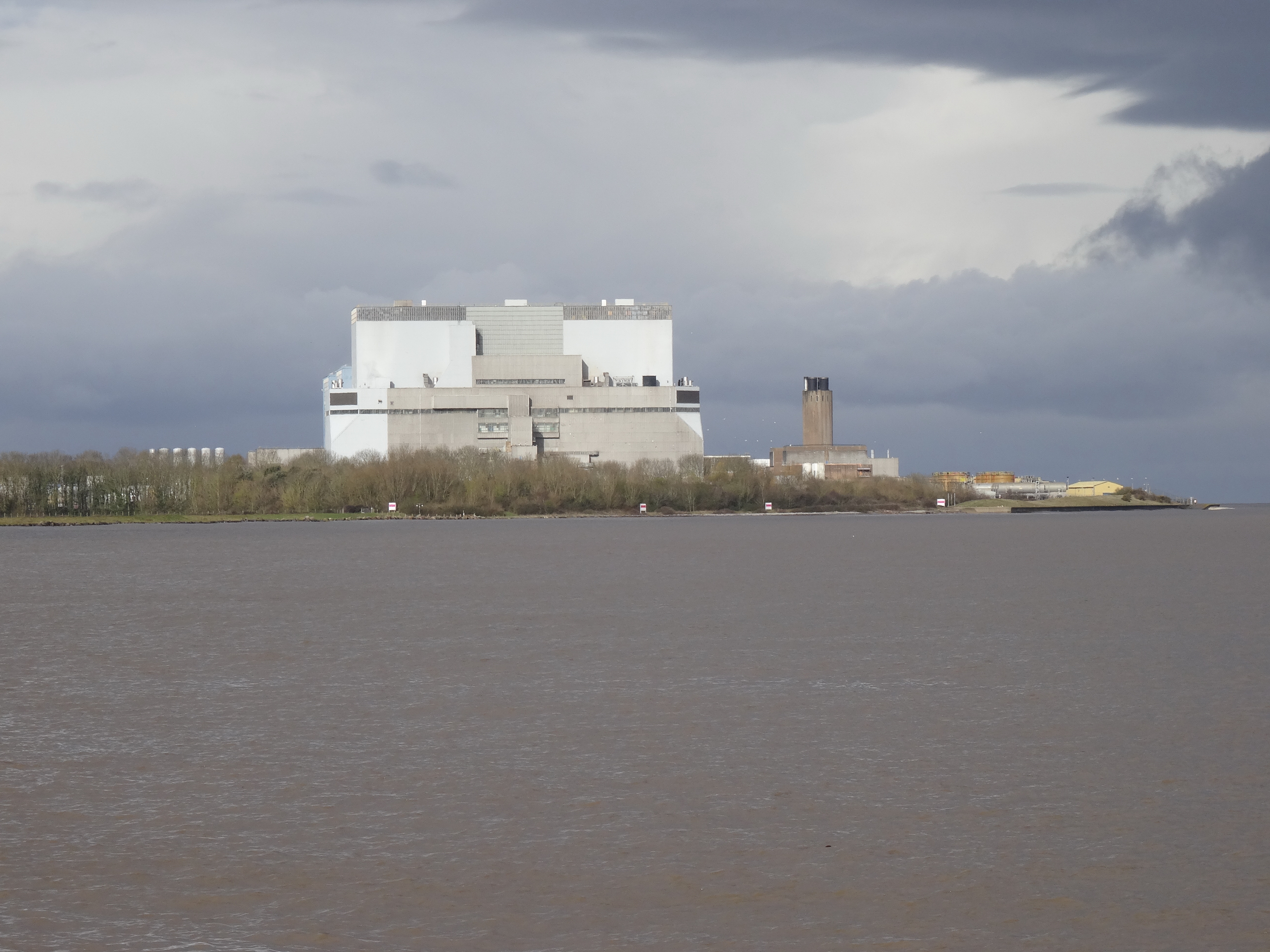
A view across Bridgwater Bay to the Hinkley A and B power station site. HPC will be developed alongside, at an estimated cost of £ 18 billion (David J.H. Blake)

A view across Bridgwater Bay to the Hinkley A and B power station site. HPC will be developed alongside, at an estimated cost of £ 18 billion (David J.H. Blake)

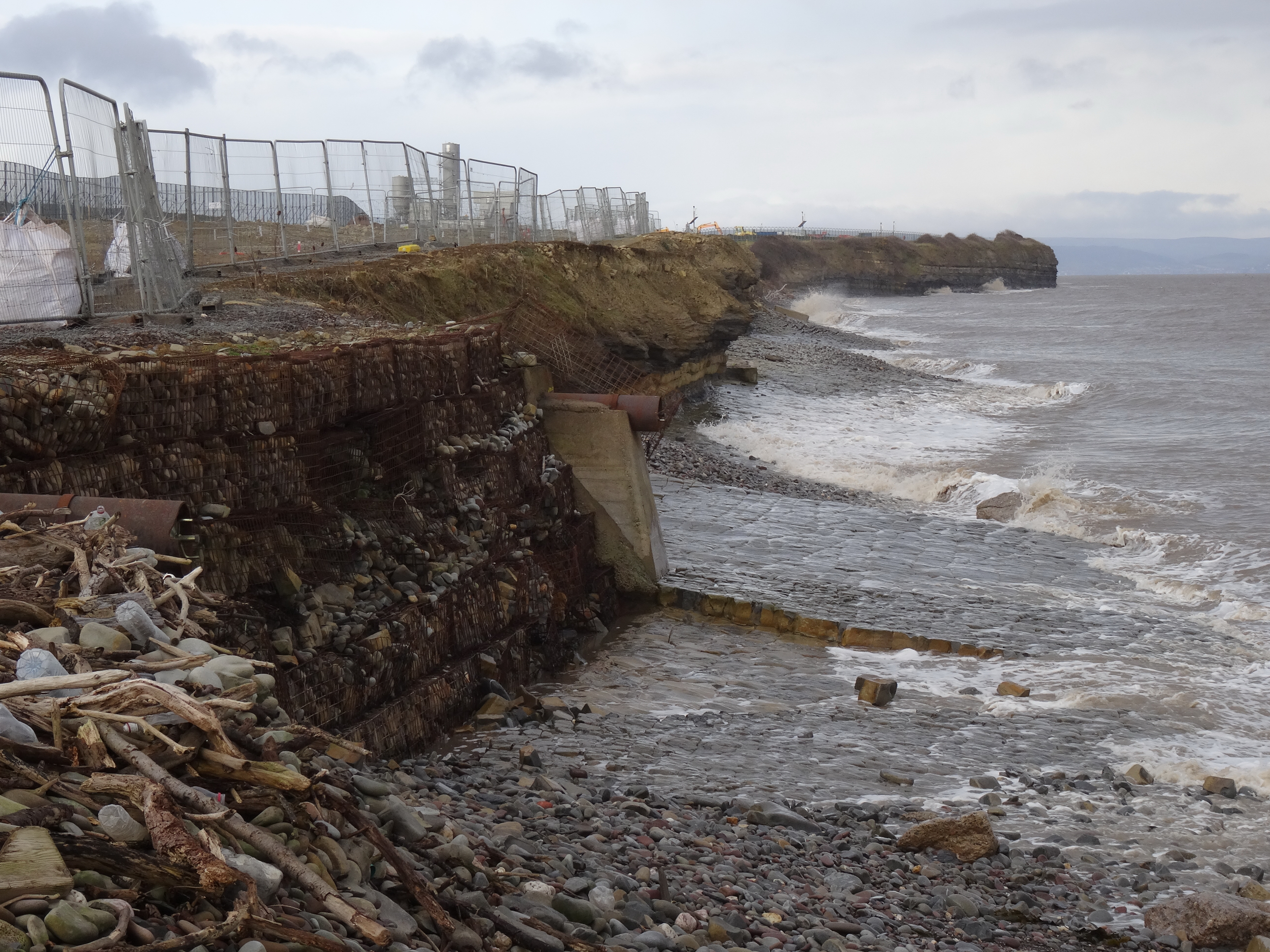
While the original A plant closed in 1999 and is being decommissioned, Hinkley B is still operating under EDF ownership and is not expected to cease operations until at least 2023. The entire site is vulnerable to future increases in sea levels, something that was not well understood when Hinkley A and B were built, but should be a high priority for HPC planners. In 1607, a major tsunami is recorded as engulfing much of this coastline and killing an estimated 2,000 people, but neither this historical event nor future predicted sea level rises of at least two metres by the end of this century and more severe weather events precipitated by climate change seems to have dampened the appetite of the proponents to push ahead with HPC, regardless of potential risks. When I visited the site in early April 2016 at high water on a spring tide, the sea was already lapping over the first line of concrete defences around the existing reactors (see picture). I can foresee extra marine erosion and flood protection measures, adding further to the costs of the project in the foreseeable future.

The coastal perimeter of the HPC site is threatened with coastal erosion, expected to worsen in future under conditions of rising sea levels, stormier weather and an underlying soft geology (David J.H. Blake)

The coastal perimeter of the HPC site is threatened with coastal erosion, expected to worsen in future under conditions of rising sea levels, stormier weather and an underlying soft geology (David J.H. Blake)

HPC was originally proposed by the government as an ideal solution to “keeping the lights on” in a climate change challenged world, able to supply 7 % of the UK’s present energy needs at a single location, through a 3,200 MW installed capacity and reliably high plant load factor[2]. The trouble is, the European Pressurized Reactor (EPR) design EDF have proposed to use is thus far unproven technology and at the four other sites where a similar nuclear reactor type is being constructed in France, Finland and China, the projects have been dogged by unforeseen technical problems leading to steep cost and time overruns.

During a spring tide in early April 2016, the sea breached the first line of sea defences near the plant. In 1607, this coastline was struck by a major tsunami that swept many miles inland and drowned thousands (David J.H. Blake)

During a spring tide in early April 2016, the sea breached the first line of sea defences near the plant. In 1607, this coastline was struck by a major tsunami that swept many miles inland and drowned thousands (David J.H. Blake)

As a political party, the incumbent Conservatives have traditionally offered strong support for nuclear power, although up until a few years ago the leadership insisted that it should not be subsidised by the taxpayer but subject to normal market forces and open competition. However, this stance shifted under the Conservative-Liberal Democrat coalition government (2010-15), when ministers decided that the UK should pursue a nuclear-fuelled future, with the provision of state subsidies to sector investors, riling both free-marketeers and renewable energy campaigners alike. This policy position remained unchanged even after the sobering wake-up call of the potential dangers surrounding nuclear power delivered by the March 2011 Fukushima disaster. Yet the British public have proven far less averse to nuclear power than the German population, perhaps partly because the former have been fed a regular line from the government that without further nuclear development the UK may be looking at future brown-outs. Such a fear-invoking narrative was recently admitted to be a myth by the government’s own Secretary of State for Energy and Climate Change, when Amber Rudd publicly stated that the nation’s lights would not go out if it was not developed, as had been claimed by her predecessors.

Such admissions are grist to the mill for the national and local civil society opposition to Hinkley, movements like Stop Hinkley which have doggedly campaigned against the project for many years, long before HPC was proposed. Although such citizen groups are ideologically opposed to nuclear power development in principle, their economic arguments against the project have been given added weight in recent years by a number of studies by financial and economic analysts, such as Liberium Capital which described the strike price as “economically insane” and “as far as we can see this makes Hinkley Point the most expensive power station in the world.”

Despite the generous government guarantees provided by a strike price (at £92.50 per MW/h) for the electricity produced of over twice the current wholesale price for electricity in the UK, the parlous state of EDF’s finances and massive debt mountain mean that HPC is a risky proposition for the utility. Its own workers’ union opposes the project and in February 2016, Thomas Piquemal, EDF’s chief financial officer resigned, warning that building HPC could ruin the company. As a result, the French government has said it plans to provide financial support to EDF, a move that will likely fall foul of EU legislation to ensure fair competition in the energy market and disallow unfair state aid to individual companies, something that the UK government is already being challenged on in the European courts by the Austrian government. With national pride and the reputation of French nuclear technology potentially at stake (EDF is also looking to invest in China and other countries), a decision from the French government on whether to bailout EDF has been delayed time and again, and a decision is not now anticipated until at least September 2016.

One remarkable point of difference between NT2 and HPC is that with the former, China was portrayed by some as a threat to EDF and Western venture capital’s regional interests, had it been allowed to gain a stake in the dam project. With the benefit of hindsight, China was poised to build dozens of other dams in Laos, with or without EDF’s involvement. But now China is actively courted as a nuclear investment partner, both for the injection of funds it can offer, but also, potentially for its technological expertise. Indeed, the China General Nuclear Power Corporation has taken a one third stake in HPC, with the deal inked just hours before the state visit of President Xi Jinping to London in October 2015. Much to the chagrin of human rights groups, the President was afforded the red carpet treatment for his visit, with PM Cameron and Chancellor Osborne hoping HPC would be the springboard for further Chinese investment in nuclear power stations in Essex and Suffolk.

With the latest twist in the Hinkley saga looking like a legal challenge will be launched against the UK and French governments, one Southwest region Green MP referred to HPC as an uneconomic “white elephant” which is being pushed regardless, because there is “now a political battle where the stakes for both the UK and France are just too high to admit failure”.

Both NT2 and NPC would qualify as prime examples of what Danish economist Bent Flyvbjerg refers to as “Machiavellian Megaprojects”, which are shown to follow a time-honoured formula:

(underestimated costs) + (overestimated revenues) + (undervalued environmental impacts) + (overvalued economic development effects) = (project approval)

As Flyvbjerg stresses in his analysis of such megaproject development by a relatively few societal elites, the monomaniacal pursuit can frequently lead to the deception of “parliaments, the public and the media about the costs and benefits of the projects”.

It seems there is more linking the development paradigm of Savannakhet and Somerset than citizens in both the U.K and Laos may fully appreciate. There is still a glimmer of hope, however, that commonsense may prevail in London and Paris, and the HPC case of folie de grandeur may be stopped in its tracks. In the case of NT2, Laos has now been locked into a project with multiple negative social and environmental consequences, many irreversible such as permanent loss of valuable terrestrial and aquatic biodiversity, that will ultimately cost its citizens and the wider Mekong basin populations dearly into the future.

[1] Interestingly, in the address given by Pierre Lellouche, Minister of State with responsibility for Foreign Trade at the Nam Theun 2 project’s inauguration ceremony on 9 December 2010, he claimed that the site was first identified back in 1927 by an engineer, presumably of the French Indochina colonial government.

[2] The plant load factor is the ratio between the actual energy generated by the plant to the maximum possible energy that can be generated with the plant working at its rated power over the duration of a year.

Leave a Comment

Filed under ASEAN, Current Events, Energy, Environment and sustainability, FEATURES, Governance, Laos, Mekong River, SLIDER, Thailand, Uncategorized, water

Seeing Beyond the Visible: How Development Practitioners Should Think About Gender & Peacebuilding in Myanmar

Women lead the voting lines at Myanmar's national election in 2015.

Women lead the voting lines at Myanmar’s national election in 2015.

Peacebuilding practitioners in Myanmar should re-orient the way we look at peace and conflict processes, by viewing them through the experiences of women. Applying a gender lens to Myanmar’s peace process—which is largely dominated by male elites and leaves out the voices of ethnic communities, will reveal a more complete picture of the strategies being enacted by civil society actors to mitigate the effects of armed conflict. This, in turn, could inform policies that are more likely to generate productive results.

Since the advent of Myanmar’s transition to democracy in 2012, bringing peace to conflict-ridden ethnic areas has become a focus for actors engaged in the country’s development. Western governments including the United States recently hailed the signing of the Nationwide Ceasefire Agreement in 2015 by a handful of ethnic Armed Organizations as an important, albeit nascent step toward the end of decades-long civil unrest. In addition, development practitioners at the national level have begun implementing peacebuilding initiatives of their own.

Much of this work is being done against a backdrop of caution: conflicts in Kachin and Shan, two of Myanmar’s largest states, have left over 120,000 civilians displaced in the last five years alone, making optimism about peace seem premature. Additionally, the presence of a plethora of international “experts” in this space has led to criticism on the goals of the peacebuilding agenda. Development practitioners, well-aware of these cautions, continue to hope that the recently-elected National League for Democracy (NLD) government will usher in a new era of nationwide reconciliation, making Myanmar an exemplary case study for conflict practitioners around the world.

Despite this optimism, however, the lens through which many practitioners look at peacebuilding in Myanmar remains incomplete. In the rush to implement solutions, gender, a crucial factor in understanding the effects of armed conflict is often left out of key programming and policy initiatives. This is compounded by the fact that in national-level peace negotiations, women (especially ethnic women) are rarely allowed a voice.

Research has shown that beyond simply a being call for diversity, there are concrete benefits to integrating gender-sensitivity into development work. These include sustainability of programming and, in post-conflict situations, an increased likelihood of sustained peace. Therefore, rather than creating programs that are “gender blind,” practitioners should put gender at the center of the peacebuilding conversation. Seeing peace and conflict from “below” will provide a more complete picture of what is happening on the ground, and inform the creation of more productive policies.


The limits of visibility

Actors who call for applying a gender lens to Myanmar’s peace process unanimously suggest that women’s circumstances in Myanmar will improve when the numbers of women in public life increase. Gender inclusion, representation and participation have surfaced as focal points in these discussions, with a host of civil society women’s organizations shedding much-needed light on the lack of women’s participation in formal peace negotiations. Instilling a gender lens onto governance, particularly during the advent of the Suu Kyi-led NLD, these groups suggest, is paramount to advancing Myanmar’s peace agenda. More women in power, the argument goes, will lead to sustainable peace on Myanmar.

As important as this argument is, I suggest that it is incomplete. Incorporating women into pre-existing structures of power, while arguably beneficial, can also replicate hierarchies dominated by elites, leaving out the experiences of ordinary women. The sheer accomplishment of instilling more women in political office doesn’t tell us, for example, how gendered cultural practices are supported by, or lead to the exacerbation of, armed conflict. It doesn’t tell us how certain women become authorized to take on leadership roles, while other women lack even the most basic understanding of gender equality. We don’t yet understand how gender dynamics at the village level authorize wars to remain entrenched, or how resistance to war and refuting gender stereotypes go hand in hand. Issues of access and power are as much a part of “gendering” peace as are questions of women’s visibility.

Development practitioners should widen the lens to look at places where gender and power intersect. This can be done by looking to the ground and examining cultural spaces where women are seemingly invisible: at the village level, in grassroots civil society, and in peacebuilding organizations themselves. We must ask how gender dynamics in these spaces inform social inequalities, keep women at a disadvantage, and cement the roots of conflict.


Broadening the lens: Gender and ethnic civilian ceasefire monitoring

One example of an area that can help us better understand the intersections of gender, conflict and peace is civilian ceasefire monitoring. In recent years, ethnic peacebuilding practitioners have begun implementing a new approach to monitoring the fragile ceasefire agreements between Ethnic Armed Organizations and the Union of Myanmar Government. Civilian Ceasefire Monitoring, or CCM, began as an answer to the failed United Nations (UN) model of armed civilian protection in contexts such as Rwanda, Bosnia and Somalia throughout the 1990’s. It differs from other peacebuilding approaches in that it engages the direct participation of communities working on the ground, rather than relying on “outside” actors (such as the UN) to monitor conflict. In the CCM approach, villagers themselves are trained to understand the ceasefire agreements in place, and monitor incidents that breach those agreements. Often included in this work is “unarmed civilian protection monitoring,” which engages villagers’ participation in reporting on broader human rights violations (i.e., land grabbing, sexual assault). Notably, civilian ceasefire monitors must remain neutral in their efforts—making a commitment to align with neither side of an armed conflict. They also, by definition, must remain unarmed.

Civilian ceasefire monitoring mechanisms in Myanmar are diverse in their practices, goals and capacities. While some draw from previous experiences monitoring conflict in their regions, others are only beginning to develop the tools and knowledge necessary to achieve their goals. Overall, though, the mechanisms are aligned in their mission to actively monitor violations that persist in ethnic conflict areas.

Recently, I conducted preliminary research for Mercy Corps Myanmar’s Supporting Civilian Ceasefire Monitoring program on the gender dynamics of civilian ceasefire monitoring in Myanmar. The research assessed CCM mechanisms in six ethnic states, where over two-hundred-and–forty-four monitors are working in twenty-four villages and townships.

The research took place in Kayah, a small state in eastern Myanmar that has suffered from decades of conflict with the Union of Myanmar (UOM) government, and where weak infrastructure and food insecurity remain rampant; Kachin, home to the Kachin Independence Organization which has been entrenched in armed conflict since 2011, resulting in the internal displacement of over one-hundred-and-twenty thousand civilians; Chin, a remote, isolated area of Western Myanmar with scant natural resources and little infrastructure and one of the poorest regions in the country; Shan, a state which has suffered from decades of civil conflict and reports the highest levels sexual violence in armed conflict; Kayin (Karen), where land confiscation, natural resource extraction, and foreign-led development projects are ongoing concerns of citizens, with armed actors often implicated as perpetrators; and Mon, whose governing body, the New Mon State Party (NMSP) abstained from signing the NCA out of protest around its non-inclusiveness of other EAOs.

Our team conducted interviews with ten men and eight women, in an attempt to understand the practices of CCM mechanisms in these areas, and what role gender inclusion (and omission) might play in their work.

The findings revealed that a correlation exists between gender inclusion strategies and network functionality. Formalized gender inclusion strategies were discussed by mechanisms in Kayin, Shan and Mon states, who demonstrated conscious efforts to include women’s voices in decision-making processes and leadership roles within the mechanism.

By contrast, mechanisms in Kachin, Kayah, and Chin demonstrated comparably less commitment to including women in their processes. It can be argued that this, in turn, affected the overall functionality of the mechanism. Women from these networks reported being silenced in meetings, excluded from decision-making, and discouraged from working as monitors. This negative feedback, they explained, came from the community, their families, and male members of the mechanisms.

In addition, the findings revealed that gender issues inform the way a mechanism approaches its ceasefire monitoring mandate—specifically, whether to monitor a given bilateral or nationwide ceasefire agreement, or whether to monitor issues of civilian protection –i.e., human rights abuses within the community. Women, we found, consistently requested that their mechanisms attend to problems of sexual violence in conflict, domestic abuse, land grabbing, and other issues of importance to women at the village level. These issues are, of course, pertinent to all members of a community, not just women. However, it was often women who brought them to the forefront of the discussion.

Above all, the research found that seeing the work of civilian ceasefire monitors through a gender lens helps us understand the way these mechanisms function, the strategies they undertake, and the challenges they face. Conversely, by not including a gender lens, we risk negating half of the conversation.

There are numerous other ways in which the “how” and “where” of gendering peace and development practice can intersect: Research on women and customary law, women’s forced labor (for example, trafficking, which I have discussed here), and issues of gender and ethnic nationalism could reveal how peace and conflict processes are informed by women’s experiences. These spaces, though not directly related to women’s participation in public life, are nevertheless worth examining.

As development practitioners, we should ask deeper questions about how peacebuilding can be more inclusive of, and responsive to, women’s needs. Changing the dynamics of firmly entrenched systems of power is not simply a matter of quotas. When we think about gender and peace in Myanmar, how we look is important as where we look. Viewing peacebuilding from “below” helps us see places where gender neutrality is often assumed, rendering women’s experiences invisible. By probing these spaces, we create a new type of visibility—one in which the structures of power that keep women at a disadvantage can finally be laid bare.

This article is the first in a three part series by Erin Kamler on gender, peacebuilding, and development in Myanmar. Read on to the second and third parts.

Leave a Comment

Filed under ethnic policy, FEATURES, Governance, Myanmar/Burma, SLIDER

An alternate past/future for Mekong River dams under the UN Watercourses Convention: Part 1

This article is the first in a three part series looking at dams in the Mekong. 

Damming the Mekong: Unprecedented threats to the river and its people

The lifeblood of the region, the Mekong River (known as the Lancang in China) and its many tributaries flow through six countries: China, Myanmar, Laos, Thailand, Cambodia and Vietnam. Its resources affect the lives of over 70 million people who rely on it daily for food and/or work, but these livelihoods are facing growing threats.1,2,3 Today, the mighty Mekong is at an unprecedented juncture in its ongoing survival, particularly from hydropower dam development.

Much of the focus of the Mekong is divided between the upper Mekong, which includes China and Myanmar, and the Lower Mekong, encompassing the remaining four states. Eleven dams are being planned or built on the Lower Mekong Basin’s mainstream with many more anticipated along its extensive tributaries.4,5 Most of these dams come with significant social and environmental impacts.

Source: WWF

Most dams trap fluvial sediment, creating erosion and reducing nutrients in the river, directly affecting agricultural production, so each additional dam means less rich soil downstream.11 Agricultural outputs from Vietnam’s Mekong Delta, particularly rice, have already been severely impacted via China’s Lancang dams scheme.12 The situation has become so critical that Vietnam recently went to the extent of asking China to discharge water from the Jinghong Dam on the Lancang in Yunnan Province to help alleviate conditions in the Delta and seems intent on requesting other upstream states to do similarly regarding river flows.13,14 Thailand’s need for water during the current drought has led it to set up temporary pumping stations to divert 47 million cubic metres of water from the Mekong, causing concern for other downstream countries.26 Additional Mekong dams, compounded by ongoing drought and rising sea levels due to climate change, will only exacerbate these issues.11,15

While some riverine communities may be displaced as their fishing or farming lifestyles become unsustainable, other communities, often indigenous peoples with a strong cultural connection to their ancestral land, are being relocated to make way for dam reservoirs.16,17

Thus, it is no wonder that disputes have emerged between various Mekong basin states as to the domestic, transboundary, environmental, and social impacts of certain dams. Part 1 of this three-part article examines the existing legal framework for regulating dam development in the Mekong and how its legal gaps and ambiguities have led to ongoing disputes, specifically regarding the Xayaburi Dam under construction in Laos.

1995 Mekong Agreement and MRC

Entering into force on 5 April 1995, the Agreement on the Cooperation for the Sustainable Development of the Mekong River (Mekong Agreement) for the Lower Mekong Basin states of Cambodia, Laos, Thailand, and Vietnam was the celebrated river basin treaty of its time and a major legal milestone.

Divided into six chapters, the Mekong Agreement’s provisions broadly set out the roles and responsibilities of riparian – being ‘of the river’ – states in governing the seasonal flows and major uses of the Lower Mekong Basin. It is accompanied by the Procedures for Notification, Prior Consultation and Agreement (PNPCA), which sets out key timeframes, standards, and processes for states regulating dam development. It contains separate procedures for projects on Mekong tributaries, plus intra-basin uses on the mainstream (proposing states are only required to notify fellow riparians of planned projects) versus inter-basin and other mainstream developments (proposing states must submit the project for prior consultation with MRC member states with the aim of reaching an agreement on any contested aspects). The PNPCA Guidelines elaborate further on implementing these processes. Both the PNPCA and Guidelines are not ‘international treaties’ in the strict legal sense as they are supplementary to, and thus sit outside of, the Mekong Agreement ratified by MRC member states.18,19

The Mekong river. Photo: Remy Kinna

The Mekong river. Photo: Remy Kinna

As Bearden (2010)18 aptly suggests, the Mekong Agreement and the MRC have successfully epitomised what a transboundary watercourse agreement and river basin commission should be in many respects, especially given the ever-changing geo-political and environmental contexts of the basin and its member states. However, twenty years later, the Mekong Agreement and PNPCA have collectively shown identifiable legal weaknesses.The Agreement also established the MRC as an inter-governmental institution with the aim to foster cooperation between basin states to effectively manage river usage. Having not yet decided to join, China and Myanmar hold official observer status as MRC ‘Dialogue Partners’.

Legal gaps and limitations for governing dams

The following critical legal gaps in the Mekong Agreement and the PNPCA have led to varying interpretations on its basic standards, timeframes, and processes for dam construction thus fostering subsequent disagreements among MRC states:

  • Lack of clear specifics for key processes under the Agreement and PNPCA’s standards, timeframes, and procedures thus leading to inconsistency in their practical application;
  • Exclusion of tributary dams from ‘prior consultation’ regulations under the PNPCA; and
  • PNPCA and Guidelines being widely perceived as not legally binding on states.2,18,19,20,21

Another significant limitation of the Mekong Agreement and the MRC is its circular mechanism for dispute resolution. As it stands, the Agreement requires states to peacefully resolve disputes or, when necessary, to refer the dispute to the MRC for further negotiation. However, the MRC refers unresolved matters back to states to use diplomatic means unless, as a last resort, they chose to invite third party involvement. Eventually, if no resolution is reached, states can essentially ‘agree to disagree’ as has occurred with the Xayaburi Dam and its PNPCA process (explored in Parts 2 and 3 of this article). Such stalemates often leave the disputing parties dissatisfied and can breed distrust for future processes.

Frustrated at the perceived inability to efficiently resolve disputes and clarify processes for dam developments, including the PNPCA, bilateral ‘Development Partners’ have considerably reduced their funding to the MRC for the 2016-2020 budget.22,23 Large-scale restructuring is scheduled and relocation of the Secretariat headquarters from Laos has even been suggested as a possibility.22,24 After years of calls for greater transparency and improved efficiency, the MRC is currently undergoing such significant changes that its ability to effectively govern the river’s resources long-term is at stake.24,25

Mekong in 2016: A basin under threat, agreement under scrutiny, institution undergoing change

As dam construction on the Mekong rapidly accelerates, states’ legal obligations under the Mekong Agreement and PNPCA, as well as the mandate of the MRC to help guide and resolve disputed procedural matters, need clarifying and strengthening to evolve and cope with these challenges.

Given the issues outlined above, Part 2 of this three-part article will next investigate the practical implementation of the Mekong Agreement and PNPCA via the Xayaburi Dam ‘prior consultation’ process, examining the specific contested procedural and legal elements. The potential benefits of the 1997 United Nations Convention on the Law of the Non-navigational Uses of International Watercourses (UNWC) – the most authoritative global treaty concerning management of international rivers – being applied to the Lower Mekong Basin are subsequently explored.

References:

  1. Vidal, J. (2015, November 26). Mekong: a river rising. The Guardian. Available from:http://www.theguardian.com/environment/ng-interactive/2015/nov/26/the-mekong-river-stories-from-the-heart-of-the-climate-crisis-interactive
  2. Hirsch, P. (1999). Nature beyond the nation state symposium: beyond the nation state – natural resource conflict and “national interest” in Mekong hydropower development. Golden Gate Law Review, 29, 399
  3. Osborne, M. (2004). River at risk: The Mekong and the water politics of China and Southeast Asia. Lowy Institute for International Policy Paper 02. Longueville Media, New South Wales, Australia
  4. Goichot, M. (2016, January 14). UN convention could help solve Mekong pact’s weaknesses. Phnom Penh Post. Available from: http://www.phnompenhpost.com/analysis-and-op-ed/un-convention-could-help-solve-mekong-pacts-weaknesses
  5. International Rivers (2015, November 15). Guest Blog – Dams: Don’t Risk What You Can’t Afford To Lose. Available from: http://www.internationalrivers.org/blogs/263/guest-blog-dams-don-t-risk-what-you-can-t-afford-to-lose
  6. Than, K. (2011). New Mekong Dam a Go, and a Blow to Megafishes? National Geographic. Available from:http://news.nationalgeographic.com/news/2011/03/110324-mekong-river-endangered-megafish-xayaburi-dam/
  7. Gaworecki, M. (2016, January 12). Scientists sound alarm over hydropower’s impacts on tropical fish biodiversity.Mongabay. Available from: http://news.mongabay.com/2016/01/scientists-sound-alarm-over-hydropowers-impacts-on-tropical-fish-biodiversity/
  8. Turton, S. (2015, October 22). Mekong dams will wipe out fisheries, study says. The Phnom Penh Post. Available from: http://www.phnompenhpost.com/national/mekong-dams-will-wipe-out-fisheries-study-says
  9. WWF (2012, August 27). Mekong dams could rob millions of their primary protein source. Available from:http://cambodia.panda.org/news_cambodia/press_releases/?uNewsID=206032
  10. Henderson, S. (2013, December 3). Mekong Dams a Long-Term Risk to Food Security. Cambodia Daily. Available from: https://www.cambodiadaily.com/archives/mekong-dams-a-long-term%E2%80%88risk-to-food-security-48415/
  11. Khadka, N.S. (2015, October 20). Climate Change: Mekong Delta heads for troubled waters. BBC News. Available from: http://www.bbc.com/news/science-environment-34407061
  12. Gillet, K. (2011, August 21). Vietnam’s rice bowl threatened by rising seas. The Guardian. Available from:http://www.theguardian.com/environment/2011/aug/21/vietnam-rice-bowl-threatened-rising-seas
  13. Tiezzi, S. (2016, March 16). Facing Mekong Drought, China to Release Water From Yunnan Dam. The Diplomat. Available from: http://thediplomat.com/2016/03/facing-mekong-drought-china-to-release-water-from-yunnan-dam/
  14. Viet, D. (2016, March 16). Vietnam takes urgent action to rescue Mekong River Delta. VietNamNet Bridge. Available from: http://english.vietnamnet.vn/fms/environment/152461/vietnam-takes-urgent-action-to-rescue-mekong-river-delta.html
  15. Choonhavan, K. (2014, April 30). Vietnam screams for halt to Mekong dams as delta salts up. The Nation. Available from: http://www.nationmultimedia.com/opinion/Vietnam-screams-for-halt-to-Mekong-dams-as-delta-s-30232520.html
  16. IRIN. (2011, July 29). LAOS: Villagers brace for relocation as dam project moves forward. IRIN. Available from:http://www.irinnews.org/report/93355/laos-villagers-brace-for-relocation-as-dam-project-moves-forward
  17. Titthara, M. (2016, January 7). Trapped between two dams. Mekong Eye. Available from:http://www.mekongeye.com/2016/01/26/trapped-between-two-dams/
  18. Bearden, B.L. (2010). The legal regime of the Mekong River: a look back and some proposals for the way ahead.Water Policy. 12, 798
  19. Rieu-Clarke, A. (2015). Notification and consultation procedures under the Mekong Agreement: insights from the Xayaburi controversy. Asian Journal of International Law. 5(1), 143
  20. IUCN. (2016). A window of opportunity for the Mekong Basin: The UN Watercourses Convention as a basis for cooperation (A legal analysis of how the UN Watercourses Convention complements the Mekong Agreement): IUCN. 27pp. Available from: http://www.3sbasin.org/publication/download-documents.html?download=99:a-window-of-opportunity-for-the-mekong-basin-the-un-watercourses-convention-as-a-basis-for-cooperation
  21. Kinna, R. (2015, November 24). UN Watercourses Convention: Can it revitalise the Mekong Agreement 20 years on?. Mekong Commons. Available from: http://www.mekongcommons.org/un-watercourses-convention-can-it-revitalise-mekong-agreement-20-years-on/
  22. Cox, J. (2016, January 13). Forecast Stormy for Mekong, Commission Says. Khmer Times. Available from:http://www.khmertimeskh.com/news/19880/forecast-stormy-for-mekong–commission-says/
  23. Turton, S. (2015, June 25). Mekong body risks losing funds: donors. The Phnom Penh Post. Available from:www.phnompenhpost.com/national/mekong-body-risks-losing-funds-donors
  24. Hunt, L. (2016). Mekong River Commission Faces Radical Change. The Diplomat. (22 January, 2016). Available at: http://thediplomat.com/2016/01/mekong-river-commission-faces-radical-change/
  25. International Rivers (2008, March 27). MRC’s crisis of legitimacy and relevancy challenges new CEO: Regional Groups. Available from: https://www.internationalrivers.org/resources/mrc-s-crisis-of-legitimacy-and-relevancy-challenges-new-ceo-regional-groups-3177
  26. Lee, G. & Scurrah, N. (2009). Power and responsibility – The Mekong River Commission and Lower Mekong mainstream dams. A joint report of the Australian Mekong Resource Centre, Sydney University and Oxfam Australia. Available from: http://sydney.edu.au/mekong/documents/power_and_responsibility_fullreport_2009.pdf
  27. Cochrane, Liam. (2016, March 17) Mekong River diverted into Thailand’s waterways, worrying drought-stricken neighbours like Vietnam ABC News. Available from: http://www.abc.net.au/news/2016-03-18/mekong-river-thailand-diverts-worries-neighbours/7256678

This article was first published here on the website of the Global Water Forum. It is reprinted with permission of the author and Global Water Forum. 

Rémy Kinna is an Australian international water law, policy and governance specialist and Principal Consultant with Transboundary Water Law (TWL) Global Consulting (www.transboundarywaterlaw.com) currently based in Phnom Penh, Cambodia. He is an Honorary Research Associate with the Institute of Marine and Environmental Law at the University of Cape Town, South Africa, and an Expert – International Water Law and Policy with the London Centre of International Law Practice’s Centre for International Water Law and Security. Rémy can be contacted via email (remy@transboundarywaterlaw) or found on TwitterAll views and errors remain those of the author and do not represent those of the states, organisations and individuals mentioned in this piece.

Leave a Comment

Filed under ASEAN, Cambodia, Current Events, Economic development, Energy, Environment and sustainability, Foreign policy, GMS, Governance, Mekong River, Regional Relations, SLIDER, Thailand, Vietnam, water

Regaining Thailand: An Inevitable Challenge for US Policymakers

This article focuses on the political situation in Thailand and the current state of U.S.-Thai relations. Due to the recent Thai military coup in 2014, the relationship between the United States and Thailand has deteriorated in various aspects to the extent that the ex-ASEAN frontrunner seems to have lost its position as a vibrant democracy and human right advocate and a relatively strong U.S. ally in the Asia-Pacific region. Although it will be an inevitable challenge for U.S. policymakers, to assist Thailand in regaining such position, it is believed that the United States must reverse its policy on the cutbacks in cooperation with Thailand and work with Thai authorities in an attempt to stabilize the political situation and consequently restore democracy to the country.

In elaboration of the above standpoint, this article is divided into three sections. The first section provides background to how the Thai military coup has come to power and of the present state of U.S.-Thai relations followed by a section which describes the significance of Thai political situation to the United States. The last section will be an illustration on a step-by-step procedure recommended to be taken by the United States in order to take Thailand back to its former self as a democratic nation and a U.S. ally.

Background Information

In May 2014, General Prayuth Chan-ocha seized power in what is now Thailand’s fifth military coup under its current monarch of King Bhumibol Adulyadej. Although coups have been frequent in Thailand’s turbulent modern history, the crucial timing and the severity of the junta’s subsequent actions suggest a subterranean ratcheting up of tensions. The backdrop of the coup was six months of street protests by “yellow shirts” which paralyzed the democratically elected government of Yingluck Shinawatra, the youngest sister of the former Prime Minister Thaksin Shinawatra.

Thaksin Shinawatra is undoubtedly considered a controversial figure in Thailand. During his administration, his populist policies worked in favor of his supporters mostly the lower-class who make up the majority of the Thai population. Despite various attempts by the elites to rid Thaksin of his influence, it was him and his allies that had always won elections on consecutive occasions over the past. Coming with the party’s gain in its popularity among the destitutes was the ascending despite from the the urban middle class, elites and especially the royalists who saw the party and its leader’s popularity and policies as cunning approaches to consolidating power. For the royalists, Thaksin’s legacy and influence was also seen as a threat to the monarchy, who has always maintained outright supremacy in modern times.

A loose group comprising royalists, ultra-nationalists and the urban middle class who disliked Thaksin is known as the People’s Alliance for Democracy (PAD) or the “yellow shirts”. It is well known for its constant rallies of political movements against Thaksin and his allies in politics including his own sister the last democratically elected prime minister Yingluck Shinawatra. They were behind the huge street protests that led up to both the 2006 military coup, which ousted Thaksin and sent him into exile overseas, as well as the recent one, which deposed his sister from the state’s premiership in similar ways. They are renowned for opposing stance against the “red shirts,” who sided with Thaksin and protested against unelected governments that toppled over him and his successors. For the “yellow shirts” and royalists, the coup was therefore seen as  a showcase of their own achievement after repeated prolonged efforts to eliminate prospects of Thaksin and his successors’ repeat victories in general elections and their returns to political power.

Upon taking power, Prayuth promised to Thai people in what described as return of “sustainable happiness” and laid a “roadmap” to returning the country the democratic ruling

whilst in reality all he and the junta has been committing seems to be of undemocratic nature and against its originally proclaimed plan. To name a few, Prayuth has suspended the democratic constitution, imposed martial law, and dialed back civil liberties such as freedom of speech and assembly. Over the past year, more than 1,000 politicians, academics, and journalists have been detained or sent to Thai military facilities for what is called “viewpoint adjustments”, while Yingluck has been put on trial for criminal negligence over alleged graft in a rice subsidy scheme. In April 2015, the junta released the first draft of its new constitution, the real aim of which was branded undemocratic in that it appeared to work against return of  electoral power once wielded by Thaksin Shinawatra to the Thai population. The draft was so unpopular and untrustworthy that it was rejected by the National Reform Council and surprisingly faced opposition from both the Phua Thai and Democrat Parties, the longstanding rivals in Thai politics. In January 2016, the second constitutional draft was launched to the public amidst fear of Meechai Ruchupuan, the official in charge of drawing it up, that it might not resolve long-running troubles and even produce weak civilian governments under the hidden influence of the military. Criticism of the new draft has demonstrated significant flaws in its content which once again bleak the potential of real democracy being returned to the nation. Notwithstanding masses of criticisms, Prime Minister Prayuth Chan-ocha remained adamant that the referendum for the draft constitution be held in mid-2017 even without solid guarantee.

As the United States’ oldest ally and a strategic hub to U.S.’ interests in the Asia-Pacific, Thailand’s regressive path cannot be ignored. Thailand is at present a military regime that lacks guarantee of when it will return to civilian rule. Further, it must be noted that elite interests are divergent from the United States’. While the United States, in collaboration with the Asia Pacific region, are expected to strive for bringing back the democratic state in Thailand, the royalists are dreading return of an electoral democracy that brought Thaksin and his successors into power over the past decade. Moreover, they become increasingly hostile with the United States’ signs of growing disapprovals and reactions shown in their curtailment of cooperation with Thai authorities. After Kristie Kenney, the US Ambassador to Thailand, criticized the coup, Thai royalists began a social media campaign calling for the ambassador to be recalled to Washington. Khunying Songsuda Yodmani, the daughter of former pro-US military dictator Thanom Kittikachorn, blasted the United States for ‘meddling’ in Thailand’s affairs and called on the U.S. State Department to “respect its allies and treat them as equals rather than its colonies.”

In the areas of defense and security, the Obama administration suspended more than $4.7 million worth of the unspent FMF and IMET assistance for Thailand. It cancelled high-level engagements, exercises, and a number of training programs with the military and police. Every year, the United States participate in the Cobra Gold, the largest Asia-Pacific military exercise held in Thailand. In the past, the exercise involved many thousands of U.S. and Thai troops and included high-end military operations. In 2015, however, the U.S. military scaled down the Cobra Gold, reducing U.S. troops to just 3,600 and cancelling a large-scale, live-fire exercise associated with amphibious landing. This is not surprising as under prohibitions in U.S. laws, American forces are limited in what exercises they are permitted to conduct with a nation that had overthrown a democratically elected government.

Nevertheless, Thailand, trying to prove its prevailing independence from Western sanctions is embarking on its journey to pursuing bilateral ties with China. To begin with, Thailand’s military junta favors China’s stance on the country’s internal situation. According to the conservative Thai newspaper Naew Na, sources in the Ministry of Defence noted that, “China regarded Thailand’s political problems as an internal issue, and that China would not interfere.” Due to the lack of ideological differences between Thailand and China’s current regimes, Thailand has been working more closely with China. On June 6, 2015, General Prayuth Chan-ocha announced that Thailand was now a “partner of China at every level.” Moreover, in January 2015, China’s Defense Minister Chang Wanquan embarked on a visit to Thailand aimed at boosting Sino-Thai defense relations. For Thailand, securing relations with China is the ruling junta’s way to show Washington that there are alternate partners who are willing to do business with, without fretting about the legitimacy of its rule.

Economically, Thailand’s ruling junta is boosting ties with China as a way to reverse its sluggish growth. In December, Thailand welcomed Chinese Premier Li Keqiang, the most prominent foreign leader to visit the country since the military seized power on May 22. It was a good opportunity for Thailand to show that Thailand’s political problems are not obstacles to trade, especially since the West has reduced trade ties with Thailand following the coup.

Why Does This Matter?

As the oldest ally to the United States in the Asia-Pacific, Thailand acts as a crucial determinant to the U.S. pivot to the Asia-Pacific region. While U.S. relations with most countries in Southeast Asia are warming, the United States’ ties with its oldest partner in the region are a critical outlier.

Although it is true that the military junta purposefully took control of Thailand, it must be understood that there is a looming royal succession coming up due to the ailing 87-year-old Thai King Bhumibol Adulyadej’s ill-health. For now, the Thai military has assumed political control to ensure it manages the royal succession, whenever that takes place. King Bhumibol guided his people through the tumult that was the second half of the 20th century until today. His death will shake Thailand like nothing has in its modern history, and the Thai military wants to be firmly in charge when that happens, and it is that simple.

In responding to Thailand’s political crisis, the United States must walk a tightrope, balancing consistency in U.S. foreign-policy tenets supporting democracy, human rights and freedom of speech with readiness to deal with deep-rooted consequences of Thailand’s political transition that may arise in the near future. It risks losing serious geopolitical ground if it fails to manage this difficult chapter in Thailand’s political evolution.

Whether or not the junta succeeds in this aim, Prayuth’s “democracy with Thai characteristics” may struggle to bridge his country’s deep political and social divides. American academic David Streckfuss has described his rule as a throwback to Thailand’s “golden age of military dictatorship” during the Cold War. Particularly, it overlooks the rising political expectations of the Thai people. “This is not the same Thailand as 1958, 1976, or 1991,” Streckfuss writes. “And neither are the Thai people the same. Democracy in Thailand may not be inevitable, but its chances are considerably higher than successfully putting the genie of political consciousness back in the bottle.” In other words, Prayuth may find the Thai people growing restless provided that not much has been done to bridge the divides. Meanwhile, the United States has an interest in seeing democracy return to Thailand as rapidly as possible. The U.S. must therefore act as a mediator ready to handle the consequences that may arise from Thailand’s political crisis.

What Should The United States Do?

For now, it is unlikely that Thailand will have real elections until the succession has taken place, which could be several years from now. Moreover, the draft constitution currently being circulated falls short of what would be considered as democratic. The presented charter contains provisions for a new senate where the junta would appoint all 250 members and leave six seats open for the heads of the armed forces. This appointed senate would also check the power of lawmakers during the five-year transitional phase, which allows the junta, and not civilians, to both determine both the senate body and the laws. Further, the new prime minister could be selected if over 250 members of parliament support the motion and if it subsequently approved by a joint session of the lower house and the appointed senate. This would allow the junta-controlled senate, and not the citizens to choose their leader, and would arguably allow junta leaders like Prayuth to prolong his premiership. In addition, the revamped constitution may allow a planned National Strategic Reform and Reconciliation Committee – nicknamed the “crisis panel” – to seize all executive and legislative power from the government and parliament in an emergency. An unelected “outsider” could become prime minister, endorsed by parliament, if a “crisis” arises, and critics fear that pro-junta outsiders will be boosted to become premier. Additionally, the Constitutional Court will continue to decide the fates of politicians who fall afoul of the charter’s laws or if a “crisis” remains unresolved. During the past decade, that Constitutional Court ruled against several elected politicians, effectively ending their careers. Essentially, this constitution will provide the junta a supreme right to prevent the sort of electoral democracy that brought Thaksin and his allies to power, contrary to popular 1997 constitution that the junta canceled after a 2006 coup.

The U.S. government must be strategic. Taking lesson from the hostilities that the Americans faced after the previous U.S. ambassador Kristie Kenney staked out hardline against the coup, Washington must urge the current ambassador to Thailand Glyn Davies to be cautious, moderate and take a more nuanced approach towards protecting U.S. interests. Meanwhile, Davies must be urged to continue negotiating with Thai authorities. His team should consult with the military and various stakeholders, in order to deepen understanding of U.S. concerns and listen to perspectives of the key players in the political drama that has engulfed the kingdom. Further, to restore democratic hopes, Davies’ team must also pressure the junta to amend the new draft through diplomatic pressures and negotiations. It must uphold the principle that the constitution follows international guidelines, respects the choice of citizens and not the military officials over their premier. At this point, there were numerous politicians and civilians who were detained over their criticisms of the new draft; the U.S. government must assert the fact that their opinions must be respected. Beyond that, it should pressure the Thai government to end the use of military tribunals to try civilians, and amend or revoke the penal code article 112 on lese-majeste and release those who are convicted under that article.

Thailand’s relations with China have long been strong and it seems that Beijing incrementally steps up its ties with the Thai military every time Washington pulls back. Washington must therefore find ways to demonstrate that it remains a friend of Thailand and not turn its back on the country when politics enters a rough patch. One idea would be to establish a private eminent persons’ group of senior former U.S. foreign-policy officials, experts and business leaders that could meet influential Thais on a regular basis to discuss the future of Thai-U.S. relations, for example, five years down the road.

In the areas of defense and security, Washington can reverse its cuts to military cooperation, but with limits. First, it can continue its full complement of joint military exercises. Second, the U.S. should prepare to hit the ground running with resumption of full military-to-military contact, to include the doubling of IMET assistance. Nonetheless, Washington should also condition that Thailand will only receive full military cooperation if it is progressing towards the democratic path and take into account the human rights of its citizens, through Ambassador Davies’ use of continued diplomatic pressure and negotiations. This way, the U.S. will be able to both improve its ties with Thailand and at the same time ensure that Thailand is walking the right way.

Bangkok hosts one of the largest U.S. embassies in the region, and this serves as the base for a raft of U.S. activities in Southeast Asia including regional headquarters for narcotics addiction, U.S. Agency for International Development, and the Federal Bureau of Investigation. If the military continues to delay elections and tighten control on civil society, it would not be safe for these institutions and operations to be solely based in Bangkok, as it would allow the junta to jeopardize U.S. interests, institutions and operations. However, rather than completely relocating these activities, which would strain U.S.-Thai relations even further, a good option will be to disperse these interests throughout Southeast Asia, which would not only protect U.S. interests, but would also allow it to better deal with Thailand. For example, the U.S. could enlarge its embassies throughout the region and establish second offices for these activities in countries such as Vietnam and Singapore, for a different set of reasons. U.S.-Vietnam relations in recent times have been improving and strategic; establishing offices in Vietnam will not only allow the U.S. to handle more closely mainland Southeast Asian issues, but will also increase its leverage over the ongoing disputes with China in the South China Sea, a sea crucial to maritime trade. As for Singapore, the island nation’s political stability, development and hub location in Southeast Asia allows it to serve as a haven for U.S. interests to be well-maintained and not be threatened.

Moreover, an important way to regain Thailand is by increasing engagement with nearby countries, which has already been happening. For example, the U.S. could work towards the development and democratization of Thailand’s neighboring countries Lao, Cambodia and Myanmar, in case it will have any spillover effects to Thailand in the future. Having recently gone through a dramatic political transition from a military dictatorship to a democratic regime, working with Myanmar will give hope. Another very important country the U.S. should work very closely with is Indonesia, a regional leader, stable democracy and home to the headquarters of ASEAN, the political and economic organization of ten Southeast Asian countries. First, more diplomatic activities in Indonesia will allow the United States increased presence over ASEAN regional institutions to influence the dynamics and affairs of Southeast Asia as a region. Second, with Indonesia on its side, the U.S. will be able to utilize Indonesia’s power in Southeast Asia to push Thailand and other countries in the region to embrace democratic transitions and human rights. It would not be a quick process, but working with neighboring countries will gradually press Thailand to democratize in the long-run.

After all it is worth noting that there exists remarkable prospect of Thai’s current political status being overlooked by the United States amidst the rising of some neighboring countries on the ASEAN political and diplomatic platform. There also arises a concern that this may steer away the United States’ attention from assisting Thailand in gaining back democracy and basic human rights. Among a few countries is Myanmar which has recently gone through a massive political upheaval from the dictatorship to democratic regime and coming with their newly-acquired democracy is evidence of China’s attempt to secure the top alliance position via its economic collaboration plan and policies with the country. Confining its attention to a small group of the Asia Pacific countries may do the United States more harms than goods. Hence it is crucial that the United States never loses sight of maintaining a good balance of power through its public relations and diplomatic exercises throughout the Asia Pacific region.

This op-ed, written by a concerned Thai citizen, is posted anonymously.

Leave a Comment

Filed under ASEAN, SLIDER, Thailand, Uncategorized

The Myth of Sustainable Hydropower

20150106100918-envir-don-sahong

Explorers, travelers and traders have long been enchanted by the magical vistas and extraordinary biodiversity of the Mekong flowing through six countries, from the mountains of Tibet to the delta in Vietnam.

However the voracious demands of an energy-hungry region have led to a headlong rush into hydropower and a simmering conflict over the vitally important water resources of this great international river.

The current plans for a cascade of 11 dams on the main stream of the Lower Mekong is a recipe for killing the turbulent spirit of the mighty Mekong, taming its waters and the wonders of nature in the obsessive pursuit of energy at all costs.

The supporters of large dams argue hydropower is an allegedly ‘clean efficient source for of energy.’ They further claim that dams stimulate economic growth and promote development.

However the opposition to all dam projects on the mainstream Mekong, starts with the rural communities along the Mekong and its river basin supporting a 60 million population. The dam developers and government technocrats have failed to examine and study the hidden costs of hydropower, and the irreversible destruction of a unique ecosystem.

A wide-spectrum of critics points to well-documented list of negative impacts: the reduction of water flow and sediment, the huge loss of fisheries, the reduction of food security, and the increasing salinization-intrusion of sea water in the delta, to name but a few serious impacts which run counter to any narrative that dams automatically bring economic progress and “development.”

2016 will be a decisive year for hydropower projects on the mainstream Mekong. The first dam on the Lower Mekong –the Xayaburi Dam is now 60% built. The Don Sahong dam in southern Lao has just been launched, in January this year and a third dam the Pak Beng is being prepared.

Can hydropower on a mainstream river be sustainable?

The unilateral launch of the Xayaburi dam in 2012 and now the Don Sahong dam – second dam on the mainstream of the Mekong, is turning the river away from the historical vision of an international river of cooperation and friendship between Laos, Cambodia, Thailand and Vietnam, and into another conflict zone over the sharing of water resources.

However the government of Laos is not under any pressure from any of the bodies that ought to be grievously concerned: UN agencies like UNEP and FAO .The World Bank, WLE (Water, Land and Ecosystems, a CGIAR consultancy group); the USAID-sponsored Mekong Partnership for the Environment (MPE); nor other bodies that adhere to the mantra of ‘sustainable hydropower’ and environmental protection.

This term identifies a discourse that argues a well-mitigated ‘nice dam’ does not inflict too much damage on the ecosystem. It is a position that offers great comfort and solace to dam developers, investors and banks under fire from environmentalists and scientists.

Within this cluster of concern about water governance and claims to protect the environment of the 4,880 kilometres long Mekong, there is a grand silence by the donor nations and international bodies that greets the decline of the region’s longest river and the launch of yet another dam.

A regional coordinator for the WLE program has argued the case for ‘sustainable hydropower’ and trade-offs.

“We all enjoy the benefits that come with electric lighting, household appliances”, says Kim Geheb, WLE. “But how do we do this without affecting food production and the health of the environment? How do we ensure that rapid, large-scale dam development is fair and equitable? Answers to these questions are at the heart of what constitutes a ‘good’ dam.”

Xayaburi dam construction site. Photo: Stimson Center

Xayaburi dam construction site. Photo: Stimson Center

The two dams launched so far on the Lower Mekong in Laos surely do not appear to fulfill any obvious criteria for the sustainability principle of what constitutes a ‘good dam. ‘The Xayaburi and the Don Sahong dams along the Mekong are neither fair nor equitable, for the overwhelming majority of poor farming communities living downstream from these dams. These two dams both lack credible environmental impact assessments (EIAs), have failed to provide any trans-boundary studies, and have been launched in defiance of wide-ranging protest and riparian objections.

Scientific consultants to WWF (The World –Wide Fund for Nature) have issued a number of reports exposing massive flaws in these two projects and the lack of credibility of their assurances of effective fish mitigation.

Latest data published by Catch and Culture MRC’s fisheries publication shows that threat posed to the Mekong is based on hidden economic costs that will occur the Mekong is dammed.

The Mekong is a very special river hosting the world’s largest inland fisheries valued at $11 billion ($11 billion for wild capture but that total figure is $17 billion if fish farms along the Mekong are included.) It ranks with the Amazon for the extraordinary diversity of fish species at around 1000 and scientists are still counting.

Fisherman checks his nets on Cambodia's Tonle Sap

Fisherman checks his nets on Cambodia’s Tonle Sap

Estimated fisheries contributed $2.8 billion to Cambodia’s economy in 2015. That’s a big chunk of Cambodia’s $16.71 billion GDP. These catches for wild-capture fisheries are directly under threat from hydro-electric dams.

Studies have shown that the projected loss of fisheries, crops and biodiversity caused by dams will result in a staggeringly high deficit, compared to the modest benefits from increased energy and electricity. The 2015 study calculates the Mekong net loss at minus $2.4 billion (for 6 dams) and up to minus $21.8 billion if all eleven dams are built on the mainstream according to a study published by Chiang Rai University

The science shows that it does not even make good economic sense to build more large dams, in a river blessed by such amazing ecological wealth.

The mitigation game fools no one

Sustainable hydropower and its concern to minimize harm to the environment relies heavily on mitigation technology, including such devices as fish passage, fish ladders and even so-called ‘fish-friendly’ turbines.

Christy Owen, party leader of the MPE (The US-Aid backed Mekong Partnership for Environment) explained at a recent forum: “This work can help ensure that new development projects meet the needs of business, while minimizing harm to local communities and the environment.”

Her statement assumes that no matter the high stakes, and the calamitous effects of ‘bad dams’, dams are somehow “destined to go ahead” after a measure of mitigation and refinement

Fish mitigation technology has mostly been applied and tested in northern climes – the rivers of North America, and parts of northern Europe. Importing this technology to the Mekong and other tropical rivers teeming with a vastly greater variety of fish species than in the rivers of colder countries, is seen by most fisheries experts as highly risky at best.

What may work in the rivers of North America and Norway cannot be mechanically transferred to the vastly more diverse fish species and ecology of the Amazon and the Mekong.

Hydropower consultant working with WWF Dr. Jian-Hua Meng views the mitigation carried out by Swiss consultants on the Xayaburi dam as a huge gamble with the river’s natural resources. “They are playing roulette with the livelihoods of over 60 million people. It would not be acceptable in Europe, so why is it different in Asia?” [1]

The mitigation team employed by Mega-First, the Malaysian developer of the Don Sahong dam, has been engineering fish diversion channels so that fish will change their centuries- old route along the Sahong channel which will be totally blocked by the building of the Don Sahong Dam.

NGO mobilization in Thailand against the Don Sahong Dam.

NGO mobilization in Thailand against the Don Sahong Dam.

However the MRC panel of experts found no evidence that this engineering project would guarantee the protection of large quantities of migratory fish of many different species by offering an untested alternative migration route to bypass the traditional channel according to MRC fisheries expert Dr So Nam (Pakse MRC technical review of experts December 2014).

Mekong specialist Dr. Philip Hirsch, based at University of Sydney shared with this correspondent “After 30 years of studying dam impacts, I have yet to come across one [dam], whose impacts have been well-mitigated. Let’s start with dams that are already there, before using ‘anticipated mitigation’ as a pretext for going ahead with new projects.”

The evidence is clear: there is nothing sustainable about large dams

A widely cited Oxford University study, published in the journal Energy Policy in March 2014, reviewed data from 245 large dams in 65 different countries, and concluded that large dams in general are not sustainable.

As the authors wrote in a statement attached to the study: “The evidence is conclusive: Large dams in a vast majority of cases are not economically viable. Instead of obtaining hoped-for riches, emerging economies risk drowning their fragile economies in debt, owing to ill-advised construction of large dams.”

The global governance debate has clearly shifted business towards paying more attention to environmental protection issues, but all too often this is more a concern to improve their corporate image and improving their public relations, rather than a genuine will rethink their on-going strategy for damming the Mekong.

From his decades of research in the Mekong region Dr Philip Hirsch concludes: “The impacts of some dams are just too great to mitigate.”

WWF warns that hydropower does not mitigate of climate change. But with the Mekong under threat from an annual decline in water flow from the melting glaciers in Tibet, it can on the contrary exacerbate and drive climate change.

The evidence is steadily mounting that if we allow the Mekong to be comprehensively dammed, climate change will grow worse with increasing droughts and salinization from the ocean. The region will then be saddled with a ruined Mekong and the riparian peoples will be damned into around 20 years time to the tragic and irreversible legacy of unsustainable hydropower.

The only way to save the Mekong is by pushing for the political will of regional countries to understand the ecological wealth and the real economic value of great rivers like the Amazon and the Mekong.


References:

Strategic Environmental Assessment of Mainstream Dams …

www.mrcmekong.org › … › Initiative on Sustainable Hydropower The SEA presents trans-boundary impacts of the proposed mainstream … As with any commissioned study, the SEA report is not an official MRC approved document.

2) Mekong communities seek injunction on Xayaburi Dam deal …

www.nationmultimedia.com › national

Oct 16, 2014 – … River yesterday lodged a petition with the Administrative Court in Bangkok, … Court on June 24 to accept the network’s right to bring a lawsuit

Catch & Culture Vol. 21, No. 3 » Mekong River Commission

www.mrcmekong.org › News & Events › Newsletters

Jan 5, 2016 – Lower Mekong fisheries estimated to be worth around $17 billion a year … Catch and Culture is published three times a year by the office of the Mekong River … are available through the MRC website, www.mrcmekong.org

The 2015 study calculates the Mekong net loss at minus $2.4 billion ( for 6 dams) and up to -21.8 $billion ( for 11 dams)

Energy Policy

Volume 69, June 2014, Pages 43–56  Oxford Univesity study on the impacts of large dams .The study is based on data from 245 large dams in 65 different countries.

Should we build more large dams? The actual costs of hydropower megaproject development

http://www.bsg.ox.ac.uk/news/should-we-build-more-large-dams

Latest research pubished in 2015 by Chiang Rai University Mekong research group http://www.mfu.ac.th/nremc/content_detail.php?id=298

Contact the author :

Tom Fawthrop

director of THE GREAT GAMBLE ON THE MEKONG  EUREKA FILMS 2015

eurekacuba@gmail.com

[1] (Interview with the author and film-maker Tom Fawthrop who directed the film The Great Gamble on the Mekong’ Eureka Films 2015).

Leave a Comment

Filed under Energy, Environment and sustainability, SLIDER, Sustainability and Resource Management, water

“Welcome to Sayabouly – Land of Elephants & Dams”

ChairmanGaisorn_Xaya

A propaganda poster in the center of Sayabouli township shows founding leader of the Lao People’s Revolutionary Party and former Prime Minister Kaysone Phomvihane

Sayabouly[1] province, situated in Laos’ northwest, has long been considered something of a historical and geographical anomaly. For a start, it is the only Lao province that lies entirely on the western bank of the Mekong river with only a forested mountain range separating it from Thailand, and secondly, as a once remote borderland, it has at various times been the subject of territorial disputes that occasionally have proved quite bitter.

Once part of the Lan Xang kingdom and used as a conduit for warring Siamese and Lao armies, by the late nineteenth century Sayabouly became a slice of desirable real estate for expansionist Siamese and French colonial governments, both of whom claimed dominion over its territory and rich forest resources. The Siamese were forced to cede it to France in 1904 by treaty, no doubt recognising its strategic importance for buffering the important city of Luang Prabang. During the Second World War in 1940, Thailand annexed it with the help of the Japanese army and renamed it Lan Chang, but the province returned to French control six years later with the restoration of French Indochina and Thailand was obliged to drop its claims as part of the conditions for its entry into the United Nations.

Sainyabuli_Province-Laos.svg

Location of Sayabouli province in Lao PDR. Photo: Wikipedia

Since the fall of French Indochina and its inclusion in a new Lao nation, Sayabouly has been subject to periodic Thai irredentist claims for lost lands of a greater Thai empire and saw active insurgency by Thai-funded fighters during the twenty year civil war, although it largely escaped the US aerial bombing campaign that devastated so much of the rest of the country. More recently, the southern end of Sayabouly in Botene district experienced a short border war between the Thai and Lao military from December 1987 to February 1988, supposedly over disputed logging claims and the legacy of unclear French border demarcation. This rather bloody spat reportedly led to the deaths of around a thousand soldiers (primarily on the Thai side), but was deftly hushed up by the authorities on both sides, with the Thai government blocking reporters from accessing the battlefield area. I have heard credible reports from Lao soldiers present that Thailand employed chemical weapons against the Lao

Sayabouly also offered an important sanctuary for Communist Party of Thailand (CPT) fighters during the 1970s and 80s, a leading member of which used to be a neighbour when I lived in remote Phiang District for two years in the late 1990s. I was a field-based advisor with a UNDP-funded aquaculture extension project working with the provincial livestock and fisheries department in a role that gave me a unique opportunity to travel extensively throughout the province, at a time when road communications were still problematic and slow, while telecommunications facilities did not extend much further than the provincial capital.

The kindly old Thai CPT comrade I knew had trained in China and fought in the jungles throughout Northern Thailand, eventually retreating to communist Laos following a government amnesty for CPT members being declared in 1982. After laying down his weapons, he lived out his twilight years in Muang Phiang in conditions of relative poverty living the life of a smallholder farmer, steadfastly refusing to return to his birth place in Sisaket Province, Northeast Thailand. He used to tell me about the dense forests the CPT set up small camps in to conduct raids into Thailand, which one could trek through for days without encountering a road or human habitation, living largely off hunted game and forest produce. The Lao authorities permitted a small group of Thai CPT dissidents to seek refuge in Sayabouly for years after hostilities officially ceased, including the noted writer, Assanee Polajan.

Retooling Sayabouly

Despite recent government efforts to put the province on the map through tourist promotion, attempting to take advantage of its position as both a gateway to Luang Prabang and a province with a rich potential for eco-tourism in its own right, reflected in the organisation of an annual Elephant Festival in Sayabouly provincial capital (held on 19-21 February this year), originally conceived by ElefantAsia to ensure pachyderm protection, with the elephants acting as an iconic symbol of wider Lao cultural and environmental conservation concerns.

Having evolved since its first iteration in Hongsa district in 2006, tourists nowadays would see dozens of elephants led in to the township to play football, drag demonstration logs, parade in costume, take a bath in the Nam Houng river, give rides and generally entertain locals and foreigners alike. Since its inception, the conservation message has been gradually replaced by spectacle and commercialism, with ElefantAsia nudged out of the scene by competitors with far deeper pockets and greater influence in high places, with the two most prominent names by far being “Hongsa Power Company” and “Xayaburi Power Company”. Both maintain a healthy fleet of branded four wheel drive vehicles and display prominent roadside posters around town that compete with Lao People’s Revolutionary Party (LPRP) hammer and sickle adorned banners, from which smiling demagogues beam down on passers-by above ubiquitous state propaganda messages. Ironically perhaps, given the province’s history, both of these companies are Thai-owned. Amidst this strange mix of modern corporate advertising and North Korean style political propaganda, it is unlikely a visitor would learn much about the province’s rich historical past at the Festival, much less its environmentally controversial present.

Not disconnected from the deft switch to Thai corporate sponsorship of the Elephant Festival, Sayabouly province hosts two of the largest energy production projects in Southeast Asia. These have contributed to a fundamental alteration in its ecological character in a matter of a few years, perhaps more than any other province in the Lao People’s Democratic Republic, as it is officially known. What were remarkably healthy and biodiverse forests and river systems at the turn of the millennium, have rapidly degraded to become rather lacklustre shadows of their former state, diminishing their value and utility to the majority of the scattered rural population that heavily depended upon the services they provided. Furthermore, rare and endangered wildlife species have all but disappeared, falling victim to habitat loss, hunting and a scarcely restrained trade in bush meat.

Fishers EDMK

Group of youth work as a team with nets to catch small fish in the Nam Huong river near Sayabouli township.

For many households, agriculture was a secondary occupation to the foraging and harvesting of non-timber forest products and a wide variety of aquatic organisms that formed the basis of livelihoods up to around the millennium. While this livelihood switch may be considered the inevitable cost of “development” and “progress” wherever one cares to look in the “developing” nations of the world, the social and environmental changes I found in Sayabouly during a recent visit were nevertheless rather stark and speak to wider political and structural issues emerging in this autocratic state, sandwiched between three voracious regional powers.

Harnessing Sayabouly

My first return visit to Sayabouly in over a decade began in the northern district town of Hongsa, travelling there by slow boat down the Mekong River to the minor landing at Tha Suang, an hour’s journey downstream from the popular backpacker overnight stopping off village of Pak Beng, located roughly midway between Huay Xai and Luang Prabang. Pak Beng is on the cusp of being transformed by a near-completed bridge over the Mekong that will link Thailand and China, and just above the bridge, a 912 MW hydropower dam, with the site currently being prepared by Datang, a Chinese corporation. From Tha Suang, Hongsa is reached along a narrow, twisting dirt road, which snakes up through some of the last remnants of a once immense jungle. One emerges from that forest high above Hongsa to be greeted by the sight of an immense smoking industrial complex, dominated by a massive chimney and three cooling towers. On the day of my visit the tops of the chimney and towers were lost in the cloud, giving the view something of a surreal quality, juxtaposed as it is next to paddy fields and traditional villages.

HONGSA EdMK

Hongsa lignite power station. Local air and water quality has deteriorated around the site since operations began in 2015.

Hongsa has become the site of a giant opencast lignite mine and associated thermal power station which is designed to produce when fully operational an electricity output of 1,653 MW, of which all but 100 MW will be exported to Thailand. It is described by the Lao government as a “model project” that is “truly environmentally friendly and conducive to sustainable social development”[2]. The main investors in Hongsa Power Company (HPC) are Thai companies Banpu Power and Ratchaburi Electricity Generating Holding, each of which hold a 40 % stake, while the remaining 20 % is retained by the Lao government’s Lao Holding State Enterprise (LHSE). The consortium has been granted a 25 year concession to operate the mine and power station, which employs some 700 staff, of which about 400 are Lao nationals. The concession area covers about 60 km2 and required the forced resettlement of over 2,000 people to a once-forested 1,200 hectare site located some 18 kilometres to the east of Hongsa town. Oustees are trained to adopt new and alternative livelihoods involving both agricultural and non-farm activities by staff from HPC and state officials, but inevitably within a far more challenging and biologically impoverished landscape than their more productive homelands.

The local driver who took me to Hongsa told me that since the mine and power station were built, the local river (Nam Kene) had become seriously polluted affecting the water source for several villages and killing fish all the way down to its confluence with the Mekong over 30 kilometres away. He told me, “since the power station opened last year, people in Hongsa and Muang Ngeun have been complaining about chest complaints and other health issues, brought about by the dirty air from those chimneys.” He explained that a vast area of agricultural land, mostly rice paddies, and natural forest had been confiscated over the last few years, to make way for both the mine and power station, but also the resettlement site, leading to a rapid loss of previously prolific non-timber forest products and wildlife available locally.

The same informant also told me that villagers living along the Mekong’s banks in Hongsa district were aware of and concerned about the future impacts of the Xayaburi hydropower project on their fisheries and natural resources-based livelihoods. This was the other Thai-owned mega-project looming large over the province’s future. They had already experienced a precipitous decline in fish catches in recent years, but were not sure if this was mostly related to dams upstream in China that have already greatly altered flow regime of the river, or the ongoing construction of Xayaburi dam located 90 kilometres downstream of Luang Prabang city. The Xayaburi dam project officially began construction in 2012, although site preparations had been going on for a year or two previously, creating a noted logical disconnect between Lao state-controlled media announcements and reported observations of actual on the ground activities.

Cover_Xayaburi Dam (Courtney)

The Xayaburi dam under construction in December 2014. Photo: Courtney Weatherby

The 1,285 MW project, estimated to cost $ 3.5 billion, is owned by “Xayaburi Power Company”, which is a 50% owned subsidiary of the Thai construction corporation giant CH. Karnchang PLC, a major listed company on the Thai stock exchange. Funds to build the dam project have been loaned by a group of six Thai financial institutions, including the state-run Export-Import Bank of Thailand. Its implementation has been described as a “game changer” in terms of paving the way for future hydropower development along the lower Mekong mainstream. Indeed, since it was approved by the Lao and Thai governments, Xayaburi has sparked off a rush of new hydro development domestically in Laos, including an equally controversial project in southern Laos at Don Sahong, situated on the most important river channel for upstream fish migration, just a few kilometres from the border with Cambodia. Similar to the Hongsa project, 95% of the power produced from Xayaburi is scheduled for export to Thailand, following planned completion in 2017, underlining a wider gradual incorporation of neighbouring state’s natural resources into the Thai market. This is not to underestimate similar designs and processes underway by both China and Vietnam who are in fierce competition with Thailand for the rights and means to extract them.

Sayabouly at risk

In terms of the environmental and social impacts of the Xayaburi project, much has been written elsewhere about its destructive potential to decimate capture fisheries upstream and downstream, through blocking migration pathways and altering flow and sediment patterns across international boundaries, although the Lao government has treated its development in essence as a domestic affair, with any transboundary impacts considered minor and “incidental.” The government and developers have consistently rejected any need to accept responsibility in the event of a decline in fisheries linked to the dam, arguing that their technological mitigation methods in the form of an unproven fish lift and pass will be sufficient.

In any case, as the director-general of Laos’ Department of Energy Policy and Planning, Daovong Phonekeo maintained, following the decision to pursue construction of Don Sahong dam last year, “for the development of the Mekong River, we don’t need consensus.” Meanwhile, a challenge against the legality of Thailand’s Ministry of Energy and four other state agencies’ support for the Xayaburi dam project was brought to the Supreme Administrative Court by a coalition of villagers at risk of impact and civil society groups, but was thrown out late last year by judges on the grounds that the agencies involved had performed their legal duty correctly. An appeal against the verdict was filed by the plaintiffs on January 25 this year, but any decision will come too late to halt the dam’s completion. The often maligned and toothless Mekong River Commission has remained to all intents and purposes mute throughout this process, causing disillusioned donors to head for the door with future funding.

Although the Xayaburi dam has been roundly criticised for its destructive potential by a wide range of civil society and international state and non-state organisations and media, including repeated concerns voiced by the United States government and other Western nations, the Lao government and allied hydropower industry interests portray any opposition as being confined to a small group of foreign environmentalists that are ideologically opposed to any development activities. Thus, opposition to Xayaburi and other major Mekong dams is perceived within Laos as the preserve of a minority of Western “troublemakers” that through ignorance and arrogance, want to keep the nation perpetually poor and underdeveloped, by halting its rightful sovereign demands to fully develop its water resources for hydropower production and other purposes. Anyone who remotely sympathises in public with this unreasonable foreign position is likely to be harshly treated by the ubiquitous state machine, which falls under the direction of the Politburo of the LPRP.

As the respected historian and political observer of Laos, Martin Stuart-Fox has observed, “No criticism, or even political debate, is permitted outside the confines of the highly secretive party, which recruits its membership from the ambitious and educated. Without the support of the party, promotion in government and the bureaucracy or success in business is impossible.”[3] In short, Laos languishes near the bottom of almost any international league table of civil liberties, accountability, rule of law, and anticorruption and transparency measures, with virtually no civil society to speak of, in particular around hydraulic development issues. As a young villager watching a dam site being prepared on the Nam Kading river in central Laos once confided to me, “To speak against a dam here, is like speaking against the king over there”, pointing towards Thailand. In other words, it is just not done, if one wants to survive.

And not everyone does survive under the LPRP regime, which has ruled with an iron fist since “liberation” in 1975. Lao people who dare to speak out or protest may be incarcerated for years in grim prisons or fall victim to more brutal measures. Some have been known to simply disappear and are never heard of again, for conducting what would be considered quite innocuous activities in most other countries. Even though he was careful not to directly criticise the government’s policy on dam development and was a relatively high-profile NGO leader who had won the Magsaysay Award in 2005 and travelled extensively abroad, Sombath Somphone became a victim of suspected state enforced disappearance in December 2012. While his case has been extensively covered in the international media, and the Lao government has been criticised by Australian and European parliamentarians for not releasing more information about Somphone’s case, there has been little progress made over the last three years and the human rights situation domestically has continued to worsen, leading to a palpable sense of fear amongst ordinary citizens. According to a reliable source in Vientiane, since Somphone’s disappearance an estimated 200 Lao citizens have similarly disappeared, with a reasonable assumption that state forces are responsible.

While such figures are impossible to verify, in the absence of a free media and independent organisations to investigate such allegations, it is widely recognised by organisations such as Human Rights Watch that Laos has regressed in terms of basic freedoms over the last decade. I found Lao people I met during my visit far less likely to talk frankly about the internal situation than I ever recall was the case in the late 1990s and could only attribute this to a context of worsening state censorship of expression and draconian internal repression, even while superficially it may appear to be reaching out to processes of regionalisation and globalisation. Even foreigner friends who work in Laos were reluctant to talk about dam-related issues, perhaps frightened that their Lao visas or work permits may be cancelled by vindictive authorities. There is no contradiction in this position, nevertheless, if one appreciates how power and decision-making are centralised within the hands of a relatively small group of people at the top of a patronage-based hierarchical system.

Whither Sayabouly?

To better comprehend the political situation in Sayabouly and more broadly in Laos with regard to dam development, the visible environmental degradation and tangibly repressive atmosphere that surrounds such infrastructural development, it is helpful to recall the work of Karl Wittfogel and his “hydraulic society” hypothesis. Wittfogel, in describing the nature of state-society relations in certain ancient states in arid and semi-arid areas which exerted strong authoritarian control (often under a despotic, theocratic ruler), hypothesised that state formation and expansion was carried out to a large extent through the centralised control over water resources, in particular irrigation development and management, though included other productive and protective (i.e. flood control) functions too, as well as non-hydraulic infrastructural construction. He noted how, “the rulers of hydraulic society were great builders”, in their efforts to dominate and sustain their power base. In modern states too, one can discern how state-centric hydraulic development can permit the greater control over society, with increased bureaucratisation and centralisation of power to a small, ruling elite, paralleling the processes in ancient states, albeit within a narrower time frame nowadays due to technological advancements. Laos is becoming a classic nouveau hydraulic society as its handful of ruling families concentrate the wealth and power that results from the sole authority to dole out rights (at considerable cost, one might add) to public and private operators wishing to develop the hydraulic potential of the nation’s rivers.

This leads to some spectacularly big and bad projects being built throughout the country, exemplified by the Xayaburi hydropower project, but also a slew of smaller dam projects on tributaries, such as the one I witnessed getting under way to the east of Sayabouly town on the Nam Houng River. A contract signing and groundbreaking ceremony was held on 2 August last year attended by the recently deposed Lao foreign minister, Somsawat Lengsavad, and work is being undertaken by a Lao construction company linked to the central elite, Simouang Group and a Korean sub-contractor, Dowoo Engineering and Construction, both of which appear to have no prior experience of dam construction. Even though the electricity production capacity is relatively small at 15 MW, the project’s ecological footprint is high, that will lead to the destruction of an “ADB Sustainable Tourism Development Project” funded medicinal plant preserve and spa centre at Huay Namsai, originally aimed at boosting the province’s eco-tourism credentials, supporting ethnic minorities and boosting local livelihoods.

159_NamHoung1_29-1-16

Sign announcing directions to the Chinese built Nam Houng 1 hydropower plant.

When I visited in late January, the magnificent old growth forest around the centre had just been felled and the trunks were awaiting removal, while visitors to the centre were blocked from entry by dam company guards. A provincial official that had helped to establish the centre told me that he was thoroughly disillusioned, after he had learned the herbal plant centre was to be flooded by the dam and local Hmong people would lose land and livelihoods as a result. He confided that the LPRP leaders were considering changing the provincial motto from “Sayabouly, Land of the Elephants” to “Sayabouly, Battery of ASEAN”. I looked for a hint of irony in his face, but there was none.

Sayabouly province may not be territorially integrated into the borders of Greater Thailand and it is still very much a part of the PDR, but its natural resources are increasingly not being enjoyed locally by the majority of its inhabitants. Instead, they are flowing across the border to the nearest of an insatiable triumvirate of neighbours, captured by powerful foreign business interests in close collusion with the provincial and national level LPRP apparatchik. It is apparent that such processes of primitive accumulation will only grind to a halt when the store cupboard is well and truly bare, which may not be too long into the future. Tellingly, it is predicted that lignite reserves at Hongsa will be exhausted just one year after the power concession agreement expires, presumably leaving the nation with one humungous bill in clean up costs at the mega “mine-mouth power project”. Whether there will be any wild elephants left in the province’s forests by 2040, or indeed any Lao forests left intact at all, seems most unlikely under the present paradigm.


[1] NB: I have adopted the spelling convention most commonly used by provincial authorities, though there are several other variations commonly encountered, including that used for the eponymous hydropower dam, which I have retained when referring to the project in this article i.e. “Xayaburi”.

[2] This quote is taken from the Ministry of Energy and Mining, sponsored amongst others by Hongsa Power Company, that paints a wholly rosy picture of this and other power projects underway or already built in Laos. Available at: http://www.laoenergy.la/pageMenu.php?id_menu=47

[3] Quote taken from Stuart-Fox, M. (2008). Laos. In Sanha Kelly, Christopher Walker and Jake Dizard (Ed.), Countries at the Crossroads 2007: A Survey of Democratic Governance (pp. 369-392) Lanham, MD, United States: Rowman & Littlefield Publishers .

Leave a Comment

Filed under Energy, Environment and sustainability, Laos, SLIDER, Thailand

Regional Roundup for Week of 3.7.16

EXSE FOCUS

 China’s National People’s Congress: Key PointsNYT A look at the nation’s priorities for this year, and for the rest of the decade, shows an emphasis on economic pain and environmental troubles.

Related: Advisory Body’s Delegates Offer Glimpse Into China’s WorriesNYT // This includes the public dancing groups favored by many older Chinese women.

Related: Voices from the Great Hall: what China’s movers and shakers are saying as the country’s biggest political festival plays out in BeijingSCMP

Related: Black suits, grey skies: China’s national legislators are back in Beijing … and so is the smogSCMP

U.N. Toughens Sanctions on North Korea in Response to Its Nuclear ProgramNYT The Council adopted a draft resolution calling for stricter measures to curb the North’s nuclear program, but much depends on whether China will enforce it. // China is the only country that has real ability to impact N. Korea, providing immense resources to the struggling country.  In order for the new sanctions to be effective, China needs to abandon its equidistance policy between N. and S. Korea, along with other attempts to maintain stability.  Xi Jinping has proven less tolerant of N. Korea’s actions, having denounced destabilization of the region for “selfish gains” and physically distanced himself since assuming leadership.

Related: North Korea fires missile volley into sea after UN ratchets up sanctionsThe Guardian

Related: South Korea’s Nuclear TemptationThe Diplomat

Related: China Warns THAAD Deployment Could Destroy South Korea Ties ‘in an Instant’The Diplomat

Related: Philippines impounds North Korean ship, deporting crew under new UN sanctionsSCMP

As Economy Slows, Experts Call on China to Drop Growth TargetNYT A growing number of analysts say China’s practice of setting an annual target for growth actually hurts the economy and encourages officials to falsify data.

Related: China cuts 2016 growth target amid continued economy concernsThe Guardian

Related: China’s Excess Production Has Intensified Slowdown, Business Group SaysNYT

Related: HSBC Posts 4th-Quarter Loss and Comes Under S.E.C. ScrutinyNYT

In New Economic Plan, China Bets That Hard Choices Can Be AvoidedNYT China’s leaders are wagering that they can spur growth while deferring the pain of restructuring the economy.

Related: Xi Jinping’s Remedy for China’s Economic Gloom Has Echoes of ReaganomicsNYT

Related: How Not to Analyze the State of Chinese Outward FDIThe Diplomat

Related: China’s Currency Turbulence: Evidence China Lacks A Committed Economic Direction?The Diplomat

 Thai communities vow to appeal against Laos damThe Third Pole Even after losing a battle in the Thailand Administrative Court, a group of Thai villagers are not giving up. They have filed appeal after losing the first community-led lawsuit in the region to challenge a large dam on the Mekong river.

 Cambodians Raise Questions About Angkor Beer’s Involvement in Don Sahong DamRadio Free Asia An attempt by about 100 Cambodian protesters to force the Angkor Beer company to divest its stake in the Don Sahong hydropower plant in Laos fell flat on Friday when company representatives said the brewer has no involvement in the project.//The first news I’ve heard of this. Would be a shame too, if you had to give up Angkor Beer for Cambodia Breweries on ethical reasons. For reasons of taste, among others, I hope that they’re not involved in Don Sahong. 

REGIONAL RELATIONS

U.S. Proposes Reviving Naval Coalition to Balance China’s ExpansionNYT The proposal is the latest overture to India to become part of an informal network of naval powers seeking to balance China’s maritime growth. //China is becoming a greater maritime power and there are many in US and foreign policy circles that advocate for containing China. 

Related: Possible Radar Suggests Beijing Wants ‘Effective Control’ in South China SeaNYT

Related: Can Singapore Smooth China-ASEAN Relations?The Diplomat

Related: ASEAN ‘Seriously Concerned’ By China’s South China Sea BehaviorThe Diplomat

Related: Chinese Warships Visit Thailand, Cambodia on Goodwill TourThe Diplomat

Related: China, Vietnam share ‘common destiny’, says Xi Jinping in bid to calm waters amid heightened tensions over rival claims in South China SeaSCMP

US tech firms bypassing Pentagon to protect deals with China, strategist saysThe Guardian The US government has an increasingly tense relationship with Silicon Valley… yet needs its help to battle the ‘new cold war’ with China.//Resolving ‘issues of national security’ with massive profit incentives is going to be a common story in the coming years. Apple/FBI is just an opening blow. 

Related: Apple, the FBI, and the US Soft Power EdgeThe Diplomat

Related: Chinese Deals Feel the Chill From WashingtonNYT

 Why the U.S. Should Embrace the AIIBThe Diplomat There are compelling reasons for the U.S. to join China’s new development bank.//The least of which is providing assistance and counsel on maintaining responsible lending practices. Some would argue that countries like UK do a similar job. 

 Beijing: Taiwan’s president elect must recognise island is part of ‘One China’The Guardian Taiwan’s president-elect Tsai Ing-wen must respect the island’s own constitution that states Taiwan and the mainland are both part of one China, China’s foreign minister has said during a visit to Washington.

Taiwan’s TPP OdysseyThe Diplomat Domestic issues (like pork imports) pose just as much of a challenge to Taiwan’s TPP dreams as Beijing does.

SUSTAINABILITY AND RESOURCE MANAGEMENT

Statistics From China Say Coal Consumption Continues to DropNYT The data lends further support to the view that the world’s largest emitter of carbon dioxide may be reaching a peak in coal consumption. // While the decrease of coal consumption is much needed news for the environment, the alternatives should be closely investigated, as well.  Hydropower is one of China’s go-to sources, and its environmental and human rights record isn’t as clean as it appears.

Related: Beijing to Raise Threshold on Red Alerts for Smog NYT

Related: China to cut 1.8m jobs in coal and steel sectorsThe Guardian // Maybe the United States should be looking towards the Chinese strategy for reducing coal.

Related: China’s pollution problem gets hairy with ‘nose-tache’ to filter smogThe Guardian // To shed a little humor on the situation…

Related: China to build ventilation ‘corridors’ in Beijing to help tackle air pollutionThe Guardian

Related: China will face pressure to do more if climate goals ‘too easy’: US official SCMP // The United States has little room to talk as it has been having trouble passing measures that would allow it to begin tackling its own recent climate pledge.

 China’s 13th Five-Year Plan emphasises ‘environmental shortcomings’ – The Third Pole ‘Environmental shortfall’ is the latest rubric to emerge from central government, by which it will deliver an economic manifesto that places environmental action at the centre.

Related: China Declares ‘People’s War’ on Pollution As Smog Envelops BeijingRadio Free Asia

A nomadic woman’s story of environmental protection on the Tibetan PlateauMekong Commons The Chinese government has sought strategies for grassland protection since 2000 until now, including various environmental conservation projects. However, there has been less attention on local people’s knowledge and their way of life and unique traditional livelihood.

 Cambodia: Smugglers Warned NYT Prime Minister Hun Sen said Thursday that he had authorized the military to fire rockets from helicopters at smugglers of illegally cut timber.

The Tonle Sap: Cambodia’s Beating HeartThe Diplomat The Tonle Sap is Southeast Asia’s largest lake and Cambodia’s main source of protein, but all is not well on the Great Lake.//I’ve personally heard many stories of decreasing fish stocks and receding shorelines when interviewing locals on the northern shore. The lake, whose fish provides more than 60% of Cambodia’s protein, is indeed in trouble and dams upriver on the Mekong don’t help.  

No Songkran water wars, govt urgesThe Nation PM wants cooperation from public amid fears about severe drought and low water levels in country’s dams.

 Illegal wildlife trade thriving in Asia thanks to explosion of activity on social media platformsSCMP Social media sites such as Facebook and Instagram are increasingly being used in Asia as platforms for the illegal trade in a range of threatened species such as orangutan and sun bears…

 How will Indonesia cope with slump in demand for palm oil? SEA Globe Indonesia’s top export is palm oil. With demand for the environmentally destructive crop falling, the future of Indonesia’s key commodity, palm oil, is under scrutiny.

 CHINA

 China Military Budget to Rise Less Than 8%, Slower Than UsualNYT The People’s Liberation Army’s budget will increase by 7.6 percent this year, the smallest rise in six years.

Related: China’s Never-Ending Military ReformsThe Diplomat

Related: Confirmed: Construction Begins on China’s First Overseas Military Base in DjiboutiThe Diplomat

Related: China’s future: academic says nation ‘at turning point that will see it stall or continue to prosper’SCMP

China Moves to Bolster Lending by Easing Banks’ Reserve RatioNYT The country’s top financial policy makers are trying to reassure the rest of the world that their handling of the economy remains on track.

Related: China cuts reserve rates for fifth time in a year – The Guardian

Xi Jinping’s News Alert: Chinese Media Must Serve the Party – NYT In visits to state news organizations on Friday, the president reiterated his policy, and he wants to curb the presence of foreign media companies.//The latest development in a worrying string of crackdowns on speech and press freedoms. The question is: what kind of criticism needs to be muzzled? What plans are in the works (or economic collapses on the horizon) that Zhongnanhai fears will lead to editorial or social unrest?

Related: China Deletes Microblog of Critic of President Xi JinpingNYT

Related: ‘Love the party, protect the party’: How Xi Jinping is bringing China’s media to heelThe Guardian

Related: Tibetan blogger jailed for ‘endangering social stability’The Guardian

Chinese Court Upholds Life Sentence for Top Aide to Bo XilaiNYT The court rejected an appeal by the aide, Wu Wenkang, who had been given a life sentence by a lower court…

In rare address, China’s president calls for new ties between officials and private firmsSCMP Chinese President Xi Jinping made a call on Friday for “new ties ­between politics and business”, encouraging officials to reach out to the private sector while keeping corruption at bay.

Related: Xi Jinping’s Virtual Political Reality – The Diplomat

Related: Xi Jinping: A Cult of Personality? – ChinaFile


China Labels Protesters ‘Radical Separatists,’ and They AgreeNYT Violence in the bustling Mong Kok district was the most startling sign yet of the rise of a confrontational local movement and the unlikely goal of Hong Kong independence.

Related: Politically charged Chinese art show opens in Hong KongThe Guardian

China Moves to Halt ‘Weird’ ArchitectureNYT A directive issued by the State Council and the Communist Party’s Central Committee says buildings should be “pleasing to the eye.’’ // What does a ‘weird’ architecture ban, intensified media constriction, strengthening religious regulation, cut-throat corruption crackdowns, resumed political and business alliances, and Xi’s cult of personality have in common?  The current president of China may more up his sleeve than we originally thought.  Drawing on his revolution experiences under Chairman Mao, he seems to be reverting China’s political system back to the age of intense unification under the Party, just this time with enough cash in the bank and international investment to prevent economic catastrophe or ruin.

China’s Two-Child Policy: What Next?The Diplomat There is no guarantee that the new policy will arrest China’s demographic trends.

China to build second railway line into TibetNYT China announces five-year development plan, including plan to link Lhasa with Chengdu in China’s south-west.

China’s ISIS WoesThe Diplomat With its rising overseas presence, can China sustain its policy of non-interference?

SOUTHEAST ASIA

Laos kicks off ASEAN chair – security, integration on top of agendaInvestvine Laos this week kicked off its chairmanship of the Association of Southeast Asian Nations, or ASEAN, with an agenda-setting meeting of the bloc’s foreign ministers in the capital Vientiane.

 Reporting on Life, Death and Corruption in Southeast AsiaNYT Thomas Fuller, a New York Times correspondent who is leaving the region after a decade, says one theme there keeps recurring: impunity.//A poignant retrospective from one of the top journalists and writers in the region. His reporting will be missed. 

 Vietnam’s 12th Party CongressThe Diplomat A tale of two goals: maintaining a monopoly of power and sustaining economic growth.

 With Presidential Vote Looming, Myanmar Stares at Uncharted WatersThe Diplomat While many issues remain unresolved between the military and Aung San Suu Kyi’s party, further democratization is possible in the Southeast Asian country.//The next president of Myanmar will be picked this week. 

Related: Is Myanmar’s Military Behind Shadowy Cyber Attacks?The Diplomat

Related: Like South Africa After Mandela, Myanmar Needs Many Real Leaders–Not Just OneThe Diplomat

 Dozens of Burmese troops killed in Arakan, rebels claimDVB Ethnic rebel group the Arakan Army said it killed over 30 government troops in a clash in Burma’s west on Thursday evening. The Burmese army has not reported the fight or confirmed any loss of life.

Related: Burmese army extends role in Shan State conflictDVB

Related: Shan Coalition Meeting Cut Short Under Military PressureThe Irrawaddy Magazine

 The Truth About Myanmar’s Rohingya IssueThe Diplomat It is much more complex than is often portrayed by some.

Related: UN says Myanmar’s Rohingya have been left behind by election gainsSCMP

Ousted Thai PM says junta’s draft constitution is a charade – The Guardian Thailand’s former prime minister Thaksin Shinawatra has called a draft constitution presented by junta leaders a charade that will keep generals in power indefinitely.//Despite Thaksin having ulterior motives in this statement, it’s likely an accurate analysis of the constitution. 

Related: Why Thailand’s Next Election May Not MatterThe Diplomat

Related: Thai junta feeling the pressure? Rights group claims increased persecution of academics reveals deepening insecuritySCMP

 Obama revives anti-slavery law to target Thailand’s seafood exportsThe Guardian Seafood produced by slaves in Thailand will be among goods banned from sale in the US as Barack Obama revives laws targeting industries that use forced and child labour.//It’s about time – if your tuna comes from Thailand, it’s quite likely that it was produced using slave labor. 

Cambodia Wants China Warships: Navy CommanderThe Diplomat The Southeast Asian state is eyeing the purchase of two Chinese vessels.

Cambodia leaders step up rivalry over social media as election campaigning begins earlySCMP Cambodia’s long-ruling Prime Minister Hun Sen and exiled opposition leader Sam Rainsy have gotten an early start to campaigning for elections in 2018, vying for “likes” on Facebook as the political role of social media grows among the country’s youthful electorate.

Malaysia Broadens Media Crackdown As Political Scandal WorsensThe Diplomat Internet freedom suffers as Najib’s embattled government tries to fight off the deepening 1MDB scandal.

Related: Is Malaysia Sliding Toward Dictatorship?The Diplomat

This week’s news digest was compiled and analyzed by Julia Zielinski, with added analysis by William Feinberg. 

Leave a Comment

Filed under NEWS DIGEST, SLIDER