
East by Southeast is in full gear and ready to dive into 2016. Southeast Asia’s issues are still numerous and complicated, which will give us much to ponder and analyze in the next 12 months. If you want to check out what we’re expecting for 2016 in Southeast Asia, read our predictions here.
EXSE FOCUS
What’s Old is New Again: Predictions for Southeast Asia 2016-East by Southeast
Much can change in a year’s time. In January 2015, Singapore’s Lee Kuan Yew was still alive, Aung San Suu Kyi’s future as leader of Myanmar was quite uncertain and East by Southeast was not making any predictions about international affairs in Southeast Asia. But again, much can change in a year’s time. 2016 will be a critical period for geopolitics in the region, as new strategic relationships are formed and existing ones strengthened.
A Preview of China-Southeast Asia Relations in 2016-The Diplomat
China’s ties with the members of the Association of Southeast Asian Nations (ASEAN) remain stable and bilateral cooperation will likely deepen in the coming year. China is likely to accelerate its “One Belt, One Road” (OBOR) strategy, which will inevitably require cooperation with ASEAN countries. Meanwhile, China is willing to keep the South China Sea disputes stable.//China has quite the balancing act to pull off in SE Asia – striking the right foreign relations balance in order to implement OBOR would be hard enough. Doing so while maintaining sovereignty claims in the SCS might prove to be too much to handle. 2016 may be the year that China realizes that it’s over-committed to the SCS.
Related: China’s 2016 Strategy Towards Southeast Asia-Asia Unbound
Rethinking US Asia Policy: 3 Options Between Appeasement and War-The Diplomat
The unifying theme of U.S. Asia policy has been the maintenance of a stable, liberal regional order. Yet a number of regional trends now militate against that goal: trust among regional neighbors is low; military modernization investments are rampant; territorial nationalism is growing in salience; and China continues to press its peripheral claims in ways that risk inadvertent conflict. The current configuration of U.S. policy does nothing to arrest any of these problems, yet their continuation threatens longstanding U.S. interests in Asia. So what can be done? Today, there’s still time to pursue options that eschew either war posturing on the one hand or unreciprocated conciliation on the other.
China, Laos agree to $500 million railway loan-GoKunming
Following years of inconclusive negotiations, China and Laos have finally hammered out a financing agreement for a railway project connecting Kunming to Vientiane. Although terms of the deal have yet to be made public, representatives of both countries announced this week they are now ready to move forward on the multi-billion dollar endeavor. Negotiations undertaken throughout 2015 hinged on the loan interest rates China offered its smaller, landlocked neighbor. Railway officials in Laos objected to the original figure of three percent interest on a proposed US$500 million line of credit extended by a consortium of Chinese investment banks.
China needs to pave ‘One Belt One Road’ with green finance, say experts-The Third Pole
China’s One Belt, One Road initiative, which aims to further the country’s influence and trade links with almost 60 countries, mainly in Asia and Europe, could be a major source of environmental damage unless projects are backed by green banking, experts have told thethirdpole.net.//…Wouldn’t it be nice. This goes back to the argument of high/low standards for Chinese investment – incorporating green finance would certainly be a big step forward but it’s unlikely because it runs contrary to the trend. China’s investments abroad are typically done no strings attached (keeping in line with China’s principle of non-intervention) and with so many developing countries involved in OBOR, it’s unlikely that a high-standard, green approach will be used.
REGIONAL RELATIONS
Chinese civilian jet airliners land at disputed South China Sea island – state media-The Guardian
China Daily newspaper says test flight by two planes proves runway on Fiery Cross reef is able to safely handle large aircraft. A pair of Chinese civilian airliners have landed at a newly created island in a disputed section of the South China Sea in a test to see whether its airstrip is up to standard, according to state media. The China Daily newspaper said the jets made the two-hour flight to Fiery Cross reef from Haikou on the southern island province of Hainan on Wednesday.//A travel agent friend of mine has been posting on WeChat about new Haikou to SCS flights that he wants to organize.
Related: China Defends Airstrip Construction in the South China Sea-The Diplomat
Related: South China Sea: The Story of the Tanmen Fishermen-The Diplomat
Related: Vietnam protests after China lands plane on disputed Spratly islands-The
Guardian
Everything You Wanted to Know About the USS Lassen‘s FONOP in the South China Sea-The Diplomat
U.S. Defense Secretary Ashton Carter finally comes out with a comprehensive account of the USS Lassen’s FONOP. 56 days. That’s how long it took for a senior U.S. government official to come out on the record and clarify the precise nature of the October 27 freedom of navigation operation undertaken by the USS Lassen in the South China Sea.//Look for more FONOPs this year coming to a reef near you!
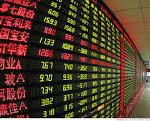
Chinese share trading halt sends cold ripples across Asian markets-The Guardian
Asian markets slide to three-month low and currencies falter after China cuts market trading and devalues the yuan. Asian markets fell to a three-month low on Thursday after Chinese shares tumbled more than 7% and triggered a market closure while Beijing accelerated a devaluation of the yuan, raising the spectre of a regional currency war. The MSCI index of Asia-Pacific shares, which provides a rough overview of market performance across the region, dropped 1.4% to its lowest level since September.
Shades of Southeast Asia Among Hong Kong’s Missing Book Sellers-The Diplomat
Five people who are linked to a Chinese book shop in the well-known Causeway Bay shopping precinct have gone missing amid speculation they have been taken by mainland authorities. One is a British citizen another is Swedish-Chinese. The forced disappearance – a euphemism for state-sponsored kidnappings – of critics, political opposition or just plain irritants is another. Nor are those disappearances uncommon in Southeast Asia. The disappearance of agriculturalist and reformer Sombath Somphone in Laos, labor protester Khem Sophathin Cambodia and lawyer Somchai Neelapaijit in Thailand are three of the more notable examples in a region mired in human rights abuses.//As China grows closer to authoritarian Thailand and Lao PDR, disappearances in those countries will increase, especially in Thailand. However, the case of Sombath teaches us that these disappearances will not go ignored, even though it has led to few answers in the Lao activist’s case.
Where China and the United States Disagree on North Korea-The Diplomat
The recent nuclear test has exposed a deep Sino-U.S. gap over North Korea. The “artificial earthquake” in North Korea caused by its fourth nuclear test has set off geopolitical tremors in U.S.-China relations, exposing the underlying gap between the two countries that has long been papered over by their common rhetorical commitment to Korean denuclearization.
Legacy of unexploded ordnance in Indochina: Whose responsibility? Whose cost?-Mekong Commons
In late November, in Mondulkiri province, Cambodia, a tragically common incident happened. A woman was killed and three of her family members injured by a grenade that remained from the Second Indochina War. The death was the 63rd by unexploded ordinance (UXO) in 2015 in Cambodia, according to the Cambodian Mine Action and Victim Assistance Authority. Forty years have passed since the Second Indochina War, but still hundreds of people in the region die or are injured each year by the unexploded ordnance (UXO) that remains. Many people, especially those who live in the region’s more remote areas, live with daily fear. What is the international community doing about this legacy, and why is it taking so long?//Siem Reap’s Cambodian Landmine Museum and Vientiane’s COPE Center are two places in the region doing important work on UXO issues.
SUSTAINABILITY AND RESOURCE MANAGEMENT
Beijing air quality improved in 2015 despite pollution alerts, authorities say-The Guardian
Environmental authorities in Beijing say the Chinese capital’s air quality in 2015 was better than the year before despite the city’s first two red alerts for pollution late in the year. China has been setting national and local targets to reduce its notorious air pollution as citizens have become increasingly aware of the health dangers. Beijing’s municipal government has been replacing coal-fired boilers with natural gas-powered facilities, forcing older, more polluting vehicles off the road, and closing or moving factories that are heavy polluters.
What’s in store for China and the environment in 2016?-China Dialogue
This year will see the beginning of China’s 13th Five Year Plan (FYP), and it need to be a good start. That means policymakers will have to apply the central government’s idea of “ecological red lines” when formulating plans, due for completion by June, for the energy sector over this period. There are several key parts of the 13th FYP that the outside world should be watching.
Thailand’s forest rangers step up training in violent ‘blood wood’ war– The Guardian
The forests of the Mekong region have become a battleground as rangers try to stop poachers from driving the Siamese rosewood tree to extinction. It’s dawn in Thailand’s Eastern forest, and the sound of combat boots echoes through the jungle mist at Ta Phraya national park’s headquarters. The stomping boots belong to forest rangers on a counter-poaching tactics course. They are training with Hasadin, a team of elite rangers formed in June 2015, whose mission is to stop the Siamese rosewood tree from being driven to extinction by poachers.
What Is the Value of the Mekong River?-The Diplomat
Putting a value on the Mekong River and measuring the impact it has on the gross domestic product (GDP) of downstream countries has for a long time been a strategic target of bureaucrats and non-governmental organizations seeking to measure and protect the world’s twelfth longest river and its contribution to regional growth. Now scientists with the Mekong River Commission (MRC) have gone much of the way in answering that. According to recent estimates, fisheries alone from the Lower Mekong Basin are valued at a whopping $17 billion a year, contributing three percent to the combined GDP of Vietnam, Cambodia, Laos, and Thailand.//What is the value of assessing the monetary worth of ecological resources? How can this number be used to influence decisions regarding dam construction along the Mekong?
Related: Wonder of the aquatic world under threat from plans for Mekong dams The Guardian
Severe drought could be the biggest concern for this year-The Nation
Natural disasters and more severe drought brought on by climate change should be one of the biggest concerns for Thailand in 2016, |academics said. “With the weather pattern shifting more than before, seasons and weather will become more unpredictable. This is due to climate change, which will most certainly have the worst effect on our food production as it relies heavily on weather,” Tara Buakamsri, Greenpeace Southeast Asia’s campaign director, said.
CHINA
Wall St. Slides After Chinese Stocks Plunge-NYT
Global stock markets tumbled on Monday, as further fears about a slowdown in China’s economy reignited concerns about global growth. The selling on Monday started after China released a weak manufacturing report, and continued after the United States did the same. Chinese stocks lost nearly 7 percent of their value, although they appeared to stabilize Tuesday morning. The Standard & Poor’s 500-stock index, the main benchmark for the United States stock market, posted a decline of 1.5 percent, while European stocks fell.//This is a stock plunge that will likely repeat many times in the coming years. China’s slowdown is not finished.
Related: Relatively Stable Trading in Stocks a Day After Sell-Offs-NYT
North Korea’s Hydrogen Bomb Claim Strains Ties With China-NYT
North Korea’s announcement that it had completed a test of the weapon infuriated China, which had recently sought to forge closer ties with its reclusive neighbor. North Korea’s test of a nuclear bomb on Wednesday seemed aimed at antagonizing a familiar adversary, the United States. The army spoke of the need to ward off the “imperialist aggressors,” and a television commentator warned that foreigners were intent on destroying the country’s way of life. But North Korea’s decision had a more surprising target: China, its neighbor and chief ally for six decades, which had recently sought to forge closer ties.
Related: U.S. Prods China on North Korea, Saying Soft Approach Has Failed-NYT
Tibet in Limbo: An Exile’s Account of Citizenship in a World of Nation-States-The Diplomat
The international community needs to address the plight of Tibetan refugees. Tibet is a prime example of this 21st century phenomenon of statelessness in a world of nation-states. In fact, many parallels have been drawn between the troubled Himalayan region and stateless peoples from the Palestinians to the Kurds.
SOUTHEAST ASIA
Cambodia Marks Milestone in UN Peacekeeping Contributions-The Diplomat
It is the tenth year the ASEAN state has sent peacekeepers abroad. According to Cambodian government estimates, since 2006, Cambodia has dispatched 3,372 troops, 108 of whom were female, to join UN peacekeeping operations in Chad, the Central African Republic, Cyprus, Lebanon, Mali, Sudan, South Sudan, and Syria. The country currently has a total of 869 personnel deployed globally, with 853 troops and 16 military experts, according to UN contributor statistics. Like many other contributing states, Cambodia’s involvement in peacekeeping is shaped by various factors, including the pursuit of regional and international recognition.//This is certainly a nice accomplishment for Cambodia – hopefully it will be able to contribute more in the future.
Thailand, Cambodia Could Finish New Rail Link By End of 2016-The Diplomat
Cambodian local official reaffirms desire to complete railway line within the year. Cambodia and Thailand have long sought to complete a railway line connecting them which would boost tourism and business. For Cambodia, the link would be part of a broader rehabilitation of its rail system, much of which was destroyed during civil war beginning in the 1970s. And for Thailand, it would serve as another project within the current government’s ambitious infrastructure plans.
In Myanmar, A Simple Verdict on a Flawed Election-The Diplomat
Myanmar’s November election—a landslide victory for the National League for Democracy (NLD) – was a procedural success. Turnout was high, the voting process went smoothly, and there was little electoral violence. These are impressive results for a nation ruled under military dictatorship for half a century, until the country began introducing modest democratic reforms over the last few years. The November 8 election, however, has elicited a fair amount of criticism from the international community. And it’s easy to understand why.//This authors are correct – if you’re a Buddhist Bamar living in Yangon, then the November 8 elections were a great achievement for your country. If you’re a impoverished Rohingya trapped in Rakhine state, then Myanmar might not be a country that you want to live in anymore, as evidenced by the thousands who risk their lives to get to Thailand, Indonesia, Malaysia, etc every year. The elections are certainly a laudable achievement from one perspective, but Myanmar has much work to do if it wants to attain ‘national reconciliation’.
Related: Myanmar: Fahrenheit 436-The Diplomat
Former Lao Finance Minister Named in Corruption Probe-Radio Free Asia
Authorities in Laos have taken into custody a former finance minister and four colleagues in connection with a scheme in which private companies cashed government bonds issued in promise of payment for work they never performed, according to a source in the one-party communist state. Phouphet Khamphounvong, Lao finance minister from 2012 to 2014 and formerly a governor of the Bank of the Lao PDR (People’s Democratic Republic), was arrested “at the end of December 2015 while attending a party,” a finance ministry source told RFA’s Lao Service.//Knowing the high levels of endemic corruption present in the Lao government, this arrest is more likely to be about politics than any pursuit of justice for the Lao people. The real questions – what did he do and who did he piss off?
This week’s news digest was compiled by Brooke Rose, with added analysis by Will Feinberg.
 Regional Roundup for Week of 8.30.2015
 Regional Roundup for Week of 10.11.15
 Regional Roundup for Week of 3.22.15


