Category Archives: China

Remarks: Strengthening Cooperation & Promoting Cross-border Transport Logistics

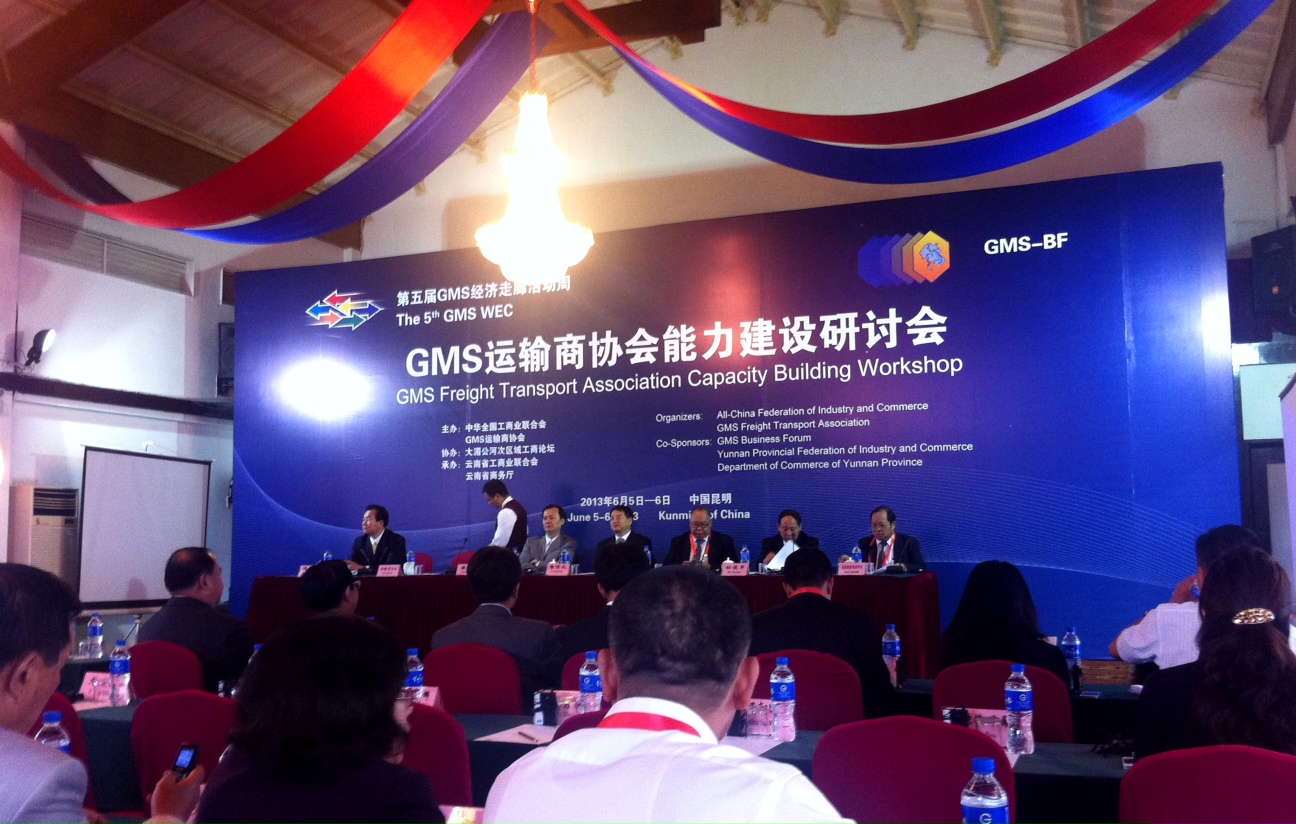
GMS workshop

NOTE: The following is the English language transcription of a speech by Yang Shiji, Vice Director of the Yunnan Provincial Government’s Research Office, presented on June 5, 2013 at a workshop on GMS (Greater Mekong Subregion) Freight Transport Association Capacity Building.  The first part contains an interesting portrayal of connectivity potentials and a brief history of transportation linkages between China and Southeast Asia.  The reader should keep in mind that the area in discussion contains some of the most difficult terrain in the world, but the speaker’s main concerns are inter-government cooperation and the harmonization of customs and trade procedures throughout the region.   The final portion of the speech provides a framework to improve connectivity and upgrade logistical services within the region. 

For reference, a map of the Greater Mekong Subregion is linked here

“Strengthening Cooperation and Promoting Cross-border Transport Logistics in the Greater Mekong Subregion”

Cross-border logistics is an emerging industry combining several composite services such as transport, warehousing, and information.  Connecting production with consumption and linking countries to the outside world, the industry is composed of tangible and intangible factors and covers the entire process from product manufacturing to commodity flow.  Therefore, giving full play to the function and role of transport and upgrading the efficiency of cross-border logistic transport will have significant impact on all aspects of the economic and social lives of the countries in the GMS.  With the maturation of China’s market economy, a professional and efficient logistic system has been an indispensible factor for upgrading the quality of its economic functions, the income of its enterprises, and an accelerator for its entire national economy.

Located at the junction of China and Southeast Asia, the South Asian Subcontinent, Yunnan borders with Laos, Vietnam, and Myanmar, and shares with them a 4060 km national boundary line, about one-fifth of China’s total land border.  It has 25 frontier counties, 23 national entry ports, and over 100 trading channels for border residents.  To its east Yunnan is linked to the Zhujiang River delta and the Yangtze River delta economic circles, and to its south it has direct access from three routes, east, central, and west, to Hanoi, Bangkok, Singapore, and Rangoon via the Kunming-Bangkok highway and the Pan-Asia Railway, currently under construction.  It is the gateway to the vast western hinterland of China to its north.  To its west, it has access to the Indian Ocean via Myanmar.  In a word, the province enjoys the locational advantage in “connecting with two oceans, the Pacific Ocean and Indian Ocean, and linking with three major markets in East Asia, Southeast Asia, and South Asia.” Continue reading
Leave a Comment

Filed under China, DOCUMENTS, Economic development, GMS, Laos, Mekong River, Myanmar/Burma, Regional Relations, Technology, Thailand, Vietnam

What’s at Stake for the China-South Asia Expo?

expo

The China-South Asia Expo opened without a hitch yesterday in Kunming despite online calls for a continuation of environmental protests outside of the Expo’s opening ceremony site.  It seems protesters decided to stay home due to a combination of sticks and carrots offered by local authorities.  On June 3, Kunming’s mayor announced the release of key environmental impact assessment data concerning the construction of a PetroChina oil refinery and PX chemical plant side project scheduled for construction 40 km from the city’s downtown area.  Also, the excessive presence of armed and unarmed public security officers lining the city’s streets and manning the Expo site also likely turned protesters away.

What is the rationale behind the excessive security measures?  What’s really at stake at the 1st China-South Asia Expo?

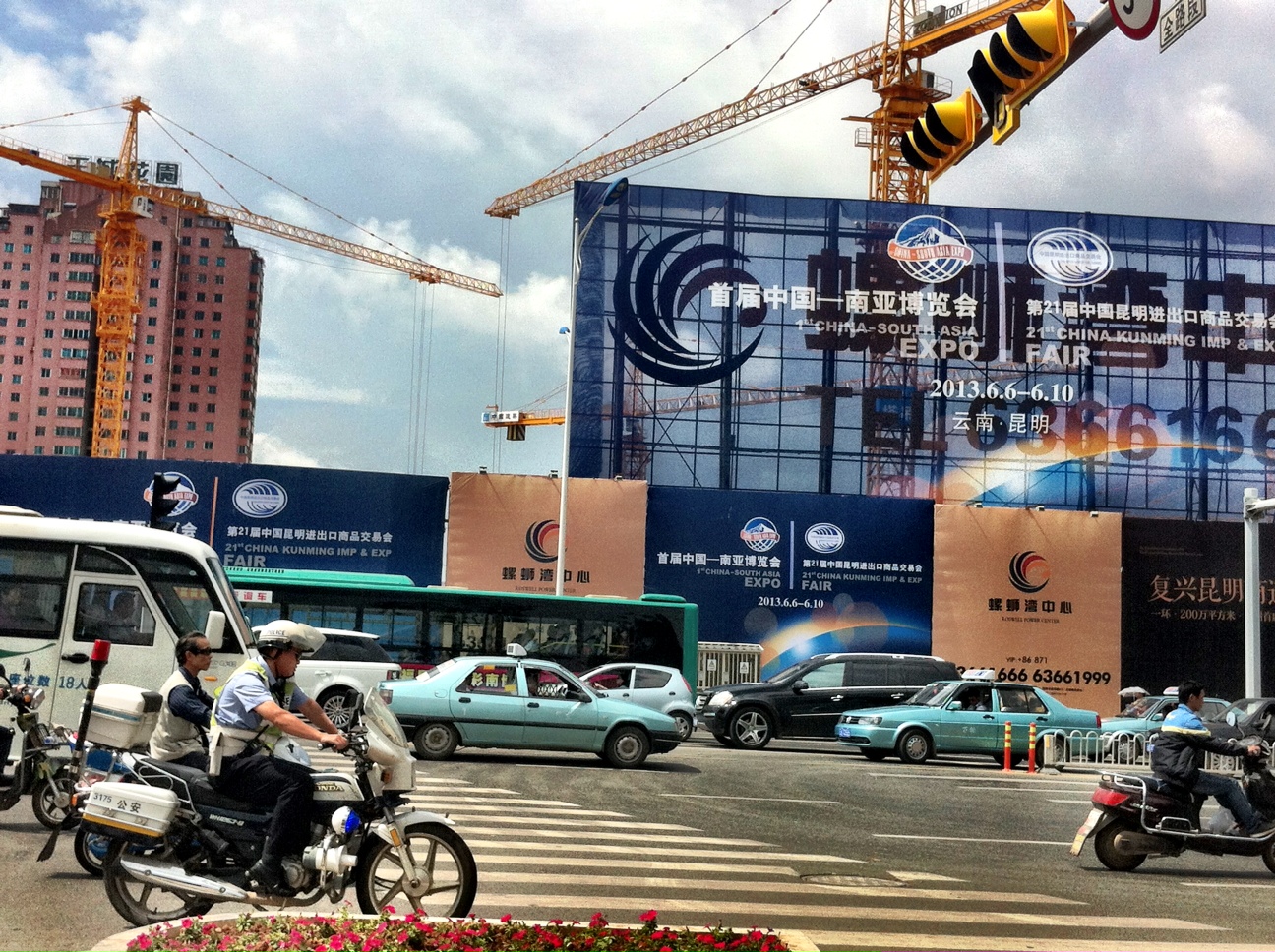
The Expo, a combination trade fair and high level forum for investment and trade promotion discussions between China, Southeast Asia, and now South Asia, is part of China’s Bridgehead Construction strategy to establish Kunming and Yunnan province as a gateway between China and its neighbors to the south and west.  A smoothly running Expo not only will seal multilateral agreements and high-value business deals that will streamline regional trade and investment, but it will also guarantee the continuation of soft-budget infrastructure development projects sponsored by Beijing to Kunming and Yunnan province that are part and parcel of the “Bridgehead” strategy.

Continue reading

3 Comments

Filed under China, Current Events, Economic development, Energy, Environment and sustainability, Foreign policy, GMS, Laos, Myanmar/Burma, Vietnam

China’s media report on Kunming’s environmental protests

The English language discussion of Kunming’s ongoing environmental protests should not exclude China’s official media reports.  The translation below is of a 5/28 article from the Southern Weekend website.

Yunnan’s Anning City Retracts Notice on Face Mask Registration

from Southern Weekend (南方周末)May 28, 2013

More than 200 copies of a ‘Letter of Guarantee’ have been signed by vendors of advertising services, printing services, copy services, face masks, and t-shirts.  These vendors promise to strictly follow national laws and regulations regarding their commercial business and promise not to speak of rumors, create rumors, or spread rumors.  They promise not to participate in any form of information broadcasting, forwarding of messages, and not to participate in sit-ins, protests, or demonstrations of any kind.  They promise to not print, create, or publish things related to the Anning PetroChina Oil Refinery or the “China-South Asia “Expo or advertisements, propaganda materials, or any materials of negative influence.  This “Letter of Guarantee” goes into effect on the day of signing and is valid through June 30, 2013 and sales of all services above must also be accompanied by ID registration of the purchaser.  –Official statement from the Kunming Economic Development Zone Industry and Commerce Bureau. 

The exposure of Anning’s required ID registration of face mask purchases has stirred up considerable public debate.  On the evening of 5/25, the Anning City government’s press office issued a statement saying Anning’s Industry and Commerce Bureau will retract the notice on face mask registration.  But according to a report on 5/27, the “Procedure for registration of face mask purchases” was still in effect for much of the Kunming municipality and was not exclusive to Anning City.  Registration is still required for printing, copying, and publication services. Continue reading

4 Comments

Filed under China, Current Events, Economic development, Energy, Environment and sustainability, Governance

Mr. Thein Sein Goes to Washington… Mr. Abe Goes to Naypidaw

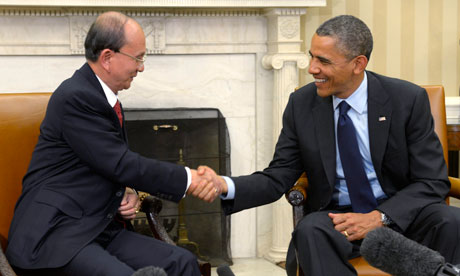
This past week saw big foreign policy news from Myanmar (Burma). Just days after meeting with US President Obama in Washington, Burmese President Thein Sein returned to Naypidaw to meet with Japanese Prime Minister Shinzo Abe. Both visits saw improvements in Burma’s respective relations with the two countries, but which of the two relationships remain closer? From whom did Burma gain the most, and vice versa? The clear answer is Japan.

President Thein Sein visited Washington at the beginning of last week, becoming the first Burmese leader to visit the US since Ne Win in 1966. The visit was a largely symbolic one, lacking many of the tangible economic benefits that are usually associated with these sort of state visits. Aside from agreements to strengthen bilateral trade relations with two US agencies, most of Myanmar’s benefits can be found in the language of US officials. Before the President arrived, US Press Secretary Jay Carney referred to the country as Myanmar, not Burma. Myanmar is the name used by the military junta since 1989, while Burma is an appellation preferred by opponents of the regime. President Obama also referred to the country as ‘Myanmar’ and while it does not mark an official policy change, it does reflect a change in attitude.

During his meeting with President Thein Sein, Obama raised the perennial issue of human rights, but at the same time expressed strong support for the leader. Also of note, US Senator Mitch McConnell, a long-time champion of sanctions against Myanmar, said he was no longer in support of continued sanctions against the country, paving the way for smoother relations in the future. The Burmese president’s visit to the US came without multi-million dollar contracts and major US investment in the country will have to wait, but Thein Sein’s visit did represent a further thawing of the relationship, and offers hope for the future.

Continue reading

2 Comments

Filed under China, Current Events, Economic development, Foreign policy, Myanmar/Burma, Regional Relations

Air pollution and Kunming’s prevailing rainy season wind patterns

Anning PetroChina

Click to enlarge image.

This image shows prevailing wind patterns during Kunming’s rainy season which runs roughly from May to October.  Strong southwesterly winds bring monsoons from the Bay of Bengal over the Burmese landmass into Yunnan province.

The red rectangle in the southwest corner is the site of the PetroChina oil refinery, the focus of a series of recent environmental protests by concerned Kunming residents.  GoogleMaps has detailed imagery of construction site’s layout.  The purple area to the north is Kunming’s city center, determined by the area inside of Kunming’s 2nd ring road and home to a population of approximately 2.5mn.

Winds passing over the 10 million ton PetroChina oil refinery will send toxic pollutants directly over Anning city and Kunming’s most populated urban districts.  Anning is Kunming’s largest satellite city with an urban population of 100,000.  Kunmingers often drive to Anning to soak in its famous hot springs (also predictably in the pollution path), but in the last 10 years, most of Kunming’s heavy industry moved to Anning in an attempt to reduce pollution in the Dianchi Lake watershed.

After passing over Anning, winds become more concentrated and pick up speed to shoot through three passes in the Xishan (Western Hills) mountain range.  The solid line represents the most voluminous wind channel.  It doesn’t take an expert to see that the oil refinery site was chosen at the most optimal point for dumping pollution onto Kunming.  Perhaps this is why city officials are reluctant to release data from the project’s legally mandated environmental impact assessment.

To make matters worse, a strong southerly lake effect wind, constrained by Kunming’s eastern hills, pushes all westerly winds northward into the city center as they break over Xishan mountain range.  This guarantees that nearly all winds that pass over the oil refinery site through Kunming’s downtown and finally into the city’s north district, home of an additional 1.5mn residents.  Kunming’s north district, currently undergoing a major urban facelift, is planned as one of the city’s new core urban centers with a projected population of 3 to 4 million residents by 2020.

3 Comments

Filed under China, Current Events, Economic development, Energy, Environment and sustainability, Uncategorized, VISUALS

Yunnan’s Wild Mushroom Season is Here!

mushroom market small

PHOTO: Kunming’s Guandu mushroom market

You may know that Yunnan has been called a ‘Kingdom of Biodiversity’, but perhaps you didn’t know that Yunnan is also a ‘Kingdom of Mushrooms’. Research shows that more than 600 species of mushrooms grow in Yunnan, of which 20-30 are species of famous edible mushrooms found across the entire province. Below I list the six edible mushrooms known as the most delicious and most common to Yunnan. The rainy season (also the mushroom season) is coming shortly, I hope you can find at least one or two these mushrooms in the wild! Continue reading

5 Comments

Filed under China, Food, Health, Yunnan Province

Law of large numbers: The growing gravity of Kunming’s environmental protests

Kunming’s ongoing protest against the construction of a 10mn ton petroleum refinery 40km from the city center continues to gather attention in China’s domestic media and in the international media.  Yet despite continuous coverage of the protest in China’s Global Times, South China Morning Post, the Telegraph, the Guardian, and most recently the Atlantic (among many other media outlets), questions concerning the gravity of the protests continue to pop up in online chat forums: Does a protest of 1000+ Chinese citizens in a city of 7 million have impact?  Given the numbers, does the average Kunming citizen know about this issue?  Can protests of this scale force changes to policy agendas?

ExSE’s answer to all three of those questions is an unequivocal YES.  Kunming mayor Li Wenrong would have not made an impromptu engagement with protesters last Thursday if he didn’t see the movement as a legitimate challenge to the status quo.  He followed through on his promise to open a Sina Weibo account by noon on 5/18 and since then he’s gathered more than 75000 followers.  Further, an online poll created after the initial 5/4 protest exceeded its limit of 100,000 responses within three days.  The poll asked a simple yes or no question: Should there be a PX plant in Anning? An overwhelming majority of 80% ticked “no.”  It’s no surprise that the poll’s weblink was eradicated last week.  Admittedly, there is no way of knowing whether Li Wenrong’s 75k followers are mostly from Kunming, and online polls are never without bias; but the large numbers undeniably say something and suggest that the 2000+ protesters are representative of a much larger group of concerned citizens. Continue reading

3 Comments

Filed under China, Current Events, Economic development, Energy, Environment and sustainability, Governance, Myanmar/Burma, Yunnan Province

Taiwan: The most important R.O.C. in the South China Sea

Events over the last couple weeks have re-drawn attention, rightfully, to an oft-overlooked player in the South China Sea disputes, Taiwan (aka. Republic of China). SCS analyses often dismiss Taiwan’s claims as a marginal issue and is only mentioned in the context of mainland China’s claims, however as the most recent incidents with the Philippines demonstrate, Taiwan’s strategic importance to the South China Sea (and East China Sea) is actually woven into the very core of disputes.

Fishermen Wars

On May 9, a 65 year old Taiwanese fishermen named Hung Shih-cheng was shot and killed by the Philippine Coast Guard in a standoff. The PH Coast Guard claims that they shot at Mr. Hung’s vessel  to disable the engine as a self-defense mechanism because the fishing boat was attempting to ram-and-run. Eye-witness accounts through Taiwanese media however, report that the boat was struck by 30-40 bullets, which seems excessive. Mr. Hung was unarmed, accompanied on the boat by his son and two other sailors.

On May 10th, the news broke and Philippine officials acknowledged the incident and indicated investigations have began. Coast guard commander Rodolfo Diwata Isorena indicated that the 11 officers involved have been suspended from duty. On May 12, with tensions running high on both sides, Taiwan issued a 72 hour ultimatum to the Philippine authorities, demanding formal apology from the President, appropriate reparations to the fishermen’s family, and extradition of perpetrators to Taiwan for investigation to ensure “justice”. On May 15th, just minutes before the deadline, the Philippines announced that it would send its representative to Taiwan to apologize but that no extradition will occur and was unclear with regards to reparations. Taiwan subsequently rejected this apology declaring it insincere and insufficient. It announced a series of retaliatory actions, including withdrawing its diplomatic representative, conducting elevated sea patrols, and sanctions on work permits for the nearly 87,000 Filipinos working in Taiwan. The last action would prove to be costly to the Philippines which sends over a million workers overseas each year and is heavily reliant on remittances.

On May 17, Taiwan carried through with its threat to conduct joint Naval – Coast Guard drills in the SCS, the first time ever crossing the 20* latitude “temporary enforcement line” since the Taiwanese government established it in 2003. Taiwan indicated that these drills, along with heightened patrols (increase of 1-2 ships to 3-4 ships) are not a one-off occurance but will continue indefinitely, in order to ensure the safety of its fishermen. Continue reading

Leave a Comment

Filed under China, Culture, Current Events, Energy, Environment and sustainability, Foreign policy, Philippines, water

Unstoppable: Kunming’s environmental protest movement takes a powerful turn


protest view

Kunming’s anti-PX protest movement broke through to new heights on Thursday as more than 2500 protesters took to the city’s downtown streets.  The unexpected success of this impressive NIMBY movement has empowered protesters to shift targets – what began two weeks ago as a movement opposing the construction of a polluting chemical plant attached to a PetroChina oil refinery 40km from the city center has evolved into a full blown protest against the entire 10mn ton oil refinery project.  Throughout the morning the protesters worked a powerful and persistent ground game breaking through rank after rank of public security forces to gain total control of Kunming’s downtown streets by noon.  Protesters marched in peaceful and non-violent demonstration for more than five hours under the intense Kunming sun and prompted an engaging appearance of Kunming mayor Li Wenrong who sympathized with protesters and promised immediate change – another breakthrough victory for this growing social movement. Continue reading

5 Comments

Filed under China, Current Events, Economic development, Energy, Environment and sustainability, Myanmar/Burma, Uncategorized

Mixed signals and smokescreens: Kunming’s government responds to Anti-PX protests

On Saturday, 5/11 anyone with cellular service registered to the Kunming municipality received two brief text messages concerning the city’s recent anti-PX protests.  Sent from the Kunming’s official propaganda offices, the messages when read separately state the key decision makers deciding the fate of the polluting PX plant are willing to increase transparency and engage with the public on this issue. However, when read together, the messages send mixed signals and suggest decision makers are creating a smoke-screen to stem a planned protest scheduled for later this week and buy time for the safe passage of the PX plant.

The first text message reads:

“Kunming Mayor Li Wenrong expresses that after the ‘By-products projects attached to the PetroChina Oil refinery feasibility study’ is finished at the end of July, he will use democratic decision making processes and stringently act on this issue in accordance to the needs of majority of the masses.”

This message suggests the mayor could follow China’s environmental law by conducting an environmental impact assessment (EIA) on the PX plant (the by-product project he mentions) and releasing the findings to the public.  It also suggests he could hold a public hearing before approval for the PX project is granted – another legal requirement.  Both of these measures were directly demanded at last week’s protests attended by more than 2000 participants in downtown Kunming, so perhaps the city government is willing to play ball AND more importantly,  follow the law.

The second text message reads:

“The CEO of Yunnan PetroChina expresses that the Kunming Anning Oil Refinery project is a fuel processing plant that producing State 5 Grade gasoline, diesel, and jet fuel.  This project will not include PX processing equipment and will not produce PX.”

Read separately, this message suggests the issue has concluded, and Kunmingers can put down their protest posters.  With no PX plant in the works, why show up for this week’s protest, right? Continue reading

Leave a Comment

Filed under China, Current Events, Energy, Environment and sustainability, Uncategorized