Category Archives: Yunnan Province

Kunming Train Station Attack Suspects Arrested in Indonesia

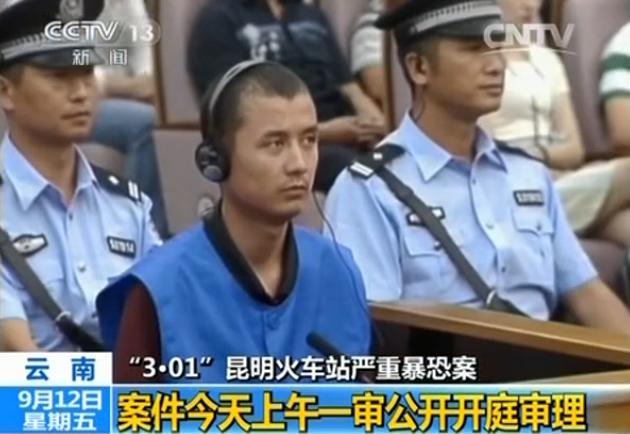
Four of the attackers were found guilty following their trial in September 2014.

Four men suspected of planning the 2014 Kunming Train Station attack were arrested this week in Indonesia. According to a report in the Jakarta Post, the Chinese and Indonesian governments agreed to enhance counter-terrorism cooperation in exchange for  information regarding nine Chinese nationals suspected of planning the Kunming terrorist attack. The agreement was signed by the head of the Indonesian  National Counterterrorism Agency (BNPT) Comr. Gen. Saut Usman and China’s Deputy Public Security Minister Meng Hongwei  in Beijing on Tuesday, February 10.

The terror suspects were reportedly arrested on Monday near Poso, Central Sulawesi Province. Speaking after the signing of the cooperation agreement,Saut, director of the BNPT,  said that only four of the nine suspects were arrested. Of the remaining five, three fled into the Sulawesi jungle, while two others escaped to Malaysia. After being picked up by police, the four suspects initially admitted to being Chinese nationals from Xinjiang, however they later changed their story, saying they were from Turkey. China and Indonesia signed an extradition treaty in 2009 so if it is true that suspects are indeed Chinese nationals, it is likely that they will be soon be sent to China to face charges.

In recent years, more and more Uighurs have fled China through Yunnan and into Southeast Asia. In  March 2014, a group of more than 200 Uighur refugees were found in a Thai human trafficking camp near the Malaysian border and earlier that month more than 60 Uighurs were caught escaping into Malaysia. In both cases, those in question claimed Turkish nationality. In previous cases, Uighurs found immigrating illegally into Cambodia and Malaysia were extradited back to China, where they were imprisoned.

In Chinese media, connections between the suspects and the Islamic State in Iraq and the Levant (ISIL) have been made. According to one story on Sina.com, the four suspects were found with Islamic State paraphernalia, leading some to believe that they have a relation to the terrorist organization.  To date, more than three hundred Chinese nationals have joined the Islamic State, and recent reports say that three Chinese fighters were beheaded earlier this month as punishment for defection.

Though the exact story of their arrival in Sulawesi is murky at the moment,  Saut believes they are indeed from China. “They are believed to have fled to Poso by taking the land route through Myanmar, southern Thailand and Malaysia. From Malaysia, they entered Indonesia through Medan with Turkish passports and they posed as asylum seekers when they were in Medan,” he said as quoted by Antara news agency. According to Saut, the terrorism suspects went to Puncak in Bogor, Java to join a group of people from the Middle East who wanted to go to Poso.

Central Sulawesi has long been one of Indonesia’s most unstable regions. Starting in the late nineties, tensions between the province’s Muslim and Christian communities began to boil over before a spate of violence gripped the province. A series of bus attacks in Poso in 2002 and the beheadings of three teenage girls in 2005 brought a certain notoriety to the region  and to this day it’s known as a hotbed for extremist activity in the Indonesian archipelago.

The timing of the arrests and the signing of the counter terrorism cooperation agreement between the two countries is unlikely to be a coincidence. According to information received from the Indonesian Embassy in Beijing, the suspects’ names were on international terrorist watchlists and it is probable that Indonesian authorities picked them up independent of Chinese involvement. Following their arrests, it is likely that the Indonesian government used the news as a bargaining chip  to get the Chinese to sign the bilateral cooperation agreement. The arrests, being related to such a high-profile case, and the cooperation agreement should be seen as victories for Indonesia, whose relationship with China is growing closer, despite persistent maritime issues.

Leave a Comment

Filed under China, Indonesia, Kunming Train Station Attack, SLIDER, Yunnan Province

China’s Upscaling of Potato Production Sprouts Controversy


Farmers in China's Gansu province show off increases in potato yields

Farmers in China’s Gansu province show off increases in potato yields

The Chinese Ministry of Agriculture started the year with an awkwardly named but nevertheless resonating event: at the “Potato Staple-ization Strategy Research Symposium” Vice-minister of Agriculture Yu Xinrong proclaimed that potatoess shall become China’s fourth staple food.  That netizens tweeted more than half a million responses on Sina Weibo about this denotes more than sheer curiosity. While many of the conversations focused on a perceived Chinese consumers’ tardiness in getting on the Columbian Exchange bandwagon, the announcement could have an impact throughout the country and affect the ethnic minority regions and the Southwest in particular.

Historically speaking, potatoes, an American contribution to the world’s food basket, quickly became a mainstay on the tables through most of the Old World, despite initial trepidation among the Europeans.  Research suggests they might have contributed extra nutrition and thus the population boom that brought about the Industrial Revolution. The Irish Famine ensued, and the rest of history is laced with potato jokes.

Spud Stigma

In China, however, spuds have largely remained within the category of dishes (菜) rather than the staple source of carbohydrates and thus energy of the meal (主食). Unlike the other new comer, corn, which has successfully shed its foreign flair, the name Western taro (洋芋) has stuck with taters and is further strengthened by deep-fried potatoes served up by fast food industry that positions it as a Westernized modern food choice. The association of potatoes with foreignness has also been brought to the New World by immigrants, and in a subaltern twist the term potato queen is used to describe Asian gay men that prefer non-Asian partners.

Besides foreigners, the other factor that gives spuds a bad name is poverty. An unnamed researcher has been widely cited saying that potatoes are the staple food for 75% of China’s officially poor counties, where potatoes are consumed “instead of cereals” up to half of the year. What’s more– a lot of that poverty is concentrated in ethnic minority areas: the backward denizens of supposedly sad places like Yunnan, Guizhou, and Gansu rely on spuds to scrape out a living.

The reverse side of the perceived unfortunate overlap between ethnicity, poverty, and potatoes is something that a southern Yunnanese acquaintance imparted over lunch the other day: spuds are grown for oneself. Adapted for a wide variety of ecological conditions and productive even in poor soils and under other unfavorable circumstances, potatoes provide easy and reliable sustenance. More importantly, in the words of anthropologist James Scott, potatoes can be “appropriation-free”: bulky, low in commercial value, and harvested intermittently, potatoes like other tubers are a good way of keeping the tax-collectors and their ilk at bay. It is no coincidence that potatoes are so prevalent in refuge zones as different as Guyuan in southern Ningxia and the balmy mountain slopes of Yunnan and Guangxi.

Cumbersome taters

While direct requisition of crops is not much of a concern for farmers today, especially since the abolishing of farming taxes in 2006, potatoes are nevertheless strongly affected by farming policies and national food security strategies. For justifiable historic reasons the Chinese government, which is linked to some of history’s worst natural and man-made famines and related unrest, at all levels is extremely concerned with ensuring availability of food. With national grain self-sufficiency as the core principle, the central government has consistently demanded and incentivized production of staple crops through a mix of administrative mandate to grow certain crops, direct subsidies to house-holders and larger producers, and intervention pricing. While intervention purchases and stockpiling has been extended to the somewhat-ridiculed strategic swine reserve, it still mostly focuses on grains and shuns spuds because of the difficulty of appropriation.

Unlike bacon, you can’t just put some taters on ice for a few years, or depending on the situation either cellar the spuds for a good while or alternatively sell at a commodities exchange in Chicago if the price is right. Potatoes don’t keep well and the bulk makes them a lousy commodity for shipping. Despite globally being the fourth most significant staple (hence the frequent misstatement in the press that somehow the UN has declared potatoes as one of the global four staples), the governmental preference for a government-focused national-level food security rather than rural household level food-sufficiency has led to spuds falling behind in output growth. However, food security (what the Chinese government calls 粮食安全, not to be confused with food safety – 食品安全) is primarily concerned with the provision of food at the national level through market mechanisms rather than household self-provision. In other words, there is no tater scarcity at the household level, where those who choose to grow them can have their fill, but that does not result in peaceful minds behind the planners’ desks.

It is not to say that potatoes are some sort of primeval anarchist food taking on the capitalist-with-Chinese-peculiarities hegemony. For one, local governments have been as quick as ever to get their paws in the potato pot and are pushing potatoes as one of the options for farming development. According to the National Statistics Bureau, between 2006 and 2012, total potato output increased by about 40%. That’s a solid increase of over more than 5% a year, albeit rather low when compared with the expansion of many other indicators over the same time period. According to the UN Food and Agriculture Organization, China is the world’s largest producer of potatoes. Mind you, the FAO estimate for 2006 exceeds the Chinese central government’s estimates 5-fold, so go figure on who’s right.

It would also be a mistake to say that there is much pride in the importance in the potato in the regions where potatoes are important to the diet. During a recent month-long research stay with various rural households in Ningxia, I heard several apologies for offering too many potatoes and not enough rice to the guest. My insistence that, having grown up on a Latvian potato farm, I gladly take spuds over rice any time was accepted with a polite smile and puzzlement over the impossibility of such a statement. The shame of living off potatoes even by those who grow them is an obvious obstacle in increasing the demand for fresh potatoes and possibly even derived dry goods.

Technical solutions

The drive to (let’s borrow a word from the Ministry of Foreign Affairs’ repertoire) hype spuds encounters the simplest of economic realities: if there was demand for potatoes the farmers would meet it despite regulations slanted against it. After all, regulations have not stopped urbanization and the emergence of a secondary market for theoretically untradeable farmland. And if indeed the potatoes were so good for you as some have suggested, the market would have overcome the consumer acceptance obstacles described earlier and we would be eating spuds left and right.

The Ministry of Agriculture’s decision to “staple-fy” spuds should be interpreted as increased pressure to expand potato production – the stated goal is to almost double the current reported plantations of 80 million mu to 150 million mu. That’s increase of almost half a million hectares. New investment in growing technologies and varieties will be made available, which has predictably caused knee-jerk concerns about potential weakly regulated experiments with genetic modification. It also means a push towards more industrially processed and thus durable potato products, particularly using potato starch that, unsurprisingly, transforms the crop into long shelf-life products favored by retail supply chain managers and government food provision planners alike. To celebrate the new national potato staple-ization strategy, Shanxi potato entrepreneur Feng Xiaoyan, who goes by @sisterpotato on Sina Weibo, has launched a product line of potato mooncakes.

And while you praise the crackdown on superfluous gifts and thus a reduced (albeit not eliminated) chance of getting your next year’s Mid-Autumn bonus in the form of candied fork floss covered potato starch mooncakes, the good folks in China’s agricultural research and development industry are getting ready to partake in the expected windfall in research funding and new experiments. Local government officials and their cousins who own the farming companies are looking forward to filling their coffers with infrastructure programs and potential subsidies.

A curious and unfortunate potential side-effect of expanded cultivation is the replacement of existing technologies and varieties with improved yields with the accompanying other side of the coin– disappearance of existing livelihoods and genetic as well as cultural diversity. While the farmers of hilly dry parts of Yunnan will not be marching down the streets of Kunming against Monsanto (in fact, poor Monsanto is unlikely to be able to stick its finger in this pie), the fact remains that intensifying farming can leave the growers and the rest of us with fewer resources for when the bad times of crop failure, pests, or climate change hit.

Interestingly, this year’s Central Government Document Number 1, the annual proclamation of rural and development priorities, did not address potatoes and did not call for any expansion of the staple policies to include new crops. The State Council might not be as excited about spuds as Ministry of Agriculture is. Just like many issues, this one will be decided in the well-ventilated halls of newly built governmental districts with limited direct public input. Regardless though of whether one roots for the spud or takes a more tater-phobic stance, the potato staple-ization controversy has stirred minds and brought to dinner table conversation some of the fundamental issues at play in Chinese agriculture, particularly in the economically marginal regions.

1 Comment

Filed under Agriculture, China, Current Events, Economic development, Food, SLIDER, Sustainability and Resource Management, Yunnan Province

Oil pipeline connects Kunming to Andaman Sea

pipline map

Map of Sino-Burmese oil and natural gas pipeline. (Image via Stratfor)


A 771-kilometer long oil pipeline linking refineries in Kunming to oil fields off the western coast of Myanmar began shipments over the weekend. Built over six years, at a cost of 9.37 billion yuan (US$1.5 billion), the project was marred by controversy in China and, at times, violence and threatened cancellation in Myanmar.

An opening ceremony held in the Burmese city of Yangon on January 29 marked activation of the above-ground crude pipeline. It travels from the Andaman port of Kyaukpyu, through the Chinese border town of Ruili and on to Anning just west of Kunming. The inauguration was attended by Liao Yongyuan, general manager of China National Petroleum Company (CNPC), and U Nyan Tun, vice president of Myanmar, according to a report by website The Nation.

The pipeline is jointly owned by Myanmar Oil and Gas Enterprise and CNPC, with the latter controlling a majority stake of 50.9 percent after having financed most of the construction process. When operating at full capacity, the pipeline is designed to transport 22 million tons of crude oil into China each year, a total nearly double that reported when work on the energy conduit first broke ground in 2009.

Named after seabed fossil fuel deposits off the Myanmar coast, the Shwe pipeline runs parallel with a similar natural gas conduit that went online in 2013. First proposed in 2004, the twin pipelines were conceived in China as a way to bypass oceangoing tanker shipments of crude oil and natural gas from not only Myanmar, but also the Middle East and Africa.

Now that both pipelines are open for business, Southwest China will receive fossil fuels from countries to its west much more directly. Sea-bound shipments not only take significantly longer than those through the pipeline, but must also pass through the nominally United States-controlled Strait of Malacca — one of the busiest ocean shipping lanes in the world.

As with many Sino-Burmese infrastructure projects, the twin Shwe pipelines were not guaranteed to ever be finished. Construction was nearly halted in 2012 when Burmese parliamentarians threatened to mothball the project over environmental concerns, reported labor strife and claims of forced village relocations. On the Chinese side, well-publicized Kunming rallies against a refinery-related petrochemical factory also brought the future of the pipeline into question, at least momentarily.

This article was written by  and originally published in GoKunming.

Leave a Comment

Filed under China, Current Events, Energy, Myanmar/Burma, SLIDER, Yunnan Province

A Tibetan Christmas in Yunnan

Brendan 1

Nestled on the banks of the Upper Mekong River — or Lancang (澜沧江) as it is known in China — are several Tibetan villages of mixed religion where Buddhist and Catholic families live together and often join in each other’s festivals. While engaged in research on the history and budding economy of winemaking in this region, I was able to take part in the annual Christmas mass and festival in the village of Cizhong (茨中). Here, celebrations are a two-day event and the largest festival of the year for the area.

First, a very short primer on the history of Catholicism in Yunnan’s northwest, and how the religious observance of Christmas became a major festival for local Tibetans: Yunnan’s official renaming of the nearby Zhongdian region as Shangri-La — based on James Hilton’s classic 1930’s novel Lost Horizon — actually gains a small bit of credence as the real location of Hilton’s story thanks to Cizhong and its nearby villages. In the book, the fictional Shangri-la is a mixed monastic community where Tibetan Buddhists, Chinese, and western Catholics all live peacefully in together. This is largely true in Cizhong today, though Catholicism historically faced a somewhat violent reception from some in the region, while other peopele openly welcomed it. French Catholic missionaries first arrived in northwest Yunnan in the nineteenth century, and viewed their work as a gateway to expanding their teachings across greater Tibet.Brendan 2

Never being able to reach very far into this isolated and at times violent country — often due to resistance from local Buddhist lamas — the French would eventually manage to set up a community of churches and convert many Tibetan communities in northwest Yunnan along both the upper reaches of the Lancang and Nujiang rivers. They were never quite able to penetrate much farther into Tibet. Even in these areas, religious crusaders at times faced violent repression from local religions leaders and in many cases even death.

Yet the French persisted in their missions, and were later joined in the early to mid-twentieth century by request by a group of Swiss from the Great Saint Bernard Hospice high up in the Alps. These priests had already become quite famous for providing mountain rescues and services to Catholic pilgrims crossing the Alps en route to Rome. Their expertise in mountain travel and high-altitude living were crucial in helping to continue and eventually take over the work first begun by the French in Yunnan.

Today in Cizhong, where the original cathedral built by the French in 1905 still stands, about 80 percent of villagers still actively practice Catholicism. They are led by a Han Chinese priest from Inner Mongolia who arrived in 2008, sent by the Catholic Association of China. Prior to this time, the village had no priest, and so no formal masses were held after 1952 when the remaining French and Swiss Christians were expelled. Villagers nonetheless maintained their religion and began to openly pray together in the 1980s after Deng Xiaoping lifted bans on organized religion put in place during the Mao era.

Brendan 3

2014 Christmas observance

Christmas today in Cizhong is a major event, and the non-religious portions of the festival are in fact celebrated by both Catholics and Buddhists alike. Major preparations and community events for the festival began on the morning of Christmas Eve, when many villagers gathered together at the church to clean the building and decorate it for the festival. Lunch was made for those working through the afternoon, and then everyone returned home before dusk.

The decorations set up in the church were predominantly what one might equate with a Western Christmas celebration: Statues of Mary and Joseph in shrines on each side of the altar were surrounded by strings of lights, and a similar statue of Christ was placed high up on the wall behind the altar for all to see. Several plastic Christmas trees which grace the inside of the church year round were also cleaned and redecorated with Christmas lights.

Brendan 4

A very elaborate nativity scene was set up to one side of the altar, decorated with pine boughs, with lights on its roof. In addition to the boughs, the areas in the front of the church are also decorated with branches from a local broadleaf evergreen tree with red berries from the genus Photinia. Local elders say they have called this plant shengdan shu — or ‘Christmas Tree’ — since the time of the French and Swiss fathers.
Brendan 5

Around 7pm, villagers slowly began to arrive and file into the church for the evening mass, which began this year around 8:30. It should be noted that Christmas seems to have become quite a publicized event in Cizhong, perhaps due to the attention it receives in tourism materials. The mass not only included Cizhong villagers but many foreign — particularly French — and Chinese tourists, photographers, and other academics including myself. Christmas Eve mass continued for just under two hours, after which everyone returned home until the next morning. Both Christmas masses, and particularly the morning mass, were much more extravagant than a typical Sunday service. Large numbers of villagers showed up from all over, dressed in their full traditional Tibetan regalia. This drew even more tourists.

The Christmas morning mass — which actually didn’t begin until almost noon despite villagers arriving around 9am — also included a full processional composed of the priest and his assistants walking into the church in their robes, with candles, a cross, and incense censer. None of this is normally used for weekly services.The language of the mass in Cizhong is peculiar.  Many familar Catholic songs sung by villagers are sung in Tibetan using the translations originally created by the French and Swiss. Conversely, the mass and bible readings themselves are conducted by the priest in Mandarin Chinese, so the service is quite syncretic and eclectic being Chinese with Tibetan chanting.

Later an engaged couple walked down the aisle to receive a special Christmas blessing from the father. They were followed by a procession of children in traditional Tibetan clothing and Santa hats, followed by traditionally dressed women bearing gifts for Christ. The priest and his village assistants accepted the gifts and then placed them in front of the nativity scene that had been set up below and to the side of the altar.

brendan 9

The Afterparty

Following the Christmas morning mass, everyone — villagers, tourists, and anyone else in attendance — gathered in the courtyard in front of the church and began the afternoon festivities of drinking and performing traditional Tibetan dances and sings. During this portion of the day, Buddhist locals also arrived to join in the festivities.

To begin, everyone first simply found a spot in the courtyard to enjoy the sun, the company of others and cake donated by all the village families. It was served followed by a choice of barley liquor — known as qingkejiu — mixed with meat, or a locally made rice wine called mijiu mixed with egg.

Brendan 7

After a short time, traditional circle dancing began, accompanied by singing and several men playing traditional string instruments called piwang. The singing is always done as a back-and-forth exchange, with men and women each singing separately while dancing on opposite sides of the circle which rotates around as more people join.

While the merriment ensued, a lunch of several Chinese-style dishes was served in a small museum room next to the church. Here, several tables were set up and groups of locals and visitors rotated through to sit down and be served. After they finished, the tables were cleared and a new group welcomed in to eat.

Dancing continued, and by this time many of the villagers had joined in. The men particularly all seemed to be sporting a bottle or can of beer. By around 5pm things began to wind down with most people returned home, while the tourists and other visitors headed back to their guesthouses. And with that, my Tibetan Catholic Christmas on the Upper Mekong came to an end.
Brendan 8

Leave a Comment

Filed under China, Culture, Current Events, ethnic policy, SLIDER, Yunnan Province

Meet the Salween

salween

I heard the name “Salween” before. I didn’t know exactly where it is. I knew it was somewhere close.

Somehow its name portrays a feeling of fearless turbulence. Perhaps, it’s the sound of “S” and the rhyme between “ween” and a Thai word “wian” from the word “wonwian” meaning lingering and wandering which makes me think of the word “namwon” meaning whirlpool.

There is a legend about the two great sister rivers of Southeast Asia: the Salween and the Mekong.

And this is how the story goes:

One day, the two rivers decided to go to sea. They agreed to travel through the mountains together and stopped whenever they wanted to. The Mekong slowly spanned its waterline through the landscape while the Salween hurried its way to claim the frontline.

After rushing ahead, the Salween decided to stop for a quick nap to wait for the Mekong. Days passed and the Mekong was still absent. The Salween thought the Mekong took a chance when it was sleeping to get ahead—to be the first to see the ocean. Angry and feeling betrayed, the Salween rushed through the channels and aimed to destroy any rock that stood in its way. Its wild speed was felt by those living nearby. The Mekong, on the other end, finally arrived at where the Salween was napping. Not seeing its younger sibling did not push it to move any faster. The Mekong continued to crawl and collect waters along the way; it even went off-route to carry fish and water into Tonle Sap before it finally reached the sea.

It is said that many communities believe in this story, though I have only heard it from two people. The anecdote may vary. Though it does resemble the turtle and the hare tale, but stories and legends are much better tools to narrate and describe the difference between the two.

Perhaps, it is the Salween’s anger that makes it the last free flowing river in China and Southeast Asia until 2015.

The Salween is originated from the marshland in the Himalayan Plateau—the same glacial area where the Mekong and the Brahmaputra start their mightiness. It travels over 2,200 kilometres through southwest China, Thailand, and Myanmar. Most of the areas it nourishes are occupied by ethnic indigenous communities. In Yunnan alone, the Nu River  (as the Chinese called the upper Salween) feeds at least 22 ethnic groups. The same reality applies to downstream communities at the border between Thailand and Myanmar and major ethnic states in Myanmar (where Burmese names it “Thanlwin”). I remember someone told me that the Salween’s turbulence is reflected by perpetual ethnic tension in the most recent open country of ASEAN.

The plan to dam the free flowing Salween is not new. 13 cascade dams for the Nu River were proposed in 2003 as part of China’s 10th Five Year Plan. Chinese environmentalists immediately called the government to halt the project. Their voices were listened, but the hiatus is now over and the proposed 13 hydropower projects are back on the table.

Thailand’s eyes on damming Myanmar’s Thanlwin/Salween is also not new. Nearly ten years ago, Thai environmentalists became aware of 7,110 MW Ta Sang Hydropower Project, a Thai national dam at the cost of Burmese environment. The news of Ta Sang Dam has been silent but a recent loosely done EIA report and signed MOA for the 1,360 MW Hat Gyi Dam prove that the intention isn’t going away.

7 is the number of proposed dams on the Thanlwin/Salween. Over 20,700 MW will be generated to Thailand and China. The newly built transmission lines that would come with the new dams would gracefully pass over the electricity and wealth to Myanmar’s neighboring countries. Its people would have to look up to the electricity they are not entitled to use while watching their houses and livelihoods inundated by the reservoir.

But the real battle has only started. In June, 2014 Myanmar government switched on the green light for Chinese Hanergy Holding Group Company to tackle its hydropower project in Shan State. Kunlong Dam will stand tall to hold back the Salween while producing 1,400 MW of electricity to be sent back to China.

Large-scale hydropower projects—along with many other environmentally and socially detrimental projects—never prove beneficial to local communities. “The few should sacrifice for the many” is the excuse project proponents always use to dignify their grand prize. However, in this case, “the few” we’re talking here isn’t small in number but their political voice and power to decide how and who would control the river they rely on.

“We call the Thanlwin, ‘the River of Peace’” said Ko Ye, an activist from Dawei who has been fighting against Thailand-proposed mega development project in his hometown. “Because if this river is dammed or falls under one group’s control, the ethnic war in Myanmar will never stop.

2 Comments

Filed under China, Current Events, Economic development, Energy, Environment and sustainability, ethnic policy, Mekong River, Myanmar/Burma, SLIDER, Sustainability and Resource Management, Thailand, water, Yunnan Province

Kunming airport site of winter weather chaos

File photo of de-icing at the Kunming airport.

File photo of de-icing at the Kunming airport.

Winter weather bedeviled China’s fourth largest airport last weekend. As with similar situations from the past few years, thousands of travelers experienced delays, flight cancellations and a general lack of up-to-date information regarding flight status in Kunming. Aboard one airplane, anger and frustration boiled over to the point that passengers attempted to open emergency doors while their aircraft was moving.

China Eastern Airlines flight MU2036 was originally scheduled to depart Kunming Changshui International Airport January 9 for Beijing at 8:45pm. However, due to a combination of cold, fog and snow, the flight was delayed five hours and did not begin boarding until 1:45am.

While passengers stowed their baggage and took their seats, several people noticed a distraught elderly woman complaining of discomfort. Further delayed as the aircraft wings were de-iced, passengers began to complain on the woman’s behalf to flight attendants, some demanding to speak with the captain.

At this point, the story becomes a bit confused. The captain apparently addressed the cabin via intercom. What he said is a point of contention, with at least one passenger taking to social media to accuse the captain of going on a profanity-laced tirade so virulent multiple travelers felt compelled to call the police. A spokesperson for China Eastern Airlines has denied the use of any untoward language.

Once the plane began to taxi onto the runway, at least two unidentified passengers — still worried by the condition of the elderly woman and further angered by the pilot’s tirade — tried to open three of the plane’s emergency exit doors. The aircraft returned to the terminal, where 25 people were taken into custody by airport police.

Two people were eventually arrested, a tour guide from Beijing and a woman surnamed Zhao. Both were charged with “inciting [a] crowd and disturbing public order” and will spend 15 days in a Kunming jail.

Changshui Airport authorities delayed 83 flights on Friday — some for nearly 12 hours — and canceled another 23. Those cancellations and continued cold, foggy weather in turn led to more delays on Saturday and Sunday. Other than the drama on flight MU2036, no near riot situations arose as they did in 2013.

This post written by Patrick Scally was originally posted on the GoKunming website on 1/12/15.

Leave a Comment

Filed under China, Current Events, SLIDER, Yunnan Province

Zen & the Chinese Art of Motorcycle Driving

Photo courtesy of GoKunming.com

Photo courtesy of GoKunming.com

One cloudless August day in 1998, I rented a bicycle and rode straight through the heart of central Beijing. It was the kind of day China’s capital never sees anymore — expansive blue skies, crisp, clean morning air and virtually empty city roads.

I cruised alongside hundreds of other riders crowded into bike lanes nearly as wide as the adjacent avenues. Bicycles dominated the city, outnumbering vehicles ten to one, with most being one variation or another of the classic Flying Pigeon. The riders all moved together in improbable synchronicity, like a shimmering shoal of fish. The lanes were extremely crowded but it felt as if the shoal carried me along and I effortlessly kept pace with everyone else, propelled by the exhilaration of facing my first day in China.

Fast forward to now, after more than 16 years in the country, and I struggle to find ways to keep that exhilaration alive. These days I ride my off-road motorcycle through the streets of Kunming trying my hardest not to flip the bird at every driver that gets in my way. This year, after a decade and a half of self-control, I finally let it fly. I took my right hand off the throttle, thrust my upraised fist toward the offending driver and extended my middle finger to the sky.

I was full of rage and hoped to provoke the same rage in the driver. I wanted to ruin his drive as he had ruined mine. Instead, the driver lifted his index finger, pointed at me and smiled. I could see him mouth two words to his friend in the passenger seat. “Kan! Laowai!” — Look! Foreigner!

I bought my first motorcycle in 2002 when I lived in Dali. I had never even ridden one before, but I planned a solo road trip north along the borders of Myanmar and Tibet. I didn’t have any idea what to expect, even strapping a machete to the side of my saddle just in case a band of ruffians threatened trouble. I never needed the weapon.

The countryside roads weren’t without their dangers. Tractors tore out from side roads without warning. Dogs, chickens and even children seemed to appear out of nowhere. But obstacles aside, I fell in love with China’s countryside and my mind raced with ideas of where to ride to next. With one twist of the throttle I was off to new adventures, making up songs and singing them as loud as I could over the roar of the engine.

But now, after more than a decade of driving in Kunming, I have been transformed. In place of gleeful songs, only obscenities broadcast from my helmet. I tear through the city as if I’m the Road Warrior on the run from murderous bandits. I honk my horn at every intersection as a warning to anyone who dares cross my path. Traffic rules mean little and courtesy even less. At times I feel like the Hulk — usually I’m the mild-mannered Bruce Banner, but with a spark of the ignition, the beast is unleashed.

In the past, I always obeyed traffic rules. I never got a ticket, made sure to yield the right of way and rarely honked my horn. More importantly I never lost my cool. Why then am I now so tempted to throttle so many that cross my path on the city roads? Or perhaps a more intriguing question is: Why am I becoming more and more like the very drivers I detest?

With a traffic culture that favors the aggressive and impatient, it is easy to blame everyone else for turning me into this creature. It is actually more dangerous being a law-abiding driver than an aggressive and selfish one. If you go too slow or stop for a crossing pedestrian, you might end up getting rammed from behind. And on a motorcycle, the safest place to be is out in front of all the traffic. Speeding or running a red light is sometimes the best way to stay out of harm’s way. On China’s roads, it seems that only the strong survive. Unfortunately, this is an attitude that derails any prospect of efficient traffic.

There are very few parts of the world outside of China that have ever seen such an immediate growth in urban traffic. Over the last decade, the number of cars on the roads in cities like Kunming has increased more than tenfold. Urban planners and law enforcement have struggled to adjust. The roads have widened and the laws continually change, but cities need more than just the stroke of a pen to adapt. Efficient traffic systems can’t just be instituted. They are cultural and evolve over time.

The safety of everyone on the road is best guarded when cars yield to motorcycles, motorcycles to bicycles, and bicycles to pedestrians. But the pecking order has been lost and so too has any proper ‘right-of-way’ mentality. Instead, roads in China are often plagued by many who cling to a sense of entitlement. Motorists feel as if they have earned the right of way just by the very purchase of an automobile. And those who can afford even more expensive cars feel that much more entitled. They drive brand new black BMWs, flashing their brights and honking their horns warning everyone ahead – ‘VIP coming through!’

Every time I mount my motorcycle, I do so knowing exactly what to expect. I know that someone will cut me off. I know that an electric scooter will dangerously tear through a red light right as I cross an intersection. I know that some fancy car behind me will honk its horn, urging me to acknowledge his self-importance. So why should I let it surprise me or stir my fury when I know exactly what is likely to happen? Expecting the worst is the best way to avoid the worst. And it should be a lot harder to get angry when I know what is coming.

China has changed at a rate never seen before at any point in time anywhere else on the planet. Everyone is racing to find their place in society, making sure that they don’t get left behind. Traffic culture is only one manifestation of this, and it is constantly evolving. Today’s traffic might be closer to a frenzy of sharks than a shoal of fish, but I’ll be better off passively following the current than angrily fighting against it.

After the middle finger incident earlier this year, I decided that before expecting change from any of the others sharing the road with me, I needed to at least be more responsible for myself. I’ve stopped expecting everything to fix itself all at once, and I try my best to be a part of the evolution by incorporating a little more common courtesy into my daily drives. I am increasingly amazed by how much I receive in return.

This doesn’t mean that I don’t still curse motorists that cross me from time to time, and it certainly doesn’t mean that I am now a perfectly patient driver. But the next time I let the middle finger fly free, I’ll at least try to do it with a smile.

Leave a Comment

Filed under China, SLIDER, Yunnan Province

The Illicit Drug Industry & Counter-Narcotics in Southeast Asia

drug picture 1

Drug enforcement officials in Burma. Image: The Irrawaddy

On 5 October 2011, when Thai river police investigated reported gunshots on the middle reaches of the Mekong River, they discovered two cargo vessels and their 12 Chinese crew members, all of whom had been executed and their bodies dumped in the river. The ships were determined to have been hijacked to transport illicit cargo, and they contained over 920,000 amphetamine tablets, locally referred to as yaba, which were subsequently confiscated by Thai authorities.

Over the past 70 years stories like this have become commonplace in the notorious Golden Triangle, a delta area at the confluence of the Mekong and Ruak Rivers that takes up approximately 150,000 square kilometers of land in the tri-state Thai, Lao and Burmese (Myanmar) border region. Drug production and trafficking has brought this locality to international infamy, and it remains the world’s second largest cultivator of opium poppy, second only to Afghanistan. Faced with rising heroin and amphetamine-type stimulant (ATS) addiction levels, drug-related violence, and an expanding HIV epidemic, Southeast Asian governments have recently begun to intensify their efforts to combat this endemic problem. Using bilateral agreements and the frameworks of the Association of South-East Asian Nations (ASEAN), the Greater Mekong Subregion (GMS), and the Asian Regional Forum (ARF), actions by these governments have met varying levels of success.


Colonial Roots of the Southeast Asian Drug Trade

Opium poppy is native to the lush and remote Yunnan and Sichuan Provinces of China’s southwest. For hundreds of years small-scale cultivation by hill tribes in the region met the modest needs of Chinese opium-smokers, but in the early 19th century a powerful competitor arrived in Southeast Asia: the British Empire and its waves of merchants and imperialists, all trying to find new markets for seemingly unlimited supplies of India-grown opium. At the humiliating conclusion of the 1842 Opium War the British forced the Chinese emperor to accept opium imports, thereby unleashing one of the most devastating drug epidemics in history: a mere thirty years later, British opium imports were supplying an estimated 15 million Chinese opium addicts.

Social upheaval in China during the 19th and 20th century caused massive emigration of Chinese refugees to all parts of the world, and where they went, their opium habits followed. The large Chinese immigrant populations in Thailand, Burma, and Vietnam provided lucrative opportunities for the opium industry, and despite the protests of indigenous rulers, one by one state-mandated opium franchises were forced into being by British and French imperialists. It was also in this time that fleeing Chinese merchants and hill tribe people arrived in the Golden Triangle area and introduced poppy cultivation to the local populations.

In British Burma, the imperialist government lacked the ability to administer the western Shan States and so instead provided them with autonomy in exchange for loyalty. This autonomy provided a foundation for a thriving opium economy and a fiercely independent political consciousness, both of which would have strong legacies long after the British withdrawal. In French Indochina, the government-run Opium Monopoly worked industriously to incorporate Laotian poppy-growing hill tribes, and helped to sponsor the Yunnan-Tonkin railway, which provided a valuable link to the well-established opium cultivators of southwest China.


Colonial Events Timeline

In the years following World War II, almost all of the world’s major opium producers, the largest being Turkey, Iran, and India, brought an end to their legal opium exports to Southeast Asia, which created an enormous vacuum in the opium industry. Newly Communist China, independent Burma, and restored French Indochina all cracked down on local production, further choking supply. Eradication of the drug industry was not achieved however, primarily thanks to the actions of Chinese Nationalist Kuomintang (KMT) remnants in northern Burma, the corrupt Thai National Police Force, and the French and American covert intelligence agencies.

About 1,500 battered KMT troops entered Burma in 1949, fleeing the advance of the People’s Liberation Army into Yunnan Province. This weak force was nearly crushed by the Burmese army, but in 1950 they began receiving airdrops of weapons from the CIA, which was frantic to arm groups on the southern borders of the People’s Republic of China in case Mao Zedong had expansionist ambitions. Reinforced by additional troops flown in from Taiwan, the empowered KMT army executed several failed invasions to retake Yunnan, but afterward decided to remain in northern Burma and hold the line against the Communist threat. This well-armed army proceeded to force the local tribes-people into opium cultivation, and with the help of the corrupt Thai police force, created one of the most robust drug production and trafficking systems in history.

Opium produced in northern and eastern Burma was transported across the Thai border and down to Bangkok, where it was exported out of the rest of Southeast Asia. In 1961, provoked by aggressive expansionism on the part of the KMT, the Burmese Army and the PLA jointly ousted the Nationalists from Burma and forced them into Thailand and Laos, where their communities remain today. Although the KMT forces no longer directly controlled the opium cultivation, the system was in place and ethnic Chinese, then later various Burmese insurgent traffickers, maintained the lucrative trafficking network into Thailand.


Drug enforcement officials in Burma. Image: Business Week

Drug enforcement officials in Burma. Image: Business Week

In French Indochina, the under-financed French intelligence community covertly took over management of the formally illegal opium trade in order to continue their efforts in suppressing Ho Chi Minh’s Viet Minh. The Laotian opium industry that they nourished would later find its greatest successes during the American GI heroin epidemic of the Second Indochina Conflict, and following that, in its international spread into the continental US and Europe.

Currently, the vast majority of Southeast Asian illicit narcotics are produced in the semi-autonomous, rebel-administered eastern states of Burma, while smaller amounts also come from the remote areas of western Laos and northern Thailand. It is trafficked in two main routes: the southern route goes through Thailand to Bangkok for distribution, and the northern route enters China’s Yunnan Province, headed for Kunming and then all of East Asia. Recently, Golden Triangle supply has been unable to keep up with skyrocketing Asian demand for heroin and ATS, and approximately one third of East and Southeast Asia’s narcotics now originate in Afghanistan.

map

Source: UNODC Southeast Asia Opium Survey 2013: Lao PDR, Myanmar


Temporarily successful eradication programs and sustained crackdowns brought Southeast Asian drug production to a historical low in 2006, but since then there has been a consistent increase in cultivation, production, trafficking, and consumption, with levels returning to those of the 1970s and 1980s. This steady expansion of the drug trade is occurring despite a 2005 self-imposed opium cultivating ban in the territories of the United Wa State Army (UWSA) in Burma, a rebel group that previously accounted for the lion’s share of Burma’s opium production. This worrying trend has many consequences for Southeast Asian society.


Threats Posed by the Illicit Drug Industry

The streaming supply of narcotics from the Golden Triangle into China and Thailand has negative impacts on myriad areas of Southeast Asian life. Mass drug addiction and drug trafficking causes the breakup of families and increases in crime rates, spreads diseases like HIV, burdens the economy through lost productivity, imposes financial costs on the state, spreads law enforcement thin, overwhelms justice systems, encourages corruption, and funds violent groups. As production continues to increase, these problems are becoming more pronounced and demand strong preventative action.

The United Nations Office on Drugs and Crime estimates that an average of 13% of injected-drug users are HIV positive, and more than half have hepatitis C. Coupled with China’s annually growing number of registered opioid users (official figures reported 1.3 million users in 2012, with actual rates likely almost double that), this situation makes the threat of a massive HIV epidemic in the world’s largest country ever more likely. Recent trends in China suggest that methamphetamine use is slowly overtaking heroin use as China’s most problematic drug, and just in China 228 meth labs were dismantled in 2012. Widespread amphetamine use continues to be a regional dilemma, as more than 8,980,000 people in East and Southeast Asian used ATS tablets in 2013. The Greater Mekong Subregion has the highest rate of crystal meth use in the world, and this drug use is exacting large tolls on society, as addiction-fueled crime expands and as families and communities spend time and resources helping addicts.

Number of Heroin Users 2010

Source: UNODC Transnational Organized Crime in East Asia and the Pacific: a Threat Assessment, April 2013

The criminals and insurgents that operate the drug trade are making enormous windfalls from their work: the value of all consumed East and Southeast Asian heroin was estimated at $16.3 billion USD in 2011, with methamphetamine and amphetamine consumption valued at an additional $15 billion USD. The traffickers and their associates encompass a wide variety of individuals: ethnic Chinese syndicates, Nigerian and Iranian criminal groups, high-ranking Southeast Asian officials and military personnel, and Burmese insurgent and paramilitary forces. Although on average 50,000 people are arrested each year for trafficking illicit narcotics in Southeast Asia, the high profits of the drug trade continue to lure thousands more into the business. In the case of Burmese fighters, drug earnings are usually spent on weapons, helping to intensify violence in those areas.

drug market value

Source: UNODC Transnational Organized Crime in East Asia and the Pacific: a Threat Assessment, April 2013

Some of the drug trade’s worst victims are the poverty-stricken opium cultivators in the Golden Triangle. Lacking other economic opportunities and desperate for income, many rural farmers are forced into dealings with violent traffickers and become trapped in a cycle of drug cultivation, slowly becoming more and more dependent on poppy income. They are prevented from growing crops that can benefit society, and oftentimes their communities are hit hard by addiction. Unfortunately, these rural villagers only make up a small portion of the people whose lives are destroyed by the drug trade.


International Cooperation and Efforts to Eliminate the Drug Industry

The governments of Southeast Asia have been working to combat the narcotics trade ever since their post-colonial independence, but unfortunately the vast majority of these efforts have been restricted to unilateral measures. Law enforcement is usually by definition national in character, but the drug trade is a transnational and regional problem, and increased cooperation on the part of Southeast Asian governments is critical for its sustainable reduction.

Thanks in large part to the prodding of the US government, which had recently declared its own War on Drugs, the 1976 ASEAN Bali Summit saw the adoption of the “ASEAN Declaration of Principles to Combat the Abuses of Narcotics Drugs.” Although mainly filled with rhetoric and containing few concrete measures, this declaration showed consensus among the ASEAN governments and kicked off the modern wave of counter-narcotics policies in Southeast Asia.

Thailand can be considered one of the more successful cases of sustainable reduction in illicit cultivation. Starting in 1984, the Thai government embarked on a 30-year intensive program of crop replacement, which has resulted in bringing opium cultivation in northern Thailand to negligible levels.

In contrast, the efforts of Burma’s Central Committee for Drug Abuse Control have been snared in the frequently contradicting objectives of the government’s anti-insurgent policy. Despite the ambitious 1999 declaration by the ruling regime to eliminate all illicit drug production by 2014, the Burmese government often turns a blind eye towards the narcotics industry in its efforts to co-opt various rebel groups. In the 1980s and 1990s the weak central government began signing ceasefire agreements with the numerous insurgent armies that control the Burmese borderlands, and many of those autonomy-granting agreements contained clauses permitting (and even encouraging) drug cultivation and production by the groups in exchange for their loyalty to the regime. Subsequently, drug enforcement policy became a tool of the state, and it was used both as a carrot and a stick to bring insurgent groups into the legal fold. When a United States grand jury indicted several leaders of the United Wa State Army, which had signed a ceasefire agreement and was the largest Burmese opium producer in the early 2000s, the government refused to arrest them or crack down on their illegal businesses. This lack of enforcement can be seen as a way of repayment for loyalty, and is in direct contrast to the government’s actions towards the Myanmar National Democratic Alliance Army (MNDAA). The MNDAA, another major opium producer, had refused to make peace with the government, and when the government attacked them in 2009, drug enforcement was the justification given. These two examples show how the central regime manipulates drug policy to its advantage in its state-building efforts, and explains the lack of sustained progress in eliminating the narcotics industry.


ASEAN response timeline            In addition to the unilateral efforts of individual states, regional organizations and agreements have been crucial to the evolution of drug enforcement in the Golden Triangle. In the late 1990s, ASEAN began examining anti-narcotics and other issues such as human trafficking and smuggling in the context of transnational crime, and started putting greater emphasis on regional cooperation. The expansion of ASEAN in 1997 to include the Lao People’s Democratic Republic and the Union of Myanmar allowed the other ASEAN governments to exert more diplomatic pressure on the newcomers to clean up their drug exporting regions, demonstrated in the ASEAN Declaration on Transnational Crime. Although the declaration contained no binding measures, it set up several communication and monitoring bodies, including the ASEAN Ministerial Meeting on Transnational Crime (AMMTC), the ASEAN Chiefs of National Police (ASEANAPOL) and the ASEAN Senior Officials on Drug Matters (ASOD). These bodies mainly monitor the progress of the 2000 Bangkok Political Declaration in Pursuit of a Drug-Free ASEAN 2015, but they also work to encourage development of bilateral extradition treaties, international criminal justice institutions, and cooperative border control, legal assistance, and data sharing.


The Future: Regional Integration and the Effectiveness of Anti-Narcotics Policy

2015 is marked to be the year in which the ASEAN Economic Community is brought into being, and many hope that it will bring with it great advances in regional trade, infrastructure, and cooperation. Already projects such as the North-South Economic Corridor, running from Kunming to Bangkok, and the building of ports and bridges along the Mekong River are generating enormous economic benefits. However, advances in regional integration also provide opportunities for those who would exploit them for illegal purposes. The increasing ease of transporting illicit narcotics and the improving communication technologies of criminal groups present a strong challenge to the national law enforcement agencies of ASEAN countries. Equally innovative and efficient use of new capabilities and technologies, as well as increased intelligence sharing and coordination must be implemented for Southeast Asian governments to effectively meet these new threats.

In November 2011, just a month after the “Mekong Massacre,” China, Laos, Burma, and Thailand agreed to cooperate on river patrols and law enforcement along the Mekong River. Their Joint Statement detailed numerous confidence building measures between the various national police forces, but mainly focused on the responsibility of each individual nation to properly patrol its own sovereign waters. This aspect reveals the major weakness of all ASEAN counter-narcotics efforts to date: ASEAN nations are caught in a paradoxical situation where despite the damaging effects of the drug industry and transnational crime on national sovereignty, the only way to effectively counter those threats is by each nation giving up some measure of their treasured sovereignty. Sovereignty and non-intervention are the two defining pillars of the “ASEAN Way,” and yet those two concepts desperately need to be reevaluated if transnational crime is to be confronted.

Confidence building measures and increased regional communication is a critical first step, but in order to make real progress in fighting the rising threat of transnational crime ASEAN nations need to accept the reduction of their sovereignty. A hopeful example is provided by the official conclusion of the Mekong Massacre: Naw Kham, the Burmese drug lord who supposedly masterminded the murders, was captured by Burmese counter-narcotics forces and extradited to China, where he and three of his subordinates were tried and executed in March 2013. Extradition treaties like these form the basis of effective cooperation, and similarly collaborative measures must be actively pursued by ASEAN governments if they are to successfully tackle the deeply-entrenched and continually evolving menace of the drug industry in Southeast Asia.

1 Comment

Filed under China, Cold War, Current Events, Economic development, ethnic policy, GMS, Governance, Laos, Mekong River, Myanmar/Burma, Regional Relations, SLIDER, Thailand, USA, Vietnam, Yunnan Province

China’s Maritime Silk Road is all about Africa

Thailandriceexport-1

Rice bound for Africa is loaded onto a cargo ship in Bangkok, Thailand

A recently signed agreement between China and Thailand sheds light on the dynamics of the Maritime Silk Road.

Amid all the fanfare and media buzz about China’s re-envisioning of its two Silk Road projects, the New Silk Road and the Maritime Silk Road, admittedly little is known about the details, the mechanics, and the functions of the new routes.  For example, this interactive graphic published by Xinhua suggests the Maritime Silk Road’s prime focus is to facilitate trade between Asia and Europe when in actuality the focus of the Maritime Silk Road is to support and facilitate booming trade growth between Asia and Africa.  To put this into perspective, from 2011 to 2013, trade between China and the EU showed no increase, keeping steady at around USD 530bn.  This was outpaced by trade growth between China and Africa which expanded at an average of 10% per year over the same period of time and is projected to increase 15-20% per year over the next five years.  In 2013 total trade between China and Africa reached USD 210bn – five years ago China’s total trade with Africa was less than half of what it is now. Continue reading →

2 Comments

Filed under ASEAN, China, Current Events, Foreign policy, GMS, Regional Relations, SLIDER, Thailand, Trade, Yunnan Province

Growth slowing in Yunnan and Kunming, economy still deemed healthy

Quarterly provincial financial reports used to be cause for celebration across China — a way to tout the wonders of Socialism with Chinese characteristics. The days of double-digit growth have seemingly passed, but much of the country still lays claim to some economic indicators that would make other nations jealous.

Among these places is Yunnan, which this year is on track to post strong, yet simultaneously disappointing, year-on-year (YoY) gross domestic product growth. So far in 2014, the province’s economy is valued at 821 billion yuan, which puts it on track to increase by roughly eight percent over the first three quarters of 2013.

While expansion of this magnitude may sound encouraging, eight percent is a significant drop from the 12.1 percent gain Yunnan enjoyed in 2013. Similar reports have come from all corners of China. “None of the 31 provinces and municipalities are matching growth goals set at the start of the year” by Beijing, according to financial projections made by news outlet Bloomberg.

Such numbers can be a bit esoteric when it comes to how they actually affect the average person. Despite the overall decline in economic performance in Yunnan so far this year, many residents of the province are actually seeing their incomes grow at robust rates.

Through the first three quarters of 2014, the average income of urban residents in the Spring City has grown 9.6 percent YoY. A report released earlier this week by the National Bureau of Statistics (NBS) shows the median yearly income for urban residents of Kunming now stands at 21,754 yuan. Those who live in rural areas under jurisdiction of the Spring City earn significantly less — 7,480 yuan annually — but still saw their incomes grow by 11.2 percent over the same period last year.

At the same time incomes are growing, so too are commodities prices, a combination often signaling a healthy economy. The consumer price index (CPI) — a metric cataloguing price fluctuations in the cost of 84 food-related retail goods kept by KNBS — rose 2.8 percent YoY, led most notably by serious increases in the prices of all types of meat.

Huang Bin (黄斌), lead analyst at NBS, characterized the increase in CPI as steady and moderate when compared to rising incomes, perhaps indicating Kunming’s economy, at least, has yet to succumb to the economic deflation Bloomberg reports is hitting other parts of the country. “From an analysis of the data, the incomes of rural residents grew faster than urban residents [in Kunming]. In terms of promoting the growth of consumption, this is good news.” Huang said.

This article was posted by in on the GoKunming website on 

Leave a Comment

Filed under Economic development, Governance, SLIDER, Trade, Yunnan Province