Category Archives: SLIDER

Infrastructure money continues to pour into Kunming

Planning Map of Kunming Subway System Image: Kunming Rail Transit Group

Planning Map of Kunming Subway System Image: Kunming Rail Transit Group

The seemingly unlimited supply of development money made available to Spring City urban planners shows no signs of letting up. A new report released by the municipal governmentreveals 340 billion yuan (US$54.3 billion) has been allocated to “accelerate” construction, especially on the city’s metro, railway and highway systems, over the next five years.

Referred to as the “Comprehensive Transportation Campaign” (CTC), program costs include having at least six fully functioning metro lines by the year 2020, up from the current number of two-and-a-half. When finished, the above- and below-ground sections of the Kunming Metro will cover 206 kilometers. Three additional lines are also under consideration, but will not be finished by 2020.

It is not only the metro that will receive huge amounts of funding. So too will railway ventures designed to make Yunnan more connected not only to the rest of China, but also to its Southeast Asian neighbors. Among the 12 railroads receiving CTC money is a line that will one day connect Lhasa to Shangri-la and then Kunming, a bullet train to Shanghai and other railways linking up with Chongqing, and cities in Guizhou, Myanmar and Vietnam.

In addition to the expenditures for the metro system and vast railway upgrades, the Comprehensive Transportation Campaign will add more than 20 newly built or drastically expanded traffic expressways radiating outwards from the Spring City. The network of roads is planned to connect all of the “economically important cities of central Yunnan” and in some cases drastically reduce driving times.

One other key initiative involves logistics and Dianchi Lake. To facilitate all of the planned trade coming into and leaving Kunming once the aforementioned projects are completed, an enormous “integrated transport hub” is under consideration for Chenggong. If approved — and it appears the money has already been set aside — a 458 million yuan (US$73 million) shipping and receiving facility would be built on the shores of the lake, complete with a wharf.

The CTC’s 340 billion yuan price tag should provide a significant economic jolt to a city already in the throes of a long-lasting and frenetic building boom. In 2014, the entire province saw 70 billion yuan earmarked for infrastructure work — a number almost matched by annual CTC outlays for the Spring City alone. It appears provincial leaders, and those in Beijing, are still quite serious in their intentions to transform Kunming into a hub connecting greater China with Southeast Asia and beyond.

Editors note: This article was originally published on GoKunming and written by Patrick Scally. It is republished here, in its entirety, with permission from the author.

Leave a Comment

Filed under Governance, SLIDER, Technology, Yunnan Province

Regional Roundup for Week of 3.22.15

Thanks for your support!  ExSE posted its 200th post earlier this week with analysis of the downfall of Qiu He, Yunnan’s Provincial Vice Party Secretary.  More coming this week on Qiu He’s background and demise into this week.  As we prepare for our 2nd anniversary, we look forward to providing you with more timely analysis on issues rising in the region.  Of course we always welcome contributions from new writers – feel free to get in touch at eastbysoutheastmail@gmail.com

EXSE FOCUS

Hostility From U.S. as China Lures Allies to New Bank – NYT The willingness of Britain to join the China bank over American objections was an especially clear sign of China’s sophisticated strategy for winning friends, and Washington’s failure to respond effectively.//Can the White House produce a press release stating its logic for not joining the AIIB?

Related: 3 European Powers Say They Will Join China-Led Bank –NYT

Related: Australia on brink of joining China’s Asian Infrastructure Investment Bank – The Guardian

Related: The AIIB Debacle: What Washington Should Do Now – CFR

High-end Laos resort serves up illegal wildlife for Chinese tourists  – The Guardian Shocking undercover investigation finds restaurants offering live bear cubs ‘to eat on request’ washed down with tiger bone wine in the ‘lawless playground’ of Laos’ Golden Triangle Special Economic Zone //We’ve posted on the lawlessness of the Kings Roman Casino and GTSEZ before – news on this place only get worse and worse.  Let’s be clear here, this is a 100% Chinese owned project in northern Laos.


REGIONAL RELATIONS

ASEAN Patrols in the South China Sea? – The Diplomat A US official suggests ASEAN states undertake joint patrols in the South China Sea.

Myanmar’s Fight With Rebels Creates Refugees and Ill Will With China – NYT The Myanmar Army has been fighting rebels of the Kokang, a Chinese ethnic group that has lived in the mountains of northern Myanmar for more than 400 years.

Related: China’s Flashpoint on the Land: Southwest Yunnan – The Diplomat

DVB Debate: ‘How troubled is Burma’s relationship with China?’ – DVB

Air Force Back in Kokang Action Amid Chinese Ire Over Border Bombing – The Irrawaddy

China Needs Great Power Diplomacy in Asia – The Diplomat To promote its Silk Road strategy, China needs to proactively engage other Asian powers.

Related: From ‘Made in China’ to ‘Made in Africa’? – The Diplomat

 Malaysia as ASEAN Chair: What Are The Challenges? – The Diplomat Malaysia must confront several challenges to successfully lead ASEAN in 2015.

Human Trafficking Thrives Where Rule of Law Ends – The Diplomat Solving Asia’s enormous human trafficking problem will require trained law enforcement and non-corrupt judicial systems.

Michelle Obama Going to Asia to Push Education – NYT The first lady will leave Wednesday for a five-day trip to Japan and Cambodia to promote Let Girls Learn, an effort to expand access to education for millions of girls in developing countries.


SUSTAINABILITY AND RESOURCE MANAGEMENT

 China’s ‘Silent Spring’ Moment? – NYT As “Under the Dome” went viral, a stunned leadership stumbled over how to react.

Military scrambles to put out fires as burn-offs are banned – The Nation MORE than 16,000 people in Lampang have undergone treatment for respiratory issues since the smog began affecting the upper North in February, the province’s deputy governor said yesterday.

Big fish to fry: Endangered Mekong giant barb ends up in Saigon restaurant – Cambodia Daily The rare fish has been transported all the way from Cambodia

Outlook for Solar Gets a Bit Brighter – NYT Solar has seen a dramatic fall in costs, on the order of more than 60 percent over the last five years.

World Coal Investments Increasingly Risky, Especially China’s – China File The investment case for coal-fired power is looking increasingly unconvincing, but more plants will need to be cancelled if the world is to avoid runaway climate change, a report published on Monday said.

Jade Sales Dwindle Amid Conflict and Chinese Anti-Graft Campaign – The Irrawaddy Jade sales at the country’s biggest gems market in Mandalay have slowed to a near-halt in recent months, industry experts said, likely linked to both Chinese anti-corruption campaigns and stalled production in conflict-affected parts of northern Burma.


CHINA

Chinese, Japanese and South Korean Ministers to Resume Three-Way Talks – NYT Recognizing the urgent need to stop the country’s nuclear weapons program, South Korea, Japan and China issued a joint statement in which they said they would continue to try to reopen talks aimed at ending North Korea’s nuclear weapons…

Hackers Attack GreatFire.org, a Workaround for Websites Censored in China – NYT Unidentified hackers have attacked GreatFire.org, a website that provides access to news websites blocked by China.

A bad day for women – The Economist A GROUP of women’s-rights activists had planned to mark International Women’s Day on March 8th by handing out leaflets and stickers in several Chinese cities to draw attention to the prevalence of sexual harassment on public transport. But the authorities decided to observe the day in a different way—by detaining at least ten of the women. Five remain in custody, charged with the crime of “picking quarrels and causing trouble”, a frequently used catch-all for locking up dissidents. Fellow feminists fear this heralds greater government opposition to their campaigning.

Cameroon Highlights Pros and Cons of Chinese Infrastructure Development – China File When finished, the new deep-sea port in the southern Cameroonian city of Kribi will likely become a major gateway for all of Central Africa. This will be Cameroon’s only deep-sea port that can accommodate the larger inter-continental trading ships. This might explain why officials have placed such a huge financial bet on the project.

 China’s Trial-and-Error Economy – Project Syndicate The key to understanding China’s development path is to grasp the process of trial and error that has long guided policymaking. In such a context of experimentation, mistakes are to be expected; what matters is how the country’s leaders respond to them

China Unveils Plan to Bolster Its National Soccer Team – NYT The men’s national team has never lived up to the expectation of Chinese fans. Now the government is pushing for changes that it hopes will bring better results

Chinese army denounces ‘pathetic and shameful’ Xu Caihou after cancer death – The Guardian Ex-general was facing trial in high-profile corruption case, with Communist party showing no disappointment that cancer killed him first

Q and A.: David Shambaugh on the Risks to Chinese Communist Rule – NYT The highly influential American scholar of Chinese politics argues that his recent essay about the ‘‘endgame’’ of the Communist Party envisions a protracted period of decline.


SOUTHEAST ASIA

Bangkok’s Big Brother is watching you – The Guardian General Prayuth Chan-ocha is determined to make Thailand a happy place. He’s doing this by throttling civil liberties. Abigail Haworth charts the surreal rise of his despotic regime.

Thai former PM Yingluck Shinawatra to face trial over rice scheme – The Guardian Thailand’s first female prime minister must attend a hearing in May at Bangkok’s Supreme Court over a subsidy scheme that cost the country billions of dollars

Laos Tries But Fails to Make ASEAN NGOs Ignore Plight of Missing Activist – VOA Lao activists are crying foul at a stealthy, failed attempt by their government to delete the disappearance of the country’s most prominent civil society leader from the list of regional human rights issues to be discussed on the sidelines of the Association of  Southeast Asian Nations (ASEAN) summit in Malaysia next month.

Michelle Obama, Tell the President to Forgive Cambodia’s Debt Cambodia Daily The White House says the U.S. is committed to being more involved in the Asia-Pacific region. This week, Michelle Obama will make a historic solo visit to Cambodia—the first sitting U.S. first lady to visit the country.

National Assembly Passes Election Laws Cambodia Daily The National Assembly on Thursday unanimously approved the country’s two new election laws, paving the way for the new bipartisan National Election Committee to be established.

Prime Minister Warns of Legal Action Against Kem Sokha Cambodia Daily On the 45th anniversary of Lon Nol’s U.S.-backed 1970 ouster of Prince Norodom Sihanouk, Prime Minister Hun Sen on Wednesday publicly accused the opposition CNRP of working to illicitly overthrow his CPP government.

Growing Political Crisis in Malaysia? – The Diplomat The government may have thought that jailing Anwar would bring stability. If so, it was mistaken.

Vietnam capital suspends scores of officials after tree felling causes uproar – Thanh Nien The exact number of the suspended officials and the punishment they are facing have remained sketchy

Burma’s bizarre capital: a super-sized slice of post-apocalypse suburbia – The Guardian The purpose-built city of Naypyidaw – unveiled a decade ago this year – boasts 20-lane highways, golf courses, fast Wi-Fi and reliable electricity. The only thing it doesn’t seem to have is people, report Matt Kennard and Claire Provost

One nation, world’s apart – SEA Globe Indonesia’s 17,500 islands are home to one of the most diverse populations on earth. Is shifting power from Jakarta to other urban centres the best way to unite the archipelago?

5,000 White Card holders stripped of NLD membership – DVB Five thousand non-citizen White Card holders have been forced to renounce their membership of the National League for Democracy (NLD). A new law means that holders of White Cards, which afford holders legal status in the form of temporary residency and voting rights, are no longer permitted join political parties. The Union Election Commission (UEC) recently threatened parties with severe penalties, including dissolution, if non-citizens were not expelled.

APEC 2015: Tapping into the potential of high-value services – ADB Analysts have long argued that the services will help take Asian emerging economies further up the value chain in global markets, but first we need an altogether different lens to look at the sector.

Victims of the raid – The Economist On January 25th 392 SAF troops assembled at Mamasapano, a town in the Muslim-majority province of Mindanao, in the southern Philippines, to capture Marwan and two other men, Usman and Baco, who are suspected of involvement in various bombings and kidnappings. What was supposed to be a simple snatch and grab turned into a disaster: after a daylong firefight, 44 SAF troops were dead, along with 18 MILF fighters, at least five civilians and an unknown number of BIFF rebels.

Burma jails New Zealand bar manager over ‘insulting’ Buddha images – The Guardian Phil Blackwood and two Burmese colleagues get two-and-a-half year sentences over use of psychedelic image of Buddha wearing headphones to promote bar

Burma’s Military to Maintain Political Role, President Says – The Irrawaddy  Burma’s military will maintain its role in politics in order to support a transition to democracy but will eventually submit to civilian rule, President Thein Sein said in an interview broadcast on Friday.

Rangoon Peace Talks End on ‘Positive’ Note – The Irrawaddy On the tail end of four days of peace talks between the Burmese government and ethnic armed groups, stakeholders on both sides of the table came out with a positive outlook.

Gears of war – SEA Globe Southeast Asia is experiencing a boom in the arms trade, but does that mean advances for defence contractors?


YUNNAN

Yunnan mulls “total ban” on tobacco product advertising – GoKunming Late in 2014, Beijing made international headlines when it enacted sweeping reforms regarding smoking and the advertising of cigarettes. The statutes are planned to go into effect in June 2015 and will be the most stringent anti-tobacco laws in the country. It now appears Yunnan province — the heart of Chinese tobacco country — may soon follow suit.


Leave a Comment

Filed under Current Events, NEWS DIGEST, SLIDER

Qiu He, top Yunnan official, ousted for corrupt land deals

Qiu He

Qiu He, Former Vice Party Secretary of Yunnan Province Photo: GoKunming

The Ides of March did not bode well for Yunnan province’s most controversial official.  Qiu He, Yunnan’s Vice Party Secretary  is being investigated for alleged corruption by the government’s corruption watchdog agency for “serious violations of discipline and law”, a common euphemism for graft.

State media reported the opening of the Central Commission for Discipline Inspection (CCDI) investigation into Qiu on Sunday March, 15.

Qiu He was in Beijing at the time of the announcement, attending the yearly National People’s Congress there, along with the rest of the Party leadership from Yunnan.

He is the latest in a number of top Yunnan officials to have been nabbed for corruption in the past year. Following the investigation of former vice governor of the province, Shen Peiping, in March 2014, former Kunming Party Secretary Zhang Tianxin and former Yunnan Party Secretary Bai Enpei were all taken down for graft.

Before taking up the position of deputy Party secretary of Yunnan in 2011, Qiu He was the Party secretary of the provincial capital, Kunming, starting in late 2007.

A controversial city-builder 

Originally from Jiangsu province, Qiu was known as an anti-graft crusader and free market reformer. He began his meteoric rise in politics as the Party secretary of northern Jiangsu’s Suqian city, where he privatized local hospitals and schools and reformed the city’s infrastructure.

In Kunming, Qiu began his tenure by organizing a taskforce to ensure city officials arrived to work on time and limited their lunch breaks to thirty minutes.  Within a week of taking office in 2007 he instituted a policy linking local political futures of local officials to waste water pollution into the feeder rivers of Kunming’s Lake Dianchi, one of China’s most polluted bodies of water.   His passionate speeches on Yunnan’s development often highlighted the need to turn Yunnan from a backwater frontier province into a fast-developing regional hub.

He was the catalyst for a swath of controversial infrastructure projects in Kunming, including a new international airport finished in 2012 and an expansive subway system, still under construction and over budget.  The fog-stricken location of Kunming’s Changshui international airport, 40km outside of the city is a common source of frustration for Kunming’s citizens.  During the winter months, the airport will often close unexpectedly, stranding thousands of passengers and costing airlines millions.

Among Kunmingers, Qiu He is also known for demolishing a majority of Kunming’s 300-plus “urban villages” – poorly-constructed, low-income neighborhoods that dotted the city’s modern landscape. Many of these villages were replaced by housing developments built by businessmen from Jiangsu, Qiu He’s home province.  While Qiu He’s economic polices are often attributed to the skyrocketing rates of growth in Yunnan province (average 12% over last 5 years), now that China’s real estate market is cooling off, the Spring City’s blue skies are marred by dense and unsightly high-rise housing projects, many of which have completely stopped construction.  During Qiu He’s tenure, this pattern of unfettered real estate development was also copied in scenic and popular tourist regions such as Dali and Xishuangbanna, greatly decreasing their natural and cultural values.

 Attracting outside investment proves fatal 

While rumor and speculation are bound to follow the announcement of Qiu’s takedown, many cite deals made with his Jiangsu and Zhejiang business connections as reason for the investigation.

The New Luosiwan International Trade Center, with an area of more than 3 million square meters, is one of the world’s largest warehouse distribution centers and the final stop before Chinese-made goods are shipped onto destinations in Southeast Asia. It was built with an investment of more than 3 billion renminbi ($500 million) from Liu Weigao, a Jiangsu businessman most famous for establishing Yiwu’s China Commodity City, the world’s largest small commodities market, in Zhejiang province. Qiu He knows Liu, a National People’s Congress representative to Jiangsu’s Suqian city, from his time as Party secretary there. Once in Kunming, Qiu He recruited Liu to invest in New Luosiwan as part of his economic development policy. When the CCDI announced an investigation into Liu Weigao in February 2015, speculation circulated that Qiu He’s downfall was imminent.

According to one source at a local bank who wished to remain anonymous, Qiu’s demise was a popular topic of discussion at the office. Liu Weigao had millions in savings seized after he was investigated in February, along with a number of business loans associated with New Luosiwan that have yet to be paid back. The source and the source’s colleagues knew of Qiu He’s connection to Liu Weigao and openly speculated prior to Sunday whether Qiu would be investigated himself.

In fact, Qiu was scheduled to visit the bank’s local offices in downtown Kunming this week for an investigation of the bank’s performance. The source and colleagues spent the weekend at the office preparing for the Vice Party Secretary’s visit. However, the work appears to be all for naught, after Qiu did not come back from Beijing Sunday.

An even bigger target

Despite his controversial track record in Yunnan, Qiu He was known as an official who cared more about his promising political path rather than benefiting financially from his position. Qiu was an extremely cautious politician who is known only to have met with supplicants during office hours, and not in decadent KTV parlors or in exclusive social clubs.

Whereas 2014 saw a raft of top Yunnanese officials taken down for their connections to the disgraced Zhou Yongkang, Qiu He’s investigation appears unrelated. Instead it may mark a shift in focus from the Sichuan-based clique that formed under Zhou to an even bigger target.

Qiu He is associated with a political faction related to Li Yuanchao, current vice president of China. Li, the former Jiangsu Party Secretary from 2003 to 2007, is a major power broker in the province and likely oversaw Qiu He’s rise. Behind Li Yuanchao however, stands former President Jiang Zemin, who oversaw the country’s development in the 1990s. Jiang’s clique includes officials from Shanghai, Zhejiang and Jiangsu.

Qiu He could be the first top official from the Jiang clique to be taken down during Xi Jinping’s current anti-corruption campaign. Further fueling speculation of a crackdown on the Jiang clique, the Governor and Provincial Party Secretary of Jiangsu province were nowhere to be found at this year’s recently concluded “two sessions” (lianghui). Some analysts see current President Xi Jinping’s crackdown on corruption as serving the dual purpose of restoring the public’s confidence in the Party and eliminating Xi’s political rivals.

Many Kunmingers welcomed news of the downfall of former top Yunnanese officials Bai Enpai, Shen Peiping, and Zhang Tianxin with support and expressed satisfaction; however reactions to Qiu He’s ousting are mixed, particularly among investment groups from outside of Yunnan.  A source close to the situation remarked that many of Kunming’s Jiangsu businessmen left the city after hearing about Qiu’s investigation. His friends with connections to Qiu, many of whom are responsible for large chunks of Yunnan’s commerce, have all cancelled their cell phone subscriptions and are currently unreachable.  Their fears, understandably justified, lie in speculation that once Xi’s political rivals are eliminated, those businessmen connected to them will soon come under the gun.

3 Comments

Filed under China, Current Events, Economic development, Governance, SLIDER, Yunnan Province

Regional Roundup for Week of 3.15.2015

EXSE FOCUS

Air raid by Burma kills four in China – The Guardian China has summoned Burma’s ambassador for a meeting after a bomb from a Burmese aircraft fell in Chinese territory and killed four people, the foreign ministry in Beijing said on Saturday.//Myanmar accuses the other side of sabotage, says damage didn’t come from Myanmar’s bombers.  China summoned Myanmar’s ambassador on Friday.  

    Related: After Myanmar Bombing, China Deploys Jets, Warns of ‘Resolute Measures’ – The Diplomat

Related: Supply Shortage for Kokang Refugees in China: Local Lawmakers – the Irrawaddy

Is China’s ‘Non-Interference’ Here to Stay? – The Diplomat Major General Huang Xing’s alleged involvement in supporting Myanmar’s Kokang rebels puts China in a tricky position.//Kokang’s ties to China and Yunnan run deep and long from the Cold War days of the Burma’s Communist Party and related rebel insurgency to the current era, the area has produced such colorful figures as Olive Yang and Lo Hsing Han. 

Knowledge Vacuum and Conflict Plague Salween River – The Irrawaddy Caught up in a web of international energy demand and supply, the fate of the Salween lies with the Burmese government, Burmese, Chinese and Thai hydropower companies, and to some extent the ethnic political groups who control pockets of territory along the river.//Hydropower projects on China’s portion of the Salween are stopped indefinitely.  

Deputy Party chief of Yunnan under probe – Global Times Qiu He, deputy secretary of the Communist Party of China Yunnan Provincial Committee has been put under investigation, China’s top anti-graft body said Sunday.//This week’s biggest story.  Watch as it unfolds.  

Trouble at home – The Economist Political instability returns to South-East Asia


REGIONAL RELATIONS

Vietnam’s Cam Ranh Bay Caught in US-Russia Crossfire – The Diplomat How will Hanoi respond to U.S. pressure to curtail flights of Russian refueling aircraft out of Cam Ranh Bay?//And I thought Petrov was only interested in the Jordan River Valley.  

Chinese loans for Burma’s police – DVB Burma’s parliament has agreed to borrow 246 million yuan (US$40 million) from China in order to purchase vehicles and equipment for the country’s police force.//Hmm, which lending neighbor will they purchase said equipment from?

The periphery cannot hold – The Economist Things fall apart along a violent stretch of the Myanmar-China border. Two reports look at the conflict from each side

Laos and China Prepare to Sign Construction Contract for High-Speed Railway Project – Radio Free Asia China and Laos will sign a construction contract for a $7.2 billion high-speed railway project planned by cash-strapped Laos, linking the two neighboring countries and extending to Thailand, the Lao government official is charge of the project said.//The fanfare has been blasting on this project for many years – still no revelation on how Laos will pay for the project which has a price tag worth its yearly GDP

China Blasts ASEAN Head for South China Sea Remarks – The Diplomat Beijing scolds ASEAN’s Vietnamese chief for allegedly biased and false comments.

ASEAN Is Not a Security Community (Yet) – The Diplomat Has the bloc really been the force for peace in the region that some claim?//Yes.  Despite the need for evolution of core ASEAN norms, Southeast Asia has been at relative peace (at the interstate level) for 20+ years. How many other regions have this track record?

Vietnam has 128 investment projects in Cambodia to date – ShanghaiDaily Vietnam has had 128 projects in Cambodia with a total investment of 49.6 million U.S. dollars so far, reported Vietnam’s state-run news agency VNA on Tuesday.//Worth knowing in comparison to China’s projects.  China is trying to paint Vietnam as the bad guy in Cambodia too or at least remind us that China’s not the only tiger in Cambodia’s mountains.  

Vietnam, Cambodia Boost Defense Ties – The Diplomat The two sides are looking to expand their defense cooperation.

Japan and Laos Forge New Strategic Partnership – The Diplomat The two countries have decided to elevate their relationship at a critical time.//Laos may be following the path of Myanmar (finally) and weaning off its reliance on China.  


SUSTAINABILITY AND RESOURCE MANAGEMENT

Work begins on 30MW dam in Khammuan – Vientiane Times Construction of a hydropower project on the Hinboun River in Khammuan province kicked off on Friday, aiming to supply electricity to central Laos and boost development in the region.//30 MW looks small, but central Laos is strapped for power.  

Related: Cambodia PM says work on mega-dam will not start until 2018 – Cambodian Times

ADB to Help Lao PDR’s Vientiane Set up Sustainable Transport System – ADB ADB has approved a $35 million loan to help finance a bus rapid transit system and other transport innovations to improve traffic flows in Vientiane, the fast growing capital of the Lao People’s Democratic Republic.

Mekong Delta building five areas to cultivate special rice – Viet Nam News The establishment of five new specialised rice-growing zones is underway in the Mekong Delta to meet the growing demand of domestic and international markets.

Rice shipments from Vietnam climbing on lower prices, China – Thanh Nien Rice exports from Vietnam, the world’s third-largest shipper, will probably rebound this year as lower prices boost demand, while competition with Thailand keeps the gain to single digits, according to the government.

A Turning Point in China’s ‘War on Pollution’ – The Diplomat For the first time since 2001, China’s total carbon emissions dropped last year.

Locals cold to garbage-powered electricity – The Nation The fight against plans to build a garbage-powered electricity-generating plant in Khon Kaen’s Phu Wiang Municipality has continued unabated. This plan was meant to be among various garbage-disposal methods to be used to help alleviate the problem of overwhelming waste in the municipality’s 24-rai dump, located in Tambon Ban Reu.//re-examine the technology – the burning and gasification process removes most of the toxins from exhaust.  Garbage any way you cut it has a net negative carbon contribution – turn it into electricity to prevent other carbon loss brings its carbon contribution closer to zero.  

‘Unprecedented Rate’ of Agriculture-Driven Deforestation: Report – The Irrawaddy The conversion of forestlands for agricultural development is occurring at an “unprecedented rate,” aided by a weak legal framework governing forest management and land use, according to a new report released on Thursday.

Related: Burma’s forests and the danger of agribusiness – DVB

Campaign to try and save Nan’s unique tree tunnels – The Nation In a bid to save Nan’s tree tunnels, the “Big Trees Project” will this morning submit over 6,000 signatures as part of a petition against cutting down the big trees to the National Legislative Assembly’s Committee on Transport.


CHINA

Chinese Police Detain Five Women’s Rights Activists – The Irrawaddy China formally detained five women’s rights activists on Thursday, apparently for planning to demonstrate against sexual harassment on public transport, paving the way for police to levy formal charges.//once again the reaction becomes the story. 

China’s Polluted Soil and Water Will Drive up World Food Prices – ChinaFile China’s push for more intense farming has kept its city dwellers well-fed and helped lift millions of rural workers out of poverty. But it has come at a cost. Ecosystems in what should be one of the country’s most fertile regions have already been badly damaged—some beyond repair—and the consequences will be felt across the world.//China’s farmers use 4-7 times global average of pesticides.   

China’s Real Inconvenient Truth: Its Class Divide – ChinaFile China is talking about its pollution problem, but its equally serious class problem remains obscured behind the haze.

Foreign NGOs in China Fear Clampdown Under New Law – The Irrawaddy Foreign non-government organizations (NGOs) in China are bracing for a crackdown as the government prepares to pass a new law to regulate their activities, which critics fear could curb activism and drive out several groups.


SOUTHEAST ASIA

About 50 Dead as Ferry in Burma Sinks in Bad Weather – The Irrawaddy About 50 people were believed to have drowned off Burma when a ferry sank in bad weather, government officials said on Saturday, though residents said they believed more people on the overcrowded vessel had died.//The Chinese news is quick to cover this issue too in the wake of Myanmar’s accidental bombing in Yunnan.  

VDO: 127 students arrested in Letpadan chaos – DVB One hundred and twenty-seven people were arrested in the police crackdown on students in Letpadan on Tuesday, the Burmese government has reported.

Related: 12 Letpadan students released from prison – DVB

Mass impeachment action launched against former Thai MPs – The Guardian Thailand’s anti-corruption body on Thursday launched impeachment proceedings against 250 ex-lawmakers, the majority from the toppled ruling party of Yingluck Shinawatra, in a move that could be a bodyblow to her family’s political network.

100 More Bomb Blasts Planned in Thailand, Police Told – The Diplomat Detained suspects disclose details about bomb plots following grenade attack.

    Related: Police nab two more over blast – The Nation

Suu Kyi’s NLD to Compete in Burma Vote Despite Block – The Irrawaddy  The party of Burma’s opposition leader Aung San Suu Kyi will contest the general election this year even if there is no change in the Constitution to allow the Nobel laureate to become president, one of the party’s top leaders said on Friday.

No More ADB Funding to Finish Stalled Railway Project – The Cambodia Daily Visiting Asian Development Bank President Takehiko Nakao said Tuesday that no more money would be forthcoming from the bank to complete a stalled and bankrupt project to rehabilitate Cambodia’s old railway lines, a $142 million effort that had been billed as a key infrastructure initiative.//Perhaps the AIIB can help continue to line Hun Sen’s pockets.

Touching up Cambodia – SEA Globe After years of floundering near the foot of global rankings on a range of development indicators, Cambodia is finally taking some steps in the right direction

DSI probe into cooperative unveils fishy land deals – The Nation The Department of Special Investigation’s examination of financial transactions relating to the Klongchan Credit Union Cooperative embezzlement has found that up to three land plots covering as much as 1,000 rai (395 acres) were bought using stolen money and then transferred to other people in a bid to avoid detection.

Defiant Narong vows to fight his abrupt transfer – The Nation Dr Narong Sahametapat has vowed to put up a fierce fight against what he perceives as intimidation in the wake of an abrupt transfer order to remove him as Public Health Ministry permanent secretary pending a probe.


YUNNAN

Minor quake hits Songming, rattles Kunming too – GoKunming A moderate earthquake hit Songming County in central Yunnan on March 9. The temblor caused little noticeable damage, but was felt by many in Kunming.//Pretty scary for a city that rarely feels earthquakes.  My house rocked back and forth on a tiny pendulum arc.

Leave a Comment

Filed under NEWS DIGEST, SLIDER

China summons Burmese ambassador after bomb kills four in Yunnan

China has summoned Myanmar’s Ambassador to China following a Burmese air raid that led to the deaths of four Chinese citizens.

The Burmese military is currently engaged in an armed conflict with the Myanmar National Democratic Alliance Army (MNDAA), centered on the Kokang region. Kokang lies on the border of Burma’s Shan State and China’s Yunnan Province.

According to a report from state-run Xinhua News Agency, four villagers from Yunnan’s Gengma County were killed Friday afternoon while working in their sugarcane fields. Nine others were injured.

A Nanchang A-5C Fantan jet fighter commonly used by the Burmese military.

A Nanchang A-5C Fantan jet fighter commonly used by the Burmese military.

China’s Vice Minister of Foreign Affairs Liu Zhenmin expressed strict condemnation of the incident in a statement. Late Friday night, Liu urged Burmese Ambassador to China Thit Linn Ohn to fully investigate the incident and report the investigation’s outcomes to Beijing.

In addition, the Vice Minister asked for severe punishment for those involved and for the Burmese to take steps to ensure security in its border regions.

The incident on Friday was the second of its kind in just a week. On March 8, an errant shell fired from Burmese territory landed on a house in Gengma County. No one was injured.

While the Chinese press has pointed its finger squarely at the Myanmar Air Force, the question of blame is not so clear cut on the Burmese side.

An official with the office of the Myanmar president claimed that Burmese forces had informed the Chinese side of their air operations, which were carried out “strictly adhering to the information we told them”.

“The targets of all our aerial attacks were inside our territory,” the official, Zaw Htay, told Reuters in an interview.

“It’s possible that those fighting with us purposely created these attacks with the intent of causing misunderstanding between China and us … We plan to explain it to Chinese diplomats after summoning them.”

The 2015 Kokang Conflict began last month when MNDAA forces launched an offensive against the Burmese military. They attacked in an effort to retake territory lost in 2009 during a similar conflict with government forces. Like the 2009 conflict, this latest flare up has caused tens of thousands of refugees to flee across the border into Yunnan.

Before hostilities broke out in 2009, Kokang, a region largely populated by ethnic Han Chinese, had enjoyed a twenty year ceasefire.

MYANMAR-POLITICS-MINORITIES-UNREST

MNDAA soldiers in Kokang region. AFP image, February 13, 2015

Myanmar has repeatedly accused the Chinese government of  aiding the MNDAA with troops and materiel. Beijing has categorically denied such claims.

The MNDAA was formed in 1989 after the breakup of the Communist Party of Burma, an armed group which Beijing supported for decades.

This latest iteration of the Kokang conflict has done much to strain relations between China and Myanmar.  Despite historically close ties between the two governments, Naypidaw’s efforts to defeat simmering rebellions in its border regions have had consequences for bilateral ties. The 2009 Kokang conflict and the refugee crisis it created drew condemnation from China’s Ministry of Foreign Affairs. Additionally, Burmese shells landed in Chinese territory during 2012 and 2013 as a result of Myanmar’s ongoing conflict with the Kachin Indepence Army.

Long Myanmar’s only ally in the region, China has had to compete with other countries for Myanmar’s favor following its implementation of reforms starting in 2011. However, whereas many have claimed Myanmar was distancing itself from China, the opposite may be true following this latest iteration of the Kokang conflict.

Additionally, these threats to China’s border security could test its commitment to non-interference, a key part of its foreign policy. Will another incident provoke China to deploy troops to the region? Will China seek to mediate a ceasefire agreement in Kokang? Does this all mark a significant turn in Sino-Burmese relations? China’s response in the coming days and weeks will help to answer these questions and more.

Update 7:07pm, March 14: According to new reports from China Central Television, China Eastern Airlines has decided to cancel six flights to three cities in Myanmar: Yangon, Mandalay and the capital, Naypidaw. In addition , it is now reported that China has deployed fighter jets to the border region opposite Kokang.

1 Comment

Filed under China, Current Events, Foreign policy, Myanmar/Burma, Regional Relations, SLIDER, Yunnan Province

Myanmar accidentally bombs China, worsening tense relations

A Nanchang A-5C Fantan jet fighter commonly used by the Burmese military.

Fighting between ethnically Chinese Kokang rebels and the Burmese military spilled over the border into Yunnan on March 8. China Central Television reports a plane from Myanmar’s air force mistakenly dropped bombs on a Chinese village in Gengma County (耿马县), near the prefectural capital of Lincang.

The house of a civilian surnamed Luo was destroyed by one of the bombs, but no casualties or injuries were sustained. Hong Lei, spokesman for the Chinese Foreign Ministry, confirmed the accident during a March 10 press conference, saying, “The Chinese side has expressed grave concerns to the Myanmar side, asking them to get to the bottom of this incident as soon as possible and take effective measures to ensure that such [an] incident will never happen again.”

Indeed, a similar mishap happened two years ago, when three errant mortars fired by Burmese troops exploded in a different Yunnanese village. On that occasion, Burmese troops were fighting against the Kachin Independence Army, which is in Myanmar’s Kachin State.

On Sunday, the Burmese military’s intended target was Kokang guerrillas fighting for the Myanmar National Democratic Alliance Army (MNDAA). A slow-burning civil war between the Kokang and Myanmar’s government has been ongoing for decades, and although a ceasefire was agreed to in 1989, hostilities resumed again in 2009.

The most recent flare-up in violence began last year when rebels ambushed and killed seven Burmese soldiers at an outpost along the Chinese border. The conflict has escalated further over the past month, causing at least 10,000 Burmese civilians to flee across the border into Yunnan to escape ongoing airstrikes.

The refugee situation, combined with the accidental bombardment of Chinese territory, has strained already difficult Sino-Burmese relations. Spokesman Hong voiced concern at his press conference, saying:

Conflicts in the Kokang region in northern Myanmar have been raging on for more than a month, disturbing the stability and normal order of China-Myanmar border areas. China once again urges relevant parties to exercise restraint, calm things down on the ground at an early date, and restore peace and stability in northern Myanmar.

Despite Mr Hong’s rather moderate tone, an accident such as this could seriously challenge China’s stance of non-interference — a cornerstone of Beijing’s foreign policy strategy. As journalists writing in The Diplomat recently pointed out, “It may be China’s state policy not to get involved, but that doesn’t mean individual actors from China are following suit”.

Making things more confused, China has been accused by members of the Burmese military of supplying Kokang rebels with weapons and other supplies. The allegations, which were categorically rejected by Beijing, are based in part on historical assumptions. In the past, before the 1989 ceasefire was signed, Chinese officials openly supported the pro-communist MNDAA, who are ethnically Han Chinese and speak Mandarin.

In addition to the official denials emanating from China’s capital, Kokang rebels have also disavowed receiving any military support. Nonetheless, Chinese authorities recently launched an investigation into the actions of Huang Xing, a former senior strategist from the People’s Liberation Army. He stands accused of corruption and leaking state secrets to Burmese rebels as long ago as 2009.

This article was written by Chiara Ferraris and originally published on GoKunming. It is reprinted here, with permission, in its entirety. 

1 Comment

Filed under China, Current Events, Myanmar/Burma, SLIDER, Yunnan Province

Thinking Outside the Dome

The meteoric popularity of Chai Jing’s “Under the Dome,” attests to the Chinese public’s readiness for stronger environmental policies to tackle air pollution. Despite its banning last Friday, the documentary’s apparent support from certain branches of the bureaucracy, and increasing pro-environment rhetoric coming into this year’s hosting of the National People’s Congress and the Chinese People’s Political Consultative Conference (also referred to as the Lianghui) seem to suggest that change may be in the air when it comes to tackling China’s smog. What is less clear is what the hidden consequences of these efforts to combat urban air pollution will be.

A fresh shipment of coal from western China.

In September 2013, the State Council promulgated the Action Plan for Air Pollution Prevention and Control (APPC), which contained directives addressing China’s air crisis. These included a reduction in coal’s share in China’s energy profile to 65% by 2017, reduced capacity in high polluting industries like steel and cement production, and improved fuel quality standards.[i] The next year, Premier Li Keqiang famously declared “war on pollution,” spotlighting the issue as a top-tier policy concern.

Regionally, the government has banned new construction of highly-polluting industrial projects such as coal power plants and steel factories in key cities on the east coast. However, the push to curb air pollution in Beijing is driving the coal industry westward, where massive coal bases are being established to feed China’s need for energy. Environmental activists are concerned that because of the massive quantities of water needed for coal processing — up to 20% of China’s water resources are used to produce energy from coal[ii]— the additional strain of a larger western coal industry may wreak havoc on water tables and food resources in a region already plagued by desertification.

Distribution of coal reserves in China.

Air pollution activists also have good reasons to be concerned about this trend. Northern China not only suffers from air quality problems arising from pollutants, but also from periodic dust storms that roll in from China’s northwest.  Relocating coal plants, especially coal-to-chemical projects, and other water intensive polluters to these regions is an invitation for ecological disaster. Worse, Inter-governmental Panel on Climate Change (IPCC) projections show a potential for increased desertification in China due to global warming. Increased coal capacity will continue to threaten the ecosystems of northwestern China and thus the health of China’s citizens elsewhere. The specter of intensified dust storms descending on Beijing each spring should give those concerned about air pollution reason to demand strict controls on heavy industry and coal processing in northwestern China, not just in Beijing and its direct environs.

The upshot of the energy development story in China’s northwest is that many of the same areas endowed with rich coal reserves are also blessed with massive wind resources. In the last decade, the central government has actively pushed for the development of wind power, resulting in a 73-fold increase in wind capacity since 2006.[iii] Moreover, the same electricity corridors built to accommodate China’s new coal bases will also serve large wind farms. Much, however, is still up in the air. Will wind power be given priority in power transmission eastward? Will wind power have the funding and support it needs? And what will be the consequences of China’s massive coal development in the west? These are questions that a concerned Chinese citizenry will need to address in order to breathe free.

Charles Vest is a freelance translator and environmental activist based in Beijing. He researches climate change and environmental policy in China

[i] Cornot-Gandolphe, Sylvie, “China’s Coal Market: Can Beijing Tame ‘King Coal’?” Oxford Institute for Energy Studies, http://www.oxfordenergy.org/2014/12/chinas-coal-market-can-beijing-tame-king-coal-2/

[ii] China’s Water-Energy-Food Roadmap, accessible from http://www.wilsoncenter.org/publication/global-choke-point-report-chinas-water-energy-food-roadmap

[iii] Li Xin, “Decarbonizing China’s Power System with Wind Power — The Past and the Future,” Oxford Institute for Energy Studies, http://www.oxfordenergy.org/2015/01/decarbonizing-chinas-power-system-wind-power-past-future/

Leave a Comment

Filed under China, Current Events, Energy, Environment and sustainability, SLIDER, Sustainability and Resource Management, Technology, water

Review: Great Gamble on the Mekong documentary

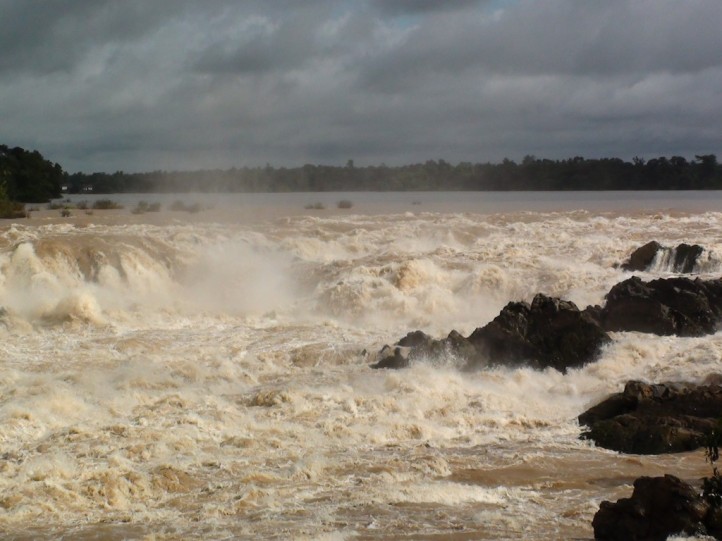
Khone Phapeng falls in southern Laos; photo by Tom Fawthrop

Khone Phapeng falls in southern Laos; photo by Tom Fawthrop

Fishers and farmers have for some time tried to block a proposed dam on the Mekong River in southern Lao People’s Democratic Republic (Lao PDR). Most recently, they made their views known at a public consultation on the Don Sahong dam. In all likelihood, however, they will lose and the dam will be built. Great Gamble on the Mekong, a new documentary from filmmaker and journalist Tom Fawthrop, insightfully details the probable dire consequences of this dam, and the failure this represents for a once-promising extra-legal cooperative structure, the Mekong River Commission.

The Mekong runs from the Himalayas in Tibet through China, Burma, Thailand, Lao PDR, Cambodia, and Vietnam—the latter five forming the Lower Mekong Basin (LMB)—where it empties into the South China Sea. According to Fawthrop, it provides protein and food security for 65 million people in the form of fish for food and trade, and water and nutrients for home gardens and commercial farms. At the same time, the Mekong has long represented a potential source of renewable energy. China has already built six dams on the Upper Mekong, and plans to build at least 14 more.

Dams have been discussed and rejected on the Lower Mekong mainstream since the 1950s, though they have gone up on its tributaries in that time.  In 1995 Thailand, Lao PDR, Cambodia and Vietnam signed the Mekong Agreement and formed the Mekong River Commission (MRC). The goal of the MRC is to facilitate cooperation in managing the resources of the Lower Mekong, but it has no final decision-making power.

The proposed Don Sahong dam at the center of this film would sit squarely across the main channel that migratory fish use to bypass the massive Khone Falls near the Lao border with Cambodia. It would be the second dam begun on the mainstream of the Lower Mekong—construction began on Xayaburi, another controversial dam, in 2012—with as many as 10 more to follow.


Cost-Benefit Analysis

The Lao government and the Finnish company Poyry it hired to oversee construction of Xayaburi claim that dam will provide clean energy to three million people in Thailand and one million in Lao PDR. The MRC claims dams on the Lower Mekong mainstream have the potential to reduce the severity of floods and droughts, and thatbuilding all 12 would generate $15 billion in economic activity, create 400,000 jobs, and reduce greenhouse gas emmissions by 50 Mtons CO2/yr by 2030. A study commissioned by the MRC, and completed by the International Centre for Environmental Management (ICEM) in 2010, concluded that the 12 dams could meet 8 percent of the region’s energy needs by 2025.

The ICEM study is clear however that benefits will not be disbursed equally: “Mainstream hydropower generation projects would contribute to a growing inequality in the LMB countries. Benefits of hydropower would accrue to electricity consumers using national grids, developers, financiers and host governments, whereas most costs would be borne by poor and vulnerable riparian communities and some economic sectors…In the short to medium term poverty would be made worse….”  Lao PDR does plan to use the revenues from selling the energy produced by its dams for rural roads, health care, and education, though during the “concession period” (estimated by ICEM at 25 years) after dam completion, the bulk of revenues would go to the dams’ financiers and developers.

According to the academics and nonprofit workers that Fawthrop interviews in Great Gamble on the Mekong, the exact impacts of the dams are impossible to predict, but they will likely be severe. “The Don Sahong dam will only push Cambodia and Vietnam closer to a food crisis,” says Chhith Sam Ath, an employee of the World Wildlife Fund in Cambodia. In addition to flooding gardens along the river, and diminishing the fish stock, they predict that the entrapment of nutrients by the dams will hurt rice production in Vietnam, leading to higher global food prices.

The 2010 ICEM study concluded that building the 11 mainstream dams on the Lower Mekong would reduced “capture” (non-farmed) fisheries by 16 percent. Combined with the built and proposed dams on the Upper Mekong, and on tributaries in the Lower Mekong Basin, this number rises to 26-42 percent. New aquaculture associated with dams would only replace at most 10 percent of this loss. Lao PDR and its developers claim they can mitigate the losses of fish–Poyry claims fish gates will allow 80 percent of migratory fish to pass up and down streams, while MegaFirst, the Malaysian company planning to dam Hou Sahong, claims making adjacent channels wider and deeper will provide fish with a detour route.

Yet the fish gates Poyry plans to use have never been tested on the varieties of fish found in the Mekong, and fish passes need to be designed to take into account individual species’ behavior and sensitivity to factors such as oxygen and nutrient levels. AsPoyry’s senior project manager conceded, “whether the fish get across [the dam], you’ll only see when it is built.” Faulting Lao PDR for not testing the fish gates in the Mekong before building a dam, when you need a dam to test the gates seems unfair. But they could test the technology on a smaller, less impactful dam on a tributary.


The Political Process

In the face of this uncertainty, the ICEM report recommended putting off any mainstream dam construction until 2020, using the intervening years to more fully study the impacts of the dams on the Upper Mekong and on the tributaries of the Lower Mekong. In a five-year strategic plan issued in March 2011, the MRC Council also recommended more study, as well as a thorough Procedure of Notification, Prior Consultation and Agreement (PNPCA), the internal procedure of the MRC for member countries to consider and offer feedback on the proposals of other countries. Yet eight months later, Poyry announced that Lao PDR had met its obligations under the 1995 agreement and could proceed with construction of Xayaburi. A year after that, in November 2012, Poyry received an eight-year contract to supervise Xayaburi’’s construction and engineering, and construction began. Poyry claimed at the time that it had updated designs to take into account the concerns of downstream nations. Yet in January 2013, Cambodia and Vietnam vigorously protested that their concerns had not been addressed, and demanded a halt to construction. They were unsuccessful.

A similar drama unfolded around the Don Sahong Dam. Last September, Lao PDR announced the start of the Don Sahong Dam, this time avoiding the PNPCA by claiming the project was not on the mainstream. After diplomatic outrage, the Lao government consented to a PNCPA, which began last July and is only required to run six months. Despite opposition from the governments and civil society in Vietnam and Cambodia, the Lao government has signaled its intention to proceed with the dam.

These dams are the first major test of the MRC’s ability to handle conflict among its members. The MRC tasks members with “aiming at arriving at agreement” on projects that significantly impact water quality or flow but has no voting mechanism or penalties for not reaching agreement. The CEO of the MRC Secretariat, Hans Guttman, states in Great Gamble that if the parties don’t arrive at an agreement, the country proposing such a project can still go ahead with it.


Resistance

Citizens of Cambodia, Thailand, and Vietnam have lobbied their respective governments to halt the dam. Hundreds of NGOs, both local and international (including World Wildlife Fund and International Rivers) have been trying to mobilize the opposition. Thai villagers filed a lawsuit against EGAT, the National Energy Policy Council, and three other government agencies in 2012, challenging the power-purchasing agreement they entered into with the Lao PDR government for electricity from Xayaburi. In June 2014, the Thai Supreme Administrative Court agreed to hear the case.

The international response, outside of the press, has been muted. MRC’s international donors issued a joint statement in January 2013 urging further study before beginning dam construction, but have said little else. The UN and heads of state have been notably silent.

Fawthrop’s film does not address how concerned Westerners can respond. The answer certainly feels fraught, given Laos’ historical experience of French colonialism and U.S.military aggression, including the unexploded ordinance that still affects the country. Then there’s the region’s very real need for clean energy as well as the standard argument about the hypocrisy of industrialized nations telling any country to sacrifice growth for environmental protection.

This is the progressive’s dilemma when it comes to foreign policy. Certainly any intervention should come in the form of carrots and not sticks: money and/or technology to develop less destructive sources of renewable energy; promotion of tourism to the region; UNESCO World Heritage Site recognition for Kohne falls, and so on, conditioned on implementing the ICEM report’s recommendations.What Great Gamble on the Mekong makes clear, and what studies of other massive dam projects have proved is that this is a humanitarian issue, and that the poorest will likely suffer the most.

Great Gamble on the Mekong has some distracting elements. The claim that the Thai banks funding Xayaburi are “getting nervous” as a result of letters sent to them by anti-dam activists seems like wishful thinking. For the sake of their own credibility, the filmmakers shouldn’t have included a cartoon set to Pink Panther music. Finally, the filmmakers should have addressed how some species got to be endangered before any dams were built. For example a WWF report says that overfishing was partly responsible for the decline of the great catfish. These critiques aside, this is an important and stirring film.

Nathaniel Eisen is a freelance author interested in the intersections of trade, human rights, security policy, and the environment. Information about the documentary Great Gamble on the Mekong can be found at www.tomfawthropmedia.com. Copies of the DVD can be ordered from eurekacuba@gmail.com.  This post was first published on the Foreign Policy in Focus blog on 12/26/2014.  It is reposted here with the permission of the author.

Leave a Comment

Filed under China, Current Events, Energy, Environment and sustainability, Foreign policy, GMS, Mekong River, Reviews, SLIDER, water

Regional Roundup for Week of 3.8.2015

EXSE FOCUS

Documentary on Air Pollution Grips China – NYT Since its online debut on Saturday, “Under the Dome” has inspired an unusually passionate eruption of public and mass media discussion.//Given the impressive nature of this important expose, it’s surprising (yet not unexpected to hear local China bash Chai Jing, not for the quality of her documentary, but rather for her former romantic relationships and how she chose to give birth to her child in the US.  

Related: China takes environmental documentary that went viral off the web – The Guardian//still available on non-Chinese sites like Youtube and on Hong Kong’s Phoenix News site.

How China Fuels Myanmar’s Wars – NYT Chinese-led development projects stoke ethnic tensions across the border.//NYT and the Guardian deepen their coverage of the China-Myanmar connection, but this is not new news rather this has been happening for decades.  The more interesting news is how Myanmar’s opening up has steered aid from ethnic areas and without support drives ethnic groups to war.  

Related: Ousted Chinese General Aided Myanmar Rebels: Report – The Diplomat

Living Next Door to China – The Irrawaddy Many Myanmar remain suspicious of Chinese investment and resent past Chinese mega projects that have had negative social and environmental impacts. Thus, a quick embrace of Japanese, South Korean and Western businesses has been evident as the country opens up.

Trashing the ASEAN Brand – Project Syndicate Three of Southeast Asia’s most important states – Malaysia, Thailand, and Indonesia – are raising serious doubts about their commitment to the rule of law, the integrity of their judicial systems, and the quality of mercy in the administration of justice. Worse, their political backsliding jeopardizes the entire region’s prospects.//Since when has the ASEAN brand at its core been about rule of law and quality of judicial systems?  

Villagers Call on Spirit to Curse Officials, Company Behind Dam – The Cambodia Daily Villagers in Stung Treng province displeased local authorities on Saturday by holding a traditional ceremony calling upon a powerful local spirit to curse those behind the construction of the Lower Sesan 2 dam.


REGIONAL RELATIONS

Uighur migrants held in Thailand for 11 months take case to court – The Nation A Thai court will decide this month whether to release 17 Uighurs from the western Chinese region of Xinjiang, including 13 children, who have been detained for the past 11 months in Bangkok, a lawyer for the group said on Tuesday.

Vietnam arrests 4 for attempting to smuggle 58 workers into China – Thanh Nien Each of the job seekers has paid them a fee of around US$300

The Rebalance in Southeast Asia: Not About Containment – The Diplomat Far from trying to “contain” China, the U.S. is focusing on a wide array of initiatives with regional actors.

Vietnam opposes China’s illegal construction works on Truong Sa – Thanh Nien The country has requested China to immediately stop these wrongful actions

Chinese authorities hit back at border restriction ‘rumours’ – DVB Chinese authorities hit back at media, including DVB, who have reported that China has blocked access to camps at the Sino-Burmese border and sent Kokang refugees back to the troubled region despite fears for their safety.

350 Displaced Civilians Arrive in Shan Border Town – The Irrawaddy More than 350 displaced civilians arrived in northern Shan State’s Chin Shwe Haw on Wednesday after spending several weeks hiding in the forest on the Burma-China border to escape fighting in the Kokang Special Region, an aid worker said.

US to provide 6 patrol ships to Vietnam as ties strengthen – Thanh Nien US ambassador praises Vietnam for becoming more LGBT-friendly

US Army to Continue Military Dialogue with the PLA – The Diplomat US Army Pacific will push for closer ties with the Chinese military.


SUSTAINABILITY AND RESOURCE MANAGEMENT

Thai firms agree Dawei signing ceremony – DVB Two Thai construction companies are expected to sign an agreement with the Burmese government to start developing the first phase of the Dawei megaproject.//Game of ports – one of three critically strategic ports to open on the Andaman Sean in Myanmar in the next 10 years.  

EIA report on Krabi coal port, plant rejected – The Nation Experts agree it is misleading, incomplete

Fishermen want help cleaning up oil in Rayong – The Nation Rayong fishermen and beachside vendors yesterday urged to the government to help clear up an oil slick and garbage from the Mae Rampeung Beach in Muang district.

Vietnam’s prime minister says climate change is real, calls for more responses – Thanh Nien “There is still a misconception that climate change is something abstract”

Thailand Tests Floating Homes in Region Grappling With Floods – The Irrawaddy The 2.8 million baht (US$86,000) amphibious house in Ban Sang village is one way architects, developers and governments around the world are brainstorming solutions as climate change brews storms, floods and rising sea levels that threaten communities in low-lying coastal cities.

Smog up North goes beyond safety levels – The Nation The problem of smog in the North is still severe as Chiang Mai province’s PM10 (particulate matter up to 10 micrometers in size) yesterday stood at 143 micrograms per cubic metre – which is beyond the safety level of 120.

Rangoon Govt Power Supplier to Become Corporate Entity – The Irrawaddy The Yangon Electricity Supply Board (YESB) said it will become a government-owned corporate entity on April 1. The move will make the government utility provider financially independent from the Ministry of Electric Power and marks the first phase of a plan to privatize the electricity supplier of Burma’s biggest city.

Vietnam officials say power price hike imminent – Thanh Nien They say a new price level is needed to attract private investors

China set to miss safe rural drinking water targets – chinadialogue In 2011, China launched a huge policy and investment drive to bring safe drinking water to the entire country, including its remotest areas


CHINA

China Lowers Official Economic Growth Target – NYT By cutting its growth target to approximately 7 percent, China is emphasizing more sustainable growth.

China Names 14 Generals Suspected of Corruption – NYT The generals, including the son of a former high-ranking leader, were the latest to fall under President Xi Jinping’s sweeping anticorruption campaign.

China knife attack suspect shot dead after wounding nine people – The Guardian Two assailants slashed people at train station in southern city of Guangzhou before police killed one and captured the other

China’s Defense Budget to Increase 10 Percent in 2015 – The Diplomat Details on what precisely China is spending money on remain murky.

China’s New Silk Road and Its Impact on Xinjiang – The Diplomat China’s plans for Central Asia are likely to see Beijing take a tighter grip on the restive Xinjiang region.


SOUTHEAST ASIA

Students, Activists Allege Violence in Rangoon Protest Crackdown – The Irrawaddy After being released from custody early Friday morning, eight people detained after Thursday’s student protest in downtown Rangoon have said they were injured by police and a plainclothes mob during the subsequent crackdown.

Related: Burmese police block student protesters – NYT

Related: Junta-Era Thugs Are Back on the Streets – The Irrawaddy

Michelle Obama to Visit Japan and Cambodia – NYT The American first lady, Michelle Obama, will travel to Japan and Cambodia this month as part of an effort to support education for girls, the White House said Tuesday.

UN-Cambodia Tribunal Charges Two More Ex-Khmer Rouge Cadres – The Irrawaddy A U.N.-backed war crimes tribunal in Cambodia charged two former cadres of the 1970s Khmer Rouge regime with crimes against humanity on Tuesday over their alleged roles in the deaths of an estimated 1.8 million people

Cambodia and Australia: Treating Refugees as Bargaining Chips – The Diplomat The two countries are selective in their interpretation of international laws on the rights of refugees.

Shwe Mann: the right man for the job? – SEA Globe With Aung San Suu Kyi likely to be out of the running, some fancy that Shwe Mann will become Myanmar’s next president

        Related: Election will be held in November, says Thein Sein – DVB

Related: Observers Lukewarm on Thein Sein, Suu Kyi Dialogue – The Irrawaddy

Human-trafficking bill passes first reading – The Nation The National Legislative Assembly (NLA) yesterday agreed in principle to a bill aimed at tackling human trafficking with heavier penalties, including the immediate closure of businesses found to be abusive to employees and death penalty if the abuse results in deaths.

MNDAA claims swelling of its ranks – DVB The Myanmar Nationalities Democratic Alliance Army (MNDAA) claims that the number of its troops has risen to around 5,000 since conflict reignited with Burmese government forces on 9 February.

Preah Sihanouk at Center of New Industrial Plan – The Cambodia Daily The Council of Ministers released a new policy on Friday aimed at boosting Cambodia’s industrial development beyond the garment and food sectors, placing Preah Sihanouk province at the center of plans to modernize the country’s economy.

Drowning in debt: the growing threat to Cambodia’s poor? – The Guardian In a growing microfinance market, some Cambodians are juggling as many as six separate loans. How can MFIs balance ethical concerns with commercial interest?

Lao Authorities Require Gun Re-registrations to Reduce Illegal Firearms – Radio Free Asia Lao authorities have put in place a new rule that requires the re-registration of firearms—including those owned by police officers, soldiers and village security officials—in an effort to eradicate illegal firearm possession, an Internal Security Ministry official said.


YUNNAN

Prince William in China: illegal wildlife trade a ‘vicious form of criminality’ – The Guardian Speaking at the Xishuangbanna Elephant Sanctuary in Yunnan Province, Prince William said: “it is appalling that elephants – and many others – may be extinct in the wild in our lifetimes”.

Related: China’s illegal ivory traders exploiting online market – The Guardian

Related: China’s temporary ban on ivory imports to be “ineffective” – chinadialogue

Blaze guts Guandu market, killing twelve – GoKunming A fire that broke out in a Kunming wholesale market on the afternoon of March 4, claimed the lives of a dozen people and destroyed 50 businesses before being extinguished. Investigators are now combing through the wreckage in attempts to discover the source of the blaze, which witnesses say began with a loud explosion.

Leave a Comment

Filed under NEWS DIGEST, SLIDER

Myanmar fighting escalates, tens of thousands flee into China

mynamar fighting

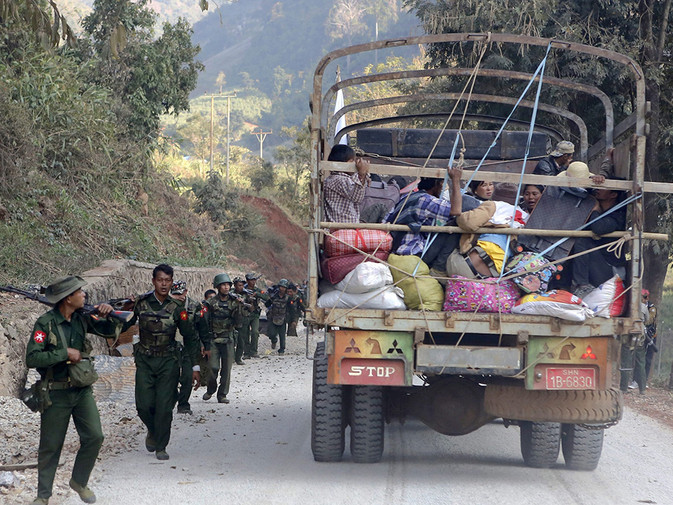
As fighting in Myanmar grew more intense near the Sino-Burmese border during Spring Festival, media reports became increasingly confused and alarming. Clashes between rebels and government forces in Shan State reportedly claimed the combined lives of more than 100 combatants on both sides. The ramp-up in hostilities has also forced tens of thousands of Burmese civilians to flee their rural villages for refuge in China.

Fighting that first broke out on February 9, and included air and artillery strikes by the Burmese army in Kokang, have led to protracted bouts of guerrilla warfare. Estimates place the number of dead in the violence between 70 and 130, and media reports are unclear how many of these are soldiers or civilians.

However, a spokesman for the Myanmar Defense Ministry, Lieutenant General Mya Htun Oo, wasquoted in the Hindustan Times as saying “the conflict had killed 61 military and police officers and around 72 insurgents”. Red Cross officials have also said humanitarian workers in the region have been attacked twice in the past week. The Burmese military has declared three months of martial law in Kokang, although how well such a policy can be enforced remains unclear.

Skirmishes have been most intense near the Burmese town of Laukkai, or Laogai. The village, now described as a “ghost town”, is located on the Salween River — known in Chinese as theNujiang. The refugees sought shelter in Yunnan’s Lincang Prefecture and were first thought to number a few thousand. However, Red Cross workers in Myanmar now claim at least 30,000 people have made the crossing, raising fears both inside and outside China of a looming humanitarian crisis.

The embattled Kokang region is a semi-autonomous part of northeastern Myanmar. Although the national government in Naypyidaw asserts titular control of the area, 90 percent of the local population claim Chinese descent and identify ethnically as Han Chinese. The rebel army now fighting Burmese troops is called the Myanmar National Democratic Alliance Army (MNDAA) and is headed by former members of the country’s defunct Communist Party.

No official reason has been given for the escalation in violence in Kokang, although it seems likely connected to December ambushes by guerrillas that killed at least seven Burmese soldiers and injured 20 others. As the conflict continues, both sides have presented their own narratives. Burmese military spokesmen have gone so far as to accuse the rebels of employing Chinese mercenaries in an attempt at complete self rule — a charge the guerrillas and Beijing have vociferously denied.

Also at stake for both the Kokang and Burmese authorities are lucrative, if unofficial, trade routes in the area. China’s border with Myanmar is extremely porous, and around Kokang is notorious for booming illicit trafficking of illegally logged timber, rare animals, jade and narcotics.

This article by  was first posted on the GoKunming on 

Leave a Comment

Filed under ASEAN, China, Cold War, Current Events, ethnic policy, Foreign policy, Myanmar/Burma, Regional Relations, SLIDER, Yunnan Province