
On This Day in Southeast Asian History:
On August 10, 1960 (August 9, in the US) Laotian neutralist army captain Kong Le mounted a successful coup against the American backed right wing government dominated by General Phoumi Nosovan. His goal was to re-establish Laotian neutrality, restore neutralist Souvanna Phouma as Prime Minister, end the civil war with the communist Pathet Lao and end widespread corruption. This coup started a chain of events that led to the Geneva Accords of 1962 and the establishment of the Second Coalition Government under Prime Minister Souvanna Phouma. However, the civil war resumed in 1963 after the Pathet Lao and North Vietnamese attacked Neutralist and Royalist forces on the Plain of Jars. In 1966, after his neutralist forces were largely destroyed, Kong Le fled to exhile in France. Years later on December 2, 1975 the Pathet Lao overthrew the Royal Government and established the Lao PDR.
EXSE FOCUS
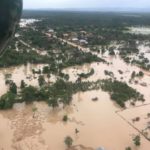
Laos Shelves New Hydropower Projects Pending Policy, Safety Reviews –Radio Free Asia Laos has suspended consideration of new hydropower projects in the country pending reviews of development policy after the breach of a dam last month left at least 34 dead with 100 still missing, Lao sources say. The announcement followed an August 6-7 meeting of the country’s cabinet chaired by Prime Minister Thongloun Sisoulith at which plans were also made to carry out safety inspections of all hydropower projects already built or under construction in the Southeast Asian country.
Related: Laos suspends new hydropower projects after dam break –Investvine
A stop light for Lao hydropower is a chance to make a right turn towards renewables –EastbySoutheast On August 7, the government of Laos officially suspended consideration of all new dams in order to review its hydropower strategy in response to the safety vulnerabilities exposed by the tragic collapse of the Xepian Xe Namnoy Dam in Laos on July 23. This is a turning point for the Lao leadership, who have long pinned hopes for Laos’s development on being the “Battery of Southeast Asia” by exporting hydroelectricity to markets in neighboring markets in Thailand and Vietnam.
Moratorium on new Mekong dams in Laos provides window of opportunity – EastbySoutheast Lao government ministries connected to the inspection process are woefully understaffed and lack experience lending to constraints that spell out a lengthy period of inspection. To conduct a more impactful assessment, the Lao government should employ the expertise of international development partners with particular experience in building resilience for climate change impacts and severe weather events like the tropical storm that triggered the dam breach in southern Laos. The list of potential candidates is long and includes Australia, Germany, Japan, and the US, whose Army Corps of Engineers and USAID projects in Laos have long assisted with dam safety capacity building.
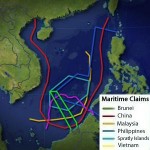
US-China rivalry shifts to mainland SEA –Bangkok Post The sense of deja vu at last week’s annual Asean foreign ministers meeting in Singapore regarding progress on the code of conduct in the South China Sea — an agreement with China on a single draft for future negotiations — is an ominous sign that the regional grouping is already at the centre of US-China rivalry. Both superpowers are determined to cooperate, compete and confront — not necessarily in that order — whenever they deem such approaches are warranted, using the familiar battlefield of Southeast Asia, snugly situated at the crossroads of the Indo-Pacific.
US pledges nearly $300 million in security funding for Southeast Asia –Japan Times U.S. Secretary of State Mike Pompeo pledged on Saturday to provide nearly $300 million in new security funding for Southeast Asia as China forges ahead with plans to bolster its engagement in the region. Pompeo unveiled the figure to reporters on the sidelines of a meeting of foreign ministers from the 10-member Association of Southeast Asian Nations (ASEAN) and other officials from around the world in Singapore.
REGIONAL RELATIONS
Pompeo in Jakarta to reaffirm US-Indonesia ties –Straits Times Indonesian Foreign Minister Retno Marsudi met United States Secretary of State Mike Pompeo in Jakarta on Saturday (Aug 4) and reaffirmed ties between their two countries. Ms Retno also discussed Indonesia’s own Indo-Pacific concept with Mr Pompeo, reiterating its key principles of inclusivity, openness, prioritising cooperation, a habit of dialogue, respect for international law, and Asean centrality.The meeting at the Foreign Ministry came after a busy few days for both officials, who met their other Asean counterparts in Singapore this week, with shifts in the world order and global trade tensions high on the minds of many.
Singapore Pledges Continued Support for Myanmar –The Irrawaddy Singapore’s foreign minister said the city-state and current ASEAN chair would continue to support Myanmar’s economic development and peace process through its many challenges. Speaking with journalists from across the regional bloc on Monday, Vivian Balakrishnan said Singapore stood with Myanmar as it tackled economic challenges, civil war and the Rohingya crisis. Balakrishnan has met Myanmar State Counselor Daw Aung San Suu Kyi, who also serves as the country’s foreign minister, several times in the past two years, both in Myanmar and Singapore.
WHAT HAPPENED TO THE BILLIONS CHINA PLEDGED THE PHILIPPINES? NOT WHAT YOU THINK –South China Morning Post Here’s a quiz. How often in these past weeks have you read about the duplicitous Chinese tricking other governments with false investment promises? Quite a lot, probably, given the volume of reportage on the supposed pullback of Chinese cash in the Philippines. These reports argue that China’s US$24 billion commitment to the Philippines, comprising US$15 billion in foreign direct investment (FDI) and US$9 billion in aid, has barely materialised since an agreement in October 2016 in which the funds were committed.
What’s Next for Vietnam-Thailand Security Cooperation? –The Diplomat This week, Thailand’s minister of public security paid a visit to Vietnam in yet another notable official exchange between the two Southeast Asian states. The interaction highlighted the ongoing activity on the defense side of the strategic partnership that both sides have forged over the years. As I have noted before in these pages, the defense realm has long factored into wider cooperation between Vietnam and Thailand, which, though characterized by animosity for much of the Cold War, has been warming somewhat in recent years, with ties officially elevated to the level of a strategic partnership back in 2013.
Vietnam and RoK foster legislative cooperation –Nhan Dan Politburo member and National Assembly Standing vice Chairwoman, Tong Thi Phong, hosted a reception in Hanoi, on August 8, for a delegation from the Executive Committee of the RoK NA led by its deputy head, Yun Jae-ok. Speaking at the reception, NA vice Chairwoman Phong emphasised that the Vietnam-RoK strategic cooperative partnership has seen strong and comprehensive development with practical achievements in the recent past. //This demonstrates the continued growing relationship between South Korea and other Southeast Asian nations.
ASEAN’s participatory agenda: Nowhere to go –Jakarta Post ASEAN has turned 51 years old, but many seem to find the regional grouping strangely distant, despite the fact that people’s participation has long been part of its key agenda. The ASEAN Vision 2020 projects a “community of caring societies” that will be characterized by “greater participation of the people” and where “civil society is empowered”. The participatory agenda was in parallel with the commitment to progress with human rights in ASEAN.
SUSTAINABILITY AND RESOURCE MANAGEMENT
Can Cambodia’s farmers survive climate change? –Mekong Eye With fields too hot and productivity too low, it is no surprise that Thailand has such an influx of Cambodian workers. The afternoon clouds did little to take the edge off the extreme heat Yan Horl endures toiling in his rice field in Cambodia’s Prey Veng province. He arrives home exhausted. Just a few years ago, the 58-year-old could eke out a living on his one-hectare plot in the village of Trapeang Cham. Yields that routinely exceeded three tonnes now barley surpass two as rising temperatures and a greater propensity for disease reduce productivity.
Almost a quarter of Southeast Asia’s bats face extinction –Southeast Asia Globe According to Tigga Kingston, a researcher with the Southeast Asian Bat Conservation Research Unit, Southeast Asia is home to 379 of the 1370 bat species in the entire world – and yet rapid forest destruction threatens to wipe out 23% of the region’s bat population in the near future. “Southeast Asia is really, really important in the global text. Yet, one quarter of Southeast Asian bats are in trouble,” Kingston said. “That’s a huge problem, 23% threatened or near threatened.
Hanoi to breathe easier by banning bikes –ASEAN Post The city of Hanoi is choking in air pollution and its city council hopes to reduce it by banning motorcycles from the inner city by 2030. The city aims to remove some 2.5 million old motorcycles from its streets between now and 2020. Hanoi, with an estimated population of 7.8 million people, is considered one of the most air polluted cities in Southeast Asia with its air quality consistently rated as “Moderate” to “Unhealthy” throughout 2017.
How Japanese technology is cleaning Myanmar’s polluted waterways –Eco-Business In the heart of Myanmar, a few miles south of Mandalay, lies the textiles town of Wundwin. For more than 60 years, the area has been the primary production hub of the longyi, a traditional Burmese garment that is routinely dyed a variety of colours, more often than not black. There are more than 600 factories that dye fabric in Wundwin, and for many decades wastewater from the factories has been discharged into the surrounding rivers.
CHINA
A turning point in China’s disaster preparedness? –Chinadialogue In April, the Chinese government inaugurated the new Ministry of Emergency Management as part of the massive government overhaul announced at the National People’s Congress in March. This long-awaited reform is the latest in a series of efforts going back to the SARS epidemic in 2003 to improve how China manages and responds to disasters. The new ministry will play an important role in solving existing problems within the state architecture. It is expected to improve the state’s ability to save lives and reduce economic losses during and after disasters.
Foreign Aid With Chinese Characteristics –The Diplomat Beijing’s new development agency has a clear mission statement. According to the PRC’s State Council website, the “China International Development Cooperation Agency” (CIDCA) has been set up to “strengthen the strategic planning and overall coordination of foreign aid.” CIDCA is an organization designed to cut through the overlap and discord of the current system. In this sense it performs a coordinating role similar to that of aid agencies in other donor countries.
ROUND 2: US, China announce newest round of tariffs as Trump’s trade war shows no sign of slowing down –Business Insider The US and China rolled out a new wave of tariffs as the trade war between the two countries rolls on. The US will impose a 25% tariff on another $16 billion worth of Chinese goods starting August 23, US Trade Representative Robert Lighthizer announced Tuesday. The new set of measures are the second tranche of tariffs that President Donald Trump originally announced in March, following an initial round of tariffs on $34 billion worth of Chinese imports that went into effect in early July.. //This trade war will not just affect consumers, but also global supply chains. This will have an effect on the economies of Southeast Asia.
China Seeks to Woo India From US Containment –Asia Sentinel Relations between Asia’s two Asian superpowers appear to be thawing to the point that India may be softening its opposition to China’s grandiose, trillion-dollar global Belt and Road Initiative (BRI) to connect with other regions through infrastructure projects including roads, ports and railways. Chinese President Xi Jinping has met three times with Indian Prime Minister Narendra Modi in the past three months, with Modi tweeting after the BRICS summit in July that it was “Always a delight to meet President Xi Jinping. Our talks were fruitful and will add vigor to the ties between India and China.”
Southeast Asia’s connectivity is critical to China’s belt and road … but can Asean pull it off? –South China Morning Post Asia will remain the world’s fastest growing region and a true powerhouse of the global economy if Asean bloc nations, with the help of trade partner China, can realise cross-border integration and connectivity. Although discussions about Asia’s tremendous growth in recent years often centre on economic giants India and China, Southeast Asia is quickly rising to become equally, if not more, promising.
China is building coal power again –Eco-Business Satellite imagery reveals that many coal-fired power projects that were halted by the Chinese government have quietly restarted. Analysis by CoalSwarm estimates that 46.7 gigawatts of new and restarted coal-fired power construction is visible based on satellite imagery supplied by Planet Labs. The coal-fired power plants are either generating power or will soon be operational. If all the plants reach completion they would increase China’s coal-fired power capacity by 4 per cent.
SOUTHEAST ASIA
Cambodia’s Election: Mind the Numbers –The Diplomat For over nine months, we had known who would win last weekend’s general election in Cambodia. In November, the country’s largest opposition party, the Cambodia National Rescue Party (CNRP), was dissolved after being accused of trying to overthrow the government. Through intimidation and enticement, the long-ruling Cambodian People’s Party (CPP) and Prime Minister Hun Sen unsurprisingly emerged victorious at the weekend’s election. //With this sham election, Hun Sen has tightened his control over Cambodia. Barring a radical change to the political structure in Cambodia, the prospects are bleak for free democratic elections in the near future.
Brunei’s economy shows signs of recovery, but oil and gas remain only drivers –Investine Despite Brunei’s attempts to diversify its economy, only increases in oil and gas production in the first quarter of 2018 have boosted the country’s gross domestic product (GDP), official figures show. According to statistics released by the Department of Economic Planning and Development on July 30, liquefied natural gas production was up by 12 per cent compared to the same period last year.
Indonesia Earthquake: At Least 98 Dead and 20,000 Homeless –New York Times A day after an earthquake devastated an Indonesian resort island, hundreds of tourists remained stranded, hotels were filled to capacity and rescuers continued to dig through rubble in a search for survivors. The 7.0-magnitude temblor on the island of Lombok claimed at least 98 lives and injured an additional 236 people. It left at least 20,000 people homeless, and sent thousands of tourists fleeing.
Malaysia ex-PM Najib charged with money laundering –BBC Former Malaysian Prime Minister Najib Razak has been charged with three counts of money laundering linked to a multi-million dollar corruption scandal. He is accused of having received 42m ringgit ($10m; £8m) from state fund 1MDB in his personal bank account. Mr Najib was arrested in July and has already been charged with breach of trust and abusing his position.
Wanted: Yingluck –The Interpreter Last month, Thailand’s military government sought the extradition of former prime minister Yingluck Shinawatra from the UK. A year ago, Yingluck had been due in court to face charges of dereliction of duty while in office. She failed to show. She was found guilty in absentia and handed a five-year jail term. The junta could have issued the request for Yingluck’s extradition at the beginning of the year, when images of her emerged in London. //It is doubtful that the UK would extradite Yingluck to Thailand, but if it happens it will cause political chaos in Thailand as Yingluck’s supporters would be outraged by her imprisonment.
Construction of temporary houses underway in Attapeu –Vientiane Times Authorities in charge are speeding up the construction of temporary houses to accommodate those made homeless by the flood that raged through here on July 23. Construction is expect to take 45 days after work began two weeks ago. “Authorities are speeding up construction of the houses to accommodate the flood victims,” Director of the province’s Energy and Mines Department, Mr Vithaya Phommachanh, said at a press conference yesterday.
YUNNAN
As eastern China sizzles, Yunnan beset by too much rain –GoKunming Summer rains are once again causing serious problems in Yunnan. Large swathes of the province have been pounded by incessant storms for more than a week, causing dangerous flooding and landslides. Heavy rainfall is expected to continue throughout the week, and those in the most waterlogged regions have been told to brace for repeated rounds of inclement weather. While cities like Beijing endure a heatwave, 11 of Yunnan’s 16 prefectures are experiencing sodden and saturated conditions.
This week’s news digest is curated by Kevin Rutigliano.
 The Code of Conduct for the South China Sea: A Waiting Game
 Regional Roundup for Week of 6.16.16
 Regional Roundup for Week of 7.26.18


