Category Archives: Current Events

Alpaca for sale in Kunming: Financial stunt or subtle protest?

9455

Nanping Square is a bustling retail area in the heart of Kunming known for its upscale shopping, luxury entertainment and, as of recently, an alpaca. On the afternoon of July 28, a man surnamed Fang paraded his woolly pet — a small relative of the llama — around the busy commercial plaza. The bewildered animal wore a sign hung around its neck stating “Lost a fortune in the stock market, mythical creature for sale”.

Large crowds gathered around the man, who declared he was selling his beloved companion for 100,000 yuan in response to losing his shirt during the stock market’s recent fluctuations. Fang explained he originally bought the alpaca two years ago and imported it from New Zealand — an endeavor costing him the same amount he now hopes to recoup from selling the animal. He admitted his situation was regrettable, saying because he “raised the alpaca from infancy, we now regard him as part of the family.”

Seeing the prized pet go will not be easy, Fang admitted, but after receiving his daughter’s first college tuition bill, he believes he has no other choice. The hapless investor told bystanders he had already mortgaged his house and car, but it was not enough. The alpaca, he explained, is his last major asset. Although a cherished family-member, Fang confessed that the 56 yuan needed daily to properly feed the growing animal has also left an increasingly large hole in his wallet.

Despite the hefty selling price, the hopeful Fang argued that alpacas make for loyal and well-behaved pets. Because of its docile nature, Fang’s alpaca was the center of attention for both curious children and their confused parents. One excited onlooker told reporters “My kids have always wanted an alpaca. If it’s the right price, we may even take it home tonight.” However, after consulting with Fang, he sadly confessed that “the asking price is a bit too high for just a pet.” Later in the afternoon, police politely escorted Fang and his companion out of the square. No buyer was found.

Fang first moved to Kunming ten years ago from Shaanxi province. After amassing a small fortune that included investments in stocks, Fang experienced firsthand the brunt of this summer’s economic upheavals. In Yunnan, this has included the suspension of trading on the world’s largest rare metal brokerage, the Kunming Fanya Non-ferrous Metal Exchange. Investors, unable to sell futures options worth billions, threatened legal action and protested in the street.

Many Chinese netizens also see Fang’s recent alpaca stunt as a similar, if more subtle, form of protest. His use of the term ‘mythical creature’ is thought by many to be an allusion to a list of imaginary beasts posted six years ago in an online Chinese encyclopedia. The list included the now-infamous ‘grass mud horse’ (草泥马), an invented term for alpaca which, when pronounced with different tones, is a caustic epithet involving mothers, and has since become a way to express frustration with censorship.

While Fang’s intentions to raise capital by selling his beloved alpaca may be genuine, the manner in which he has done it, for many observers, represents a form of protest against recent government interventions in the economy, albeit subtly and in a quintessentially Chinese manner.

9456

 This article written by Richard Diehl Martinez was originally posted here on the Gokunming.com website.

Leave a Comment

Filed under China, Current Events, SLIDER, Yunnan Province

Shangri-la Highland, China’s newest micro-brewery

On June 20, 2015, a new face entered, or rather re-entered, the growing craft beer scene in Yunnan. The Shangri-la Highland Craft Brewery, founded and chaired by Songtsen Gyalzur (known as Sonny), officially opened for business. Though hailing from similarly mountainous Switzerland, Sonny, a Tibetan, has deep roots in Shangri-la, from where his parents emigrated.

The impetus for Shangri-la Beer began in 2009, when he first traveled to his family’s homeland in Yunnan and visited an orphanage run by his mother. Coming from a real estate background back in Switzerland, Sonny opened a restaurant to give back to the local community. As part of his mission, he worked to employ and train former orphanage residents. With business booming, customers soon began asking him if any beers were made locally in Shangri-la. That is when Sony decided to open a brewery that would use local ingredients.

After some research, Sonny learned that most Chinese beers, such as Dali Beer, are made using larger quantities of rice. Collaborating with a Swiss brew master, he instead developed beers using highland barley grown on farms near the city. They then opened and developed a small brewery, which sold four bottled beers — mostly in small quantities — to local restaurants in the old town.

These beers, which are now produced at a larger facility, include Tibetan Lager, Tibetan Pale Ale, Black Yak — similar to a porter with some hints of coffee — and Supernova, which is a strong flavorful ale with hints of licorice. The beers were, and still are, all brewed using a combination of naked highland barley and imported Belgian malts. Seasonal microbrews are also planned for the future.

Following the initial success of Sonny’s small and unofficial brewery, the local government approached him, suggesting he open a much larger, officially licensed operation with their support. Officials believed this would be a good way to help local farmers sell their barley. Construction on the new brewery facility began in March 2014, with its official opening ceremony taking place in June.

It was, for Shangri-la, quite a spectacular event, attended by notable dignitaries, both local and foreign. Large scale festivities were held, including traditional Tibetan dances. There was, of course, free beer for all. Sonny also introduced the crowd to the brewery itself and explained his philosophy of brewing good beer – at one point comparing a good beer to a beautiful Tibetan woman. The opening itself was paired with two other notable events in Shangri-la over the weekend, the annual horse racing festival, and the celebration of Shangri-la’s establishment as an official city.

To capitalize on the two-day event, Sonny and his company also worked to formally establish a sister-city relationship with the skiing town of Arosa back in Switzerland. As such, the opening celebration for the new brewery included speeches of recognition from both the Swiss ambassador to China and the mayor of Shangri-la. City and federal governments on both sides were very supportive of the Swiss-Sino relationship, and used the brewery as a vehicle to support it. Fortunately, and following much effort, bureaucrats in Beijing also came through to encourage the idea.

Sonny’s Tibetan beers are unique, a fact his brew master attributes to the alpine water used in the beer-making process. For Shangri-la Beer, brewing is not just so much about the hops which have become so popular in American microbrews. Sonny explains that, unlike hops-based beer, his are more focused on malts — for both flavor and for the utilization and development of local Tibetan yeasts and highland barley. The beer also has no additives or stabilizers, as part of an all-organic mission statement.

During our interview, Sonny explained that he feels the beer is truly Tibetan. It is made by native people with local raw materials, resulting in brews typifying the social custom of drinking barley chhaang — a strong Tibetan alcoholic drink often made from barley.

With its new brewery and bottling factory, Shangri-la Beer has moved beyond the scale of a microbrewery, but Sonny maintains the company is committed to maintaining a quality and unique product. He explains that to make a micro-style beer that can be legally bottled is very difficult due to the required production size. Obtaining an official health and bottling license from Beijing took a huge amount of effort. The minimum production capacity required for such a license is 18,000 bottles per hour. Yet even at this quantity, Shangri-la Beer remains something of a mystery to the wider world. In the very near future, however, Sonny’s brew will arrive in Kunming.

This post originally appeared on GoKunming, and appears here with full permission from the author.

Leave a Comment

Filed under China, Culture, Current Events, SLIDER, Yunnan Province

Gold Diggers

7bc8cb8699a452430e95a37b47c70175_XL

A major Geographical investigation looks at the devastating environmental and debilitating health effects a Thai gold mine is having on a village in Loei, and at how a group of determined villagers are fighting back


It’s a truly idyllic valley, thumbs of karst rising from rice fields, a glowing sunset tempered by cumulo nimbus. Women bend at the waist planting rice seedlings, their movements reflected in the water. The set for a painter or poet.

Instead it’s the stage for the violent suppression of popular protests in the northern Thai province of Loei. For eight years, the embattled villagers have been fighting the owners of an adjacent gold mine. This lovely valley and the determined villagers are at the intersection of human, physical and political geography writ small and very mean.

To the villagers, the environment itself has become the enemy. The water in which the women stand plunging seedlings into mud is contaminated with arsenic, manganese and chromium. Below the overburden dumps, the rice fields hold arsenic, cyanide, mercury and cadmium.

Under trees, an unusual number of people sit in wheelchairs. Changma, 65, suffering debilitating peripheral neuropathy in her legs and hands (‘stocking/glove syndrome’) sits in her basic kitchen, cleaning pots. She is barely able to walk. Her doctor diagnosed the cumulative effects of arsenic. Cham, 84, who lives 300 metres away, has worse symptoms. A bowl of water nearby soothes the pain and persistent tingling associated with damaged nerves. Her 86-year-old husband with degenerative spinal condition is unable to care for her. We see cases of skin rashes. All signs of chronic arsenic poisoning.

Continue reading

Leave a Comment

Filed under Agriculture, Current Events, Economic development, SLIDER, Sustainability and Resource Management, Thailand

Regional Roundup for Week of 7.26.2015

The big news this week came from Myanmar, where 153 Chinese nationals were sentenced to life imprisonment as punishment for illegal logging in the country’s Kachin state. ExSE will delve into the story and its implications for Sino-Burmese relations later this week. In other news, Cambodia’s senate passed a strict NGO law that threatens to change the way more than 5,000 organizations operate. The law will allow the government to de-register NGO’s if they’re not ‘politically neutral’. 

EXSE FOCUS

Burma sentences 153 Chinese workers to life imprisonment for illegal loggingThe Guardian China has lodged a diplomatic protest with Burma after a court sentenced 153 Chinese nationals to life imprisonment for illegal logging. China’s voracious demand for raw materials has fuelled resentment in Burma towards its giant northern neighbour. Regions along Burma’s porous border with China have long been hotbeds for an illegal trade in timber to feed Chinese demand. A court in Myitkyina, capital of Kachin state in the north of Myanmar, handed down sentences to 155 Chinese citizens on Wednesday. Two of those convicted got 10-year prison terms, the rest life sentences. Rule of law suddenly making its way to Myanmar?Another jab at China as Myanmar moves further away from its old patron? Look for ExSE to explore the implications of this case later this week. 

Related: The Dangers of Chinese Interference in Illegal Logging Case-The Irrawaddy Magazine

 Cambodia’s Senate Passes NGO Law, Despite Ongoing Protests Against ItRadio Free Asia Ruling-party Senators in Cambodia’s parliament on Friday predictably approved a controversial law that lets the government regulate the roughly 5,000 nongovernmental organizations that operate in the developing country. A majority of Senators — 44 from the Cambodian people’s party (CPP) — passed the Law on Associations and Non-Governmental Organizations (LANGO), while 11 from the opposition Sam Rainsy Party boycotted the session in protest against the bill that places restrictions on NGOs and associations. The law requires all NGO’s to register activities and finances with government. Government can ‘de-register’ an NGO if it is not ‘politically neutral’. This is a strong move by the the Hun Sen government against those who most often oppose him – activists are right to worry about their future in the country. 

Reopening of US naval base in Philippines could fuel South China Sea rowInvestvine The Philippine government on July 16 announced that it will revive a US-built deep-water naval base in Subic Bay, marking the return of military presence there for the first time since George H.W. Bush was in the White House. China’s expansionist ambition in Southeast Asian waters is seen as the main instigator to the military base’s rebirth. Increasingly discordant exchanges between China and the Philippines have, according to security analysts, demanded action beyond the tub-thumping of President Aquino’s anti-China speech making. Another escalation of tensions in the SCS with no end in sight. Quite possible that US troops could be stationed at new Subic Bay base. It would be prudent for the US to avoid a military presence so close to Scarborough Shoal, situation is combustible enough. 

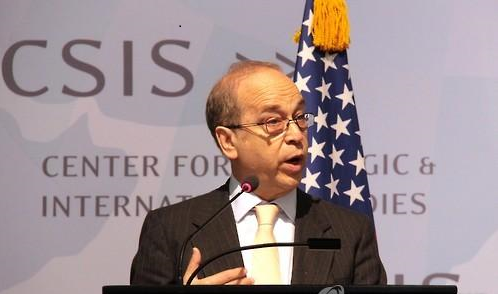
Daniel Russel: Remarks at the 5th Annual South China Sea ConferenceEast by Southeast On July 21, 2015 at the 5th Annual South China Sea Conference at the Center for Strategic and International Studies (CSIS), Daniel R. Russel, Assistant Secretary, Bureau of East Asian and Pacific Affairs for the US State Department delivered a keynote speech clearly outlining the US position on China’s recent land reclamation action in the South China Sea and its implications for US-China relations.

REGIONAL RELATIONS

Obama to Push U.S. Trade in Kenya as China’s Role GrowsNYTimes Central agreements may help shape a major deal for private investment in Kenya’s infrastructure, while also helping mend relations between governments. Trade between China and Africa, valued at $222 billion in 2014, has been rising swiftly and is now about three times the amount of trade between the United States and the African continent, according to figures from the World Bank and the American government.

U.S. Fears Data Stolen by Chinese Hacker Could Identify SpiesNYTimes The potential exposure of the American intelligence officers could prevent a large number of them from being posted abroad again. American officials are concerned that the Chinese government could use the stolen records of millions of federal workers and contractors to piece together the identities of intelligence officers secretly posted in China over the years.

 Laos and China to Build Bridge to Thailand as Part of Railway ProjectRadio Free Asia Laos and China will jointly build a bridge linking the Southeast Asian nation with northeastern Thailand as part of a U.S. $7.2 billion high-speed railway project that has been delayed by numerous setbacks for more than four years, a Lao government official said. Officials from both sides agreed to construct the bridge over the Mekong River to link Laos with Thailand’s Nong Khai province during a meeting in which they resolved to build the much-delayed rail line from Kunming in south China’s Yunnan province to the Lao capital Vientiane, a high-ranking official in the Ministry of Public Works and Transport told RFA’s Lao Service. The cost of this rail line is about equal to Lao PDR’s annual GDP. Laos badly needs infrastructure improvements but vanity projects like this are not the way to go. 

Chinese ship accused of attacking Vietnamese fishing boats off central coastThanh Nien News Fisherfolk in Binh Dinh Province have said their boats were attacked by a Chinese ship while they were fishing in Vietnamese waters this week.Nguyen Nhat Ngoc, a 53-year-old captain, told local coast guards on Friday that his boat with three people aboard was at more than 15 nautical miles from the Spratly Islands on Tuesday when an armored Chinese ship chased after them.

SUSTAINABILITY AND RESOURCE MANAGEMENT

Locals worried about plans to divert water from MekongThe Nation A NETWORK of Thais living along the Mekong River yesterday voiced their concern about a plan to divert water from the river to special economic zones. Beung Kan is one of the provinces on the banks of the Mekong River, which also runs through China, Laos, Cambodia and Vietnam. Jintana pointed out that local farmers and fishermen were already suffering from dams built upstream of the river, and hence they have a reason to worry about impacts from other big projects.

Thai Court Holds Hope for Transboundary Justice in the MekongInternational Rivers The closely-watched lawsuit filed by Thai Mekong communities against the Xayaburi Dam’s power purchase agreement (PPA) reaches a critical juncture Friday, as it is the final day that the Administrative Court will accept evidence into the case. Should the court overturn the agreement, construction on the dam would likely be suspended. 

Silence of the DammedMekong Commons In the ongoing controversy over the costs and benefits of hydropower in the Mekong River basin, there is much debate among governments, private business and civil society especially in Thailand and internationally. But one voice seems to be always silent in this debate: that of the local communities of Laos in whose country at least two mainstream Mekong dams are being built or planned and who will face the brunt of the projects’ impacts.

Cash-strapped farmers forced to watch crops wither awayThe Nation AS THE Chao Phraya River Basin runs out of water for farmland, rice farmers are running out of cash. Without water, farmers can do nothing but leave their plants to wither. Without crops, they have no source of certain income. As a result, many farmers have turned to loan sharks to get money to fill their family members’ hungry stomachs. This means the longer the drought crisis, the deeper they will plunge into debt. Based on the grim weather forecasts, there is a risk the drought may drag on for years.

Government water projects set in motionThe Nation THE GOVERNMENT will revive 12 water resource management projects worth more than Bt30 |billion for implementation in 2015-16 to ensure that the country will not face another water shortage over the next decade. Prime Minister Prayut Chan-o-cha said these projects include construction of more water reservoirs and irrigation systems using the annual investment budget plus some state borrowing. In the longer term, he said, the government needs to conduct a feasibility study on water usage resources in neighbouring countries.

Dawei’s coastal calm disrupted by Thailand’s industrial plansMekong Commons The Dawei Special Economic Zone (DSEZ) in the Dawei district of Tanintharyi Region is a planned massive multi-billion-dollar project that includes a deep-sea port, heavy industries and extensive transport links. The project has met resistance due to its right violations, land grabbing and potentially enormous ecological impacts on coastal livelihoods. Hundreds of farmers have already lost land to the project, but tens of thousands more would be required to give up farmland if the project continues.

Will China ‘export’ GHG emissions through overseas investment?China Dialogue Climate change is now firmly at the top of the agenda, especially in China. The world’s largest polluter wants to become an example of a less carbon-intensive economy, one which embraces renewable energy, makes the transition away from coal and has the capacity to capture carbon instead of emit it. But can China ‘decarbonise’ its economy, and what does cutting carbon domestically mean for the rest of the world? Besides being the world’s leading carbon emitter, China is also responsible for major emissions outside its own borders, many of which result from infrastructure projects in Latin America.

Pollution From Copper Mining in Northern Laos Destroying Local LivelihoodsRadio Free Asia A company operating a copper mine in northern Laos’ Oudomxay province is polluting the local environment and destroying the livelihoods of residents, according to villagers, who have called for officials to investigate the firm. A resident of Sawang village, in Oudomxay’s Namo district, told RFA’s Lao Service that domestic firm CNP Exploration Mining and Import-Exports Company had been digging for copper in the area, ruining the local water.

CHINA

Top Chinese Official Is Ousted From Communist PartyNYTimes Ling Jihua, a top aide to China’s former president, was also removed from public office and will be prosecuted on corruption charges. The charges against the official, Ling Jihua, 58, are the result of an internal investigation begun last December by the party’s Politburo, which found evidence that he took bribes, committed adultery and improperly hoarded a large amount of state and party “core secrets,” according to a report by the state-run Xinhua news agency. Ling first entered the hot seat when his son was notoriously killed in a car crash racing Ferraris around Beijing in 2012. Ling reportedly denied his son was invovled and tried to cover up the incident, paying off two women who were involved in the crash to keep silent. The downfall of Ling Jihua, former top aide to Hu Jintao, further proves that no one is safe from Xi’s anti-graft force. Prosecution of such high officials only causing the Chinese rumour mill to churn more – is Xi aiming for a higher target like Ling’s old boss? 

China’s Global Ambitions, With Loans and Strings AttachedNYTimes The country has invested billions in Ecuador and elsewhere, using its economic clout to win diplomatic allies and secure natural resources around the world. Where the Andean foothills dip into the Amazon jungle, nearly 1,000 Chinese engineers and workers have been pouring concrete for a dam and a 15-mile underground tunnel. The $2.2 billion project will feed river water to eight giant Chinese turbines designed to produce enough electricity to light more than a third of Ecuador.

 Trial of Chinese Rights Campaigners on Subversion Charges ContinuesNYTimes The proceedings in the southern city of Guangzhou against the three defendants, who have been held for over a year, resumed after a monthlong halt. The trial of three prominent rights campaigners, including a lawyer, on charges of inciting subversion continued on Friday in the southern Chinese city of Guangzhou, amid a sweeping crackdown on human rights lawyers that has drawn international condemnation.

Asia stocks down as China manufacturing weakensThe Associated Press Asian stock markets were rattled Friday by cautious earnings outlooks from U.S. companies and a further deterioration in Chinese manufacturing.

SOUTHEAST ASIA

 Thai officials among more than 100 charged with human traffickingThe Guardian Army general, politicians and police among those charged after dozens of bodies, believed to be of migrants, exhumed from abandoned camps. Thailand’s state prosecutors are pressing charges against more than 100 people, including an army general, in a multinational human trafficking scandal that came to light after dozens of bodies were discovered in the south of the country earlier this year. The sweeping investigation, in which 15 Thai state officials were implicated, began after 36 bodies, believed to be those of migrants from Burma and Bangladesh, were exhumed from abandoned jungle camps near the Thai-Malay border in May. The Thai army has long been rumored to be involved in human trafficking related to sex and fishing trades. 

Related: Thailand Charges 72 With Human Trafficking Crimes Ahead of U.S. ReportNYTimes

Thailand’s Junta Pushes Back Election Date AgainThe Diplomat Despite protestations, the coup leader appears to be settling into power. Since taking power in a coup in May 2014, the junta has repeatedly delayed planned elections, claiming that the country needs greater stability before a poll will be held or that the new constitution is not yet finished. After vowing elections in 2016, the deputy chairman of the junta-created legislature now reportedly has declared that elections will not be possible until 2017, since it will take so long to print the new charter and deliver written copies of it across Thailand.

A Thai House DividedNYTimes Tensions within the military-royalist establishment will complicate the royal succession in Thailand. A rift is growing within Thailand’s military-royalist establishment, threatening the country’s stability and undermining prospects that the upcoming royal succession will unfold smoothly. On one side is an old guard of senior officers who gradually consolidated power during the long reign of King Bhumibol Adulyadej. On the other is a new guard from a semi-autonomous elite military unit at the service of Queen Sirikit, which includes the leaders of last year’s coup against the elected government of Prime Minister Yingluck Shinawatra. Many believe that the 2014 coup was carried out for the express reason of keeping order during the transition period following the King’s death. That Gen. Prayuth’s junta government is causing instability is neither ideal nor surprising. 

Political implications of Thailand’s royal successionNew Mandala The imminent passing of the 87-year Thai monarch, Bhumibol Adulyadej, will send tectonic shock waves through Thailand’s body politic. Bhumibol, the world’s longest-serving monarch, is a pillar of Thai politics. During his reign Thailand emerged as a $390 billion economy, a middle income state. If nothing else, his passing creates an enormous vacuum in Thai politics and there is palpable fear about Thailand’s future without him. The uncertainty is real because the succession has the potential to upend Thai politics.

The ‘boat people’ crisis won’t end until Burma stops persecuting the RohingyaThe Guardian Boat departures have slowed for now, but are expected to resume as the regime steps up its relentless ethnic cleansing. Ebadullah can barely stand. Twenty-six years old and from Burma, he’s weak and weathered, but wants to talk. “If someone tried to move in the boat, they would beat us,” he said. “Those who didn’t move were beaten, too.” Armed gangs have promised jobs and lump-sum payments to families left behind, and have crammed approximately 150,000 men, women, and children — mostly Rohingya Muslims like Ebadullah — into modern-day slave ships. Where is the international pressure against Myanmar for the Rohingya crisis? Nowhere to be found as long as there’s money to be made. 

Related: 155 boatpeople returned to BangladeshDVB

Cambodian court jails 11 opposition activists for ‘insurrection’The Guardian Eleven Cambodian opposition members and activists have been jailed on insurrection charges, including three who received 20-year sentences, a defence lawyer has said. Rights groups said the draconian penalties, for taking part in clashes in July 2014 over the closure of a key protest site in the capital, were imposed as leader Hun Sen intensifies efforts to smother dissent in a kingdom he has led for more than three decades.

YUNNAN

World’s largest solar maker invests in YunnanGoKunming Solar power is shining a renewed spotlight on Yunnan. Last week, Trina Solar announced an agreement with Yunnan Electric Power Design Institute to supply solar cells capable of producing 51 megawatts of electricity. These panels will be the first installment of a larger plan to populate some tea-growing areas in Xishuangbanna with photovoltaic generators.The proposed solar farm will eventually reach a capacity of 100 megawatts (MW), enough to power roughly 36,000 homes annually. Despite its tremendous size, all of the electricity has been reserved exclusively for large tea plantations within the prefecture. The power will be utilized to run well-water pumps and irrigation systems already in place within the farms.

Extreme summer weather wreaks havoc around YunnanGoKunming Walking through Kunming on a warm sunny day, a casual observer would find little trace of the drought that parched much of the province for half a decade. Running water and frequent rains stand in stark contrast to the water shortages once a constant nuisance for residents of the Spring City. Other parts of Yunnan, however, are not so lucky, experiencing wildly juxtaposed weather, including flash floods and scorching droughts.

This week’s news digest was compiled by Brooke Rose with commentary by William Feinberg. 

Leave a Comment

Filed under Current Events, NEWS DIGEST, SLIDER

World’s largest solar maker invests in Yunnan

solar

Solar power is shining a renewed spotlight on Yunnan. Last week, Trina Solar announced an agreement with Yunnan Electric Power Design Institute to supply solar cells capable of producing 51 megawatts of electricity. These panels will be the first installment of a larger plan to populate some tea-growing areas in Xishuangbanna with photovoltaic generators.

The proposed solar farm will eventually reach a capacity of 100 megawatts (MW), enough to power roughly 36,000 homes annually. Despite its tremendous size, all of the electricity has been reserved exclusively for large tea plantations within the prefecture. The power will be utilized to run well-water pumps and irrigation systems already in place within the farms.

The Yunnan Electric Power Design Institute (YEPDI), according to an industry press release, will supply “engineering, procurement and construction services for the project”. Representatives from both companies expressed hope the collaboration will revolutionize renewable energy projects in the region. Chang Jichun, deputy manger of YEDPI, congratulated Trina Solar as “an industry leader with a vision to build a greener world…[building] a pioneer project in China to put solar power to work on the tea plantations.” As a result of the endeavor, Chang continued, Yunnan’s “tea plantations can be more efficient with increas[ed] self-reliance and less pollution.”

In the first stage of the multi-pronged project, Trina Solar will deliver approximately 43,000 TSM-255 modules and 154,000 TSM-260 versions. Extremely durable and designed to withstand exposure to pesticides and herbicides, the glass panels represent only half of the solar farm’s eventual size. With each panel measuring one meter by 1.65 meters, the 190,000 panels eventually covering the farm will take up an area of 660,000 square meters.

Put in perspective, that corresponds to 120 American football fields worth of solar modules placed side-by-side — a sea of glittering black. Each TSM-260 panel comes with a 25-year performance guarantee. Tea farmers in the area are thus assured a long-term source of renewable electricity, with each panel replaceable and upgradeable. Already underway, shipments and installation are expected to be completed by the third quarter of 2015.

Trina Solar has proved itself the most lucrative and successful businesses of its kind, often promising shareholders five percent returns on investment. Founded in 1997, Trina Solar today operates mostly in Africa, China and North America and explosive demand for solar energy has allowed the company to grow exponentially since its founding. Last year, the company sold solar panels able to generate 3.66 gigawatts of electricity. With such success, Trina Solar may well push further into the Yunnan market as the BBC reports Beijing has pledged to introduce programs to significantly expand the nation’s solar and wind power industries.

Yunnan province is already home to some of the largest photovoltaic power stations in Asia. Just 70 kilometers southeast of Kunming on the outskirts of the Stone Forest, a 166 MW solar farmis expected to complete construction this year. Once fully underway, the project will generate 188 million kilowatts of energy per hour, eliminating 175,000 tons of carbon dioxide emissions each year. The 9.1 billion yuan (US$1.45billion) project is just one of many reasons Kunming carries the unofficial title of China’s ‘Solar City‘.

Outside of Yunnan, massive endeavors throughout China are underway to reinforce the importance of wind and solar energy while tackling the country’s crippling pollution issues. Although often overlooked, China already leads the world in terms of renewable electricity production, currently spending more than US$80 billion annually on enhancing its green energy sector — funding which has facilitated a 100-fold increase in the country’s use of solar cells since 2005.

This article written by Richard Diehl Martinez, was originally published here on the Gokunming.com website.

Leave a Comment

Filed under China, Current Events, Economic development, Energy, Environment and sustainability, Sustainability and Resource Management, Yunnan Province

Daniel Russel: Remarks at the 5th Annual South China Sea Conference

russel
On July 21, 2015 at the 5th Annual South China Sea Conference at the Center for Strategic and International Studies (CSIS), Daniel R. Russel, Assistant Secretary, Bureau of East Asian and Pacific Affairs for the US State Department delivered a keynote speech clearly outlining the US position on China’s recent land reclamation action in the South China Sea and its implications for US-China relations.  Given the timeliness and relevance of this speech, we’ve posted it in its entirety below.  
Good afternoon. Thank you, Murray, for the kind introduction. It’s always a pleasure to be back at CSIS.

Let me start by laying out the essential context.

The United States has always had interests in Asia. These interests have only grown stronger as our economies have become more interconnected, and as our people have grown closer through travel and the Internet.

For the last seven decades, we’ve worked with allies and partners in the region to build shared prosperity and shared security. In the last six-and-a-half years, in particular, we’ve invested in building cooperative relations with every country in the region. This is the rebalance.

There are many types of investment the world, and Asia, needs in order to grow—investment in people, first and foremost; investment in business; in physical infrastructure, and just as important; investment in “cooperative capital” – the international law and order infrastructure that facilitates the interactions between countries, that advances regional economic integration, and helps states peacefully manage and settle disputes.

The U.S. makes balanced investments in all of these areas.

The last one, the international rules-based system, has been the ‘essential but underappreciated underpinning’ of global growth over the last 70 years. That’s especially true in Asia, where many countries have grown – and continue to grow – their economies through international trade, especially trade with the U.S.

Asia’s nations have achieved so much in recent decades—reducing poverty, raising living standards, and creating opportunities for their people. They’ve done it through hard work, cooperation with each other, partnership with the U.S., and by jointly developing and operating within a rules-based system.

And we are helping them to do even more:

We’re taking broad-based, sustainable economic growth to a new level with the Trans-Pacific Partnership.

The TPP embraces a future that reaches beyond trade and investment to include high standards for environmental protection, for labor rights.

TPP’s provisions will support a thriving, growing, entrepreneurial middle class that is able to connect with the world and do business through a free, open Internet.

We’re taking the security architecture that underpins this brighter future to a new level by investing in regional institutions like the East Asia Summit and the Association of Southeast Asian Nations (ASEAN), in addition to our longstanding work with global ones like the U.N.

These institutions uphold norms and tackle tough challenges; they can help bring parties together to hash out disagreements, or when bilateral diplomacy doesn’t succeed, help to have those disputes resolved peacefully in a fair, impartial manner.

Standing behind and supporting these institutions is our system of alliances and partnerships.

This network has helped keep the peace in the region since World War II. And through a series of important agreements with key security partners over the last few years, we’ve refreshed them so they’ll last for decades to come.

We’re taking environmental protection to a new level, through our work on ocean preservation, on combatting climate change and its effects, and through programs like the Lower Mekong Initiative that help make economic growth environmentally sustainable.

As we pursue this broad, forward-looking vision for the region, we’ve worked constructively with China—a lot.

We’ve built greater understanding through President Obama’s 20 some-odd meetings with the Chinese President or Premier; and through the Strategic and Economic Dialogue and an alphabet soup of other consultations.

We’ve put a floor under the relationship so it can withstand tensions or even a crisis.

And in the last couple years, all of this work has paid off—we’ve made measurable progress in a range of cooperative efforts: in low-carbon policies; countering piracy at sea; in stemming the Ebola crisis; supporting a better future for Afghanistan; and much more.

But unfortunately, the situation in the South China Sea does not fit this cooperative pattern.

Now, the U.S. is not a claimant. As I’ve said here at CSIS, these maritime and territorial disputes are not intrinsically a US-China issue. The issue is between China and its neighbors and – ultimately – it’s an issue of what kind of power China will become. But for a variety of reasons, the competing claims and problematic behavior in the South China Sea have emerged as a serious area of friction in the U.S.-China relationship.

Let’s take a step back and recall, as I’m sure you discussed this morning, that there is a history of competing assertions of sovereignty and jurisdiction in the South China Sea, and even violent conflicts in 1974 and 1988.

There are no angels here. The occupation of land features in this contested space over the years looked a lot like “squatters’ rights.” But that is something that in 2002 the claimants agreed to stop doing.

In that year, all the claimants (and the ASEAN states) signed a Declaration of Conduct. In it, and on other occasions, they have committed “to exercise self-restraint in the conduct of activities that would complicate or escalate disputes and affect peace and stability including, among others, refraining from … inhabiting the presently uninhabited… features and to handle their differences in a constructive manner”.

In the Declaration of Conduct, they also committed to negotiate a Code of Conduct that would lay out and lock in responsible behavior. But in the ensuing 13 years, work on the Code has stalled, and the Declaration has not been sufficient to prevent confrontations or to help claimants resolve these disputes peacefully.

Recently, the level of concern in the region has escalated as the scale and speed of China’s reclamation work has become public. The Chairman’s statement at the ASEAN leaders’ summit in April was unusually blunt, speaking of “serious concerns” about “land reclamation being undertaken in the South China Sea, which has eroded trust and confidence and may undermine peace, security and stability….”

While China’s statement on June 16 that it would stop reclamation work “soon” was presumably intended to reassure, its effect was in fact alarming since the statement went on to warn that China would construct military facilities on these reclaimed outposts.

So we are pushing the parties to revive the spirit of cooperation embodied in the 2002 Declaration of Conduct.

We see a broad consensus within ASEAN on a path forward to reduce tensions and promote peaceful handling of these disputes. And we support ASEAN’s efforts to expeditiously conclude an effective, rigorous Code of Conduct that builds on the Declaration by translating its cooperative spirit into specific “do’s and don’ts.”

But to make this happen, the parties need to create room for diplomacy.

In the famous words of Rich Armitage’s Dictum Number 1, “when you find yourself in a hole – stop digging.” That is the advice we are giving to all the claimants: lower the temperature and create breathing room by: stopping land reclamation on South China Sea features; stopping construction of new facilities; and stopping militarization of existing facilities.

These are steps the parties could commit to immediately; steps that would cost them nothing; steps that would significantly reduce risks; steps that would open the door to eventual resolution of the disputes.

Secretary Kerry has made this point to Chinese leaders and to the other claimants, and will be meeting with his counterparts early next month in Malaysia at the ASEAN Regional Forum, or ARF, to push for progress on this important priority.

Now, steps to exercise restraint through a moratorium and a Code of Conduct will create diplomatic space and help keep the peace, but they won’t address the question of maritime boundaries or sovereignty over land features.

So what’s the way forward?

When it comes to competing claims, two of the main peaceful paths available to claimants are negotiations and arbitration.

Countries across the region in fact have resolved maritime and territorial disputes peacefully and cooperatively, whether through direct negotiations or through third-party dispute settlement mechanisms.

Just a few examples: Indonesia and the Philippines recently agreed on their maritime boundary;

Malaysia and Singapore used international court and tribunal proceedings to resolve disputes concerning the Singapore Strait; and the International Tribunal for the Law of the Sea delimited the maritime boundary between Bangladesh and Burma.

A common thread runs through the maritime boundary disputes that have been resolved peacefully: the parties asserted maritime claims based on land features, and were prepared to resolve those disputes in accordance with international law.

This is why we’ve consistently called on all claimants to clarify the scope of their claims in the South China Sea, in accordance with international law as reflected in the 1982 Law of the Sea Convention. Doing so would narrow the differences and offer the basis for negotiations and cooperative solutions.

Regrettably, I don’t know anyone in the region who believes that a negotiated settlement between China and other claimants is attainable in the current atmosphere.

And the multiple competing claims in some parts of the South China Sea make negotiations that much more difficult.

And then there is the absolutist political position taken by some claimants who insist that their own claims are “indisputable” and represent territory – however distant from their shores – that was “entrusted to them by ancestors” and who vow never to relinquish “one inch.”

What about arbitration? As this audience knows, there currently is an arbitration case pending under the Law of the Sea Convention between the Philippines and China.

At the heart of the case is the question of the so-called “Nine Dash Line” and whether that has a legal basis under the international law of the sea. It also asks what maritime entitlements, if any, are generated by features that China occupies? In other words, regardless of whose jurisdiction it may fall under, would Mischief Reef, for example, be entitled to a 12 nautical mile territorial sea? A 200nm exclusive economic zone? A continental shelf?

Now, it’s important to note that the Tribunal is not being asked – and is not authorized to rule – on the question of sovereignty over disputed land features. Everyone recognizes that the sovereignty issue is beyond the Tribunal’s jurisdiction. Claimants would need to agree to bring that sort of sovereignty dispute before a court or tribunal, typically the ICJ.

But under the Law of the Sea Convention, the Tribunal is authorized to first determine whether it has jurisdiction under the Convention over any of the Philippines’ claims in the case and, if it does, whether the Philippines’ arguments have merit.

The United States, of course, is not a party to this arbitration and does not take a position on the merits of the case. But when they became parties to the Convention, both the Philippines and China agreed to its compulsory dispute settlement regime.

Under this regime, the decision of the arbitral tribunal is legally binding on the parties to the dispute. It’s a treaty. In keeping with the rule of law, both the Philippines and China are obligated to abide by whatever decision may be rendered in the case, whether they like it or not.

Now China has argued that the tribunal lacks jurisdiction, and the tribunal has specifically considered this issue in recent hearings in The Hague, looking very carefully at a position paper published by China. But if the Tribunal concludes that it in fact has jurisdiction in this case, it will proceed to the merits, including potentially the question of the legality of China’s “Nine-Dash Line.”

Should it then rule that the “Nine-Dash Line” is not consistent with the Law of the Sea Convention, and particularly if the Tribunal ruled that the features cited in the case do not generate EEZ or continental shelf entitlements, the scope of the overlapping maritime claims – and hopefully the points of friction – would be significantly reduced.

But it’s also important to recognize that even in this outcome, important sovereignty and boundary issues would remain unresolved.

This is as good a time as any to acknowledge (as China has often pointed out) that the United States has not acceded to the Law of the Sea Convention, although accession has been supported by every Republican and Democratic administration since the Convention was signed and sent to the Senate in 1994. It is supported by the U.S. military, by industry, environmental groups, and other stakeholders.

For the United States to secure the benefits of accession, the Senate has to provide its advice and consent, as I hope it ultimately will.

But even as we encourage the parties to work for long term solutions, we are obligated to protect U.S. interests. Let me take a moment to examine what some of those interests are:

  • Protecting unimpeded freedom of navigation and overflight and other lawful uses of the sea by all, not just the U.S. Navy;
  • Honoring our alliance and security commitments, and retaining the full confidence of our partners and the region in the United States;
  • Aiding the development of effective regional institutions, including a unified ASEAN;
  • Promoting responsible marine environmental practices;
  • Fostering China’s peaceful rise in a manner that promotes economic growth and regional stability, including through consistency with international law and standards.
  • And more generally, an international order based on compliance with international law and the peaceful of disputes without the threat or use of force.

As a practical matter, in addition to our support for principles such as the rule of law, we are taking steps to help all countries in the region cooperate on maritime issues. For example, we’re investing in the maritime domain awareness capabilities of coastal states in the region.

This allows countries to protect safety at sea and respond to threats such as piracy, marine pollution and illegal trafficking. Maritime awareness also advances transparency, in line with our call to all claimants to be more open and transparent about their capabilities, actions, and intentions at sea.

The U.S. military’s freedom of navigation operations are another element of a global policy to promote compliance with the international law of the sea.

Our goal is to ensure that not only can the U.S. Navy or Air Force exercise their navigational rights and freedoms, but ships and planes from even the smallest countries are also able to enjoy those rights without risk. The principles underlying unimpeded lawful commerce apply to vessels from countries around the globe.

And under international law, all countries—not just the United States—enjoy the rights, freedoms, and lawful uses of the sea that our diplomacy and the U.S. military’s freedom of navigation operations help protect.

For us, it’s not about the rocks and shoals in the South China Sea or the resources in and under it, it’s about rules and it’s about the kind of neighborhood we all want to live in. So we will continue to defend the rules, and encourage others to do so as well. We will also encourage all countries to apply principles of good neighborliness to avoid dangerous confrontations.

Let me close by mentioning that we have a host of cooperative initiatives we’re working on for the upcoming ASEAN Regional Forum meeting, the Asia-Pacific Economic Cooperation forum, and the East Asia Summit—all of which will advance much more quickly and effectively when tensions in the South China Sea are lower.

President Obama and Secretary Kerry have shown that they are not afraid to tackle the biggest challenges facing US foreign policy and the world. And we’re energized, here in the fourth quarter of this administration to do much more in partnership with our Allies, with ASEAN and with China.

For us, for the region, and for China – finding a peaceful, lawful and responsible way forward on the South China Sea is a prerequisite to achieving our longer term goals.

Thank you.

1 Comment

Filed under ASEAN, China, Current Events, Philippines, Regional Relations, SLIDER, South China Seas, Vietnam, water

Kunming to invest in public electric car fleet

9412

The Kunming municipal government is moving toward the acquisition of all-electric cars that will be made publicly available by year’s end. Once delivered, the vehicles would become the centerpiece of a public transportation initiative designed to reduce general traffic congestion and cut down on overall tailpipe emissions in the Spring City.

Kunming deputy mayor Wang Chunyan (王春燕) traveled to Hangzhou on a fact-finding mission concerned with the scheme earlier this week. While there, he met with government counterparts and automotive industry leaders to discuss the city’s electric car-sharing fleet — a first in China when inaugurated in 2013.

Hangzhou officials have been lauded for the implementation of a public car rental system that relies on automation and cars using no gasoline. Wang wants Kunming to emulate this system. Following a meeting with Hangzhou deputy mayor Zhang Zheng (张耕), Wang told reporters he expects the Spring City to make an initial purchase of 2,000 electric cars by December 2015.

At its inception, Hangzhou’s ‘micro-transport’ (微公交) system made available two thousand electric cars built by Zhejiang-based Kandi Technologies, a subsidiary of manufacturer Geely. People who need to rent a car for a few hours or days can present their national identification cards and driver’s licenses, along with valid credit cards, at rental centers resembling outsized vending machines. Once registered, customers choose between two- or four-seat cars, both with top speeds of 80 kilometers per hour and a single charge range of roughly 90 kilometers.

Two years on, the Hangzhou fleet has quadrupled in size to 9,850 vehicles. They rent for between 20 and 25 yuan per hour, a fee that includes insurance. Long-term leases are also available — 9,000 yuan for year-long use of a two-passenger car and 14,400 yuan for a four-passenger version. The cars can be re-powered, or have their batteries replaced, at any rental facility or at an expanding network of quick-charge locations.

Deputy mayor Wang said Kunming would adopt the Hangzhou project and adapt it for implementation in the city. Kandi cars will be utilized, but a pricing scheme has yet to be announced. Kunming urban planners want to alleviate at least some of the traffic jams that stifle commuters on a daily basis. Wang’s proposal also targets the related problem of perpetual parking shortages — which once caused some garage spaces to fetch yearly prices of 180,000 yuan (US$29,000).

Kunming’s frenzy of car buying perhaps reached its zenith in 2010, when 1,000 new cars were being registered in the city each day. Costly infrastructure projects aimed at easing traffic congestion have been largely hit-or-miss. This newest solution of publicly sharing e-vehicles has become quite popular in China’s largest metropolises, as Beijing, Shanghai, Shenzhen, Chengdu and now Kunming have all followed Hangzhou’s lead.

This article written by Patrick Scally was originally published here on the GoKunming.com site on July 16, 2015.

Leave a Comment

Filed under China, Current Events, SLIDER, Sustainability and Resource Management, Yunnan Province

Regional round-up for week of 7.12.15

Giant steps for the future of US-Vietnam relations this week, as Vietnam’s Communist Party General Secretary Nguyen Phu Trong paid a historic visit to Washington and discussed Agent Orange cleanup, the TPP, and military relations with President Obama.  It was the first time that a standing party General Secretary visited the US – Ho Chi Minh lived in the US before he became founder of Vietnam’s Communist Party.  The Chinese stock market roller coaster threatened to unravel much of the goodwill promised in Xi Jinping’s Silk Road infrastructure development projects and the AIIB – let’s keep our eye on this.  Finally Thai usurper PM Prayuth continued to prove his reputation as Southeast Asia’s biggest asshole by separating more than 50 Uighur families for life – he sent 170 women and children refugees to Turkey while dispatching their husbands back to China for likely life imprisonment.  These stories and more below.

EXSE FOCUS

After Week of Turmoil, Chinese Stocks Post Further Gains – NYTimes A week of volatility in China’s stock markets ended on a better note than many investors expected, as government policies to prop up shares seemed to have muted some of the panic among sellers. China’s Shanghai composite index jumped 4.5 percent Friday, after a similar rise on Thursday. Responding to the restored confidence and a new proposal from the Greek government for a bailout plan, regional markets followed suit. The Hang Seng in Hong Kong rose over 2.1 percent.//Recovery in China’s stock market is critical for Xi Jinping’s political aspirations both domestically and abroad.  A major crash could bankrupt his policy reform plans and reduce much capital earmarked for infrastructure projects in Southeast Asia.  This week the Indonesian media ran a headline of China poses a bigger threat to Indonesia than Greece with logic in the aforementioned vein, but the headline could read the same in each of Southeast Asia’s countries.

Related: The Problem With China’s Efforts to Prop Up Its Stock Market

Ignoring Protests, Thailand Deports About 100 Uighurs Back to China – NYTimes Thailand has sent about 100 ethnic Uighurs back to China, the country they fled, a Thai government spokesman said on Thursday. Thailand acted despite international warnings that the Uighurs could face harsh treatment in China and pleas that they be allowed to resettle elsewhere. // Point for China in Thai relations, adds to Thai gov announcement of Chinese sub deal a few weeks ago. 

ExSE analysis by Will Feinberg here.

Southeast Asia Drought Forces Farmers to Leave Fields Unplanted – Radio Free Asia A severe lack of rain and higher-than-normal temperatures in parts of Vietnam, Laos and Cambodia have caused some farmers to leave their fields and rice paddies unplanted, sources inside the developing Southeast Asian countries said.//Finally the rains came this week.  Overnight the Mekong rose by one meter in Vientiane – droughts and sudden rises in river levels disables the opportunity for flood retreat agriculture, a long relied on form of planting in Southeast Asia.  

Malaysian prime minister faces corruption allegations – CFR Asia Unbound Prime Minister Najib Razak is facing calls to resign after a Wall Street Journal report traced nearly $700 million of deposits into his personal bank account from the 1Malaysia Development Bhd. (1MDB), the country’s strategic development fund. Investigators have frozen bank accounts associated with the case and have raided the offices of 1MDB, while both 1MDB and Najib have denied wrongdoing. The fund, which is owned by Malaysia’s Finance Ministry, has financed itself by issuing more than $11 billion in debt. Though the fractured political opposition poses little threat to the prime minister,criticism from within his own governing party, and from political heavyweight and former Prime Minister Mahathir Mohamad, could threaten Najib’s continued leadership.

Related: self-explanatory.  

Sesan families report illness – Phnom Penh Post Villagers living downstream from the controversial Lower Sesan II hydropower project have claimed that they contracted unusual skin ailments causing large black spots on their bodies after the firm building the dam drained industrial waste into a river they use for bathing. Locals in Plok village, only a few kilometres downstream from the $800-million project in Stung Treng province’s Sesan district, have said they saw workers at the dam site using explosives near the river bank and piping industrial waste into the water earlier this year.//The costs of hydropower projects in Southeast Asia continue to rise along with unforeseen risks.

All aboard: Kunming-Vientiane Railway inches forward – East by Southeast Although a bit trite with repetition, no saying better encapsulates the major obstacle facing Laos than “geography is destiny”. The only landlocked country in Southeast Asia, Laos is wedged between the vast rivers and expansive mountain ranges that demarcate its natural borders with China, VietnamCambodiaMyanmar and Thailand. Because of its lack of access to maritime trade routes, the small country has historically relied heavily on domestic subsistence agriculture with little opportunity for much international commerce. // Kunming – Singapore (really South Malaysia) rail would be HUGE win for China, and Laos must be a part of that. Beijing’s progress on this will reflect robustness of government and economy.

Myanmar: General Election Is Scheduled for Nov. 8 – AP via NYTimes The military, which had ruled the country since 1964, scheduled the last general election in 2010 under rules widely seen as rigging the outcome. // These elections will be test of Burma’s commitment to democracy reforms. Suu Kyi’s absence will hurt but not crush NLD’s chances, watch to see which candidate they field.

President Obama, Vietnam Party chief talk deepening of partnership at White House — Tuoi Tre News U.S. President Barrack Obama and Vietnam’s Party leader Nguyen Phu Trong have agreed to the principle of resolving disputes in the East Sea via peaceful means based on international law. The agreement was reached during a meeting held at the White House in Washington, D.C., on July 7 (local time) between the U.S. president and his guest, who is the General Secretary of the Communist Party of Vietnam. // VN wants to be new US darling, almost all citizens want to be in TPP (June Pew poll). Not just hedge against China, VN wants development it can’t get from China.

              Related: Vietnam Party Chief’s Historic Visit to Washington: Establishing Strategic Trust   

Thailand’s electricity utility may be complicit in human rights violations in Myanmar’s Salween dams – Mekong Commons The building of the 241 meter high Mong Ton (also known as Tasang dam) is well underway in the Upper Salween River in the southern Shan state of Myanmar. The largest dam planned on the Upper Salween River, the US$10 billion Mong Ton dam’s reservoir  will flood at least 640 square km stretching across two-thirds of Shan State. It will produce 7,000 MW of power, 90% of which will be exported to Thailand and China. the reservoir. // 🙁


REGIONAL RELATIONS

UN tribunal to begin South China Sea deliberation – BBC A United Nations tribunal is to begin deliberations on whether it can hear a legal challenge over territorial claims in the South China Sea. In 2013, the Philippines asked the Permanent Court of Arbitration to declare invalid most of China’s maritime claims in the disputed area. China claims almost the whole of the South China Sea angering several Asian neighbors. It says the tribunal does not have the jurisdiction to hear the challenge. If the tribunal decides it can rule on the case, the legal hearings will get under way.  // The likely mixed ruling (expected in August or September) will be an ultimate Phils win, but probably won’t stop China from doing anything as the court has no jurisdiction.

              Related: China on talks with PH: No need to drop case

              Related: 3 out of 5 Filipinos have ‘little trust’ in China – SWS poll

A Tipping Point in the US-China-Vietnam Triangle – The Diplomat The significance of Trong’s visit lies more in what it means than in what it says. For the United States, it means that the strategic gains from a close and strong relationship with Vietnam have outweighed the strategic costs of provoking China and the political costs of befriending a communist regime. For Vietnam, the trip will boost the communist regime’s legitimacy, but at the same time, the friendship with America will have political and strategic ramifications. It will affect the balance of power among the country’s elites in favor of the reformers at the expense of the conservatives, and it will irritate China. Trong’s trip means that the reformers are on the rise and the conservatives in decline. It also means that Hanoi has reached the limits of its engagement with Beijing and is now trying to reach out to Washington to broaden its options.

Cambodia’s Strategic China Alignment – The Diplomat Cambodia’s provisional alignment with China will depend on the foreign policy behaviors of Thailand and Vietnam toward Cambodia, ASEAN’s relevance in meeting the security need of its members, its capability to withstand perceived threats from neighboring countries, and the availability of sufficient support from the international community to ensure the small kingdom’s survival, sovereignty, and pursuit of prosperity. // Cambodia gets infrastructure development, an army training school, and support for neglecting human rights from China. In return China got support in the SCS during Cambodia’s 2012 ASEAN chair. 


SUSTAINABILITY AND RESOURCE MANAGEMENT

New dams could drown hopes of returning home for refugees – Bangkok Post In mid-June, the Thai military government and its Myanmar counterpart signed a memorandum of understanding on energy, with an eye to expanding Thailand’s import of electricity from Myanmar, by up to 10,000 megawatts. The initial agreement also promotes overseas investment by Thai state-owned and public companies in numerous coal and hydropower projects in Myanmar, including the Hat Gyu, Ywathit, and Mong Ton dams on the Salween River. Significantly, these projects are all situated in ethnic states, namely the Shan, Kayah, Karen, and the Tanessserim divisions, which make up some of the country’s most vulnerable areas and populations.

Italian-Thai set to sign 50-year Dawei contract – Bangkok Post Italian-Thai Development Plc (ITD) through its subsidiary Dawei Development Co (DDC) will sign a contract with the Myanmar government by July 24 to develop and run the Dawei economic development zone for at least 50 years.

As Blockade Against Sarawak Dam Continues, OECD Complaint Results in Unprecedented Agreement – International Rivers The blockade to stop the Baram Hydroelectric Dam in Sarawak, Malaysia from being built is now entering into its 21st month, standing as a testament to the strength, determination and hope of thousands of women and men, prepared to go up against all odds. Up to 20,000 indigenous people, known collectively as the Orang Ulu, or upriver people, would be displaced if the proposed 1,200 megawatt (MW) dam moves ahead. Much of the land to be inundated is considered the customary territory of the Orang Ulu. The blockade effort began in October 2013 and consists of two separate sites set up at road access points in the area of the proposed dam.


CHINA

Chinese Authorities Detain and Denounce Rights Lawyers – NYTimes At least five lawyers from a firm that specialized in rights cases have been detained and accused of running a criminal syndicate to smear the Communist Party and “create social turmoil” through their litigation, state-run media said on Saturday.

Mass Evacuation in China as Typhoon Chan-Hom Hits Coast – NYTimes A typhoon swept along the coast of eastern China on Saturday, whipping up high waves, intense winds, and rain that forced the crowded commercial region to suspend flights and evacuate hundreds of thousands of residents.

The Big Story Behind China’s New Military Strategy – The Diplomat As China reemerges as one of the globe’s leading powers, just what type of actor it will be on the world stage has become a subject of intense debate among China watchers and the broader public. With tensions rising to what one eminent China scholar has called a “tipping point” in U.S.-China relations, the Chinese government released its first-ever white paper on military strategy just before the fourteenth annual Shangri-La Dialogue was held in Singapore this past weekend. Since 2012, Beijing has indeed become more assertive in proximate waters, and the paper underscores determination to strengthen Chinese “strategic management of the sea.”


SOUTHEAST ASIA

Outcry as Malaysia’s human trafficking record brings praise from US — Reuters Country could now sign up to Trans-Pacific Partnership trade deal, but advocates say Malaysia continues to face human trafficking issues. The United States is upgrading Malaysia from the lowest tier on its list of worst human trafficking centres, US sources said on Wednesday, a move that could smooth the way for an ambitious US-led free-trade deal with the south-east Asian nation and 11 other countries. The upgrade to so-called “tier two watch list” status removes a potential barrier to President Barack Obama’s signature global trade deal. // U.S. reps have said they’ll introduce bills to stop this if it isn’t changed. How will Obama get around it for TPP?

Seven dead and dozens injured in attacks in Thailand’s south Agence France-Presse More than 6,300 people have been killed in the conflict pitting troops and police against rebels seeking greater autonomy for three Muslim-majority provinces. Three people were killed and a dozen injured in four separate bomb blasts in Thailand’s war-torn deep south, police said on Saturday, while another four died from shooting and arson attacks. More than 6,300 people have been killed in near-daily conflict pitting troops and police against rebels seeking greater autonomy for the three Muslim-majority provinces bordering Malaysia since 2004.

Vietnam After 2016: Who Will Lead? – The Diplomat Every five years, the Vietnamese Communist Party holds its National Congress. Among other important policy issues, the party congress chooses the central leadership teams, to govern both the party and the country. If the 11th party congress (2011) is any guide, the new Central Committee, which will be elected by all delegates at the coming 12th party congress (to be held in 2016), will select a new general secretary (Tng Bí Thư), a new Politburo (B Chính Tr), a new Secretariat (Ban Bí Thư), and a new Central Commission of Inspection (U Ban Kim Tra Trung Ương).

Why people don’t buy insurance in Asia – ADB Blog Insurance is often viewed as a product of the sophisticated, capitalistic system of the West, and those who are outside this cultural group are less likely to value insurance protection. Asians, who rely on informal insurance such as a family network, are thus typically less focused on buying insurance

Kokang conflict reveals ethnic strife unlikely to end after cease fire – East by Southeast Many things in Myanmar are changing – the economy, the government, infrastructure. Others, like violent ethnic conflict, seem destined to stay the same. For the past three months, the government of Myanmar has been fighting the Myanmar National Democratic Alliance Army (MNDAA), an ethnic rebel army based on the country’s border with China. The MNDAA are predominantly made up of ethnic Kokang fighters. The Kokang are ethnically Han Chinese and the live in Kokang region, in Myanmar’s Shan state.


YUNNAN

New Research: Rubber Expansion Threatens Biodiversity and Livelihoods – East by Southeast  Xishuangbanna prefecture in China’s Yunnan province has seen an explosion of rubber cultivation in the past 15 years. Increasing amounts of environmentally valuable and protected land are being cleared for rubber plantations that are economically unsustainable, new research suggests. More widespread monitoring is vital to design policy that protects livelihoods and environments. The research was recently published in Global Environmental Change and constitutes a joint effort by scientists at the World Agroforestry Centre (ICRAF) East and Central Asia office, the Chinese Academy of Sciences, the Royal Botanic Garden Edinburgh, the University of Singapore and the East-West Center.

This week’s news digest was compiled by John Jeunemann with analysis by John Jeunemann and Brian Eyler.  

Leave a Comment

Filed under Current Events, NEWS DIGEST, SLIDER

All aboard: Kunming-Vientiane Railway inches forward

china train head

Although a bit trite with repetition, no saying better encapsulates the major obstacle facing Laos than “geography is destiny”. The only landlocked country in Southeast Asia, Laos is wedged between the vast rivers and expansive mountain ranges that demarcate its natural borders with China, Vietnam, Cambodia, Myanmar and Thailand. Because of its lack of access to maritime trade routes, the small country has historically relied heavily on domestic subsistence agriculture with little opportunity for much international commerce.

The legacy of its geography in combination with the destruction wrought by the United States during the Vietnam War has today resulted in a nation with some of the world’s highest poverty and unemployment rates. With the help of the Chinese and Thai governments, Laos hopes to change this narrative of international isolation in the years to come.

Since 2010, plans have been under consideration to construct a high-speed railway between Kunming and Vientiane, Laos’ capital. However, political and financial setbacks have pushed the starting date of the project back by five years. This year, the three governments all sound confident that construction of the seven billion dollar project will begin.

Many analysts now view the construction of the Kunming-Vientiane railway within the context of China’s larger ambitions to revamp trade routes throughout Southeast Asia. China’s president Xi Jinping has openly stated his eagerness to establish silk road-esque connections with China’s neighbors, placing Kunming at the epicenter of overland transactions. The country has already invested 40 billion dollars to facilitate railway links, which it hopes will eventually drive new economic plans throughout South Asia.

Already, long-term proposals have been hashed out to eventually link Kunming with Singapore. The first phase in the series of projects is currently under construction, with China building a 737-kilometer connection between the Thai city of Nong Khai — just across the Mekong River from Vientiane — and Map Ta Phut — one of the largest deep water ports in Thailand.

The planned Kunming-Vientiane rail then, would add on to existing railroad infrastructure, facilitating a larger Kunming-Bangkok route by — according to recent estimates — no later than 2020. A link to Malaysia would from there be relatively simple. If all goes as projected, passengers may, within the next decade, be able to hop onto a high speed rail from Kunming all the way to Singapore.

Past financial qualms that have plagued the realization of the Vientiane-Kunming proposal continue to worry politicians in both China and Laos. Although a fairly small investment for China, the seven billion dollar price tag corresponds to over 60 percent of Laos’ US$11.24 billion gross domestic product, making it a hefty and risky endeavor. Currently, the two countries have agreed on a 40-60 split of the initial financing, with Laos contributing US$840 million and China US$1.26 billion. The remaining five billion will later be chipped in by Chinese venture capital firms, who would then hold substantial stakes in the railway once it is up and running.

Although worries over the pragmatic utilization of the railway have previously stymied Laos’ cooperation with Chinese entrepreneurs, increasingly Lao politicians believe the connection to Yunnan’s capital is paramount for their country’s economic growth. In an interview with Japanese magazine Nikkei, Laos’ deputy prime minister, Somsavat Lengsavad, explained that Laos, being a landlocked country, can only rely on roads, so the transport cost is very high. “In our policy of turning Laos from a landlocked to a land-linked country, we believe the railroad will help us reach our objective. [The railway] will boost the Lao economy because many investors are now looking for a production base here. They say that if the country had a railway, it would help them reduce their transportation costs. So it would make us more attractive to investors.”

Recently, the country has proven itself one in an appealing group of potential manufacturing centers in Southeast Asia as overseas companies flee China. Over the past few years, Laos has ridden a growing wave of economic growth, with annual GDP often topping eight percent. Such financial development has been attributed primarily to the construction of massive 1,000-megawatt hydroelectric dam complexes, growing highway infrastructure and multibillion-dollar investors betting on long term prosperity in the region.

Politicians, including Lengsavad, remain sanguine that the fiscal expansion will only be further boosted by a direct link to Yunnan. Already, companies including Samsung and Yahoo have left China to venture into smaller, burgeoning financial systems. Laos hopes the Vientiane-Kunming connection will enable it to hop onto the train of foreign investment out of China.

Skeptics, including Lao politicians, point out that the real construction cost of the Kunming-Vientiane route may soon render the project another white-elephant. Without a doubt, both financially and topographically, much stands in the way of the railway’s establishment. An astounding 154 bridges, 76 tunnels and 31 train stations will be necessary for the Lao leg of the track. The monumental proposals stands in stark contrast to Laos’ nearly complete lack of experience with railway construction. The land-locked country currently boasts only of a 3,5-kilometer train link, spanning the Thai-Lao Friendship Bridge.

To make matters more complicated, the Annamite mountain range, which the railway will eventually need to cross, is infamous as a minefield littered with unexploded American ordnance dropped during the Vietnam War. These factors combined are likely to result in a final cost for the track much greater than the projected seven billion dollar price tag. Laos thus finds itself stuck between a rock and a hard place — on one hand it desperately needs infrastructure for greater commerce, while on the other, current proposals may leave the country in an even more precarious financial situation than it currently faces.

This article was written by Richard Diehl Martinez and first posted here on GoKunming.

Leave a Comment

Filed under ASEAN, China, Current Events, Foreign policy, GMS, Laos, Mekong River, Regional Relations, SLIDER, Thailand, Trade, Yunnan Province

Kunming’s China-South Asia Expo Balloons to Enormous Proportions

9325

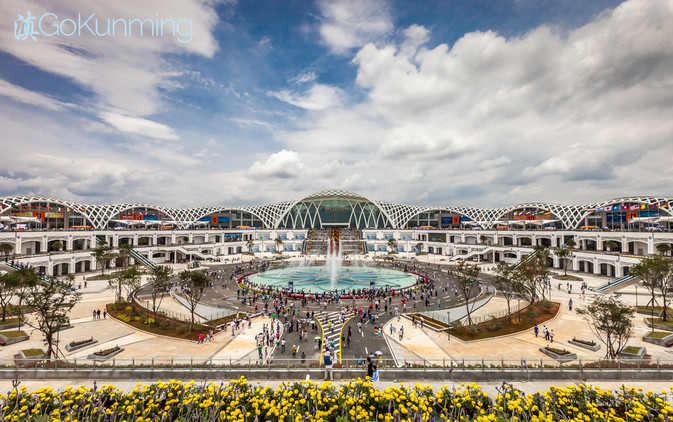
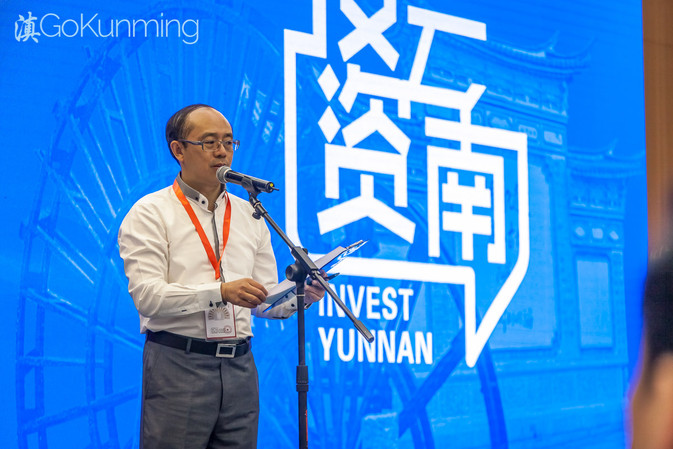
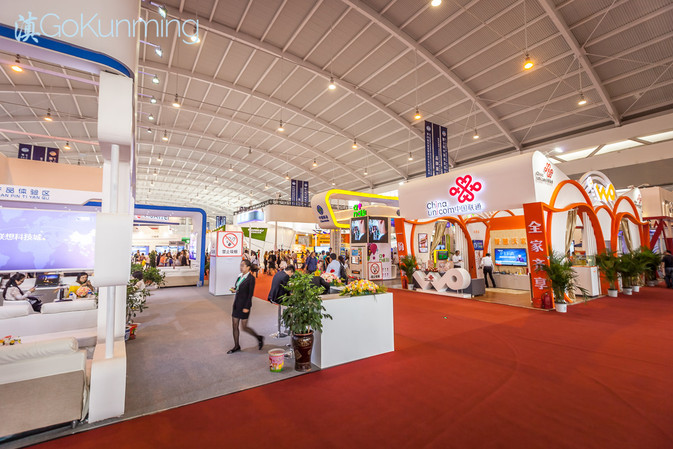
When the Spring City throws a trade and investment party, everyone comes. That is the lesson gleaned following closing ceremonies held yesterday at the twenty-third annual Kunming Import and Export Commodities Fair and third annual China-South Asia Expo. Expected to generate billions in business agreements and attract hundreds of thousands of curious attendees, the twin events did not disappoint.

The expos are held each year with the intention of attracting greater foreign business interest and interaction with Yunnan-based companies. This principal goal is part of a larger strategy to build up the province’s economy while also increasing China’s political and commercial footprint in Southeast Asia and beyond.

In terms of sheer numbers, these goals are being realized. Contracts signed during the course of the fairs totaled 785 billion yuan (US$127 billion) in direct foreign investment — a catchall term including money put toward virtually any business acquisition or other commitment. At last year’s expo opening ceremony, Chinese Vice Premier Wang Yang (汪洋) said he expected the next few years to be “the most active and fruitful period yet” for cooperation between Yunnan, Association of Southeast Asian Nations member-countries and South Asia. He appears to have been correct.

The numbers for direct foreign investment in Yunnan dwarfed those concerned with Chinese ventures in other countries, which reached 155 billion yuan (US$25 billion). In total, 903 overseas firms inked deals to begin or expand existing businesses in the province. The largest of these involved the fields of tourism, energy and infrastructure development, logistics, education, and environmental protection.

9329

Highlighting Yunnan’s growing importance as a trade and investment hub, 20,000 businesspeople as well as dignitaries from 31 countries attended. Among the most notable were Chinese Vice President Li Yuanchao (李源潮), the president of the Maldives, Laos’ prime minister and high-ranking representatives from Bangladesh, Cambodia, India, Myanmar, Thailand and Vietnam.

India’s Minister of State External Affairs, VK Singh, also attended. He represented the expo’s feature country, a place of honor this year replete with a dedicated “museum” devoted not only to the Subcontinent’s most advanced industries, but also its history and culture. At a separate event held during the expo, Singh officially opened China’s first yoga college at the Yunnan University of Nationalities campus in Chenggong.

9326
Giving India such recognition was no random decision, but instead a calculated diplomatic move aimed at encouraging the world’s second most populous country to embrace China’s Belt and Road Initiative. The brainchild of President Xi Jinping, the proposal looks to propel regional integration between China and the countries of Central and South Asia, India chief among them.

While enormous deals and industry-specific conferences were carried out behind closed doors, the general public tuned out in droves to this year’s expos. In preparation, organizers printed half a million tickets. It did not prove to be enough, as 740,000 attendees passed through the gates at the Kunming Dianchi International Convention and Exhibition Center, shattering last year’s attendance numbers by 500,000.

An exhibitor from Taiwan, surnamed Li, told reporters she had signed deals to sell dried fish to Carrefour, Parkson and Golden Eagle while at the expo. She, like many other exhibitors, ran out of things to sell two days before the expo concluded. “Everyone has been so friendly and warm,” Li said, “I hope to see them all again next year.”

This article, written by Patrick Scally with images by Yereth Jansen, was first posted here on Gokunming.com.

Leave a Comment

Filed under China, Current Events, Economic development, Foreign policy, GMS, SLIDER, Yunnan Province