Category Archives: Current Events

Lao National Assembly Approves Don Sahong Dam

don sahong pic

Regional media and NGOs in Southeast Asia are calling the controversial Don Sahong dam on the Mekong River a “time bomb,” and the project’s recent approval by the Lao PDR government has initiated a ticking countdown. Daovong Phonekeo, director general of the Energy Policy and Planning Department at the Lao Ministry of Energy and Mines said in an email statement released earlier this month that the National Assembly approved a concession agreement for the Don Sahong Dam with Mega First Corp, a Malaysian developer which has never built a hydropower project.

This legislation gives the green light for the project’s construction, which is now planned to commence by the end of the year. While the project’s 260MW hydropower capacity is small and intended for local use, its impacts will be felt region-wide as researchers believe the dam will block off the only channel accessible during the dry season for the yearly migration of hundreds of fish species endemic to the Mekong River. The Mekong is the world’s largest inland fishery with millions of people living along its banks who rely on daily fish catches for food consumption and income.

“The Don Sahong Dam will certainly negatively impact migratory fish moving between Laos and Cambodia, Thailand and Vietnam. The question is, to what extent, and how much might it be possible to mitigate impacts?” said Ian Baird in an interview with ExSE. Baird is a geologist from the University of Wisconsin with decades of experience researching fisheries and communities in the Don Sahong area. “The risk is high because the Khone Falls area is so important for long distance fish migrations, and because it remains highly uncertain how efficient the measures being developed will be. Many uncertainties remain, but the stakes are high, and this makes the project risky.”

don sahong

The dam is located less than 2 kilometers from the Cambodian border in the Siphandon area of southern Laos. Siphandon, literally “four thousand islands,” is one of the earth’s most unique land and waterscapes. Here the Mekong navigates mazes of rocky channels, creating a throng of islands, and expands to more than 15 kilometers wide at some parts.  A fault line runs through this area creating picturesque waterfalls which attract many thousands of tourists from the region and around the world. . The Sahong channel, where the dam will be built, is the only major channel without a rocky cascade and thus is the only channel accessible by seasonal fish migrations.

Mega First, the dam developer, has conducted research on fish migration over the last 18 months to identify fish species and determine migratory patterns, hoping that findings reveal migratory fish are using other minor channels close to the Sahong channel for migration. A 2014 Mega First study by Kent Hortle, a respected Mekong fisheries expert, suggests China’s damming of the Mekong has regulated the river’s dry season level to permit fish passage through channels previously unavailable to fish.

Increased pressure from civil society groups, international NGOs, and academic research has prodded Mega First to widen and deepen these minor channels, but the effectiveness of these mitigation efforts will not be known until the dam’s construction is completed. Peter Hawkins, the main fisheries consultant for Mega First is on record for saying, “’if these passages do not prove to be sufficient they will continue to work on them to create the best bypass possible.”

The new legislation means dam construction will likely begin before Mega First’s fish mitigation research is complete, making the project a risky gamble. International Rivers’ Southeast Asia director, Ame Trandem called for a two year moratorium on the Don Sahong Dam until more research can be done on impacts to fish migration.

“The Don Sahong Dam is not a done deal,” Trandem wrote in a statement on the International Rivers website. “Until the project developer can prove that [the dam] will not harm the Mekong River’s rich fisheries and the unique ecosystem services it provides to millions of people in the basin, it is in the best interest of Laos and the region to give the Mekong River a much needed reprieve.”

Meanwhile, Laos pledges to maintain productive economic and diplomatic ties with the neighbors that surround the landlocked state.  One must then question Laos’s calculus for pushing forward the dam’s approval process when stakeholders ranging from the official to grassroots levels in Thailand, Cambodia, and Vietnam all have voiced opposition to the project.  However, neighboring governments have yet to comment on the dam’s recent approval.

Moreover, Laos gave only nominal consideration to the regional notification and consultation process mandated by the Mekong River Commission, an inter-governmental organization of which Laos is a charter member. More critically one must question whether or not the dam’s approval includes a regional or geopolitical calculus at all, since most evidence indicates that the dam serves as a pet project of a powerful Lao political family with prospects and license to develop the Siphandon area for investment and tourism.

Regardless of Siphandon’s development trajectories, waiting until Mega First’s own research is published and vetted by stakeholders is the most pragmatic course forward for the Don Sahong Dam. Any other pathway could gravely impact regional food security, including Laos’s own food supply, and place Laos further at odds with its downstream neighbors.


Leave a Comment

Filed under Current Events, Regional Relations, SLIDER, Sustainability and Resource Management, water

SMEC’ed About the Head

What is it about No that SMEC doesn’t understand?

SMEC, an Australian based services company that morphed out of the Snowy Mountains Engineering Corporation, was recently handed a petition containing 23,7171 signatures opposing a dam that would effectively divide war-shocked Shan state in Myanmar in half.

They are the  public face of a consortium planning a giant dam on the Upper Salween river at Mong Ton in Myanmar.  It’s not the first time they have been told the idea stinks.  Maybe they are heroically taking one for the gang; the disaster prone Three Gorges Corporation,  the very shonky Sino Hydro, the Myanmar Electricity Power  Enterprise,  and state energy monopsony  Thai Electricity Generating Authority (EGAT).  Then there is a UK team of engineers Malcolm Dunstan and Associates, involved in dam building in Myanmar in the past and, because of human right violations on the sites, placed on UK’s Burma Campaign’s ‘Dirty Company’ list. SMEC might well soon be down there with them.

SMEC has been meeting the people of Shan state, seeking agreement for the Mong Ton dam to be built on the upper Salween in Shan State. They have faced serial rejection. Meetings have been cancelled due to local hostility. Old Shan women have risen to their feet, their voices rich and challenging, telling the SMEC representatives that having survived years of war, they refuse to let their ancestral lands be drowned to produce unneeded electricity for China and Thailand.

SMEC’s habit of giving gifts of cloth bags, bottled drinks and snacks to people they interview has as angered local villagers, who view these as bribes. They report SMEC repeatedly pushes the ‘positive’ impacts of the dam, appearing deaf to protests, while attempting to persuade them to sign documents they don’t understand.

On July 22nd, a group of villagers returned the bags they had been given by SMEC surveyors, and instead presented them with anti-dam posters. A Shan joint statement calls SMEC’s assessments process “simply a sham, aimed to rubber-stamp the Mong Ton dam plans, rather than objectively assess (sic)  the project’s actual impacts.”

In April this year the Australian Federal Police raided SMEC’s international’s headquarters in New South Wales ‘as part of an investigation into allegations of foreign bribery – it was unclear if this was associated with the Myanmar project.

‘Many of our highly respected stupas and pagodas, such as Ho Leung temple, will be destroyed.’ said Hkyaw Seng, whose village is close to the construction site. The 700 years old Ho Leung Temple, on the eastern bank of the Salween is famous throughout Shan State, with tens of thousands of pilgrims travelling there every March.

In the Australian context, this might be compared to submerging St Patrick’s Cathedral in Melbourne  to power New Zealand.

Burma Battlers

Along with other ethnic states of Myanmar, Shan state suffered intense warfare for over 20 years and sporadic clashes since. It is the biggest of Myanmar’s seven ethnic states with population of around 8 million people, half of whom are  Shan.

During that long war many abuses were committed by the Burmese Army, include arbitrary execution and detention, torture, looting, rape, forced relocation and forced labour.

Shan and Karen representatives reported to this correspondent that SMEC’s work has been obstructed by political instability, increasing military presence and growing community resistance. In May Burmese Army tanks were photographed in Kunhing, whose renowned ‘thousand islands’ in the Pang tributary will be submerged by the dam reservoir. They fear opposition to the dam will trigger military violence.

Four SMEC officials went to the Wa capital in early July this year, seeking to survey the Wa Special Administrative Region. They were ‘advised’ to return at a later date by leaders of the China-backed United Wa State Army, possibly due to growing political and military tension between UWSA (notoriously linked with cross border drug trade) and Burmese government; tensions that erupted into fighting in Mong Ton township in early June 2015. SMEC is now effectively unable to carry out surveys in a large swathe of Wa-controlled territory along the eastern bank of the Salween above the planned Mong Ton dam.

The US$10 billion (2015 estimate) hydropower dam will flood an area nearly the size of Singapore, virtually bisecting  Shan state and destroying around a hundred communities. You can replace houses but not communities which are organic social structures built on trust mutual support and shared histories. It is the very strength of these communities that enabled their people to endure the hardships of war. Locals report that tanks are returning, as are armed guards. A Chiang Mai lawyer with connections to the Shan, told this correspondent recently ‘local media report that the project has started, and in a conversation we had… a few weeks ago, there is a camp of mostly Chinese engineers doing testing near the site. They said that the river near that area is off limits to all people and that warning shots were fired at a boat that got too close. The contact was not sure who fired the shots.’

The Burma river network (BRN) asserts that large dams are being constructed on all of Burma’s major rivers and tributaries by Chinese, Thai and Indian companies. The dams are causing displacement, militarization, human rights abuses, and irreversible environmental damage – threatening the livelihoods and food security of millions. The power and revenues generated are going to the military regime and neighbouring countries.

Role Play

So what is an Aussie company doing there?

‘It is not SMEC’s role to provide recommendations as to whether the Project should proceed. The findings of the EIA/SIA will be presented to the Government of Myanmar, who will decide (with other sources of information) whether to proceed with the Project.’ (Pro forma response from SMEC).

SMEC’s role has been to complete the Environmental and Social Impact Assessments. The general idea is for both these studies to be submitted to the government to be signed-off (or, as happens too often, paid off) and plans for mitigation put to the villagers and agreed to before work can start. However a local council member in Mong Ton, seconding the lawyer’s report, said that despite the local people’s disapproval, earthworks were already underway along the ridge of the mountain, as was confirmed by Kai Khur Hseng, a spokesperson for the Shan by phone from the Thai-Myanmar border.

‘Well you would expect that,’ said environmental consultant Dr Sean Foley in neighbouring Laos. ‘They borrow lots of money to build the dam and no doubt to pay off officials. The longer they delay, the more interest they have to pay, so it’s in their interest to get moving, and pay the necessary fees to ensure the EIA is agreed to. The ‘soft’ items like compensation to villagers and relocation construction are usually where all the cost savings are made.’

As for the social impacts, it should be obvious, when confronted with a room full of people who are largely farmers and whose land is about to be flooded, wearing ‘No Dams’ headbands, that maybe, just maybe, these people think the social and economic costs are not worth it. Despite SMEC’s claims to hold free and fair consultations the presence of local militias and pro-government representatives in meetings inhibited villagers from asking questions.

A message sent to SMEC’s local senior manager, Michael Holics, which asked how much forest was going to be destroyed, how many tonnes of concrete to be used was met with a pro forma response  (see above), the same response given to questions related to resettlement, land allocation, livelihoods, and fish stocks. Tropical dams are under scrutiny, found to emit as much greenhouse gas as coal fired power plants with similar energy output, while devastating huge areas of land.

SMEC’s job has already been done by International Rivers (IR) and other local groups who have listed the environmental and social factors mitigating against building the dam. Pianporn Deetes of IR told this correspondent that tens of thousands of ethnic people living on the floodplains near the dam site have already been forcibly relocated. ‘All dams planned on the Salween River will greatly disrupt the riverine ecosystem and destroy the livelihoods of peoples living along the river.’

SMEC could hardly avoid the fact that in 2007, the dam consortium was given land on which to build an office, land confiscated from Wan Mai village. In the way of the then-incumbent military junta, landless villagers were forced to attend the ground-breaking ceremony for the dam. Further north, the Mekong, Salween and Yangtze rivers flow in parallel for at least 300 kms, creating a World Heritage listed biodiversity area that is being destroyed by megaprojects like hydropower dams. In short, SMEC whose office centred CSR principles would have this project in Australia booed off the field, seem undeterred.

Sai Khur Hseng reported that wars and forest destruction had taken its toll on mega-fauna like elephants but that  ‘Survivors habitat will be drowned by the dam.’ Myanmar’s laws have not been reformed in keeping with global standards and do not provide for compensation or relocation.

Paul Sein Twa, reported that business cronies of the regime have already been clear-felling formerly dense teak forests around the dam site. Director of the Karen Environmental and Social Action Network (KESAN), Twa told Mongabay that proposed multiple dams would do irreparable damage to the Salween Basin extending across, China, Myanmar and Thailand. The basin is “home to the world’s last great teak forest, to dry-season islands rich with crops, and to healthy fisheries upon which many people depend. This river is of vast ecological and cultural value, and it is worth preserving for present and future generations.’

Did the Earth Move for You

The Mong Ton dam wall, some 241 meters high, would be one of the highest in the region. The area is very prone to earthquakes and warning has been issued about impending risk of a serious movement of the nearby Sagaing fault after the Nepal ‘adjustment’. The collapse of such a dam would be disastrous.  Scientists have warned of additional  +7 scale adjustments in the next decade and have clearly advised against dam building. A dam this size could itself cause a seismic event, as happened in Sichuan China.

The Himalayan and Tibetan glaciers appear to be melting faster than earlier predicted, offering increased flows in the short-term but ‘dry ice’ in the future.

Twa agreed the dam also poses a threat of catastrophic flooding, should the region’s seismic activity lead to an earthquake-induced dam failure.

Asia is engaged in a orgy of dam building, pushed heavily by China and Thailand, whose urban elites stand to profit mightily from such investments. In this part of the world rivers are integral to life, providing food, transport and irrigation to countless communities.

Myanmar’s government has not publicly addressed villager’s complaints, but have praised the Salween dam projects as benefiting local populations, securing critically-needed electricity for Myanmar and leading to peace. But the opposite appears to be true, with the poor losing hard-won security and military build ups occurring daily. Maybe SMEC’s shareholders should understand the implications of the company’s activities and make their discontent clear.

The author of this article has chosen to publish anonymously.

Leave a Comment

Filed under Current Events, Economic development, Energy, ethnic policy, Governance, Myanmar/Burma, SLIDER

Remembering Yunnan’s Role in World War Two

1

The streets of Beijing are abuzz with patriotism, filled with goose-stepping soldiers, gleaming new military hardware and bedecked with five-star red flags. It is the seventieth anniversary of Japan’s formal surrender in 1945, an act that brought the cataclysm of the Second World War to its official end.

While the capital celebrates and hundreds of millions watch the Beijing parade on television, Yunnan residents quietly reflect on their province’s stand in what is officially called the ‘Chinese People’s War of Resistance Against Japanese Aggression’. Although no parades will be held this year in Kunming commemorating those who fought and died, Yunnan’s stature as one of China’s last bastions of hope remains undiminished, if often a bit misunderstood.

The vicissitudes of history — especially in a war fought on as many fronts as World War Two — leave thousands, if not millions, of stories untold. In Yunnan, the general narrative has by now been boiled down to three major fronts, all of which effected one another. They include the development of Kunming as China’s last ditch air base, a months-long engagement in the mountains of western Yunnan and the opening of the Stilwell Road. Although those three events do not comprise the entirety of the war effort carried out South of the Clouds, they go a long way toward creating a general overview.

2

The China National Aviation Corporation, The Flying Tigers and The Hump

Few know that the foundation of the province’s current airport network was laid more than 70 years ago by Americans and Chinese working for an often-misunderstood Chinese/American-owned commercial airline known as China National Aviation Corporation, or CNAC. Founded in 1929 by aircraft manufacturer Curtiss-Wright, CNAC ran into difficulties dealing with Chiang Kai-shek’s Nationalist government and was sold to Pan American Airways in 1933.

CNAC fared better in China under Pan Am management and began to service routes linking the United States, Pan American’s Pacific network, and China’s major urban centers, first flying into Kunming in 1935. Runways were hard to come by in China at the time, and CNAC had a competitive advantage with its river planes, which often made water landings on the Yangtze and other waterways.

War was to quickly alter the fate of CNAC. By the end of 1941, CNAC was making evacuation flights as well as carrying out the dangerous supply runs between India and Kunming for which it would late become famous. When the American Volunteer Group — now more commonly referred to as The Flying Tigers (飞虎队) and credited with bringing down as many as 300 Japanese aircraft during its brief tenure — disbanded in July of 1942, many of its pilots joined CNAC rather than return to the US military. This blurred the lines between CNAC and the Flying Tigers, as the ‘original’ Tigers were now seen in CNAC civilian uniforms.

As Japanese forces gained ground in southern China and Burma, Yunnan and Kunming became a critical nexus for material shipments and air support sorties. Kunming remained un-captured throughout the war, not only due to CNAC and The Flying Tigers, but also because thousands of local civilians turned out to build and repair airstrips, work as makeshift mechanics and otherwise support Allied troops.

3

The Huitong Bridge and Ledo Road

During World War II the western part of Yunnan was occupied by Japanese forces. They had effectively cut off the Burma Road that once supplied Yunnan and Sichuan, while simultaneously attempting to stop cargo planes flying The Hump transport route. The planned goal was to march on Kunming and then Chongqing.

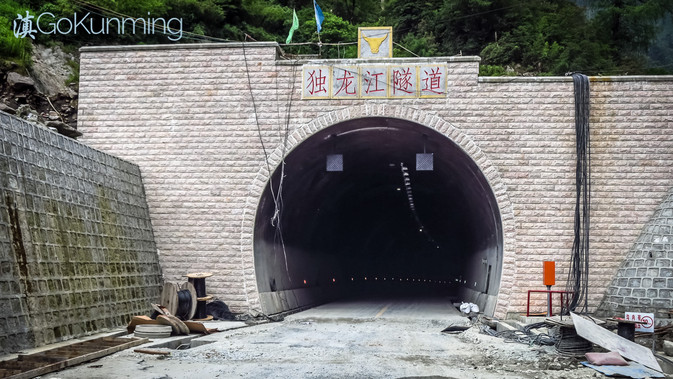
The Japanese army could only be stopped from further penetration by blowing up the Burma Road bridge at Huitong (惠通桥), where it crossed the Nu River — then known to the world outside China by its Burmese name, the Salween. General Joseph “Vinegar Joe” Stilwell, Allied commander of the China-Burma-India Theater, worked hard to reopen the Burma Road because he saw it as the only way of getting in enough supplies and heavy equipment to fight the war further east into China.

Under his command, American engineering battalions began to cut a road through the north of Burma from the Indian railhead town of Ledo, planning eventually to link up with the original Burma Road at the Chinese border. To recapture the ground through which the supply line needed to travel, Stilwell launched the Salween Campaign. He used the Chinese Expeditionary Army, first established and trained in India, as a vanguard.

This force was made up of Chinese army units cut off from the mainland by Japanese attacks on the Burma Road, as well as other reinforcements flown in on empty Hump return flights to India. These men were known as the X-Force, while the American-trained and supplied Y-Force operated from Yunnan.

4

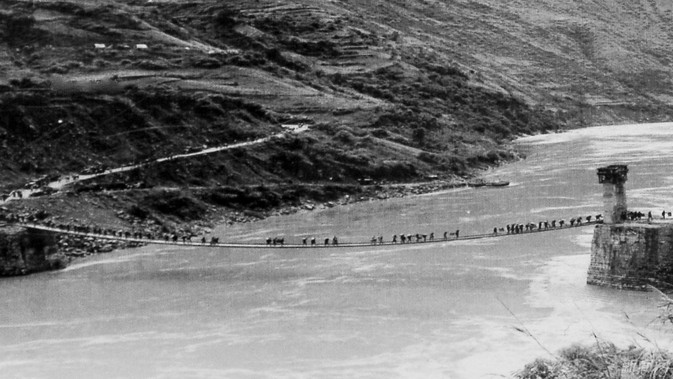
The Y-Force, with the assistance of American supplies, technicians and tactical advisers, forded the Nu River beginning on May 11, 1944. On the first day some 40,000 troops crossed the river with the help of 398 American rubber boats and countless bamboo rafts. In the days that followed, 60,000 more troops and thousands of pack animals carrying supplies crossed the river. The Japanese had not expected an army of this size capable of crossing the rain-swollen river, and were taken by surprise. However, they were able to hold up the enormous force because they retained control of the passes along the Gaoligong Mountains.

The Japanese base at Songshan controlled the Huitong Bridge across the Nu River. The stronghold — referred to as “Gibraltar on the Burma Road” — proved extremely difficult to capture. First, the Chinese tried to storm it en masse but were forced back again and again, each time with heavy losses. Next, the Chinese started to construct trenches up the mountain, but in the end this did not work either. Finally they undermined Japanese command and supply bunkers by digging long tunnels though the mountain. Using tons of US-supplied TNT, the force blew up the mountaintop on August 20, 1944.

Even then there was stiff resistance and the mountain stronghold was only captured on September 7, following more than three months of heavy fighting. The victory was secured at a cost of 7,600 Chinese lives and those of some 3,000 Japanese defenders.

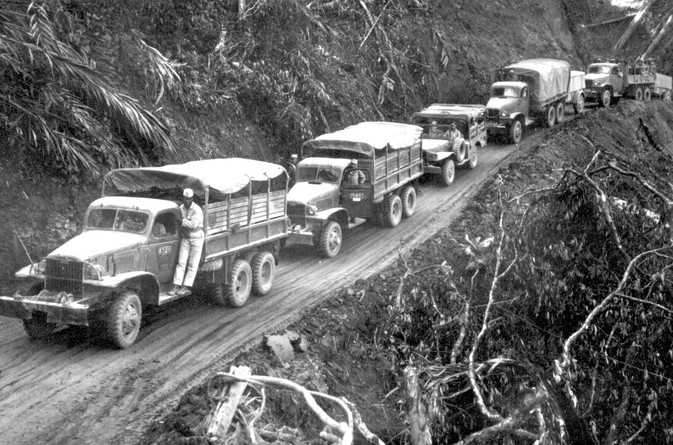
On January 12, 1945 the first convoy left India and followed the recently captured and repaired road. It arrived on February 4 in Kunming, over a twisting thoroughfare by then named the Stilwell Road. The vital supply line combined the original Burma Road — its 900-kilometer Chinese section built by an estimated 200,000 civilians in only eight months — and the US$150 million American-constructed Ledo Road.

The Yunnan front was an incredibly crucial one, for the Allies in general, and China specifically. The once sleepy and forgotten province awoke to the misery and destruction of war and responded more than admirably. Following the war, Yunnan and its people attempted to return to a normality that included a new found pride of place that remains with many to the present day.

This article, written by Patrick Scally, was originally posted here on the GoKunming website on September 3.

Leave a Comment

Filed under China, Current Events, SLIDER, Yunnan Province

Regional Roundup for Week of 9.5.15

Apologies for the late posting as team ExSE snoozed through the Labor Day weekend in the US. Biggest news this week coming through our lens was the deepening investigation and arrests related to the Erawan Shrine bombing in Bangkok.  It is apparent that Uyghur nationals, likely to have fled from China, were involved in the bombing and evidence suggests the yellow shirted bomber whose image was flung on media posts worldwide, is also Uyghur. Some analysts are saying that the Uyghur connection will only tighten the Sino-Thai bilateral relationship and further deepen China’s claims that Uyghur refugees are a destabilizing force in China and Southeast Asia, while others analysts suggest that Thailand will not again make the “mistake” of kowtowing to China (by repatriating scores of male Uyhgur nationals to China) when such actions lead to domestic and regional acts of terror with the potential to cripple Thailand’s tourism economy and threaten Prayuth Chan-ocha’s fragile military government.

EXSE FOCUS

 Dams, Climate Change Lead to Fish Decline in Cambodia’s Tonle Sap: FishermenRadio Free Asia The fish population in Cambodia’s Tonle Sap lake has declined significantly from a year ago, fishermen in the country’s Kampong Chhnang province said Friday, citing the construction of dams in the area and climate change, among other factors. Shortages have led to an increased price for fish in the region, making it harder for residents to put food on the table or make prahok, the fermented fish paste that is a staple of the Cambodian diet. //Although it’s cited as a contributing factor, fishing is something these families are highly dependent on – when securing food for the week is a challenge, (forget the prospect of sending your children to school), what options do they have?

 No Recourse: Upper Mekong Dam Spells End for Tibetan VillageEast by Southeast Dual influences of economic uncertainty in China and Southeast Asia and the unavoidable effects of climate change in addition to grassroots efforts are challenging the popular notion of a “domino effect” of inevitable hydropower development on the Mekong. While the domino effect on the Lower Mekong may be under question, it has prevailed in China’s stretch of the Mekong, silencing activism and subjecting affected communities and local ecologies to the vagaries of unchecked development. The 990MW Wunonglong dam, scheduled for completion in 2019, and the impacts of its reservoir on thousands of households serves as a case in point.

 Laos Officially Approves Controversial Dam ProjectThe Diplomat Laos’ parliament has approved the concession agreement for a controversial dam project, with construction expected to begin before the end of 2015, media sources reported earlier this week. The proposed 260-megawatt Don Sahong hydropower project is critical part of the Lao government’s hopes to transform the country into “the battery of Southeast Asia,” with revenues generated from exporting power to neighboring countries.//The Don Sahong dam is not a critical part of Laos’ plans to transform the country into the battery of Southeast Asia.  It’s a relatively small dam and the power will be distributed to the local area. However, the dam’s impacts will likely cut off a majority of seasonal migratory fish flows having a profound and devastating effect on fish biodiversity and food security for downstream countries of Cambodia and Vietnam.

China’s new Air Pollution Law omits key measures in war on smogChina Dialogue China’s revised Air Pollution Law has made changes almost every major article, after passing through three separate hearings and doubling in length from its original version. Several new elements have been added in the revised law, including articles about regional prevention and control of pollution, an alert system that gives warnings on weather conditions that worsen smog, and limits on particular levels of polluting compounds, particularly in vehicle fuels. Yet, for many, the revamped law is disappointing. The code fails to enshrine a basic right for China’s public to have clean air, and lacks a system for environmental public interest litigation. //With nearly half of China’s coal burning coming from industry, many are (rightfully) still waiting to see caps on coal usage for these major contributors.

Cambodia’s Political Truce Breaks DownCFR Now the longest-serving nonroyal ruler in Asia and the seventh-longest serving nonroyal ruler in the world, Hun Sen remains the ultimate survivor. For three decades, according to human rights groups, Hun Sen has used a combination of populist charm, control of the media through relations with media tycoons, outright intimidation, and relatively effective management of the economy to stay in power. Cambodia holds elections, but the deck tends to be stacked heavily against the opposition.

Related: It’s good to talk Southeast Asia Globe

Vietnam’s Boat People Mark Anniversary With Return to Refugee CampsRadio Free Asia A group of former “boat people” who fled persecution by the communist government in Hanoi at the end of the Vietnam War in 1975 recently toured resettlement camps in Southeast Asia to mark their journey to sanctuary 40 years earlier, and to honor those who were not so lucky. The group set off from Australia on Aug. 20 as part of a “Back to Freedom” boat tour organized by the Archive of Vietnamese Boat People to sites in Malaysia, Indonesia, the Philippines and Thailand—four key destinations for refugees seeking asylum after the conflict.


REGIONAL RELATIONS

Adrift in ASEAN: Tackling Southeast Asia’s Migration ChallengeThe Diplomat The ad hoc and variable nature of state responses to irregular migration flows in Southeast Asia reflects the absence of regional frameworks for addressing displacement and migration challenges.//Will Europe provide best practices for a coordinated ASEAN refugee policy?

Civil groups urge end to forced disappearance in ASEANThe Jakarta Post As ASEAN moves toward a single economic community, civil society groups have urged regional governments not to tolerate human rights violations and to address past abuses, including cases of forced disappearance.

Philippines, Vietnam to sign partnership deal by year-endThanh Nien News The Philippines and Vietnam will sign a “strategic partnership” agreement by the end of the year to bolster defence, political and economic ties, officials have said. “As strategic partners, we aim to deliver results… a cooperation at the highest possible level,” Philippine Foreign Secretary Albert del Rosario told reporters late Wednesday. The deal would make Vietnam the Philippines’ second “strategic partner” after Japan, with which the Philippines is also bolstering military ties.

Related: Philippines, Vietnam to Ink Strategic Partnership by End of 2015The Diplomat

Chinese ships headed home after Bering Sea sighting: U.S. NavyThanh Nien News Five Chinese Navy ships sighted in the Bering Sea off Alaska during a visit to the region by U.S. President Barack Obama have begun their “return transit,” the U.S. Navy’s top uniformed officer told Reuters on Thursday. Chief of Naval Operations Admiral Jonathan Greenert said he did not view the incident, an apparent first for China’s military, as unexpected or alarming.//The Bering strait is a critical chokepoint for China’s ever-growing Arctic trade. The Chinese, Russian, and US navy will see increased activity in this region into the future.  Will naval crowding in the arctic lead to tension or provide an arena for joint cooperation? The US should push for the latter option.

Related: In a First, Chinese Navy Sails Off AlaskaNYT

What To Expect From Xi Jinping’s Visit to the US – The Diplomat With Chinese President Xi Jinping scheduled to visit the United States late this month, U.S. commentators and presidential hopefuls are debating whether Xi’s planned state visit should be downgraded or even cancelled. Organizers of the visit settled on the September timing knowing full well the presidential campaign would likely produce a toxic media environment. To understand Xi’s coming U.S. visit, one must look beyond the Beltway—at least as far as Manhattan.

Related: Rethinking the Obama-Xi SummitThe Diplomat

Australia alarmed by strategic rivalry in South China Sea – Thanh Nien News Australia expressed alarm on Wednesday at escalating strategic rivalry in the South China Sea, saying it puts Asia at the risk of a military blunder with potentially serious consequences. China’s recent assertiveness in the South China Sea has increased military and diplomatic tensions between it and rival claimants, including Vietnam, the Philippines, Brunei, Malaysia and Taiwan.


SUSTAINABILITY AND RESOURCE MANAGEMENT

Large dams are not the answer to climate change in the Mekong RegionEast by Southeast The Mekong River basin is home to over 65 million people. The ecological diversity within the basin sustains the region’s food security. The Mekong River is second to none when it comes to the amount and diversity of fish species which provide both food and income sources in Southeast Asia. But climate change is affecting many people now and it is not stopping. If high emitters of greenhouse gases are serious about addressing climate change, it is time that they started learning about climate justice. They need to learn about the myriad impacts of dams on people and the environment, which are already well known to millions of dam affected people globally.

Why Did China Opt Out of the Arctic Climate Change Statement?The Diplomat On Sunday and Monday, foreign ministers and other international leaders met in Anchorage, Alaska to attend the Conference on Global Leadership in the Arctic: Cooperation, Innovation, Engagement, and Resilience (GLACIER). After the conference, the representatives of the Arctic Council members signed a joint statement affirming “our commitment to take urgent action to slow the pace of warming in the Arctic.” The Arctic states were joined by 10 of the 12 Arctic Council permanent observers – with China and India as the holdouts.

 TNB’s power in 11,000 treesThe Star Online In an effort to conserve the environment, Tenaga Nasional Bhd (TNB) has set a goal of planting 11,000 trees in 11 selected locations in the peninsula. TNB chairman Tan Sri Leo Moggie said the Tree for a Tree programme was an expression of the power company’s concern and commitment towards the sustainability of the environment in line with the country’s development.

Pelni, ASDP told to begin energy-conversion programThe Jakarta Post State-Owned Enterprises Minister Rini Soemarno has called on state-owned shipping firm Pelni and state-owned ferry operator PT ASDP Indonesia Ferry to immediately start their oil-to-gas energy conversion programs.


CHINA

Xi says China no threat, announces military cuts at paradeThanh Nien News As fighter jets streaked through the skies of Beijing and tanks rolled through Tiananmen Square to commemorate the end of World War II, Chinese President Xi Jinping told the world that the nation was committed to peace and announced the biggest cuts to the army in almost two decades. Xi said that army personnel would be reduced by 300,000, the largest reduction to the 2.3 million-strong military since 1997. The announcement foreshadows the most sweeping overhaul of the military in at least three decades, moving it closer to a U.S.-style joint command structure, people familiar with the matter said. //Not exactly in agreement with China’s display at the parade. Also, see article below about China’s unveiling of largest killer drone yet.

Related: China’s second world war commemorations – in pictures The Guardian

            Related: China’s leaner army may pose a bigger challenge to U.S.Thanh Nien News

China Unveils Its Largest Killer Drone To Date – The Diplomat China’s heaviest attack and reconnaissance drone to date, the Caihong 5 (CH-5), or Rainbow 5 recently made its maiden flight at an undisclosed airfield in Gansu province, according to China Military Online. According to the South China Morning Post, Chinese state television announced that the debut of the Rainbow 5 will “change the game in airstrikes.”

Weeks After Tianjin Blasts, Many Residents Await Compensation for Damaged HomesNYT The chemical blasts that rocked the northeastern port city of Tianjin last month damaged an estimated 17,000 homes, shattering windows, overturning furniture and knocking down walls. But more than three weeks after the explosions, many Tianjin residents have yet to receive compensation for their losses, and some say they have been pressured into dropping their claims. //Over 100 fatalities and many more injured, still waiting to be compensated. The consequences of corruption and official negligence at its worst.

Related: Behind Deadly Tianjin Blast, Shortcuts and Lax RulesNYT

IMF: Impact of China slowdown larger than expectedThe Jakarta Post China’s economic slowdown is having a broader impact on the global economy than originally expected, especially on emerging markets, the International Monetary Fund said late Wednesday. In a report for Group of 20 finance chiefs meeting this week in Ankara, the IMF said the turmoil in China and other factors like capital flow reversals were increasing the risks to economic growth around the world.

China-led AIIB to offer loans with fewer strings attached: sourcesThe South China Morning Post The Asian Infrastructure Investment Bank will require projects to be legally transparent and protect social and environmental interests, but will not ask borrowers to privatise or deregulate businesses for loans.

The China Economy: What Lessons for Africa? – Jakarta As the Chinese stock market falters, the economy slows and China’s economic footing doesn’t seem quite as secure as it did even just a few months ago, doubts are beginning to surface in Africa over whether it might be time to look beyond the China model.


SOUTHEAST ASIA

Post-bomb Bangkok Moves on, But With New Sense of InsecurityThe Irrawaddy One Bangkok resident says he can’t shake the horrid sight of what he saw, or the smell of death. Another says the initial shock is gone and he’s returned to his old routine—work, happy hour and taking selfies. Two weeks have now passed since the bombing at a central Bangkok shrine, giving residents of the Thai capital time to digest what authorities call the deadliest attack the country has ever experienced.

Related: Bangkok bomb: police say man arrested unlikely to be main suspectThe Guardian

Vietnam needs over $3.86 billion to upgrade north-south railway: reportThanh Nien News Vietnam will possibly need nearly VND88.2 trillion (US$3.86 billion) to upgrade its north-south railway and increase the speed to 80-90 kilometers per hour from 50 kph at the moment, news website Dau Tu recently reported. The 1,726-kilometer railway will be able to transport 16 million passengers and 6 million tons of goods a year by 2020, it quoted the Vietnam Railway Authority as saying.

Garment Factories Downsize in Response to Minimum WageThe Irrawaddy At least one factory has shut down, and several others have reduced their workforces and cut allowances, following the government’s adoption of a minimum wage. Ahead of the introduction of a 3,600 kyats (US$2.80) minimum wage, which took effect on Sept. 1, the Sabel Pwint Garment Factory in Rangoon’s Hlaing Tharyar Industrial Zone closed its doors. It is believed the company provided termination payments to all of its 237 employees.

Myanmar’s Election Chief Vows Free and Fair ElectionsRadio Free Asia Myanmar’s election chief gave a verbal assurance on Wednesday that the country’s general elections in November will be free and fair, while one ethnic minority party called on the government to delay the vote because of damage caused by heavy flooding. “It will be free and fair; otherwise, I wouldn’t hold the elections,” said Tin Aye, chairman of the Union Election Commission (UEC), the body responsible for the polls in the country’s upcoming Nov. 8 general elections.

Related: Myanmar Election Body Rejects Muslim Parliamentary CandidatesRadio Free Asia

ADB, Myanmar Sign $3 Million Grant Flood ReliefADB The Government of Myanmar and the Asian Development Bank (ADB) today signed a $3 million grant agreement to finance relief efforts for communities affected by recent flooding and landslides. The agreement was signed by U Maung Maung Win, Permanent Secretary of Myanmar’s Ministry of Finance, and Winfried Wicklein, ADB’s Myanmar Country Director.

Rice Fields at Risk in Western Cambodia With Lack of RainfallRadio Free Asia
A delay to the beginning of the rainy season, which typically lasts from the end of May through the first half of October, has devastated provinces that are home to the country’s largest area of rice fields and plantations, vice president of the National Committee for Disaster Management Nhim Vanda told RFA’s Khmer Service. “In my experience, if there is no rain in September, the rice in Pursat and Battambang provinces will be destroyed,” he said. According to Nhim Vanda, several thousand hectares (one hectare = 2.5 acres) of rice fields across Pursat and Battambang—as well as in the provinces of Banteay Meanchey, Takeo, Kampot, Kampong Speu and Siem Reap—are at risk of failure if the rains do not come.

At least 13 dead after migrant boat sinks off Malaysia: officialThe Jakarta Post At least 13 people have drowned after a small wooden boat, believed to have been carrying about 70 Indonesian migrants, sank in the Malacca Strait early Thursday, Malaysian officials said.


YUNNAN

Remembering Yunnan’s role in World War TwoGoKunming While the capital celebrates and hundreds of millions watch the Beijing parade on television, Yunnan residents quietly reflect on their province’s stand in what is officially called the ‘Chinese People’s War of Resistance Against Japanese Aggression’. Although no parades will be held this year in Kunming commemorating those who fought and died, Yunnan’s stature as one of China’s last bastions of hope remains undiminished, if often a bit misunderstood.

Anning refinery fined for violation of national environmental lawsGoKunming Yunnan Petrochemical Company, a subsidiary of China National Petroleum Corporation, was fined 200,000 yuan (US$31,000) for violating articles 19 and 24 of the national Environmental Protection Act. Specific details were not disclosed beyond mention of “significant changes and unauthorized construction” without the company filing required environmental impact assessment (EIA) documents.

This week’s digest was compiled by Rachel Tritsch with analysis by Rachel Tritsch and Brian Eyler.

Leave a Comment

Filed under Current Events, NEWS DIGEST, SLIDER

Anning refinery fined for violation of national environmental laws

refinery

The Chinese Ministry of Environmental Protection issued a modest fine over the weekend to anAnning oil refinery. While the “administrative penalty” did not specifically mention pollution, the facility in question has been the source of public concern and controversy since construction began in 2013.

Yunnan Petrochemical Company, a subsidiary of China National Petroleum Corporation, was fined 200,000 yuan (US$31,000) for violating articles 19 and 24 of the national Environmental Protection Act. Specific details were not disclosed beyond mention of “significant changes and unauthorized construction” without the company filing required environmental impact assessment (EIA) documents.

However, the two statutes Yunnan Petrochemical Company was found to be in violation of are both concerned with the construction of factories or processing installations deemed potentially harmful to the environment. Article 19 is specifically concerned with the “utilization of natural resources”, and reads, in part:

The development and utilization of natural resources is bound to affect and damage the environment, [including] resources such as water, land, forests, grasslands, oceans, minerals…All types of exploitation of natural resources must comply with the relevant laws and regulations and fulfill ecological environmental impact assessment procedures according to law…and key construction projects, must comply with soil and water conservation programs should [or] otherwise will not be allowed to start construction.

In addition to the fine, the Anning refinery was ordered to shut down construction on the parts of the factory not in compliance with EIA requirements. Those sections will be allowed to reopen only after the proper documents have been submitted and approved by the Ministry of Environmental Protection.

The refinery, which processes “ten million tons” of petroleum each year, has been a source of community concern since construction began outside of Anning in 2013. Local residents feared the plant would produce the chemical paraxylene — an important ingredient in the manufacturing of plastic bottles and polyester clothing. If inhaled or absorbed through the skin, the gas causes varying degrees of damage to abdominal organs and the central nervous system.

Concerns over the potential danger the facility could pose to public health went viral on microblogging services, and led to large street protests in Kunming. The city’s mayor eventually addressed demonstrators, promising to look into the matter. However, no substantial news of a final decision was made public, and the refinery operated without further media comment until Saturday.

This article written by Patrick Scally was first published here on the GoKunming website on September 1, 2015.  Eastbysoutheast.com reported extensively on the the PX protest issue in Kunming in 2013.

Leave a Comment

Filed under China, Current Events, Energy, Governance, SLIDER, Yunnan Province

No Recourse: Upper Mekong Dam Spells End for Tibetan Village

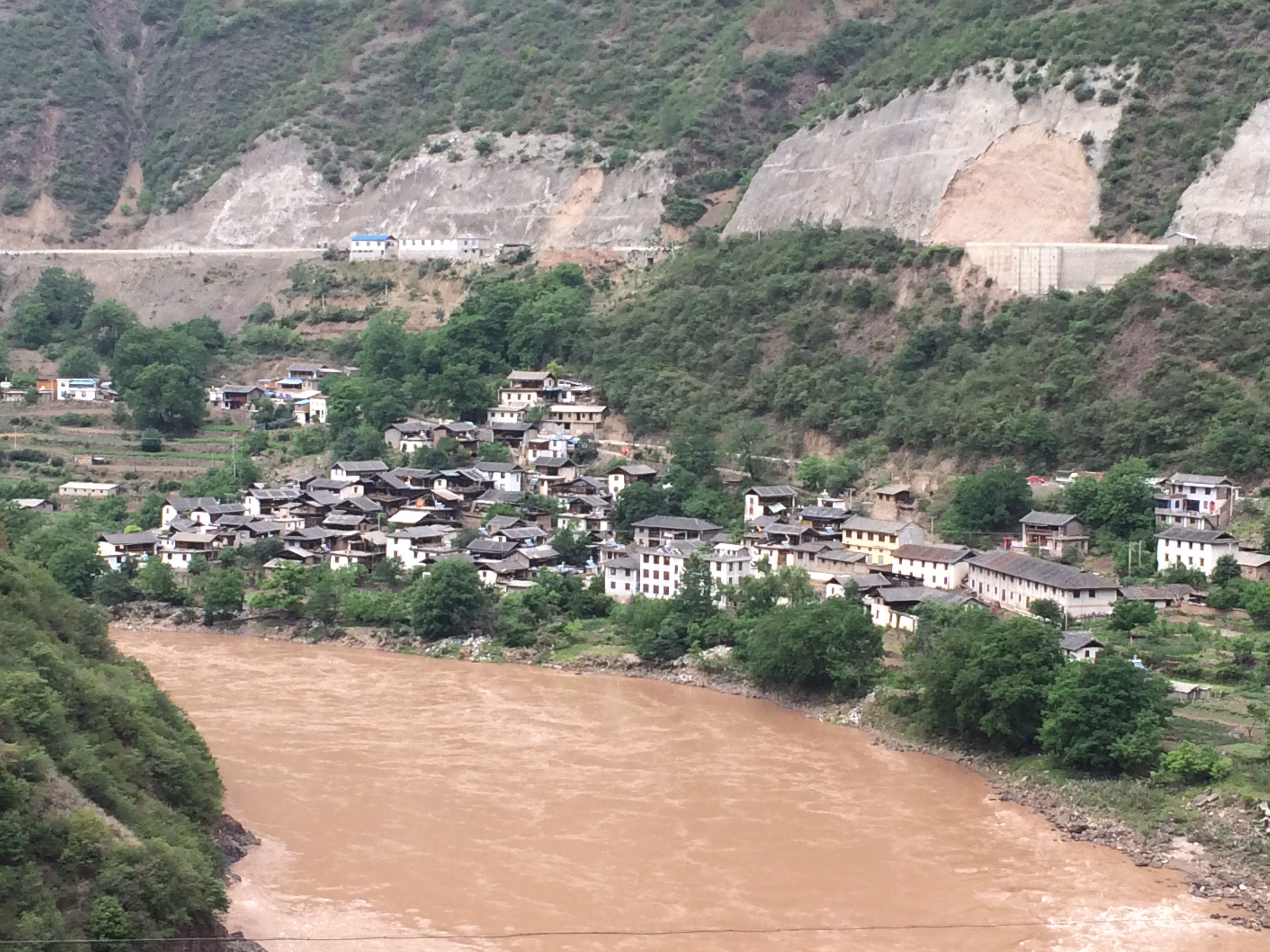
Cizhong village in the background along the west bank of the Upper Mekong in Yunnan.

Cizhong village in the background along the west bank of the Upper Mekong in Yunnan.

Cizhong, a remote Tibetan village in China’s Yunnan province, has no recourse against the onslaught of impacts from the construction of the Wunonglong dam on the Upper Mekong River.

This year has seen no pause in activity from civil society organizations and community level stakeholders in the Lower Mekong targeting criticism at the Xayaburi and Don Sahong dams in Laos, both high-profile projects on the main stem of the Mekong River. Moreover, evidence shows how efforts of these groups are actually delaying the construction of these projects and raising the costs associated with their completion. Dual influences of economic uncertainty in China and Southeast Asia and the unavoidable effects of climate change in addition to grassroots efforts are challenging the popular notion of a “domino effect” of inevitable hydropower development on the Mekong.

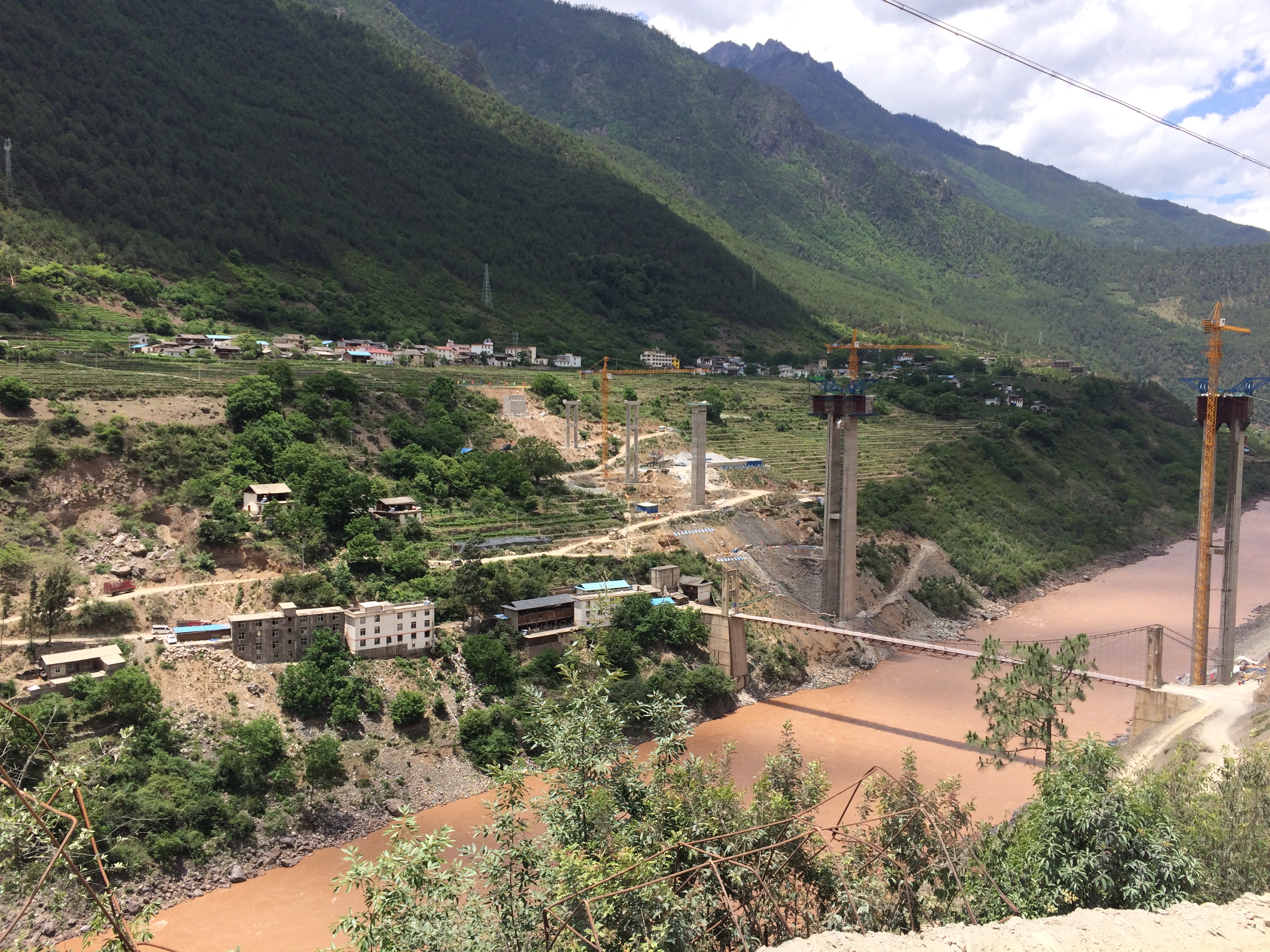
Yet while the domino effect on the Lower Mekong may be under question, it has prevailed in China’s stretch of the Mekong , silencing activism and subjecting affected communities and local ecologies to the vagaries of unchecked development. The 990MW Wunonglong dam, scheduled for completion in 2019, and the impacts of its reservoir on thousands of households serves as a case in point.

Construction began at the Wunonglong dam site in 2010.

Construction began at the Wunonglong dam site in 2010.

I first heard of the impacts of the Wunonglong dam on the day I walked into Cizhong, a village 40km upstream of the construction site. Cizhong sits on a small plateau 100 meters above the Mekong at the southern end of Deqin county in one of the most remote areas of Yunnan province. I crossed into Cizhong on a bridge that will be inundated by the dam’s reservoir in a few years.  Looming fifty meters above, a half constructed bridge built by the dam developer Huaneng Hydrolancang will upon completion bisect a patch of carefully maintained rice paddies located between the river and the village.

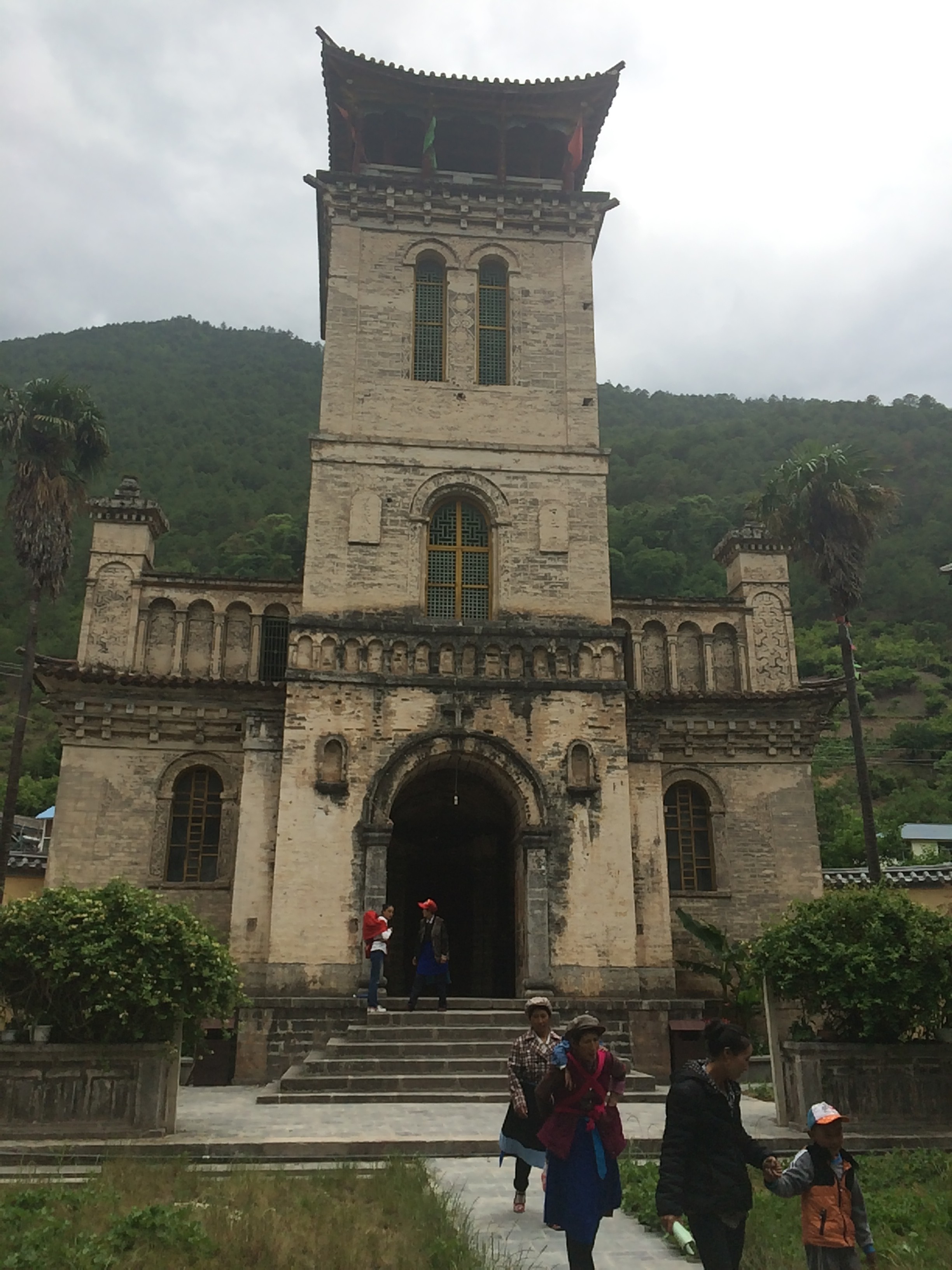
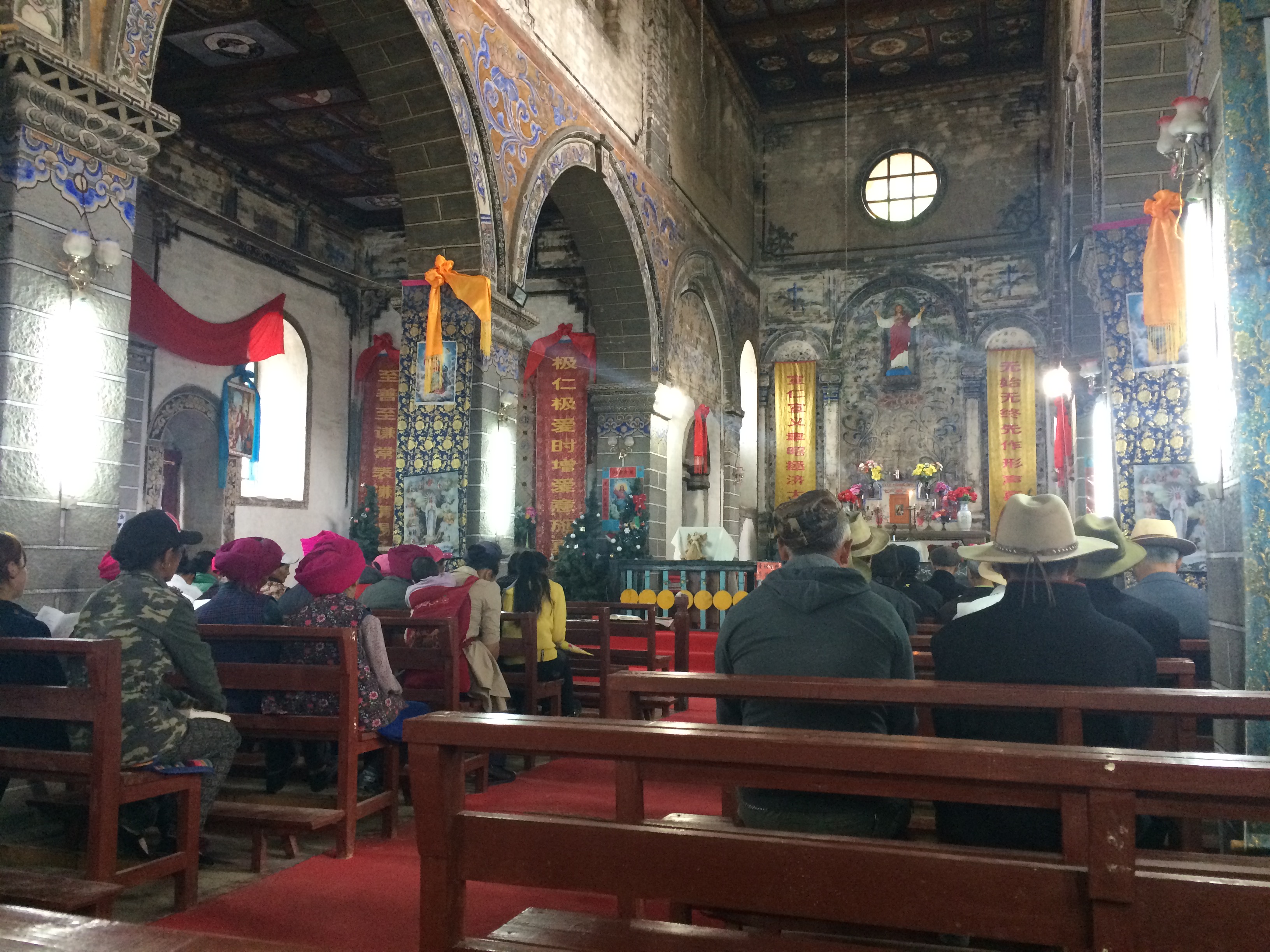
Cizhong is majority Tibetan, and for years both Chinese and foreign tourists have flocked to the village for two reasons.  First, eighty percent of the village’s 115 households are members of the local Catholic church established in the late 19th century by French missionaries. Several times a week, villagers file into the stone Cizhong cathedral, a nationally protected structure, to take part in mass led by Li Fei, a priest from Inner Mongolia.  The prayers sung in unison before mass are to the tune of commonly known Tibetan Buddhist chants.  European tourists typically line the back pews to catch a glimpse of this uncommon marriage of cultures.

Cizhong’s Catholic Church, a nationally protected structure built in the early 20th century.

Cizhong’s Catholic Church, a nationally protected structure built in the early 20th century.

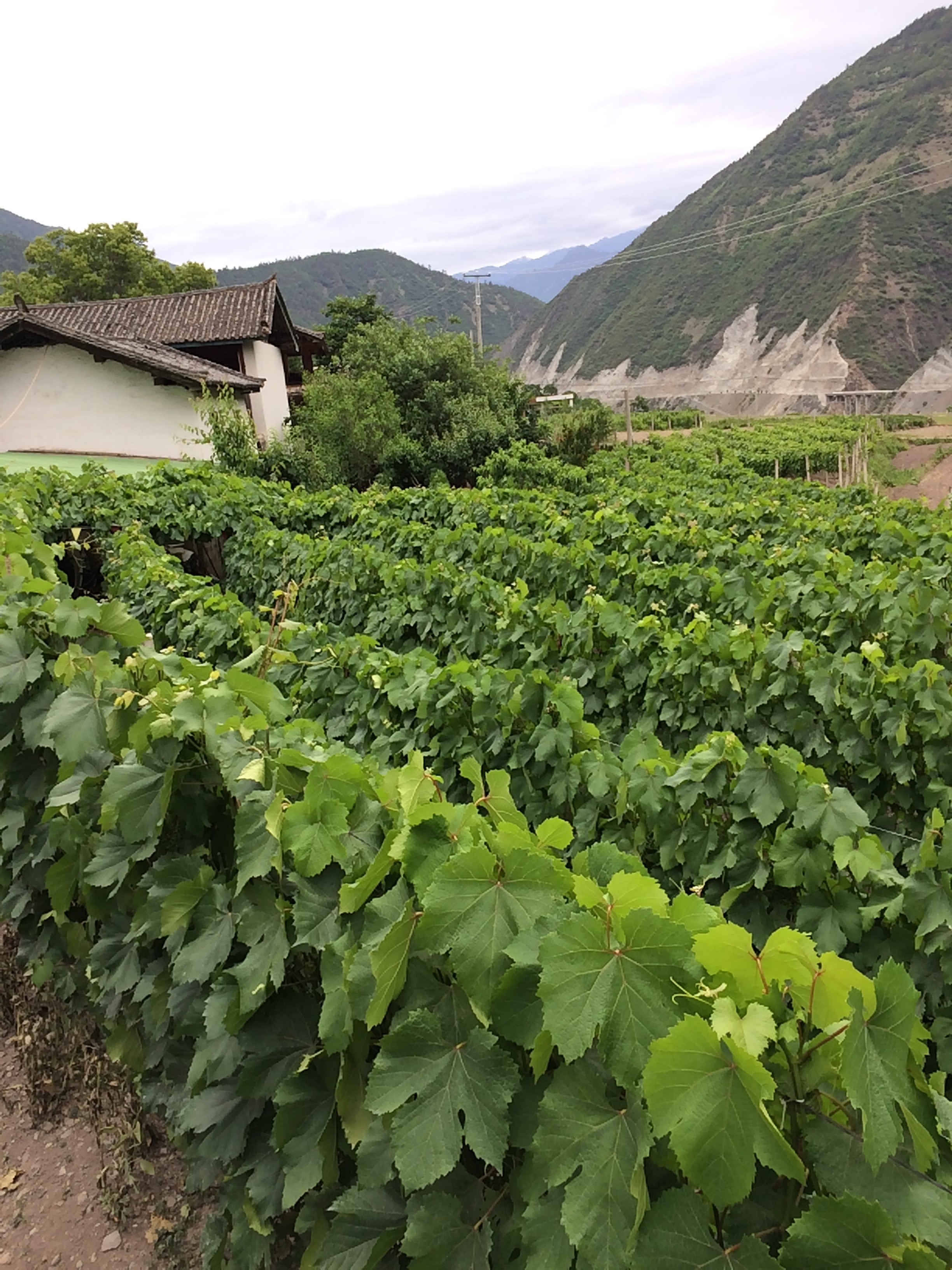
Second, Cizhong is home to a growing cottage wine industry, also introduced by the French missionaries prior to the establishment of the People’s Republic of China in 1949.  The wine boom started in the late 1990s with the resurrection of a Rose Honey grape variety found growing on the cathedral grounds and no longer cultivated in France.  About ten years ago, the local Deqin county government introduced agricultural assistance programs that brought in other kinds of grape varieties as well as technical aid to supply a larger wine making industry in the Shangri-la region.  Currently, most villagers sell their grapes to middlemen each harvest, but some choose to make their own wine to retail at Cizhong’s local wineries and guesthouses.

New neighbors

However, the things that make Cizhong special may not be around for long. The Wunonglong dam threatens not just Cizhong’s local economy that has delivered modest levels of prosperity to the village over the past thirty years, but also the religious harmony between local Tibetan Catholics and Buddhists.

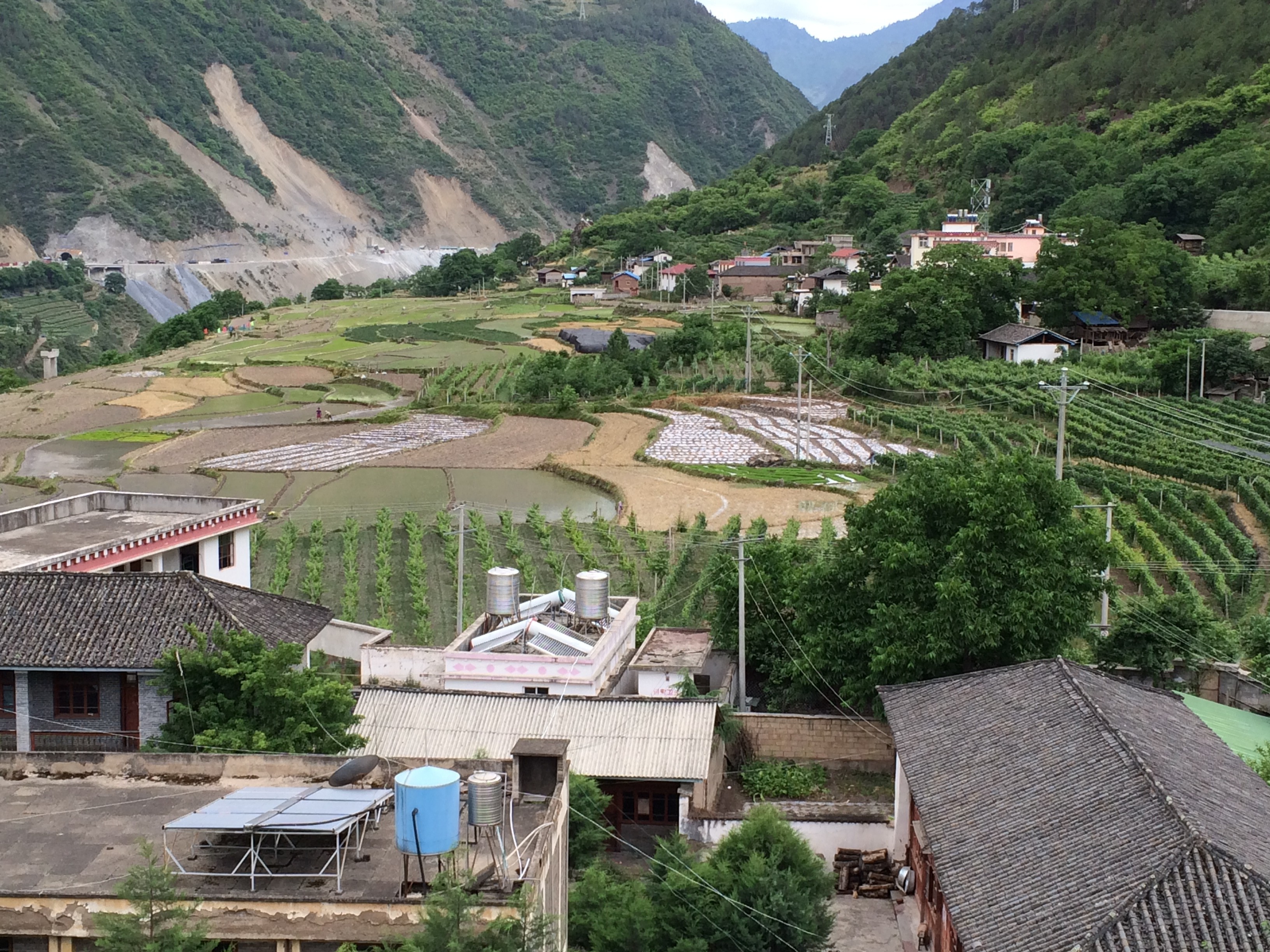
In two years Yanmen, an upstream community with more than two hundred households, will be entirely relocated to Cizhong.  Yanmen sits low along the banks of the Mekong and will be completely flooded by Wunonglong’s reservoir and the only place to transplant Yanmen’s residents is on top of Cizhong’s rice paddies.  Upon hearing the news of Yanmen’s takeover of their rice paddies, Cizhong’s villagers reacted emotionally as the paddies create a critical community space for social interaction. “The village elders cried when they heard the rice paddies would be destroyed.  The paddies were carved with their bare hands in the 1960’s and now the government wants to take them away?” says a local villager. Another villager claimed one rice harvest can feed the village for two years. Without a rice crop, villagers will have to generate income to overcome a critical food security issue.

Part of Yanmen village located below the inundation zone of Wunonglong's reservoir.

Part of Yanmen village located below the inundation zone of Wunonglong’s reservoir.

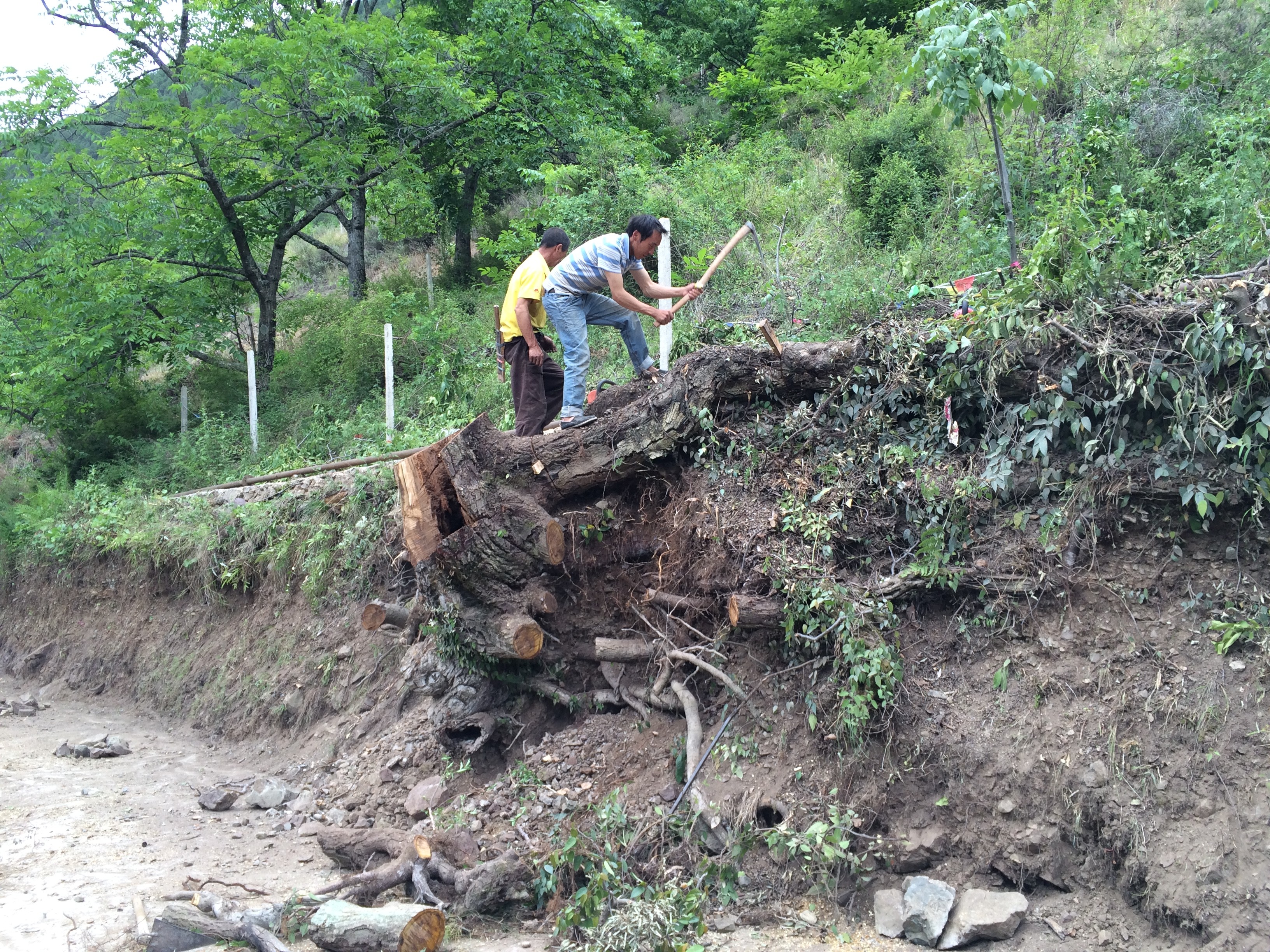
The day I walked through Cizhong was the last day for the giant walnut trees that lined Cizhong’s only road. To widen the road making way for Yanmen’s relocation, the remains of the trees, which each can produce up to 10000 RMB (1500 USD) of walnuts per year for sale at local markets, were stacked into wrecked piles of limbs and logs. Villagers received 300-10000 RMB in compensation per tree, at most enough to cover one year’s harvest.

The wine industry, as well as walnuts, has suffered as a result of the relocation. “They cut down an entire row of my grapes,” says a villager who also lost walnut trees to the road’s expansion.  “We were only compensated 40 RMB for a healthy vine and 30 RMB for saplings.  One vine produces 40 RMB of grapes per year, and I have no new land to plant on.  They took 100 of my vines.”

Road widening brings down scores of Cizhong’s walnut trees.

Road widening brings down scores of Cizhong’s walnut trees.

No equity, nowhere to turn

Land compensation is an issue of major contention in Cizhong.  More than half of Cizhong’s agriculturally productive land is being claimed for redistribution to the incoming residents of Yanmen and originally villagers were offered 30,000 RMB per mu of land (1 acre equals 6 mu) lost to Yanmen’s relocation.  Currently the local government is offering 100,000 RMB per mu, but Cizhong’s villagers continue to hold out.

“The villagers who moved to the city long ago and no longer live here agreed to 100,000 RMB per mu.  It’s easy for them because they have other jobs and other income, but to us, the taking of our land is taking away our only source of income,” says a villager surnamed Wang. Some villagers will lose all of their productive land. Stall tactics make sense since the local government will take 30% of the compensation and only dole out the agreed upon compensation in monthly installments over 15 years.  At the current offer, with only 3000 RMB per mu in compensation per month, even the most business savvy individuals will not be able to survive.  “We will wait,” says Wang with unsteady confidence.

Yanmen’s residents will rebuild on Cizhong’s carefully cultivated rice paddies

Yanmen’s residents will rebuild on Cizhong’s carefully cultivated rice paddies

I inquired about legal recourse.  “The local mayor only listens to money.  He’s not on our side,” continues Wang.  “I tried to file a petition in Deqin, the county seat, but the official there said the only way he’d review our petition was if the entire village showed up. That’s impossible. We don’t know who to turn to.”

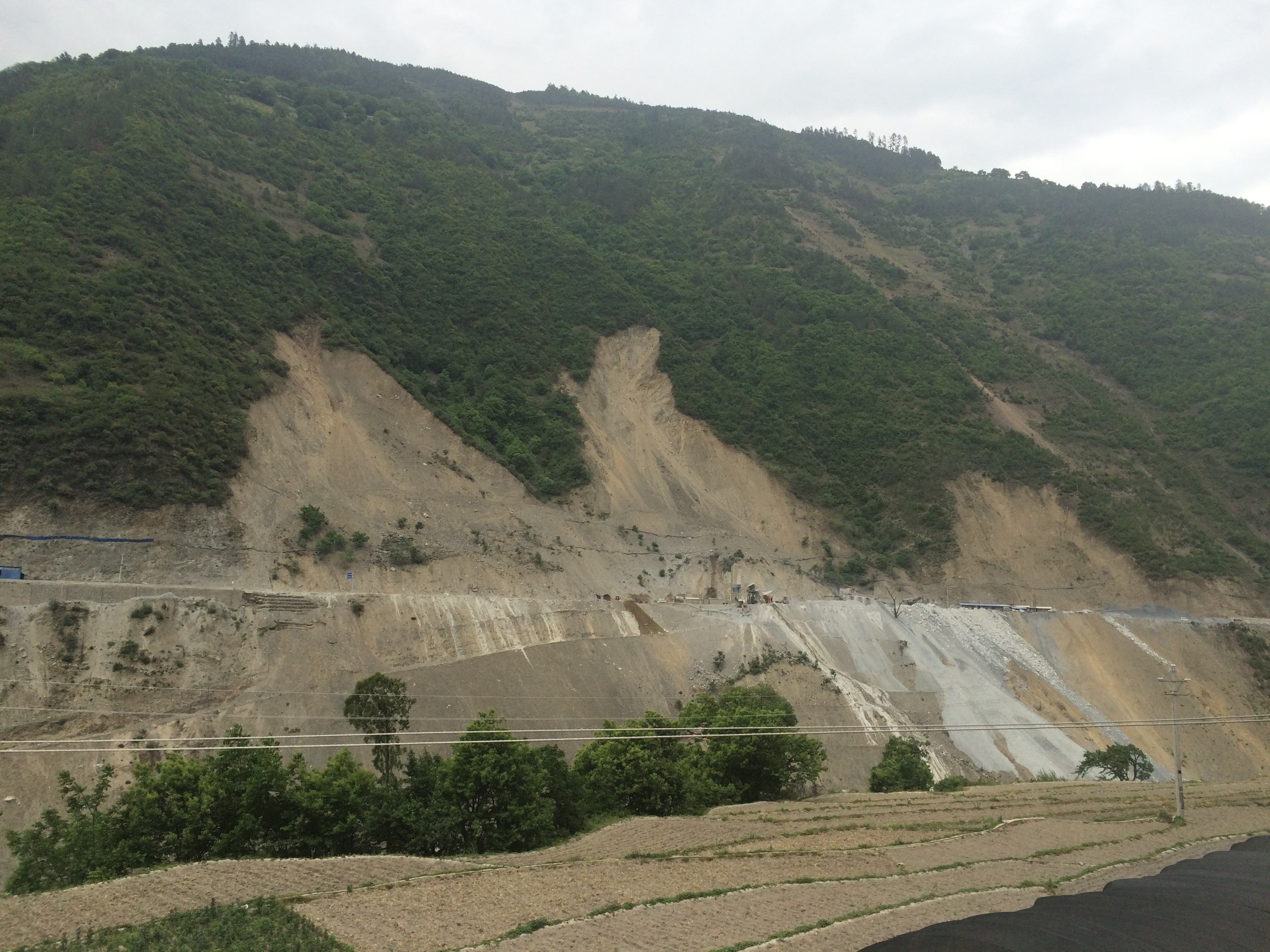
Two hundred meters from the village on the opposite bank of the Mekong, new road construction and a tunneling project carries on day and night. Like the old bridge, the current road to Cizhong will be flooded by the dam’s reservoir. Noise from stone crushing machinery and cement processers pervades the valley.  Last year a landslide created by the road project forced the river to change course and washed away three mu of Wang’s riverside agricultural land. To date he has received no compensation.  Wang claims landslides opposite the village have resulted in the deaths of more than fifty construction workers. He points to cracks in the plaster walls of his traditional home built of wood and earth.  “My house shakes all day long from the construction.”

Highway construction opposite Cizhong has led to landslides and more than 50 deaths.

Highway construction opposite Cizhong has led to landslides and more than 50 deaths.

“Ten years ago we had everything we needed and now life is only getting worse,” continues Wang. Electricity generated by the Wunonglong dam will not be distributed to Cizhong.  In a prelude to Cizhong’s current worries, a small-scale hydropower project adjacent to the village was constructed a few years ago. It sends no power to the village, and to make matters worse, the small scale project cut off access to a local stream and to pasture lands beyond it.  “We let our cows out to pasture in the hills but they came back with bloodied legs because they couldn’t cross the land affected by the small hydropower project. Now there’s nowhere for our cows to graze.” When the small scale project was commissioned, developers promised locals 500 units of free electricity – those promises were never fulfilled.  Not a single Cizhong villager was employed in the construction of the small scale power station, and the price of electricity has been on a steady rise in the village.

Squeezed by national development needs

When Chinese dam developers conduct feasibility studies and first meet with locals affected by projects, they fervently sing praises of hydropower, boasting of how the dam will deliver local communities out of poverty and provide new income sources.  Reality tells a different story as infrastructure development projects in southwest China nearly always fail to provide net benefits to those who live closest to them.  In the case of China’s hydropower development on the Mekong, most power is sent to cities on or near China’s eastern coast. And as China doubles down on its commitments to reducing carbon output, the investment in hydropower projects, particularly in the under-developed southwest is amplified.

In Cizhong as in many other parts of upland southwest China, the Chinese government’s “core interests” of energy dependence and carbon reduction combine forces to turn land held by indigenous ethnic peoples  into a marketable commodity. Individual livelihoods, the social cohesion provided by generational practices and reliance on the land, and local traditions are consistently marginalized.

A few years ago at a village meeting, a former Cizhong mayor berated the villagers shouting “This land, this water, these mountains, they are not yours!  Stop acting like these are yours!  This is the state’s land, and these are the state’s resources.”

From a legal perspective, the Chinese state owns the land and everything above and below it, but villagers who are responsible for the productive economic activities that happen on that land are legally guaranteed compensation at fair market value for land grabbed by developers or involved in relocation efforts. Yet on China’s periphery, even the commoditization process fails. The marginalized nature of Cizhong and distance from the state’s judicial apparatus prevents fair compensation. Further, the law lacks consideration for values attached to various ways upland ethnic peoples use the land.

The Chinese state apparatus sees compensation to and relocation of rural peoples affected by development through standards applied to lowland agriculture, where patches of land are treated as commodities producing an accountable thus taxable yield on an annual basis. In upland China as in parts of Southeast Asia, land use patterns are less standardized and less predictable. Villagers there use mountain slopes as common pasture land for grazing animals, the forests as areas for collecting consumable and marketable products such as the matsutake mushroom and caterpillar fungus, or as in Cizhong’s case, walnuts produced by trees lining its roads and fields. The value of community-building functions created by these shared land use practices often is greater than the cumulative economic value derived from the land.

Sunday mass in Cizhong's Catholic church.

Sunday mass in Cizhong’s Catholic church.

“We are worried about village harmony,” Wang continues, discussing how the daily routines of Cizhong’s Catholics are still deeply entwined with Tibetan Buddhist culture.  “It’s common to see Buddhist monks present to give blessings at Catholic weddings and Christmas and Easter. We’ve achieved this harmony through decades of exchange with our Buddhist neighbors.”  However, all of Yanmen’s residents are believers in Tibetan Buddhism and unfamiliar with Catholic culture. Wang is worried that despite common ethnic heritage, the influx of Buddhists will upset community harmony and social interaction.  He labels Yanmen’s residents as overly superstitious and tells stories of how they are caught up in a spiteful sectoral feud between a local protector deity and the Dalai Lama that divides families in this part of the Tibetan world.

As if matters could not get any worse, when Yanmen village moves in, Cizhong will lose its name. Yanmen is one rung higher in China’s administrative ranking of localities, providing further risk to the interdependent cottage tourism and wine industries that have bet their futures on Cizhong’s name and unique history. The name change coupled with the inundation of Tibetan Buddhist villagers from Yanmen will dilute the uniqueness of Cizhong’s past and have a particular impact on Cizhong’s tourism industry.  With less land available for agricultural production per household, villager’s annual grape yields will decrease having an impact on income.  Villagers might choose to switch to higher value crops, but options for diversification are few in the canyonlands of the Upper Mekong. Alternatively villagers will be pressured to intensify the use of fertilizers to increase grape yields, pushing limits on sustainability and subjecting the local ecology to the effects of dangerous chemicals.

Spring grapes in Cizhong

Spring grapes in Cizhong

With no avenue for legal recourse and no one coming to aid the villagers, Cizhong’s days are numbered. The demoralizing effects of the Wunonglong dam are obvious and with nowhere to turn to for assistance or relief, Cizhong’s villagers can only passively wait to absorb the next shockwave. Censorship and the tightening of restrictions on NGOs under Xi Jinping’s government discourages civil society groups from intervening in cases like Cizhong’s making this unfortunate village just one of many caught up in the inevitable leviathan of energy infrastructure development in southwest China.

3 Comments

Filed under Agriculture, China, Current Events, Energy, Food, SLIDER, Sustainability and Resource Management

Regional Roundup for Week of 8.30.2015

A huge week for Asia. An epic stock market tumble in China had repercussions for markets globally and has raised questions over China’s economic strength, while a 3% devaluation of the yuan has stoked fears of a possible trade war. Much for Xi and Obama to talk about next month. In Thailand, a key suspect, thought to be a foreigner,  in the Erawan shrine bombing has been arrested. In the apartment he was found in, Thai authorities recovered bomb making materials and a stack of fake Turkish passports. Theories linking the bombing to the repatriation of scores of Uyghur refugees ealrier this summer seem to be correct. Stay with ExSE as the investigation digs further. 

EXSE FOCUS

Wall St. Slips Lower After a Wild WeekNYT Investors were calmed by strong growth figures from the United States, while China continued to take measures to shore up stocks and the renminbi. // The government announced earlier this year its plan to freeze annual GDP growth at 7%.  Recent stock slips could cause problems with this carefully calculated maneuver.

Related: Zombie Factories Stalk the Sputtering Chinese EconomyNYT

Related: Political Risks May Foil Economic Reform in ChinaNYT

Related: Press freedom watchdog calls for release of Chinese business reporterThe Guardian

Related: The US Still Runs the World – Project Syndicate

How to Solve China’s Currency Parity Puzzle?ChinaFile The yuan lost about 3 percent of its value against the U.S. dollar between August 11 and 13, roiling global equity markets and stoking fears that China had pushed a trade war button.

Related: What does China’s Shock Yuan Devaluation mean for Africa?China in Africa: The Real Story

Chinese Media Jumps on Tragic Virginia ShootingChinaFile Within China, the high rate of gun violence in the United States is widely known and often seen as a flaw in the U.S. political system, a criticism repeated after the Virginia shooting.

Thai Police Announce Arrest in Bangkok Shrine BombingNYT The Thai police on Saturday arrested a foreign man who they said was likely to have been involved in the Aug. 17 blast, which killed 20 people.//Look for ExSE’s analysis of the Erawan bombing, the search for the culprit and its connection to Uyghur and Pan-Turkic nationalism in SE Asia this week. 

Related: Bangkok Bombing Spotlights Uyghur Woes in Southeast AsiaThe Diplomat

Related: Hongkongers allowed to cancel Bangkok trips dated up to September 10 after shrine blastSCMP

National Security Adviser Meets With Chinese President Before His U.S. VisitNYT Susan E. Rice met with President Xi Jinping and other officials and discussed a number of issues that included areas of tension between the two nations.

Related: China’s Vulnerability Is a Test for U.S. Presidential CandidatesNYT

Related: Can President Xi’s September Visit Save US-China Relations?The Diplomat

Related: US-China Strategic Rivalry: Balancing the RebalanceThe Diplomat

Sit-In Leaders Are Charged in Hong KongNYT Three students who led last year’s pro-democracy Umbrella Movement in Hong Kong were charged over their roles in setting off the massive rallies and sit-ins.

Related: Hong Kong Christian Groups Feel New Scrutiny From Mainland NYT

Related: ‘Secret’ meeting between Democratic Party members and Beijing official a step on the right pathSCMP

REGIONAL RELATIONS 

A Military Game of Chicken in the South China Sea? The Diplomat Amid criticisms of China’s island-reclamation activities, the U.S. and China continued to trade accusations that the other is militarizing the South China Sea.

Related: Taiwan and Its South China Sea Peace InitiativeThe Diplomat

Related: Philippine Nationalism and the South China SeaThe Diplomat

Human rights groups face global crackdown ‘not seen in a generation’The Guardian Laws affecting funding, requiring registration and prohibiting protest are among controls that are making it difficult for NGOs and other campaign groups.

Related: British rights activist charged with defamation in ThailandThe Guardian

Related: Lao Migrants To Be Witnesses in Thai Human Trafficking CaseRadio Free Asia

China, Japan battle to build Indonesia’s first bullet trainThe Jakarta Post China and Japan are locked in an increasingly heated contest to build Indonesia’s first high-speed railway, with the Asian giants sweetening deals and turning up the charm as time runs out to woo Jakarta.//Add high-speed rail to the growing list of projects where the Japanese and Chinese. Look for an ExSE report on Chinese, Thai and Japanese cooperation and competition on Myanmar’s Dawei Deep Sea Port project coming soon. 

Chinese oil rig to continue drilling near Vietnamese coastSCMP A Chinese oil rig at the centre of last year’s standoff between China and Vietnam will continue drilling not far from Vietnam’s coast, China’s maritime safety authorities said on Tuesday.

US visa programme popular with Chinese derided as ‘immigration reform for 1pc’SCMP With immigration a hot topic on the presidential campaign trail, unions and immigrant advocates are targeting a federal visa programme popular with Chinese that they deride as “immigration reform for the 1 per cent.”//Tied up in this are discussions about job creation and China pursuing corruption and graft suspects abroad. 

Related: US regulator freezes assets of immigration consultant accused of defrauding 250 Chinese investorsSCMP

US Admiral: China ‘Very Interested’ in RIMPAC 2016The Diplomat China was invited to participate in RIMPAC for the first time in 2014, but some have already argued that the People’s Liberation Army Navy (PLAN) should not be invited back in 2016.

Related: Should the Pentagon Fear China’s Newest Weapon? – The Diplomat

SUSTAINABILITY AND RESOURCE MANAGEMENT

China, US to cooperate in developing ‘clean coal’ technologies to help combat climate changeSCMP Officials from China and the United States have taken a major step towards an agreement to advance “clean coal” technologies that claim to reduce the fuel’s contribution to climate change.//Climate change mitigation continues to be a great point of cooperation between the US and China. Good to see that stress in other areas of the bilateral relationship haven’t prevented building upon past achievements in climate change research. 

Dams ‘destroying Mekong fish stock’The Nation Fishermen in delta and Northeast Thailand say dams in China and Laos have hit breeding and yields, forcing many to quit.//ExSE has been personally observing fish stock depletion in Chiang Rai province for the past three years. There is little doubt in our minds that hydro projects on the upper Mekong are indeed causing fish population decline.  

Related: Large dams are not the answer to climate change in the Mekong RegionMekong Commons

Related: Black Markets in China Still Driving World’s Tiniest Porpoise to ExtinctionNYT

Adapting to air pollution with clean air stands in China – The Guardian To adapt or mitigate? As with climate change, both mitigation and adaptation are needed to tackle air pollution in China.

Related: Air quality rule changes put heat on local authorities SCMP

Related: A Small Chinese Experiment With Large Environmental ImplicationsThe Diplomat

Thai Locals Incensed over Krabi Coal Power PlanThe Irrawaddy Many residents of Krabi, a popular tourism province in southern Thailand, are opposing the government’s plan to build a coal plant close to their homes.

Work starts on Vietnam’s first solar power plantThanh Nien News Potential is huge as Vietnam records around 2,000-2,500 hours of sunlight annually.

Edinburgh zoo says giant panda Tian Tian lost cub during pregnancyThe Guardian Giant panda had been expected to give birth last week, but experts now suspect she absorbed the foetus into the womb.

Thailand destroys 2-tonne ivory stockpile amid junta crackdownSCMP Thailand destroyed more than two tonnes of ivory Wednesday – a victory for animal rights groups fighting against the trade in a country renowned for being a hub for illegal tusks.

Related: US praises Thailand for crushing 2.1 tonnes of illegal ivoryThe Nation

Related: Vietnam seizes elephant tusks, pangolin scales in large shipment from MalaysiaThanh Nien News

CHINA

China Holds 23 Linked to Fatal Blasts in TianjinNYT Chinese leaders have moved vigorously in recent days to quell outrage over the blasts, which rattled top leaders and raised questions about the safety of China’s industrial zones.// It was never in doubt that officials’ heads would roll over the Tianjin blast – of course many of them are being investigated for corrutpion.

Related: China’s Disaster ManagementNYT

Related: Plans submitted to move, upgrade about 1,000 chemical plants in China after Tianjin explosions disaster SCMP

Explosion at China chemical plant leaves one dead and nine injuredThe Guardian One person has been killed and nine injured in an explosion at a chemical plant in eastern China, state media has said.

A Fake Goldman Sachs Underlines a Real Chinese StrengthNYT The investment bank joins a long list of counterfeits that includes Apple stores and British villages.

Related: Fake iWatches, salt, marijuana and Starbucks: A look at China’s counterfeitsSCMP

China arrests Christians who opposed removals of crossesThe Guardian Human rights lawyer and church activists understood to be among people detained after Communist party campaign to take down religious symbols.

Human Rights Lawyer Prevented From Flying Out of BeijingNYT Liang Xiaojun is part of a large circle of rights lawyers in China, hundreds of whom have been questioned or detained since early July in a crackdown.

Related: The death penalty is in its final throes, but too many are still being executed – The Guardian

Top bosses at website of Communist Party newspaper People’s Daily detained for suspected graftSCMP The president and a vice-president of People.cn – the website of People’s Daily – have been taken away by Henan prosecutors for alleged bribery, state media reported yesterday.//It appears that with the arrests of journalists for reporting ‘fake information’ on China’s stock market crash, and now this, that Xi’s anti-corruption drive has switched gears. As an acquaintance said, “We always knew you couldn’t talk about politics, but now it seems you can’t talk about anything.”

Related: China’s Communist Party silences former critic, the liberal Nanfang news groupSCMP


China Denies Sending Additional Troops to North Korean BorderThe Diplomat China’s state media stayed away from the story – in fact it appeared that censors were actively deleting the relevant social media posts – and on Thursday, China’s Defense Ministry officially denied the reports.

Related: Assessing North Korea’s ‘Ground Game’ with ChinaThe Diplomat

The leading power: China to take charge in Iran’s nuclear plant revampSCMP Iranian Vice-President Ali Akbar Salehi, who is also head of the country’s Atomic Energy Organisation, on Friday said China would play “a leading role” in redesigning the Arak heavy-water reactor to significantly reduce its plutonium output.//With the world watching Iran’s post-deal nuclear program, this is a good opportunity for China to positively involve itself in a very significant project. Good to see China taking Great Power responsibility.

Related: China to the rescue? Mugabe banks on Beijing for Zimbabwe’s revival, as opponents jeerSCMP

Related: Chinese Investment in Africa: Surprisingly Small, but Growing FastChinaFile

Chinese military on charm offensive as it announces joint drills with Malaysia, US and AustraliaSCMP The military will hold joint drills with Malaysian forces in the strategic Strait of Malacca next month, the defence ministry said yesterday, as a training exercise launched featuring Chinese, Australian and American troops.

Related: A Swift proposal: US wants coastguard agreement with China to help keep peace at seaSCMP

Related: Russia and China Kick Off Naval Exercise in Sea of Japan – The Diplomat

Related: Philippines, Malaysia Hold Joint Naval Exercises Amid Security Concerns – The Diplomat // Although the listed reasons for     cooperation do not include protection against China’s militarization in the South China Sea, could this be some early signs of Southeast Asian military alliance against China’s efforts to dominate the territory?

SOUTHEAST ASIA

ASEAN members discuss effective border security – The Jakarta Post Representatives of ASEAN member countries highlighted the importance of effective border security amid rapidly increasing connectivity in Asia during a regional meeting in Bangkok, Thailand, on Monday.//With the ASEAN Economic Community’s implementation happening sometime in the next century, border security will be a priority for ASEAN members. 

UN warns of fresh wave of boatpeople in Asia as monsoon season endsSCMP A fresh surge of refugees and migrants from Myanmar and Bangladesh is expected to set out in smugglers’ rickety boats for southeast Asia when the monsoon season ends in about a month, the United Nations said.//After a disastrous spring, all eyes should be on the Andaman Sea and Thailand, Malaysia and Indonesia’s handling of the refugee crisis.

Related: A break for the border: Mae SotSoutheast Asia Globe Magazine

Related: Koh Kong zone ‘will reduce illegal migrants’ NationMultimedia.com

Myanmar Democracy Icon Finds Herself Assailed as AuthoritarianNYT As landmark elections approach, Daw Aung San Suu Kyi, the Nobel laureate, is being openly criticized by activists, commentators and intellectuals.//ASSK should be a more outspoken proponent of minority rights in Myanmar. Of course, that doesn’t necessarily win you votes with the people who forms her party’s base.

Related: 2 More Opposition Candidates Disqualified by Election CommissionThe Irrawaddy Magazine

The Truth About Myanmar’s New Discriminatory LawsThe Diplomat The euphemistically-termed “Protection of Race and Religion” bills raise serious questions about the country’s future.

Related: Rohingya IDPs Detained in Rangoon: PoliceThe Irrawaddy Magazine

Related: Myanmar Striking Rohingya From Voter Rolls, Activists SayNYT

Ceasefire date will follow next meeting: govtDVB Multimedia Group A date will be announced for the signing of a nationwide ceasefire agreement (NCA) after next month’s meeting between ethnic leaders and President Thein Sein, according to the Burmese government’s chief negotiator at the peace talks, Union Minister Aung Min.

Related: Arakan Army Calls for Calm After Bangladesh Border Clash – The Irrawaddy Magazine

Thai soldiers helping Myanmar flood victimsNationMultimedia.com The Royal Thai Armed Forces yesterday dispatched 51 soldiers on a C130 aircraft to help flood victims in Myanmar.

Related: Chin Govt Requests $15.5m Flood Rehabilitation GrantThe Irrawaddy Magzine

Related: ADB to Provide $3 Million For Myanmar Flood ReliefADB.org News Release

Disputes Continue Over Cambodian Government’s Official MapRadio Free Asia A Cambodian official in charge of the country’s borders denounced an opposition lawmaker who accused him of lying about a map of the Southeast Asian nation he found in the U.S. Library of Congress, amid ongoing debate over the charts that the government uses to demarcate its border with Vietnam.

That’s a lot of dope: Cambodia seizes US$7 million worth of marijuana hidden in coffee bags SCMP Cambodian police on Tuesday showed off a seizure of nearly 1.5 tonnes of marijuana worth more than $7 million packed into coffee bags, part of an ongoing drug crackdown in the country.

‘First Lady’ of Cambodia’s Khmer Rouge dies at 83Thanh Nien Daily “Her body will be cremated on Monday evening,” her son Ieng Vuth told AFP by telephone from Pailin.

Vietnam to free 18,200 prisoners in amnesty, but no political activistsThe Guardian Country’s second biggest-ever amnesty to mark independence celebrations includes release of 34 foreigners.

Related: Hanoi to close 40 streets for National Day paradeThanh Nien Daily

Malaysia finds mass graves of 24 suspected human trafficking victimsThe Guardian Malaysian authorities have found mass graves containing the remains of more than 20 people believed to be human trafficking victims near the border with Thailand, police said on Sunday.

No more Mr Nice GuyThe Economist: Asia DOWN a quiet lane in Kuala Lumpur, Malaysia’s capital, campaigners at trestle tables are doing a roaring trade in yellow T-shirts. The volunteers have already flogged more than 30,000 of the garments, which are becoming de rigueur for Malaysians planning to attend protests on August 29th-30th to demand the resignation of the country’s prime minister, Najib Razak.//Protests ongoing, former PM of Malaysia Mahathir Mohamad has called for Najib’s resignation as well. 

Related: Malaysia blocks website calling for anti-Najib protest over 1MDB scandalSCMP

Singapore Gears Up for its September 11 ElectionThe Diplomat The city-state’s next general election will be a key test for its ruling party.

YUNNAN

Yunnan poverty rate drops dramaticallyGoKunming Recently released statistics from the Yunnan Office of Poverty Alleviation and Development show Yunnan’s poorest are significantly better off than they were four years ago. While millions continue to live at bare minimum levels, a dramatic decrease in what is termed ‘absolute poverty’ over the past four years is sign for optimism.

Yunnan’s Dulong minority, isolated no moreGoKunming The survey team from Yunnan University found state-funded housing and road projects are transforming the culture of the Dulong people (独龙族), who have for centuries inhabited the Dulong River area largely undisturbed. Now, with the opening of a tunnel and road in 2014, their traditional way of life has been changed and sometimes disrupted by a permanent link to the outside world. // Does the end of isolation in a globalizing world mean the end of zomia?

This week’s news digest was compiled by Julia Zielinski with analysis by Will Feinberg.

Leave a Comment

Filed under Current Events, NEWS DIGEST, SLIDER

Yunnan’s Dulong minority isolated no more

9512

Recently, the Ethnic Dulong Survey Team conducted a week of anthropological observation and interview research based around the remote village of Dizhengdang (迪政当村). Under the leadership of Professor Gao Zhiying (高志英), an expert on ethnic Dulong culture and society, the 21 team members spent three days heading from Kunming to one of Yunnan’s most remote river valleys.

The survey team from Yunnan University found state-funded housing and road projects are transforming the culture of the Dulong people (独龙族), who have for centuries inhabited theDulong River area largely undisturbed. Now, with the opening of a tunnel and road in 2014, their traditional way of life has been changed and sometimes disrupted by a permanent link to the outside world.

9517

A bit of background

The town of Kongdang (孔当) sits on a plot of flat land by the Dulong River, and is also a stop on the Dulong River Road, which begins in Gongshan (贡山县). Dizhengdang is 42 kilometers further north of Kongdang and currently inhabited by 592 villagers comprising 158 households.

The narrow Dulong river valley is formed by an upstream tributary of the Irrawaddy River, which runs primarily through Yunnan before reaching Myanmar. Its course cuts across the Gaoligong Mountain Nature Reserve. Seventy percent of the entire Dulong population — roughly 4,000 people — call this area home. A long history of isolation and poverty has for decades made the Dulong targets of socio-economic aid and government-funded ‘reforms’.

9513

The first of these began in 1964, with the establishment of the 65-kilometer People and Horse Track (人马驿道). This footpath was built largely by the People’s Liberation Army and opened a new avenue for the supply of everyday goods to inhabitants of the Dulong valley. The seven-day hike to Gongshan was cut to four, making the transport of commodities in both directions less cumbersome. A state-operated mule caravan later shuttled vital supplies such as grain and clothing back and forth over the mountains as well, ending the need for military parachute drops of supplies that preceded the path. In 1999, a 96-kilometer road from Gongshan to the Dulong River saw its first traffic, officially ‘opening up the last minority area in China‘.

Fifteen years later, a seven-kilometer tunnel opened along the Dulong River Road, reducing travel times further and making villages once unreachable during the winter months accessible year-round. Other branch roads are planned or under construction to even more distant hamlets. These include Dibuli (迪布里), Nandai (南代), and Xiongdang (雄当) near the Tibetan border — which are still only accessible by dirt paths, tiny suspension bridges and Yunnan’squickly disappearing ziplines.

9516

Anthropological observations

Traditionally, the Dulong practiced subsistence slash-and-burn agriculture while cultivating corn, millet, buckwheat, taro and several varieties of beans. However, the Chinese government has, since 2003, subsidized many villages with cash and handouts of rice in efforts to conserve forested hillsides. This has had multiple and often contradictory consequences. In addition to hunting and fishing, the joint cultivation of traditional agriculture is a core element of Dulong culture, relating not just to native ecological knowledge, but also to religion and social organization.

Thus, the implementation of grain and cash handouts has increased the Dulong people’s dependency on state subsidies, decreased overall agro-biodiversity, and threatened to make endemic bio-cultural knowledge a thing of the past. The extra time saved from less farm work also leaves room for some villagers to seek out timber and herbs in the mountains, which, while increasing incomes, also results in unintended natural resource depletion and a new form of deforestation.

9510

Between 2010 and 2014, the provincial government invested a further 1.3 billion yuan (US$203 million) in “improved housing, infrastructure, social development and environmental protection”. This included the building of several modern housing clusters not necessarily located near where their proposed inhabitants traditionally call home.

For example, the research team from Yunnan University observed in Dizhengdang that each household has its own house built by the state. However, the choice of the new village site only took into consideration road accessibility. The new compounds are convenient for villagers living nearby but for those living scattered in the mountains beyond road networks, a move to a new home without arable lands is problematic.

9511

Among the 40 households in the northernmost hamlets of Xianghong and Nandai, not one them have moved to the new compounds in Xiongdang and Dizhengdang. When asked why they had not taken advantage of government housing, many replied “We don’t have farmland nearby the new villages, and the elderly also prefer to stay in the places where they grew up”. All villagers interviewed expressed satisfaction and gratitude for government subsidy policies, but considering the high cost of daily supplies transported to this remote valley, most Dulong people still have to work very hard in the fields to lead modest lives.

Another major factor soon to affect Dulong culture is the expected inundation of tourists hungry for the opportunity to see an ethnicity most famous for tattooing the faces of its women. While this practice is no longer common, many of the older female residents do still bear the marks of this tradition.

During the researchers’ one-week canvas of the area, the fledgling tourist industry was apparent, with visitors from Kunming and Shenzhen being the most prevalent. Due to the policies listed above — as well as the opening of a permanent road — the Dulong people are undergoing radical changes to their society and culture. How they adjust to the rapid encroachment of the outside world remains an open question.

9515

This article written by Sun Fei was first published on 8/25 here on the GoKunming website. 

Leave a Comment

Filed under Agriculture, China, Culture, Current Events, Economic development, ethnic policy, SLIDER, Yunnan Province

Regional roundup for week of 8.23.15

EXSE FOCUS

Bangkok Bomb Attack at Popular Shrine Kills at Least 20-NYT A bomb placed inside a Bangkok religious shrine frequented by tourists exploded Monday evening, killing at least 20 people, hurling body parts onto the pavement, shattering windows and creating panic in one of the city’s most popular districts. At least 123 people were reported wounded in what Thailand’s top police official and others called a vicious act meant to target civilians. The explosion came at a particularly busy time of day at the Erawan Shrine, an important tourist attraction in Bangkok’s main shopping area.//Although suspects related to the case have been apprehended, police fear bomber has left the country. Watching CCTV clips of the bomber getting away reminds us of the high levels of video surveillance on every corner in developing Southeast Asia.  

Related: Thai Police Seek ‘Foreign Man’ in Bombing of Bangkok Shrine-NYT

Related: Bangkok Bombing Not Likely to Be Tied to Foreign Terrorism, Thailand Says-NYT

Related: China fears its tourists were target for Bangkok bombers-The Guardian 

Related: Bangkok bomb: Thai capital reeling after deadliest attack in years-The Guardian

Game of thrones: The Economist RESIDENTS of Bangkok, which has seen more than its share of political unrest, sometimes seem hard to shock. But the bomb which exploded at the Erawan shrine in Thailand’s capital on August 17th, killing more than 20 people and injuring about 100, has unnerved and bewildered in equal measure. It was timed to explode at a packed intersection during the evening rush hour. Grainy video footage just before the blast shows a young man slipping off a rucksack near the site. Some blame Muslim separatists in Thailand’s deep south. Others say it is “red-shirt” supporters of the populist government driven out in a coup last year.

Obama Administration Warns Beijing about Covert Agents Operating in U.S.-NYT The Obama administration has warned Beijing about the presence of Chinese government agents operating secretly in the United States to pressure prominent expatriates to return home immediately, according to American officials. The American officials said that Chinese law enforcement agents covertly in this country are part of Beijing’s global campaign to hunt down and repatriate Chinese fugitives and, in some cases, recover allegedly ill-gotten gains. The Chinese government has officially named the effort Operation Fox Hunt.//The Sino-US relationship is a game of tennis where the balls grow spikes with every volley.  

Related: China lashes out at US after claims Beijing is deploying ‘covert agents’-The Guardian

Pentagon to Increase Drone Flights Over South China Sea-The Diplomat The U.S. Department of Defense is planning to step up the number of drone surveillance flights by 50 percent over the next four years the Wall Street Journal reports. A senior defense official told the Wall Street Journal that the Pentagon in particular seeks to improve its intelligence collection capabilities in places such as Ukraine, Iraq, Syria, North Africa, and the South China Sea.

Related: Diplomacy and the South China Sea-The Diplomat

Vietnam Warns of Coming Economic Bombshell for Mainland Southeast Asia-The Diplomat Cambodia, Laos, Vietnam and Myanmar are the poorest, least well-run countries within ASEAN. They are also notoriously publicity-shy. Anything negative that needs to be shared is usually served-up amid a flurry of bureaucratic dogma that tends to bury the bad news. The messages are still there, but one needs to pay attention.

Will China Take Over US Military Facility in Djibouti?-The Diplomat Citing Global Times and Counter Punch, Want China Times says that “Djibouti reportedly ordered the U.S. to vacate the Obock military base so that it can be turned over the People’s Liberation Army.” The United States’ actual permanent base in Djibouti is at Camp Lemonnier; Obock is a port city with an existing airport and naval pier. Washington is reportedly deeply concerned about the move, which would give China its first-ever overseas base — one that incorporates U.S.-built facilities.//China has been monitoring pirates off the north-east African coast in joint missions with the US for nearly a decade. This port if realized fits nicely into China’s plan to defend the 21st Century Maritime trade route with its navy. As mentioned would be a big step in a new direction for the principles of China’s foreign policy – although Xi signaled this step when he took power.   

Vietnamese plea to Thailand: Don’t divert the Mekong-The Nation PEOPLE in Vietnam hope Thailand will reconsider its plan to divert water from the Mekong – because it would seriously affect their ability to produce food. The Mekong Delta is Vietnam’s most important agricultural area. Each year, the area produces the most rice and fruit in the country. This region also nurtures many freshwater fish species, which are an important source of protein for local people. However, this key food production could be jeopardised by large water management projects upriver, Vietnamese experts have warned.//Future dam operators to future everyone else in Southeast Asia: Don’t divert the Mekong. How can a watershed that’s being used for so many other purposes handle/manage/coordinate a cascade of large dams? 


REGIONAL RELATIONS

Towards A Real Solution to Southeast Asia’s Refugee Crisis-The Diplomat It took the foreign ministers of Malaysia, Indonesia and Thailand more than ten days to sign a joint agreement that would allow the rescue of thousands of dehydrated and starving Rohingya and Bangladeshis who had been drifting in the Andaman Sea for weeks. Under enormous international pressure, these three countries offered to help 7,000 people at sea. In fact, their gesture is far less meaningful than it seems.

The Strategic Costs of TPP Failure-The Diplomat The Trans-Pacific Partnership is in trouble. Trade ministers failed last month to conclude the massive 12-nation trade deal by their hoped-for summer deadline, putting negotiations in danger of collapse. This is a problem. Trade advocates argue that letting the TPP die would be a significant lost opportunity for the global economy. But there’s a potentially bigger problem here – one that may have serious consequences for both U.S. national security and regional stability in the Asia-Pacific.

Everybody needs good neighbours-SEA Globe Magazine Australia has been accused of bribing human traffickers, paying off the Cambodian government to take in refugees and spying on East Timorese officials. With geopolitical tensions at boiling point, Australia’s actions could have damaging repercussions for its relationship with Southeast Asia


SUSTAINABILITY AND RESOURCE MANAGEMENT

China’s Carbon Dioxide Emissions May Have Been Overstated by More Than 10%-NYT Scientists may have been overestimating China’s emissions of carbon dioxide, the main greenhouse gas driving global warming, by more than 10 percent, because of inaccurate assumptions about the country’s coal-burning, according to a study published on Wednesday. //Study calls into question studies conducted on U.S. (and other big emitters) carbon emissions. Do these estimates overstate or understate the carbon emitted by other countries? Highlights the importance of continual questioning where scientific predictions/estimation are concerned 

Related: China’s carbon emissions from fossil fuels may be 14% lower than thought-The Guardian

 Red Pandas Are Adorable and in Trouble-NYT The International Union for the Conservation of Nature, which assesses the status of wild populations of animals (red pandas), estimates that about 10,000 live in the wild, in two subspecies, all on mountain slopes in a narrow band running from western China to Nepal. Deforestation and disease threaten them now, and climate change looms. //Part of China’s larger decline in total biodiversity, a trend often made known through the publicized decline of an exceptionally well-known, charismatic species, such as the red panda.

 Chinese mock claims Beijing is most liveable city despite smog lifting-The Guardian Social media users express incredulity that the capital was ranked the country’s best city to live in while disaster-hit Tianjin was ranked the second best. Chinese internet users have mocked a report claiming that Beijing is the country’s most liveable city even as they enjoy unusually blue skies in the lead-up to a major military parade. China’s capital city ranked 69th out of the world’s 140 most liveable cities in the Economist Intelligence Unit’s (EIU) semi-annual survey, released this week.

What Made Chinese Mayors Step Up Pollution Fight?-The Diplomat With demands for swift and decisive action ringing in their ears, municipal leaders have responded by ordering drastic measures, such as tough curbs on sectors including vehicle use, construction, and the burning of coal, all of which produce tiny particulate matter deemed extremely harmful to human health. The Henan city of Zhengzhou saw a miraculous improvement in July, after suffering awful air quality for the first half of the year. More than three weeks ago, air quality reached a “good” level, and almost vaulted the city into the “excellent” category.

Floods cause clean water shortages across Burma-DVB Multimedia Group Flooding has affected 12 out of 14 states and regions since early this month, with western and central Burma suffering the most severe inundation. According to the United Nations, by 11 August about 1.1 million people were affected and 240,000 displaced, while about 700,000 acres of farmland were destroyed, raising fears of food security problems and rising food prices.

Lao Loggers Backed by Corrupt Officials Pillaged Champassak Forests in July-Radio Free Asia Illegal logging in southern Laos’ Champassak province was particularly devastating on forests in July, according to a local police officer, who said businessmen working in tandem with high-ranking officials raced to cut timber in the region ahead of the start of the rainy season.

The Mekong region’s urban future: Why learning from a rural lifestyle could build sustainable cities-Mekong Commons Urbanization in the Mekong Region is transforming societies that were once dependent upon agricultural production, as they become predominantly industrialized and market-based. As this urban expansion unfolds, it is bringing new challenges to urban and rural communities who are changing their lifestyle and livelihoods in order to adapt. Some inhabitants in the Mekong’s emerging cities haven’t fully let go of their rural traditions and habits, raising the question is it bringing a more sustainable lifestyle to established urban communities?


CHINA

Tianjin and China’s Industrial Calamities-NYT The lax enforcement of safety regulations and endemic corruption make for a dysfunctional government.  Tianjin is an important industrial port in northern China, about a half-hour ride from Beijing on the new high-speed rail line. Tianjin is seen as the shape of things to come in the new China. Then on the night of Aug. 12, a series of huge blasts at a hazardous-materials warehouse owned by Rui Hai International Logistics killed more than 100 people and shattered that dream. The explosions reduced the surrounding area to ruins, displacing thousands of local residents, many of whom remain angry at the government’s poor handling of the disaster.

Related: New Concerns in Tianjin Blast After Dead Fish Are Found-NYT

Related: Chinese Report Details Role of Political Connections in Tianjin Blasts-NYT 

Related: Fear of Toxic Air and Distrust of Government Follow Tianjin Blasts-NYT 

Related: Tianjin explosions: sodium cyanide on site may have been 70 times allowed amount-The Guardian

Related: Tianjin blasts: Communist party insists there will be no cover-up as anger grows-The Guardian

China Woes Send Stocks Into Tailspin-NYT Plummeting stock markets worldwide signal that investors have not gotten over the shock of China’s devaluation last week. The selling began in Asia, punishing Chinese stocks once again. It then moved to Europe, walloping markets in Germany and Italy, and ended with a rush for the exits in the United States. Along the way, the price of oil traded near six-year lows and currencies of developing countries suffered further pain. Astonishingly, the currency of Kazakhstan lost a fourth of its value against the dollar after the country’s government let it trade freely in the markets.

Related: Stocks Plunge Sharply for a Second Day on Wall Street-NYT

Related: New China stock market plunge prompts global jitters-The Guardian

 China’s Currency Again Left Out of I.M.F. Basket-NYT China must wait until at least next year for the renminbi to join an exclusive club of the world’s top currencies, the International Monetary Fund said on Wednesday. The fund’s board voted to leave unchanged until Sept. 30, 2016, a basket of currencies used in its operations. China, the world’s second-biggest economy, had wanted the I.M.F. to include the renminbi in the basket along with the United States dollar, the euro, the British pound and the Japanese yen starting Jan. 1.

Chinese police arrest 15,000 for cybercrimes-The Guardian Public security ministry says police have investigated 66,000 websites and 7,400 cases of cybercrime over unspecified period Police in China say they have arrested about 15,000 people for crimes that “jeopardised internet security”, as the government moves to tighten controls on the internet.

China Tests New Missile Capable of Hitting Entire United States-The Diplomat On August 6, China has tested its newest intercontinental ballistic missile (ICBM) with two guided simulated nuclear warheads, according to information obtained by The Washington Free Beacon. The August 6 flight test was the fourth time a DF-41 (CSS-X-20) long-range missile has been tested in the last three years and allegedly confirmed that the ICBM is capable of carrying multiple warheads.

A Chinese Rights Revolution Reversed?-The Diplomat The recent roundup of over 200 rights lawyers in China was greeted with shock in the U.S. But to us, it is not surprising. For all its exhortations for citizens to “use the law as your weapon,” our research indicates that the Communist Party never meant to foster a bona fide rights movement. For years many China watchers saw signs that China was moving in the direction of political liberalization, if slowly. While political reforms have been less dramatic than the better-known story of economic reform, these changes raised hopes that China would pursue a path of gradual political reform that would soften its autocracy and perhaps lead to real democracy.

Tibetan Youth is Detained After Staging Solo Protest in Lithang-Radio Free Asia Police in southwestern China’s Sichuan province detained a young Tibetan man this week after he launched a brief protest in a public square, calling out for Tibetan freedom and the return of exiled spiritual leader the Dalai Lama, sources said. The protest by the still-unidentified youth took place at about 9:40 a.m. on Aug. 18 in Lithang (in Chinese, Litang) county in the Kardze (Ganzi) Tibetan Autonomous Prefecture, a Tibetan monk now living in India and originally from Lithang told RFA’s Tibetan Service.


SOUTHEAST ASIA

Conservatives in Myanmar Force Out Leader of Ruling Party-NYT The party’s leadership did not explain the underlying reasons for the change, but the ouster appeared to be part of a struggle for power. The head of Myanmar’s governing party has been removed from his post in what one aide described as a “coup,” the most visible sign yet of splintering within the country’s military elite and the resurgence of conservative forces that dominated under decades of military rule. //Ongoing  implications of Shwe Mann’s ousting.  Check out ExSE’s analysis here.  

Related: Aung San Suu Kyi Calls Ex-Leader of Myanmar Governing Party an ‘Ally’-NYT

Related: Turmoil in Burma’s military-backed ruling party as leaders are deposed-The Guardian

Related: Burma’s parliament resumes as tensions simmer in military-backed ruling party-The Guardian

 Myanmar’s Best Hope for Peace-NYT Myanmar is one step away from a historic deal that could end seven decades of internal armed conflict. On Aug. 6-7 representatives of the Myanmar government, including from the armed forces, met with leaders of the country’s ethnic armed groups and finalized the text of the Nationwide Cease-Fire Agreement. An adviser to the Myanmar government argues that the nationwide cease-fire agreement is a major step toward ending one of the most intractable conflicts in Asia.

Myanmar’s Elections: Jostling for Power-The Diplomat Myanmar is soon to hold elections for regional/state assemblies, the national parliament, and the president. Voting for the first two, scheduled for November 8, will influence the third – the election of the president, which may take place in February 2016. Much is at stake, not only for political forces within the country but also for powers elsewhere in the region. The process of conducting free and fair elections and their eventual outcome will very likely influence regional politics.

Related: 6,000 candidates registered for November election-DVB Multimedia Group

 Cambodian court jails 11 opposition activists for ‘insurrection’-The Guardian Draconian penalties include 20-year sentences for three of the activists convicted over 2014 protests in Phnom Penh. Eleven Cambodian opposition members and activists have been jailed on insurrection charges, including three who received 20-year sentences, a defence lawyer has said. Rights groups said the draconian penalties, for taking part in clashes in July 2014 over the closure of a key protest site in the capital, were imposed as leader Hun Sen intensifies efforts to smother dissent in a kingdom he has led for more than three decades.

Ruling Party Official Writes Off Sam Rainsy’s Commitment to Cambodia’s ‘Culture of Dialogue’A senior official with Cambodia’s ruling party on Wednesday dismissed opposition leader Sam Rainsy as insincere after he pledged his Cambodia National Rescue Party (CNRP) would scale back criticism of the government for its handling of a border dispute with neighboring Vietnam.

Vietnam jails Australian man for trying to send drug precursor chemicals home-The Guardian Nguyen Ly Toan, 39, gets 20 years after customs agents found contraband disguised as cooking ingredients in a package bound for his wife in Australia. Vietnamese authorities have sentenced an Australian man to 20 years in jail for trying to send drug precursor chemicals through the post. Nguyen Ly Toan, 39, was arrested in July 2013 after Vietnamese customs agents discovered the chemicals in a package bound for Australia.

Why Vietnam is the most investor-friendly country in Southeast Asia-Thanh Nien Daily Vietnam is the most investment worthy place in ASEAN – this is a common response of many foreign investors when being asked about their investment plan in the upcoming years. This is not an exaggeration about Vietnam’s current investment environment as well as its potentiality but is in fact based on valid and practical grounds, where improved economic diversification, international integration, reformed investment legislation and good economic policy must be counted.

This week’s news digest was compiled by Brooke Rose with analysis by Brooke Rose and Brian Eyler.

Leave a Comment

Filed under Current Events, NEWS DIGEST, SLIDER

John Kerry’s 2015 ASEAN Summit Speech 8.6.15

Transcript of US Secretary of State John Kerry’s speech and Q&A at 2015 ASEAN summit in Kuala Lumpur, Malaysia.  August 6.2015

SECRETARY KERRY: Good afternoon, everybody. So let me begin, if I may, by thanking our Malaysian hosts for their very warm welcome and for having really put together an exemplary ASEAN and regional forum as well as the entertainment and gathering us. We really appreciate the generous hospitality and quality of their chairmanship for the past year.

I think all of you know that ASEAN has really long been the centerpiece of the Asia Pacific’s multilateral architecture and it’s really also a key of the United States’ ongoing focus on the initiative to rebalance our resources, our time, our energy, our effort with respect to the region.

In my remarks at Singapore Management University earlier this week, I spoke about how we seek a region in which countries come to each other’s aid when natural disasters strike or human emergencies occur. In that spirit, I want to express my personal and my country’s condolences to all those affected by the flooding and the very heavy rains in Myanmar. The United States – I said there would be additional assistance. The United States will provide $600,000 of immediate relief through USAID’s Office of U.S. Foreign Disaster Assistance. And we have a team on the ground now working with local officials in order to meet the most urgent needs. We will continue to follow the situation and we’re going to work with our partners in order to help those in the most affected areas.

I also want to express my condolences to the folks who have experienced an extraordinary tragic loss of life on Malaysia Airlines Flight MH370. While we were here during the course of this journey with the discovery of the flap on Reunion Island, all the wounds have been opened again, all of the sorrow is felt even more intensely, and there are no words to express adequately our sense of loss and our sense of heartbreak to the families of the victims. Obviously, we hope very much that the debris that was discovered on the Reunion Island, if it is found to be conclusively from the aircraft, that this will help to bring some sense of closure about what happened and perhaps even more reliable information that can be tracked from the currents that may even narrow the area of search, which we would hope for.

I want to commend the French authorities and other international experts for their diligence both in the analysis of this wing but also in their overall investigation as well as in the ongoing search.

Over the last two days here, we reviewed a number of challenges that are related to the security and quality of life of this region that require the kind of cooperative thought and action that ASEAN was specifically designed to achieve. We are, for example, all of us – all of us at this meeting – united in our desire to counter and mitigate the harmful impacts of climate change, one of the most acute and potentially devastating threats to our shared future. And those countries that have not yet announced their independent – nationally designed contributions – defined contributions, all stepped up and said they intend to do so, some of them very shortly. Australia, for instance, has a big meeting in the next couple of days.

So people are pushing towards the target date of the Paris negotiations, and we welcome that. I was able to report to our colleagues that the United States has reduced its greenhouse gas emissions to the lowest levels in two decades and that we have set a goal for even more ambitious reductions by the year 2025. At the ASEAN-U.S. ministerial meeting, we discussed the importance of every single country going into this effort, each of them putting forward their own targets for the post-2020 period. And I would remind everybody that was actually agreed to at the ASEAN-U.S. summit last fall.

Following the Lower Mekong Initiative meeting – the ministerial meeting – we issued a statement on building a sustainable future for the Mekong. I think it’s an important document because it lays out a plan of action for the next five years and the statement reiterates our goal of supporting a smart and responsible development along the Mekong River. And the Mekong River, as everybody in this part of the world knows, is one of the great rivers of the world and millions of people rely on that river as their source of livelihood, their source – protein, of food. It is critical.

At the ASEAN regional forum, ministers endorsed a statement committing everyone to tackle illegal, unregulated, and unreported fishing. And I was proud to announce a new multiyear Oceans and Fisheries Partnership with the Southeast Asian Fisheries Development Center in order to develop a system for documenting and tracing illegal fishing with an initial commitment by the United States of 4.3 million for the first year as it gets going.

On the security side, I expressed our serious concerns over the developments in the South China Sea, including a massive land reclamation and the potential militarization of land features. I reiterated America’s strong support of freedom of navigation, overflight, and other lawful uses of the sea. These rights, I would remind everybody, are universal rights and they must be respected by every nation, large and small. To that end, I made clear our belief that the claimants to some of these reefs, islands, to some of these areas, should – all of them, every one of them – take concrete steps in order to try to lower the tensions by refraining from further land reclamation, militarization, and construction projects. A number of the claimants today made clear their willingness to refrain from those very actions.

So this is an important step forward, but obviously there’s work left to be done since no claimant is going to be expected to stop if others are disregarding this call and continuing to proceed with their work. So a policy of restraint will create the diplomatic space that is required for a meaningful code of conduct to emerge. And we will work very hard with all of our partners in order to try to help that code of conduct come into being. It is vital that claimants refrain from provocative unilateral actions, that they pursue their claims according to international law, and that they settle their differences peacefully through rule of law.

I also reaffirm that the United States has very strong interests itself in the South China Sea and we have a strong interest in the way that disputes are addressed. The United States will continue to take steps to support peace and stability in this region, to uphold international law, and protect our interests throughout this arena as we have, in fact, for decades.

In the East Asia Summit ministerial, we tackled a wide array of pressing political and security challenges from maritime security to cyber security to countering violent extremism. And I’m very pleased to report that the – excuse me – that the East Asia Summit foreign ministers endorsed the Vienna P5+1 plan for the reduction of Iran’s – the reduction – the elimination of Iran’s pathways to a nuclear weapon and I think that the endorsement that came from all of the countries there today this morning really underscores the interest that people on a global basis have in the success of this agreement.

I also had an opportunity to meet with the prime minister and the foreign minister in bilateral meetings. In addition to global and regional issues, we discussed our shared interest in wrapping up successfully the Trans-Pacific Partnership, and especially, cooperating to combat violent extremism. I also raised concerns about freedom of expression and I spoke with the prime minister about Anwar Ibrahim’s situation.

We also talked about accelerating progress in the fight against human trafficking. This was a very significant part of my message at a number of the meetings that we had publicly with all of my colleagues as well as privately with each of my bilaterals. Human trafficking is too prevalent in places where people who are migrants or who are simply poor and without and recourse or refugees are preyed on. And it is intolerable that in the year 2015 anyone should be content to live with what amounts to modern day slavery – people who are pressed into any number of types of work from sexual exploitation to the labor market exploitation and put into positions they can’t escape from, and some of them, even literally, very much imprisoned in those positions.

The Government of Malaysia, I’m pleased to say, has made significant efforts to comply with the minimum standards of the elimination of trafficking. And in my conversation with the prime minister, we talked about the ways in which we can cooperate to do more, and the prime minister welcomed that opportunity, particularly in the field of law enforcement. I made it clear in my meetings with both the prime minister and the foreign minister that this is a priority for the United States and that they need to continue to show leadership, as they did in the passing with their laws, now with the full implementation of those laws.

And let me just say – I’m sure all of you feel this inherently, viscerally – that there is perhaps no greater threat to human dignity and no greater assault on basic freedom and no greater detraction from the values that we are espousing and trying to lift people up with, no greater evil alive today in many ways than human trafficking. We all need to be true to the principle that although money may be used for many things, we must never, ever allow a price tag to be attached to the heart and soul and the mind and freedom of a fellow human being. That is the standard that we need to set for all nations, and this will remain a main priority of both the State Department and the Obama Administration for the remainder his time in office.

So as always, when representatives of the United States of America and ASEAN nations get together, we really had a very full plate of challenges to discuss. And I can assure you, as I made it clear to my colleagues, the United States will remain deeply committed to the security of this region, deeply committed to the prosperity of Southeast Asia, and of the Asia Pacific more generally.

I was thrilled to meet with young students and recent graduates, all members of the Young Southeast Asian Leaders effort that President Obama has started – YSEALI, as it’s called. The energy and excitement that they feel about the possibilities of the future is really what defines not just Malaysia but this entire region. And we’re fully engaged and confident because we believe in those young people and in the possibilities that they believe in. And we will do everything in our power to work with the governments of this region to help deliver to their people.

So on that note, I’d be delighted to try to take a few questions.


MR KIRBY: First question will come from Matt Lee, Associated Press.

SECRETARY KERRY: Yes, Matt.

QUESTION: Ready?

SECRETARY KERRY: Yes, sir.


QUESTION: Okay. I want to take you a little bit further afield and ask you about your meeting last night with Foreign Minister Lavrov (inaudible), because the word is that you two signed off on or made some significant progress on the new UN Security Council resolution that would, in fact, create a mechanism to investigate the use or alleged use of chemical weapons in Syria, and that that resolution could be presented for a vote as early as tomorrow, I guess. So I’m wondering if you could tell us what the details are of this mechanism and if you’re at all concerned that Russia’s apparent willingness to do this while still holding to its friendship to Assad will string out or delay actual bringing to justice of any perpetrators that are found or whether you’re convinced that this is actually going to do the trick. Thank you.


SECRETARY KERRY: Thanks, Matt. Let me comment on the meeting with Foreign Minister Lavrov. We discussed a number of issues. We talked about Ukraine and the need to fully implement Minsk and what seems to be the difference of opinion with respect to what Minsk means relative to the elections and the modalities for the elections and the constitutional reform. There is a meeting tomorrow that will take place by video and we will both instruct our teams to try to dig in and make some suggestions for each of them as to how we might be able to try to move forward, because we both agree that these working groups are the best mechanism for the full implementation of the Minsk agreement and the defusing of the crisis in Ukraine.

We’re not far away now from having an agreement for the flow of (inaudible), for some rail – resumption of rail track, for the OSCE to be able to have greater oversight and understanding of what weapons will be pulled back from the line of contact. All of these issues are very much on the table and part of the discussion at this point. And I think that Foreign Minister Lavrov is anxious, as I am, to try to see as much progress be made as rapidly as possible as we come to the end of summer and beginning of fall and obviously other kinds of challenges that may come forward.

But yes, we also talked about the UN resolution, and indeed, I believe, reached an agreement that should try to see that resolution voted on shortly, which will create a process of accountability which has been missing. What happens is the inspection process produces evidence of use of some kind of weapon. By the way, so we’re clear, all declared chemical weapons – mustard and sarin and other declared that are illegal – were removed. The allegations that exist today are almost exclusively – not – not exclusively, there’s one – maybe one instance of some or two instances of something else – about chlorine. And chlorine by itself is not one of the required declaration items that has to be removed. But when mixed in a certain way, chlorine can be become a toxic agent and a illegal chemical.

So what we are trying to do is get beyond the mere finding of the fact that it may have been used and actually find out who used it and designate accountability for its use. And what we will achieve, we believe, with this resolution is the creation of a mechanism which will actually enable us to do that. That’s our hope. So I think it was a worthwhile meeting and hopefully the UN will be able to proceed forward with an agreement unless there is some last-minute glitch, which I hope there will not be.

MR KIRBY: Next question. (Inaudible).


QUESTION: Mr. Secretary, the U.S. Government’s decision to upgrade Malaysia to Tier 2 in the human trafficking watch list has been criticized by those who feel that Malaysia has not done enough to merit such a rating. Do you think Malaysia has done enough? And what do you have to say about accusations that the rating has just been given to pave the way for the Trans-Pacific Partnership Agreement with Malaysia?


SECRETARY KERRY: Not – let me just be crystal clear, because I am the person who approved this. I personally signed off on it. And I had zero conversation with anybody in the Administration about the Trans-Pacific Partnership relative to this decision – zero. The reason I made this decision was based on the recommendation of my team, because Malaysia has passed additional legislation in 2014, they’ve consulted with civil society, they drafted amendments to Malaysia’s anti-trafficking law in order to allow the country’s flawed victim protection regime to change.

Now, let me make this clear: Tier 2 Watch List ranking actually indicates there’s still a lot of room for improvement. It’s not a gold seal of approval by any means. It is a sign of movement in the right direction, but it also means there’s a lot of way to go. And that’s the discussion that I had yesterday with the foreign minister and with the prime minister. In the last year, Malaysian authorities increased the number of trafficking investigations, they increased the number of prosecutions relative to 2013, and they adopted a pilot project in order to allow a limited number of trafficking victims to leave government facilities in order to go work.

Now, we still are concerned about the comparison of the number of investigations and prosecutions to the number of the convictions. It’s not good enough yet. But we felt that because the law just passed, because it’s being implemented, that this gives us an opportunity to work with the government, which is exactly what I got commitments to do yesterday and now we will do in order to up the number of convictions. And one of the reasons for that disparity is the difficultly of getting evidence. It’s very complicated. It’s very hard to do. We believe that we can be very helpful through Federal Bureau of Investigation and through other entities that work at this to help Malaysian authorities be able to develop greater capacity to gather the evidence that will produce the convictions that we want to see so we can end impunity for this crime.

So our – my judgment was I want a country that we can work with and improve that has already indicated its willingness to start down that road in a significant way. Malaysia has done that, and this year will be a very important year of truth. If they don’t advance, if there isn’t sufficient cooperation, if there isn’t a genuine effort to improve the gathering of evidence and to have better prosecutions, and if the pilot project isn’t built on and so forth, then next year, obviously, I have the distinct ability to be able to make a different decision. But I’m confident it was the right decision and I can guarantee you it was made without regard to any other issue.

MR KIRBY: Last question from Pam Dockins, Voice of America.


QUESTION: Thank you. As you mentioned, the South China Sea has been a focal point here. First of all, what is the U.S. view on China’s statement that it has stopped reclamation work in the South China Sea?

And then secondly, a follow-up on the last question regarding human trafficking, the Senate Foreign Relations Committee today has a hearing on the State Department’s human trafficking report. How do you feel about the hearing to look into how the final report was compiled? Do you feel that the hearing is justified?


SECRETARY KERRY: Well, I think any hearing on a report of the – of any agency of the government is justified. I mean, obviously, the Congress has a right to – I mean, the Congress are the ones who mandate these reports and they have every right in the world to take a look to see whether or not it’s being implemented in the way that Congress intended. So I don’t have any problem with that at all, and I’m absolutely confident about the work that our TIP team does which literally takes an entire year to do; it is extremely thorough. There’s an enormous amount of input from our embassies, from our consulates, from people in the field, and I think that that will come out in the course of the hearing.

So frankly, I look forward to the members of Congress learning more about exactly how in depth our efforts are, how professional they are, and how exhausting the effort is that they have joined with us in engaging.

Now, with respect to the South China Sea, first of all, let me remind everybody that the United States doesn’t take a position on the competing claims. We’re not choosing between claimants, and that’s for the legal process or the diplomatic process to do. What we do urge is all the claimants to refrain from unilateral actions that create tension or the potential of conflict, or frankly, the potential of a mistake that could then become an international incident. And it’s our sense that the Chinese have indicated that they have stopped. I hope it’s true. I don’t know yet. What’s really needed, though, is an agreement to stop not just the reclamation but the large-scale construction and militarization. So it’s not just an issue of reclamation. And our hope is we put forward a proposal that people stop all three and that they step back and work the process of the code of conduct and whatever other legal process to try to resolve these issues.

I did find, and I will say this openly, that in my meeting with Foreign Minister Wang Yi, he indicated a – I think a different readiness of China to try to resolve some of this, though I think it still was not as fulsome as many of us would like to see, but it’s a beginning. And it may open up some opportunity for conversation on this in the months ahead; we’ll have to wait and see. But the easiest thing of all would be for everybody to adopt a position of we’re not going to do anything except routine maintenance – no new buildings, no new facilities, no militarization, no more reclamation – while the legal process is resolved in order to give certainty to everybody, which is what is required here.

MR KIRBY: Thank you, sir.

SECRETARY KERRY: Thank you all very much.

MR KIRBY: Thank you.

SECRETARY KERRY: Appreciate it.

Leave a Comment

Filed under ASEAN, Current Events, Regional Relations, SLIDER, South China Seas, USA