Category Archives: China

Origins: A Study Abroad Homecoming

I did not study abroad to “have the time of my life” or “take it easy for a semester”. Don’t get me wrong—I love adventure. When I fall into a routine for too long, I often crave it. I have spent the past six summers traveling in some of the most remote areas of the world. Last winter, I took a Birthright trip to Israel and embraced my Jewish identity. So traveling to China should not have been a big deal—it should have been just another adventure. Another opportunity to learn about local culture while reflecting on my own privilege. But to me, studying abroad in China for four months was daunting. By returning to my birth country, I was committing myself to the unknown and opening myself up to heartbreak.

I have always been sensitive. Even in safe situations growing up, I often felt vulnerable and insecure. It is a miracle, really, that I have traveled so much, as new situations and environments often give me days-long stomachaches and have me calling home in an emotional upheaval. More surprising still is on every adventure, I opt to travel with all strangers instead of childhood friends, relatives, or classmates from home. But maybe I thrive on that very uneasiness. Maybe my restless side thrives on facing challenges and exploring new places, cultures, and people without a familiar face by my side. Even more accurate, though, is me pushing myself to explore my own identity.
IMG_8378.JPG

Identity is a loaded word. It has a different meaning in various contexts. Identity can encompass perceptions of self as well as others people’s perceptions of you. It can include religion, socioeconomic status, intellectual point of view, political stance. Identity can be defined in the context of one’s community, geographic location, educational institution. And that is just the brink of the layered, multi-dimensional term.

​The eve of October 24, 2014, I boarded a flight from my study abroad program in Kunming to Nanjing, China. It is no metaphor when I say my whole body was shaking in fear, anticipation, excitement, and angst. Truthfully, as I write this three months later, my body is still tense, my fingers trembling. It has taken me months to process, truly, those three days. I think I am still processing my experience—I don’t know if the processing will ever stop. Identity is tricky that way: it always changes. Identity can contradict itself while making all the sense in the world. My identity can restrict me and liberate me.

​That weekend, I returned to my birthplace, Yangzhou. At least we think it is my hometown. When I was three days old, the Yangzhou Social Welfare Institute (both an orphanage and a home for the elderly) states that its workers found me outside the gates. There were no traces of my birth parents. But I am nearly five-foot-nine and my city is known for its tall women. I take pride in that shared trait.

​Returning to Yangzhou was my top priority when I decided to study abroad in China. Initially, the program interested me because of its focus on regional development in Southeast Asia, the place I truly feel at home. Having dabbled in Chinese culture and Mandarin for years, I kept forcing myself to become interested in China. Yet those moments of interest never lasted. I easily could have studied in Thailand, Vietnam, or Cambodia. But that would have been the safe route. Conquering my fear of China and all its unknowns reminded me that I could be strong and face the world bravely. Coming “home” to Yangzhou seemed to be the natural test of my courage.

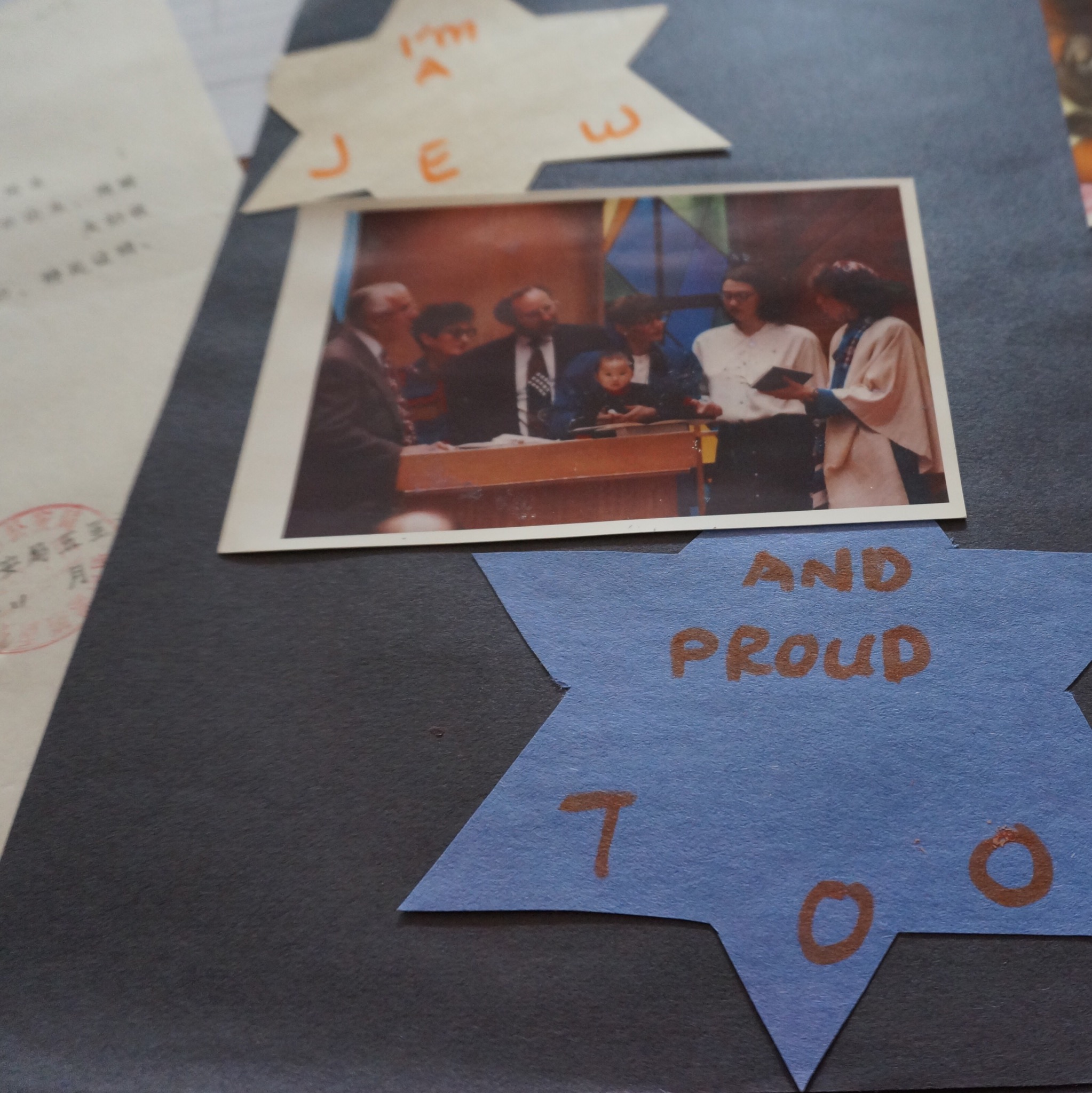
​This wasn’t my first trip back. In 2005, I returned to China with my family and one other family of three. The girl was my crib mate in 1994 and miraculously, our parents had connected through Families with Children from China, an organization dedicated to giving adoptive families support pre- and post- adoption. It is common for families to bring their adopted children back to their birth countries when they turn 10 years old. We traveled for three weeks, mixing heritage and cultural “homeland” experiences with the more touristy excursions. While in Yangzhou, we visited my orphanage; I met one of my caretakers. Since my parents adopted me at five months old, I have no recollection of China. But I created memories during my first return. I distinctly remember one boy who gripped onto my finger and refused to let go. I recall an infant in a neon-pink fleece crying and throwing her bottle across the nursery. I still feel the pang in my chest as it hit me for the first time: that was once me. I was once in a crib, wanting to be held, nurtured, cherished as someone’s own loved one. During that visit, I presented the orphanage director with a scrapbook of my life in New York. I included a page that said, “I am a Jew, and Proud, Too” as well as photos of my dear grandparents meeting me for the first time at JFK Airport.

​Now, nearly ten years later, I had the opportunity to “come home” to my orphanage again. If you could still call it that. A decade ago, there was a master blueprint for reconstruction. Now, the upgrades have been completed. The new and grand center replaces the old one. Wooden floors and smoothed-cement walls replace the linoleum and dilapidated cinderblock. The former cracked marble sign at the entrance has been replaced with a sleek glass panel. The first floor of the center has been converted to a museum that celebrates successful adoption stories, including a photo of John Huntsman and his family.

Entrance to the Yangzhou Social Welfare Institute

​I did not recognize this place. Maybe that was good, as it meant the needs of the new children were being met. The demographics of children have shifted: it went from, in 1994, being mostly abandoned infant girls to, in 2014, being a majority of mentally and physically disabled boys who span from infancy to middle-school age. I recognize that state-of-the-art physical therapy equipment and play areas are rare in Chinese orphanages. Yangzhou is a welcomed, successful anomaly. But a selfish little part of me wishes there was some memory of the old building, whether it be a metal crib, the dim lighting, or the familiar smell of hot powered milk.

​This new building felt sterile. The lack of crying children or chaos made me feel as if I were in an artificial environment. Most of all, though, I felt that with the tearing down of the old building, I was no longer part of this community. I was once again a perpetual outsider, someone looking into her past without a tangible connection. I was disconnected from one more part of my Chinese heritage. It hurt.

​Of course, this is false. The building I saw ten years ago was a remodeled version of what my parents had witnessed twenty years ago, in 1994, when they adopted me. Everything changes all the time. Nothing slows down just because you want to reminisce.

​But reminisce I did. A public relations worker pulled my file from the archives. Inside the cardboard box, carefully preserved, was my father’s business card, a copy of my Chinese birth certificate, my adoption records, and the scrapbook I had brought nearly ten years ago. Although the construction paper had faded, I was instantly comforted. Here, inside the new, smoothed walls of the orphanage, a part of me remained. I laughed as I saw the “I’m a Jew, and Proud, too” page, especially in the wake of my Rosh Hashanah encounter in Kunming. Being just five days before the two year anniversary of my grandpa’s death and the one year anniversary of my grandma’s, I gulped back the sobs as I flipped through pages of photos of me in their arms.

​It’s unnerving, this concept we call time. It distances us from pain, yet in one moment, one photo can trigger sorrow and joy simultaneously. Seeing those photos of my grandparents sparked emptiness in my heart that I hadn’t felt since their respective funerals. Yet at the same time, I was overcome with relief. Relief that I still remembered their comforting hugs. Reassured that they weren’t slipping from my memories or my grasp. Hopeful that they would be proud of my journey and the person I am becoming.
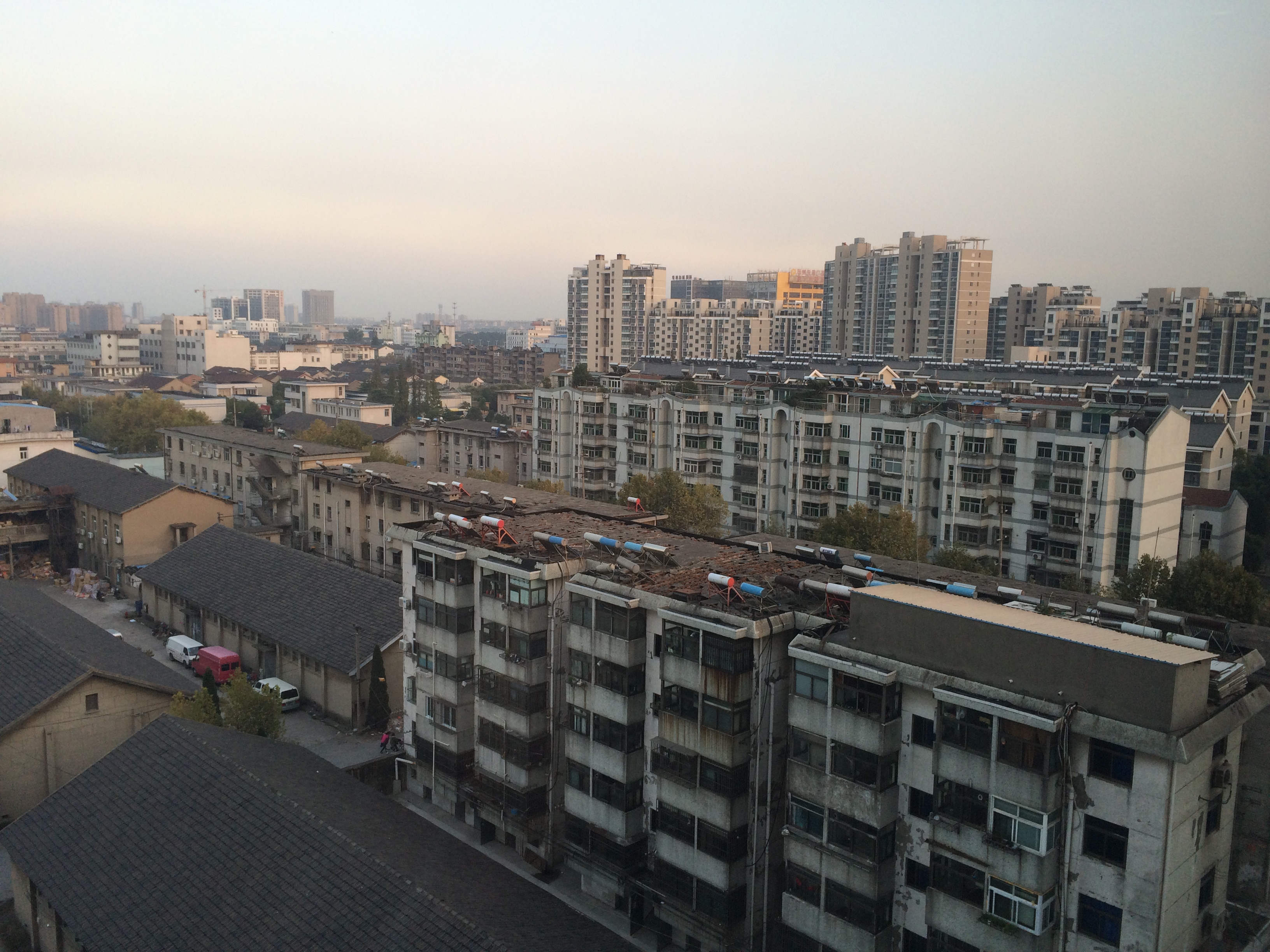
Skyline of Yangzhou, China.

Skyline of Yangzhou, China.

​Even Yangzhou the city was unrecognizable. Ten years ago, roads on the outskirts of the city were unpaved. The canals were beautiful but trash lined some of the older cobblestone streets. Rickshaws were the vehicle of choice. This time, electric motorbikes filled the paved streets. Trash bins and recycling cans sprinkled the sidewalks. There were Western toilets. It was unrecognizable, yet I felt at home. In the market, a woman asked me if I was a Yangzhou girl. Without hesitation, I answered “Yes” and she smiled. For once, I was a local, no questions asked. Unlike Kunming or other parts of China, where my native language does not match my face and my name does not complement my complexion, in Yangzhou, I did not feel like I was letting down others’ expectations of who I should be. Instead, I was candidly, unapologetically me. And no one countered this fact. Even when I fumbled my Mandarin, people smiled patiently. I explained to a shopkeeper that I was a Yangzhou girl but an American, too: I was returning home for a visit. She gave me a “welcome home” hug. I felt no resentment from her, unlike I have from other Chinese who discover I am internationally adopted.

​This is not to say that I fit in perfectly. I was still at the crossroads of my identity. But I felt accepted and I felt an inner calm. I have only felt this calm in Southeast Asia. Even in the United States, the land I call home, I feel out of place. Often, my inner anxiety exacerbates microaggressions, or non-conscious remarks others make about my identity. The expectations of others have become a burden to me. It is my nature to aim to please others; I hate letting people down, even if I have no control over the situation. My time in China has taught me that I have more grit than I give myself credit. It was four months of discomfort, yet I survived. No. I did more than survive; I grew up. I learned about myself. Sure, I learned that I do not want to live in China for the long-term. But I also learned that I am capable of it.

​Returning to China, overall, was not a homecoming for me. If anything, I felt alien. But going to Yangzhou gave me a new sense of what coming home could feel like. Home does not always have to be a place of comfort. It does not have to be familiar. Instead, it can be entering a new place and having a sense of calm wash over you at the same time new questions enter your mind. Coming home can feel like leaving home, and the familiar, simultaneously. I left New York and Southeast Asia, the places I feel safest, and traded them for China, my country of origin. But New York could be my nation of origin, as well. It was where I was given a family, and put down my first real roots. Even Southeast Asia could be my origin: it is the first region where I let go of every insecurity and allowed myself to live freely, unapologetically, and out of my comfort zone.

​My study abroad journey taught me about Southeast Asia, sure. Yes, I learned basic Mandarin. Of course I built up my spicy-food tolerance. But really, study abroad is not about the academics. I learned 5% about the country, but 500% more about myself than when I set off. Cliché as it sounds, the self-discovery process was difficult and rewarding. There is no tangible measure for understanding identity, yet I feel myself observing, questioning, learning, and adapting. My semester in China has taught me to cope with internal struggles and insecurities while exploring who I am—and testing my emotional strength—in a new society. I have lost count of how many times my sense of self has been turned around and twisted. And with every bend, my confidence has faltered. Yet coming to China has made me stronger and more independent. I have new survival tactics. I have learned to channel my vulnerabilities and emotions, turning it into productive and positive energy. I’ve encountered people of all backgrounds who have vastly different agendas and means of getting there. I have furthered my understanding of “informed global citizen” and have pushed myself to become a responsible rising one.

1 Comment

Filed under China, SLIDER

Report: Thousands of Burmese refugees fleeing into China

Renewed fighting between the Burmese military and a guerrilla army in Myanmar’s northeastern Shan State erupted once again this week. The violence has caused civilian refugees — by some estimates more than 10,000 people — to flee across the border into rural areas in China’s Yunnan province.

Hostilities broke out on Monday in Kokang, a self-administered zone with a population estimated at 150,000. An article posted on Burmese news website The Irrawaddy reports fighting was most intense near the town of Laukkai, located on the Salween River — known in Chinese as theNujiang. Refugees were headed to the opposite side of the river to the village Nansan (南傘) in Lincang Prefecture.

The location of Myanmar’s Kokang region shown in green. Shan State in Yellow (Wikipedia)

The Burmese military attacked areas held by the Myanmar National Democratic Alliance Army (MNDAA), the armed wing of the Kokang ethnic group — 90 percent of whom are of Han Chinese ancestry. Bombing has been concentrated nearby Laukkai using Russian-made jet fighters and helicopters during the day and artillery during the night, according to MNDAA general secretary Htun Myat Lin.

He also claimed the number of refugees fleeing into China was approaching 10,000 as of Tuesday, most of them Burmese villagers, with a small minority made up of Chinese merchants. Chinese media have so far not estimated the number of displaced but Foreign Ministry spokesman Hua Chunying was quoted by CCTV as saying:

China is concerned about the Myanmar situation. During the past two days, some Myanmar border residents, because of safety considerations, have entered China. They have been looked after. China will continue to pay close attention to how the situation develops, and maintain the peace and stability of the China-Myanmar border. We also believe that the Myanmar side should also work hard for this.

State-backed Burmese news outlets have yet to release reports regarding casualties from the fighting. No official reason has been given for the escalation in violence, although it seems likely the actions by the Burmese military are connected to December ambushes by Kokang guerrillas that killed at least seven soldiers and injured 20 others.

The current situation along the border closely mirrors a monthlong period in 2009 when an estimated 30,000 Burmese civilians from Kokang crossed into Yunnan in the wake of fighting. China dealt quietly with those displaced by fighting six years ago, instituting a near media blackout of its humanitarian actions.

This article was written by Patrick Scally and originally published on GoKunming on February 12, 2015 .

Leave a Comment

Filed under China, Current Events, Myanmar/Burma, Regional Relations, SLIDER, Yunnan Province

Kunming Train Station Attack Suspects Arrested in Indonesia

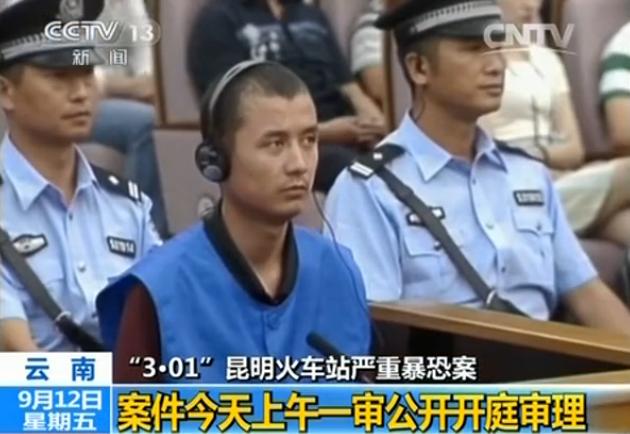
Four of the attackers were found guilty following their trial in September 2014.

Four men suspected of planning the 2014 Kunming Train Station attack were arrested this week in Indonesia. According to a report in the Jakarta Post, the Chinese and Indonesian governments agreed to enhance counter-terrorism cooperation in exchange for  information regarding nine Chinese nationals suspected of planning the Kunming terrorist attack. The agreement was signed by the head of the Indonesian  National Counterterrorism Agency (BNPT) Comr. Gen. Saut Usman and China’s Deputy Public Security Minister Meng Hongwei  in Beijing on Tuesday, February 10.

The terror suspects were reportedly arrested on Monday near Poso, Central Sulawesi Province. Speaking after the signing of the cooperation agreement,Saut, director of the BNPT,  said that only four of the nine suspects were arrested. Of the remaining five, three fled into the Sulawesi jungle, while two others escaped to Malaysia. After being picked up by police, the four suspects initially admitted to being Chinese nationals from Xinjiang, however they later changed their story, saying they were from Turkey. China and Indonesia signed an extradition treaty in 2009 so if it is true that suspects are indeed Chinese nationals, it is likely that they will be soon be sent to China to face charges.

In recent years, more and more Uighurs have fled China through Yunnan and into Southeast Asia. In  March 2014, a group of more than 200 Uighur refugees were found in a Thai human trafficking camp near the Malaysian border and earlier that month more than 60 Uighurs were caught escaping into Malaysia. In both cases, those in question claimed Turkish nationality. In previous cases, Uighurs found immigrating illegally into Cambodia and Malaysia were extradited back to China, where they were imprisoned.

In Chinese media, connections between the suspects and the Islamic State in Iraq and the Levant (ISIL) have been made. According to one story on Sina.com, the four suspects were found with Islamic State paraphernalia, leading some to believe that they have a relation to the terrorist organization.  To date, more than three hundred Chinese nationals have joined the Islamic State, and recent reports say that three Chinese fighters were beheaded earlier this month as punishment for defection.

Though the exact story of their arrival in Sulawesi is murky at the moment,  Saut believes they are indeed from China. “They are believed to have fled to Poso by taking the land route through Myanmar, southern Thailand and Malaysia. From Malaysia, they entered Indonesia through Medan with Turkish passports and they posed as asylum seekers when they were in Medan,” he said as quoted by Antara news agency. According to Saut, the terrorism suspects went to Puncak in Bogor, Java to join a group of people from the Middle East who wanted to go to Poso.

Central Sulawesi has long been one of Indonesia’s most unstable regions. Starting in the late nineties, tensions between the province’s Muslim and Christian communities began to boil over before a spate of violence gripped the province. A series of bus attacks in Poso in 2002 and the beheadings of three teenage girls in 2005 brought a certain notoriety to the region  and to this day it’s known as a hotbed for extremist activity in the Indonesian archipelago.

The timing of the arrests and the signing of the counter terrorism cooperation agreement between the two countries is unlikely to be a coincidence. According to information received from the Indonesian Embassy in Beijing, the suspects’ names were on international terrorist watchlists and it is probable that Indonesian authorities picked them up independent of Chinese involvement. Following their arrests, it is likely that the Indonesian government used the news as a bargaining chip  to get the Chinese to sign the bilateral cooperation agreement. The arrests, being related to such a high-profile case, and the cooperation agreement should be seen as victories for Indonesia, whose relationship with China is growing closer, despite persistent maritime issues.

Leave a Comment

Filed under China, Indonesia, Kunming Train Station Attack, SLIDER, Yunnan Province

China’s Upscaling of Potato Production Sprouts Controversy


Farmers in China's Gansu province show off increases in potato yields

Farmers in China’s Gansu province show off increases in potato yields

The Chinese Ministry of Agriculture started the year with an awkwardly named but nevertheless resonating event: at the “Potato Staple-ization Strategy Research Symposium” Vice-minister of Agriculture Yu Xinrong proclaimed that potatoess shall become China’s fourth staple food.  That netizens tweeted more than half a million responses on Sina Weibo about this denotes more than sheer curiosity. While many of the conversations focused on a perceived Chinese consumers’ tardiness in getting on the Columbian Exchange bandwagon, the announcement could have an impact throughout the country and affect the ethnic minority regions and the Southwest in particular.

Historically speaking, potatoes, an American contribution to the world’s food basket, quickly became a mainstay on the tables through most of the Old World, despite initial trepidation among the Europeans.  Research suggests they might have contributed extra nutrition and thus the population boom that brought about the Industrial Revolution. The Irish Famine ensued, and the rest of history is laced with potato jokes.

Spud Stigma

In China, however, spuds have largely remained within the category of dishes (菜) rather than the staple source of carbohydrates and thus energy of the meal (主食). Unlike the other new comer, corn, which has successfully shed its foreign flair, the name Western taro (洋芋) has stuck with taters and is further strengthened by deep-fried potatoes served up by fast food industry that positions it as a Westernized modern food choice. The association of potatoes with foreignness has also been brought to the New World by immigrants, and in a subaltern twist the term potato queen is used to describe Asian gay men that prefer non-Asian partners.

Besides foreigners, the other factor that gives spuds a bad name is poverty. An unnamed researcher has been widely cited saying that potatoes are the staple food for 75% of China’s officially poor counties, where potatoes are consumed “instead of cereals” up to half of the year. What’s more– a lot of that poverty is concentrated in ethnic minority areas: the backward denizens of supposedly sad places like Yunnan, Guizhou, and Gansu rely on spuds to scrape out a living.

The reverse side of the perceived unfortunate overlap between ethnicity, poverty, and potatoes is something that a southern Yunnanese acquaintance imparted over lunch the other day: spuds are grown for oneself. Adapted for a wide variety of ecological conditions and productive even in poor soils and under other unfavorable circumstances, potatoes provide easy and reliable sustenance. More importantly, in the words of anthropologist James Scott, potatoes can be “appropriation-free”: bulky, low in commercial value, and harvested intermittently, potatoes like other tubers are a good way of keeping the tax-collectors and their ilk at bay. It is no coincidence that potatoes are so prevalent in refuge zones as different as Guyuan in southern Ningxia and the balmy mountain slopes of Yunnan and Guangxi.

Cumbersome taters

While direct requisition of crops is not much of a concern for farmers today, especially since the abolishing of farming taxes in 2006, potatoes are nevertheless strongly affected by farming policies and national food security strategies. For justifiable historic reasons the Chinese government, which is linked to some of history’s worst natural and man-made famines and related unrest, at all levels is extremely concerned with ensuring availability of food. With national grain self-sufficiency as the core principle, the central government has consistently demanded and incentivized production of staple crops through a mix of administrative mandate to grow certain crops, direct subsidies to house-holders and larger producers, and intervention pricing. While intervention purchases and stockpiling has been extended to the somewhat-ridiculed strategic swine reserve, it still mostly focuses on grains and shuns spuds because of the difficulty of appropriation.

Unlike bacon, you can’t just put some taters on ice for a few years, or depending on the situation either cellar the spuds for a good while or alternatively sell at a commodities exchange in Chicago if the price is right. Potatoes don’t keep well and the bulk makes them a lousy commodity for shipping. Despite globally being the fourth most significant staple (hence the frequent misstatement in the press that somehow the UN has declared potatoes as one of the global four staples), the governmental preference for a government-focused national-level food security rather than rural household level food-sufficiency has led to spuds falling behind in output growth. However, food security (what the Chinese government calls 粮食安全, not to be confused with food safety – 食品安全) is primarily concerned with the provision of food at the national level through market mechanisms rather than household self-provision. In other words, there is no tater scarcity at the household level, where those who choose to grow them can have their fill, but that does not result in peaceful minds behind the planners’ desks.

It is not to say that potatoes are some sort of primeval anarchist food taking on the capitalist-with-Chinese-peculiarities hegemony. For one, local governments have been as quick as ever to get their paws in the potato pot and are pushing potatoes as one of the options for farming development. According to the National Statistics Bureau, between 2006 and 2012, total potato output increased by about 40%. That’s a solid increase of over more than 5% a year, albeit rather low when compared with the expansion of many other indicators over the same time period. According to the UN Food and Agriculture Organization, China is the world’s largest producer of potatoes. Mind you, the FAO estimate for 2006 exceeds the Chinese central government’s estimates 5-fold, so go figure on who’s right.

It would also be a mistake to say that there is much pride in the importance in the potato in the regions where potatoes are important to the diet. During a recent month-long research stay with various rural households in Ningxia, I heard several apologies for offering too many potatoes and not enough rice to the guest. My insistence that, having grown up on a Latvian potato farm, I gladly take spuds over rice any time was accepted with a polite smile and puzzlement over the impossibility of such a statement. The shame of living off potatoes even by those who grow them is an obvious obstacle in increasing the demand for fresh potatoes and possibly even derived dry goods.

Technical solutions

The drive to (let’s borrow a word from the Ministry of Foreign Affairs’ repertoire) hype spuds encounters the simplest of economic realities: if there was demand for potatoes the farmers would meet it despite regulations slanted against it. After all, regulations have not stopped urbanization and the emergence of a secondary market for theoretically untradeable farmland. And if indeed the potatoes were so good for you as some have suggested, the market would have overcome the consumer acceptance obstacles described earlier and we would be eating spuds left and right.

The Ministry of Agriculture’s decision to “staple-fy” spuds should be interpreted as increased pressure to expand potato production – the stated goal is to almost double the current reported plantations of 80 million mu to 150 million mu. That’s increase of almost half a million hectares. New investment in growing technologies and varieties will be made available, which has predictably caused knee-jerk concerns about potential weakly regulated experiments with genetic modification. It also means a push towards more industrially processed and thus durable potato products, particularly using potato starch that, unsurprisingly, transforms the crop into long shelf-life products favored by retail supply chain managers and government food provision planners alike. To celebrate the new national potato staple-ization strategy, Shanxi potato entrepreneur Feng Xiaoyan, who goes by @sisterpotato on Sina Weibo, has launched a product line of potato mooncakes.

And while you praise the crackdown on superfluous gifts and thus a reduced (albeit not eliminated) chance of getting your next year’s Mid-Autumn bonus in the form of candied fork floss covered potato starch mooncakes, the good folks in China’s agricultural research and development industry are getting ready to partake in the expected windfall in research funding and new experiments. Local government officials and their cousins who own the farming companies are looking forward to filling their coffers with infrastructure programs and potential subsidies.

A curious and unfortunate potential side-effect of expanded cultivation is the replacement of existing technologies and varieties with improved yields with the accompanying other side of the coin– disappearance of existing livelihoods and genetic as well as cultural diversity. While the farmers of hilly dry parts of Yunnan will not be marching down the streets of Kunming against Monsanto (in fact, poor Monsanto is unlikely to be able to stick its finger in this pie), the fact remains that intensifying farming can leave the growers and the rest of us with fewer resources for when the bad times of crop failure, pests, or climate change hit.

Interestingly, this year’s Central Government Document Number 1, the annual proclamation of rural and development priorities, did not address potatoes and did not call for any expansion of the staple policies to include new crops. The State Council might not be as excited about spuds as Ministry of Agriculture is. Just like many issues, this one will be decided in the well-ventilated halls of newly built governmental districts with limited direct public input. Regardless though of whether one roots for the spud or takes a more tater-phobic stance, the potato staple-ization controversy has stirred minds and brought to dinner table conversation some of the fundamental issues at play in Chinese agriculture, particularly in the economically marginal regions.

1 Comment

Filed under Agriculture, China, Current Events, Economic development, Food, SLIDER, Sustainability and Resource Management, Yunnan Province

Oil pipeline connects Kunming to Andaman Sea

pipline map

Map of Sino-Burmese oil and natural gas pipeline. (Image via Stratfor)


A 771-kilometer long oil pipeline linking refineries in Kunming to oil fields off the western coast of Myanmar began shipments over the weekend. Built over six years, at a cost of 9.37 billion yuan (US$1.5 billion), the project was marred by controversy in China and, at times, violence and threatened cancellation in Myanmar.

An opening ceremony held in the Burmese city of Yangon on January 29 marked activation of the above-ground crude pipeline. It travels from the Andaman port of Kyaukpyu, through the Chinese border town of Ruili and on to Anning just west of Kunming. The inauguration was attended by Liao Yongyuan, general manager of China National Petroleum Company (CNPC), and U Nyan Tun, vice president of Myanmar, according to a report by website The Nation.

The pipeline is jointly owned by Myanmar Oil and Gas Enterprise and CNPC, with the latter controlling a majority stake of 50.9 percent after having financed most of the construction process. When operating at full capacity, the pipeline is designed to transport 22 million tons of crude oil into China each year, a total nearly double that reported when work on the energy conduit first broke ground in 2009.

Named after seabed fossil fuel deposits off the Myanmar coast, the Shwe pipeline runs parallel with a similar natural gas conduit that went online in 2013. First proposed in 2004, the twin pipelines were conceived in China as a way to bypass oceangoing tanker shipments of crude oil and natural gas from not only Myanmar, but also the Middle East and Africa.

Now that both pipelines are open for business, Southwest China will receive fossil fuels from countries to its west much more directly. Sea-bound shipments not only take significantly longer than those through the pipeline, but must also pass through the nominally United States-controlled Strait of Malacca — one of the busiest ocean shipping lanes in the world.

As with many Sino-Burmese infrastructure projects, the twin Shwe pipelines were not guaranteed to ever be finished. Construction was nearly halted in 2012 when Burmese parliamentarians threatened to mothball the project over environmental concerns, reported labor strife and claims of forced village relocations. On the Chinese side, well-publicized Kunming rallies against a refinery-related petrochemical factory also brought the future of the pipeline into question, at least momentarily.

This article was written by  and originally published in GoKunming.

Leave a Comment

Filed under China, Current Events, Energy, Myanmar/Burma, SLIDER, Yunnan Province

A Tibetan Christmas in Yunnan

Brendan 1

Nestled on the banks of the Upper Mekong River — or Lancang (澜沧江) as it is known in China — are several Tibetan villages of mixed religion where Buddhist and Catholic families live together and often join in each other’s festivals. While engaged in research on the history and budding economy of winemaking in this region, I was able to take part in the annual Christmas mass and festival in the village of Cizhong (茨中). Here, celebrations are a two-day event and the largest festival of the year for the area.

First, a very short primer on the history of Catholicism in Yunnan’s northwest, and how the religious observance of Christmas became a major festival for local Tibetans: Yunnan’s official renaming of the nearby Zhongdian region as Shangri-La — based on James Hilton’s classic 1930’s novel Lost Horizon — actually gains a small bit of credence as the real location of Hilton’s story thanks to Cizhong and its nearby villages. In the book, the fictional Shangri-la is a mixed monastic community where Tibetan Buddhists, Chinese, and western Catholics all live peacefully in together. This is largely true in Cizhong today, though Catholicism historically faced a somewhat violent reception from some in the region, while other peopele openly welcomed it. French Catholic missionaries first arrived in northwest Yunnan in the nineteenth century, and viewed their work as a gateway to expanding their teachings across greater Tibet.Brendan 2

Never being able to reach very far into this isolated and at times violent country — often due to resistance from local Buddhist lamas — the French would eventually manage to set up a community of churches and convert many Tibetan communities in northwest Yunnan along both the upper reaches of the Lancang and Nujiang rivers. They were never quite able to penetrate much farther into Tibet. Even in these areas, religious crusaders at times faced violent repression from local religions leaders and in many cases even death.

Yet the French persisted in their missions, and were later joined in the early to mid-twentieth century by request by a group of Swiss from the Great Saint Bernard Hospice high up in the Alps. These priests had already become quite famous for providing mountain rescues and services to Catholic pilgrims crossing the Alps en route to Rome. Their expertise in mountain travel and high-altitude living were crucial in helping to continue and eventually take over the work first begun by the French in Yunnan.

Today in Cizhong, where the original cathedral built by the French in 1905 still stands, about 80 percent of villagers still actively practice Catholicism. They are led by a Han Chinese priest from Inner Mongolia who arrived in 2008, sent by the Catholic Association of China. Prior to this time, the village had no priest, and so no formal masses were held after 1952 when the remaining French and Swiss Christians were expelled. Villagers nonetheless maintained their religion and began to openly pray together in the 1980s after Deng Xiaoping lifted bans on organized religion put in place during the Mao era.

Brendan 3

2014 Christmas observance

Christmas today in Cizhong is a major event, and the non-religious portions of the festival are in fact celebrated by both Catholics and Buddhists alike. Major preparations and community events for the festival began on the morning of Christmas Eve, when many villagers gathered together at the church to clean the building and decorate it for the festival. Lunch was made for those working through the afternoon, and then everyone returned home before dusk.

The decorations set up in the church were predominantly what one might equate with a Western Christmas celebration: Statues of Mary and Joseph in shrines on each side of the altar were surrounded by strings of lights, and a similar statue of Christ was placed high up on the wall behind the altar for all to see. Several plastic Christmas trees which grace the inside of the church year round were also cleaned and redecorated with Christmas lights.

Brendan 4

A very elaborate nativity scene was set up to one side of the altar, decorated with pine boughs, with lights on its roof. In addition to the boughs, the areas in the front of the church are also decorated with branches from a local broadleaf evergreen tree with red berries from the genus Photinia. Local elders say they have called this plant shengdan shu — or ‘Christmas Tree’ — since the time of the French and Swiss fathers.
Brendan 5

Around 7pm, villagers slowly began to arrive and file into the church for the evening mass, which began this year around 8:30. It should be noted that Christmas seems to have become quite a publicized event in Cizhong, perhaps due to the attention it receives in tourism materials. The mass not only included Cizhong villagers but many foreign — particularly French — and Chinese tourists, photographers, and other academics including myself. Christmas Eve mass continued for just under two hours, after which everyone returned home until the next morning. Both Christmas masses, and particularly the morning mass, were much more extravagant than a typical Sunday service. Large numbers of villagers showed up from all over, dressed in their full traditional Tibetan regalia. This drew even more tourists.

The Christmas morning mass — which actually didn’t begin until almost noon despite villagers arriving around 9am — also included a full processional composed of the priest and his assistants walking into the church in their robes, with candles, a cross, and incense censer. None of this is normally used for weekly services.The language of the mass in Cizhong is peculiar.  Many familar Catholic songs sung by villagers are sung in Tibetan using the translations originally created by the French and Swiss. Conversely, the mass and bible readings themselves are conducted by the priest in Mandarin Chinese, so the service is quite syncretic and eclectic being Chinese with Tibetan chanting.

Later an engaged couple walked down the aisle to receive a special Christmas blessing from the father. They were followed by a procession of children in traditional Tibetan clothing and Santa hats, followed by traditionally dressed women bearing gifts for Christ. The priest and his village assistants accepted the gifts and then placed them in front of the nativity scene that had been set up below and to the side of the altar.

brendan 9

The Afterparty

Following the Christmas morning mass, everyone — villagers, tourists, and anyone else in attendance — gathered in the courtyard in front of the church and began the afternoon festivities of drinking and performing traditional Tibetan dances and sings. During this portion of the day, Buddhist locals also arrived to join in the festivities.

To begin, everyone first simply found a spot in the courtyard to enjoy the sun, the company of others and cake donated by all the village families. It was served followed by a choice of barley liquor — known as qingkejiu — mixed with meat, or a locally made rice wine called mijiu mixed with egg.

Brendan 7

After a short time, traditional circle dancing began, accompanied by singing and several men playing traditional string instruments called piwang. The singing is always done as a back-and-forth exchange, with men and women each singing separately while dancing on opposite sides of the circle which rotates around as more people join.

While the merriment ensued, a lunch of several Chinese-style dishes was served in a small museum room next to the church. Here, several tables were set up and groups of locals and visitors rotated through to sit down and be served. After they finished, the tables were cleared and a new group welcomed in to eat.

Dancing continued, and by this time many of the villagers had joined in. The men particularly all seemed to be sporting a bottle or can of beer. By around 5pm things began to wind down with most people returned home, while the tourists and other visitors headed back to their guesthouses. And with that, my Tibetan Catholic Christmas on the Upper Mekong came to an end.
Brendan 8

Leave a Comment

Filed under China, Culture, Current Events, ethnic policy, SLIDER, Yunnan Province

Meet the Salween

salween

I heard the name “Salween” before. I didn’t know exactly where it is. I knew it was somewhere close.

Somehow its name portrays a feeling of fearless turbulence. Perhaps, it’s the sound of “S” and the rhyme between “ween” and a Thai word “wian” from the word “wonwian” meaning lingering and wandering which makes me think of the word “namwon” meaning whirlpool.

There is a legend about the two great sister rivers of Southeast Asia: the Salween and the Mekong.

And this is how the story goes:

One day, the two rivers decided to go to sea. They agreed to travel through the mountains together and stopped whenever they wanted to. The Mekong slowly spanned its waterline through the landscape while the Salween hurried its way to claim the frontline.

After rushing ahead, the Salween decided to stop for a quick nap to wait for the Mekong. Days passed and the Mekong was still absent. The Salween thought the Mekong took a chance when it was sleeping to get ahead—to be the first to see the ocean. Angry and feeling betrayed, the Salween rushed through the channels and aimed to destroy any rock that stood in its way. Its wild speed was felt by those living nearby. The Mekong, on the other end, finally arrived at where the Salween was napping. Not seeing its younger sibling did not push it to move any faster. The Mekong continued to crawl and collect waters along the way; it even went off-route to carry fish and water into Tonle Sap before it finally reached the sea.

It is said that many communities believe in this story, though I have only heard it from two people. The anecdote may vary. Though it does resemble the turtle and the hare tale, but stories and legends are much better tools to narrate and describe the difference between the two.

Perhaps, it is the Salween’s anger that makes it the last free flowing river in China and Southeast Asia until 2015.

The Salween is originated from the marshland in the Himalayan Plateau—the same glacial area where the Mekong and the Brahmaputra start their mightiness. It travels over 2,200 kilometres through southwest China, Thailand, and Myanmar. Most of the areas it nourishes are occupied by ethnic indigenous communities. In Yunnan alone, the Nu River  (as the Chinese called the upper Salween) feeds at least 22 ethnic groups. The same reality applies to downstream communities at the border between Thailand and Myanmar and major ethnic states in Myanmar (where Burmese names it “Thanlwin”). I remember someone told me that the Salween’s turbulence is reflected by perpetual ethnic tension in the most recent open country of ASEAN.

The plan to dam the free flowing Salween is not new. 13 cascade dams for the Nu River were proposed in 2003 as part of China’s 10th Five Year Plan. Chinese environmentalists immediately called the government to halt the project. Their voices were listened, but the hiatus is now over and the proposed 13 hydropower projects are back on the table.

Thailand’s eyes on damming Myanmar’s Thanlwin/Salween is also not new. Nearly ten years ago, Thai environmentalists became aware of 7,110 MW Ta Sang Hydropower Project, a Thai national dam at the cost of Burmese environment. The news of Ta Sang Dam has been silent but a recent loosely done EIA report and signed MOA for the 1,360 MW Hat Gyi Dam prove that the intention isn’t going away.

7 is the number of proposed dams on the Thanlwin/Salween. Over 20,700 MW will be generated to Thailand and China. The newly built transmission lines that would come with the new dams would gracefully pass over the electricity and wealth to Myanmar’s neighboring countries. Its people would have to look up to the electricity they are not entitled to use while watching their houses and livelihoods inundated by the reservoir.

But the real battle has only started. In June, 2014 Myanmar government switched on the green light for Chinese Hanergy Holding Group Company to tackle its hydropower project in Shan State. Kunlong Dam will stand tall to hold back the Salween while producing 1,400 MW of electricity to be sent back to China.

Large-scale hydropower projects—along with many other environmentally and socially detrimental projects—never prove beneficial to local communities. “The few should sacrifice for the many” is the excuse project proponents always use to dignify their grand prize. However, in this case, “the few” we’re talking here isn’t small in number but their political voice and power to decide how and who would control the river they rely on.

“We call the Thanlwin, ‘the River of Peace’” said Ko Ye, an activist from Dawei who has been fighting against Thailand-proposed mega development project in his hometown. “Because if this river is dammed or falls under one group’s control, the ethnic war in Myanmar will never stop.

2 Comments

Filed under China, Current Events, Economic development, Energy, Environment and sustainability, ethnic policy, Mekong River, Myanmar/Burma, SLIDER, Sustainability and Resource Management, Thailand, water, Yunnan Province

Kunming airport site of winter weather chaos

File photo of de-icing at the Kunming airport.

File photo of de-icing at the Kunming airport.

Winter weather bedeviled China’s fourth largest airport last weekend. As with similar situations from the past few years, thousands of travelers experienced delays, flight cancellations and a general lack of up-to-date information regarding flight status in Kunming. Aboard one airplane, anger and frustration boiled over to the point that passengers attempted to open emergency doors while their aircraft was moving.

China Eastern Airlines flight MU2036 was originally scheduled to depart Kunming Changshui International Airport January 9 for Beijing at 8:45pm. However, due to a combination of cold, fog and snow, the flight was delayed five hours and did not begin boarding until 1:45am.

While passengers stowed their baggage and took their seats, several people noticed a distraught elderly woman complaining of discomfort. Further delayed as the aircraft wings were de-iced, passengers began to complain on the woman’s behalf to flight attendants, some demanding to speak with the captain.

At this point, the story becomes a bit confused. The captain apparently addressed the cabin via intercom. What he said is a point of contention, with at least one passenger taking to social media to accuse the captain of going on a profanity-laced tirade so virulent multiple travelers felt compelled to call the police. A spokesperson for China Eastern Airlines has denied the use of any untoward language.

Once the plane began to taxi onto the runway, at least two unidentified passengers — still worried by the condition of the elderly woman and further angered by the pilot’s tirade — tried to open three of the plane’s emergency exit doors. The aircraft returned to the terminal, where 25 people were taken into custody by airport police.

Two people were eventually arrested, a tour guide from Beijing and a woman surnamed Zhao. Both were charged with “inciting [a] crowd and disturbing public order” and will spend 15 days in a Kunming jail.

Changshui Airport authorities delayed 83 flights on Friday — some for nearly 12 hours — and canceled another 23. Those cancellations and continued cold, foggy weather in turn led to more delays on Saturday and Sunday. Other than the drama on flight MU2036, no near riot situations arose as they did in 2013.

This post written by Patrick Scally was originally posted on the GoKunming website on 1/12/15.

Leave a Comment

Filed under China, Current Events, SLIDER, Yunnan Province

Mass Disappearance of Vietnamese Brides in China’s North

Cover shot of a 2010 Southern Weekly magazine featuring the trend of Chinese men are marrying Vietnamese brides

Cover shot of a 2010 Southern Weekly magazine with a feature on how Chinese men are marrying Vietnamese brides

Police are investigating how a hundred people came to be missing last month in Handan County, Hebei.  The disappeared aren’t protesters or dissidents, they aren’t journalists, they aren’t teachers; they haven’t been victim to a mud slide, a coal mine collapse or a flood.  They are a hundred young Vietnamese women, brokered into marriage to Chinese men across the border mere months ago, and now gone.

Public, verifiable facts on the case are scarce; even on the barest nature of the crime.  Are the disappeared women victims or co-conspirators with their traffickers?  Did they move on willingly, clandestinely, or were they forcibly kidnapped?  How could a hundred people remove themselves from their new husbands without a trace left behind?

One local official says it looks like the men were scammed by a marriage broker who had lived in the county for twenty years before disappearing with the women.

Wu Meiyu was herself a Vietnamese bride, moving to the county and raising a family there with her new Chinese husband.  Wu is alleged to have travelled widely this year in search of lonely male bachelors to sell Vietnamese brides to.  She successfully administrated one hundred illegal marriages to these men, importing each bride individually through associates in Vietnam for a hefty fee.

On the evening of November 20 all one hundred of these women disappeared en masse.  They apparently told their husbands they were attending a dinner party, but none returned at evening’s end.  Except, possibly,for one.

It has been reported that one of the brides returned to her hometown and filed a police report.  The report claimed that upon arriving for a dinner party she was told by an unspecified person that a new husband was going to be found for her.  At some point she fell unconscious and after awakening managed to make her way back to her adopted village.

This incredibly vague, frustrating anecdote raises more questions than it answers, but if true, appears to imply that the women have been trafficked against their will.  On the other hand, this is the only piece of evidence pointing to the forced nature of the disappearance, and if untrue the likelihood of the women being scammers themselves increases.

Whether these women are victims or co-conspirators, the scale of the movement of people involved highlights the robust, entrenched criminal networks involved in human trafficking in the region – and the suffering trafficking incurs for all involved.

Human trafficking in China is a huge, murky issue.  Although absolutely illegal in PRC law, it occurs constantly; domestically – with victims being abducted and transported thousands of kilometers across the huge country, to unfamiliar surrounds – and internationally, with thousands of people being smuggled in from neighboring countries such as Vietnam, Myanmar, Laos and nations further afield.  In some parts of China openly marrying brokered, foreign brides has become local tradition.

Chinese police forces are enacting a notional attempt to stem the tide of trafficking crime, with most attention being paid to child trafficking, sexual slavery and prostitution.  However, given China’s skewed sex ratio and its growing demand for trafficked children and wives (the Chinese Academy of Social Sciences estimates there could be up to 24 million more men than women of marriageable age in China by 2020) it remains to be seen if police can make any real inroads into the problem.

This particular police investigation into the hundred missing women is worth tracking for its unusual scale.  Every day young vulnerable Vietnamese women are abducted from their homes by friends, family and strangers and sold into China.  These damaged women rarely manage to return and are mostly voiceless if they do.

Local and regional policing efforts need to work effectively to achieve a solid outcome in this potentially high-profile case so that more attention can be drawn to the crimes of slavery and human trafficking in Asia.Source countries must also do their bit, but as a significant destination country China has a huge responsibility –and debt – to the many victims who wake up there daily in the dark: far from home, scared and stripped of their rights.

Leave a Comment

Filed under China, Current Events, Human trafficking, Regional Relations, SLIDER, Vietnam

Zen & the Chinese Art of Motorcycle Driving

Photo courtesy of GoKunming.com

Photo courtesy of GoKunming.com

One cloudless August day in 1998, I rented a bicycle and rode straight through the heart of central Beijing. It was the kind of day China’s capital never sees anymore — expansive blue skies, crisp, clean morning air and virtually empty city roads.

I cruised alongside hundreds of other riders crowded into bike lanes nearly as wide as the adjacent avenues. Bicycles dominated the city, outnumbering vehicles ten to one, with most being one variation or another of the classic Flying Pigeon. The riders all moved together in improbable synchronicity, like a shimmering shoal of fish. The lanes were extremely crowded but it felt as if the shoal carried me along and I effortlessly kept pace with everyone else, propelled by the exhilaration of facing my first day in China.

Fast forward to now, after more than 16 years in the country, and I struggle to find ways to keep that exhilaration alive. These days I ride my off-road motorcycle through the streets of Kunming trying my hardest not to flip the bird at every driver that gets in my way. This year, after a decade and a half of self-control, I finally let it fly. I took my right hand off the throttle, thrust my upraised fist toward the offending driver and extended my middle finger to the sky.

I was full of rage and hoped to provoke the same rage in the driver. I wanted to ruin his drive as he had ruined mine. Instead, the driver lifted his index finger, pointed at me and smiled. I could see him mouth two words to his friend in the passenger seat. “Kan! Laowai!” — Look! Foreigner!

I bought my first motorcycle in 2002 when I lived in Dali. I had never even ridden one before, but I planned a solo road trip north along the borders of Myanmar and Tibet. I didn’t have any idea what to expect, even strapping a machete to the side of my saddle just in case a band of ruffians threatened trouble. I never needed the weapon.

The countryside roads weren’t without their dangers. Tractors tore out from side roads without warning. Dogs, chickens and even children seemed to appear out of nowhere. But obstacles aside, I fell in love with China’s countryside and my mind raced with ideas of where to ride to next. With one twist of the throttle I was off to new adventures, making up songs and singing them as loud as I could over the roar of the engine.

But now, after more than a decade of driving in Kunming, I have been transformed. In place of gleeful songs, only obscenities broadcast from my helmet. I tear through the city as if I’m the Road Warrior on the run from murderous bandits. I honk my horn at every intersection as a warning to anyone who dares cross my path. Traffic rules mean little and courtesy even less. At times I feel like the Hulk — usually I’m the mild-mannered Bruce Banner, but with a spark of the ignition, the beast is unleashed.

In the past, I always obeyed traffic rules. I never got a ticket, made sure to yield the right of way and rarely honked my horn. More importantly I never lost my cool. Why then am I now so tempted to throttle so many that cross my path on the city roads? Or perhaps a more intriguing question is: Why am I becoming more and more like the very drivers I detest?

With a traffic culture that favors the aggressive and impatient, it is easy to blame everyone else for turning me into this creature. It is actually more dangerous being a law-abiding driver than an aggressive and selfish one. If you go too slow or stop for a crossing pedestrian, you might end up getting rammed from behind. And on a motorcycle, the safest place to be is out in front of all the traffic. Speeding or running a red light is sometimes the best way to stay out of harm’s way. On China’s roads, it seems that only the strong survive. Unfortunately, this is an attitude that derails any prospect of efficient traffic.

There are very few parts of the world outside of China that have ever seen such an immediate growth in urban traffic. Over the last decade, the number of cars on the roads in cities like Kunming has increased more than tenfold. Urban planners and law enforcement have struggled to adjust. The roads have widened and the laws continually change, but cities need more than just the stroke of a pen to adapt. Efficient traffic systems can’t just be instituted. They are cultural and evolve over time.

The safety of everyone on the road is best guarded when cars yield to motorcycles, motorcycles to bicycles, and bicycles to pedestrians. But the pecking order has been lost and so too has any proper ‘right-of-way’ mentality. Instead, roads in China are often plagued by many who cling to a sense of entitlement. Motorists feel as if they have earned the right of way just by the very purchase of an automobile. And those who can afford even more expensive cars feel that much more entitled. They drive brand new black BMWs, flashing their brights and honking their horns warning everyone ahead – ‘VIP coming through!’

Every time I mount my motorcycle, I do so knowing exactly what to expect. I know that someone will cut me off. I know that an electric scooter will dangerously tear through a red light right as I cross an intersection. I know that some fancy car behind me will honk its horn, urging me to acknowledge his self-importance. So why should I let it surprise me or stir my fury when I know exactly what is likely to happen? Expecting the worst is the best way to avoid the worst. And it should be a lot harder to get angry when I know what is coming.

China has changed at a rate never seen before at any point in time anywhere else on the planet. Everyone is racing to find their place in society, making sure that they don’t get left behind. Traffic culture is only one manifestation of this, and it is constantly evolving. Today’s traffic might be closer to a frenzy of sharks than a shoal of fish, but I’ll be better off passively following the current than angrily fighting against it.

After the middle finger incident earlier this year, I decided that before expecting change from any of the others sharing the road with me, I needed to at least be more responsible for myself. I’ve stopped expecting everything to fix itself all at once, and I try my best to be a part of the evolution by incorporating a little more common courtesy into my daily drives. I am increasingly amazed by how much I receive in return.

This doesn’t mean that I don’t still curse motorists that cross me from time to time, and it certainly doesn’t mean that I am now a perfectly patient driver. But the next time I let the middle finger fly free, I’ll at least try to do it with a smile.

Leave a Comment

Filed under China, SLIDER, Yunnan Province