Author Archives: GoKunming

About GoKunming

GoKunming.com is Kunming's premier website for English language news, upcoming community events, reviews, and local listings.

Infrastructure money continues to pour into Kunming

Planning Map of Kunming Subway System Image: Kunming Rail Transit Group

Planning Map of Kunming Subway System Image: Kunming Rail Transit Group

The seemingly unlimited supply of development money made available to Spring City urban planners shows no signs of letting up. A new report released by the municipal governmentreveals 340 billion yuan (US$54.3 billion) has been allocated to “accelerate” construction, especially on the city’s metro, railway and highway systems, over the next five years.

Referred to as the “Comprehensive Transportation Campaign” (CTC), program costs include having at least six fully functioning metro lines by the year 2020, up from the current number of two-and-a-half. When finished, the above- and below-ground sections of the Kunming Metro will cover 206 kilometers. Three additional lines are also under consideration, but will not be finished by 2020.

It is not only the metro that will receive huge amounts of funding. So too will railway ventures designed to make Yunnan more connected not only to the rest of China, but also to its Southeast Asian neighbors. Among the 12 railroads receiving CTC money is a line that will one day connect Lhasa to Shangri-la and then Kunming, a bullet train to Shanghai and other railways linking up with Chongqing, and cities in Guizhou, Myanmar and Vietnam.

In addition to the expenditures for the metro system and vast railway upgrades, the Comprehensive Transportation Campaign will add more than 20 newly built or drastically expanded traffic expressways radiating outwards from the Spring City. The network of roads is planned to connect all of the “economically important cities of central Yunnan” and in some cases drastically reduce driving times.

One other key initiative involves logistics and Dianchi Lake. To facilitate all of the planned trade coming into and leaving Kunming once the aforementioned projects are completed, an enormous “integrated transport hub” is under consideration for Chenggong. If approved — and it appears the money has already been set aside — a 458 million yuan (US$73 million) shipping and receiving facility would be built on the shores of the lake, complete with a wharf.

The CTC’s 340 billion yuan price tag should provide a significant economic jolt to a city already in the throes of a long-lasting and frenetic building boom. In 2014, the entire province saw 70 billion yuan earmarked for infrastructure work — a number almost matched by annual CTC outlays for the Spring City alone. It appears provincial leaders, and those in Beijing, are still quite serious in their intentions to transform Kunming into a hub connecting greater China with Southeast Asia and beyond.

Editors note: This article was originally published on GoKunming and written by Patrick Scally. It is republished here, in its entirety, with permission from the author.

Leave a Comment

Filed under Governance, SLIDER, Technology, Yunnan Province

Myanmar accidentally bombs China, worsening tense relations

A Nanchang A-5C Fantan jet fighter commonly used by the Burmese military.

Fighting between ethnically Chinese Kokang rebels and the Burmese military spilled over the border into Yunnan on March 8. China Central Television reports a plane from Myanmar’s air force mistakenly dropped bombs on a Chinese village in Gengma County (耿马县), near the prefectural capital of Lincang.

The house of a civilian surnamed Luo was destroyed by one of the bombs, but no casualties or injuries were sustained. Hong Lei, spokesman for the Chinese Foreign Ministry, confirmed the accident during a March 10 press conference, saying, “The Chinese side has expressed grave concerns to the Myanmar side, asking them to get to the bottom of this incident as soon as possible and take effective measures to ensure that such [an] incident will never happen again.”

Indeed, a similar mishap happened two years ago, when three errant mortars fired by Burmese troops exploded in a different Yunnanese village. On that occasion, Burmese troops were fighting against the Kachin Independence Army, which is in Myanmar’s Kachin State.

On Sunday, the Burmese military’s intended target was Kokang guerrillas fighting for the Myanmar National Democratic Alliance Army (MNDAA). A slow-burning civil war between the Kokang and Myanmar’s government has been ongoing for decades, and although a ceasefire was agreed to in 1989, hostilities resumed again in 2009.

The most recent flare-up in violence began last year when rebels ambushed and killed seven Burmese soldiers at an outpost along the Chinese border. The conflict has escalated further over the past month, causing at least 10,000 Burmese civilians to flee across the border into Yunnan to escape ongoing airstrikes.

The refugee situation, combined with the accidental bombardment of Chinese territory, has strained already difficult Sino-Burmese relations. Spokesman Hong voiced concern at his press conference, saying:

Conflicts in the Kokang region in northern Myanmar have been raging on for more than a month, disturbing the stability and normal order of China-Myanmar border areas. China once again urges relevant parties to exercise restraint, calm things down on the ground at an early date, and restore peace and stability in northern Myanmar.

Despite Mr Hong’s rather moderate tone, an accident such as this could seriously challenge China’s stance of non-interference — a cornerstone of Beijing’s foreign policy strategy. As journalists writing in The Diplomat recently pointed out, “It may be China’s state policy not to get involved, but that doesn’t mean individual actors from China are following suit”.

Making things more confused, China has been accused by members of the Burmese military of supplying Kokang rebels with weapons and other supplies. The allegations, which were categorically rejected by Beijing, are based in part on historical assumptions. In the past, before the 1989 ceasefire was signed, Chinese officials openly supported the pro-communist MNDAA, who are ethnically Han Chinese and speak Mandarin.

In addition to the official denials emanating from China’s capital, Kokang rebels have also disavowed receiving any military support. Nonetheless, Chinese authorities recently launched an investigation into the actions of Huang Xing, a former senior strategist from the People’s Liberation Army. He stands accused of corruption and leaking state secrets to Burmese rebels as long ago as 2009.

This article was written by Chiara Ferraris and originally published on GoKunming. It is reprinted here, with permission, in its entirety. 

1 Comment

Filed under China, Current Events, Myanmar/Burma, SLIDER, Yunnan Province

Myanmar fighting escalates, tens of thousands flee into China

mynamar fighting

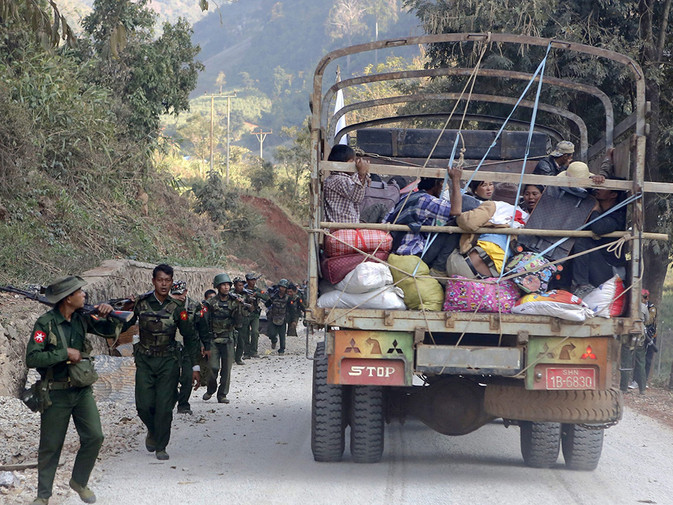
As fighting in Myanmar grew more intense near the Sino-Burmese border during Spring Festival, media reports became increasingly confused and alarming. Clashes between rebels and government forces in Shan State reportedly claimed the combined lives of more than 100 combatants on both sides. The ramp-up in hostilities has also forced tens of thousands of Burmese civilians to flee their rural villages for refuge in China.

Fighting that first broke out on February 9, and included air and artillery strikes by the Burmese army in Kokang, have led to protracted bouts of guerrilla warfare. Estimates place the number of dead in the violence between 70 and 130, and media reports are unclear how many of these are soldiers or civilians.

However, a spokesman for the Myanmar Defense Ministry, Lieutenant General Mya Htun Oo, wasquoted in the Hindustan Times as saying “the conflict had killed 61 military and police officers and around 72 insurgents”. Red Cross officials have also said humanitarian workers in the region have been attacked twice in the past week. The Burmese military has declared three months of martial law in Kokang, although how well such a policy can be enforced remains unclear.

Skirmishes have been most intense near the Burmese town of Laukkai, or Laogai. The village, now described as a “ghost town”, is located on the Salween River — known in Chinese as theNujiang. The refugees sought shelter in Yunnan’s Lincang Prefecture and were first thought to number a few thousand. However, Red Cross workers in Myanmar now claim at least 30,000 people have made the crossing, raising fears both inside and outside China of a looming humanitarian crisis.

The embattled Kokang region is a semi-autonomous part of northeastern Myanmar. Although the national government in Naypyidaw asserts titular control of the area, 90 percent of the local population claim Chinese descent and identify ethnically as Han Chinese. The rebel army now fighting Burmese troops is called the Myanmar National Democratic Alliance Army (MNDAA) and is headed by former members of the country’s defunct Communist Party.

No official reason has been given for the escalation in violence in Kokang, although it seems likely connected to December ambushes by guerrillas that killed at least seven Burmese soldiers and injured 20 others. As the conflict continues, both sides have presented their own narratives. Burmese military spokesmen have gone so far as to accuse the rebels of employing Chinese mercenaries in an attempt at complete self rule — a charge the guerrillas and Beijing have vociferously denied.

Also at stake for both the Kokang and Burmese authorities are lucrative, if unofficial, trade routes in the area. China’s border with Myanmar is extremely porous, and around Kokang is notorious for booming illicit trafficking of illegally logged timber, rare animals, jade and narcotics.

This article by  was first posted on the GoKunming on 

Leave a Comment

Filed under ASEAN, China, Cold War, Current Events, ethnic policy, Foreign policy, Myanmar/Burma, Regional Relations, SLIDER, Yunnan Province

Report: Thousands of Burmese refugees fleeing into China

Renewed fighting between the Burmese military and a guerrilla army in Myanmar’s northeastern Shan State erupted once again this week. The violence has caused civilian refugees — by some estimates more than 10,000 people — to flee across the border into rural areas in China’s Yunnan province.

Hostilities broke out on Monday in Kokang, a self-administered zone with a population estimated at 150,000. An article posted on Burmese news website The Irrawaddy reports fighting was most intense near the town of Laukkai, located on the Salween River — known in Chinese as theNujiang. Refugees were headed to the opposite side of the river to the village Nansan (南傘) in Lincang Prefecture.

The location of Myanmar’s Kokang region shown in green. Shan State in Yellow (Wikipedia)

The Burmese military attacked areas held by the Myanmar National Democratic Alliance Army (MNDAA), the armed wing of the Kokang ethnic group — 90 percent of whom are of Han Chinese ancestry. Bombing has been concentrated nearby Laukkai using Russian-made jet fighters and helicopters during the day and artillery during the night, according to MNDAA general secretary Htun Myat Lin.

He also claimed the number of refugees fleeing into China was approaching 10,000 as of Tuesday, most of them Burmese villagers, with a small minority made up of Chinese merchants. Chinese media have so far not estimated the number of displaced but Foreign Ministry spokesman Hua Chunying was quoted by CCTV as saying:

China is concerned about the Myanmar situation. During the past two days, some Myanmar border residents, because of safety considerations, have entered China. They have been looked after. China will continue to pay close attention to how the situation develops, and maintain the peace and stability of the China-Myanmar border. We also believe that the Myanmar side should also work hard for this.

State-backed Burmese news outlets have yet to release reports regarding casualties from the fighting. No official reason has been given for the escalation in violence, although it seems likely the actions by the Burmese military are connected to December ambushes by Kokang guerrillas that killed at least seven soldiers and injured 20 others.

The current situation along the border closely mirrors a monthlong period in 2009 when an estimated 30,000 Burmese civilians from Kokang crossed into Yunnan in the wake of fighting. China dealt quietly with those displaced by fighting six years ago, instituting a near media blackout of its humanitarian actions.

This article was written by Patrick Scally and originally published on GoKunming on February 12, 2015 .

Leave a Comment

Filed under China, Current Events, Myanmar/Burma, Regional Relations, SLIDER, Yunnan Province

Oil pipeline connects Kunming to Andaman Sea

pipline map

Map of Sino-Burmese oil and natural gas pipeline. (Image via Stratfor)


A 771-kilometer long oil pipeline linking refineries in Kunming to oil fields off the western coast of Myanmar began shipments over the weekend. Built over six years, at a cost of 9.37 billion yuan (US$1.5 billion), the project was marred by controversy in China and, at times, violence and threatened cancellation in Myanmar.

An opening ceremony held in the Burmese city of Yangon on January 29 marked activation of the above-ground crude pipeline. It travels from the Andaman port of Kyaukpyu, through the Chinese border town of Ruili and on to Anning just west of Kunming. The inauguration was attended by Liao Yongyuan, general manager of China National Petroleum Company (CNPC), and U Nyan Tun, vice president of Myanmar, according to a report by website The Nation.

The pipeline is jointly owned by Myanmar Oil and Gas Enterprise and CNPC, with the latter controlling a majority stake of 50.9 percent after having financed most of the construction process. When operating at full capacity, the pipeline is designed to transport 22 million tons of crude oil into China each year, a total nearly double that reported when work on the energy conduit first broke ground in 2009.

Named after seabed fossil fuel deposits off the Myanmar coast, the Shwe pipeline runs parallel with a similar natural gas conduit that went online in 2013. First proposed in 2004, the twin pipelines were conceived in China as a way to bypass oceangoing tanker shipments of crude oil and natural gas from not only Myanmar, but also the Middle East and Africa.

Now that both pipelines are open for business, Southwest China will receive fossil fuels from countries to its west much more directly. Sea-bound shipments not only take significantly longer than those through the pipeline, but must also pass through the nominally United States-controlled Strait of Malacca — one of the busiest ocean shipping lanes in the world.

As with many Sino-Burmese infrastructure projects, the twin Shwe pipelines were not guaranteed to ever be finished. Construction was nearly halted in 2012 when Burmese parliamentarians threatened to mothball the project over environmental concerns, reported labor strife and claims of forced village relocations. On the Chinese side, well-publicized Kunming rallies against a refinery-related petrochemical factory also brought the future of the pipeline into question, at least momentarily.

This article was written by  and originally published in GoKunming.

Leave a Comment

Filed under China, Current Events, Energy, Myanmar/Burma, SLIDER, Yunnan Province

Kunming airport site of winter weather chaos

File photo of de-icing at the Kunming airport.

File photo of de-icing at the Kunming airport.

Winter weather bedeviled China’s fourth largest airport last weekend. As with similar situations from the past few years, thousands of travelers experienced delays, flight cancellations and a general lack of up-to-date information regarding flight status in Kunming. Aboard one airplane, anger and frustration boiled over to the point that passengers attempted to open emergency doors while their aircraft was moving.

China Eastern Airlines flight MU2036 was originally scheduled to depart Kunming Changshui International Airport January 9 for Beijing at 8:45pm. However, due to a combination of cold, fog and snow, the flight was delayed five hours and did not begin boarding until 1:45am.

While passengers stowed their baggage and took their seats, several people noticed a distraught elderly woman complaining of discomfort. Further delayed as the aircraft wings were de-iced, passengers began to complain on the woman’s behalf to flight attendants, some demanding to speak with the captain.

At this point, the story becomes a bit confused. The captain apparently addressed the cabin via intercom. What he said is a point of contention, with at least one passenger taking to social media to accuse the captain of going on a profanity-laced tirade so virulent multiple travelers felt compelled to call the police. A spokesperson for China Eastern Airlines has denied the use of any untoward language.

Once the plane began to taxi onto the runway, at least two unidentified passengers — still worried by the condition of the elderly woman and further angered by the pilot’s tirade — tried to open three of the plane’s emergency exit doors. The aircraft returned to the terminal, where 25 people were taken into custody by airport police.

Two people were eventually arrested, a tour guide from Beijing and a woman surnamed Zhao. Both were charged with “inciting [a] crowd and disturbing public order” and will spend 15 days in a Kunming jail.

Changshui Airport authorities delayed 83 flights on Friday — some for nearly 12 hours — and canceled another 23. Those cancellations and continued cold, foggy weather in turn led to more delays on Saturday and Sunday. Other than the drama on flight MU2036, no near riot situations arose as they did in 2013.

This post written by Patrick Scally was originally posted on the GoKunming website on 1/12/15.

Leave a Comment

Filed under China, Current Events, SLIDER, Yunnan Province

Growth slowing in Yunnan and Kunming, economy still deemed healthy

Quarterly provincial financial reports used to be cause for celebration across China — a way to tout the wonders of Socialism with Chinese characteristics. The days of double-digit growth have seemingly passed, but much of the country still lays claim to some economic indicators that would make other nations jealous.

Among these places is Yunnan, which this year is on track to post strong, yet simultaneously disappointing, year-on-year (YoY) gross domestic product growth. So far in 2014, the province’s economy is valued at 821 billion yuan, which puts it on track to increase by roughly eight percent over the first three quarters of 2013.

While expansion of this magnitude may sound encouraging, eight percent is a significant drop from the 12.1 percent gain Yunnan enjoyed in 2013. Similar reports have come from all corners of China. “None of the 31 provinces and municipalities are matching growth goals set at the start of the year” by Beijing, according to financial projections made by news outlet Bloomberg.

Such numbers can be a bit esoteric when it comes to how they actually affect the average person. Despite the overall decline in economic performance in Yunnan so far this year, many residents of the province are actually seeing their incomes grow at robust rates.

Through the first three quarters of 2014, the average income of urban residents in the Spring City has grown 9.6 percent YoY. A report released earlier this week by the National Bureau of Statistics (NBS) shows the median yearly income for urban residents of Kunming now stands at 21,754 yuan. Those who live in rural areas under jurisdiction of the Spring City earn significantly less — 7,480 yuan annually — but still saw their incomes grow by 11.2 percent over the same period last year.

At the same time incomes are growing, so too are commodities prices, a combination often signaling a healthy economy. The consumer price index (CPI) — a metric cataloguing price fluctuations in the cost of 84 food-related retail goods kept by KNBS — rose 2.8 percent YoY, led most notably by serious increases in the prices of all types of meat.

Huang Bin (黄斌), lead analyst at NBS, characterized the increase in CPI as steady and moderate when compared to rising incomes, perhaps indicating Kunming’s economy, at least, has yet to succumb to the economic deflation Bloomberg reports is hitting other parts of the country. “From an analysis of the data, the incomes of rural residents grew faster than urban residents [in Kunming]. In terms of promoting the growth of consumption, this is good news.” Huang said.

This article was posted by in on the GoKunming website on 

Leave a Comment

Filed under Economic development, Governance, SLIDER, Trade, Yunnan Province

Official: Yunnan will have two bullet trains by 2016

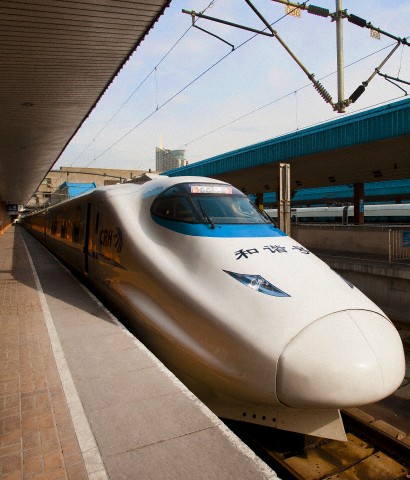
Engine of a Chinese high speed train parked at a railway station platform, Shanghai, China.  Image: Corbis

Engine of a Chinese high speed train parked at a railway station platform, Shanghai, China. Image: Corbis

Announcing specific completion timetables for infrastructure endeavors is a dicey business in China. If a project suffers setbacks and deadlines pass without completion, officials can lose their jobs. This reality makes it maddeningly difficult to guess with any accuracy when work on a given venture might actually conclude.

Such is the case with high-speed railways in Yunnan. Initial forecasts first made public six years ago anticipated at least two separate inter-city bullet train lines would be running in the province by 2015. That goal is apparently no longer feasible, but the head of the Kunming Railway Bureau (KRB) appears confident work will be completed less than two years from now.

Zhang Caichun (张才春), KRB party secretary, publicly declared both the Shanghai-Kunming (沪昆高铁) and Yunnan-Guangxi (云桂高铁) lines would be operational by the end of 2016. He made the comments October 30 while taking calls for the Mayor’s Hotline — a phone service established to make government officials more available to the public.

The Shanghai-Kunming High-Speed Railway will connect the now under-construction railway station in Chenggong to China’s most populous municipality. The dual track, passenger-only railway, will cover 2,066 kilometers and pass through the major cities of Hangzhou, Nanchang, Changsha and Guiyang. A full journey is projected to take eight to ten hours at cruising speeds of between 200 and 300 kilometers per hour.

Zhang’s comments confirmed reports regarding the Shanghai-Kunming line from last year. However, up until Thursday, no concrete schedule for the 754-kilometer Yunnan-Guangxi line had been announced. According to Zhang, that line — connecting Kunming to Nanning, and eventually Guangzhou — will be finished two years from now, at the same time as the Shanghai project. The Kunming terminus will be the existing Kunming Train Station, another detail left up in the air until Zhang began taking phone calls.

During his time speaking with the public, the railway chief also revealed details of what passengers can expect when boarding bullet trains in Yunnan. Some staff, according to Zhang, will be decked out in minority dress common to the areas through which the trains travel and dining cars will feature minority cuisine. On a more practical level, trains will all be equipped with wi-fi capability.

This article was originally posted on the GoKunming website by in News and published

1 Comment

Filed under China, Current Events, Economic development, SLIDER, Yunnan Province

Yunnan government weathers unexpected power shake-up

Li Jiheng (left) has taken over for Qin Guangrong (right) as Yunnan Provincial Party Secretary

The government of Yunnan completed a reshuffle of its top members a bit more than two and half years ago amid some confusion. At the time, Kunming’s golden boy partysecretary, Qiu He (仇和), received what appeared to many to be an improbable demotion. It’s déjà vu all over again as the Communist Party’s top man in the province has been relieved of his office without an accompanying explanation.

During a high-level meeting of provincial party cadres held October 14 in Kunming, it was made public that Qin Guangrong (秦光荣), party secretary of Yunnan, would be replaced by sitting governor Li Jiheng (李纪恒). Generally, such power handovers are quickly followed by news of a departing bureaucrat’s next job posting. In Qin’s case, no such announcement has been forthcoming.

The news seems all the more odd because until very recently, Qin was tabbed by many to be in line for a promotion to Beijing. The South China Morning Post is reporting that before Tuesday’s meeting, “speculation was rife […] that he could become deputy head of the party’s Working Committee of Organs Directly Under the State Council.”

Qin’s departure was conducted without any apparent rancor and the outgoing party boss gave a lengthy speech in which he said he was thankful for his 16 years of public service in Yunnan. He first arrived in the province in 1999 after a governmental stint in Hunan. Qin was then named governor in 2007 and provincial party head six years later.

The newly anointed Li also addressed the meeting and thanked his predecessor for what he deemed Qin’s “practical” approach and “heartfelt and sincere” service. Li also took the time to welcome his heir-apparent and relative newcomer, Chen Hao (陈豪). Chen had previously been deputy-head and party secretary of the All-China Federation of Trade Unions (中华全国总工会), the largest organization of its kind in the country.

Qin’s time in office will most likely be remembered for environmental issues. During the entirety of his time as provincial party head, Yunnan suffered from a recurring and often crippling drought. Qin was a vocal proponent of rerouting water from the Jinsha River (金沙江) towards Kunming in the dual hope of alleviating city water shortages and flushing away the algae blooms that have become a permanent feature of Dianchi Lake.

The secretary also had a hand in aggressively implementing Beijing’s Bridgehead Strategy — a multifaceted program aimed at strengthening the province’s economy through international business and trade. However, when all is said and done, history may judge Qin guilty by association with several governmental colleagues — including his predecessor — who have recently been embroiled in corruption scandals.

This article was written by Patrick Scally and originally published in GoKunming on October 15, 2014.

1 Comment

Filed under China, Governance, SLIDER, Yunnan Province

Water release at Yunnan dam sparks SE Asian alarm

Manwan Dam, Yunnan

A huge hydroelectric facility in southern Yunnan is causing tension between China and several of its downstream Southeast Asian neighbors. The Jinghong dam (景洪大坝), which stretches across the Mekong River, is currently discharging water in an effort to lower reservoir levels, raising the specter of flash flooding further south along the riverway.

On September 1, the Chinese government informed flood control authorities in Cambodia, Laos and Thailand that the dam would begin to release large amounts of excess water. The facility partially opened its floodgates September 5, releasing 535 cubic meters of water per second. Such activity is expected to continue through the end of the month.

Although this amount of water has yet to cause flooding in Laos or Thailand, both countries have issued public warnings as a precaution. Officials in both countries fear any further increase in outflow from the dam — which has the capacity to release up to 9,000 cubic meters of water per second — could have disastrous consequences. An unnamed official in Laos told website RFA river levels in the city of Houayxay — 200 kilometers south of the Jinghong dam — had risen noticeably but had so far not approached flood levels.

Thailand, which makes up more than 800 kilometers of the country’s northern border, is currently in the grips of its annual flood season. At least 28 provinces in the country’s north are already experiencing widespread inundations. Because of this, Thai flood control authorities are particularly wary of any increased flow along the river. Channel News Asia is reporting “the situation at the Chao Phraya dam, the main water gateway between the mountainous north and the central plains [of Thailand], are at a critical level”.

Further downstream in Cambodia and Vietnam, officials appear less concerned. No flood warnings related to the Jinghong dam water release have yet been issued in either country. However, a spokesman for Cambodian water conservancy group 3S Rivers Protection Network told reporters, “We know when an upstream dam opening its gates to release reservoir water combines with the heavy rains of wet season, it’s a high threat.”

The 1,750-megawatt hydropower plant, located roughly five kilometers north of the city ofJinghong, first went into operation 2008 following more than five years of construction. Power generated at the facility is used in Yunnan but is also often sent to energy-hungry Guangzhou or exported to Thailand.

Exemplified by the current situation in Jinghong, cross-border management of the Mekong — called the Lancang River (澜沧江) while flowing through China — is often a contentious issue. Mekong countries have, in the past, expressed frustration over how the river is handled inside China. Such concerns largely revolve around the wellbeing of the 48 million people who rely directly on the waterway for their food and livelihoods in Southeast Asia.

This article was written by Patrick Scally and originally posted on GoKunming.

Leave a Comment

Filed under ASEAN, China, Energy, Mekong River, Regional Relations, SLIDER, water, Yunnan Province

Plugin by Social Author Bio