Tag Archives: Kunming train station

Official: Yunnan will have two bullet trains by 2016

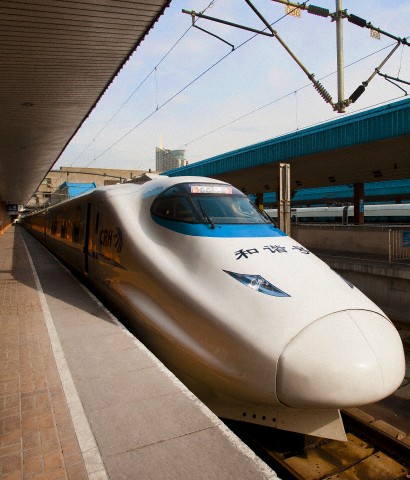
Engine of a Chinese high speed train parked at a railway station platform, Shanghai, China.  Image: Corbis

Engine of a Chinese high speed train parked at a railway station platform, Shanghai, China. Image: Corbis

Announcing specific completion timetables for infrastructure endeavors is a dicey business in China. If a project suffers setbacks and deadlines pass without completion, officials can lose their jobs. This reality makes it maddeningly difficult to guess with any accuracy when work on a given venture might actually conclude.

Such is the case with high-speed railways in Yunnan. Initial forecasts first made public six years ago anticipated at least two separate inter-city bullet train lines would be running in the province by 2015. That goal is apparently no longer feasible, but the head of the Kunming Railway Bureau (KRB) appears confident work will be completed less than two years from now.

Zhang Caichun (张才春), KRB party secretary, publicly declared both the Shanghai-Kunming (沪昆高铁) and Yunnan-Guangxi (云桂高铁) lines would be operational by the end of 2016. He made the comments October 30 while taking calls for the Mayor’s Hotline — a phone service established to make government officials more available to the public.

The Shanghai-Kunming High-Speed Railway will connect the now under-construction railway station in Chenggong to China’s most populous municipality. The dual track, passenger-only railway, will cover 2,066 kilometers and pass through the major cities of Hangzhou, Nanchang, Changsha and Guiyang. A full journey is projected to take eight to ten hours at cruising speeds of between 200 and 300 kilometers per hour.

Zhang’s comments confirmed reports regarding the Shanghai-Kunming line from last year. However, up until Thursday, no concrete schedule for the 754-kilometer Yunnan-Guangxi line had been announced. According to Zhang, that line — connecting Kunming to Nanning, and eventually Guangzhou — will be finished two years from now, at the same time as the Shanghai project. The Kunming terminus will be the existing Kunming Train Station, another detail left up in the air until Zhang began taking phone calls.

During his time speaking with the public, the railway chief also revealed details of what passengers can expect when boarding bullet trains in Yunnan. Some staff, according to Zhang, will be decked out in minority dress common to the areas through which the trains travel and dining cars will feature minority cuisine. On a more practical level, trains will all be equipped with wi-fi capability.

This article was originally posted on the GoKunming website by in News and published

1 Comment

Filed under China, Current Events, Economic development, SLIDER, Yunnan Province

The Kunming Train Station Attack: A Hypothesis

In answering the question “Why was Kunming chosen as the site of last Saturday’s attack?”consider the following:

In response to a police crackdown in Hotan, Xinjiang beginning in the summer of 2013, a large group of Uighurs attempted to make their way to Laos through Yunnan. Instead of escaping to Southeast Asia as refugees as planned, thirty were arrested at the border along with dozens of others throughout the province. Warrants were issued for those who were not immediately caught, and a detailed most wanted list was made public. At least eight remained at large and as time passed, hope for the release of their compatriots or relatives and their own escape to a foreign refuge grew smaller. With warrants out for their arrest and a heavy police presence in Xinjiang, returning home was impossible. Without local ID cards, settling down in Yunnan would prove just as difficult. Out of viable options, the group of eight decided to make a brutal last stand, taking out vengeance on the province where their plans failed. Gathering what little resources they could find in Kunming, the group planned to strike where they would be able to cause the most damage. And so on March 1, 2014, five people walked into the Kunming Train Station with knives and terror ensued. Continue reading

5 Comments

Filed under China, Current Events, Kunming Train Station Attack, SLIDER, Yunnan Province

Kunming Train Station Attacks: The Media’s Response


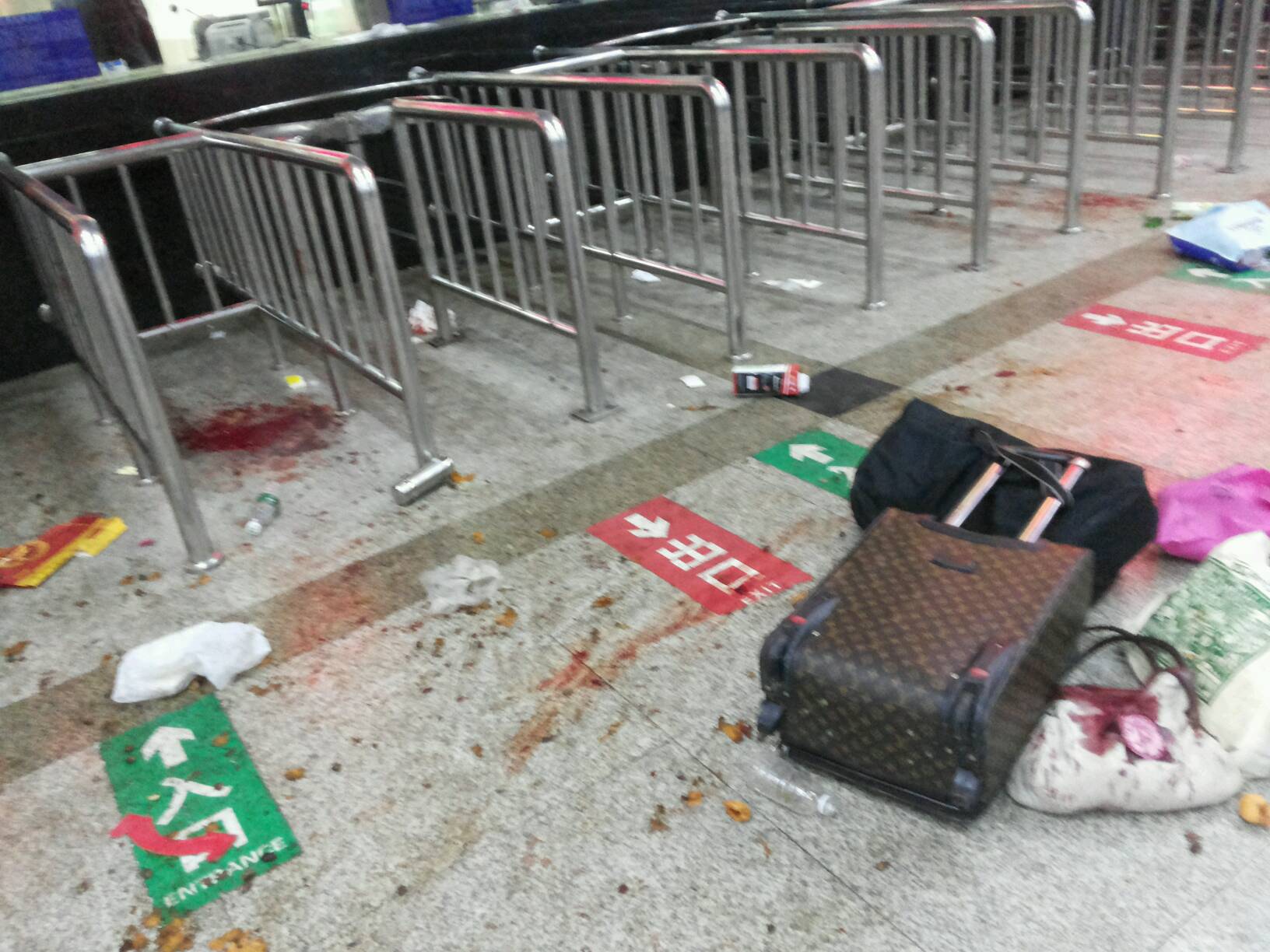
luggage

It’s Monday night, local time, and more than a day has passed since Kunmingers and the rest of the world awoke to news of Saturday night’s terrorist attack at the Kunming Railway Station. In that time, local residents, concerned citizens, the media and the world at large have begun the process of digesting what happened and what it all means. In this short time, reports have gone from panicked messages on mobile chat apps to full articles in the international press and an ongoing discussion on Twitter and Weibo. A few narratives have emerged, each with their distinct angle on the attack and some focused solely on the reaction to them.

Many of the first stories that were published were strict accounts what happened, such as this report from the BBC. The BBC story is representative in describing only the scene at the train station and eyewitness accounts of the attack. Similar stories were found on the websites of most news outlets.

The Chinese press, like the international press, only reported accounts of the scene at first, but stressed the official response, with most articles carrying quotes from President Xi Jinping and Premier Li Keqiang. Today, much of the coverage focused around security measures,  the efforts of medical teams in Kunming, and Chinese citizens’ response to the attacks.

Another narrative in the Chinese press was one of anger towards the foreign media for their treatment of the incident. One hotly discussed essay was this one from Xinhua News. Both the US Embassy and CNN drew Xinhua’s ire for downplaying the importance of the attacks. CNN put quotation marks around the word ‘terrorists’ in its first article on the incident while the US Embassy’s official statement failed to identify the attackers as terrorist. Xinhua was not the only one angry with the US Embassy, with thousands of Chinese criticizing the US online as well. In addition, this graphic from the People’s Daily online edition made for an intense discussion on both Twitter and Weibo.

A third strain of coverage of the incident centered around the bigger picture for China’s minority populations going forward. This article from Reuters looks at the possibility for increased tension between Uighurs and the majority Han population. A 2013 ChinaFile article by James Palmer, republished yesterday by Foreign Policy, was another article looking at ethnic tensions in Xinjiang that made the rounds on Twitter over the past 36 hours. The discussion around both articles has focused on whether or not the Kunming attacks are a harbinger for a new wave of crackdowns in Xinjiang and it’s a conversation that is sure to develop over the next days and weeks.

One line of discourse that has been missing from coverage is that of local Kunmingers. As often happens with events like these, the details and reactions of those most affected are discarded for larger implications and trends. Whether it be another short-lived skirmish over media bias towards China or the continuation of a long discussion on ethnic tensions in China, what locals think might be lost in the shuffle. Some interesting storylines that should be followed are: how Kunming as a city heals from the attacks; the language locals use to talk about the attack and what we can learn from that; how Kunming’s Uighur and Hui Muslim populations have been affected by the attacks; and how these attacks fit in the larger picture of ethnic relations in Yunnan. These are all critical questions and East by Southeast will do its best to find answers to them in the coming days. At the same time, we encourage our readers to reach out and tell us how they have been affected by the attacks what they see as important in the aftermath of such an event.

1 Comment

Filed under China, Current Events, Kunming Train Station Attack, SLIDER