Category Archives: water

Monsters in the Mekong

Construction of the Xayaburi Dam in Laos

Construction of the Xayaburi Dam in Laos

It will be a giant, stretching across the mighty Mekong River. Standing 32.6 metres tall and 820m wide, the $3.8 billion Xayaburi dam in Laos could supply electricity to more than three quarters of a million homes in Thailand. And when it’s completed in 2019, it will be the most controversial power project in the region.

Since the plan was released in 2010 to construct the hydroelectric plant, geologists and environmentalists have voiced concerns about safety and the effects the mega-dam will have on neighbours Cambodia, Vietnam and Thailand. They have highlighted the risks of seismic activity in the area and the threat to the fishing industry on the 3,100-mile long (4,900 kilometres) Mekong River, which flows from the Tibetan steppes into southern China on its way to Myanmar, Laos, Thailand, Cambodia and Vietnam. Continue reading

1 Comment

Filed under China, Current Events, Laos, Mekong River, Regional Relations, SLIDER, Thailand, water

The anti-Vietnam protest that didn’t happen

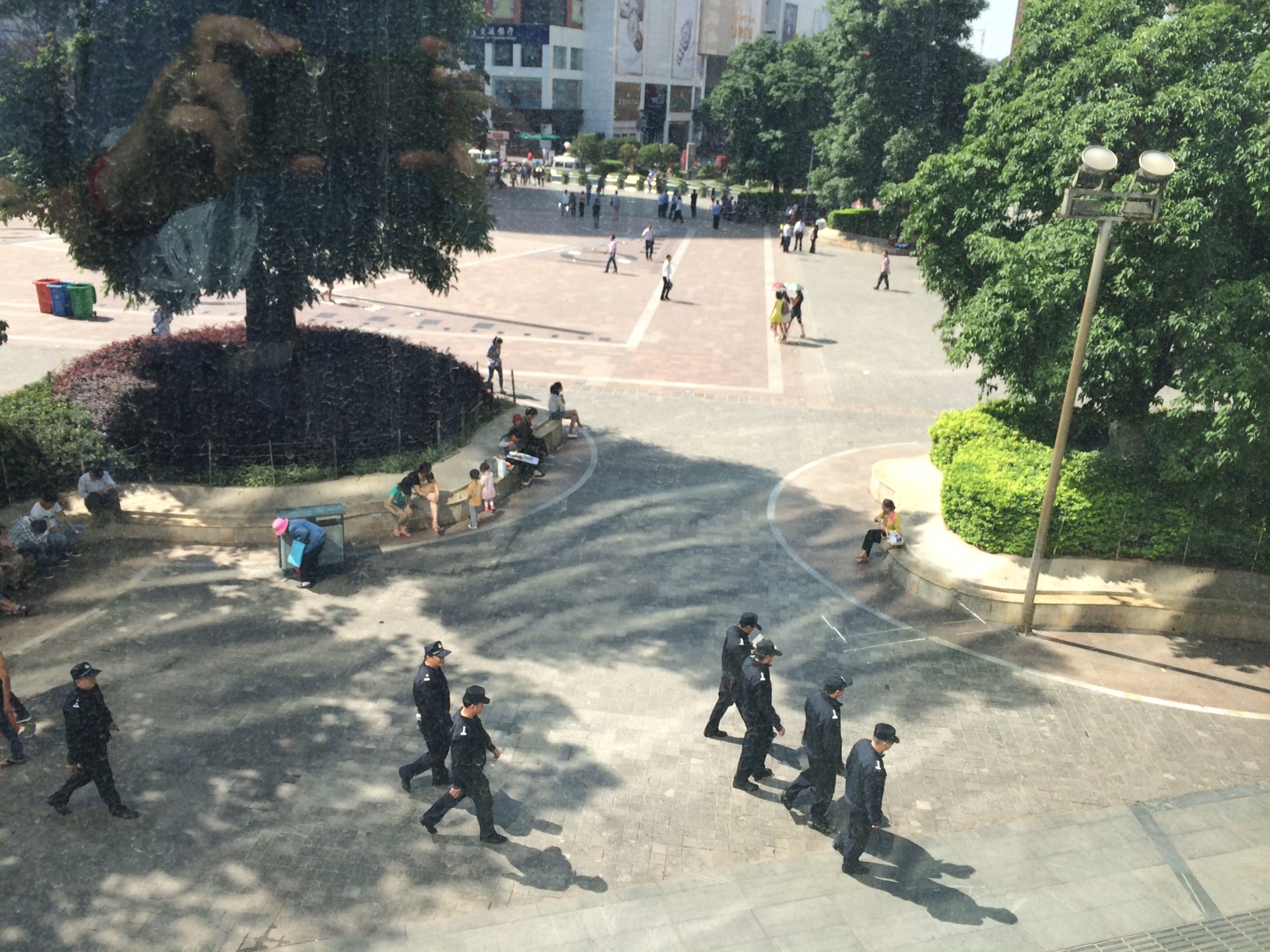
Kunming’s Nanping Jie Square, the site of Sunday’s non-protest.

The ringtone on my wife’s cell phone abruptly called us awake at 8:30am on Saturday. The caller ID displayed the name of one of my closest friends and colleagues in Kunming, yet I wondered why he was calling my wife. “Comrade, good morning,” rang out his thick Sichuanese accent.  This was a standard greeting among my circle of friends, but calling someone comrade in China has long gone out of fashion.

“There’s something I have to tell you.”

So it turns out he spent the previous day at his workplace, a local university, holding meetings with top administration and security brass discussing how to prevent the university’s students from attending a protest scheduled for Sunday, the next day. He told me that a group of Vietnam war veterans from China’s 1979 punitive invasion of Vietnam received approval from the local civil affairs bureau and the local public security bureau to march on the Vietnamese consulate in downtown Kunming.  The scheduled march was in reaction to the growing movement of anti-Chinese protests in Vietnam that left more than 20 Chinese, Taiwanese, and Vietnamese dead in the previous week.

The starting point was the city’s main pedestrian square at Nanping Street; the march would commence at 9am and finish at 2pm at the consulate.  His call was a warning for me to lay low – for all foreigners to lay low – because foreigners, especially Caucasian foreigners could serve as a potential target for angry, nationalistic protesters.  He was also calling to warn me to stay far away from the protest.  He knew I had a penchant for observing and writing about protests in Kunming, and my actions in the past had landed me and subsequently him only by guilt of association in a little trouble with local security officials.

To help place the gravity of the situation squarely on my shoulders, he told me of how he spent the previous evening having meetings with the students under his supervision, pleading them not to attend the protest – even though it was a legal protest – for fear that it may turn violent or take a turn toward other issues that were suppressed and mulling around in the hearts and on the minds of disgruntled people in Kunming.  In fact, his work group in cooperation with a successful commercial real estate form had arranged a 5 kilometer eco-walk scheduled for Sunday morning, but due to the protest he decided to cancel the event.  His university and the firm apparently poured a good deal of money into the event so he was quite put out by the cancellation.  “Right now, we will do what it takes to ensure stability at any cost.” I had heard those words too many times in the last 18 months living in Kunming.

His parting words before hanging up were also ones familiar to me: “Stay at home and have a good time with your wife.”

This season of South China Sea’s flare-ups and shenanigans is heating up once again.  To provide a quick rundown of the last 10 days: China parks it’s billion dollar oil rig 150 miles off the coast of Vietnam near Da Nang; rams a few curious Vietnamese ships, super soaks other onlookers with high pressure water hoses; foreign ministries respond with sabers rattling; protests broil in Vietnam; Chinese, Korean, and Taiwanese factories burn; people die unnecessarily due to this tricky, inane, orderless, yet extremely critical game of cartography, resource grabbing, and interpretation of the current world order.  And to round out the week, the first organized civil response in China comes from….Kunming?

In some ways Kunming makes sense.  The pathway of China’s 1979 spring invasion of Vietnam cut through southeastern Yunnan province into Vietnam’s Lao Cai province.  The three month war was a tough decision for the newly installed Deng Xiaoping.  He sought to punish Vietnam for its humanitarian invasion of Cambodia to take out the Khmer Rouge and install a new caretaker government, in some ways Deng thought this would help make good on his warming commitment to US-China relations.  Many of the troops sent to Vietnam were stationed in Yunnan, Kunming specifically.  Many did not return.  In total approximately 70,000 soldiers and civilians died in the three month conflict.

Both sides claimed pieces of victory.  In the end, China chalked up fewer casualties and proclaimed the incursion’s main purpose was to scare the Vietnamese before retreating.  The Vietnamese army valiantly as always pushed back most of the encroaching forces as the PLA entered the provinces to the north of Hanoi.  The caretaker government in Cambodia was not handed over to the Khmer people 1979.  Officially the caretaker government left in the early 1990s, and some argue that the pro-Vietnamese caretaker government is still in power.  To me a China’s claim to victory holds little water – just like its 9 dash line that lays claim to the near entirety of the South China Sea (which by the way holds a ton of water, fish, and most importantly energy resources.)

But then again there is little about Vietnam’s South China Seas claims that make much sense either.

From my experience interacting with locals, very few Kunmingers, and Chinese people in general, under the age of 50 know the story and context of the 1979 war.   I was not surprised to learn that a group of organized veterans still operated in Kunming given that veteran groups from WWII were still active in Yunnan and much is done in this city to preserve WWII related heritage. But how many were there and how many would show up for the march on Sunday? An organized effort that received government approval and raised the alarms of state related institutions like my friend’s university would likely bring out at least one hundred people. Would they be able to rally more than 1000 Kunmingers under the intense midday sun similar to the anti-PX protests (not government sanctioned) of nearly exactly one year ago?

Would the protesters flip and set cars alight?  Wait, Vietnam doesn’t produce cars.  Would they target people who appeared to be Vietnamese? Wait, I won’t finish that sentence.

On Saturday evening, a crowd of Kunming’s expats gathered for the soft opening of a New York style pizzeria.  The chatter was (sort of) abuzz with talk of the next day’s scheduled march and protest.  Over the previous two days word of the march had spread, for better or worse, among the community via the popular Chinese social media app WeChat, and now the gathering enabled the conversation to go from digital form to the soon-to-be-obsolete vocal communication style characterized by eye contact and hand gestures.

“Did you see how close China’s oil rig is to Vietnam’s shoreline?  It’s totally in Vietnam’s Exclusive Economic Zone.”

“What’s an Exclusive Economic Zone?”

“Yo, this South China Sea shit’s been going on for years.  All these countries play around with each other like they’re still in middle school.”

“That 9 dashed line just showed up in on China’s official maps in 1954.”

“Why Kunming?”

“Maybe the anti-PXers will show up to the protest again and then it could get really ugly.  Wait…maybe the Uighers will plan another attack?  And do you think things will be different now that Kunming’s police forces can carry armed weapons?  What’s happening to our city?  This used to be a really cool place to live!”

“Those Vietnamese love to play games, they learned how from the Soviets.”

“I’m totally going to wear my bright red “Made in Vietnam” shirt with the big yellow star tomorrow.”

“Maybe that’s not the best idea.”

“What’s an Exclusive Economic Zone? And dude, where’s my beer?”


Those who watch the Sino-Vietnamese relationship closely know that the situation is not getting any better despite the rosy accolades of year-on-year bilateral trade increases, strengthened cooperation on the (lately not-so-successful) repatriation of illegal Uighur immigrants from Vietnam back to China, and a new high-speed rail and road network connecting Vietnam to China.  Watching the relationship from Yunnan province only amplifies the growing crevasses.

Looking locally and outside of the South China Sea conflict, foreign direct investment between Yunnan and Vietnam is on the decline and according to the Vietnam Ministry of Industry and Trade office in Kunming, several key Yunnanese invested projects in Vietnam have been put on hold.  Last year Vietnam Airlines suddenly cancelled its daily flight from Kunming to Hanoi.  Two years ago you could readily buy Vietnamese Banh My sandwiches from food carts in downtown Kunming, and now none are to be found.  Enrollments of Vietnamese nationals into Kunming’s university level Chinese language programs are on the decline and are eclipsed by students from Thailand and Laos.  This spring, neighboring Guangxi province closed the border to watermelon imports from Vietnam which gouged prices at home in Vietnam and angered many farmers.

The list goes on, but I must mention that the yearly China-Vietnam Friendship Tennis Tournament which traditionally ushers in Kunming’s Southeast Asia Expo has been suspended for the last two years.  Both sides suspect each other of stacking the line-up with semi-pro players and accuse each other of foul play.

Waking on Sunday morning, the day of the march, I pondered the deterioration of this relationship. It was clear that more were losing than winning, but how many of Kunming’s everyday citizens are directly affected by the recent cooling and would the protesting veterans be able to gather enough onlookers into their fold in order to make an impactful statement?

I also pondered my friend’s advice on whether or not to go observe the march – but only for a few seconds.  With my smart phone charged to the max and ready to live-tweet the march as I had done for the past anti-PX protests in Kunming, I mounted my electric motorbike and made way to the protest zone, picking up a concerned friend along the way.  He promised to help navigate the security arrangements citing experience recently gained on a week-long trip to Pakistan.

I’ve learned in the past 18 months that the signals of a protest in China begin to appear well before arriving on site, and given this sanctioned protest site was staged for the same site as last year’s initial anti-PX protest, I had a well developed strategy to lay low and observe from afar lest I be spotted and photographed by the local security apparatus.  As we approached the downtown pedestrian square at 9:15 just after the march was scheduled to begin, we saw very little increased security presence.  From 100 meters away it was easy to see the center of the pedestrian square was cordoned off by local police forces to create a space the size of two football pitches.  Local police mingled in and out of the zone, and some middle-aged men sat in the shade of some trees on the periphery of the zone.

So far no sign of a protest presented itself.  No banners, no t-shirts, no slogans, no face masks, just a nearly empty square.  In fact, the most conspicuous aspect was the plain clothes policemen scattered around the square.  Always slightly overweight, deep tan, same crew-cut, off-color collared polo, and the signature man bag containing who knows what – the uniform of the Chinese plain clothes policeman is always easy to spot.  I also spotted a fellow blogger sitting in the shade inside the protest zone – his blond locks and European pedigree always stand above the crowd at Kunming’s protests in which he often finds himself smack in the middle of.

There still wasn’t any action, so my friend and I ducked into an adjacent shopping mall and rushed up to the a 2nd floor Starbucks to find a seat on a sofa beside a window overlooking the square.  Needless to say the position of our perch made us feel more like spectators at a sporting event than at China’s first anti-Vietnam protest of the 2014 season.  We were free to comment and tweet at will.  No security forces were going to bother us there.  My VPN was on line and the connection was kicking.

From our bird’s eye viewpoint, we observed a line of ten paddy wagons parked on the southern edge of the square. A small platoon of SWAT police in riot gear made rounds of the square.  Still no protesters.  A WeChat message popped up on my cell phone from the blond blogger sitting inside the zone.  “Situation normal, just loads of police presence, no sign of protesters….Another Kunming couldn’t care less story.”

And that was just it.  Kunming really couldn’t care less.  We estimate that fewer than ten veterans showed up.  Their t-shirts with Chinese flags gave them away.  At about 10:30am, the veterans formed a half-circle in the middle of the square and were escorted around half of the square by uniformed police. Their march lasted less than a minute.  A cameraman from the local television station sitting on a shaded bench missed the procession because his boredom turned to a brief chance to catch a nap.

At 10:45am, the cameraman picked up his bags and went home. Nothing to see here folks.  By 11am the temporary fences were removed, and the pedestrian square exposed to the intensity of the midday sun once again filled with local shoppers making their way through Kunming’s commercial downtown.

I was relieved that nothing happened.  Perhaps word came down from high for the veterans to cool their guns since the Vietnamese government was making good on its commitment to control the anti-Chinese movements and violence within its own borders.  The last thing our little city needs is to have its blue sky reputation tarnished by another incident making the international news and filling the Sinosphere and the South China Seas with flotsam and jetsam.

2 Comments

Filed under China, Current Events, Economic development, Energy, Foreign policy, GMS, Governance, Regional Relations, SLIDER, South China Seas, Uncategorized, Vietnam, water

Recommendations Regarding Hydropower Development and the Rights of China’s Ethnic Peoples

Most of China’s water resources are found in China’s western regions with 70% coming from China’s southwest.  Since the beginning of this century, the core of China’s hydropower development focused on middle and upstream portions of rivers in southwest China. This region also serves as the central native land of many of China’s ethnic minorities.  In early 2013, China’s State Council issued a plan for resource development in its 12th five year plan with details to design and begin construction on more than 60 major hydropower projects between 2011 and 2015.  China is entering into an explosive period of rapid and unprecedented development of its hydropower industry.

For the next twenty years more than 8 million ethnic minorities will be affected by the development and planning of dams.  With the expressed state agenda of establishing a sustainable hydropower industry, achieving social stability in ethnic minorities areas, and realizing the “Chinese dream” for all of China’s citizens, how will the Central government guide law and policy to provide rational standardization, coordination, and management to the interests of the state, industry, and of ethnic minority groups?

According to the principles of “Encouraging the Benefits of Ethnic Autonomous Areas” set forth by the Chinese Constitution, the Law of Ethnic Autonomous Zones advanced a new regulation in 2005 to “encourage the production and livelihood of local ethnic minorities.”  This broad-based regulation passed as part of one of three items in the addendum to the State Council’s PRC Legislation on the Autonomy of Ethnic Regions. Yet to date, there is no specific clarification to the rights of local ethnic minorities or details concerning the autonomy of ethnic areas within the language of the basic law.  The administrative regulations of the State Council list only one related clause: The regulation of peaceful migration should respect the production methods, the lifestyle, and customs of ethnic minorities.

A new policy promulgated in 2012 by the National Development and Reform Commission (NDRC) requiring state sponsored development projects to first oversee the migration of peoples before beginning construction has no mention of protecting the rights of local ethnic minorities. Laws and regulations related to the issue of ethnic minority protection do indeed exist, but because there is no guarantee on the methods of protecting procedural justice or monitoring processes, these laws and regulation cannot reach efficient levels of execution.  Not long ago, the publications of the Third Plenary Session of the 18th Party Congress emphasized the Chinese Communist Party’s views of ethnic policy, guaranteeing the legal benefits of ethnic minorities and bolstering and developing the equal unity and mutual harmonious relations of socialist peoples.

In past years, researchers carrying out investigative field study on the beneficial effects of hydropower development toward the ethnic peoples of the Jinsha River, Lancang (Mekong) River, Nu (Salween) River, Yalong River, Min River, and the Dadu River discovered that the everyday livelihoods and production methods of ethnic peoples living along these rivers are immensely affected by the development of hydropower projects.  In the early development and planning stages, hydropower projects are requested to maintain a holding status before beginning construction.  For many unknown reasons this holding status could continue for many years.  The clearing of roads with dynamite creates air and noise pollution and along with the risks of falling rocks and landslides, greatly affects the safety of people and livestock and the volume of agricultural harvests.  Dam construction and rising waters force people to move.  This uprooting destroys longstanding social networks, privately held assets and shared natural resources such as traditional collecting, fishing, and grazing methods that rely on forests, pasture lands and wetlands.  What is lost is not justly compensated for.

The rights of ethnic groups to be informed, to participate, to express views, and to monitor procedures are not respected or guaranteed with the development of hydropower projects and in many ways these rights are illegally violated.  The relevant institutions of local governments cannot realistically carry out existing laws and regulations, and hydropower firms ignore the law failing to take social responsibility for the protection of vulnerable groups.  Large scale hydropower firms – particularly central level hydropower firms – exact great profits from local areas but remit taxes to the major cities in which they are registered.  The benefits received by localities are greatly out of proportion with the costs borne.


In consideration to the issues raised above and to the demands of the 18th Party Congress, the suggestions below should be considered. Generally, the Central government should re-examine existing hydropower projects and immediately clarify and formulate policy that guarantees the benefits of ethnic peoples in China’s western regions affected the by hydropower development.

1.       Clarify policy and approaches suitable for Western ethnic regions

In western ethnic regions, the Central government should incorporate a guarantee of the basic rights of ethnic peoples as an indicator of sustainable development. The Central government should coordinate development of hydropower projects in ethnic areas giving basic consideration to resource safety, economic development, guarantees of the rights of ethnic peoples, and ecological protection. The activities surrounding hydropower development should respect and guaranteed the basic rights of ethnic people including political, economic, and cultural rights. In accordance to law, ethnic peoples should not be discriminated against and should equally participate in and enjoy the benefits of resulting from economic development in their localities.  They also have the rights to maintain their value systems, religious observance, and unique ways of living.  Moreover they have rights to protect the natural resources such as the land, rivers, forests, and pastureland on which they have existed for many years.

Moreover, the Central government should amend the legal and policy framework on the Law of Ethnic Autonomous Zones within the Chinese Constitution to protect the basic rights of citizens and ethnic peoples.  While strengthening relevant polices, the Central government should expedite policy on formulating specific guarantees of the protection of peoples affected by hydropower development and ensure the implementation and execution of these policies.

2.       Guarantee procedural justice in the processes of hydropower development

In the development of hydropower projects, firms and local governments should respect and protect the rights of ethnic groups and individuals to be informed, participate, make decisions, and monitor procedures. Hydropower firms should establish corporate social responsibility systems that pay particular attention to respecting and protecting the rights of ethnic peoples while operating.  Firms should incorporate this kind of responsibility into their specific duties and make public record of their CSR work on a regular basis.  Firms should also take initiative in accepting monitoring presences of multiple levels of society.

The Central government should establish systems for assessing the impact on the rights of ethnic peoples.  Results of the impact assessment should serve as key findings for the approval of hydropower projects.

The Central government should monitor the entire process of relocation of people related to hydropower development and provide support and effective relief to ethnic peoples whose rights are violated.  The government should establish and open various channels of complaints mechanisms, provide various forms of legal assistance, and eliminate obstacles that prevent ethnic groups and their members in accessing these systemic mechanisms to realize their rights and receive relief.


3.       Guarantee mutual benefit for ethnic people and hydropower development

In ethnic areas, large-scale hydropower firms and central level hydropower firms, by principle, should register for license in the locale in which they operate and pay taxes to that locale.  An alternative could be for the hydropower firm and the autonomous local government should come to agreement on an appropriate distribution of taxes to the locale under the supervision of relevant managing government organizations,

Hydropower firms and local governments should make best efforts to reduce the relocation of people due to hydropower construction and resolutely block forced migration.  Hydropower firms and local governments should make best efforts to reduce the negative impacts of hydropower development on ethnic people’s environment, economy, society, culture, and spirit.  Hydropower firms and local governments should provide fair and appropriate compensation to ethnic groups and individuals for the material, physical, and spiritual damage and impacts caused by activities related to hydropower development.

Hydropower firms and local governments should appropriately provide accordant compensation for negative social, economic, and cultural impacts of past hydropower projects on the basis of social impact assessment and an impact assessment on ethnic people’s rights. Hydropower firms should provide monies for the protection of resources and development funds in affected communities. Firms should provide compensation to and protect the resources and development of intangible assets, communally shared natural resources, and collective impacts that are difficult to compensate at the individual level.

Local governments should adopt measures to protect the cultural heritage of ethnic peoples, to aid ethnic peoples in the passing down and development of their own history, culture, language, traditions, and customs and guarantee the protection of their own cultural heritage and historical traditions.

4.       Fully utilize the function of social organizations

In the realm of social administration, the diversification of social administration is a common and successful experience of developed countries.  It is also a mainstream trend of modern social administration.  Popularized global “New Administration” philosophies purport:

“Governments are not the only pillar of public rights. rather citizens, individuals, and non-government organizations can become pillars of public management.  Under a set of shared goals non-government organizations can participate in public policy making processes and provide public services.  The responsibilities of public affairs administration and the advocacy for the satisfaction of social and economic needs can be collectively shared through the cooperation between social groups and government.”

With the reforms of China’s government institutions and new rounds of innovation in public administration, the function of social organizations in public administration and social life becomes more apparent on a daily basis.  The government should make full use of social organizations in regard to the protection of ethnic peoples and western hydropower development.  The Central government should encourage relevant social organizations to participate in the activities of local hydropower development, participate in the ecological impact assessment, social impact assessment, and social monitoring of hydropower development.  Finally the Central government should utilize the contracting of services to support positive contributions and innovative practices that social organizations can make toward the social administration of ethnic areas.

This is the final part of a 5 part series on hydropower and the rights of ethnic minorities living in the upper Yangtze River valley.  Link here to part 1.  

1 Comment

Filed under China, Economic development, Energy, Environment and sustainability, ethnic policy, GMS, Governance, Hydropower & Ethnic Resettlement in China's Yalong River Valley, Mekong River, SLIDER, Sustainability and Resource Management, water

The weak vs. the strong: Ethnic villagers, the government, and hydropower firms

As China increases its hydropower development plans into the 21st century, an estimated 8 million ethnic people in southwest China, many of them Tibetan, Miao, and Yi will be forced to leave their remote mountain homes. My previous posts this week focused on unjust and inappropriate compensation ethnic villagers in the Yalong River valley have received during the relocation process.  During this process, local government and hydropower development firms give very little consideration to the rights of ethnic villagers.  They also give very little consideration to  existing laws protecting these marginalized people.

In the valley between the Kala and Yangfanggou dam sites, two large billboards sport eye-catching slogans.  One says, “Maximize people’s benefits within the limits of law and policy” and the other “Crack down swiftly with the heavy hand of the law against illegal acts disturbing public affairs.”

牌 打击阻工扰工

To address the second billboard, in the eyes of the law there are two kinds of illegal acts.  One kind is simply a violation of the law.  The other constitutes a crime punishable by swift and heavy measures.  Legal expert Zhou Yong of Norway University, Oslo questions the legal grounds for the Public Security Bureau to erect this billboard.  Specifically, which law is the billboard referring to?  And to what extent do swift and heavy measures apply? He continues his critique of the local public security bureau’s abuse of the law by adding that the final judicial organ deciding cases are courts, not the public security bureau.

Citizens have the right to act and react to changes going on around them especially in ethnic areas where China’s Law of Ethnic Autonomous Areas applies.  Citizens should be aware of their rights and enjoy their rights. The role of NGOs should be to ensure that people can be protected by certain laws and regulations in ethnic areas.  In addition, basic rights of personal safety and right of property should be guaranteed.

Yang Lin, an expert in social impact assessment adds that the billboards are very thought provoking.  Reading them together seems to suggest that the government will provide you with what you need, so there’s nothing to worry about.  But on the flipside, the sign indicates that if the government does not give you what it has promised, you shouldn’t ask for it again.  This kind of ex-post behavior by relocated villagers is illegal and will be punished.

Article 27 of the UN Declaration on the Rights of Indigenous People declares:

States shall establish and implement, in conjunction with indigenous peoples concerned, a fair, independent, impartial, open and transparent process, giving due recognition to indigenous peoples’ laws, traditions, customs and land tenure systems, to recognize and adjudicate the rights of indigenous peoples pertaining to their lands, territories and resources,  including those which were traditionally owned or otherwise occupied or used. Indigenous peoples shall have the right to participate in this process.

Today China is the building more hydropower projects than any other country in the world.  In the new energy development plan, over 60 major hydropower dams and several hundred small and medium sized ones will be built along the Jinsha River (Yangtze), Lancang River (Mekong), Nu River (Salween), Yalong River, Min River Brahmaputra river, and the main stem of The number of ethnic minority people resettled will soon reach eight million. This will be the largest-scale involuntary resettlement in China’s history.

A promotional film for the Ertan dam says that all Chinese people will benefit from hydropower and that China will reach through to new heights from which all mankind will benefit.

A local villager from Danbo disagrees.

“We had to go away for seven days to attend the review and assessment process.  Each family had to send a representative.  We are uneducated and had no idea who might be in charge of the assessment.  All we got were review forms.”  During our meeting she produced a thin stack of official looking forms.  “My husband became mentally ill because of this.  He is still taking medicine to control the illness.”

As a country, China has a plan for the development of the national economy and will try its best to realize the goal of energy security and sustainable resource development.  But hydropower development firms only seek to maximize profits.  The country has power, and the firms have money.  When power and money come together they will inevitably put a third party at disadvantage.

When “weak” individuals face a “strong” government and hydropower firm, the interests and needs of these individuals usually cannot be protected or heard. The Chinese government should fulfill its obligations by exercising its administrative powers within the framework of law. It should solve this issue according to the current laws, regulations, and the international conventions that China has approved.  For example the UN Human Rights Convention requires that China follow related international law and assume international obligations. When solving conflicts between three parties, the most important thing is to make sure that concerns of the people can be heard. Throughout this process, people should be able to make use of various channels and platforms to raise their concerns.

Yu Xiaogang surveys a group of relocated villagers in the Yalong River Valley

Yu Xiaogang surveys a group of relocated villagers in the Yalong River Valley

During our surveying, countless villagers vented their frustration to my research team. “We can’t sleep at night.  We can’t concentrate on our work during the day, and why is that? Back then, though we were poor, we had enough food and warm clothes.  If we move to a new place, we will lose these.”

Another shared, “We can’t afford to leave, but we can’t afford to stay.  We are sorry to cause such troubles for the Party, but this is a really big problem.”

“They used dynamite this time.  The gods of the mountains and the Buddhist spirits all left.  Some people will die now.  Some will fall ill.  Some will go crazy.”

This is the 2nd in a five part series on ethnic resettlement and the impacts of hydropower development by Yu Xiaogang.  Link here to part 5 and here to link back to part 1.


Leave a Comment

Filed under China, Current Events, Economic development, Energy, Environment and sustainability, ethnic policy, Governance, Hydropower & Ethnic Resettlement in China's Yalong River Valley, SLIDER, water

Ethnic Resettlement: Resistance & Villagers’ Rights:

The pain of resettlement

The pain of resettlement

For years in China’s southwest, water engineering and hydropower firms companies have been fanatical about building more dams.  Plans of demolition and removal of villages and structures obstructing dam design are always being put in place before plans for resettlement and compensation are appropriately thought out. Ordinary people can only wait in passive anxiety for the uncertainties related to resettlement and their future to be resolved. They are destined to make sacrifices for so-called development.

“Back there are our mountains, our meadows, our fields, and our villages,” says a villager in Shangpu village downstream of the Kala hydropower plant on the Yalong River as she points to her former home up the valley. “The fog is because of the pollution, it’s heartbreaking to see this place become polluted,” The dam’s designer wanted to use the flat land of the village as a location for a construction camp.  Eighty people were relocated to an alluvial terrace two kilometers away.

“The local government told us to do whatever the Ertan company people say,” adds the villager.

Most villagers saw little sense in moving since their village, a place they lived in for generations would not be displaced by the rising reservoir created by the dam. Many resisted.

“The elder in my family, my father, held my hand on his deathbed, holding on to his last breath. I told him ‘we will not leave here, don’t you worry, just go without regret.’ Hearing these words, he let go and passed away. I said these words myself. Only these words could comfort him,” says a Shangpu villager who has refused to move to the resettlement.   In all, eighty families signed a pact with their fingerprints to resist relocation and are still resisting to this day.

“My father said the water we drink comes from the Himalayas.  Drink the water and our children will be blessed.” The villagers are connected to their land in ways that urban city dwellers and lowland farmers fail to comprehend.  “Our ancestors left this place for us, and we have lived here for generations. The mountains and water are all wonderful. The trees, every family has walnut trees and apple trees. We don’t have to go out to work for money. The families that live here are already living a good life, that’s why no one wants to leave.”

When my research team conducted a focus group discussion with the Shangpu villagers, the trauma associated with relocation was palpable.  A group of village women sobbed openly and angrily.

Shangpu villagers weeping uncontrollably at the thought of relocation

Shangpu villagers weeping uncontrollably at the thought of relocation

A local villager added through her tears, “The Immigration Office said that we have to move no matter what, but we can’t afford to move. We are just poor farmers, we have a hard life. We can’t afford to move.  Nothing will change no matter how hard they cry.  Nothing will change if the policy has already been made. When the people of Immigration Office came here, our people asked them to please let us stay here, please think of something to help us. Many old people started to cry and got ill.”

Yang Lin, an expert in social impact assessment admits exploiting 3000 megawatts while only having to resettle a small group of people is a good bargain on paper.  But there is no reason for resettlement not to be done properly.  China does not lack the resources to justly compensate these villagers.  When securing the benefits for hydropower and construction firms, the government spares no effort.  So why can’t villagers receive the similar treatment?

The government’s official response is to prioritize the successful construction of major development projects to ensure development targets are met.  Yet the reality is proper resettlement of displaced peoples will not impede construction.  Many social and economic problems, many of them unnecessary, arise when the government seeks to solely protect the profits of the developers.  In the end, the Chinese people have to pay for the government to solve these problems and conflicts that are neglected in the early phases of construction and planning.

In 2007 China became a signatory to the UN Declaration on the Rights of Indigenous Peoples which  says:

States shall consult and cooperate in good faith with the indigenous peoples concerned through their own representative institutions in order to obtain their free and informed consent prior to the approval of any project affecting their lands or territories and other resources, particularly in connection with the development, utilization or exploitation of mineral, water or other resources. (Article 32)

Villagers’ rights to consent, participate, and be informed in the resettlement process or the project design process is always neglected.  A case in point is Danbo Village, the first village to be resettled as a result of the Yanfanggou dam. The villagers have lived in anxiety of resettlement for years.  They had no prior notification of the dam project, and one day surveyors hired by the hydropower firm showed up unannounced to measure and assess the “value” of the village.

In a focus group discussion, a villager recalled the process.  “No one has explained resettlement to us. Our people are very confused. See, like that,” as he pointed to unidentifiable chalk scribblings on his home.  “They taped measured here, and there, and drew some lines and left. We had no idea what happened.”

None of the villagers was satisfied with the result.  Many remember the surveyors measuring very little during their time and noted that much property was left out of the assessment.  Another villager added, “They came here but did not take the measuring seriously. They only measured for a little while and concluded ‘That will do.’ They didn’t measure as they promised, at all! I have worked my land day after day, all by myself, until my hair turned white, but did they measure the land? The trees, I planted them one by one and the rice fields. Did they count them? No.”

Danbo villagers will be resettled to Muli in Xianyuan township where purchasing a house costs five to six hundred thousand yuan (USD $80,000 to $95,000), in addition relocated villagers must purchase land to cultivate at the cost of RMB 110,000 with a potential yield of RMB 200,000 per year.  “All they offer us for compensation is two to three hundred thousand yuan in total! We can’t start a new life with that little bit of money.  What we need is fairness, equity, and justice.”

The Danbo villagers recall another time a group of government officials and hydropower firm representatives came to the village.  Again arriving unannounced, this time at eight or nine o’clock at night, the group held a two hour meeting where they lectured to the villagers.  There were forty or fifty of them and the director general gave the first speech followed by the deputy general and further on down the line.  The officials held documents in their hand and read directly from them speaking only in official language and speaking only in Mandarin.

Most villagers had no clue as to what the officials were reading.  After two hours, the meeting concluded and the officials went for dinner.  Some stayed behind and measured the land and the houses the following day.   “They were all over the mountain, like ants.  In our language when we say they are like ants, it means the kind of insect that crowds together when it finds a bug,” concluded one villager.

When discussing resettlement with the group anxiety and tension levels immediately intensified.  Many noted that they cannot focus on their work with the uncertain outcomes associated with resettlement and compensation occupying their minds.  Part of my team’s approach to social impact assessment is to conduct a legal briefing with the village group.  A colleague Zhou Yong, Professor of Law at Norway University, Oslo informed the group of one of their most important legal rights: a citizen’s right to know. All Chinese citizens enjoy this right, just as citizens likewise have the right to request information.

The villagers have the right to know the time frame for the dam’s construction.  It is unjust to create an environment where villagers are waiting in limbo for resettlement.  Sometimes projects are postponed for five to ten years while the affected people live in anxiety.

 Social impact expert Yang Lin advocates that in order to guarantee the right to know, the first thing to do is to inform the citizens before the launch of a project. Local governments or hydropower firms cannot only tell them to accept it after the plan has been made. This will give them the time to think about the projects, to raise suggestions and objections. Second, people should know about the overall plan, including the standard of the compensation and the overall plan for resettlement. Third, in ethnic minority areas, simply making an announcement or issuing a notice does not amount to the “guarantee the right of informed consent.” The related department should offer a detailed explanation to the people, answer their questions, and let them truly understand the related information.

Citizens should have the chance to participate in the whole process, from planning to the completion of the whole project. A system needs to be established to make sure people’s voices can be heard. A processing and a feedback system to guarantee citizens’ opinions will be taken into consideration and influence the making of the final decision. Without these systems, participation is just a meaningless and mere formality.

What happens to villagers who refuse to resettle?   A Danbo villager recounted her experience:

“I told them that we could not afford to move. They said moving or not was my own business, but they had to measure the house anyway. Then I told them to stop measuring the house, and some of them replied that if I didn’t allow them to measure this time, next time people from a higher level would be sent and force would be used. Most of us were frightened by the threat.”

This is the 3rd in a five part series on ethnic resettlement and the impacts of hydropower development by Yu Xiaogang. Link here to part 4 and here to link back to part 1.


1 Comment

Filed under China, Economic development, Energy, Environment and sustainability, ethnic policy, Governance, Hydropower & Ethnic Resettlement in China's Yalong River Valley, SLIDER, water

Misunderstanding land use, traditional values, & resettlement compensation

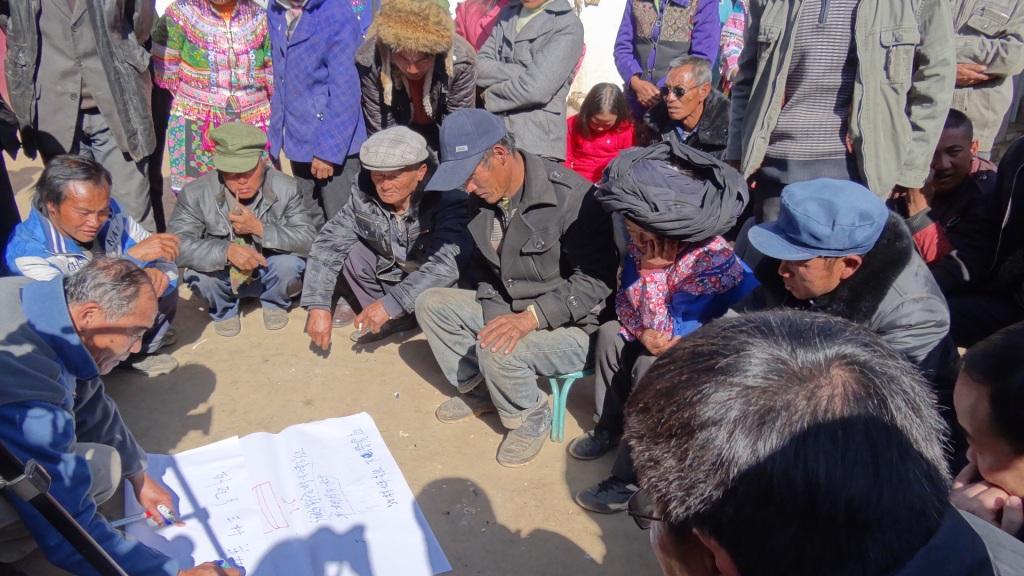
Yu Xiaogang meeting with villagers scheduled for resettlement in Muli

Yu Xiaogang meeting with villagers scheduled for resettlement in Muli

Due to the onslaught of hydropower construction in the upper reaches of the Yangtze River watershed, tens of thousands of ethnic Yi and Miao peoples have relocated from mountainside villages deep in the Yalong River valley into lowland resettlements in China’s Sichuan province.    A shared result of all peoples forced to leave their homes due to China’s development plans is a substandard compensation package due to the failure of local governments and hydropower firms to properly assess the impact of relocation on the villagers. In the case of ethnic peoples relocated from the Yalong River valley, the distribution of land parcels for agricultural purposes to individual households in resettlements falls short of matching the land use patterns enjoyed by villagers in their remote mountain homes. A villager in the Gubai resettlement commented that in the mountains he “used to fish at night and could usually get five, six, seven, to eight pounds of fish.  If we were lucky we might even get ten pounds.  We would boil them – it was such a good time.”

The Yi mountain village of Muli had groves of walnut trees each two to three hundred years old.  Villagers could earn extra income of more than 1000 RMB per year from each tree.  In the Gubai resettlement few opportunities like this exist.  Each household is only given two mu of irrigable land and less than one mu of paddy field for rice cultivation. Ma Erzi, Director of the Liang Shan Yi Minority Culture Research Institute identifies four functional areas of land use in Yi mountain villages each abundant with food resources and used throughout the year in the Yalong river valley.  He comments that traditional Yi people from Liang Shan autonomous prefecture lived by traditional farming methods and taking animals to pasture.  With their houses at the center, they divided land into pasture land 禾普, farming land 么普, forests for collecting timber and food like fruits and mushrooms 斯普, and water areas for fishing and fetching drinking water 日普. These areas formed a special distribution pattern each linked to the other, none of them dispensable.

Local governments may compensate resettled villagers for houses and land, but the water areas, forests, and pastures cannot be compensated.  These missing links will provide a major challenge for resettlement. There are two common misconceptions about resettlement. First the Chinese government believes that as long as compensation standards are followed, resettled villagers will be compensated appropriately and once compensated there is no need for follow-up.  In actuality resettled peoples think their losses are far from covered.  The products and services provided by mountains and forests where they could dig wild herbs and mushrooms, their religious facilities, the loss of community – all of these losses should be compensated for.  Second, the government economic compensation will solve all problems, but in actuality what people need is to be taught a new way to make a living and to build a new social network.  Only in this way can the resettled truly build a new life. The Yalong River valley is an ancient corridor for the movement and settlement of Tibetans, Yi, Pumi, and Miao (Hmong) peoples who have all lived to the south of Hengduan mountains for generations.  Will the demand for hydropower development cause us to turn a blind eye to the historical and cultural value of this corridor?  When resettlement separates the people from hundreds if not thousands of years of traditions, how will it harm the people who have lived there for generations?

Conducting a social impact assessment a resettlement

Conducting a social impact assessment a resettlement

To illustrate the loss of culture and the lack of recognition of the cultural values of indigenous peoples by local governments and hydropower developers, we should examine the near desecration of Yi family graves in the Liang Shan autonomous prefecture.  Over the last decade, the development of dams on the Yalong, Dadu, and Jinsha Rivers has sent countless criss-crosses of electricity lines through the blue skies of Liang Shan.  In 2009, a series of the electricity towers was scheduled for construction on a mountain specified for placing the Ji, Mu, Wu, and Qi family graves – the core ancestral clan of the Liang Shan Yi people. “To build an electric tower on our mountain is like hammering a nail into someone’s head – it will hurt for sure!” recalls Feng Gebo, a local leader and representative of the Ji-Mu-Wu-Qi clans.  “That tower is hammered into the head of our mountain, it gives us a feeling that we can never develop again because we are being stepped on.” Feng took my research team to a hole five to six meters deep, dug initially to support an electricity tower. “We filled this hole in on our own after the ground breaking ceremony for the tower network.  (The hydropower firm) didn’t do anything.”

The Ji-Mu-Wu-Qi ancestral tombs date back to 1556 and play a key role in maintaining and preserving Yi identity and historical understanding.  Feng pleaded to the local government to move the towers to an adjacent ridge without tombs. But his original pleas fell on deaf ears as local officials failed to understand his request or cited state development as a priority over local needs.  “They believe it’s for the construction of the state and the stated outcome of this hydropower project is to help us overcome poverty and achieve prosperity.  But we know what’s good for us, and we believe the best thing to do is to let this place stay just the way it was.” Feng acknowledged during his initial pleas to the local government he discovered that officials held different views.  He discovered some officials understood the importance of protecting the social customs, religions, and cultures of minority peoples. “At that time, I managed to arrange more than 100 people to help me, to make sure construction would not start until I finished the negotiations.”  He was only asking for the two towers to be built 200 meters away so his ancestors could rest in peace.  To keep vigil over their movement, farmers would spend nights at the construction site warming themselves by a fire in the subzero autumn temperatures to prevent construction from starting up.

This lasted until February 2010 when the local party secretary ended negotiations with Feng and asked him to send the farmers home due to exposure the extreme temperatures.   “The secretary promised me the construction would not start without the permission of the farmers.  In the end, the provincial design institute redesigned the towers and removed them.” Prior to the establishment of the PRC in 1949, ethnic groups in the mountainous regions of southwest China defended their culture, lands, and traditions with arms and kept the expanding Chinese state at arms’ length.  Feng noted, “At that time if you built something like that on top of a mountain, you would be in real trouble and make enemies for sure.” The Yi people have a saying often asserted in a quarrel or argument, “Are you an Apukeh or not?”  An Apukeh refers both to the ancestral tomb and the essence of an honorable person.  “You can mess with anything you like, but you simply cannot mess with an Apukeh – it’s a matter of life.  As a part of the next generation if you cannot protect the ancestral tomb, then you can’t protect anything.  You don’t call yourself a man or even a person.  That’s how important the Apukeh is – more important than our lives.” In September 2010, Feng Gebo’s efforts and the collective efforts of Yi people in the Ji-Mu-Wu-Qi clan successfully saved their ancestral tombs.  But how many other ancestral mountains will be flooded due to rising reservoirs behind dams or destroyed by the construction of electricity towers or roads that support the hydropower projects?

This is the 2nd in a five part series on ethnic resettlement and the impacts of hydropower development by Yu Xiaogang.  Link here to part 3 and here to link back to part 1.


2 Comments

Filed under China, Culture, Economic development, Energy, Environment and sustainability, ethnic policy, Hydropower & Ethnic Resettlement in China's Yalong River Valley, SLIDER, water

Hydropower and ethnic resettlement in the Yalong River valley

Sichuan's Yalong River Valley.  Image: josephrock.net

Sichuan’s Yalong River Valley. Image: josephrock.net

The Yalong river is one of the largest tributaries of China’s Yangtze river watershed.  Originating in Qinghai province, the 1368 kilometer long river system creates some of the deepest gorges in the world falling 3180 meters in elevation before flowing into the Yangtze at Panzhihua in southern Sichuan province.  According to the 2013 Twelfth Five Year Plan for resources management issued by the Chinese National Energy Administration, 21 dams will be built on the mainstream of the Yalong River and two of the dams will be the highest in the world.  The Plan also includes the completion of several hydropower projects which have been on hold since 2005 due to concerns about the fragility of the local ecosystem and culture. Continue reading

5 Comments

Filed under China, Current Events, Economic development, Energy, Environment and sustainability, ethnic policy, Governance, Health, Hydropower & Ethnic Resettlement in China's Yalong River Valley, SLIDER, water

A Casino at the Khone Falls in Laos?

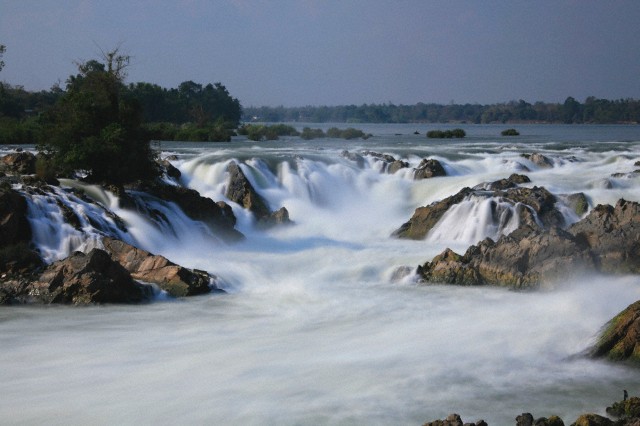
Khone Falls in Siphandone, Laos.  Image: Corbis

Khone Falls in Siphandone, Laos. Image: Corbis

At the end of March 2014 the Lao PDR government will consider a proposal to build a special economic zone slated for tourism development and other unspecified commercial uses in Siphandone, one of the world’s most pristine and biodiverse areas.  The SEZ will showcase a casino located less than one kilometer from the famed Khone Falls, the largest in Southeast Asia.

“The Siphandone area is set to become a more sought after tourism destination with many more activities to experience,” remarked Buasone Vongsongkhone, Deputy Governor of Laos’ southern Champassak province on Monday, March 17 after a meeting to discuss the proposal.

Vongsongkhone said the plans for the SEZ will include a casino and other facilities in keeping up with developing tourism trends in the Siphandone and Khone Falls area while protecting the environment.

“At the meeting we discussed how to regulate the casino to ensure the zone has proper security.”

What Vongsongkhone did not discuss was the impact of the new SEZ on the relatively untouched ecosystem of the Siphandone area.  Siphandone, translated as “four thousand islands” is where the Mekong River fans out into a waterfall and islet ridden expanse more than 15 kilometers wide.  The sparsely populated area has been described as an environmental oasis and is home to numerous native fish and bird species.  The Khone falls area is the perhaps the last habitat where endangered freshwater Irrawaddy dolphin can be found in the wild.

Satellite image of Siphandone.  Khone falls is the on left side of the image.  Google Earth

Satellite image of Siphandone. Khone falls is the on left side of the image. Google Earth

Laos’ growing reputation of holding some of our world’s last untouched natural areas and idyllic vacation spots has brought increases in international tourists to Siphandone area.  With the increase in tourism, the need for regulation and protection is obvious, but is marking a zone for economic development first and environmental protection second a sustainable approach or is it just another way for local Lao officials and outside investors to gain quick wealth through the exploitation of Laos’ abundance of resources?

Last week in an article in the Vientiane Times, the official English language outlet for Laos’ state controlled media reported “the government attaches great importance to developing SEZs to boost the country’s growth, which is crucial to lifting people out of poverty and enabling Laos to graduate from the list of least developed countries by 2020.”

Mock-up of the That Luang Marsh SEZ in Vientiane.

Mock-up of the That Luang Marsh SEZ in Vientiane.

The track record for SEZs in Laos, often dominated by Chinese and Vietnamese investment, is sketchy at best.  In Vientiane, construction of the That Luang Marsh SEZ (yet to begin commercial activities) has negatively impacted the local urban environment.  The natural wetland filters and holds the capital city’s waste water acting as a terminus of the city’s century-old waste canal system; many of these canals are now blocked by construction.  Much of the That Luang wetland areas has been filled in and long-time residents have noticed an average rise in temperatures as water is removed from the ecosystem. 

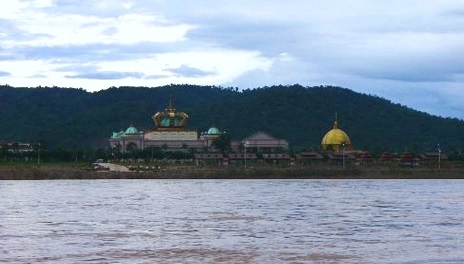
In Laos’ northern Bokeo province, the Golden Triangle SEZ dominated by the Chinese owned King Roman Casino complex has a seedy reputation as a conduit for money laundering from China and zone of human trafficking. The SEZ has scarred the scenic views of the Golden Triangle area, also known for its tourism, with open quarry mining and industrial development.

King Roman Casino along the Mekong in Bokeo Province, Laos

King Roman Casino along the Mekong in Bokeo Province, Laos

To make matters worse, the Siphandone area is slated for the construction of the 260 megawatt Don Sahong dam located  on the only of Siphandone’s Mekong channels that allows for the passage of hundreds of species of migratory fish.  In September 2013, the Lao PDR government notified the Mekong River Commission that the Don Sahong dam project would begin construction in 2014 despite years of protest and opposition by local and international environmental NGOs.

Eco-tourism opportunities such as river cruises, dolphin sighting tours, village homestays, and fishing demonstrations have brought sustainable sources of income to local communities in the Siphandone area for years.  Investors interested in building large resorts and casino complexes will likely be majority Chinese and Vietnamese taking more than they provide while leaving a stained and irreversible mark on one of the Earth’s most scenic spots.

3 Comments

Filed under China, Economic development, Energy, Environment and sustainability, GMS, Laos, Mekong River, SLIDER, Sustainability and Resource Management, water

Energy and Environmentalism on the Mekong: Time to Reach Across the Aisle

In recent years, two powerful narratives have emerged from mainland Southeast Asia. Generally speaking, discussions of the region focus around one of two topics: economic development and environmental degradation. For example, by typing “Mekong” into Google News the first page of results will show articles like this and this. As one can imagine, these two views of Southeast Asia are often in opposition and proponents of each rarely see eye to eye, sometimes going so far as to ignore the other side altogether. Recently, the battleground of these two narratives has been the construction sites of hydroelectric dams (both real and planned) that dot the Mekong River. Proponents of economic development see these dams as a necessary component to continued economic growth in the region. On the other hand, environmentalists point to the unknown ecological costs of the Mekong dams and argue that there are hidden costs to supposedly cheap hydropower. What is lost in the increasingly polarized game of right and wrong is a larger, more nuanced picture of the region and its needs. Some say that the Mekong needs dams while others argue that the region needs better protection measures for its natural resources. But what Southeast Asia really needs is for development fans and environmentalists to stop ignoring each other, and to restart the dialogue. Continue reading

1 Comment

Filed under Economic development, Energy, Environment and sustainability, GMS, Mekong River, SLIDER, Sustainability and Resource Management, Uncategorized, water

China Sea Territory Disputes (source: Money Morning, NPR, google news)

0912ChinaSeaTerritory2

Leave a Comment

Filed under Brunei, China, Foreign policy, Malaysia, Myanmar/Burma, Philippines, USA, Vietnam, VISUALS, water