Category Archives: Uncategorized

Silence of the Dammed

photo-1

In the ongoing controversy over the costs and benefits of hydropower in the Mekong River basin, there is much debate among governments, private business and civil society especially in Thailand and internationally. But one voice seems to be always silent in this debate: that of the local communities of Laos in whose country at least two mainstream Mekong dams are being built or planned and who will face the brunt of the projects’ impacts.

We never get to hear or see an informed opinion from local communities in Laos about the dams under planning and construction although many of these communities would face being displaced or resettled and lose their fisheries and other river-based livelihoods.

Laos is often perceived as a peaceful, Buddhist country with verdant mountains, rivers and a rural (and laid-back) way of life. While this may be true on the surface, it is a daily fact of life for Laotians that the ruling Lao People’s Revolutionary Party (LPRP) maintains control over the country’s press and civil society.

This also gives the impression that Laos has for the most part a passive citizenry that is least interested in politics. During three years of my field research in Laos, however, I found many Laotians I met always enjoyed talking about politics with me. They have access to Thailand’s radio and television channels, and understanding Thai language is not a problem. Its just that the politics that they could freely talk about was about Thailand not Laos.

It is not surprising then that the debate about hydropower in Laos is met with silence among Lao people, especially communities, and the people who do voice their opinions are usually those in government or the hydropower business.

Missing voices in Don Sahong

I interviewed people about 10 km from the site of the Don Sahong Hydropower Project (DSHP) located on the Mekong River’s mainstream in the Siphandone area of southern Laos, less than two kilometers upstream of the Laos-Cambodia border.1

The Don Sahong Dam threatens the rich subsistence and commercial fisheries in Laos and could pose impacts also in Cambodia, Thailand, and Vietnam. It also threatens the last remaining population of the Irrawaddy dolphins in Laos whose habitat is the Siphandone area. Moreover, the planned water diversion from the Khone Phapheng waterfalls could undermine the area’s tourism.

The dam builders and government officials have organized many public information activities about the dam and social or environmental assessment studies to evaluate the potential impacts of the DSHP.

I asked my interviewees – the local people in the area – whether they were involved in these studies. Most said they have never engaged in these studies, and did not know about the DSHP’s expected impacts.

“Laos has only one communist party”. Local people always repeat this sentence several times, before somebody clarifies watchfully: “Nobody is allowed to express their opinions against the party. Whether we like the Don Sahong dam or not, it will be constructed..

When I asked them if they know about the potential impacts of the dam, a fisher replied: “I cannot foresee what will happen if the Don Sahong dam is completed. The officials said nothing is going to harm our life. However, I am worried about the reduction in fishing.”

Photo-2-e1436256249154

Dam developers have announced no-fishing zones around the Don Sahong dam site although local fishers have used these areas for their livelihoods for more than a hundred years. (Photo by JeeRung.)

To my surprise, many did not even understand the concept of a dam. One sixty-five year old woman said: “I do not know what is a dam. Will a dam be built here? I asked my children to explain the meaning of a dam.” Another fisher asked: “What is the Don Sahong dam? I never heard any news if it will be located here?”

“Public information activities”

The public information activities being held by the DSHP developer are not like a “public hearing” process where citizens can freely debate the merits and demerits of the project, ask for information, provide alternatives, raise concerns, etc. In fact, the DSHP’s public activities does not include the free, prior and informed consent from potentially affected people before going ahead with the project. Moreover, the available documents such as EIA, mitigation and other plans are not made available in the local language.

I conducted in-depth interviews with local people who had an opportunity to participate in the DSHP’s public information activities. Most interviewees said the information they received were about the dam’s positive impacts provided by the dam developers, but there was no information about the negative impacts. The summary of these efforts at misinformation by the dam proponents are provided in the table below.

photo 3 silence-of-the-dammed-table

Restrictions on media and other freedoms, weak civil society

There are few local civil society or nongovernmental organizations (CSOs/NGOs) dealing with issues of hydropower projects and monitoring them in Laos. Moreover, any emergent grassroots-level NGO working on public policy monitoring are viewed with government suspicion as politically subversive troublemakers. Although a few international CSOs especially based outside Laos have voiced critical views about the Mekong hydropower projects in Laos, their views are ignored by official state policy.

The citizenry of Laos (apart from state officials and some influential groups) has only minimal access to information about pending legislation, changes in regulations, or government policy. There are no established mechanisms for government consultation with civil society groups.

Lao people are also subject to severe restrictions on freedom of expression. The government controls all print and electronic media through the state news agency, Khaosan Pathet Lao. All media content is vetted by the Ministry of Information and Culture. A press law announced in 2001 that would allow limited private media ownership has not yet been adopted. If enacted, it would still impose strict controls, including the power to close publications deemed to be “anti-government”.

photo-4-e1436256293606

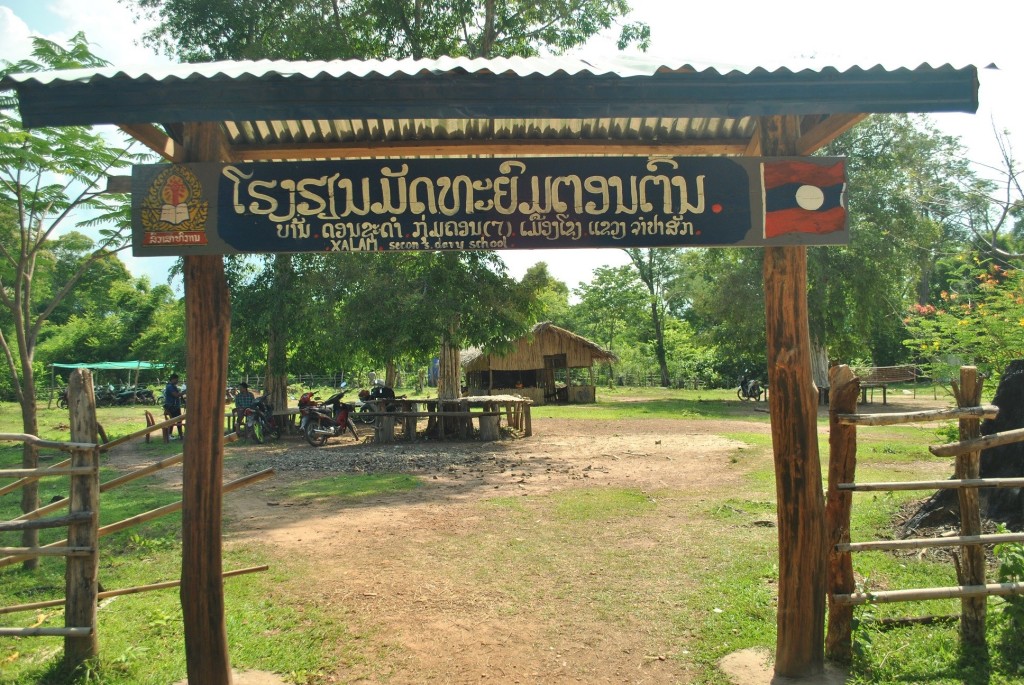
Once Don Sahong is completed, the Don Sadam secondary school will be taken for the site of the hydropower transmission station. (Photo by JeeRung.)

Freedom of speech is restricted by provisions in the penal code that forbid “slandering the state, distorting party or state policies, inciting disorder, or propagating information or opinions that weaken the state.”

Article 59 of the penal code sets a prison sentence of 1 to 5 years for anti-government propaganda. Journalists who do not file “constructive reports” or who attempt to “obstruct” the work of the LPRP may be subject to jail terms of 5 to 15 years. Previous violators are believed to have incurred prison sentences of between 1 and 5 years2. The authorities usually harass the English-language press when it does not toe the official line.

The act of expressing views opposite to the official view of the state administration or public policies in public spaces is considered taboo. Lao authorities have consistently suppressed political antagonists, cracked down on those expressing critical opinions with arbitrary imprisonments and sometimes enforced disappearance3. The most high-profile case has been the “disappearance” of Magsaysay award winner Sombath Somphone. He was last seen in Vientiane in December 2012. Through these measures, Laotian authoritaries have instilled a fear among the populace of free expression of views.

Given this situation described above, it is not surprising that we do not hear about or see the genuine participation or expression of critical views by local communities in Laos regarding the Mekong hydropower projects.

Show 3 footnotes

This article written by JeeRung was originally posted here on the Mekong Commons site.  It is reposted with permission of the author and Mekong Commons.

Leave a Comment

Filed under Laos, SLIDER, Sustainability and Resource Management, Uncategorized

Seismicity & Sediment Flow in the Mekong River Basin

Understanding the geologic history of the upper Mekong basin is increasingly important for examining the effects of dam construction, both in terms of seismicity and sediment trapping.  The sediment regime of the river has been altered by the construction of dams, which have captured large quantities of sediment.  However, the degree to which it has changed the river is uncertain due to the small number of studies done so far.  Additionally, agriculture and development have their own effects on the sediment load of the Mekong, which further complicates sediment analysis.  More alarmingly, a large magnitude earthquake could cause dam damage or failure, which in turn could cause catastrophic damage downstream.  While such an event is unlikely, it is important to properly regulate dam construction as well as encourage the construction of earthquake resistant infrastructure, especially in Yunnan, Northern Thailand, and Laos.  The underlying geologic structure of the Mekong River Basin is highly complicated and should be studied in greater detail so that dams are constructed as safely as possible, both to protect downstream communities and to ensure that the sediment load is not being disturbed at the expense of aquatic ecosystems and downstream agricultural communities.


Tectonic setting

The origin of the Mekong River lies 5,000 meters above sea level, high on the Tibetan plateau.  From there the river runs through China’s Qinghai and Yunnan provinces, where it is called the Lancang River.  Its name changes to the Mekong as it flows through the five mainland Southeast Asian nations: Myanmar, Lao PDR, Thailand, Cambodia, and finally Vietnam.  The River runs a total of 4,350 km before it spreads out over the Mekong delta and into the South China Sea.  The Mekong drains an area of 795,000 square kilometers, with an annual discharge of 475 cubic kilometers, making it the longest and largest river by volume in Southeast Asia, and the 12th longest and 8th largest by volume in the world.  At 16,000 cubic meters per second, the Mekong has an average discharge comparable to the Mississippi river, despite the Mekong being over 1,000 miles shorter. (Fig 1)  Its importance in the region as a source of livelihood and culture cannot be understated; it is the connecting tie between the nations of mainland Southeast Asia.  While river ‘capture’, or the seismically induced alteration of river pathways, makes pinpointing the origin of the Mekong River difficult, there is some indication of its modern derivation.  According to one study, which took sediment cores from the South China Sea, “The oldest sediments, which are linked to the modern delta body, accumulated in the early mid-Holocene, at about 8000 calibrated years before present preceding the mid-Holocene sea-level highstand in the South China Sea.” (See figure 1, core MD01-2393)  Primarily because of sea level rise the Mekong River has changed since then into the basin recognizable today.

The Mekong River Basin is situated off the southeastern edge of the Tibetan Plateau, which as an active converging plate boundary has a strong influence on the tectonics of the Mekong basin.  The collision of the Eurasian plate and the Indian Plate are the source of the uplift of the Himalayas and the Tibetan Plateau, and the Mekong River basin lies between this convergent plate boundary and the Sumatran Subduction Trench further south along the southern coast of Sumatra.  This intraplate zone is a ‘basin and range’ province, much like the Nevada-Utah basin and range of the United States, and is scattered with faults with different slip-rates, especially in the area in and around northern Thailand.  Considering this somewhat unique geologic position which has created different fault zones pulling and pushing in different directions, the basin’s geology is both heterogeneous and, particularly in the northern part, seismically active.  To the north of the Mekong River Basin, the Longmenshan fault zone is highly active; responsible for the devastating earthquake in Chengdu in 2008, which claimed the lives of over 68,000 people.   The upper Mekong basin is not range of the Longmenshan fault zone, but its basin and range typology is strongly influenced by this fault zone.  The most notable fault systems that influence the basin are the “right-lateral, strike-slip Red River and the left-lateral strike-slip Xianshuihe-Xiaojiang fault systems.”  These fault systems as a portion of the typical ‘basin and range’ geological province create series of exactly that: similarly trending valleys and mountains that are a direct result of fault blocks falling and rising with respect to each other.  This allows different geologic layers to be exposed within relative short distances, meaning that as the Mekong River flows downstream, it quickly gathers different types of sediments.


Sediment regime

The sediment regime in the Mekong is a result of its drainage pattern and the variety of rock types in the river basin.  The Mekong River basin itself is atypical of continent draining rivers in its drainage pattern is not dendritic.  Rather, the river has a parallel drainage pattern which is much more linear with more direct tributary angles.  This pattern is a combined result of the underlying geologic structure and the slope of the topography.  The upper basin is particularly narrow which indicates strong, or steep, slope control.  Often, underlying structures such as joint systems control the geometry of tributary angles, which are generally narrow.  In these steep and narrow gorges, the rapid flowing water of the Mekong quickly erodes the hillsides, making the river a muddy-silt brown.  Considering the heterogeneity of the underlying structure, the swift moving water gathers many different minerals, creating a rich sediment regime with lots of chemical elements needed for agriculture and aquatic ecosystems.  The upper part of the basin, especially in China, is the primary source for this sediment.  Researchers have suggested that “the existing estimate of the mean annual suspended sediment load of the Mekong reported in the literature is ~160 Mt y^-1, and (Roberts) has estimated that about 50% of this load is contributed by the upper part of the basin in China.”

The northern part of the basin “accounts for about 24% of the total area of the basin and about 18% of its total discharge, and sediment yields in these mountainous headwaters, which have steep, unstable slopes, are clearly substantially higher than those from the remainder of the basin.”  As it flows the Lancang River quickly becomes a muddy-silt brown, reducing the River’s ability to erode the rock further downstream.  Dams allow sediment to settle out, in fact “Kummu and Varis cited estimates that suggest that the Manwan Dam could trap as much as ~50-60 Mt of sediment per year, and this would clearly cause a major reduction in the sediment load of the Lancang River.”  What the overall effect this entrapment will be is not yet known.  What is known is the exiting water, devoid of sediment, will erode rock more quickly than it did before, possibly replacing the sediment lost but at the cost of downstream slope stability.  The increased erosion of stream beds could pose ‘major threats’ to places such as Luang Prabang, Vientiane, and Nongkhai.

Figure 2: Mekong Sediment load, values from 1961 compared with recent years (between 1997 and 2002).

Figure 3: Mekong river discharge, values form 1961 compared with recent years (between 1997 and 2003).

Unfortunately, there have not been a lot of studies done in Southeast Asia on this subject, and research needs to be continued in order to examine how the sediment regime has been and is being altered.  So far, research done has shown that variations in sediment discharge are more closely linked with the total water discharge of the Mekong, rather than the construction of new dams. Figures two and three illustrate this problem as there are hardly enough data points, due to a lack of continuous research, to come to a conclusion about the sediment regime and the way dams have affected it. In this way, it is important that these parameters be monitored annually so that a meaningful conclusion can be drawn as to whether or not dams have a negative impact on sediment transport.


Seismicity: Predicting earthquakes in the northern Mekong Basin

Accurately predicting the timing of an earthquake, as seismologists know, is close to impossible. But that doesn’t mean that it’s not worth trying, because properly understanding seismic activity can be effective in protecting human lives.  While exceedingly challenging, seismologists use a variety of techniques to predict the likelihood of earthquakes occurring, and what the magnitude of the earthquake might be.  These techniques generally involve measuring average slip rates and estimating the likelihood within a given period of time of the fault ‘slipping’ which causes earthquakes.  In the Mekong River basin, this is extremely important with regard to the dams that have been built along the river as well as for dams in the planning phases.

Figure 4. Dams along the Mekong River and its tributaries. Courtesy of the WWF

Seismic activity in the Mekong River basin is primarily limited to areas in Yunnan, northern Thailand, and Laos.  Some areas in northern Thailand in recent history have been described as seismically inactive, as despite there being several fault zones there are few historical records of destructive earthquakes.  There is some mention in different literature that northern Thailand is seismically ‘highly stable’, which happens to be true for recent history, but that does not suggest earthquakes cannot or will not happen.  As Fenton says in his 2003 study, “Due to a lack of large, damaging earth-quakes during historical time, Thailand has not been considered to be a seismically active country.  Although there are a number of accounts of historical earthquake damage (Nutalaya et al. 1985), the locations and sizes of most of these events are not well constrained.”  While earthquakes are generally below 6.5 in magnitude, there are notable exceptions.  For example, “[The Red River] fault has produced several earthquakes >M 6.0 including the 4 January 1970, M 7.5 earthquake in Tonghai which killed over 10,000 people.”  While this was further north, there are concerns that earthquakes could cause substantial damage to developing infrastructure.  One USGS study of a magnitude 6.8 earthquake in the Golden Triangle region of Myanmar in March of 2011 highlights that “Overall, the population in this region resides in structures that are highly vulnerable to earthquake shaking, though some resistant structures exist. The predominant building types are wood and unreinforced brick masonry construction.” This suggests that if a larger magnitude earthquake of were to strike, the damage would be enhanced by the collapse of structures which are not equipped to handle such shaking.  These faults are considered capable of generating maximum earthquakes of up to 7.5 in magnitude, which while unlikely on an annual basis, (see figure 6) increase in likelihood over time.

Figure 6. Faults in Northern Thailand.  Note the proximity of faults 3, 11, and 18 to the Mekong and proposed dam site. Note annual probability of fault movement in Fig. 7   Courtesy of the USGS


Figure 7. Annual probability of fault movement among studied active faults in northern Thailand. See fig 6. and key for location of faults. Data courtesy of the USGS

The Xayaburi dam in Laos is controversial for several reasons, but fears of damage from earthquakes are rising.  One Thai geologist, Dr Punya of Chulalongkorn University, has estimated there is a “30 per cent chance of a medium-sized earthquake hitting the dam site in the next 30 years, and a 10 per cent chance of a powerful earthquake of up to magnitude 7.” He was reported as saying: “If the fault at the dam site becomes active … there is no chance for seismic engineering to take care of that.”  Dr Punya also stated that construction on the dam should “never have started” at such a site without further research into its seismic risk.   Dr. Punya’s concerns do not seem unwarranted, as there have been substantial earthquakes in recent years.  In 2011, two earthquakes occurred 48 kilometers from the site of the Xayaburi dam, one 5.4 and one 4.6 magnitude.  One month later a magnitude 3.9 earthquake occurred 60 kilometers from the dam site.  In 2007, a 6.3-magnitude quake hit the Xayaburi area.  Further away, in northern Myanmar, a 6.9 magnitude quake on March 24, 2011 killed 151 people.

Apparently, the earthquakes near Xayaburi occurred on what were thought to have been inactive faults, “an unusual development and one that causes additional concern.”  It is possible this may be related to dam-induced seismicity, another substantial concern many geologists bring up with regard to dam construction and seismicity.  This phenomenon has been documented as far back as 1932, and the Sichuan earthquake in 2008 has been suggested as being a result of this effect.  Tectonic movement isn’t a process that changes within the lifetimes of humans, and a trend of increasing seismicity is only likely to continue.  In fact, “some studies suggest that due to the high slip rate on this fault, future large earthquakes arehighly possible.”  While total dam failure is extremely unlikely, earthquakes will nonetheless be able to cause a lot of damage to dams, costing the dam companies millions.  Moving forward, it is imperative that more geologic and seismic studies are done of the northern Mekong basin.  This is especially true for dam construction companies as they construct dams; to do so in as safe and secure a way as possible.


Conclusion

Unfortunately, most of the scientific literature on the subjects of seismicity and sediment transport in the Mekong River point to the lack of research done thus far as a limiting factor for their own research.   While there has been a fair amount of research done, it is not sufficient to completely assess whether dams are safe to construct or not.  Based on preliminary findings, it seems that most earth scientists that have studied this region agree that they feel uneasy about the construction of dams and that more research needs to be done.  The construction of dams might ultimately be important for the development of Southeast Asian nations, but proper research needs to be done to ensure they are not irreparably damaging the river.  A worst-case scenario would consist of catastrophic dam failure due to an earthquake, which would in turn likely cause downstream dams to fail, and destroying any communities along the river.  The economic loss, not to mention the loss of life, would be disastrous.  Because of this risk, however small, research and engineering techniques should be paid for ahead of time by dam construction companies rather than afterwards with human lives and livelihoods.


References:

Ai, M., and M. Hong. 2011. Earthquake Shaking: 2011.

Clark, M. K., L. M. Schoenbohm, L. H. Royden, K. X. Whipple, B. C. Burchfiel, X. Zhang, W. Tang, E. Wang, and L. Chen. 2004. Surface uplift , tectonics , and erosion of eastern Tibet from large-scale drainage patterns. Tectonics 23:1–21.

Fawthrop, T. 2014, November 19. Experts renew quake fears over Xayaburi dam Mekong River in Laos. South China Morning Post. Xayaburi.

Fenton, C. H., P. Charusiri, and S. H. Wood. 2003. Recent paleoseismic investigations in Northern and Western Thailand 46(October).

Turner, B., J. Jenkins, R. Turner, A. L. Parker, A. Sinclair, S. Davies, G. P. Hayes, A. Villaseñor, R. L. Dart, A. C. Tarr, K. P. Furlong, and H. M. Benz. 2014. Seismicity of the Earth 1900 – 2010 Himalaya and Vicinity PA IN HA NA FA ST ARC 80225(303):80225.

Walling, D. E. 2008. The Changing Sediment Load of the Mekong River. A Journal of the Human Environment 37(3):150–157.

Leave a Comment

Filed under GMS, Mekong River, SLIDER, Sustainability and Resource Management, Uncategorized

Regional Roundup for Week of 11.2.2014

The EXSE weekly news digest is back after a long hiatus – and we have a new look!  Our revamped digest is more concise and follows the general format of the website focusing on what we do best: regional relations, sustainability and resource management, Yunnan province, and book reviews.  Below you’ll see that we’ve also maintained focus on domestic issues in China and Southeast Asia.  Enjoy! Look forward to more posts this coming week on corruption in Yunnan and the engineering the Southern Silk Road.

EXSE FOCUS

What Should Obama and Xi Say to Each Other at APEC? ChinaFile Next week’s Asia-Pacific Economic Cooperation meeting in Beijing (November 5-11) between Presidents Xi Jinping, Barack Obama, and other leaders from around the world, is billed as the Chinese capital’s highest-profile international event since the 2008 Olympics. Local law enforcement have warned people they face arrest for wearing Halloween costumes on the subway as it may cause crowds to gather and create “trouble.” Hopes are high that the leaders of the world’s two largest economies won’t scare each other off

 Related: What Beijing Wants From APEC The Diplomat

Related: What Beijing Wants From APEC Asia Unbound

 The Guardian view on the Asian Infrastructure Bank: the US should work with it, not oppose it | Editorial the Guardian It’s no surprise that China is promoting a solution to the shortage of infrastructure capital in Asia. It is an exaggeration to talk of the pace of reform at the World Bank and the International Monetary Fund, for there has been almost none to these, the so-called Washington institutions that, together with the US Treasury, have both sustained and constrained the global economy since 1945. How to reflect the changing balance of economic power has been endlessly discussed but rarely implemented.

 Related: Australia won’t join Asian infrastructure bank ‘until rules change’ Guardian  

 Obama Prepares to Travel to Myanmar at a Critical Time Asia Unbound In November, President Obama will travel to Myanmar to attend the East Asia Summit, which brings together a broad range of nations from across the Pacific Rim. It will be the president’s second trip to Myanmar, following his landmark 2012 trip, which was the first by a sitting U.S. president to Myanmar since the country gained independence six decades ago. During the East Asia Summit, Obama almost surely will hold bilateral meetings with Myanmar President Thein Sein and other senior Myanmar leaders, including opposition leader Aung San Suu Kyi.

Related: Listening Post: On Visit, Obama to Face a Backsliding Myanmar NYT

 Mapping the flow SEA Globe An interactive map released by campaign group Global Financial Integrity (GFI) reveals the staggering speed illicit financial outflows – illegal movements of money or capital from one country to another – are leaving developing world countries. The information is compiled from a December 2013 report “Illicit Financial Flows from Developing Countries: 2002-2011”


REGIONAL RELATIONS

Banyan: The city on the hill Economist WHEN Barack Obama ducked out of two summits in Indonesia and Brunei a year ago, the credibility of the “pivot to Asia” he had proclaimed, giving the region greater importance in American foreign policy, took a big knock. This month he is due to show up at back-to-back gatherings in Beijing, Naypyidaw, the capital of Myanmar, and Brisbane in Australia, giving him a chance to hammer out the dent. It will be a struggle. The centrepiece of the economic aspect of the pivot, a regional free-trade agreement called the Trans-Pacific Partnership (TPP), is still not a done deal.

The U.S. Should Not Fear Competing With China The Diplomat With the Asian Infrastructure Investment Bank, the U.S. should not be afraid of a little healthy competition.

Not U.S. Isolationism, But a Rebalancing of Priorities and Means Asia Unbound  The Chicago Council on Global Affairs 2014 survey released last month entitled “Foreign Policy in the Age of Retrenchment” reports that over 40 percent of Americans believe that the United States should “stay out” rather than take an active part in global affairs. But the survey also shows that over four-fifths of Americans believe that the United States should continue to show strong leadership in world affairs. Possibly the strongest counter-arguments for smart American leadership versus isolationism and retrenchment are expressed in poll results regarding American attitudes toward its alliances in Asia. This is an important finding because it shows growing American understanding of the importance of Asia and growing support for the strategic value of the U.S. rebalance to Asia.

US-Philippines Defense Ties Under Fire The Diplomat A U.S. Marine accused of murder has called broader U.S.-Philippines cooperation into question.

Can China and Vietnam Overcome Their Territorial Disputes? The Diplomat Yang Jiechi’s visit to Vietnam was full of optimism, but the China-Vietnam relationship remains fragile.

How Vietnam Woos China and India Simultaneously The Diplomat In managing relations with India and China, Vietnamese diplomacy has grown dynamic and creative.


SUSTAINABILITY AND RESOURCE MANAGEMENT

Tibetan Plateau Faces Massive ‘Ecosystem Shift’ China File Large areas of grasslands, alpine meadows, wetlands, and permafrost will disappear on the Tibetan plateau by 2050, with serious implications for environmental security in China and South Asia, a research paper published by scientists at the Kunming Institute of Botany has warned.

Beijing Zeroes In on Energy Potential of South China Sea NYT Much of the muscle-flexing over disputed waters in the region is political. But China is also interested in the oil and natural gas that might lie below the waters.

 Dam could sound death knell for dolphins Phnom Penh Post Ahead of crucial discussions about the future of Cambodia’s wetlands this month, residents of a globally significant area of the Mekong River fear an environmental catastrophe if hydropower plans go ahead.

 China’s obsession with vertical cities Guardian By the end of next year one-in-three of the worlds 100m+ skyscrapers will be in China, as its state-orchestrated urbanisation drive prompts a megacity building bonanza

Tuna firm’s bungled IPO exposes China’s flouting of global fishing rules Guardian  Draft IPO sends a reporter down a rabbit hole to find shell companies and shady dealings in the world-wide fishing industry. Reporting on international fishing can often feel like investigating organized crime. Everyone knows how things are run, but the truth is obscured by shell companies, back-door dealings, and plausible deniability.

Growth in the New Climate Economy Project Syndicate Action to reduce carbon-dioxide emissions and mitigate climate change has long been viewed as fundamentally opposed to economic growth. But a recently released report concludes that efforts to combat climate change could boost growth considerably – and soon.


CHINA

China upholds death penalty for three who led mass stabbing in Kunming AFP  A Chinese appeal court has upheld death sentences for three people convicted over a mass stabbing this year in which 31 people were killed, say state media. The higher peoples court of Yunnan province rejected Hasayn Muhammads appeal and upheld the penalty meted out by the Kunming municipal intermediate peoples court last month, Xinhua said in a dispatch from Kunming.

Taiwan Leader Stresses Support for Hong Kong Protests NYT President Ma Ying-jeou of Taiwan said that he supported Hong Kong protesters’ democratic ideals, but would still pursue trade agreements with China.

Corruption in the housing market: To those that have The Economist OFTEN the trickiest part of being a corrupt bureaucrat is not how to find new ways to extort money or accept bribes, but how to hide the ill-gotten gains. No one wants to end up like “Uncle House”, as a district official in the southern province of Guangdong was dubbed by internet users. He was outed two years ago by online anti-corruption activists after acquiring 22 properties that on his salary he clearly could not afford.However, research by Hanming Fang of the University of Pennsylvania, and Li-An Zhou and Quanlin Gu of the Guanghua School of Management at Peking University suggests that the housing market is a source of illicit riches, as well as a place to park them

China’s 4th Plenum: Rule of Law Under the Party The Diplomat U.S. editors Ankit Panda and Zachary Keck are joined by Shannon Tiezzi to discuss China’s fourth plenum.

China to put decorated general on trial over corruption Reuters A once-powerful retired Chinese military officer has confessed to taking vast amounts in bribes and will be prosecuted in court, the official Xinhua news agency said on Tuesday.General Xu Caihou, a former vice-chairman of the powerful central military commission, was court martialled in June. He has been stripped of his title and expelled from the military, Xinhua said, citing army lawyers.


SOUTHEAST ASIA 

UN Rapporteur: ‘Backtracking’ could undermine Burma’s reforms DVB UN Special Rapporteur Yanghee Lee has expressed concern about “possible signs of backtracking” that could undermine Burma’s reform process, according to a UN press statement released yesterday which highlighted some key points of Ms. Lee’s speech to the UN General Assembly about Burma’s human rights situation.

Burma considers altering law that bars Aung San Suu Kyi from being president AFP Burmas parliament will consider amending the countrys constitution which currently bars the opposition leader, Aung San Suu Kyi, from becoming president before crucial elections next year, an official said on Friday. Suu Kyi is trying to change key sections of Burmas charter ahead of 2015 polls that are widely expected to be won by her National League for Democracy (NLD), if they are free and fair, after decades of military rule.

US Blacklists Burma Ruling Party Lawmaker DVB  The U.S. Treasury on Friday blacklisted a hard-line lawmaker of Burma’s ruling party, accusing him of undermining political and economic reforms.

The Rise of Public Opinion in Cambodia’s Politics The Diplomat The ruling elite can no longer simply ignore the opinions of the Cambodian public.

After Budget Released, Cambodia’s Opposition Blasts Process Cambodia Daily With the release of the government’s 2015 draft national budget Thursday, the opposition CNRP, whose 55 lawmakers joined the National Assembly in August, called Cambodia’s budget-drafting process “disgusting and unbelievable” on Friday.

Malaysia: A lousy sequel Economist FOR 16 years Anwar Ibrahim, leader of Malaysia’s opposition, has battled dodgy charges of sodomy and corruption designed to keep him from power. One way or another, a court hearing which began on October 28th looks like the end of the road. As The Economist went to press Mr Anwar (pictured above, with his wife) was reaching the conclusion of his final appeal against a five-year prison sentence, imposed in March, for allegedly having sex with a male aide (sodomy is illegal in Malaysia).


YUNNAN PROVINCE

Official: Yunnan will have two bullet trains by 2016 Go Kunming Announcing specific completion timetables for infrastructure endeavors is a dicey business in China. If a project suffers setbacks and deadlines pass without completion, officials can lose their jobs. This reality makes it maddeningly difficult to guess with any accuracy when work on a given venture might actually conclude.

A quick glimpse of Yunnan’s ancient salt towns GoKunming  Exploring Yunnan is not fully completed unless one visits at least one of the three ancient and historically important salt towns in southwest China. Heijing (黑井), Nuodeng (诺邓) and Shiyang (石羊) are three often undiscovered pearls of the province, and can provide travelers with a rare view of China from another time.

Online rumor spurs closure of ‘wild animal bazaar’ GoKunming Here at GoKunming there are several not-yet-dead horses that we routinely beat. Among these, news stories regarding the environment, wild animals, officials behaving badly and bizarre, often vague, trending internet tropes tend to receive the most user feedback. Rarely, however, has one news item rolled all of these themes into a nice compact ball exemplifying many of the challenges facing Yunnan. That is, of course, until this week.

Related: Seafood banquets put tropical reef fish at risk The Third Pole


REVIEWS

Hun Sen’s Cambodia: A Review Asia Unbound A new book by Cambodia-based journalist Sebastian StrangioHun Sen’s Cambodia has set the standard for compelling and accessible histories of modern-day Cambodia. In particular, the book is the first to offer an accessible but thorough biographical portrait of longtime Cambodian prime minister—and strongman—Hun Sen. Strangio details in compelling form how Hun Sen rose from a skinny, totally uneducated and unworldly senior official in the Vietnam-installed post-Khmer Rouge regime into a smooth autocrat who has dominated the country for decades. Over time, Hun Sen also has become fabulously rich and has become an increasingly powerful player in Southeast Asia, due to Cambodia’s membership in ASEAN, Hun Sen’s longevity, and Hun Sen’s ability to play his patrons Vietnam and China off of each other.

From the Ruins of Empire…arise the nation-state Jottings from the Granite Studio One of the best books on empire, colonialism, and de-colonization I have read in the past few years is Pankaj Mishra’s brilliant From the Ruins of Empire: The Revolt Against the West and the Remaking of Asia. It’s a sprawling story told through the biographical sketches of major Asian intellectuals such as Liang Qichao, Jamal al-Din al-Afghani, and Abdurreshi al Ibrahim, near contemporaries who witnessed the crumbling of empire and worried about what might come next in a world still dominated by North Atlantic states and Western value systems.

What China’s Reading: ‘Broken Dreams, USA’ China File As a kid, I couldn’t understand why Chinese people flocked to the United States when the policemen there were so cruel, the crime rate was so high, and the food was so unpalatable. Later I realized that it’s because in America there are cars, concrete jungles and skyscrapers, and color televisions. How we used to admire and worship such a country, America. But now it seems the old “American dream” is too plain for Chinese people’s desires…


Leave a Comment

Filed under NEWS DIGEST, SLIDER, Uncategorized

China and South Asia: Contention and Cooperation Between Giant Neighbors

Are China and India allies or enemies in the South Asian economy? Well, it seems they are both; working together in healthy and profitable partnerships while maintaining armies in the contested China-India borders. This article explains the paradoxical nature of the China-India relationship and its impact and implications for the smaller countries in South Asia and neighboring Southeast Asia.

The rise of China and India over the last two or three decades continues to make global news headlines. Competition between these two global powers in economic, political and diplomatic domains has garnered scholarly and media attention. Yet we know much less about China’s growing ties and contention with India that are also spreading across the South Asia subcontinent and beyond. As China-India trade has grown, India in 2006 opened the historical trade route, Nathula Pass, which had remained closed for almost 50 years as a result of a border war with China in 1962. Today in the presence of several persistently disputed border zones in South Asia (see Map 1), China is beginning to build dams on the rivers in the Tibetan Plateau, including the upper Brahmaputra (yarlung tsangpo or Yarlung River), which could impact populations living downstream in India and Bangladesh (see Map 1). China has taken over the construction of Gwadar Port in the Pakistani province of Baluchistan, on the Arabian Sea. China has also begun building the Gwadar road corridor all the way north to Xinjiang. Continue reading

Leave a Comment

Filed under China, Economic development, Energy, Foreign policy, GMS, Mekong River, Myanmar/Burma, Regional Relations, SLIDER, Uncategorized, Yunnan Province

Scores of Kunming officials investigated for corruption

Image: The Irrawaddy

Image: The Irrawaddy

Graft is becoming an increasingly risky business for corrupt Kunming officials and those who enjoy their favors. Last year, the city charged 52 county-level cadres with corruption-related crimes. This year, however, The People’s Procuratorate of Kunming has already investigated three times that number, including several high-ranking bureaucrats.

From January to May of this year, provincial prosecutors opened inquiries involving 154 public officials suspected of corruption and bribery, newspaper Legal Daily is reporting. In a vague briefing, a representative from the Procuratorate described the vast majority of cases as “serious”, classifying eight as “highly serious” and seven others as “extremely serious”.

One of the “extremely serious” cases involves Wang Baoji (王宝基), former deputy inspector of the Yunnan Department of Transportation. Wang is charged with accepting 2.8 million yuan (US$450,000) in bribes from construction companies to develop highway projects from 2011 to 2013. In the same week, the Procuratorate sentenced Kang Xiaodong (康晓东), eight-year deputy director of the Yunnan Department of Justice, to fifteen years in prison for accepting five million yuan (US$806,000) in bribes.

The Legal Daily report made no mention of what punishment the other 152 officials may face if found guilty. However, penalties for bribe-taking and corruption can often be harsh. Previous high-profile Yunnan administrators convicted of such crimes have routinely faced long periods of incarceration, or worse. In 2007, a former Kunming deputy mayor was sentenced to life in prisonfor accepting kickbacks. Four years earlier, one-time governor Li Jiating was sentenced to death for taking bribes.

The current crackdown on official corruption can be traced back to Xi Jinping’s first speech as president of China, in which he pointedly said the Communist Party must adhere to “strict discipline”. In the wake of Xi’s comments, Beijing has reprimanded thousands of government officials around the country for lavish spending, fraud and taking payoffs.

Xi’s remarks have also led China’s central government to carry out a nationwide audit of towns and municipalities in all provinces. Although unfinished, the accounting inspection has uncovered wide-ranging and serious financial misdeeds, some of them in Yunnan. Last year in Luliang County (陆良县), it was discovered that officials had faked financial data to the tune of 5.2 billion yuan (US$850 million).

Click here to link to this article first posted on GoKunming on 6/30 and written by Cissy Yu.

Leave a Comment

Filed under China, Current Events, Economic development, Governance, SLIDER, Uncategorized, Yunnan Province

Carrots, Sticks & the TIP Report: Understanding the US Government’s Anti-Trafficking Efforts in Southeast Asia

Last week the US State Department issued its annual Trafficking In Persons (TIP) Report, which ranks every country in the world according to their adherence to the US government’s anti-trafficking mandate. For the first time, Thailand was designated “Tier 3,” the lowest “rung” on the TIP Report’s ladder.

The report, which is published by the Office to Monitor and Combat Trafficking, describes “Tier 1” countries as those demonstrating sufficient anti-trafficking efforts; “Tier 2” as those that have begun to demonstrate such efforts but still have improvements to make; and “Tier 3” as countries demonstrating little to no effort to combat trafficking. Countries that receive the Tier 3 ranking are subject to sanctions by the US government. Continue reading

Leave a Comment

Filed under Cambodia, China, Current Events, ethnic policy, Foreign policy, GMS, Governance, Health, Malaysia, Mekong River, Philippines, Regional Relations, Singapore, Uncategorized, water, Yunnan Province

Regional Roundup for the week of 6.15.14

It’s a good week for the environment in Southeast Asia with the discovery of over 300 new species in the Mekong river region, as well as the development of a new software program and community engagement plan to model changes to the Tonle Sap Lake in Cambodia.

Top news this week also included the lifting of a national curfew in Thailand, as well as a timeline for an interim government to be in place by August. The world’s fourth-largest supermarket corporation Carrefour announced a ban on Thai shrimp products after extensive reports of slave conditions in the fishing industry, and other companies may follow.

Tensions remain high in the South China Sea, with continued back-and-forth diplomatic jabs from China and Vietnam over increasingly escalated confrontations between fishing boats and government vessels from both countries.

ExSE FOCUS

Thailand: Nationwide Curfew Lifted | NYT — Thailand’s military government announced Friday that it had fully lifted a nationwide curfew it imposed after seizing power last month.

A Push to Save Cambodia’s Tonle Sap Lake | NYT — Scientists are digitally tracking the links between human activity and the fragile ecosystem of Cambodia’s great lake./Ambitious computer modeling project that could help predict the impact of climate change and monsoons (as well as hydroelectric projects) on critical fisheries resources./

Flying squirrel and eyeless spider discovered in Greater Mekong | Guardian — Over 300 new species of animals, fish and plants found in the forests surrounding Mekong river in 2012-13, WWF says. A series of high-flying creatures, including giant flying frogs and squirrels and a parachute gecko, are among the hundreds of exotic new species recently discovered in the greater Mekong region in southeast Asia./Over 300 more reasons for researching the river system and strengthening environmental impact assessment protocols./

Slave labour producing prawns for supermarkets in US, UK: your questions answered | Guardian — A six-month investigation established that large numbers of men are bought, sold and held against their will on fishing boats off Thailand and are integral to the production of prawns sold in major supermarkets in the UK and US.

China Accuses Vietnam of Ramming Ships to Stop Rig | NYT — China says that Vietnamese ships have rammed Chinese vessels 1,416 times since a dispute over a Chinese oil rig in the South China Sea flared up in May.

China joins in world’s largest naval exercises | Guardian — Chinese ships headed for waters near Hawaii on Tuesday to participate for the first time in the world’s largest naval exercises, a rare opportunity to build trust with the US and regional rivals including the Philippines and Japan.

Record-setting turn-out at South Asia Expo | GoKunming — The Second Annual China-South Asia Expo and the Kunming Import and Export Commodities Fair ended on Tuesday after generating 130 billion yuan (US$21 billion) in trade turnover, once again smashing totals from previous years. In addition, contracts signed during this five-day period are estimated to yield a whopping 708.2 billion yuan in capital investment.

CHINA

Arrested Chinese Lawyer Pu Zhiqiang Speaks from Prison | ChinaFile — Early this morning, the Beijing Public Security Bureau formally arrested rights-defense lawyer Pu Zhiqiang on charges of picking quarrels and illegally obtaining personal information about a Chinese citizen. The arrest, announced via one of the PSB’s verified social media accounts, came 37 days after Pu was detained after attending a private commemoration of the June Fourth Tiananmen Square massacre.

Campaign to Crack Down on Fringe Sects in China Worries Mainstream Churches | NYT — The campaign was prompted by the murder of a woman at a McDonald’s that horrified the nation and was attributed to adherents of a religious group.

Square Feet: Chinese Shoppers Change Hong Kong Border Area | NYT — Vast numbers of mainland Chinese traders and shoppers are pumping money into Hong Kong, leading to rapid development of the territory’s border area.

Contributing Op-Ed Writer: The True Cost of China’s Fakes | NYT — The government could learn something from how online shoppers deal with the problem of counterfeit goods.

Huaqiangbei: the mega market with every smartphone part in pictures | Guardian — Huaqiangbei is a gigantic electronics parts market in the middle of Shenzhen, China. To explore it is to enter an Aladdins cave where almost everything you need to build a computer or smartphone – or 100 or 1,000 of them – is available.

Inside Shenzhen: China’s Silicon Valley | Guardian — Just 30 years ago this Pearl River Delta megacity was a mere fishing village. Now home to up to 15 million people it hopes to become a tech nirvana for the world’s hardware startups.

Momo, the Chinese app that exposes sex and generational divides | Guardian — When Chen Xiaozhe downloaded the smartphone application Momo, his intentions were clear. “My principal motive was to try to have sex with a wide variety of girls,” said Chen, 27, who runs an online shop. Momo attracts 100m social networking users, but is trying to shake off its ‘hookup’ reputation.

How Adidas supported worker rights in China factory strike | Guardian — A strike at Taiwanese shoe manufacturer Yue Yuen in Dongguan, China, which supplies athletic shoes to the likes of Nike and Adidas, brought the 43,000 employee outfit to a standstill for 10 days in April. Two months on and the factory still does not appear to have returned to full capacity.

Obesity: Chubby little emperors | Economist — With rising incomes and more diverse diets, Chinese people are consuming much more fatty food and fizzy drinks. Meals now contain more than twice as much oil and meats as in the 1980s.This is producing a health calamity, both in heart disease (which now accounts for over a third of deaths) and in a less-noticed explosion of diabetes, which is closely linked to obesity.

Malnutrition: The hungry and forgotten | Economist — Widespread malnutrition still threatens to hold back a generation of rural Chinese.China used to have more undernourished people than anywhere in the world except India: about 300m, or 30% of the population in 1980. Economic growth has pulled half of them out of poverty and hunger. But that still leaves about 150m, mainly in the countryside.

REGION

Border Makes China and India Bristle, Even as They Seek Closer Ties in Trade | NYT — As the neighbors try to reinvigorate their economic relationship in meetings this week, India’s support for Tibetan exiles who seek regional autonomy is an abiding source of conflict.

Establishing Quid Pro Quo on the India-China Border | Diplomat — Establishing Indian sovereignty in Arunachal Pradesh could solidify Chinese claims in Tibet.

China Calls Japan the Aggressor in Flybys Over Sea | NYT — China contradicted Japan’s account of the latest close encounters between military aircraft, further escalating tensions between the two countries.

Vietnam and the South China Sea: Rigged | Economist — Vietnam and China share a long history of enmity—and of managing to patch things up when they go wrong. But their latest dispute is not running true to form.

How Indonesia and the Philippines Solved Their Maritime Dispute | Diplomat — The recent Indonesian-Philippine maritime pact offers important lessons for the South China Sea disputes.

CAMBODIA

Cambodian Activist’s Fall Exposes Broad Deception | NYT — Activists say the story of Somaly Mam is part of a larger tale of deception meant to attract foreign money into impoverished Cambodia./Unfortunately a widespread problem in Cambodia, many NGOs are well-intentioned but poorly managed, and others are dysfunctional to the point of corruption./

Rolls-Royce to open showroom in Cambodian capital | Guardian — A British luxury car manufacture will soon be marketing its goods in one of the world’s poorest countries: Cambodia. Rolls-Royce announced on Monday that it has joined with a Cambodian business partner to open a showroom in the capital Phnom Penh next month.

INDONESIA

Jokowi’s Plans? | Diplomat — The frontrunner in Indonesia’s presidential election has been remarkably vague on his policies.

MALAYSIA

World Briefing: Malaysia: Jet Insurance Payments Begin | NYT — Malaysia Airlines has begun giving out $50,000 in advance insurance payments to families of people aboard the missing Flight 370, but many Chinese relatives have indicated that they will reject the money.

MH370 families in drive to raise $5m to entice ‘whistleblower’ to solve mystery | Guardian — Several families of those aboard Malaysia Airlines flight MH370 launched a drive on Sunday to raise $5m for any insider who can resolve the mystery of the plane’s disappearance three months ago.

MYANMAR/BURMA

World Briefing: Myanmar: Opposition Is Dealt a Blow | NYT — A parliamentary committee has voted against changing a clause in Myanmar’s Constitution that bars the opposition leader Daw Aung San Suu Kyi, left, from becoming president.

Op-Ed Contributor: The People vs. The Monks | NYT — Never before have so many lay Buddhists in Myanmar pushed back against the monks.

PHILIPPINES

Top Militant Leader Is Arrested in Philippines | NYT — Khair Mundos, 50, a leader of Abu Sayyaf, was arrested on Wednesday morning in southern Manila, according to a statement from the police.

THAILAND

Interim Thai government in place by August, says junta leader | Guardian — The head of the junta that seized power in Thailand last month has said an interim government will be set up by August the first time he has given a clear date on the military handing back any sort of power in the country.

In Thailand, Growing Intolerance for Dissent Drives Many to More Authoritarian Nations | NYT — Since the military coup last month, academics and activists have been driven to flee a nation once considered a liberal haven in Asia.

US may blacklist Thailand after prawn trade slavery revelations | Guardian — The US is considering downgrading Thailand on a human trafficking blacklist, following revelations in the Guardian that slaves are being used in the production of prawns sold in leading American, British and European supermarkets.

Carrefour stops buying prawns from CP Foods following slavery revelations | Guardian –Supermarket group Carrefour has decided to stop buying prawns from the Thai company CP Foods, following a Guardian investigation which revealed slavery in the supply chain. The French retailer, which is one of the four largest in the world, announced that it had suspended purchases while it audited the complex chain.

VIETNAM

In Vietnam, Paying Communities to Preserve the Forests | NYT — The country is the first in Southeast Asia to make ecosystem payments a national policy through a 2010 law that established an incentive program./The program is paid for mainly by state-owned hydroelectric operations, and provides subsidies to farmers to reduce the incentive of illegal logging or coffee planting. Could be a promising model but has significant shortcomings./

Leave a Comment

Filed under NEWS DIGEST, Uncategorized

The anti-Vietnam protest that didn’t happen

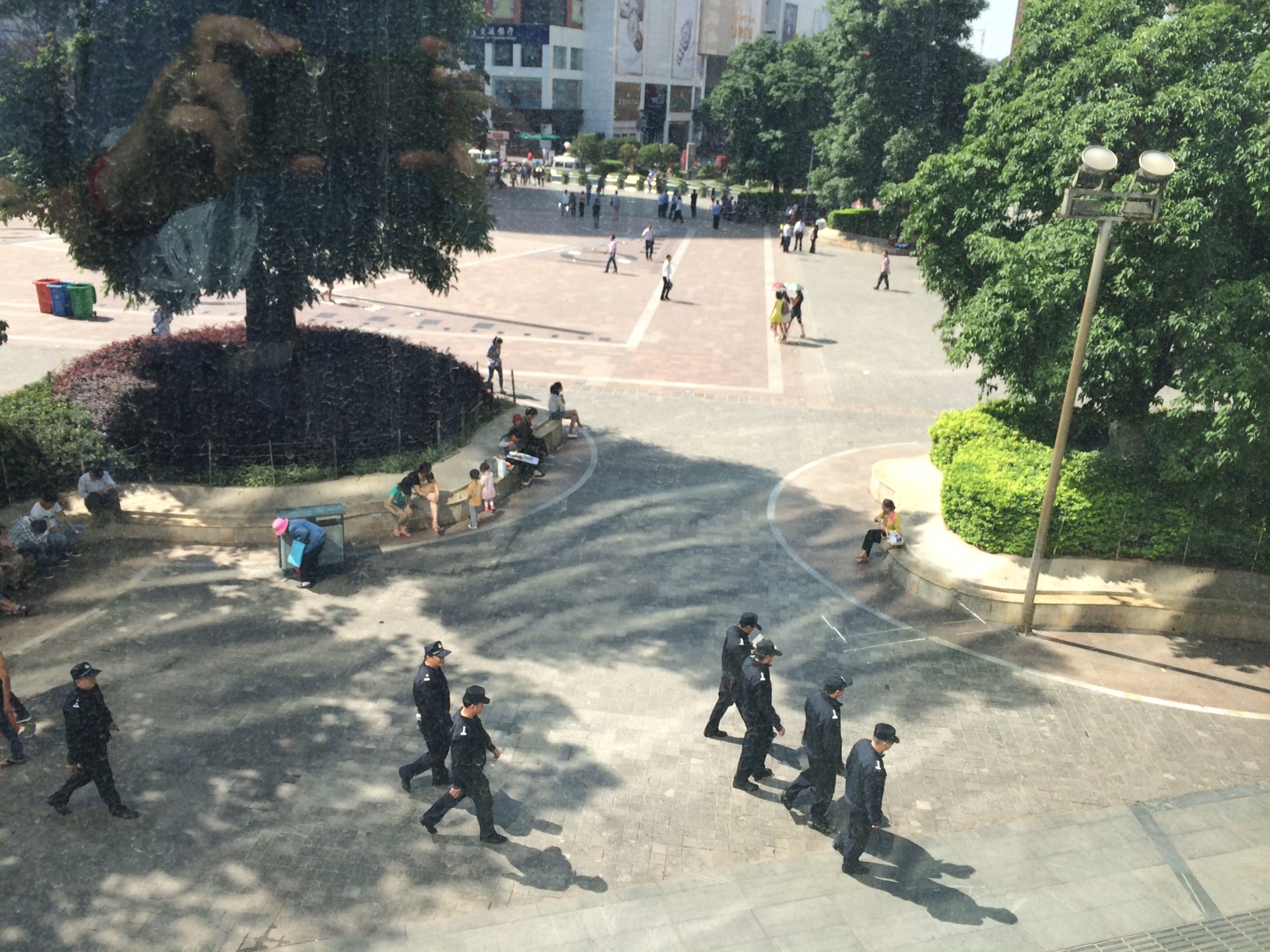
Kunming’s Nanping Jie Square, the site of Sunday’s non-protest.

The ringtone on my wife’s cell phone abruptly called us awake at 8:30am on Saturday. The caller ID displayed the name of one of my closest friends and colleagues in Kunming, yet I wondered why he was calling my wife. “Comrade, good morning,” rang out his thick Sichuanese accent.  This was a standard greeting among my circle of friends, but calling someone comrade in China has long gone out of fashion.

“There’s something I have to tell you.”

So it turns out he spent the previous day at his workplace, a local university, holding meetings with top administration and security brass discussing how to prevent the university’s students from attending a protest scheduled for Sunday, the next day. He told me that a group of Vietnam war veterans from China’s 1979 punitive invasion of Vietnam received approval from the local civil affairs bureau and the local public security bureau to march on the Vietnamese consulate in downtown Kunming.  The scheduled march was in reaction to the growing movement of anti-Chinese protests in Vietnam that left more than 20 Chinese, Taiwanese, and Vietnamese dead in the previous week.

The starting point was the city’s main pedestrian square at Nanping Street; the march would commence at 9am and finish at 2pm at the consulate.  His call was a warning for me to lay low – for all foreigners to lay low – because foreigners, especially Caucasian foreigners could serve as a potential target for angry, nationalistic protesters.  He was also calling to warn me to stay far away from the protest.  He knew I had a penchant for observing and writing about protests in Kunming, and my actions in the past had landed me and subsequently him only by guilt of association in a little trouble with local security officials.

To help place the gravity of the situation squarely on my shoulders, he told me of how he spent the previous evening having meetings with the students under his supervision, pleading them not to attend the protest – even though it was a legal protest – for fear that it may turn violent or take a turn toward other issues that were suppressed and mulling around in the hearts and on the minds of disgruntled people in Kunming.  In fact, his work group in cooperation with a successful commercial real estate form had arranged a 5 kilometer eco-walk scheduled for Sunday morning, but due to the protest he decided to cancel the event.  His university and the firm apparently poured a good deal of money into the event so he was quite put out by the cancellation.  “Right now, we will do what it takes to ensure stability at any cost.” I had heard those words too many times in the last 18 months living in Kunming.

His parting words before hanging up were also ones familiar to me: “Stay at home and have a good time with your wife.”

This season of South China Sea’s flare-ups and shenanigans is heating up once again.  To provide a quick rundown of the last 10 days: China parks it’s billion dollar oil rig 150 miles off the coast of Vietnam near Da Nang; rams a few curious Vietnamese ships, super soaks other onlookers with high pressure water hoses; foreign ministries respond with sabers rattling; protests broil in Vietnam; Chinese, Korean, and Taiwanese factories burn; people die unnecessarily due to this tricky, inane, orderless, yet extremely critical game of cartography, resource grabbing, and interpretation of the current world order.  And to round out the week, the first organized civil response in China comes from….Kunming?

In some ways Kunming makes sense.  The pathway of China’s 1979 spring invasion of Vietnam cut through southeastern Yunnan province into Vietnam’s Lao Cai province.  The three month war was a tough decision for the newly installed Deng Xiaoping.  He sought to punish Vietnam for its humanitarian invasion of Cambodia to take out the Khmer Rouge and install a new caretaker government, in some ways Deng thought this would help make good on his warming commitment to US-China relations.  Many of the troops sent to Vietnam were stationed in Yunnan, Kunming specifically.  Many did not return.  In total approximately 70,000 soldiers and civilians died in the three month conflict.

Both sides claimed pieces of victory.  In the end, China chalked up fewer casualties and proclaimed the incursion’s main purpose was to scare the Vietnamese before retreating.  The Vietnamese army valiantly as always pushed back most of the encroaching forces as the PLA entered the provinces to the north of Hanoi.  The caretaker government in Cambodia was not handed over to the Khmer people 1979.  Officially the caretaker government left in the early 1990s, and some argue that the pro-Vietnamese caretaker government is still in power.  To me a China’s claim to victory holds little water – just like its 9 dash line that lays claim to the near entirety of the South China Sea (which by the way holds a ton of water, fish, and most importantly energy resources.)

But then again there is little about Vietnam’s South China Seas claims that make much sense either.

From my experience interacting with locals, very few Kunmingers, and Chinese people in general, under the age of 50 know the story and context of the 1979 war.   I was not surprised to learn that a group of organized veterans still operated in Kunming given that veteran groups from WWII were still active in Yunnan and much is done in this city to preserve WWII related heritage. But how many were there and how many would show up for the march on Sunday? An organized effort that received government approval and raised the alarms of state related institutions like my friend’s university would likely bring out at least one hundred people. Would they be able to rally more than 1000 Kunmingers under the intense midday sun similar to the anti-PX protests (not government sanctioned) of nearly exactly one year ago?

Would the protesters flip and set cars alight?  Wait, Vietnam doesn’t produce cars.  Would they target people who appeared to be Vietnamese? Wait, I won’t finish that sentence.

On Saturday evening, a crowd of Kunming’s expats gathered for the soft opening of a New York style pizzeria.  The chatter was (sort of) abuzz with talk of the next day’s scheduled march and protest.  Over the previous two days word of the march had spread, for better or worse, among the community via the popular Chinese social media app WeChat, and now the gathering enabled the conversation to go from digital form to the soon-to-be-obsolete vocal communication style characterized by eye contact and hand gestures.

“Did you see how close China’s oil rig is to Vietnam’s shoreline?  It’s totally in Vietnam’s Exclusive Economic Zone.”

“What’s an Exclusive Economic Zone?”

“Yo, this South China Sea shit’s been going on for years.  All these countries play around with each other like they’re still in middle school.”

“That 9 dashed line just showed up in on China’s official maps in 1954.”

“Why Kunming?”

“Maybe the anti-PXers will show up to the protest again and then it could get really ugly.  Wait…maybe the Uighers will plan another attack?  And do you think things will be different now that Kunming’s police forces can carry armed weapons?  What’s happening to our city?  This used to be a really cool place to live!”

“Those Vietnamese love to play games, they learned how from the Soviets.”

“I’m totally going to wear my bright red “Made in Vietnam” shirt with the big yellow star tomorrow.”

“Maybe that’s not the best idea.”

“What’s an Exclusive Economic Zone? And dude, where’s my beer?”


Those who watch the Sino-Vietnamese relationship closely know that the situation is not getting any better despite the rosy accolades of year-on-year bilateral trade increases, strengthened cooperation on the (lately not-so-successful) repatriation of illegal Uighur immigrants from Vietnam back to China, and a new high-speed rail and road network connecting Vietnam to China.  Watching the relationship from Yunnan province only amplifies the growing crevasses.

Looking locally and outside of the South China Sea conflict, foreign direct investment between Yunnan and Vietnam is on the decline and according to the Vietnam Ministry of Industry and Trade office in Kunming, several key Yunnanese invested projects in Vietnam have been put on hold.  Last year Vietnam Airlines suddenly cancelled its daily flight from Kunming to Hanoi.  Two years ago you could readily buy Vietnamese Banh My sandwiches from food carts in downtown Kunming, and now none are to be found.  Enrollments of Vietnamese nationals into Kunming’s university level Chinese language programs are on the decline and are eclipsed by students from Thailand and Laos.  This spring, neighboring Guangxi province closed the border to watermelon imports from Vietnam which gouged prices at home in Vietnam and angered many farmers.

The list goes on, but I must mention that the yearly China-Vietnam Friendship Tennis Tournament which traditionally ushers in Kunming’s Southeast Asia Expo has been suspended for the last two years.  Both sides suspect each other of stacking the line-up with semi-pro players and accuse each other of foul play.

Waking on Sunday morning, the day of the march, I pondered the deterioration of this relationship. It was clear that more were losing than winning, but how many of Kunming’s everyday citizens are directly affected by the recent cooling and would the protesting veterans be able to gather enough onlookers into their fold in order to make an impactful statement?

I also pondered my friend’s advice on whether or not to go observe the march – but only for a few seconds.  With my smart phone charged to the max and ready to live-tweet the march as I had done for the past anti-PX protests in Kunming, I mounted my electric motorbike and made way to the protest zone, picking up a concerned friend along the way.  He promised to help navigate the security arrangements citing experience recently gained on a week-long trip to Pakistan.

I’ve learned in the past 18 months that the signals of a protest in China begin to appear well before arriving on site, and given this sanctioned protest site was staged for the same site as last year’s initial anti-PX protest, I had a well developed strategy to lay low and observe from afar lest I be spotted and photographed by the local security apparatus.  As we approached the downtown pedestrian square at 9:15 just after the march was scheduled to begin, we saw very little increased security presence.  From 100 meters away it was easy to see the center of the pedestrian square was cordoned off by local police forces to create a space the size of two football pitches.  Local police mingled in and out of the zone, and some middle-aged men sat in the shade of some trees on the periphery of the zone.

So far no sign of a protest presented itself.  No banners, no t-shirts, no slogans, no face masks, just a nearly empty square.  In fact, the most conspicuous aspect was the plain clothes policemen scattered around the square.  Always slightly overweight, deep tan, same crew-cut, off-color collared polo, and the signature man bag containing who knows what – the uniform of the Chinese plain clothes policeman is always easy to spot.  I also spotted a fellow blogger sitting in the shade inside the protest zone – his blond locks and European pedigree always stand above the crowd at Kunming’s protests in which he often finds himself smack in the middle of.

There still wasn’t any action, so my friend and I ducked into an adjacent shopping mall and rushed up to the a 2nd floor Starbucks to find a seat on a sofa beside a window overlooking the square.  Needless to say the position of our perch made us feel more like spectators at a sporting event than at China’s first anti-Vietnam protest of the 2014 season.  We were free to comment and tweet at will.  No security forces were going to bother us there.  My VPN was on line and the connection was kicking.

From our bird’s eye viewpoint, we observed a line of ten paddy wagons parked on the southern edge of the square. A small platoon of SWAT police in riot gear made rounds of the square.  Still no protesters.  A WeChat message popped up on my cell phone from the blond blogger sitting inside the zone.  “Situation normal, just loads of police presence, no sign of protesters….Another Kunming couldn’t care less story.”

And that was just it.  Kunming really couldn’t care less.  We estimate that fewer than ten veterans showed up.  Their t-shirts with Chinese flags gave them away.  At about 10:30am, the veterans formed a half-circle in the middle of the square and were escorted around half of the square by uniformed police. Their march lasted less than a minute.  A cameraman from the local television station sitting on a shaded bench missed the procession because his boredom turned to a brief chance to catch a nap.

At 10:45am, the cameraman picked up his bags and went home. Nothing to see here folks.  By 11am the temporary fences were removed, and the pedestrian square exposed to the intensity of the midday sun once again filled with local shoppers making their way through Kunming’s commercial downtown.

I was relieved that nothing happened.  Perhaps word came down from high for the veterans to cool their guns since the Vietnamese government was making good on its commitment to control the anti-Chinese movements and violence within its own borders.  The last thing our little city needs is to have its blue sky reputation tarnished by another incident making the international news and filling the Sinosphere and the South China Seas with flotsam and jetsam.

2 Comments

Filed under China, Current Events, Economic development, Energy, Foreign policy, GMS, Governance, Regional Relations, SLIDER, South China Seas, Uncategorized, Vietnam, water

Trafficking of Women on the Burma-China Border & International Responsibility

Camp for internally displaced persons at Mai Ja Yang, Kachin State on the the Chinese border.

Camp for internally displaced persons at Mai Ja Yang, Kachin State on the the Chinese border.

In recent weeks, warfare in Burma’s Kachin State has increased and is now making its way closer to the Burma-China border. While the international community has paid little attention to the Kachin conflict over the past few years, understanding its complexity is now more important than ever. Failing to do so could have dire implications on the lives of Kachin women, and on diplomatic relations in the region.

Kachin State is an ethnic area in northern Burma that has long suffered from conflict with the central Burmese government. In 2011, a seventeen-year cease-fire was broken, resulting in the onset of active warfare. In spite of ongoing attempts at peace negotiations, the Burmese government has been committing atrocities– including rape, arbitrary arrest and torture– against civilians. The region has been documented to be an active conflict zone resulting in one of the worst humanitarian crises in the world. According to reports issued by the Kachin Independence Organization (KIO)—the political arm of the Kachin people– over 100,000 internally displaced persons (IDPs) have fled to border areas of Burma and China to escape the fighting, and these communities suffer from a lack of basic necessities and little to no foreign aid. Additionally, as the Kachin Women’s Association of Thailand has documented, the trafficking of women into China’s neighboring Yunnan province as forced brides has become a growing problem.

Recently, I traveled to Mai Ja Yang, the second largest city in KIO-controlled territory to interview women and men living amid the conflict about the issue of trafficking. I conducted interviews with over 25 trafficking survivors, female soldiers, women’s organizations, lawmakers, cultural leaders, IDP relief workers and administrators from the KIO. I was hosted by the Kachin Women’s Association of Thailand, an organization actively working on the issue.

A child in the Mai Ja Yang camp.

A child in the Mai Ja Yang camp.

My research revealed that gender discrimination, demand from China for brides due to the one-child policy and crippling conditions on the ground due to the military conflict within Kachin State contribute to the problem of trafficking. As former “forced brides” and others reported, the escalation of the military conflict has resulted in a sharp increase in irregular migration. Simultaneously, trafficking has become less of a priority for the KIO government, whose attention is focused on war strategy and the political process, rather than the empowerment of Kachin women.

Now, the Burma army is stepping up its attacks in a move that could increase women’s vulnerability to trafficking. As a recent article in the Irrawaddy Magazine revealed, last week the army launched an attack on a KIO military outpost near Mai Ja Yang, which shares its eastern border with China’s Yunnan province. Mai Ja Yang is home to a growing number of IDPs—men, women and children who have had to flee their homes after their villages were raided. Now, not only are these people’s homes destroyed, but their temporary camps are in danger, as well.

With fighting approaching the border areas, women living in the camps could become even more vulnerable. These women face insecurity in the form of food shortage, lack of infrastructure and basic sanitation. They also face circumstances of gender-based violence and rape. Additionally, lack of a means of income generation influences women to migrate to China to find work—a situation that leaves them vulnerable to labor exploitation and trafficking.

But the international community has been slow to respond to the conflict. As a recent Stimson Report revealed, the precarious nature of the US- China relationship has given American leaders pause in “interfering” in such a sensitive geo-political arena. Additionally, aid workers report having had difficulty accessing the IDP camps due to the ongoing warfare in surrounding areas.

Despite these cautions, it is in the interest of the Chinese, Burmese and Kachin governments to quell an increase in trafficking. Doing so would not only improve the lives of thousands of women, but it could prove beneficial for each country’s relationship with the United States. This is because the US State Department has made trafficking a primary agenda in its international policy. In fact, the State Department’s Trafficking In Persons (TIP) Report ranks every country in the world according to how well they comply with the US mandate against human trafficking. As a result, in recent years trafficking has become a number one priority on the US government’s agenda.

The policies associated with the US government’s anti-trafficking mandate are n0t always beneficial for the women they’re intended to help. As I discuss here, the US State Department sometimes gets it wrong, and trafficking continues to escalate. In the case of Burma and China, however, the US’s mandate could actually serve a useful—even diplomatic– function. Due to the transnational nature of human trafficking, cooperation between governments in the region is essential for the development and implementation of a robust anti-trafficking policy. Collaboration between the Chinese government and KIO, for example, is needed to resolve trafficking cases and bolster prevention efforts on both sides of the border. As wary as the US government is of getting involved in these relationships, the trafficking issue could potentially be an inroad yielding productive results.

Thus far, however, the only people seriously trying to combat trafficking along the Burma-China border are a handful of brave and talented activists on the ground. Mai Ja Yang is home to a number of women’s organizations dedicated to increasing the political and civil rights of women in Kachin society. These women work at great personal risk, while the Third Brigade of the KIA works to maintain their security.

But these organizations can only accomplish so much without international support. Instead of turning a blind eye to the conflict, Western governments should help them develop a robust anti-trafficking policy for Kachin State. Additionally, the US government should put pressure on the Burmese and Chinese governments to de-escalate the conflict in KIO-controlled areas. Failing to do so could not only exacerbate the precarious nature of diplomatic ties in the region, but it could lead to an increase in victims of human trafficking– the very people the US government says it is trying to help.

1 Comment

Filed under China, Current Events, ethnic policy, Myanmar/Burma, Regional Relations, SLIDER, Uncategorized, USA, Yunnan Province

Regional Roundup for the Week of 4.4.14

News emerged this week of protests in Maoming, Guangdong over a proposed paraxylene chemical plant, echoing similar protests that took place in Kunming last spring. Reports of police violence towards protestors as well as images of the protest and unconfirmed rumors of fatalities spread quickly on Chinese social media before being censored.

Australian and Chinese search teams announced a possible underwater signal by the “black box” flight recorder from Malaysia Airlines 370. The search for the missing plane has increased in urgency as the recorder’s batteries have a lifespan of approximately thirty days. Any surface debris that could yield clues to the plane’s disappearance would likely have drifted far from an actual crash site, thus increasing the significance of the recent underwater “ping”.

Thailand’s Constitutional Court on Wednesday agreed to hear the anti-corruption case filed against Prime Minister Yingluck Shinawatra, allowing her two weeks to defend herself to the court on charges that she abused power in 2011 by transferring the head of national security. Shinawatra still enjoys broad support from poor and rural areas of Thailand, as shown by a demonstration of support on Saturday outside Bangkok that drew “tens of thousands” of people.

ExSE FOCUS

Protests against chemical plant flare up in southern China | Guardian — The protests began last Sunday in the city of Maoming, where officials plan to build a chemical plant to make paraxylene, a petrochemical used to make plastic bottles and fabrics, but which can be toxic if ingested. Protests against paraxylene plants are not uncommon in China, but this one is unusual because images of police brutality on Sunday incensed many who saw them online before they were deleted by censors.

China petrochemical plant may be halted after protests | Jennifer Duggan  | Guardian — Following protests that resulted in clashes between demonstrators and police, officials in a city in southern China have said plans for a controversial petrochemical plant will not go ahead if the majority of the city’s residents object.

Maoming Protests Continue in Southern China | Diplomat — The protests have also spread geographically, branching out to other cities in Guangdong. Following Tuesday’s protest in Guangzhou (the capital of Guangdong province), around 20 protestors gathered in Shenzhen on Thursday to protest the PX plant. South China Morning Post reported that the Shenzhen protestors were “taken away by police” after about 10 minutes.

MH370: possible black box ‘pings’ spur on search for missing airliner | Guardian — Australian and Chinese vessels have both picked up acoustic “pings” that could be from the black box of missing Malaysia Airlines flight MH370, search officials have announced.

Thais Rally in Support of Beleaguered Prime Minister | NYT — The government supporters said they were prepared to thwart any move to dismiss Prime Minister Yingluck Shinawatra, who faces mounting legal cases that could lead to her removal from office in coming weeks.

Thai Protesters Rally, Reviving Drive Against Leaders | NYT — After a lull, critics of Thailand’s prime minister marched in Bangkok, seeking to force her out.

Leader of China Aims at Military With Graft Case | NYT — China charged Lt. Gen. Gu Junshan with financial crimes and abuse of power in a case seen as part of an effort to tighten the party’s control over the military.

Philippines and China in Dispute Over Reef | NYT — China accused the Philippines of illegally occupying its territory after a Philippine vessel resupplied a ship that has been stranded on a tiny reef for 15 years.

Vietnam and Cambodia tell Laos to stop $3.5bn Mekong River dam project | Guardian — Vietnam urged Laos to halt construction of a $3.5bn (£2.2bn) hydropower dam on Mekong River pending further study, environmental activists said on Friday.

Growing up in rural Yunnan: Tony’s story | GoKunming — Meet Tony. Right now, he is an eighth grade student at Dachaoshan Middle School in one of the poorest areas in Yunnan. Despite his mother’s suicide, his father’s severe alcoholism, his poor household, his lack of fluent Mandarin and the smoky coal stove next to the bed he shares with his grandmother, Tony works hard every single day for a better future.

Yunnan governor reaches out to Bangladesh | GoKunming — The governor of Yunnan has been busily visiting nearby countries in an effort to increase international business conducted in the province. Most recently, Li Jiheng (李纪恒) traveled to Bangladesh to meet leaders there and urge them to use Yunnan as a gateway to Chinese commerce and investment while also pushing a long-proposed trade scheme.

CHINA

China seizes $US14.5bn assets linked to ex-spy chief Zhou Yongkang – report | Guardian — Chinese authorities have seized assets worth at least 90bn yuan ($US14.5bn) from family members and associates of retired domestic security chief Zhou Yongkang, who is at the centre of China’s biggest corruption scandal in more than six decades, two sources said.

China’s Former Leaders Tell Xi To Halt Anti-Corruption Campaign | Diplomat — Former Presidents Jiang Zemin and Hu Jintao are reportedly pushing for an end to Xi Jinping’s anti-graft campaign.

Chinese Regulator to Conduct Stress Tests | NYT — After an increase in bad loans last year, the China Banking Regulatory Commission notified banks of the tests, though it did not reveal details on how they would be conducted.

DealBook: A Muddy Tract Now, but by 2020, China’s Answer to Wall St. | NYT — A largely empty expanse in Shenzhen is the setting for a financial experiment that could have a huge impact on the world’s second-largest economy. But so far it is just a bold blueprint.

China Extends Tax Break Program to Spur Economy | NYT — China’s cabinet decided to continue the breaks for small and very small enterprises through 2016 and said it was considering significantly broadening them.

Junk Bond Default a Sign Of China’s Slowing Growth | NYT — A construction materials maker was unable to meet interest payments on bonds in the latest sign that slowing economic growth is hurting companies and investors.

China’s Air Pollution Reporting is Misleading | ChinaFile — China’s air pollution is being reported in a misleading way, blocking public understanding and enabling official inaction […] Based on the qualitative assessment scale in the Ambient Air Quality Index Technical Regulations,   “moderately polluted” cities can officially report up to 365 days of “excellent or good” air quality.

Chinese Billionaire’s Trial Scrutinized for Links to Ex-Official | NYT — Analysts say the trial of Liu Han is an outgrowth of efforts to investigate an even bigger target, who ran the domestic security apparatus for a decade.

Gay Activist Sues the Chinese Government for Defamation | Diplomat — Xiang Xiaohan filed suit after the Hunan government refused to register his LGBT organization.

REGION

Hunt for Jet’s Black Boxes Is a Race Against Time | NYT — Only days are left before the batteries on the flight data and cockpit voice recorders on the missing Malaysia Airlines jet are set to die.

Chinese Travel Agencies Write Off Malaysia | Diplomat — Two Chinese online ticketing websites, eLong and LY.com announced that they would “stop booking flights by Malaysia Airlines indefinitely starting from March 27 – till it reaches agreement with the families of passengers on board MH370.” Several other agencies have followed suit, according to Times of India.

More than 100,000 protesters rally in Taiwan against trade pact with China | Guardian — More than 100,000 protesters took to the streets of Taiwan’s capital on Sunday as a two-week-long campaign against a trade pact with China gathered steam, piling further pressure on the island’s leader.

Burmese-Thai Border Trade Increases Through Myawaddy | Irrawaddy — The volume of trade through the busiest crossing on Burma’s border with Thailand is rising, according to the Karen State chief Minister, who predicted an increasing flow of goods as cross-border links improve.

Affluent Wine Buyers in Asia Find Their Confidence | NYT — An adventurous and increasingly educated crowd is fueling a boom in fine wines in China and elsewhere in Asia, though prices have come down.

Beijing’s Arctic Play: Just the Tip of the Iceberg | Diplomat — China has clearly signaled that it has a strong interest in the Arctic region.

Asia’s Next BRICS? | Diplomat — As growth in the BRICS slows, many of the new economic stars are from the Asia-Pacific.

CAMBODIA

World Briefing: Cambodia: Illness Spreads at Factories | NYT — Scores of garment workers have fallen sick this week at factories in Cambodia, including two that produce clothing for the sportswear groups Puma and Adidas, workers and the companies said Thursday.

World Briefing: Cambodia: Protest Rally Thwarted | NYT — Police officers on Monday beat antigovernment protesters who defied a ban on public demonstrations to demand a license for what would be Cambodia’s first opposition television channel.

Holy activism | SEA Globe — “A bundle of sticks can’t be broken,” according to an old Cambodian proverb. It is a philosophy that underpins a network of media-savvy monks who defy the authorities by speaking out against social injustice.

INDONESIA

Indonesia’s elections: Democracy’s big bang | Economist — As organized human efforts go, it is a big one. Nearly 190m Indonesians out of a population of about 250m are eligible to go to the polls on April 9th to elect a new parliament.

The Fight to Save Indonesia’s Forests | Diplomat — Indigenous Dayak communities are in a battle to preserve ancestral forests.

World Briefing: Indonesia: Payment Spares Maid in Saudi Arabia | NYT — Indonesia has agreed to pay $1.8 million to prevent one of its citizens from being executed in Saudi Arabia, just days before she was to be beheaded for killing her employer.

MALAYSIA

Transcript From Lost Jet Is Released By Malaysia | NYT — The dialogue covers 54 minutes, from just before Malaysia Airlines Flight 370 left Kuala Lumpur to the last contact the pilots had with air traffic personnel.

Chinese tourist and hotel receptionist kidnapped in Malaysia | Guardian — Six men armed with pistols are said to have raided the Singamata Reef resort late on Wednesday before fleeing in a speedboat. A police report said the Chinese victim was a 28-year-old woman from Shanghai, while the receptionist was a 40-year-old woman from the Philippines.

MYANMAR/BURMA

Religious Tensions Cloud Myanmar Census | NYT — The nationwide count has been criticized because the government has denied members of a long-persecuted Muslim minority the right to identify themselves as Rohingya.

Burma census: Rohingya anger at snub video | Guardian — Burma’s first census in over 30 years has been overshadowed by disputes centring on ethnicity. The country’s minority Rohingya Muslims have expressed their grief at not being allowed to classify themselves as ‘Rohingya’ on census forms, while Buddhists in Rakhine state threatened to boycott the census if the term was permitted.

Total Breakdown in Myanmar’s Arakan State | CFR — Over the weekend, according to Radio Free Asia and other news reports, nearly all international aid groups operating in western Myanmar’s Arakan, or Rakhine, State, fled the state capital or hid in police stations and other (supposedly) secure locations. They had to flee or hide as mobs of angry Arakanese Buddhists attacked several aid workers, and threatened many other offices of international aid agencies.

Myanmar’s “E-Libraries” Bring Students Up to Speed After Military Rule | Diplomat — After years of isolation under strict military rule, students at the University of Yangon and University of Mandalay will now have uncensored access to a wide range of learning materials.

PHILIPPINES

Philippines stands by rejection of Beijing’s claims to South China Sea | Guardian — The Philippine president has defended his country’s arbitration case against China’s sweeping territorial claims over the oil-rich South China Sea. Benigno Aquino III said the intention was peacefully to protect his nation’s territory and sovereignty, rather than to provoke Beijing.

THAILAND

In Thailand, Some Foresee a Coup by Legal Means | NYT — Several judges and officials involved in cases against Prime Minister Yingluck Shinawatra’s government have had antagonistic relationships with her party.

Second world war bomb kills seven in Bangkok | Guardian — Workers at a scrapyard in Thailand’s capital accidentally detonated a large bomb believed to have been dropped during the second world war, killing at least seven people and injuring 19 others, police said.

Thailand’s Deadly Highways | Diplomat — Nearly 50 people die each day in road accidents during Thailand’s two most popular festivals.

VIETNAM

Competition Intensifies in Vietnam’s Aviation Sector | NYT — The private VietJet Air is making a strong push just as Vietnam Airlines, the state flag carrier, plans a long-awaited initial public offering.

Leave a Comment

Filed under NEWS DIGEST, Uncategorized