Tag Archives: Yunnan

Yunnan to Spend 70 Billion on Infrastructure Development

8420

Yunnan lawmakers were busy over the past seven days, earmarking billions of yuan for building projects across the province. The vast majority of the money will be used to fund the ongoing construction of 26 major highways. Other money has been set aside for waterway maintenance and “disaster mitigation” projects.

The Provincial Highway Bureau expects to initiate or continue work on 1,500 kilometers of highways in the next two years, it announced in a July 14 press release. In total, the new roadways will cost 100 billion yuan (US$16.1 billion), spaced out in annual 50 billion increments over the next two years.

Stretches of road scheduled for completion this year include highways connecting Lijiang toShangri-LaRuili to Longling and Huaping to Lijiang — which is a segment of the road linking Lijiang to Chengdu.

Obtaining loans for massive infrastructure ventures has become increasingly difficult as China’s once-humming economy continues to slow. Statistics published by news outlet Kunming Information Hub show that in 2011, the province experienced a two billion yuan shortfallbetween toll road revenue and what it owed in loans for highway construction.

To avoid a repeat of that deficit, provincial planners voted to implement tolls on many of the new roads, effectually passing the bill on to automobile owners. People traveling by bus will also pay a share of the costs. Currently, a 0.5 yuan surcharge is attached to the price of every long-distance bus ticket purchased in Yunnan. That fee will now be raised to 0.9 yuan to help fund highway expansion. Long-distance transport trucks will also face higher fees based on load tonnage and distance traveled.

An additional twenty billion was pledged for waterway upgrades. Details have not been fully disclosed, but some monetary allocations will fund canals connecting rivers to reservoirs as well as maintenance on dams and hydropower stations across the province.

Although highways and water infrastructure projects comprise the lion’s share of the recently allocated money, two billion yuan (US$322 million) was also designated for the prevention of ecological disasters. Surveyors have identified thousands of “hazard points” in Yunnan — places where roadside cliffs are prone to rockslides or where villages are threatened by mudslides due to deforestation. Over the past fifteen years, Yunnan has suffered a reported 17,258 geological disasters. These claimed the lives of 1,394 people and led to more than seven billion yuan in economic losses.

This article written by Patrick Scally was first published here on 7/15 on GoKunming.

Leave a Comment

Filed under China, Economic development, Environment and sustainability, Governance, SLIDER, Yunnan Province

The Coming Downturn of China-Vietnam Trade Relations

IMG_1040small

I recently had a conversation with a high ranking officer in Vietnam’s Ministry of Industry and Trade whose work responsibilities include promoting and facilitating border trade and investment between Vietnam and China.  We have been meeting for years and despite past flareups in the South China Seas and the occasional anti-China rally in Hanoi, he has always expressed optimism toward the future of the China-Vietnam relationship. He has believed that cooler heads will always prevail at the upper levels of government and that the increasing flows in border trade and investment overland between China and Vietnam do much to alleviate the tensions brewing on the seas.  But in my recent meeting, the officer expressed a 180 degree interpretation of the future of trade relations between China and Vietnam.  He fears that as a result of China’s aggressive movements in the South China Sea, the two countries will soon adopt isolationist and protective trade policies toward each other, and the goodwill provided by decades of border trade and shared investment projects will soon become undone. Continue reading

2 Comments

Filed under China, Current Events, Economic development, Energy, Regional Relations, SLIDER, South China Seas, USA, Vietnam

Airport International Connectivity Ranking: China vs. US

Intraprovincial routes in Yunnan [click map to enlarge]

Intraprovincial routes in Yunnan [click map to enlarge]

In this era of time-space compression, people, goods, and ideas move about Earth faster and in greater numbers than ever before. Human civilization has always revolved around nodes and flows, as ancient trading centers and trade routes demonstrate. What makes the era we’re in now unique is the degree to which transportation and communications infrastructure have accelerated these flows, erasing the physical distance between the nodes. But much in our interconnected world, for instance most commodity chains, remains out of sight under the surface. Only when a factory collapse in Bangladesh splashes the headlines are we reminded of the long and convoluted paths that stuff takes on its way from raw materials to the shelves at Wal-Mart. Continue reading

8 Comments

Filed under Economic development, SLIDER, Technology, Yunnan Province

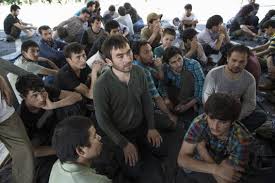
Terrorists or Refugees?: Case of ‘Uighur’ Migrants Unsolved in Thailand

Detained Uighurs in Thailand. Photo: Reuters

Detained Uighurs in Thailand. Photo: Reuters

In the past two weeks, close to 300 suspected Uighur migrants were discovered in the jungles of southern Thailand. Since their discovery and apprehension by Thai authorities, accusations of terrorism and rebuttals to these claims have flown.

Quoting an unnamed source attached with Thai police, the Bangkok Post published an article claiming that the migrants were indeed Uighurs. They intended to use Thailand as a transit point to go to Turkey, where they would be trained in terror tactics that could be used in their native China and elsewhere.

Recently, two groups of migrants have been found in the south of Thailand. The first, discovered March 12 at a rubber plantation near Songkhla, was a group of 219 people, containing dozens of women and children. Another group of 77 were arrested near a school in Sadao district on the 20th of March.

The same source alleged that the migrants were identified as Chinese Uighurs and not Turks, as they have claimed, by bus tickets and items that had Chinese writing on them. “Immigration police are not stupid,” the police source added.

Turkey has sent diplomats to southern Thailand to verify the migrants’ claims of Turkish nationality. The migrants were able to speak with diplomats when interviewed, however when met by an interpreter from the Thai Immigration Bureau they could not communicate well. “The interpreter believed they could not speak Turkish,” the source said.

A named source, Thai Immigration Bureau chief Lt. General Panu Kerdlarppol, refused to give any specific details regarding the migrants’ nationality or ethnicity. However, historically and geographically, it would make more sense that they were Uighur. Thai authorities have been aware of a Uighur migrant presence in the country since last year.

In December 2013, 112 refugees were arrested in the country’s south and are now being held at a detention center. Thirty of the migrants have so far been positively identified as Uighurs. Following the arrests, Lt. General Panu met with Chinese authorities in Kunming about the issue.

There are some, however, that dispute claims of the migrants’ nefarious motives. Speaking through the Phuket Wan Tourism News, the New York-based Human Rights Watch dismissed the accusations.

‘The groups in question are composed of significant numbers of small children, and more than a few pregnant women,” Phil Robertson, Deputy Director, Asia Division, Human Rights Watch, said today, ”so one wonders how unnamed police sources have suddenly somehow jumped to a conclusion that these people are ‘terrorists.”

Mr. Robertson links these claims of terrorism to Thailand’s treatment of asylum seekers in the past. Starting in 2009, hundreds of Muslim Rohingya refugees from Myanmar began regularly washing ashore on Thailand’s western coast. These refugees, fleeing ethnic violence in their home, were also labelled as terrorists. Oftentimes, they were pushed back out to sea by units of the Thai navy.

”It seems pretty clear that Thai officials have some ulterior motives in trying to tar this entire group with the ‘terrorist’ label,” Mr Robertson said.

He believes the end game is to deport the migrants to China, ”I suspect that such ‘terrorist’ accusations are a prelude to some Thai government officials trying to force these groups back to China in what would be a clear violation of international law,” Mr Robertson surmised.

Migrants claiming Turkish nationality were also arrested in Malaysia this month, though no further word on their situation has been released.


1 Comment

Filed under China, Current Events, ethnic policy, Kunming Train Station Attack, Regional Relations, SLIDER, Thailand

Kaiser Kuo: On Radicalization and Chinese Policy

I get that some people trying to make sense of the attacks in Kunming want to take the opportunity to discuss how Chinese policy contributed to radicalization. And while I’ve noted elsewhere how it bothers me profoundly that many Anglophone commentators offer a merely perfunctory nod to the monstrousness of the knife attacks that claimed 29 innocent lives and sent 160 or more people to the hospital with stab and slash wounds before moving on to the “real” issue of Chinese repression of Uyghur rights, I do believe the desire on the part of some people to use the Kunming massacre to talk about underlying issues is well-intentioned and appropriate.

What troubles me, though, is that too often in that ensuing discussion, this attack as well as all the recent attacks—whether or not they cross our (still somewhat blurred) definitional line into terror—are seen simply as responses to Chinese repression. Is there repression and bad policy? Yes, absolutely. Has it contributed to radicalization? Sure.

But is it the only factor that has contributed to radicalization?

Of course not. The weird part is that while it should be stunningly obvious that the whole context, the whole relationship between Islam and the secular, industrialized world, the whole discourse on the way Islamic peoples are situated in the modern world—all this has dramatically changed, but this barely enters conversation. There are myriad alternative responses, loci of identity, causes, leaders, and movements on offer now that just weren’t there pre-September 11. The Internet barely existed in the oasis cities of the Tarim before 2001.

But people are for the most part writing and talking about the situation as though it’s happening in complete isolation, as though the rise of radical Islam in the rest of the world since the 1980s doesn’t figure in. It somehow doesn’t merit a paragraph or two alongside the context paragraphs that most of the Anglophone outlets see fit to include about repressive policies in restive Xinjiang. People can’t see beyond the simple narrative of Chinese repression.

Any serious effort to look at what’s happened and where things might go from here has to look at Chinese policy, and I’m sure that there’s plenty of blame to be laid there. But it should also factor in—and this is a far from comprehensive list—the rise of Wahhabism and other fundamentalist sects much further to the west; the Mujahedin in the aftermath of the Soviet withdrawal; Bin Laden and AQ; their bloody work; the whole idiotic enterprise of the GWoT; networks like the Islamic Movement of Uzbekistan; the Afghan training camps (where let’s not forget there were many Uyghurs); the wars in Afghanistan and Iraq; and the Arab Spring in more recent years. It has to look critically at the WUC and the pared-down, simplistic narrative it’s managed to sell, and on and on.

It’s depressing that instead people are quibbling over how well organized ETIM is, with some even denying that any organizations like it exist at all. Or they quibble over whether scare-quotes should be used with the word terrorism. (Yes, I’ve been quibbling over that, but I think it’s important: Like many people, I find that the word’s been badly abused, mostly at the hands of the Bush 43 Administration, and is deeply problematic, but dropping our use of it now, or deploying it only with the scare-quotes, is too loaded a statement and sends very wrong messages).

But to my main point: Yes, let’s talk about the underlying problems. But let’s not for a second believe that if only the Chinese would be nicer all the nasty, violent radicalism would just disappear.

This post was originally published on Kaiser Kuo’s Facebook page on 3/3/14. It received so much attention that we reached out to Kaiser for a repost on ExSE.  This is posted with the permission of the author. Comments and discussion welcome.  

7 Comments

Filed under Current Events, ethnic policy, Governance, Kunming Train Station Attack, Regional Relations, SLIDER, Uncategorized

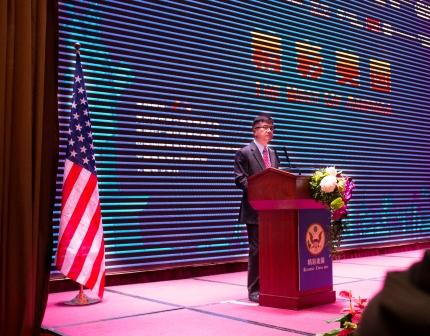
Gary Locke, US Ambassador to China visits Kunming one day after announcing resignation

photo 1

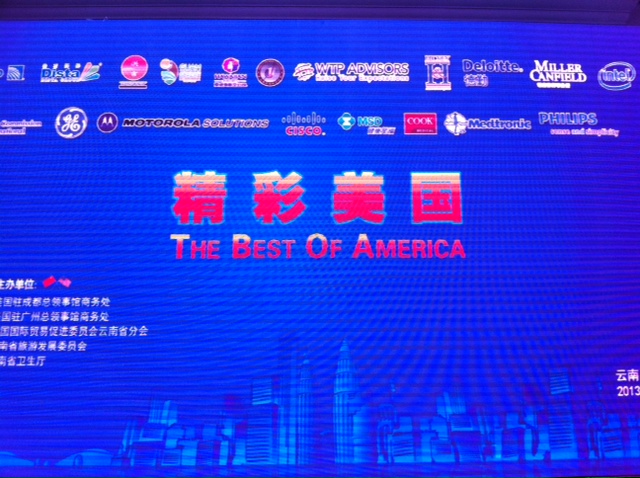
US Ambassador to China Gary Locke paid his third visit to Yunnan province on Thursday, November 21, one day after the announcement of his unexpected resignation.  His visit was part of an investment promotion roadshow entitled “The Best of America” traveling around China’s southwestern provinces and organized by the US consulates in Chengdu and Guangzhou.  The event was hosted by provincial vice-governor Gao Feng and attended by Yunnanese business interests and officials from the provincial international trade promotion department, tourism department and public health departments.   Core economic strengths of the US were represented by CEOs and officers of Deliotte, GE, Motorola, CISCO systems, Intel, and Miller Canfield Law firm in addition to other firms.  United Airlines was also in attendance and eager to promote its new direct flight from Chengdu-San Francisco opening early 2014.

Opening remarks were given by both Ambassador Locke and Vice Governor Gao. Both speeches highlighted the United States’ and Yunnan’s shared history of cooperation through the Flying Tigers, as well as the need for present day economic cooperation. In his remarks, Ambassador Locke boasted of the increase of China-to-US FDI under his tenure. In the past 21 months, investments from China totaled USD 18 billion, more than the past 10 years combined, an accomplishment Locke can only take partial credit for, as larger macroeconomic trends in the US and China were also important factors. Locke was also able to highlight the increase of Chinese students in the US in recent years. According to the ambassador, the number of Chinese students in the US reached 280,000 in 2012. In addition, Ambassador Locke was also able to point to decrease in wait time for US visas and a new, expanded visa office at the Chengdu consulate as notable achievements under his tenure.  Aside from pushing investment in America, Locke also promoted core American values like legal transparency, free trade and intellectual property rights, issues that have been divisive for the two countries in past years.

Photo courtesy of Allie Horick

Photo courtesy of Allie Horick

Speaking directly after Ambassador Locke, Yunnan’s Vice Governor Gao Feng also promoted bilateral trade and cooperation. In his remarks, Vice Governor Gao emphasized Yunnan’s role as China’s gateway to South Asia and Southeast Asia and its fast pace of the its economic growth. Gao pointed to the recent China-South Asia Expo as a marker of Yunnan’s rise in national and regional importance. The US delegation noted that Locke’s visit to Yunnan went very smoothly and all requests for visits to companies and government ministries were granted, including a visit to Yunnan University, where the Ambassador met with students and professors. This is in contrast to the difficulty encountered when US delegations request access in other provinces and autonomous regions in southwest China, particularly Tibet.

The roadshow was planned with the specific purpose of promoting Chinese FDI to the US, the export of medical technology to Yunnan’s developing healthcare sector, and tourism to the US.  After the Green Lake Hotel event, the delegation met mostly with potential investors from the agriculture and mining sectors reflective of these two sectors as two core pillars of Yunnan’s economy – tourism.  Locke also encouraged US investment in Yunnan tourism management systems – something sorely needed in Yunnan, and China at large, as localities struggle to protect cultural capital bases and natural endowments from the damaging onslaught of mass Chinese tourism.

photo 2

The inability of Yunnan’s medical infrastructure to keep up with the demand for medical services was apparent when the delegation was shown MRI scanner purchased from the US that had been use for 10 years at the Kunming Number One Hospital.  The machine was being used 70-80 times per day non-stop for seven days per week.  Cumulative cost of parts and supplies maintenance, all imported from the US, had greatly exceeded the original cost of the machine.

Lastly, Chinese tourism to the US was high on the list of promotion for the delegation.  In 2012, tourism to the US was the US’s top service sector export with Chinese tourists leading the way in number of tourists visiting the US in a by country breakdown.  In international trade accounting, foreign tourist visits are counted as an export due to the positive accumulation of foreign income.

Locke’s visit is recognition of the fruits of the China’s Western development program – namely economic progress to the degree that US investors are now drawn to the fast growth rates coming out of China’s southwestern provinces.  And as a result of that economic progress, Yunnanese investors have reached levels of wealth garnering capabilities to invest in the US, half a globe away.  His visit is also reinforcement of Yunnan’s strategic location as a gateway for regional investment to Southeast Asia and South Asia – a key point mentioned by both the US delegation and the provincial hosts.

Later in the day, Locke’s diplomatic rock star status was confirmed by an exuberant crowd of students at Yunnan University proud of their shared heritage with the US ambassador.  Locke returned that exuberance with hugs.   With Locke stepping down it may be a while until another US ambassador to China receives the kind of welcome received in Thursday in Yunnan.

Consensus among some of the ExSE members is that Locke may be stepping down in preparation for a high appointment related to the 2016 presidential election.  He is an extremely successful career politician with experience managing Americans’ most important bilateral relationship, domestic economic and international trade relations as US Commerce Secretary, and a successful run as governor of Washington State.  This portfolio positions Locke as a strong candidate for VP or Secretary of State under a future Democratic presidency.  Gary Locke will step down as US Ambassador to China early 2014 after taking up the post in August, 2011.


Leave a Comment

Filed under China, Current Events, Economic development, Regional Relations, SLIDER, Uncategorized, USA, Yunnan Province

Rubber and Sustainability in Southern Yunnan: A Tale of Two Villages

Will Feinberg compares Xishuangbanna’s rubber and sustainabilty in two of southern Yunnan’s ethnic villages. One monocrops while the other hedges.

Driving past new stores and half-built housing developments, you take a right into the forest. Keep going. The farther you drive, the worse the road gets until you burst through another patch of palms trees and cross a stream. Where are you? You’re in Mandian Village, just outside Jinghong, Yunnan and  right in the heart of Chinese rubber country.

Introduced to the area in the 1960s by the central government, rubber is big business in southern Yunnan. Large state plantations have steadily given way to private enterprises and the region has seen a proliferation of rubber planting in the past twenty years. Today in Xishuangbanna Dai Autonomous Region, which Jinghong is the seat of, rubber plantations already make up almost one fifth of all land.

While the environmental costs have been heavy, the rubber explosion has done wonders for Xishuangbanna’s economy. For rubber farmers in Mengla Country, for instance, the average household income is close to $30,000/year, comparable to places like Shanghai or Guangzhou. The economic benefits of rubber harvesting were quite clear to me while traveling through the region late last month. During the trip, I visited two villages that I had been to in 2011. In both cases, rubber has transformed the local economy, however one village was clearly better off than the other. Why?

The first village I visited was the aforementioned Mandian Village. Mandian is largely inhabited by people of the Dai ethnicity, with a 20-family group of Yi people living in an adjacent settlement. Mandian, like many other villages in the area, practices rubber cultivation and relies on rubber as its main source of income. According to villagers there, the Dai started harvesting rubber over a decade ago, while the Yi settlement began their rubber industry only within the last few years. For the village economy as a whole, rubber has had a positive influence. Per capita incomes have risen as well as household consumption and the money from rubber has allowed the town to build a new school.

However, as rubber is Mandian’s only cash crop, the village’s fortunes are now beholden to the world rubber market. Nothing illustrates this better than what happened to the village in 2012. Last year, the bottom fell out on the rubber market and the price of raw rubber dropped by half, going from 30 yuan per pound (1 US dollar is roughly equal to 6 Chinese yuan ) to 15 yuan per pound. Two villagers that I interviewed described the effects. One, a middle-aged Dai woman told of how most of the villagers who harvest rubber had to work overtime to scratch out living and the quality of life dropped for many families. Though because the Dai also plant rice, no one in the village went hungry. A young Yi woman that I spoke to also described how the economic hardships as a result of the rubber crash delayed the building of their house. The Yi, who were recently resettled as a result of the building of the Jinghong Dam, were forced to return to their old fields as a way of producing food during 2012 crash and without these fields, many villagers might have gone hungry. The fall of the rubber price in 2012 was not isolated just to Mandian village. The drop was felt in villages like Mandian all over southern Yunnan and in other rubber producing areas like Malaysia and Brazil. But there was at least one village that was comparatively isolated from the crash’s effects.

Nanpanzhong Village sits on the slope of a ridge just an hour’s drive from the Burmese border. A collection of some 120 families, Nanpanzhong is an Aini village. The Aini are a branch of the Hani/Akha minority, a nomadic, transboundary ethnicity that typically practice subsistence agriculture in the mountains of Southeast Asia. What makes the Aini of Nanpanzhong special, aside from their incredible hospitality, is their economy. Like the Dai and Yi of Mandian, the Aini also harvest rubber, but the role that rubber plays in the village’s economy is quite different. In an interview with the village mayor, I learned that money from rubber harvesting makes up only 30% of the town’s income. Instead, their primary source of income, by a long shot, is pigs. The town raises hundreds of short-eared swine which command quite a high price in China’s metropolises. According to the mayor, his pigs’ pork sells for 130 yuan/pound, many times higher than the price of normal pork. In fact, most of the village’s pork can only be found in places like Beijing, Chongqing and Shanghai; people in Jinghong can’t even afford it.

Pork sales now net the village almost sixty percent of its total income, but Nanpanzhong’s foray into the meat industry is a rather recent affair: villagers only began raising pigs in 2003. Its impact, however, has been astounding. According to the mayor, the average household income was hovering around 500 yuan per year at the turn of the millennium. Thirteen years later, that number as skyrocketed to almost 8,000 yuan and now, the mayor claims, Nanpanzhongcun is the envy of the surrounding valleys.

 When the rubber price plummeted last year, Nanpanzhong was largely unaffected. Of course, the mayor explains, villagers feel the effects when the rubber price fluctuates, but certainly less so than other places. The village is largely self-sustaining for food and the money earned from rubber, livestock and tea (which makes up a tenth of the village’s income) is used for electronics, vehicles and building materials. Both the mayor and villagers that I spoke with were convinced of the Nanpanzhong model’s superiority.

The evidence is hard to disagree with. Not considering the environmental concerns, of which there are many, rubber can be an unsustainable enterprise. Mandian, and hundreds of villages like it, have had a mixed experience with rubber. While it brought the village a new school and the villagers a higher standard of living, Mandian’s reliance on rubber and the fluctuations of the global market brought hardships to the village last year, forcing some villagers to leave in search of food. On the other hand is Nanpanzhong’s model. Rubber, while an important source of income for villagers, is part of a healthy balance. With families growing their own food and relying on two cash crops (rubber and tea) and livestock for their income, the villagers of Nanpanzhong are largely insulated from greater trends in the rubber market. The village’s exact model may not be able to be replicated in every village in Yunnan, but its general ideas can. Pairing rubber with a second cash crop and agricultural self-reliance are concepts that could give protection to villages like Mandian and offer a more economically sustainable path for thousands of people in the region.


Leave a Comment

Filed under Economic development, Food, SLIDER, Sustainability and Resource Management, Yunnan Province

Earthquake hits Northwestern Yunnan: Update & Implications

In what is becoming a more and more frequent occurrence, an earthquake hit southwestern China’s Yunnan Province yesterday (Saturday, August 31). The earthquake, measured at a 5.9 on the Richter scale, struck near the town of Benzilan, located in Yunnan’s Deqin Tibetan Autonomous Region. Continue reading

Leave a Comment

Filed under China, Current Events, water, Yunnan Province

Myanmar-China Natural Gas Pipeline Complete, But Complications Remain

Last Monday, Chinese press outlets announced the long-awaited opening of the Myanmar-China Natural Gas Pipeline. The project, which has been in construction for almost four years, is part of a larger plan to import both natural gas and oil from the Bay of Bengal, through Myanmar and into China. The twin natural gas and oil pipelines are a project of great national importance as it is expected that the output from these pipelines will ease China’s growing energy needs. It is little wonder then that the opening of the natural gas pipeline was met with such fanfare.

On the day of its opening, July 29, the announcement was the top story on China Central Television’s evening news and stories ran in national and local newspapers celebrating the pipeline’s completion. The opening ceremony itself was supposedly an affair of great jubilation as well. Xinhua News reported, “”When torches flamed in the sky of Namkham Measuring Station of the Myanmar-China Gas Pipeline, a storm of applause and cheers broke out…”

Celebratory voices were not the only ones to be heard in the days surrounding the pipeline’s completion. This editorial in the English version of the People’s Daily argued that “Irresponsible remarks on the Myanmar-China oil and gas Pipeline should stop as the scientifically feasible project has benefited multiple parties.” According to the editorial, Western criticism of the pipeline stems from a “shady mentality”. These critics are “unwilling to see an intimate relationship between Myanmar and China” and are uncomfortable with the thought of China being energy secure. Continue reading

Leave a Comment

Filed under China, Current Events, Energy, Health, Myanmar/Burma, Regional Relations

Why Can’t We Protect China’s Cleanest Freshwater Lake?

4109718

Fuxian Lake, located in Yunnan Province’s Yuxi municipality sixty kilometers southeast of Kunming, sits at the headwaters of the Pearl River, China’s third longest river. It is the largest alpine freshwater lake in China, and its water storage capacity accounts for nearly 10% of all freshwater lakes in China.  Fuxian is twelve times larger than the water volume of its western neighbor, Kunming’s Dianchi Lake. Most importantly, the lake’s water quality is rated at Class I meaning it is directly drinkable.

In order to protect Fuxian Lake’s water quality and local ecosystem, the Yunnan Provincial Government issued a set of “Protection Regulations on Fuxian Lake of Yunnan Province” on September 1, 2007. It declares the entire lake, its watershed, and adjacent lakeside area extending 100m range from the shore are within the first protection zone, a red line under strict protection and monitoring. In accordance with the local regulations, washing clothes and bathing in the lake are strictly prohibited. Even motor-driven boats have been replaced with manpower-driven pedal ones. Furthermore, conditions on the use of cultivated land, shoals and vegetation around the lake are also defined by the regulations.

Also, clearly banned are “the unauthorized expansion or alteration or creation of new buildings or structures; unauthorized pumping of water from the lake or violation of water permit provisions for pumping water; other destructive practices to the ecological system and pollution behavior.”

Since 2005, August 26th of every year has been designated by Yuxi City as the Fuxian Lake Protection Action Day. All of these measures seem to favor the lake’s protection and its aquatic ecosystem. But in practice, is it really true?

A June 7 China Central Television (CCTV) report disclosed the unregulated construction of eleven real estate projects around the lake that threaten to destroy its aquatic ecosystem and degrade its water quality.  The numerous luxury lake-view villas, five stars hotels such as Hilton Hotel, and golf courses were built or under construction within Fuxian Lake protection area. For sales promotion, these ‘Big Mac’ projects were crowned as resorts, sports parks, among other flashy names.

For example, Longhu Lake Park project is located in Mackerel Bay with an area of 147 hm2 size and an investment footprint of USD 730 million. A realtor for the project boasted that its size is as big as one-fifth of Kunming metropolitan area. To my surprise, this project even passed its environmental impact assessment. The EIA report said “impact of the project construction on the environment is slight and controllable. The project meets the regulations and the environmental management standards of construction project of the national construction projects in listed in Yunnan Province’s environmental regulations. The project location is feasible.”

A further embarrassing fact is that some projects broke ground before their EIAs were processed. The Kowloon Bay, Kowloon Sheng Jing Project is located in the upper reaches of lake’s western banks.  In its promotional materials, the developer dared to say “the project site offers the nearest resort-style apartments to Fuxian Lake so far. It is only 50m away from the shoreline.” Most of these European style villas come with a lake view. The project includes luxury hotels, lake view hotel apartments and villas.

In September 2009, Yuxi Municipal Party Committee and Government issued “A Decision for Accelerating Tourism and Cultural Industries Development.” Citing “from 2010 onwards, the municipal government will invest 30 million RMB to promote tourism development…. Each subordinate district and county should set up special budget for tourism development.” The cited purpose of the decision is to “encourage the introduction of high-star hotel projects” and “local governments will be awarded with 10 million RMB for the successful introduction of well-known international brand five-star hotel projects exceeding investment levels 300 million RMB after the project’s completion.”

In this decision, the projects mentioned above were highlighted one by one. The Yuxi municipal government vowed to “create conditions to facilitate the projects’ construction as soon as possible”.

Around Fuxian Lake, many developers promote new commercial buildings and hotels connecting project names to the beauty and quality of the lake. For instance, “Holy Water Lake Phase II” advocated that they built a “wetland park” in Fuxian Lake, exclusively open to the residence owners and the hotel guests.

Locals from surrounding villages told a CCTV reporter that the residential developments were discharging excessive levels of black, smelly sewage directly into the lake! The local villagers angrily said that protecting the Fuxian Lake was merely spoken of on the lips of leaders and the regulations were useless.

The CCTV report further pointed out that although the country already banned golf course construction in national level water resource protection zones, golf courses were being constructed around the lake. It also mentioned that most real estate projects were initiated via oral permission from the local governmental leaders without environmental impact assessment.

Naturally one cannot help asking the following questions regarding the protection of Fuxian Lake:

  • Which is really more powerful and effective, the political agendas of leaders OR the rule of law when a collision between environmental conservation and economic development occurs?
  • Why do we often repeat these inane practices, namely sacrificing environmental quality for economic development? Do these mistakes really pay off?
  • Why do not we try best to maintain our blue skies, clean water and a hygienic environment for ourselves and also for our next generations? Do we fear our next generations will rebuke us if we are too selfish?
  • Is it fair to dirty the environment dirty leave the bill for our next generations?
  • Despite the CCTV report which by the nature of its broadcast, passed muster of national censors and by the eyes of national leaders, why do local environmental protection agencies continue to maintain silence about the Fuxian Lake case?

After the CCTV report, Yuxi government issued a moratorium on the processing of new real estate development projects around Fuxian lake.

1 Comment

Filed under China, Environment and sustainability, Sustainability and Resource Management, water