
Comment on U.S. Economic Engagement in Southeast Asia: This week U.S. Secretary of State Mike Pompeo announced that the United States will provide $113 million for investment in infrastructure projects in the Indo-Pacific region. This pales in comparison to China’s $1 trillion One Belt One Road Initiative (BRI). However, it can be the first step in establishing an alternative to BRI. Countries within the region such as Myanmar and Malaysia have demonstrated that they are uneasy of becoming indebted to China and many countries in the region hope to have economic engagement from both China and the United States. Therefore, an opportunity exists for the U.S. to more actively engage in the region. ~KR.
EXSE FOCUS
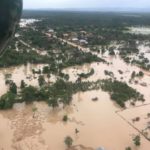
Extent of Flooding and Water Level Rise from Dam Break in Southern Laos –MRC On 23 July 2018, Saddle dam D, one of the five auxiliary dams of the Xe-Pian Xe-Nam Noy Hydropower project in Attapue Province of Lao PDR, failed and unleased flooding of several villages along the Xe-Pian river (5 km from the dam), a tributary of the Se Kong River, which flows into the Mekong mainstream. The distance from the dam to the confluence of the Se Kong and Mekong is about 283 km. Located right below the confluence is Stung Treng in Cambodia with Kratie about 124 km further down.
China and Laos’ Dam Disaster –The Diplomat Last week, a dam collapse in Laos’ Attapeu province caused a devastating flood. While the death count is still uncertain – in part because the Lao government is keeping information under tight wraps – reports indicate that hundreds are missing. On the surface, the incident had nothing to do with China, Laos’ neighbor to the north. Chinese companies were not involved in the project in question, the Xepian Xe-Namnoy dam, and China’s Foreign Ministry has said there are no reports of Chinese casualties.
The ugly side of Southeast Asia’s hydropower –Khmer Times Rescue crews continue to search feverishly for survivors and those trapped by flooding after a catastrophic dam failure in the southeastern Laotian province of Attapeu.On the evening of July 23 , around 8 pm local time, part of the Xepian-Xe Nam Noy hydropower dam “fractured” after heavy rainfall, sending a massive torrent of floodwater into the villages along the Xepian River.As of Wednesday morning, Laotian authorities said 19 people had died, hundreds were missing and 3,000 people needed rescue.
Lao gov’t approves compensation policy for dam burst victims –Xinhua People affected by widespread flooding in southern Laos look set to receive full compensation as the government has determined that the flood was not a natural disaster, local daily Vientiane Times reported on Thursday. Speaking at a meeting on Tuesday to discuss measures to assist the victims of the devastating flood, Lao Deputy Prime Minister Sonexay Siphandone said the disaster was not caused by natural events so the compensation package should be more than was usually awarded. //Hopefully this will be implemented better than Laos’ other compensation policies, which have failed to adequately compensate populations affected by development projects.
Laos’ dam disaster might not be its last – The Diplomat The Lao government had initially tried to lay blame on the heavy monsoon rain. However, Dr. Ian Baird, director of Southeast Asian Studies at University of Wisconsin-Madison University, argued to The Diplomat this was not the case. “The Xe Pian-Xe Nam Noy dam did not break because of the heavy rain,” he said “The rains that occurred in the Xe Pian-Xe Nam Noy Dam area were predictable and normal for this time of the year. [The dam broke] due to a combination of poor water management and poor construction. This was an avoidable human-caused disaster.”//Veteran Mekong reporter Tom Fawthrop.
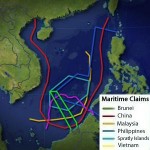
ASEAN and China create ‘single draft’ for South China Sea code of conduct –Nikkei Asian Review The Association of Southeast Asian Nations and China have created a draft document for a code of conduct in the South China Sea that would form the basis for future negotiations, both said Thursday. This marks a major achievement in ASEAN-China relations that had been shaken by conflict over the body of water for years, they said, although the deadline for the conclusion of the agreement has not been set. Foreign ministers from ASEAN countries and China held a meeting on Thursday in Singapore on the sidelines of the ASEAN Regional Forum, where the South China Sea issue has been a key sticking point. //Don’t get your hopes up folks – a final draft of a code of conduct in the South China Sea is unlikely to be agreed to in the near future.
Related: Southeast Asia, Beijing hail milestone in South China Sea talks –Reuters
Thai Army Influence is Here to Stay –East By Southeast On July 6, Thailand’s National Legislative Assembly (NLA), unanimously passed the military government sponsored 20-year master strategy outlining government goals to be achieved by 2037. This strategy is legally binding for all Thai government agencies and public organizations with penalties for non-compliance, such as removal from office for agency chiefs who do not comply with the strategy.//by me.
No surprise in Cambodian election landslide –Southeast Asia Globe Cambodia’s ruling Cambodian People’s Party (CPP) has claimed all 125 parliamentary seats in yesterday’s national election, cementing Prime Minister Hun Sen’s unrivalled control over a nation that the former Khmer Rouge commander has ruled for nearly 33 years. The tensely awaited election, which the now-outlawed Cambodia National Rescue Party (CNRP) has described as a “sham”, comes after a slow-burning campaign from the government that has seen the main opposition party dissolved, more than a hundred of its politicians banned from politics and its leader Kem Sokha locked in a remote prison on charges of treason. //It is pretty easy for the government to win an election when it has effectively outlawed the opposition.
Why is US State Secretary Pompeo coming to Southeast Asia? –Asian Correspondent US SECRETARY of State Mike Pompeo is expected to touch down in Malaysia today where he is expected to convey President Donald Trump’s commitment to Southeast Asia, amid China’s rising influence in the region. Malaysia will be the first stop for Pompeo during the Aug 1 and 5 trip before he visits neighbouring Singapore and Indonesia as tensions rise with Beijing over trade and maritime territorial disputes. During a speech in Washington to business leaders from the region, Pompeo alluded to the US’ bid to assert sovereignty over disputed areas in the South China Sea.
Related: What to Watch for From Southeast Asian States During the Pompeo Trip –CFR
New US spending in Asia won’t match China but it’s significant in other ways –CNBC Washington’s new $113 million in infrastructure spending for the Asia Pacific region can’t compete with Beijing’s massive investments there, but the move reinforces the U.S. commitment to Asian governments.Secretary of State Mike Pompeo on Monday announced new ventures focused on technology, energy and infrastructure as part of President Donald Trump’s Indo-Pacific strategy. They include $25 million to expand U.S. technology exports, $50 million for countries to produce and store energy resources as well as a $30 million assistance network for infrastructure development.//Stimson’s Brian Eyler quoted within.
REGIONAL RELATIONS
Vietnam wishes to enhance comprehensive partnership with Canada –Nhan Dan President Quang said he is pleased with the comprehensive and significant development of the Vietnam-Canada ties over the past time, noting that the two countries have shared a number of interests in bilateral relations as well as at regional and global forums. He recalled Canadian Prime Minister Justin Trudeau’s attendance in the 25th APEC Economic Leaders’ Meeting in Da Nang city and his official visit to Vietnam in November 2017, during which the two nations set up their comprehensive partnership.
Vietnam, S’pore sign MOU to boost cooperation –Straits Times Vietnam’s Deputy Prime Minister and Foreign Minister Pham Binh Minh and Singapore Foreign Minister Vivian Balakrishnan yesterday signed an agreement that will enhance bilateral cooperation in human resource development.The memorandum of understanding (MOU) covers the principles for the operation of the Vietnam-Singapore Cooperation Centre (VSCC), which is an enhancement of an existing training centre in Hanoi under the Initiative for Asean Integration.
New Zealand FM to attend ASEAN forum, East Asia Summit meetings –Xinhua New Zealand Foreign Minister Winston Peters traveled to Singapore on Wednesday to attend the Association of Southeast Asian Nations (ASEAN) Regional Forum and East Asia Summit (EAS) Ministerial Meetings. “The Asia-Pacific region is of great importance to New Zealand,” Peters, who is also deputy prime minister, said in a statement.
Japan to Help Build Fish-Processing Centers in Indonesia –Jakarta Globe The government will use a grant from the Japan International Cooperation Agency to build integrated marine and fishery centers on islands in Indonesia’s six outermost regions to boost exports. The agency, known as JICA, granted total funding of 2.5 billion yen ($22 million) for the construction of processing centers on Sabang in Aceh, Natuna in the Riau Islands, Biak in Papua and Morotai Moa and Saumlaki in Maluku.
ASEAN crafts position on US ‘Free and Open Indo-Pacific’ strategy –Nikkei Asian Review Foreign ministers of the Association of Southeast Asian Nations are working to come up with a common position on a geopolitical framework for the Indo-Pacific, a term widely used recently in place of Asia-Pacific, to ensure that the 10-member grouping is not marginalized, ASEAN officials said Wednesday. The position, based on a paper circulated by Indonesia to the nine other ASEAN countries, will be adopted when the ASEAN foreign ministers gather for a three-day meeting in Singapore starting Thursday.
SUSTAINABILITY AND RESOURCE MANAGEMENT
Rampant timber smuggling in Myanmar as forest service restructures –Mekong Eye As Myanmar works to restructure its national timber authority and adopt a new fiscal calendar, the Southeast Asian country continues to struggle to control illegal logging. The country’s forestry management agency, Myanma Timber Enterprise (MTE) announced earlier this year it plans to restructure under private sector management. Myanmar ended a one-year ban on domestic logging for export on anything other than MTE-stamped and stockpiled wood in 2017.
Demand For Pets Endangers Southeast Asia’s Birds –Radio Free Asia Go to almost any public market in the Philippines, and you can find people selling caged birds as pets. Many of the birds have been seized from their natural habitats by wildlife traffickers who meet a growing demand for them from Southeast Asia’s growing urban middle-class. The traffickers illegally ship many of these captive birds from the Philippines by sea to markets elsewhere in Asia, according to Jay Batonbacalan, a law professor at the University of the Philippines.
Asian plastic is choking the world’s oceans –Nikkei Asian Review The recent death of a short-finned pilot whale in Songkhla, southern Thailand, triggered a bout of long-overdue national anguish. The creature, discovered in June, was filled to its blowhole with 85 plastic bags that it had mistaken for food. Endangered finless porpoises, Irrawaddy dolphins, and turtles have also been recent casualties of plastic ingestion in Thai waters. A video of British diver Rich Horner swimming through dense shoals of plastic waste off the Indonesian resort island of Bali went viral in March.
Myanmar Ranks at the Bottom of Asean for Access to Electricity –The Irrawaddy Myanmar’s people have the lowest access to electricity in Southeast Asia, according to U Myo Myint, an energy expert who helped conduct a survey on the issue for the World Bank. “About 70 percent of households in Myanmar get electricity from either the national grid or other sources outside the grid for only around 2 hours per day,” U Myo Myint said Tuesday during a workshop held in Naypyitaw on the Multi-Tier Framework (MTF) global survey.
Philippines lifts two-year ban on mining exploration –Reuters The Philippines has lifted a two-year moratorium on approving mining exploration permits, in a move that the government and industry hope will help determine the potential of some prospects in the world’s No. 2 nickel ore exporter. The decision is the second mining policy measure to be amended in recent months, but environment officials said a ban on new mining operations is still in place, suggesting the impact of the new order will be limited.
CHINA
China in Africa: win-win development, or a new colonialism? –The Guardian It is now nine years since China overtook the US as Africa’s largest trading partner. Although Kenya and Ethiopia were the only two African nations among the 30 countries signing economic and trade agreements at the Belt and Road Forum (Barf) in Beijing in May last year, China has been busy on the continent. The flagship Belt and Road project is Kenya’s 290-mile railway from the capital, Nairobi, to the port city of Mombasa, which opened to the public last year. //This is just the latest state of Chinese engagement in Africa. China has been giving aid to African countries since the 1950’s.
Chinese Economy Starts to Feel Tariff Impact –Wall Street Journal China’s leadership pledged to ensure economic stability as its trade fight with the U.S. started to pinch growth, signaling that a bigger stimulus could be on the horizon. A Tuesday meeting of the Politburo, whose members are China’s top arbiters of power, highlighted the external challenges faced by the world’s second-largest economy. Without specifically mentioning the trade conflict with the U.S., a statement issued after the meeting by state media made clear the brawl is a big threat to growth and stability, trumping issues such as debt control.
China says it must retaliate against tariffs ‘to defend the nation’s dignity’ –CNBC China is not taking the United States’ latest tariff threat lightly and vows to hit back if the U.S. moves forward.”China is fully prepared and will have to retaliate to defend the nation’s dignity and the interests of the people, defend free trade and the multilateral system, and defend the common interests of all countries,” the Chinese Ministry of Commerce said in a statement on Thursday. “The carrot and stick tactic won’t work.”
China’s Empire of Money Is Reshaping Global Trade –Bloomberg China is building a very 21st century empire—one where trade and debt lead the way, not armadas and boots on the ground. If President Xi Jinping’s ambitions become a reality, Beijing will cement its position at the center of a new world economic order spanning more than half the globe. Already, China has extended its influence far beyond that of the Tang Dynasty’s golden age more than a millennium ago. The most tangible manifestation of Xi’s designs is the new Silk Road he first proposed in 2013.
China’s New Foreign Policy Setup –The Diplomat Xi Jinping has put the world on notice that China intends to be an active global player. In support of this new and more visible profile, the Chinese leadership has changed the foreign policy setup to give Xi and the Chinese Communist Party (CCP) greater control. This was reflected in changes to the foreign policy leadership team at the CCP’s National Congress in November 2017 and the National People’s Congress session in March 2018. As more details become known, it is time to take stock of this reorientation.
China May Become the World’s Leader in AI. But at What Cost? –ChinaFile The unprecedented amounts of data Chinese tech giants like Baidu and Alibaba collect is helping accelerate China’s development of big data and artificial intelligence (AI) applications, including facial recognition, automated retail operations, and its much-discussed social credit system. But it has also raised ethical concerns about data privacy, and about the state’s control over its citizens. Policymakers in Beijing are trying to balance these concerns with a desire to strengthen China’s position in both strategic fields. What is the future of AI and big data in China?
SOUTHEAST ASIA
Indonesia seeks more local content in Jakarta-Surabaya train project –Jakarta Post Transportation Minister Budi Karya Sumadi has said that the government is seeking more involvement of local contents in the Jakarta-Surabaya train project, particularly rolling stock components that can be manufactured by state-owned train maker PT Industri Kereta Api (INKA). He said PT INKA could at least manufacture 40 percent of components that would be imported.
Trump’s Tariffs Push Electronics From China to Southeast Asia –Bloomberg Electronics makers are preparing to shift more production to Southeast Asia as trade tensions with the U.S. make it less appealing to manufacture gadgets in China. A number of Taiwanese firms that form a crucial plank of the global supply chain have in recent days signaled their intention to diversify away from the world’s No. 2 economy. Delta Electronics Inc., which supplies power components to Apple Inc., said Tuesday it’s making a $2.14 billion offer to buy out a Thai affiliate — a precursor to expanding production there.
Myanmar scales back China-funded Kyauk Pyu port project in Rakhine state due to debt concerns –South China Morning Post Myanmar has scaled back plans for a Chinese-backed port on its western coast, sharply reducing the cost of the project after concerns it could leave the Southeast Asian nation heavily indebted, according to a top government official and an adviser. The initial US$7.3 billion price tag on the Kyauk Pyu deep water port, on the western tip of Myanmar’s conflict-torn Rakhine state, set off alarm bells due to reports of troubled Chinese-backed projects in Sri Lanka and Pakistan, the official and the adviser said. //Myanmar is another country looking to change its BRI deals, after Malaysia suspended several BRI projects. Will other countries soon follow?
YUNNAN
China’s Yunnan province aims at growing trade in UAE –Xinhua Agricultural producers from China’s southwestern Yunnan Province sealed deals with import firms from Dubai, United Arab Emirates (UAE), at a forum here on Sunday to expand bilateral trade. “Yunnan is also called the ‘King Province of flowers,’ and we are proud to serve the world with a range of high quality agricultural products,” said Zhao Ruijun, head of the Yunnan Provincial Department of Commerce.
This week’s new digest is curated by Kevin Rutigliano.
 Regional Roundup for Week of 6.16.16
 The Code of Conduct for the South China Sea: A Waiting Game
 Regional Roundup for Week of 7.26.18


