Category Archives: Mekong River

Laos Vegas: Rolling the dice on rural development

OLYMPUS DIGITAL CAMERA

In Lao PDR, there are three large casinos presently in operation: the Savan Vegas Hotel and Casino, the Kings Roman Casino and the Dansavanh Nam Ngum Resort. They are facing controversies over forced evictions, dispossession of farmlands belonging to the local rural communities, and are ridden with mafia-style armed fights among rival casino and investor factions. In January 2005, China’s anti-gambling campaign forced many casinos and small gambling houses to move to countries on China’s southwestern border including Myanmar, Laos, and Vietnam. Meanwhile, Lao officials and others, including middlemen and land developers, are reaping the cash benefits from this so-called rural development.

“The damned Chinese are taking over Laos,” the words spat out of a farmer whose nickname is Khoua living in the northern province of Luang Nam Tha. He was mouthing what most Lao people believe. Rural people dispossessed of land, urban dwellers witnessing the slow demise of their once elegant cities, all blame the mainland Chinese. Their presence is increasingly obvious, whether it be in the high speed motorcades blasting though Luang Prabang or in the proliferation of Chinese enterprises and their gargantuan construction projects, many of which lie echoingly empty and idle after completion. The influx of Chinese workers is affecting the local people’s chances of employment or skills training. But in the midst of frustration about the Chinese presence, what often goes unremarked or largely forgotten is that the Chinese are there as a direct result of the investment policies of the Government of Lao PDR, with many benefits from power to wealth being reaped by a long line of Lao officialdom.

When the author visited the area in November 2012, there were massive boards advertising the latest megaproject. Some provinces like Oudomxai north of the capital are more Chinese than Lao. That being said migrations and state borders have shape-shifted over the centuries blurring ethnicities and cultural loyalties. But what is obvious is the anger and resentment aimed at China while at the same time failing to recognise the agency and responsibility of the Lao government in ceding land and concessionary deals in return for investment and bribes.

This development complexity is best exemplified in the huge (and often bizarrely designed) casinos and gambling establishments that are expanding under the same perseverating rhetoric of development and poverty alleviation by which large dams and roads are being built. While these casinos have been written about in the mainstream media, very little analysis has been done about what they mean for rural people and their livelihoods.

Ferries bringing patrons across from Thailand and China for gambling (Photo by Melinda Boh.)

Ferries bringing patrons across from Thailand and China for gambling (Photo by Melinda Boh.)

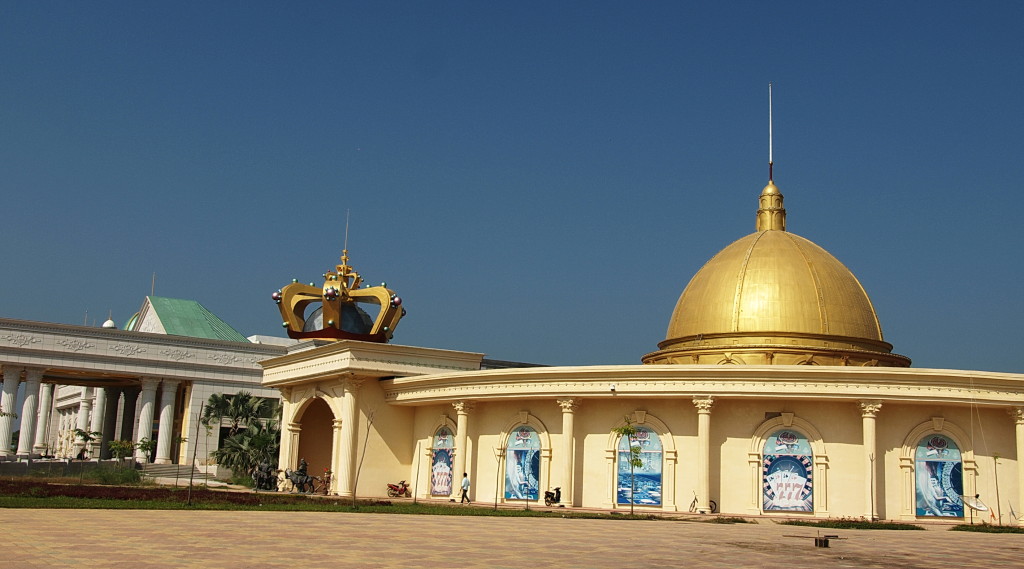
From Chiang Saen in Thailand’s north, the white colonnaded building across the river, topped with a huge gilt crown is a bizarre sight. From Huay Xai in Laos, a potholed road through farmlands leads to the casino complex. The car suddenly jolt-lands on to thick cement, marking the casino’s boundary in Dork Ngoui Kham. Half an hour later we spot the golden cupola, its clock set on Beijing time, marking Bokeo Province’s Special Economic Zone (SEZ) office.

The nearby King Roman casino reveals plaster toga-clad statues alongside Chinese patriarchs and the symbols of the newest local religion: gambling. Parked nearby were two stretch limousines. Inside the building, men in suits gambled at the tables. “Kunming officials doing a site inspection,” was the official story from an attendant.

The only Lao person we saw was a farmer on a dust-covered motorbike with his equally dust-covered wife, narrowly avoiding being pushed into the Mekong River by the boat passengers.

The concession area includes archaeological treasures, importantly the ruins of a 16th century city reputedly built by King Setthatirat. Other remnants, possibly from the Mon empires of the first millennium CE, are considered to be of World Heritage value. Instead they may end up under the runway of an international airport planned to bring patrons in, but fiercely resisted by the local farmers. History will be replaced by what appears to be a gambling based narco-empire, where anything goes. For Laos, it means that some of the most fertile arable land and considerable archaeological treasures would soon be buried under asphalt to feed the gambling industry.

Stretch limousines pick up selected high rollers from the airport (Photo by Melinda Boh.)

Stretch limousines pick up selected high rollers from the airport (Photo by Melinda Boh.)

Civilising

Defending the casino and entertainment complex, a senior Chinese manager told researcher Pal Nyriri: “Before it was opium and drug businesses. There were no roads, no electricity … Laos is developing and it [the casino] is good for them.”

Zhang Wei, the casino’s principal developer, told Thai sociologist Pinkaew Laungaramsri of Chiang Mai University: “The biggest obstacle is that villagers … do not understand us. We have rented all the land and forest … but they … cut … or burn them. We can’t go around, arresting or beat up (sic) and fine the villagers who burn our gardens … it will cause ethnic issues.”

A local NGO worker, requesting anonymity, recalled taking a Chinese delegation to the site in 2009. “The three Government officials, a journalist, an environmentalist and a few academics were shocked at what they saw. ‘This gives China a bad image,’ they said. When we stopped; a crowd of up to 70 to 100 village people assembled shouting that they would not give up their land. The area is one of the most fertile and productive in Laos.”

They pointed to a white Humvee. “That’s the local official. Zhang gave him and the (Lao) police the same cars.”

China may see itself as a civilising influence, drawing on its long and remarkable history, using its wealth and dynamism to bring rapid economic growth. But with its entrepreneurs building casinos like those at the Lao border, China risks reinforcing its growing reputation for exploiting its neighbours.

Because although it’s the Lao government’s party apparatchiks and provincial officials whose signatures and rubber stamps bless these casino developments, it’s China that gets the bad press, a point clearly understood by the visiting Chinese delegation. The development of ‘legal/ illegal’ states through the formation of SEZ’s has enabled the Lao government to consolidate power, and amass wealth, patronage and control, while portraying itself as a helpless lackey of China.

Laos is fast gaining a reputation as a lawless state. It has shown unwillingness to arrestwildlife trafficker Vixay Keosavang while it faces continuing criticism for its intransigence in not being serious about investigating the high-profile disappearance of Magsaysay award winner Sombath Somphone. Moreover, Laos continues to face allegations of human rights violations, money laundering and profligate illegal logging that are causing both international concern to its many foreign donors and local frustration.

The so called “red carpet”, the road being paved pink for the patrons (Photo by Melinda Boh.)

The so called “red carpet”, the road being paved pink for the patrons (Photo by Melinda Boh.)

SEZs and other confusions

The casinos in the SEZ epitomise the complexity of the modernist zeal with which the Government of Lao and China pursue investment. Observers like Danielle Tan have noted the SEZs bring a post-socialist neo-liberal model to the Lao-China border zones. For nations that expound socialism and wisdom of central control, this is a strange choice. Neo-liberalism increases state income through taxes, exploits labour and expropriates land from traditional owners and farmers. The renowned sociologist Pierre Bourdieu considers neoliberalism “a program for destroying collective structures”, and even nations themselves.

With their confused legal frameworks and ambiguous status, SEZs invites all sorts of temptations. The implicit freedom tempts the seamier side of legitimate trade and investment particularly in the fabled Golden Triangle. Added to this mix, the Chinese fascination with gambling and luck makes Bokeo’s proximity all too tempting.

Along with disappointed losers, Tan found evidence of drug sales and money laundering, while Li Quan a London based tiger conservationist, told the Global Times that Lao casinos were trading posts for endangered species. Others are worried about child trafficking, rape and tax farming 1.

Tan alleges that the former military junta and drug lord Lin Mingxian is a major investor in the King Roman Casino, a charge denied by Zhang Wei. Ying and Zhang, of China’s Institute of Contemporary International Relations (CIR) and part of the 2009 delegation, agreed, writing, “While the nominal boss of the Casino in Bokeo is a Fujian native with a Hong Kong passport, it is … likely… the real investor is a drug cartel from Myanmar.”

The other side of China’s double jeopardy is legitimacy. The Bokeo casino is a photocopy of those in Mong La (Myanmar) and Boten (Laos) both managed by Zhang Wei, and both closed by China after evidence of mafia-style gunfights and crimes. However the King Roman is within Lao sovereign territory, while the others were on international no man’s land.

The Vice Prime Minister of the Government of Lao PDR, Somsavat Lengsavad, reacted to China’s concern about ongoing casino development with assurances that no further concessions would be granted as “casinos were a bad model for Laos.” But barely six months later in March 2014, the Vientiane Times announced plans for another casino in the South.

In total forty-nine SEZs are planned. How many will have casinos is anyone’s guess, and pose a serious concern to China.
OLYMPUS DIGITAL CAMERA

Size matters

The CIR’s critical appraisal of Laos’ transparency backs Nyiri’s research revealing that the Government of Lao granted the Hong Kong registered King Roman group a concession for the Bokeo land in 2007, after a down payment of US$850,000.

Lao government media KPL reported 827 hectares were ceded for 40 years; the maximum allowed under Lao law, but at variance to the company’s own estimation of 10,300 hectares for 99 years. In 2010, Zhao reported the new casinos would be bigger in scale than those in Boten, bragging that US$500 million would be spent developing the site, more than ten times the Laos national health budget.

A resident of Huay Xai who declined to be identified, admitted the casino is run down: “The paint’s peeling and shops boarded up. Less people visit now. One rich guy hired some [Lao] cops to protect him, but they shot him and took his money. Despite joint patrols, we still have shootings, as the Chinese mafia are using the place as a staging post. Gamblers are afraid. As for the organic farms and markets they promised, well who would buy the stuff? The farmers who lost their land are now broke and they used to produce what the casino promised but never delivered.”

“The casino’s still trying for the airport, but there is well-organised resistance. The locals called in Thai TV. The Lao police arrested two cameramen and held them for two weeks. The Thai government responded by closing the border until they were released. Now it’s a stand-off. The PR risk is too high.”

China has its own problems with crime. What it does to curb the influence of its neighbour will be interesting to see.

Post script: In late 2013, the Lao media announced that the farmers had been given their promised settlement. The casino had agreed to pay a compensation amount that was found satisfactory to the government. Many on the Lao agribusiness list-serv cheered.

Following up on this story, I was told by the above long term resident of the area (new laws in Laos restricting critical media make me reluctant to name anyone for fear of recrimination) that the company had in fact offered compensation way over the odds as the farmers had been both successful in gaining publicity and in holding out, fearing the same poverty that had mired their neighbours.

But the informant said the Lao government refused to give their imprimateur to the negotiated rate fearing that the amount offered would set an unhealthy precedent for other areas of Laos, so the farmers were given a significantly reduced amount. Hence the term “found satisfactory to the government” does not mean what one might have assumed.

This article was written by Melinda Boh for the Mekong Commons website and published here on 1/31/15.  It is reposted in its entirety with permission from Mekong Commons and the author.  ExSE is excited to begin a new cooperative partnership with the Mekong Commons team in sharing analysis and reporting.

Leave a Comment

Filed under China, Economic development, Governance, Laos, Mekong River, SLIDER

Meet the Salween

salween

I heard the name “Salween” before. I didn’t know exactly where it is. I knew it was somewhere close.

Somehow its name portrays a feeling of fearless turbulence. Perhaps, it’s the sound of “S” and the rhyme between “ween” and a Thai word “wian” from the word “wonwian” meaning lingering and wandering which makes me think of the word “namwon” meaning whirlpool.

There is a legend about the two great sister rivers of Southeast Asia: the Salween and the Mekong.

And this is how the story goes:

One day, the two rivers decided to go to sea. They agreed to travel through the mountains together and stopped whenever they wanted to. The Mekong slowly spanned its waterline through the landscape while the Salween hurried its way to claim the frontline.

After rushing ahead, the Salween decided to stop for a quick nap to wait for the Mekong. Days passed and the Mekong was still absent. The Salween thought the Mekong took a chance when it was sleeping to get ahead—to be the first to see the ocean. Angry and feeling betrayed, the Salween rushed through the channels and aimed to destroy any rock that stood in its way. Its wild speed was felt by those living nearby. The Mekong, on the other end, finally arrived at where the Salween was napping. Not seeing its younger sibling did not push it to move any faster. The Mekong continued to crawl and collect waters along the way; it even went off-route to carry fish and water into Tonle Sap before it finally reached the sea.

It is said that many communities believe in this story, though I have only heard it from two people. The anecdote may vary. Though it does resemble the turtle and the hare tale, but stories and legends are much better tools to narrate and describe the difference between the two.

Perhaps, it is the Salween’s anger that makes it the last free flowing river in China and Southeast Asia until 2015.

The Salween is originated from the marshland in the Himalayan Plateau—the same glacial area where the Mekong and the Brahmaputra start their mightiness. It travels over 2,200 kilometres through southwest China, Thailand, and Myanmar. Most of the areas it nourishes are occupied by ethnic indigenous communities. In Yunnan alone, the Nu River  (as the Chinese called the upper Salween) feeds at least 22 ethnic groups. The same reality applies to downstream communities at the border between Thailand and Myanmar and major ethnic states in Myanmar (where Burmese names it “Thanlwin”). I remember someone told me that the Salween’s turbulence is reflected by perpetual ethnic tension in the most recent open country of ASEAN.

The plan to dam the free flowing Salween is not new. 13 cascade dams for the Nu River were proposed in 2003 as part of China’s 10th Five Year Plan. Chinese environmentalists immediately called the government to halt the project. Their voices were listened, but the hiatus is now over and the proposed 13 hydropower projects are back on the table.

Thailand’s eyes on damming Myanmar’s Thanlwin/Salween is also not new. Nearly ten years ago, Thai environmentalists became aware of 7,110 MW Ta Sang Hydropower Project, a Thai national dam at the cost of Burmese environment. The news of Ta Sang Dam has been silent but a recent loosely done EIA report and signed MOA for the 1,360 MW Hat Gyi Dam prove that the intention isn’t going away.

7 is the number of proposed dams on the Thanlwin/Salween. Over 20,700 MW will be generated to Thailand and China. The newly built transmission lines that would come with the new dams would gracefully pass over the electricity and wealth to Myanmar’s neighboring countries. Its people would have to look up to the electricity they are not entitled to use while watching their houses and livelihoods inundated by the reservoir.

But the real battle has only started. In June, 2014 Myanmar government switched on the green light for Chinese Hanergy Holding Group Company to tackle its hydropower project in Shan State. Kunlong Dam will stand tall to hold back the Salween while producing 1,400 MW of electricity to be sent back to China.

Large-scale hydropower projects—along with many other environmentally and socially detrimental projects—never prove beneficial to local communities. “The few should sacrifice for the many” is the excuse project proponents always use to dignify their grand prize. However, in this case, “the few” we’re talking here isn’t small in number but their political voice and power to decide how and who would control the river they rely on.

“We call the Thanlwin, ‘the River of Peace’” said Ko Ye, an activist from Dawei who has been fighting against Thailand-proposed mega development project in his hometown. “Because if this river is dammed or falls under one group’s control, the ethnic war in Myanmar will never stop.

2 Comments

Filed under China, Current Events, Economic development, Energy, Environment and sustainability, ethnic policy, Mekong River, Myanmar/Burma, SLIDER, Sustainability and Resource Management, Thailand, water, Yunnan Province

Letter to the Mekong River Commission on the Don Sahong Dam

The following is a letter written by Mekong river expert and conservationist Alan Potkin submitted today to the Mekong River Commission’s online stakeholder consultation concerning the Don Sahong dam.  The construction of the Don Sahong dam on the Mekong’s Hou Sahong channel in Siphandon, Laos is a project sparking extreme controversy in the Mekong region.  Despite Vietnam’s and Cambodia’s condemnation of the dam along with a massively successful petition campaign gaining more than 250,000 signatures and increasing local and international coverage of the controversial project, construction for the dam is likely to begin by the end of the year.

Indeed “now is the time to separate fact from fiction”…

Notwithstanding his Googleable scientific publications being exclusively in quantitative algology, rather than in any aspect of ichthyology (not  least fish taxonomy, physiology, and reproductive or migratory behaviors), I had consistently argued that we should accept that Dr Peter Hawkins, Don Sahong’s Environmental Manager, was speaking and acting in good faith until proven otherwise…

Until this latest announcement by him that the altered dry season hydrology above and below Siphandone, following the new release regime
from the Lançang Jiang cascade of hydropower dams in Yunnan PRC, will now make it “easier for fish to migrate” through alternate channels other than Hou Sahong during the dry season.

Well, maybe yes and maybe no.

According to years of fieldwork conducted there by Dr Tyson Roberts and Profs. Ian Baird and Water Rainboth, amongst others,
no less than 150 species of fish transit through, or are resident, in Siphandone. Other than their basic taxonomy, almost nothing is known in
sufficient empirical detail about any ofthem to understand exactly what ecological and behavioral cues initiate bi-directional migration and successful reproduction: Water temperature? Current velocity and/or stream stage? Phases of the moon? Subtle chemical alterations? Angle of the sun in the sky/polarization of insolation?

How much change in elevation per unit of lineal distance could be encompassed within a particular species’ genetically-determined
metabolic parameters and swimming musculature to still be a manageable pathway?

All essentially unknown!

The planet’s best understood migratory fishes are the salmonidae of the northern hemisphere, which in any given inland waterway probably never exceed four or five different species having themselves much in common. Yet even now ichthyologists are far from certain over exactly how salmonids are capable of navigating to, and infallibly identifying, precisely that reach of river/tributary wherein they were originally spawned, perhaps even a decade earlier, with most of those intervening years as adults spent offshore in the oceans.

And if any or all of that that were known in exact and correct detail about one or two or three of the most economically and nutritionally
important Mekong species, there would yet be another 140 species, at least, which might be responding to completely different sets of stimulae and environmental cues.

I would be delighted to have these assertions proven false by aquatic ecologists holding credible expertise far greater than my own.

Once again, I would note that available to whomever might successfully navigate far upstream into several of our interactive eBooks, notably
“Mekong-Orwell” —mostly about the Pak Mun debate Xayaboury and Don Sahong— there are linked online videos showing the
rather underdeveloped state-of-the-art of “fish friendly” turbines, and showing the general impassibility of even a 70cm artificial obstruction erected across the migratory pathways of one of the most robust and powerful N. American fish species, but one which lacks any evolutionary history of jumping.

Thanks as always, for all due consideration.

Access the interactive media links below to learn more about Alan Potkin’s work on Mekong issues.
http://www.sethathirath.com/mekong_actual_outcomes1.final_cfp.pdf
http://www.sethathirath.com/nam_phit/digital_mekong_planning.pdf
http://www.sethathirath.com/mekong_orwell_eBook/pak_mun_homepages.pdf
http://www.sethathirath.com/mekong_fish_atlas_4.1/welcome.pdf
http://sethathirath.com/EFDNW_UNESCO_1.4.1/nongchanh%20interactive/EFDNW_poster/nongchanh_poster_homepage.pdf
http://vimeo.com/86935784

Leave a Comment

Filed under Cambodia, Current Events, Laos, Malaysia, Mekong River, SLIDER, Sustainability and Resource Management, Vietnam, water

Seismicity & Sediment Flow in the Mekong River Basin

Understanding the geologic history of the upper Mekong basin is increasingly important for examining the effects of dam construction, both in terms of seismicity and sediment trapping.  The sediment regime of the river has been altered by the construction of dams, which have captured large quantities of sediment.  However, the degree to which it has changed the river is uncertain due to the small number of studies done so far.  Additionally, agriculture and development have their own effects on the sediment load of the Mekong, which further complicates sediment analysis.  More alarmingly, a large magnitude earthquake could cause dam damage or failure, which in turn could cause catastrophic damage downstream.  While such an event is unlikely, it is important to properly regulate dam construction as well as encourage the construction of earthquake resistant infrastructure, especially in Yunnan, Northern Thailand, and Laos.  The underlying geologic structure of the Mekong River Basin is highly complicated and should be studied in greater detail so that dams are constructed as safely as possible, both to protect downstream communities and to ensure that the sediment load is not being disturbed at the expense of aquatic ecosystems and downstream agricultural communities.


Tectonic setting

The origin of the Mekong River lies 5,000 meters above sea level, high on the Tibetan plateau.  From there the river runs through China’s Qinghai and Yunnan provinces, where it is called the Lancang River.  Its name changes to the Mekong as it flows through the five mainland Southeast Asian nations: Myanmar, Lao PDR, Thailand, Cambodia, and finally Vietnam.  The River runs a total of 4,350 km before it spreads out over the Mekong delta and into the South China Sea.  The Mekong drains an area of 795,000 square kilometers, with an annual discharge of 475 cubic kilometers, making it the longest and largest river by volume in Southeast Asia, and the 12th longest and 8th largest by volume in the world.  At 16,000 cubic meters per second, the Mekong has an average discharge comparable to the Mississippi river, despite the Mekong being over 1,000 miles shorter. (Fig 1)  Its importance in the region as a source of livelihood and culture cannot be understated; it is the connecting tie between the nations of mainland Southeast Asia.  While river ‘capture’, or the seismically induced alteration of river pathways, makes pinpointing the origin of the Mekong River difficult, there is some indication of its modern derivation.  According to one study, which took sediment cores from the South China Sea, “The oldest sediments, which are linked to the modern delta body, accumulated in the early mid-Holocene, at about 8000 calibrated years before present preceding the mid-Holocene sea-level highstand in the South China Sea.” (See figure 1, core MD01-2393)  Primarily because of sea level rise the Mekong River has changed since then into the basin recognizable today.

The Mekong River Basin is situated off the southeastern edge of the Tibetan Plateau, which as an active converging plate boundary has a strong influence on the tectonics of the Mekong basin.  The collision of the Eurasian plate and the Indian Plate are the source of the uplift of the Himalayas and the Tibetan Plateau, and the Mekong River basin lies between this convergent plate boundary and the Sumatran Subduction Trench further south along the southern coast of Sumatra.  This intraplate zone is a ‘basin and range’ province, much like the Nevada-Utah basin and range of the United States, and is scattered with faults with different slip-rates, especially in the area in and around northern Thailand.  Considering this somewhat unique geologic position which has created different fault zones pulling and pushing in different directions, the basin’s geology is both heterogeneous and, particularly in the northern part, seismically active.  To the north of the Mekong River Basin, the Longmenshan fault zone is highly active; responsible for the devastating earthquake in Chengdu in 2008, which claimed the lives of over 68,000 people.   The upper Mekong basin is not range of the Longmenshan fault zone, but its basin and range typology is strongly influenced by this fault zone.  The most notable fault systems that influence the basin are the “right-lateral, strike-slip Red River and the left-lateral strike-slip Xianshuihe-Xiaojiang fault systems.”  These fault systems as a portion of the typical ‘basin and range’ geological province create series of exactly that: similarly trending valleys and mountains that are a direct result of fault blocks falling and rising with respect to each other.  This allows different geologic layers to be exposed within relative short distances, meaning that as the Mekong River flows downstream, it quickly gathers different types of sediments.


Sediment regime

The sediment regime in the Mekong is a result of its drainage pattern and the variety of rock types in the river basin.  The Mekong River basin itself is atypical of continent draining rivers in its drainage pattern is not dendritic.  Rather, the river has a parallel drainage pattern which is much more linear with more direct tributary angles.  This pattern is a combined result of the underlying geologic structure and the slope of the topography.  The upper basin is particularly narrow which indicates strong, or steep, slope control.  Often, underlying structures such as joint systems control the geometry of tributary angles, which are generally narrow.  In these steep and narrow gorges, the rapid flowing water of the Mekong quickly erodes the hillsides, making the river a muddy-silt brown.  Considering the heterogeneity of the underlying structure, the swift moving water gathers many different minerals, creating a rich sediment regime with lots of chemical elements needed for agriculture and aquatic ecosystems.  The upper part of the basin, especially in China, is the primary source for this sediment.  Researchers have suggested that “the existing estimate of the mean annual suspended sediment load of the Mekong reported in the literature is ~160 Mt y^-1, and (Roberts) has estimated that about 50% of this load is contributed by the upper part of the basin in China.”

The northern part of the basin “accounts for about 24% of the total area of the basin and about 18% of its total discharge, and sediment yields in these mountainous headwaters, which have steep, unstable slopes, are clearly substantially higher than those from the remainder of the basin.”  As it flows the Lancang River quickly becomes a muddy-silt brown, reducing the River’s ability to erode the rock further downstream.  Dams allow sediment to settle out, in fact “Kummu and Varis cited estimates that suggest that the Manwan Dam could trap as much as ~50-60 Mt of sediment per year, and this would clearly cause a major reduction in the sediment load of the Lancang River.”  What the overall effect this entrapment will be is not yet known.  What is known is the exiting water, devoid of sediment, will erode rock more quickly than it did before, possibly replacing the sediment lost but at the cost of downstream slope stability.  The increased erosion of stream beds could pose ‘major threats’ to places such as Luang Prabang, Vientiane, and Nongkhai.

Figure 2: Mekong Sediment load, values from 1961 compared with recent years (between 1997 and 2002).

Figure 3: Mekong river discharge, values form 1961 compared with recent years (between 1997 and 2003).

Unfortunately, there have not been a lot of studies done in Southeast Asia on this subject, and research needs to be continued in order to examine how the sediment regime has been and is being altered.  So far, research done has shown that variations in sediment discharge are more closely linked with the total water discharge of the Mekong, rather than the construction of new dams. Figures two and three illustrate this problem as there are hardly enough data points, due to a lack of continuous research, to come to a conclusion about the sediment regime and the way dams have affected it. In this way, it is important that these parameters be monitored annually so that a meaningful conclusion can be drawn as to whether or not dams have a negative impact on sediment transport.


Seismicity: Predicting earthquakes in the northern Mekong Basin

Accurately predicting the timing of an earthquake, as seismologists know, is close to impossible. But that doesn’t mean that it’s not worth trying, because properly understanding seismic activity can be effective in protecting human lives.  While exceedingly challenging, seismologists use a variety of techniques to predict the likelihood of earthquakes occurring, and what the magnitude of the earthquake might be.  These techniques generally involve measuring average slip rates and estimating the likelihood within a given period of time of the fault ‘slipping’ which causes earthquakes.  In the Mekong River basin, this is extremely important with regard to the dams that have been built along the river as well as for dams in the planning phases.

Figure 4. Dams along the Mekong River and its tributaries. Courtesy of the WWF

Seismic activity in the Mekong River basin is primarily limited to areas in Yunnan, northern Thailand, and Laos.  Some areas in northern Thailand in recent history have been described as seismically inactive, as despite there being several fault zones there are few historical records of destructive earthquakes.  There is some mention in different literature that northern Thailand is seismically ‘highly stable’, which happens to be true for recent history, but that does not suggest earthquakes cannot or will not happen.  As Fenton says in his 2003 study, “Due to a lack of large, damaging earth-quakes during historical time, Thailand has not been considered to be a seismically active country.  Although there are a number of accounts of historical earthquake damage (Nutalaya et al. 1985), the locations and sizes of most of these events are not well constrained.”  While earthquakes are generally below 6.5 in magnitude, there are notable exceptions.  For example, “[The Red River] fault has produced several earthquakes >M 6.0 including the 4 January 1970, M 7.5 earthquake in Tonghai which killed over 10,000 people.”  While this was further north, there are concerns that earthquakes could cause substantial damage to developing infrastructure.  One USGS study of a magnitude 6.8 earthquake in the Golden Triangle region of Myanmar in March of 2011 highlights that “Overall, the population in this region resides in structures that are highly vulnerable to earthquake shaking, though some resistant structures exist. The predominant building types are wood and unreinforced brick masonry construction.” This suggests that if a larger magnitude earthquake of were to strike, the damage would be enhanced by the collapse of structures which are not equipped to handle such shaking.  These faults are considered capable of generating maximum earthquakes of up to 7.5 in magnitude, which while unlikely on an annual basis, (see figure 6) increase in likelihood over time.

Figure 6. Faults in Northern Thailand.  Note the proximity of faults 3, 11, and 18 to the Mekong and proposed dam site. Note annual probability of fault movement in Fig. 7   Courtesy of the USGS


Figure 7. Annual probability of fault movement among studied active faults in northern Thailand. See fig 6. and key for location of faults. Data courtesy of the USGS

The Xayaburi dam in Laos is controversial for several reasons, but fears of damage from earthquakes are rising.  One Thai geologist, Dr Punya of Chulalongkorn University, has estimated there is a “30 per cent chance of a medium-sized earthquake hitting the dam site in the next 30 years, and a 10 per cent chance of a powerful earthquake of up to magnitude 7.” He was reported as saying: “If the fault at the dam site becomes active … there is no chance for seismic engineering to take care of that.”  Dr Punya also stated that construction on the dam should “never have started” at such a site without further research into its seismic risk.   Dr. Punya’s concerns do not seem unwarranted, as there have been substantial earthquakes in recent years.  In 2011, two earthquakes occurred 48 kilometers from the site of the Xayaburi dam, one 5.4 and one 4.6 magnitude.  One month later a magnitude 3.9 earthquake occurred 60 kilometers from the dam site.  In 2007, a 6.3-magnitude quake hit the Xayaburi area.  Further away, in northern Myanmar, a 6.9 magnitude quake on March 24, 2011 killed 151 people.

Apparently, the earthquakes near Xayaburi occurred on what were thought to have been inactive faults, “an unusual development and one that causes additional concern.”  It is possible this may be related to dam-induced seismicity, another substantial concern many geologists bring up with regard to dam construction and seismicity.  This phenomenon has been documented as far back as 1932, and the Sichuan earthquake in 2008 has been suggested as being a result of this effect.  Tectonic movement isn’t a process that changes within the lifetimes of humans, and a trend of increasing seismicity is only likely to continue.  In fact, “some studies suggest that due to the high slip rate on this fault, future large earthquakes arehighly possible.”  While total dam failure is extremely unlikely, earthquakes will nonetheless be able to cause a lot of damage to dams, costing the dam companies millions.  Moving forward, it is imperative that more geologic and seismic studies are done of the northern Mekong basin.  This is especially true for dam construction companies as they construct dams; to do so in as safe and secure a way as possible.


Conclusion

Unfortunately, most of the scientific literature on the subjects of seismicity and sediment transport in the Mekong River point to the lack of research done thus far as a limiting factor for their own research.   While there has been a fair amount of research done, it is not sufficient to completely assess whether dams are safe to construct or not.  Based on preliminary findings, it seems that most earth scientists that have studied this region agree that they feel uneasy about the construction of dams and that more research needs to be done.  The construction of dams might ultimately be important for the development of Southeast Asian nations, but proper research needs to be done to ensure they are not irreparably damaging the river.  A worst-case scenario would consist of catastrophic dam failure due to an earthquake, which would in turn likely cause downstream dams to fail, and destroying any communities along the river.  The economic loss, not to mention the loss of life, would be disastrous.  Because of this risk, however small, research and engineering techniques should be paid for ahead of time by dam construction companies rather than afterwards with human lives and livelihoods.


References:

Ai, M., and M. Hong. 2011. Earthquake Shaking: 2011.

Clark, M. K., L. M. Schoenbohm, L. H. Royden, K. X. Whipple, B. C. Burchfiel, X. Zhang, W. Tang, E. Wang, and L. Chen. 2004. Surface uplift , tectonics , and erosion of eastern Tibet from large-scale drainage patterns. Tectonics 23:1–21.

Fawthrop, T. 2014, November 19. Experts renew quake fears over Xayaburi dam Mekong River in Laos. South China Morning Post. Xayaburi.

Fenton, C. H., P. Charusiri, and S. H. Wood. 2003. Recent paleoseismic investigations in Northern and Western Thailand 46(October).

Turner, B., J. Jenkins, R. Turner, A. L. Parker, A. Sinclair, S. Davies, G. P. Hayes, A. Villaseñor, R. L. Dart, A. C. Tarr, K. P. Furlong, and H. M. Benz. 2014. Seismicity of the Earth 1900 – 2010 Himalaya and Vicinity PA IN HA NA FA ST ARC 80225(303):80225.

Walling, D. E. 2008. The Changing Sediment Load of the Mekong River. A Journal of the Human Environment 37(3):150–157.

Leave a Comment

Filed under GMS, Mekong River, SLIDER, Sustainability and Resource Management, Uncategorized

The Illicit Drug Industry & Counter-Narcotics in Southeast Asia

drug picture 1

Drug enforcement officials in Burma. Image: The Irrawaddy

On 5 October 2011, when Thai river police investigated reported gunshots on the middle reaches of the Mekong River, they discovered two cargo vessels and their 12 Chinese crew members, all of whom had been executed and their bodies dumped in the river. The ships were determined to have been hijacked to transport illicit cargo, and they contained over 920,000 amphetamine tablets, locally referred to as yaba, which were subsequently confiscated by Thai authorities.

Over the past 70 years stories like this have become commonplace in the notorious Golden Triangle, a delta area at the confluence of the Mekong and Ruak Rivers that takes up approximately 150,000 square kilometers of land in the tri-state Thai, Lao and Burmese (Myanmar) border region. Drug production and trafficking has brought this locality to international infamy, and it remains the world’s second largest cultivator of opium poppy, second only to Afghanistan. Faced with rising heroin and amphetamine-type stimulant (ATS) addiction levels, drug-related violence, and an expanding HIV epidemic, Southeast Asian governments have recently begun to intensify their efforts to combat this endemic problem. Using bilateral agreements and the frameworks of the Association of South-East Asian Nations (ASEAN), the Greater Mekong Subregion (GMS), and the Asian Regional Forum (ARF), actions by these governments have met varying levels of success.


Colonial Roots of the Southeast Asian Drug Trade

Opium poppy is native to the lush and remote Yunnan and Sichuan Provinces of China’s southwest. For hundreds of years small-scale cultivation by hill tribes in the region met the modest needs of Chinese opium-smokers, but in the early 19th century a powerful competitor arrived in Southeast Asia: the British Empire and its waves of merchants and imperialists, all trying to find new markets for seemingly unlimited supplies of India-grown opium. At the humiliating conclusion of the 1842 Opium War the British forced the Chinese emperor to accept opium imports, thereby unleashing one of the most devastating drug epidemics in history: a mere thirty years later, British opium imports were supplying an estimated 15 million Chinese opium addicts.

Social upheaval in China during the 19th and 20th century caused massive emigration of Chinese refugees to all parts of the world, and where they went, their opium habits followed. The large Chinese immigrant populations in Thailand, Burma, and Vietnam provided lucrative opportunities for the opium industry, and despite the protests of indigenous rulers, one by one state-mandated opium franchises were forced into being by British and French imperialists. It was also in this time that fleeing Chinese merchants and hill tribe people arrived in the Golden Triangle area and introduced poppy cultivation to the local populations.

In British Burma, the imperialist government lacked the ability to administer the western Shan States and so instead provided them with autonomy in exchange for loyalty. This autonomy provided a foundation for a thriving opium economy and a fiercely independent political consciousness, both of which would have strong legacies long after the British withdrawal. In French Indochina, the government-run Opium Monopoly worked industriously to incorporate Laotian poppy-growing hill tribes, and helped to sponsor the Yunnan-Tonkin railway, which provided a valuable link to the well-established opium cultivators of southwest China.


Colonial Events Timeline

In the years following World War II, almost all of the world’s major opium producers, the largest being Turkey, Iran, and India, brought an end to their legal opium exports to Southeast Asia, which created an enormous vacuum in the opium industry. Newly Communist China, independent Burma, and restored French Indochina all cracked down on local production, further choking supply. Eradication of the drug industry was not achieved however, primarily thanks to the actions of Chinese Nationalist Kuomintang (KMT) remnants in northern Burma, the corrupt Thai National Police Force, and the French and American covert intelligence agencies.

About 1,500 battered KMT troops entered Burma in 1949, fleeing the advance of the People’s Liberation Army into Yunnan Province. This weak force was nearly crushed by the Burmese army, but in 1950 they began receiving airdrops of weapons from the CIA, which was frantic to arm groups on the southern borders of the People’s Republic of China in case Mao Zedong had expansionist ambitions. Reinforced by additional troops flown in from Taiwan, the empowered KMT army executed several failed invasions to retake Yunnan, but afterward decided to remain in northern Burma and hold the line against the Communist threat. This well-armed army proceeded to force the local tribes-people into opium cultivation, and with the help of the corrupt Thai police force, created one of the most robust drug production and trafficking systems in history.

Opium produced in northern and eastern Burma was transported across the Thai border and down to Bangkok, where it was exported out of the rest of Southeast Asia. In 1961, provoked by aggressive expansionism on the part of the KMT, the Burmese Army and the PLA jointly ousted the Nationalists from Burma and forced them into Thailand and Laos, where their communities remain today. Although the KMT forces no longer directly controlled the opium cultivation, the system was in place and ethnic Chinese, then later various Burmese insurgent traffickers, maintained the lucrative trafficking network into Thailand.


Drug enforcement officials in Burma. Image: Business Week

Drug enforcement officials in Burma. Image: Business Week

In French Indochina, the under-financed French intelligence community covertly took over management of the formally illegal opium trade in order to continue their efforts in suppressing Ho Chi Minh’s Viet Minh. The Laotian opium industry that they nourished would later find its greatest successes during the American GI heroin epidemic of the Second Indochina Conflict, and following that, in its international spread into the continental US and Europe.

Currently, the vast majority of Southeast Asian illicit narcotics are produced in the semi-autonomous, rebel-administered eastern states of Burma, while smaller amounts also come from the remote areas of western Laos and northern Thailand. It is trafficked in two main routes: the southern route goes through Thailand to Bangkok for distribution, and the northern route enters China’s Yunnan Province, headed for Kunming and then all of East Asia. Recently, Golden Triangle supply has been unable to keep up with skyrocketing Asian demand for heroin and ATS, and approximately one third of East and Southeast Asia’s narcotics now originate in Afghanistan.

map

Source: UNODC Southeast Asia Opium Survey 2013: Lao PDR, Myanmar


Temporarily successful eradication programs and sustained crackdowns brought Southeast Asian drug production to a historical low in 2006, but since then there has been a consistent increase in cultivation, production, trafficking, and consumption, with levels returning to those of the 1970s and 1980s. This steady expansion of the drug trade is occurring despite a 2005 self-imposed opium cultivating ban in the territories of the United Wa State Army (UWSA) in Burma, a rebel group that previously accounted for the lion’s share of Burma’s opium production. This worrying trend has many consequences for Southeast Asian society.


Threats Posed by the Illicit Drug Industry

The streaming supply of narcotics from the Golden Triangle into China and Thailand has negative impacts on myriad areas of Southeast Asian life. Mass drug addiction and drug trafficking causes the breakup of families and increases in crime rates, spreads diseases like HIV, burdens the economy through lost productivity, imposes financial costs on the state, spreads law enforcement thin, overwhelms justice systems, encourages corruption, and funds violent groups. As production continues to increase, these problems are becoming more pronounced and demand strong preventative action.

The United Nations Office on Drugs and Crime estimates that an average of 13% of injected-drug users are HIV positive, and more than half have hepatitis C. Coupled with China’s annually growing number of registered opioid users (official figures reported 1.3 million users in 2012, with actual rates likely almost double that), this situation makes the threat of a massive HIV epidemic in the world’s largest country ever more likely. Recent trends in China suggest that methamphetamine use is slowly overtaking heroin use as China’s most problematic drug, and just in China 228 meth labs were dismantled in 2012. Widespread amphetamine use continues to be a regional dilemma, as more than 8,980,000 people in East and Southeast Asian used ATS tablets in 2013. The Greater Mekong Subregion has the highest rate of crystal meth use in the world, and this drug use is exacting large tolls on society, as addiction-fueled crime expands and as families and communities spend time and resources helping addicts.

Number of Heroin Users 2010

Source: UNODC Transnational Organized Crime in East Asia and the Pacific: a Threat Assessment, April 2013

The criminals and insurgents that operate the drug trade are making enormous windfalls from their work: the value of all consumed East and Southeast Asian heroin was estimated at $16.3 billion USD in 2011, with methamphetamine and amphetamine consumption valued at an additional $15 billion USD. The traffickers and their associates encompass a wide variety of individuals: ethnic Chinese syndicates, Nigerian and Iranian criminal groups, high-ranking Southeast Asian officials and military personnel, and Burmese insurgent and paramilitary forces. Although on average 50,000 people are arrested each year for trafficking illicit narcotics in Southeast Asia, the high profits of the drug trade continue to lure thousands more into the business. In the case of Burmese fighters, drug earnings are usually spent on weapons, helping to intensify violence in those areas.

drug market value

Source: UNODC Transnational Organized Crime in East Asia and the Pacific: a Threat Assessment, April 2013

Some of the drug trade’s worst victims are the poverty-stricken opium cultivators in the Golden Triangle. Lacking other economic opportunities and desperate for income, many rural farmers are forced into dealings with violent traffickers and become trapped in a cycle of drug cultivation, slowly becoming more and more dependent on poppy income. They are prevented from growing crops that can benefit society, and oftentimes their communities are hit hard by addiction. Unfortunately, these rural villagers only make up a small portion of the people whose lives are destroyed by the drug trade.


International Cooperation and Efforts to Eliminate the Drug Industry

The governments of Southeast Asia have been working to combat the narcotics trade ever since their post-colonial independence, but unfortunately the vast majority of these efforts have been restricted to unilateral measures. Law enforcement is usually by definition national in character, but the drug trade is a transnational and regional problem, and increased cooperation on the part of Southeast Asian governments is critical for its sustainable reduction.

Thanks in large part to the prodding of the US government, which had recently declared its own War on Drugs, the 1976 ASEAN Bali Summit saw the adoption of the “ASEAN Declaration of Principles to Combat the Abuses of Narcotics Drugs.” Although mainly filled with rhetoric and containing few concrete measures, this declaration showed consensus among the ASEAN governments and kicked off the modern wave of counter-narcotics policies in Southeast Asia.

Thailand can be considered one of the more successful cases of sustainable reduction in illicit cultivation. Starting in 1984, the Thai government embarked on a 30-year intensive program of crop replacement, which has resulted in bringing opium cultivation in northern Thailand to negligible levels.

In contrast, the efforts of Burma’s Central Committee for Drug Abuse Control have been snared in the frequently contradicting objectives of the government’s anti-insurgent policy. Despite the ambitious 1999 declaration by the ruling regime to eliminate all illicit drug production by 2014, the Burmese government often turns a blind eye towards the narcotics industry in its efforts to co-opt various rebel groups. In the 1980s and 1990s the weak central government began signing ceasefire agreements with the numerous insurgent armies that control the Burmese borderlands, and many of those autonomy-granting agreements contained clauses permitting (and even encouraging) drug cultivation and production by the groups in exchange for their loyalty to the regime. Subsequently, drug enforcement policy became a tool of the state, and it was used both as a carrot and a stick to bring insurgent groups into the legal fold. When a United States grand jury indicted several leaders of the United Wa State Army, which had signed a ceasefire agreement and was the largest Burmese opium producer in the early 2000s, the government refused to arrest them or crack down on their illegal businesses. This lack of enforcement can be seen as a way of repayment for loyalty, and is in direct contrast to the government’s actions towards the Myanmar National Democratic Alliance Army (MNDAA). The MNDAA, another major opium producer, had refused to make peace with the government, and when the government attacked them in 2009, drug enforcement was the justification given. These two examples show how the central regime manipulates drug policy to its advantage in its state-building efforts, and explains the lack of sustained progress in eliminating the narcotics industry.


ASEAN response timeline            In addition to the unilateral efforts of individual states, regional organizations and agreements have been crucial to the evolution of drug enforcement in the Golden Triangle. In the late 1990s, ASEAN began examining anti-narcotics and other issues such as human trafficking and smuggling in the context of transnational crime, and started putting greater emphasis on regional cooperation. The expansion of ASEAN in 1997 to include the Lao People’s Democratic Republic and the Union of Myanmar allowed the other ASEAN governments to exert more diplomatic pressure on the newcomers to clean up their drug exporting regions, demonstrated in the ASEAN Declaration on Transnational Crime. Although the declaration contained no binding measures, it set up several communication and monitoring bodies, including the ASEAN Ministerial Meeting on Transnational Crime (AMMTC), the ASEAN Chiefs of National Police (ASEANAPOL) and the ASEAN Senior Officials on Drug Matters (ASOD). These bodies mainly monitor the progress of the 2000 Bangkok Political Declaration in Pursuit of a Drug-Free ASEAN 2015, but they also work to encourage development of bilateral extradition treaties, international criminal justice institutions, and cooperative border control, legal assistance, and data sharing.


The Future: Regional Integration and the Effectiveness of Anti-Narcotics Policy

2015 is marked to be the year in which the ASEAN Economic Community is brought into being, and many hope that it will bring with it great advances in regional trade, infrastructure, and cooperation. Already projects such as the North-South Economic Corridor, running from Kunming to Bangkok, and the building of ports and bridges along the Mekong River are generating enormous economic benefits. However, advances in regional integration also provide opportunities for those who would exploit them for illegal purposes. The increasing ease of transporting illicit narcotics and the improving communication technologies of criminal groups present a strong challenge to the national law enforcement agencies of ASEAN countries. Equally innovative and efficient use of new capabilities and technologies, as well as increased intelligence sharing and coordination must be implemented for Southeast Asian governments to effectively meet these new threats.

In November 2011, just a month after the “Mekong Massacre,” China, Laos, Burma, and Thailand agreed to cooperate on river patrols and law enforcement along the Mekong River. Their Joint Statement detailed numerous confidence building measures between the various national police forces, but mainly focused on the responsibility of each individual nation to properly patrol its own sovereign waters. This aspect reveals the major weakness of all ASEAN counter-narcotics efforts to date: ASEAN nations are caught in a paradoxical situation where despite the damaging effects of the drug industry and transnational crime on national sovereignty, the only way to effectively counter those threats is by each nation giving up some measure of their treasured sovereignty. Sovereignty and non-intervention are the two defining pillars of the “ASEAN Way,” and yet those two concepts desperately need to be reevaluated if transnational crime is to be confronted.

Confidence building measures and increased regional communication is a critical first step, but in order to make real progress in fighting the rising threat of transnational crime ASEAN nations need to accept the reduction of their sovereignty. A hopeful example is provided by the official conclusion of the Mekong Massacre: Naw Kham, the Burmese drug lord who supposedly masterminded the murders, was captured by Burmese counter-narcotics forces and extradited to China, where he and three of his subordinates were tried and executed in March 2013. Extradition treaties like these form the basis of effective cooperation, and similarly collaborative measures must be actively pursued by ASEAN governments if they are to successfully tackle the deeply-entrenched and continually evolving menace of the drug industry in Southeast Asia.

1 Comment

Filed under China, Cold War, Current Events, Economic development, ethnic policy, GMS, Governance, Laos, Mekong River, Myanmar/Burma, Regional Relations, SLIDER, Thailand, USA, Vietnam, Yunnan Province

Water release at Yunnan dam sparks SE Asian alarm

Manwan Dam, Yunnan

A huge hydroelectric facility in southern Yunnan is causing tension between China and several of its downstream Southeast Asian neighbors. The Jinghong dam (景洪大坝), which stretches across the Mekong River, is currently discharging water in an effort to lower reservoir levels, raising the specter of flash flooding further south along the riverway.

On September 1, the Chinese government informed flood control authorities in Cambodia, Laos and Thailand that the dam would begin to release large amounts of excess water. The facility partially opened its floodgates September 5, releasing 535 cubic meters of water per second. Such activity is expected to continue through the end of the month.

Although this amount of water has yet to cause flooding in Laos or Thailand, both countries have issued public warnings as a precaution. Officials in both countries fear any further increase in outflow from the dam — which has the capacity to release up to 9,000 cubic meters of water per second — could have disastrous consequences. An unnamed official in Laos told website RFA river levels in the city of Houayxay — 200 kilometers south of the Jinghong dam — had risen noticeably but had so far not approached flood levels.

Thailand, which makes up more than 800 kilometers of the country’s northern border, is currently in the grips of its annual flood season. At least 28 provinces in the country’s north are already experiencing widespread inundations. Because of this, Thai flood control authorities are particularly wary of any increased flow along the river. Channel News Asia is reporting “the situation at the Chao Phraya dam, the main water gateway between the mountainous north and the central plains [of Thailand], are at a critical level”.

Further downstream in Cambodia and Vietnam, officials appear less concerned. No flood warnings related to the Jinghong dam water release have yet been issued in either country. However, a spokesman for Cambodian water conservancy group 3S Rivers Protection Network told reporters, “We know when an upstream dam opening its gates to release reservoir water combines with the heavy rains of wet season, it’s a high threat.”

The 1,750-megawatt hydropower plant, located roughly five kilometers north of the city ofJinghong, first went into operation 2008 following more than five years of construction. Power generated at the facility is used in Yunnan but is also often sent to energy-hungry Guangzhou or exported to Thailand.

Exemplified by the current situation in Jinghong, cross-border management of the Mekong — called the Lancang River (澜沧江) while flowing through China — is often a contentious issue. Mekong countries have, in the past, expressed frustration over how the river is handled inside China. Such concerns largely revolve around the wellbeing of the 48 million people who rely directly on the waterway for their food and livelihoods in Southeast Asia.

This article was written by Patrick Scally and originally posted on GoKunming.

Leave a Comment

Filed under ASEAN, China, Energy, Mekong River, Regional Relations, SLIDER, water, Yunnan Province

Bottlenecks to Development: Challenges in the Mekong Delta

Last week, ExSE took a hard look at the environmental challenges facing the Mekong Delta region and found that the prospects are not good. Due to unenviable geography and global warming, rising sea levels, higher average temperatures and irregular precipitation patterns will all converge in the next 50 years to change the face of the Mekong Delta (MKD). That’s to say nothing of salinity intrusion, flooding and tropical storms. However, the MKD’s problems are not only environmental in nature; the region’s economy also faces a host of challenges, many of them tied to the Delta’s environmental changes.

Issues in the Mekong Delta are of course significant for its residents, but they also carry great importance for those outside the region because of the MKD’s role in national and regional food security. The statistics on the Delta are incredible. In an area taking up just 36,000 square kilometers (12 % of Vietnam’s total area), the Delta’s 22 million inhabitants plant 2.6 rice crops per year totaling 25 million tons of rice. The MKD’s rice production accounts for over half of Vietnam’s total and the seven million tons rice that the Delta exports has helped Vietnam become the world’s second largest rice exporter after Thailand. In addition, the Delta accounts for 70% of Vietnam’s fruit production and three-quarters of its fish catch.

The Delta’s massive agricultural output is no accident. The region is perfectly situated to receive large amounts of water and sediment from the three main stems of the Mekong Delta and the many thousands of canals that intersect them and a tropical temperature allows for farming year-round. What’s more, concerted efforts in the past 30 years to improve the region’s water infrastructure have doubled arable land in the MKD. Combined with advances in genetically modified rice strains, yields in the Delta have increased by 30% and total production has doubled, all within the past 20 years.

Incomes have also increased. According to the General Statistics Office of Vietnam (GSO), the average income of Delta residents has gone from 50 cents USD/day in 1999 to $2/day in 2010 and the region reached it Millennium Development Goals in 2006. However, despite impressive improvements in agricultural output and per capita income, the Delta has lost ground to other regions of Vietnam and now lags behind in important measurements of human and economic development.

Source: Dr. Ho Long Phi, processed from data of General Statistics Office of Vietnam.

Source: Dr. Ho Long Phi, processed from data of General Statistics Office of Vietnam.

In the late 1990’s, the Delta was actually 20% above the national average in per capita income. However more than 10 years later, the number stands at a little more than 80%. In the first decade of the new millennium, Vietnam underwent a period of intense economic growth through industrialization and people all over the country got richer as a result. The benefits of economic growth were not felt equally by everyone, however. Due to development bottlenecks, some regions, including the Mekong Delta, did not industrialize like others

One of these bottlenecks is a lack of infrastructure. The proportion of waterways, intra-provincial roads and inter-provincial roads per thousand people are all behind the national average. Of these three measures, the proportion of inter-provincial roads stands out. For one, there are only 0.34km of them per 1000 people in the Delta, standing at only half of the national average. This is especially important because of the nature of the Delta’s economy. The MKD, because its economy is so heavily concentrated in agriculture, lacks many necessary products and thus has a long history of importing and exporting nearly everything. While this may be good for enterprising middlemen, it is not good for the region’s economic development. With so few avenues for importing and exporting goods, the logisitical cost rises and because the MKD lacks so many raw materials, industrial development becomes disadvantageous. In fact, unless an investor is interested in agricultural processing, building a factory closer to Ho Chi Minh City is probably a better business plan in many cases.

Source: Dr. Ho Long Phi, processed from data of General Statistics Office of Vietnam

Measure of waterway, inter-provincial roads and intra-provincial roads in the Delta. Source: Dr. Ho Long Phi, processed from data of General Statistics Office of Vietnam

A second bottleneck, and another reason a potential investor might not consider the Delta, is a lack of skilled labor. Like the region’s road density, the MKD’s percentage of trained labor lags behind the national average; according to data collected by GSO (General Statistics Office of Vietnam) the Delta’s percentage of trained labor stood at just over half of the national average. In addition, the proportion of Delta residents with some sort of higher education stood at less than 1%, or in other words, just a fifth of the national average. With a workforce that is so poorly trained and educated, the Delta becomes an even less attractive region for investment, especially when compared to the populations near the Red River Delta (Hanoi and its environs) or Ho Chi Minh City.

What’s more, those Delta residents that have some technical training and/or higher education do not stay in the Delta for long. As the region’s economy falls farther behind the rest of Vietnam, more and more Delta residents are moving to urban centers to look for work. One of the main destinations for these people is Ho Chi Minh City, where over half of the city’s migrant workers come from the Mekong Delta. What trained labor the MKD might have ends up leaving the region for greener pastures, thus widening the gap between the Delta and places like Ho Chi Minh City.

Source: Dr. Ho Long Phi, processed from data of General Statistics Office of Vietnam

Source: Dr. Ho Long Phi, processed from data of General Statistics Office of Vietnam

One reason that the MKD has such a low percentages of trained labor and educated inhabitants is that in the past there was no need for supplementary education of any form. In an environment where the annual rice yields are stable and prices are good enough, investing time and money for a new career is an unnecessary risk and one that Delta residents have not taken. Paddy rice cultivation requires little technical skill yet provides a modest, usually stable income. However, the income provided from rice is rarely enough to invest in the expansion of other industries and in the Delta’s case, the lack of infrastructure makes such an investment an even more expensive proposition.Unfortunately for the farmers of the Mekong Delta, rice cultivation is becoming a less and less stable enterprise. For one, the price of rice has dropped in the past decade. As more and more rice is produced worldwide, the seven tons of rice the Delta exports annually decreases in value and farmers lose out.

However, shifts in the world rice market are nothing compared to problems farmers face due to global warming. As detailed here, rising temperatures, sea level rise, an erratic precipitation and flood schedule and more frequent tropical storms all threaten to radically alter the Mekong Delta in the next century. The region already has enough impediments to development with its lack of infrastructure and trained labor; its environmental issues only add to the severity of the situation. The Delta, now more than ever, is in acute need of solutions. However, who’s coming up with these solutions, if there are any to begin with, is another question unto itself and one that needs to be answered before any future for the Mekong Delta can be imagined.

Leave a Comment

Filed under Agriculture, Economic development, Environment and sustainability, Mekong River, SLIDER, Sustainability and Resource Management, Vietnam

China and South Asia: Contention and Cooperation Between Giant Neighbors

Are China and India allies or enemies in the South Asian economy? Well, it seems they are both; working together in healthy and profitable partnerships while maintaining armies in the contested China-India borders. This article explains the paradoxical nature of the China-India relationship and its impact and implications for the smaller countries in South Asia and neighboring Southeast Asia.

The rise of China and India over the last two or three decades continues to make global news headlines. Competition between these two global powers in economic, political and diplomatic domains has garnered scholarly and media attention. Yet we know much less about China’s growing ties and contention with India that are also spreading across the South Asia subcontinent and beyond. As China-India trade has grown, India in 2006 opened the historical trade route, Nathula Pass, which had remained closed for almost 50 years as a result of a border war with China in 1962. Today in the presence of several persistently disputed border zones in South Asia (see Map 1), China is beginning to build dams on the rivers in the Tibetan Plateau, including the upper Brahmaputra (yarlung tsangpo or Yarlung River), which could impact populations living downstream in India and Bangladesh (see Map 1). China has taken over the construction of Gwadar Port in the Pakistani province of Baluchistan, on the Arabian Sea. China has also begun building the Gwadar road corridor all the way north to Xinjiang. Continue reading

Leave a Comment

Filed under China, Economic development, Energy, Foreign policy, GMS, Mekong River, Myanmar/Burma, Regional Relations, SLIDER, Uncategorized, Yunnan Province

A Flood of Challenges: Climate Change and the Mekong Delta

As loyal readers of ExSE have probably noticed by now, this site, at its core, is dedicated to Mekong River and the people who are connected to it. Thus it seems odd that so little attention has been given to the Mekong Delta on ExSE. As is the case with most international coverage of the Mekong, the upper and lower reaches of the river are largely ignored in favor of stories about hydropower projects and the livelihoods they will affect. However, the challenges that the Mekong Delta (MKD) is currently facing and will face in the future are also serious. These challenges are directly related to global warming and are shared with other deltas, though the unique geography and ecology of the Mekong makes the consequences of climate change here even graver. Continue reading

2 Comments

Filed under Agriculture, Environment and sustainability, Mekong River, SLIDER, Sustainability and Resource Management, Vietnam, water

Laos Agrees to Discuss Dam Project with Neighbors

Representatives pose for a photo at the June 26 meeting of the Mekong River Commission

Representatives pose for a photo at the June 26 meeting of the Mekong River Commission

Laos has agreed to open a discussion with neighboring countries on the Don Sahong dam, but stopped short of saying it would delay construction on the controversial project.

In agreeing to the prior consultation, Laos is allowing input from the farmers and fishermen who depend on the Mekong River for their livelihood. It would also provide time for neighboring countries and opponents of the project to conduct a more comprehensive environmental impact study.

The announcement was made on Thursday during a meeting of the Mekong River Commission in Bangkok. Representatives from Thailand, Laos, Vietnam and Cambodia — all members of the commission — participated in the meeting. The agreement provided no provision for delaying the project before an adequate environmental study could be completed.

“Prior consultation does not stipulate any condition on continuing or not continuing” construction of the dam, Hans Guttman, the commission’s chief executive officer, told reporters. Guttman said the prior consultation should begin in July, with the process expected to take about six months. He said Laos did not offer to delay construction on the dam, nor did neighboring countries ask for a delay during the consultation period.

The Laos delegation did not release a statement or meet with reporters following the daylong meeting. Laos has begun preliminary construction on infrastructure at the dam site, despite strong opposition from Vietnam and Cambodia, who requested a 10-year moratorium on dam construction on the Mekong mainstream until further studies could be completed.

Earlier, Vietnam, Cambodia and Thailand stated that the dam must undergo prior consultation, as required under the 1995 Mekong agreement, to which Laos is a signatory. The Don Sahong dam is being constructed in the mainstream part of the Mekong River in the southern province of Champasak, nearly two kilometers upstream from the Laos-Cambodia border.

Opponents of the project fear the dam will block the migration of fish and cause a steep drop in the flow of water to those living downstream. Nonn Panitvong, an adviser to the Green World Foundation, said plans to build several dams along the Mekong, would transform the river, the world’s second-most biodiverse river after the Amazon, “into a giant freshwater pond”.

“That would be the end of the Mekong River,” he said.

Ame Trandem, Southeast Asia program director for International Rivers, called on neighboring countries to pressure Laos to delay construction until prior consultation is completed. “Neighboring countries must articulate to Laos their own intentions in what this process means, otherwise, the prior consultation process is likely to have missed the point entirely,” Trandem told ucanews.com.

Trandem said she hopes Laos proceeds with good faith rather than issue an “empty political statement”. “All construction should stop on the Don Sahong dam until a transboundary impact assessment is carried out and meaningful consultation takes place,” she said.

This article by Stephen Steele was originally posted here on June 27, 2014 on the UCA News website.

Leave a Comment

Filed under Cambodia, Current Events, Economic development, Energy, Laos, Mekong River, Regional Relations, SLIDER, Thailand, Vietnam, water