Category Archives: Current Events

The anti-Vietnam protest that didn’t happen

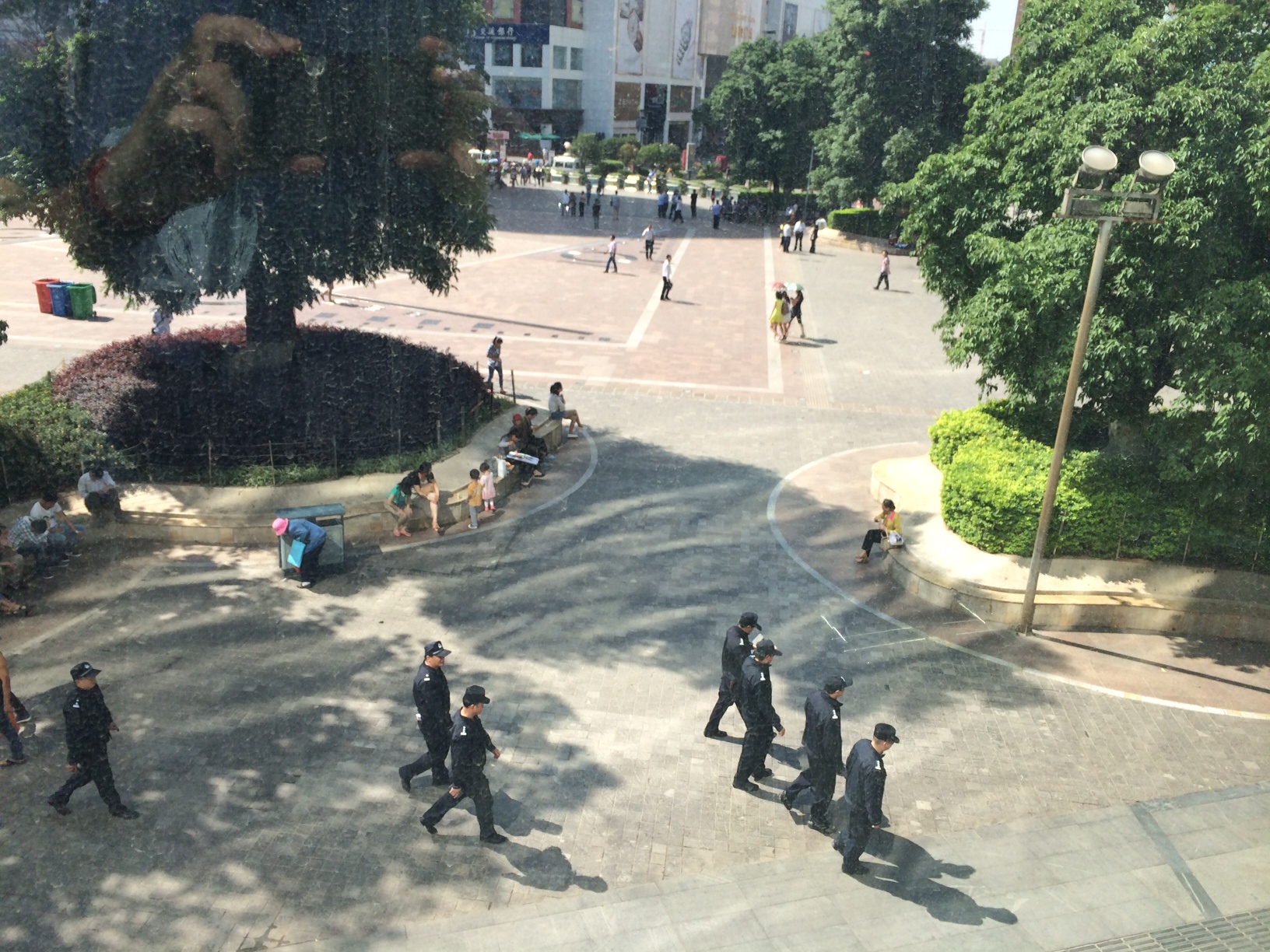
Kunming’s Nanping Jie Square, the site of Sunday’s non-protest.

The ringtone on my wife’s cell phone abruptly called us awake at 8:30am on Saturday. The caller ID displayed the name of one of my closest friends and colleagues in Kunming, yet I wondered why he was calling my wife. “Comrade, good morning,” rang out his thick Sichuanese accent.  This was a standard greeting among my circle of friends, but calling someone comrade in China has long gone out of fashion.

“There’s something I have to tell you.”

So it turns out he spent the previous day at his workplace, a local university, holding meetings with top administration and security brass discussing how to prevent the university’s students from attending a protest scheduled for Sunday, the next day. He told me that a group of Vietnam war veterans from China’s 1979 punitive invasion of Vietnam received approval from the local civil affairs bureau and the local public security bureau to march on the Vietnamese consulate in downtown Kunming.  The scheduled march was in reaction to the growing movement of anti-Chinese protests in Vietnam that left more than 20 Chinese, Taiwanese, and Vietnamese dead in the previous week.

The starting point was the city’s main pedestrian square at Nanping Street; the march would commence at 9am and finish at 2pm at the consulate.  His call was a warning for me to lay low – for all foreigners to lay low – because foreigners, especially Caucasian foreigners could serve as a potential target for angry, nationalistic protesters.  He was also calling to warn me to stay far away from the protest.  He knew I had a penchant for observing and writing about protests in Kunming, and my actions in the past had landed me and subsequently him only by guilt of association in a little trouble with local security officials.

To help place the gravity of the situation squarely on my shoulders, he told me of how he spent the previous evening having meetings with the students under his supervision, pleading them not to attend the protest – even though it was a legal protest – for fear that it may turn violent or take a turn toward other issues that were suppressed and mulling around in the hearts and on the minds of disgruntled people in Kunming.  In fact, his work group in cooperation with a successful commercial real estate form had arranged a 5 kilometer eco-walk scheduled for Sunday morning, but due to the protest he decided to cancel the event.  His university and the firm apparently poured a good deal of money into the event so he was quite put out by the cancellation.  “Right now, we will do what it takes to ensure stability at any cost.” I had heard those words too many times in the last 18 months living in Kunming.

His parting words before hanging up were also ones familiar to me: “Stay at home and have a good time with your wife.”

This season of South China Sea’s flare-ups and shenanigans is heating up once again.  To provide a quick rundown of the last 10 days: China parks it’s billion dollar oil rig 150 miles off the coast of Vietnam near Da Nang; rams a few curious Vietnamese ships, super soaks other onlookers with high pressure water hoses; foreign ministries respond with sabers rattling; protests broil in Vietnam; Chinese, Korean, and Taiwanese factories burn; people die unnecessarily due to this tricky, inane, orderless, yet extremely critical game of cartography, resource grabbing, and interpretation of the current world order.  And to round out the week, the first organized civil response in China comes from….Kunming?

In some ways Kunming makes sense.  The pathway of China’s 1979 spring invasion of Vietnam cut through southeastern Yunnan province into Vietnam’s Lao Cai province.  The three month war was a tough decision for the newly installed Deng Xiaoping.  He sought to punish Vietnam for its humanitarian invasion of Cambodia to take out the Khmer Rouge and install a new caretaker government, in some ways Deng thought this would help make good on his warming commitment to US-China relations.  Many of the troops sent to Vietnam were stationed in Yunnan, Kunming specifically.  Many did not return.  In total approximately 70,000 soldiers and civilians died in the three month conflict.

Both sides claimed pieces of victory.  In the end, China chalked up fewer casualties and proclaimed the incursion’s main purpose was to scare the Vietnamese before retreating.  The Vietnamese army valiantly as always pushed back most of the encroaching forces as the PLA entered the provinces to the north of Hanoi.  The caretaker government in Cambodia was not handed over to the Khmer people 1979.  Officially the caretaker government left in the early 1990s, and some argue that the pro-Vietnamese caretaker government is still in power.  To me a China’s claim to victory holds little water – just like its 9 dash line that lays claim to the near entirety of the South China Sea (which by the way holds a ton of water, fish, and most importantly energy resources.)

But then again there is little about Vietnam’s South China Seas claims that make much sense either.

From my experience interacting with locals, very few Kunmingers, and Chinese people in general, under the age of 50 know the story and context of the 1979 war.   I was not surprised to learn that a group of organized veterans still operated in Kunming given that veteran groups from WWII were still active in Yunnan and much is done in this city to preserve WWII related heritage. But how many were there and how many would show up for the march on Sunday? An organized effort that received government approval and raised the alarms of state related institutions like my friend’s university would likely bring out at least one hundred people. Would they be able to rally more than 1000 Kunmingers under the intense midday sun similar to the anti-PX protests (not government sanctioned) of nearly exactly one year ago?

Would the protesters flip and set cars alight?  Wait, Vietnam doesn’t produce cars.  Would they target people who appeared to be Vietnamese? Wait, I won’t finish that sentence.

On Saturday evening, a crowd of Kunming’s expats gathered for the soft opening of a New York style pizzeria.  The chatter was (sort of) abuzz with talk of the next day’s scheduled march and protest.  Over the previous two days word of the march had spread, for better or worse, among the community via the popular Chinese social media app WeChat, and now the gathering enabled the conversation to go from digital form to the soon-to-be-obsolete vocal communication style characterized by eye contact and hand gestures.

“Did you see how close China’s oil rig is to Vietnam’s shoreline?  It’s totally in Vietnam’s Exclusive Economic Zone.”

“What’s an Exclusive Economic Zone?”

“Yo, this South China Sea shit’s been going on for years.  All these countries play around with each other like they’re still in middle school.”

“That 9 dashed line just showed up in on China’s official maps in 1954.”

“Why Kunming?”

“Maybe the anti-PXers will show up to the protest again and then it could get really ugly.  Wait…maybe the Uighers will plan another attack?  And do you think things will be different now that Kunming’s police forces can carry armed weapons?  What’s happening to our city?  This used to be a really cool place to live!”

“Those Vietnamese love to play games, they learned how from the Soviets.”

“I’m totally going to wear my bright red “Made in Vietnam” shirt with the big yellow star tomorrow.”

“Maybe that’s not the best idea.”

“What’s an Exclusive Economic Zone? And dude, where’s my beer?”


Those who watch the Sino-Vietnamese relationship closely know that the situation is not getting any better despite the rosy accolades of year-on-year bilateral trade increases, strengthened cooperation on the (lately not-so-successful) repatriation of illegal Uighur immigrants from Vietnam back to China, and a new high-speed rail and road network connecting Vietnam to China.  Watching the relationship from Yunnan province only amplifies the growing crevasses.

Looking locally and outside of the South China Sea conflict, foreign direct investment between Yunnan and Vietnam is on the decline and according to the Vietnam Ministry of Industry and Trade office in Kunming, several key Yunnanese invested projects in Vietnam have been put on hold.  Last year Vietnam Airlines suddenly cancelled its daily flight from Kunming to Hanoi.  Two years ago you could readily buy Vietnamese Banh My sandwiches from food carts in downtown Kunming, and now none are to be found.  Enrollments of Vietnamese nationals into Kunming’s university level Chinese language programs are on the decline and are eclipsed by students from Thailand and Laos.  This spring, neighboring Guangxi province closed the border to watermelon imports from Vietnam which gouged prices at home in Vietnam and angered many farmers.

The list goes on, but I must mention that the yearly China-Vietnam Friendship Tennis Tournament which traditionally ushers in Kunming’s Southeast Asia Expo has been suspended for the last two years.  Both sides suspect each other of stacking the line-up with semi-pro players and accuse each other of foul play.

Waking on Sunday morning, the day of the march, I pondered the deterioration of this relationship. It was clear that more were losing than winning, but how many of Kunming’s everyday citizens are directly affected by the recent cooling and would the protesting veterans be able to gather enough onlookers into their fold in order to make an impactful statement?

I also pondered my friend’s advice on whether or not to go observe the march – but only for a few seconds.  With my smart phone charged to the max and ready to live-tweet the march as I had done for the past anti-PX protests in Kunming, I mounted my electric motorbike and made way to the protest zone, picking up a concerned friend along the way.  He promised to help navigate the security arrangements citing experience recently gained on a week-long trip to Pakistan.

I’ve learned in the past 18 months that the signals of a protest in China begin to appear well before arriving on site, and given this sanctioned protest site was staged for the same site as last year’s initial anti-PX protest, I had a well developed strategy to lay low and observe from afar lest I be spotted and photographed by the local security apparatus.  As we approached the downtown pedestrian square at 9:15 just after the march was scheduled to begin, we saw very little increased security presence.  From 100 meters away it was easy to see the center of the pedestrian square was cordoned off by local police forces to create a space the size of two football pitches.  Local police mingled in and out of the zone, and some middle-aged men sat in the shade of some trees on the periphery of the zone.

So far no sign of a protest presented itself.  No banners, no t-shirts, no slogans, no face masks, just a nearly empty square.  In fact, the most conspicuous aspect was the plain clothes policemen scattered around the square.  Always slightly overweight, deep tan, same crew-cut, off-color collared polo, and the signature man bag containing who knows what – the uniform of the Chinese plain clothes policeman is always easy to spot.  I also spotted a fellow blogger sitting in the shade inside the protest zone – his blond locks and European pedigree always stand above the crowd at Kunming’s protests in which he often finds himself smack in the middle of.

There still wasn’t any action, so my friend and I ducked into an adjacent shopping mall and rushed up to the a 2nd floor Starbucks to find a seat on a sofa beside a window overlooking the square.  Needless to say the position of our perch made us feel more like spectators at a sporting event than at China’s first anti-Vietnam protest of the 2014 season.  We were free to comment and tweet at will.  No security forces were going to bother us there.  My VPN was on line and the connection was kicking.

From our bird’s eye viewpoint, we observed a line of ten paddy wagons parked on the southern edge of the square. A small platoon of SWAT police in riot gear made rounds of the square.  Still no protesters.  A WeChat message popped up on my cell phone from the blond blogger sitting inside the zone.  “Situation normal, just loads of police presence, no sign of protesters….Another Kunming couldn’t care less story.”

And that was just it.  Kunming really couldn’t care less.  We estimate that fewer than ten veterans showed up.  Their t-shirts with Chinese flags gave them away.  At about 10:30am, the veterans formed a half-circle in the middle of the square and were escorted around half of the square by uniformed police. Their march lasted less than a minute.  A cameraman from the local television station sitting on a shaded bench missed the procession because his boredom turned to a brief chance to catch a nap.

At 10:45am, the cameraman picked up his bags and went home. Nothing to see here folks.  By 11am the temporary fences were removed, and the pedestrian square exposed to the intensity of the midday sun once again filled with local shoppers making their way through Kunming’s commercial downtown.

I was relieved that nothing happened.  Perhaps word came down from high for the veterans to cool their guns since the Vietnamese government was making good on its commitment to control the anti-Chinese movements and violence within its own borders.  The last thing our little city needs is to have its blue sky reputation tarnished by another incident making the international news and filling the Sinosphere and the South China Seas with flotsam and jetsam.

2 Comments

Filed under China, Current Events, Economic development, Energy, Foreign policy, GMS, Governance, Regional Relations, SLIDER, South China Seas, Uncategorized, Vietnam, water

Anti-Chinese Protests Shake China-Vietnam Relations

China's oil rig, the Haiyang Shiyou 981, sits 120 nautical miles from the Vietnamese coastline.  Photo: Xinhua.

China’s oil rig, the Haiyang Shiyou 981, sits 120 nautical miles from the Vietnamese coastline. Photo: Xinhua.

Following the deployment by China of an oil rig in disputed waters between China and Vietnam, anti-Chinese riots have swept Vietnam, bringing Chinese-Vietnamese relations to their lowest level in recent years.

The demonstrations started shortly after China moved an oil rig, referred to as Haiyang Shiyou 981, within 120 nautical miles off the coast of Vietnam. This position is also 17 nautical miles off of the disputed Paracel Islands.

The Paracel Islands lie at the heart of the controversy over the oil rig. The Paracel Islands are a group of small islands in the middle of the South China Sea with no native population. Both Vietnam and China place historical territorial claims to the islands. Prior to 1974, the islands were controlled by the navies of China and South Vietnam. Following a naval battle in 1974, China took the whole group of islands from South Vietnam.  Following the reunification of Vietnam in 1975, the government of the Socialist Republic of Vietnam renewed its claim to the Parcels, and the dispute has continued ever since.

The dispute over the oil rig and the Paracels also ties into different interpretations by Vietnam and China over the U.N. Convention on the Law of the Sea (UNCLOS), of which both Vietnam and China are signatories. Vietnam claims that the oil rig falls within the 200 nautical-mile exclusive economic zone (EEZ) granted to it by UNCLOS, and thus violates Vietnam’s territorial sovereignty along with UNCLOS. China claims that it falls within its territorial waters that are adjacent to the Paracel Islands it controls.

_74716789_china_vietnam_sprat_464

Regardless of the validity of each of the two country’s legal claims, one thing clear through all of these murky interpretations of international law is that the placement of the oil rig has raised significant anger on the Vietnamese side. Vietnam has declared that it will “apply all necessary and suitable measures to defend its rights and legitimate interests.” At the 24th ASEAN Summit in Burma, Vietnamese Prime Minister Nguyen Tan Dung declared that China’s placement of the rig was “brazen”, “ gravely violates the international law”, and that China’s action was “dangerous”.

In response, the Chinese side has been equally provocative. The state-run newspaper Global Times backed “non-peaceful” measures against Vietnam and the Phillipines, said that Vietnam should get a “lesson it deserves to get”, and declared that “many people believe that a forced war would convince some countries of China’s sincerely peaceful intentions”. Meanwhile, the chief of general staff of the People’s Liberation Army, Fang Fenghui, declared at a press conference that it was actually the Vietnamese who were being provocative, that the Paracels were “”border territory which has passed down from our ancestors into the hands of our generation – we cannot afford to lose an inch”, ending with “We do not make trouble. We do not create trouble. But we are not afraid of trouble.”

The situation around the rig has only gotten worse since it has been deployed, with both sides claiming the other side has rammed its ships and used water cannons, while the Chinese have deployed ships to protect the rig, and have accused the Vietnamese of erecting barricades and fishing nets around the rig in order to impede the rig.

Meanwhile, the situation on the ground on Vietnam has become violent. Anti-Chinese protests have erupted all across Vietnam in response to China’s actions, and the protestors have targeted foreign factories believed to be Chinese, but have also turned out to be Taiwanese, Singaporean, Malaysian or South Korean. More than 400 factories were damaged by the mobs. The casualties resulting from the protests are still unclear with the Chinese Foreign Ministry confirming that two Chinese nationals had been killed, while other sources said that 21 people had been killed. Over 100 are believed injured. China has charted planes and ships in order to evacuate 3000 Chinese nationals in Vietnam.

Photo: Kham/Reuters

Photo: Kham/Reuters

At the time of this writing, it seems that the protests have mostly calmed with over 1400 protestors having been arrested, and Vietnam having deployed massive numbers of security forces throughout the country. However, what’s clear is that the formerly cordial relations between the two states have been seriously damaged, with China’s Foreign Ministry declaring that the violent protests had “undermined the atmosphere and conditions for exchanges and cooperation between China and Vietnam” and that the Chinese side was suspending diplomatic contacts, along with issuing a warning against travel to Vietnam. Meanwhile, the Vietnamese Prime Minister sent out a mass text message warning people not to participate in the protests, but at the same time calling for Vietnamese to “to boost their patriotism to defend the fatherland’s sacred sovereignty with actions in line with the law”. As Vietnam continues to deal with China, the Vietnamese government will likely remember the consequences if it is seen as being soft on China by the Vietnamese populace. And unless China moves the rig, China has likely just given the US further reason to justify its pivot to Asia.

Leave a Comment

Filed under China, Current Events, Economic development, Energy, Foreign policy, GMS, Governance, Regional Relations, SLIDER, South China Seas, Vietnam

Trafficking of Women on the Burma-China Border & International Responsibility

Camp for internally displaced persons at Mai Ja Yang, Kachin State on the the Chinese border.

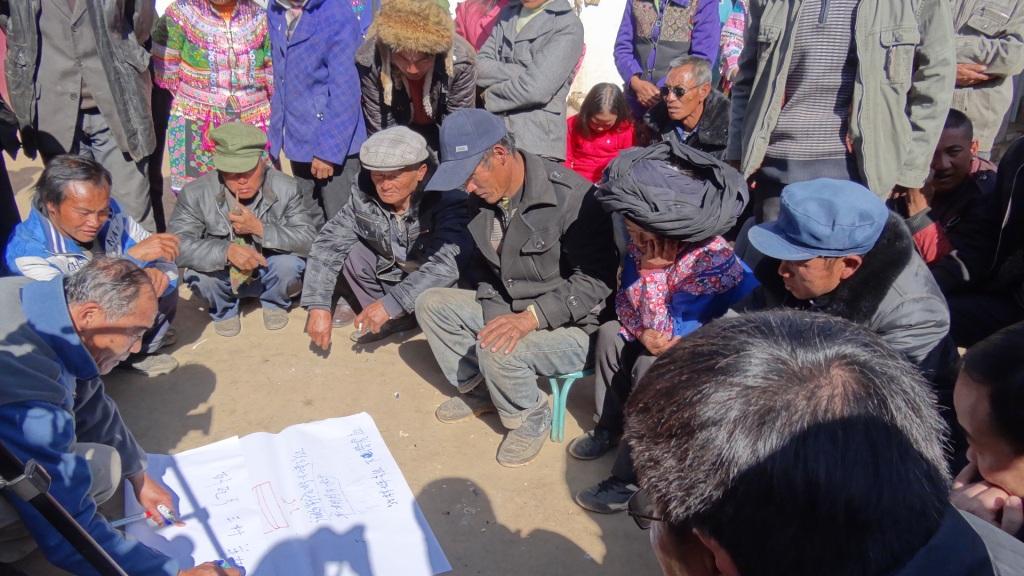
Camp for internally displaced persons at Mai Ja Yang, Kachin State on the the Chinese border.

In recent weeks, warfare in Burma’s Kachin State has increased and is now making its way closer to the Burma-China border. While the international community has paid little attention to the Kachin conflict over the past few years, understanding its complexity is now more important than ever. Failing to do so could have dire implications on the lives of Kachin women, and on diplomatic relations in the region.

Kachin State is an ethnic area in northern Burma that has long suffered from conflict with the central Burmese government. In 2011, a seventeen-year cease-fire was broken, resulting in the onset of active warfare. In spite of ongoing attempts at peace negotiations, the Burmese government has been committing atrocities– including rape, arbitrary arrest and torture– against civilians. The region has been documented to be an active conflict zone resulting in one of the worst humanitarian crises in the world. According to reports issued by the Kachin Independence Organization (KIO)—the political arm of the Kachin people– over 100,000 internally displaced persons (IDPs) have fled to border areas of Burma and China to escape the fighting, and these communities suffer from a lack of basic necessities and little to no foreign aid. Additionally, as the Kachin Women’s Association of Thailand has documented, the trafficking of women into China’s neighboring Yunnan province as forced brides has become a growing problem.

Recently, I traveled to Mai Ja Yang, the second largest city in KIO-controlled territory to interview women and men living amid the conflict about the issue of trafficking. I conducted interviews with over 25 trafficking survivors, female soldiers, women’s organizations, lawmakers, cultural leaders, IDP relief workers and administrators from the KIO. I was hosted by the Kachin Women’s Association of Thailand, an organization actively working on the issue.

A child in the Mai Ja Yang camp.

A child in the Mai Ja Yang camp.

My research revealed that gender discrimination, demand from China for brides due to the one-child policy and crippling conditions on the ground due to the military conflict within Kachin State contribute to the problem of trafficking. As former “forced brides” and others reported, the escalation of the military conflict has resulted in a sharp increase in irregular migration. Simultaneously, trafficking has become less of a priority for the KIO government, whose attention is focused on war strategy and the political process, rather than the empowerment of Kachin women.

Now, the Burma army is stepping up its attacks in a move that could increase women’s vulnerability to trafficking. As a recent article in the Irrawaddy Magazine revealed, last week the army launched an attack on a KIO military outpost near Mai Ja Yang, which shares its eastern border with China’s Yunnan province. Mai Ja Yang is home to a growing number of IDPs—men, women and children who have had to flee their homes after their villages were raided. Now, not only are these people’s homes destroyed, but their temporary camps are in danger, as well.

With fighting approaching the border areas, women living in the camps could become even more vulnerable. These women face insecurity in the form of food shortage, lack of infrastructure and basic sanitation. They also face circumstances of gender-based violence and rape. Additionally, lack of a means of income generation influences women to migrate to China to find work—a situation that leaves them vulnerable to labor exploitation and trafficking.

But the international community has been slow to respond to the conflict. As a recent Stimson Report revealed, the precarious nature of the US- China relationship has given American leaders pause in “interfering” in such a sensitive geo-political arena. Additionally, aid workers report having had difficulty accessing the IDP camps due to the ongoing warfare in surrounding areas.

Despite these cautions, it is in the interest of the Chinese, Burmese and Kachin governments to quell an increase in trafficking. Doing so would not only improve the lives of thousands of women, but it could prove beneficial for each country’s relationship with the United States. This is because the US State Department has made trafficking a primary agenda in its international policy. In fact, the State Department’s Trafficking In Persons (TIP) Report ranks every country in the world according to how well they comply with the US mandate against human trafficking. As a result, in recent years trafficking has become a number one priority on the US government’s agenda.

The policies associated with the US government’s anti-trafficking mandate are n0t always beneficial for the women they’re intended to help. As I discuss here, the US State Department sometimes gets it wrong, and trafficking continues to escalate. In the case of Burma and China, however, the US’s mandate could actually serve a useful—even diplomatic– function. Due to the transnational nature of human trafficking, cooperation between governments in the region is essential for the development and implementation of a robust anti-trafficking policy. Collaboration between the Chinese government and KIO, for example, is needed to resolve trafficking cases and bolster prevention efforts on both sides of the border. As wary as the US government is of getting involved in these relationships, the trafficking issue could potentially be an inroad yielding productive results.

Thus far, however, the only people seriously trying to combat trafficking along the Burma-China border are a handful of brave and talented activists on the ground. Mai Ja Yang is home to a number of women’s organizations dedicated to increasing the political and civil rights of women in Kachin society. These women work at great personal risk, while the Third Brigade of the KIA works to maintain their security.

But these organizations can only accomplish so much without international support. Instead of turning a blind eye to the conflict, Western governments should help them develop a robust anti-trafficking policy for Kachin State. Additionally, the US government should put pressure on the Burmese and Chinese governments to de-escalate the conflict in KIO-controlled areas. Failing to do so could not only exacerbate the precarious nature of diplomatic ties in the region, but it could lead to an increase in victims of human trafficking– the very people the US government says it is trying to help.

1 Comment

Filed under China, Current Events, ethnic policy, Myanmar/Burma, Regional Relations, SLIDER, Uncategorized, USA, Yunnan Province

The weak vs. the strong: Ethnic villagers, the government, and hydropower firms

As China increases its hydropower development plans into the 21st century, an estimated 8 million ethnic people in southwest China, many of them Tibetan, Miao, and Yi will be forced to leave their remote mountain homes. My previous posts this week focused on unjust and inappropriate compensation ethnic villagers in the Yalong River valley have received during the relocation process.  During this process, local government and hydropower development firms give very little consideration to the rights of ethnic villagers.  They also give very little consideration to  existing laws protecting these marginalized people.

In the valley between the Kala and Yangfanggou dam sites, two large billboards sport eye-catching slogans.  One says, “Maximize people’s benefits within the limits of law and policy” and the other “Crack down swiftly with the heavy hand of the law against illegal acts disturbing public affairs.”

牌 打击阻工扰工

To address the second billboard, in the eyes of the law there are two kinds of illegal acts.  One kind is simply a violation of the law.  The other constitutes a crime punishable by swift and heavy measures.  Legal expert Zhou Yong of Norway University, Oslo questions the legal grounds for the Public Security Bureau to erect this billboard.  Specifically, which law is the billboard referring to?  And to what extent do swift and heavy measures apply? He continues his critique of the local public security bureau’s abuse of the law by adding that the final judicial organ deciding cases are courts, not the public security bureau.

Citizens have the right to act and react to changes going on around them especially in ethnic areas where China’s Law of Ethnic Autonomous Areas applies.  Citizens should be aware of their rights and enjoy their rights. The role of NGOs should be to ensure that people can be protected by certain laws and regulations in ethnic areas.  In addition, basic rights of personal safety and right of property should be guaranteed.

Yang Lin, an expert in social impact assessment adds that the billboards are very thought provoking.  Reading them together seems to suggest that the government will provide you with what you need, so there’s nothing to worry about.  But on the flipside, the sign indicates that if the government does not give you what it has promised, you shouldn’t ask for it again.  This kind of ex-post behavior by relocated villagers is illegal and will be punished.

Article 27 of the UN Declaration on the Rights of Indigenous People declares:

States shall establish and implement, in conjunction with indigenous peoples concerned, a fair, independent, impartial, open and transparent process, giving due recognition to indigenous peoples’ laws, traditions, customs and land tenure systems, to recognize and adjudicate the rights of indigenous peoples pertaining to their lands, territories and resources,  including those which were traditionally owned or otherwise occupied or used. Indigenous peoples shall have the right to participate in this process.

Today China is the building more hydropower projects than any other country in the world.  In the new energy development plan, over 60 major hydropower dams and several hundred small and medium sized ones will be built along the Jinsha River (Yangtze), Lancang River (Mekong), Nu River (Salween), Yalong River, Min River Brahmaputra river, and the main stem of The number of ethnic minority people resettled will soon reach eight million. This will be the largest-scale involuntary resettlement in China’s history.

A promotional film for the Ertan dam says that all Chinese people will benefit from hydropower and that China will reach through to new heights from which all mankind will benefit.

A local villager from Danbo disagrees.

“We had to go away for seven days to attend the review and assessment process.  Each family had to send a representative.  We are uneducated and had no idea who might be in charge of the assessment.  All we got were review forms.”  During our meeting she produced a thin stack of official looking forms.  “My husband became mentally ill because of this.  He is still taking medicine to control the illness.”

As a country, China has a plan for the development of the national economy and will try its best to realize the goal of energy security and sustainable resource development.  But hydropower development firms only seek to maximize profits.  The country has power, and the firms have money.  When power and money come together they will inevitably put a third party at disadvantage.

When “weak” individuals face a “strong” government and hydropower firm, the interests and needs of these individuals usually cannot be protected or heard. The Chinese government should fulfill its obligations by exercising its administrative powers within the framework of law. It should solve this issue according to the current laws, regulations, and the international conventions that China has approved.  For example the UN Human Rights Convention requires that China follow related international law and assume international obligations. When solving conflicts between three parties, the most important thing is to make sure that concerns of the people can be heard. Throughout this process, people should be able to make use of various channels and platforms to raise their concerns.

Yu Xiaogang surveys a group of relocated villagers in the Yalong River Valley

Yu Xiaogang surveys a group of relocated villagers in the Yalong River Valley

During our surveying, countless villagers vented their frustration to my research team. “We can’t sleep at night.  We can’t concentrate on our work during the day, and why is that? Back then, though we were poor, we had enough food and warm clothes.  If we move to a new place, we will lose these.”

Another shared, “We can’t afford to leave, but we can’t afford to stay.  We are sorry to cause such troubles for the Party, but this is a really big problem.”

“They used dynamite this time.  The gods of the mountains and the Buddhist spirits all left.  Some people will die now.  Some will fall ill.  Some will go crazy.”

This is the 2nd in a five part series on ethnic resettlement and the impacts of hydropower development by Yu Xiaogang.  Link here to part 5 and here to link back to part 1.


Leave a Comment

Filed under China, Current Events, Economic development, Energy, Environment and sustainability, ethnic policy, Governance, Hydropower & Ethnic Resettlement in China's Yalong River Valley, SLIDER, water

Regional Roundup for the Week of 3.23.14

“The search continued this week for Malaysia Airlines flight 370, with minimal leads and conflicting reports increasing frustration among relatives of the missing passengers. The current search has shifted to focus on a swath of the southern Indian Ocean where Australian and Chinese searchers spotted debris, however inclement weather prevented confirmation that they were the remains of MU370. Malaysia’s handling of the incident has sparked strong criticism for a lack of transparency to both the public and to countries partnering in the search for the missing plane.

Details also emerged this week of extensive NSA hacking into Huawei servers in order to gain access to both computer and telephone networks, escalating tensions over cyber espionage between the United States and China. Michelle Obama is visiting China for a weeklong visit that is expected to focus on education and away from political topics, while President Obama is scheduled to meet with Xi Jinping at the Hague to discuss Russia and Ukraine.

Thailand’s Constitutional Court voided the results of February elections because of incomplete polling but did not indicate when another election might be held, raising the possibility of fresh protests in Bangkok that had waned since the election.”

ExSE  FOCUS

Retracing a Lost Flight: A Routine Flight, Till Both Routine and Flight Vanish | NYT — As the search stretches on, authorities look back at the data for clues of the plane’s whereabouts.

MH370: Chinese satellite spots potential debris | Guardian — A Chinese satellite has made a fresh sighting of potential debris from the missing Malaysian Airlines flight MH370 floating in the southern Indian Ocean, with ships being sent urgently to investigate.

Plane Debris Would Be Modest Clue Two Weeks After a Crash, Experts Say | NYT — If searchers spotted floating debris from the missing Malaysia Airlines jet in the ocean, it would be more dispersed and farther from the wreckage sunk beneath the waves, experts said.

Flight MH370 Shows Limits of ASEAN’s Maritime Cooperation | Diplomat — The limits of regional Search and Rescue cooperation were evident following the disappearance of MH370.

Thai Court Voids Election, Adding to Turmoil | NYT — The Constitutional Court said the election was invalid because voting was not held across the country on the same day, as required by the Thai Constitution.

Politics Won’t Be on First Lady’s China Itinerary, Aides Say| NYT — The White House is billing Michelle Obama’s visit as a cultural exchange, but political overtones will be almost impossible to avoid.

N.S.A. Breached Chinese Servers Seen as Security Threat | NYT — As the United States made a public case about the dangers of buying from Huawei, the Chinese telecommunications giant, classified documents show that the National Security Agency was creating its own back doors — directly into Huawei’s networks.

Surging ASEAN Trade Prompts Banking Realignment | Diplomat — Major banks are realigning their businesses in Southeast Asia, where a winding back of cross-border tariffs and regulations has led to sharp rise in regional trade ahead of the launch of the ASEAN Economic Community (AEC).

Turkestan Islamic Party Expresses Support for Kunming Attack | Diplomat — In an online video, TIP’s leader praised the deadly attack in Kunming and promised further violence.

Suspected Uyghurs Rescued in Thai Raid of Human Trafficking Camp | Diplomat — 200 refugees rumored to be Chinese Uyghurs were rescued from a human trafficking camp in Thailand last week.

Uyghurs Test ASEAN’s Refugee Credentials | Diplomat — Despite facing religious and ethnic discrimination in China, Uyghur refugees are often sent back.

Thousands to March for Termination of Burma’s Myitsone Dam | Irrawaddy — Thousands of protesters are expected to join a march from Rangoon to the site of the proposed Myitsone dam in Kachin State, calling for the Burma government to permanently cancel the project.

CHINA

Developer’s Collapse Adds to China Concerns | NYT — Weak housing prices for February contribute to signs that a slowdown in China’s property sector could represent a systemic risk to the economy.

The World Needs China’s Leadership | Diplomat — A more stable and prosperous world necessitates a China that’s more active and assertive in global affairs.

China Releases Plan to Incorporate Farmers Into Cities | NYT — An ambitious government blueprint is the country’s first attempt to broadly coordinate the introduction of hundreds of millions of rural residents into cities.

Tiger, Tiger, Burning Bright | SEA Globe — The greatest unsolved mystery in China right now is not the disappearance of Malaysian airliner MH370 but the fate of Zhou Yongkang, the feared former head of China’s security apparatus. From 2007 to 2012 a member of China’s top political body, the Politburo Standing Committee, Zhou is now reportedly under investigation for corruption, casting suspicion on hundreds, if not thousands, of his of his allies, subordinates, and relatives.

China’s Central Bank Allows Its Currency More Volatility | NYT — The bank doubled the amount by which the renminbi would be permitted to rise or fall each day, making it more responsive to market forces.

Xi Jinping and Social Media: Harnessing the People’s Voice | Diplomat — China’s president uses social media to attract public support, while cracking down on social media users.

Obama will meet Xi Jinping of China in attempt to isolate Russia over Ukraine | Guardian — White House extends president’s overseas schedule as adviser Rice says ‘US is leading … in supporting government of Ukraine’

Baucus in Beijing: New Ambassador, Same Priorities | Diplomat — Max Baucus is the latest in a string of trade-oriented U.S. Ambassadors to China.

Is China Underfunding its ‘War on Pollution’? | SEA Globe — China’s environmental spending showed a year-on-year drop of almost ten percent in 2013, according to the budget report delivered at China’s annual parliamentary gathering.

REGION

As Malaysia Goes Its Own Way Over Missing Jet, China Finds Limits to Power | NYT — Within China, relatives and friends of the passengers press for answers, but the government finds itself helpless as Malaysia takes the lead in the investigation.

Nations Start to Collaborate in the Search | NYT — The expansion of the multinational operation off the western coast of Australia illustrates how the hunt for the Malaysia Airlines plane has helped dampen regional tensions.

Ripple effect | SEA Globe — The tightening of the US Federal Reserve’s monetary policy will confront Asean member states with tougher financing conditions and lower capital inflows, putting growth prospects at risk.

Could Flight 370 Damage China-Malaysia Relations? | Diplomat — Frustrations in China towards Malaysia’s handling of the search and rescue mission could spill over to affect ties.

China’s Newest Maritime Dispute | Diplomat — China’s hardly in need of more territorial disputes with neighbors. Yet, it has started a new one with Indonesia.

What Flight MH370 Tells Us About the US in Asia | Diplomat — In the wake of a terrible tragedy, the U.S. is proving why it is indispensable to the Asia-Pacific region.

Malaysian Firms Eye Construction Prospects in Burma | Irrawaddy — With its companies doing over US$1.6 billion worth of business in Burma, Malaysia was ranked as the seventh-biggest source of foreign investment into the country by the end of January 2014.

CAMBODIA

Top 10 books about Cambodia | Guardian — From a portrait of Pol Pot to a collection of ancient oral tales, here are 10 titles essential to understanding the Asian nation.

Pushing the boundaries | SEA Globe — Thy Sovantha was born in 1995, the year after Cambodia’s opposition leader Sam Rainsy left his post as finance minister to start his own political party. Almost two decades later, Sovantha, whose personal Facebook page has more than 215,000 followers and counting, is an entirely new political entity: a young woman with huge support in a country where politics is the realm of old men.

INDONESIA

Indonesia’s forest fires feed ‘brown cloud’ of pollution choking Asia’s cities | Guardian — An acrid blanket of haze is hanging over the cities of south-east Asia, where 700,000 people a year die prematurely from the effects of air pollution. Industry and climate change are being blamed, but governments are slow to act.

Indonesia: A Legal Plot to Thwart Corruption Fight | Diplomat — Legislators try to hobble the country’s popular anti-corruption body.

Battle for lashes | SEA Globe — The price of Western beauty may be too high for the 100,000 workers who toil in central Java’s lucrative false-eyelash industry.

MALAYSIA

George Town Memo: Malaysia’s Deep Political Rifts Exposed Amid Mystery of Missing Flight | NYT — Malaysia’s opposition leaders have strongly criticized the government for focusing public attention on Flight 370’s pilot, an opposition supporter.

The Lede: Malaysian Opposition Leader Calls Speculation About Pilot of Missing Jet ‘Absurd’ | NYT — Malaysia’s opposition leader, Anwar Ibrahim, dismissed speculation that the pilot of the missing Malaysia Airlines jet, a supporter of his movement for democratic change, might have hijacked the plane for political reasons, in an interview with Britain’s Channel 4 News on Friday.

Pilots’ Possible Role in Flight 370 Vanishing ‘Unthinkable’ to Friends | NYT — The two men at the controls of Flight 370 led ordinary lives that revolved around family and flying, those who knew them said.

MYANMAR/BURMA

Burma’s homosexuality law ‘undermining HIV and Aids fight’ | Guardian — A law criminalising “unnatural” sex is reinforcing the stigma that leaves gay men in Burma hidden, silenced and shamed, hindering efforts to contain HIV/Aids, claim experts and activists.

Myanmar: The Worsening Plight of the Rohingya | Diplomat — It has been a tragic start to the year for Myanmar’s persecuted Muslim minority.

Myanmar Fighting a Losing Battle Against Opium Addiction | Diplomat — Myanmar, formerly the world’s largest opium producer, is experiencing a resurgence in poppy cultivation as the government seeks truces with rebel groups. In opium-growing areas, such as the village of Nampakta, officials estimate that half of the population is addicted.

Burma’s Marine Eden Braces for Tourism | Irrawaddy — The Mergui archipelago has been called the “Lost World,” but outsiders have found it—first fishermen, poachers and loggers, and now developers and high-end tourists. The people losing this world are the Moken, who have lived off the land and the sea for centuries.

PHILIPPINES

Communist Party Chief Held in Philippines | NYT — Philippine security forces arrested the chairman of the underground Communist Party of the Philippines and his wife on Saturday, the military said, dealing the biggest blow in years to the decades-old rebel group.

Eyewitness: Luzon Island, Philippines | Guardian — Photographs from the Guardian Eyewitness series

SINGAPORE

Seeing red | SEA Globe — Eager collectors and rabid critics ate up Art Stage Singapore 2014, bolstering the city-state’s presence on the global art radar.

THAILAND

Thailand to stage fresh elections after court rules February poll invalid | Guardian — Thailand’s constitutional court has ruled that a general election held in February was invalid, setting the stage for a new vote and further deepening the country’s political crisis.

Thailand needs friends to help it through its crisis | Jonathan Prentice | Guardian — Thailand faces truly existential challenges. It is riven by social, economic, ideological and regional divisions. Resignation seems to give way only to heightened extremism; vituperative intolerance has damaged any prospect of talks. Outside powers should not misinterpret a lull in the streets as progress. Without a concerted attempt to alter course, Thailand remains at risk of tipping into violent confrontation.

JOBS
Position: Assistant Director-Center for the Pacific Rim
University of San Francisco
Reporting directly to the Executive Director, the Assistant Director provides key operational and administrative support for the Executive Director and the Center. The successful applicant will be responsible for and work closely with the Executive Director in the areas of grant writing and administration, communications and marketing, and event management and public programs, and will be the first point of contact for communications and visitors to the Center related to public programs, visiting scholars, fellowship programs and conferences/events.
Minimum Qualifications: Bachelors Degree in field relevant to Asia Pacific Studies; Masters Degree desirable  At least four years of experience working in higher education, with preference for areas related to international programs or student services.
To be considered for this position please visit our web site and apply on line at the following link:http://apptrkr.com/449204


Leave a Comment

Filed under Current Events, NEWS DIGEST, SLIDER, Uncategorized

Terrorists or Refugees?: Case of ‘Uighur’ Migrants Unsolved in Thailand

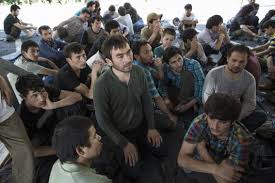
Detained Uighurs in Thailand. Photo: Reuters

Detained Uighurs in Thailand. Photo: Reuters

In the past two weeks, close to 300 suspected Uighur migrants were discovered in the jungles of southern Thailand. Since their discovery and apprehension by Thai authorities, accusations of terrorism and rebuttals to these claims have flown.

Quoting an unnamed source attached with Thai police, the Bangkok Post published an article claiming that the migrants were indeed Uighurs. They intended to use Thailand as a transit point to go to Turkey, where they would be trained in terror tactics that could be used in their native China and elsewhere.

Recently, two groups of migrants have been found in the south of Thailand. The first, discovered March 12 at a rubber plantation near Songkhla, was a group of 219 people, containing dozens of women and children. Another group of 77 were arrested near a school in Sadao district on the 20th of March.

The same source alleged that the migrants were identified as Chinese Uighurs and not Turks, as they have claimed, by bus tickets and items that had Chinese writing on them. “Immigration police are not stupid,” the police source added.

Turkey has sent diplomats to southern Thailand to verify the migrants’ claims of Turkish nationality. The migrants were able to speak with diplomats when interviewed, however when met by an interpreter from the Thai Immigration Bureau they could not communicate well. “The interpreter believed they could not speak Turkish,” the source said.

A named source, Thai Immigration Bureau chief Lt. General Panu Kerdlarppol, refused to give any specific details regarding the migrants’ nationality or ethnicity. However, historically and geographically, it would make more sense that they were Uighur. Thai authorities have been aware of a Uighur migrant presence in the country since last year.

In December 2013, 112 refugees were arrested in the country’s south and are now being held at a detention center. Thirty of the migrants have so far been positively identified as Uighurs. Following the arrests, Lt. General Panu met with Chinese authorities in Kunming about the issue.

There are some, however, that dispute claims of the migrants’ nefarious motives. Speaking through the Phuket Wan Tourism News, the New York-based Human Rights Watch dismissed the accusations.

‘The groups in question are composed of significant numbers of small children, and more than a few pregnant women,” Phil Robertson, Deputy Director, Asia Division, Human Rights Watch, said today, ”so one wonders how unnamed police sources have suddenly somehow jumped to a conclusion that these people are ‘terrorists.”

Mr. Robertson links these claims of terrorism to Thailand’s treatment of asylum seekers in the past. Starting in 2009, hundreds of Muslim Rohingya refugees from Myanmar began regularly washing ashore on Thailand’s western coast. These refugees, fleeing ethnic violence in their home, were also labelled as terrorists. Oftentimes, they were pushed back out to sea by units of the Thai navy.

”It seems pretty clear that Thai officials have some ulterior motives in trying to tar this entire group with the ‘terrorist’ label,” Mr Robertson said.

He believes the end game is to deport the migrants to China, ”I suspect that such ‘terrorist’ accusations are a prelude to some Thai government officials trying to force these groups back to China in what would be a clear violation of international law,” Mr Robertson surmised.

Migrants claiming Turkish nationality were also arrested in Malaysia this month, though no further word on their situation has been released.


1 Comment

Filed under China, Current Events, ethnic policy, Kunming Train Station Attack, Regional Relations, SLIDER, Thailand

Hydropower and ethnic resettlement in the Yalong River valley

Sichuan's Yalong River Valley.  Image: josephrock.net

Sichuan’s Yalong River Valley. Image: josephrock.net

The Yalong river is one of the largest tributaries of China’s Yangtze river watershed.  Originating in Qinghai province, the 1368 kilometer long river system creates some of the deepest gorges in the world falling 3180 meters in elevation before flowing into the Yangtze at Panzhihua in southern Sichuan province.  According to the 2013 Twelfth Five Year Plan for resources management issued by the Chinese National Energy Administration, 21 dams will be built on the mainstream of the Yalong River and two of the dams will be the highest in the world.  The Plan also includes the completion of several hydropower projects which have been on hold since 2005 due to concerns about the fragility of the local ecosystem and culture. Continue reading →

5 Comments

Filed under China, Current Events, Economic development, Energy, Environment and sustainability, ethnic policy, Governance, Health, Hydropower & Ethnic Resettlement in China's Yalong River Valley, SLIDER, water

The Economics of the Kunming Massacre

In the wake of the Kunming massacre, the mood in Beijing is more choleric than somber. President Xi Jinping immediately announced a nationwide crackdown on terrorism and military troops were rapidly posted at train and bus stations throughout the country. Armored vehicles now patrol Kunming, Xinjiang natives have been told to register themselves at local police stations in Qinghai province and in Guangxi province authorities have asked citizens to report if they see anyone from Xinjiang — anyone at all.

President Xi also issued a gag order on local reporting, with coverage in Kunming Daily and Yunnan Daily provided by Xinhua reporters in Beijing. Meanwhile China Daily featured a front page photograph of President Xi shaking hands with an ethnic Uighur member of the PCC (China’s Senate). But strengthening national unity goes beyond public cries for concord and front page handshakes. It also involves eliminating the perceived cause of the conflict, and the national narrative is that this cause has more to do with nomadism or Islamist ideology than the fact that employment opportunities for Uighur people, even in their homeland province, are dismally inadequate. In 2009 Ilham Tohti, economics professor at Beijing’s Central Nationalities University and an ethnic Uighur, spoke with Radio Free Asia and suggested jobs might be the key to settling unrest.

But rather than address economic pressures, the government continues to focus on Islam as the catalyst. In 2013 police in Xinjiang began harassing women in head scarves and men with beards. Radio Free Asia reported how one man, with no prior record of violence, stabbed a police officer when he was forced to shave. Ehmetjan Niyaz, an intelligence agent with the local security bureau, commented that they had been advised to investigate men with beards. In Xinjiang, that essentially means all Uighur men.

In other words, the more Beijing singles out Muslims as a means of burking separatism, the more separatist Xinjiang Muslims become. Gardner Bovingdon, Professor of Central Eurasian Studies at Indiana University and author of The Uyghurs: Strangers in Their Own Land, writes “the closure of mosques, supervision and dismissal of clerics, and the prevention of religious practice by the young — has made Islam in Xinjiang more rather than less political”.

Another government strategy has been to manipulate the demographics of the region. Of the 60% of Xinjiang’s population that is not Uighur, Kazakhs constitute 7% with Hui being another 4.5%. The remaining dozen or so minority groups collectively make up 8.5% while the final 40% is entirely ethnic Han. According to Dr Stanley Toops of Miami University, from 1953 to 1964 the presence of ethnic Han rose from 7% to 33%. Since the 1970s, this number has remained stable at around 40%, making it one of the fastest demographic shifts in Chinese history.

In 2007 Gaël Raballand and Agnès Andrésy published an article entitled “Why Should Trade between Central Asia and China Continue to Expand?” In it, the authors describe how the Xinjiang Construction and Production Corps, also known as the bingtuan, was created in 1954 to encourage the movement of Han Chinese into the region by creating infrastructure there. In addition to creating an ethnic Han workforce to outnumber local Uighurs, the bingtuan also helps ensure locals remain calm with a security force of more than 120,000 heavily-armed troops. As The Economist points out, propaganda is par for the course:

“A museum in Shihezi, a city in northern Xinjiang controlled by the corps, displays a photograph of members of the bingtuan militia armed with rifles, crouching behind a wall during a 1990 uprising by Uighurs near the city of Kashgar. The militia, says the caption, played an important role in crushing the unrest. Amnesty International, a human-rights group, says 50 Uighurs were killed in the incident, including some who were shot while running away.”

Morris Rossabi, who teaches History at Columbia University, points to the Tang Dynasty as the origin of the bingtuan. Famously cosmopolitan, the Tang Dynasty celebrated the Turkic culture of present-day Xinjiang, staffing its frontier armies with Turkic soldiers and even allowing some, like the great Ashina Se’er, to rise to the rank of Tang general. This helped frontier lands become self-reliant and even afforded some measure of political autonomy. The bingtuan follows this tradition by providing Xinjiang the means for economic self-reliance, yet deviates sharply by staffing its workforce with ethnic Han rather than local Uighurs.

With Xinjiang currently contributing roughly 4% of the nation’s GDP (primarily through oil reserves) as well as Beijing’s Western Development policy, which hopes to see China’s western provinces contribute greatly to the nation’s economy, Uighurs will remain a minority in Xinjiang for the foreseeable future. Dr Ilham Tohti has stated he is not opposed to state-orchestrated migration policies, but that these policies need to be carefully reviewed, pointing that if there are enough jobs to warrant the migration of millions of ethnic Han into the region, then why aren’t there enough jobs for the people already living there?

In 2006 Dr Tohti launched a website promoting understanding between ethnic Han and Uighurs, but in 2009 it was shut down and Dr Tohti was arrested. He was released shortly before President Obama’s visit to Beijing but in January 2014 the BBC reported he had again disappeared, that his family had no knowledge of his whereabouts and that the government was charging him with separatism — a crime punishable by death.

For now, events like the Kunming massacre serve to further Beijing’s program of economic development in Xinjiang by providing carte blanche to those who view ethnic identity as a major roadblock to China’s economic future and by giving Xinjiang politicians an easy scapegoat when they fail to provide economic paths of opportunity.

Leave a Comment

Filed under China, Current Events, ethnic policy, Kunming Train Station Attack, SLIDER, Yunnan Province

Regional Roundup for the week of 3.16.14

The big topic this week was the mysterious disappearance of Malaysian Airlines flight MH370 en route from Kuala Lumpur to Beijing on Saturday. What initially appeared to be simply a tragic accident has shifted to an investigation into a  much more complicated incident after it emerged that crucial communication devices on the plane appeared to be intentionally disabled, and that the plane may have flown for hours after its last contact. Search efforts are still underway 10 days after the plane disappeared, involving nearly twelve countries in the Southeast Asian region and extending well into the southern Indian Ocean.

Malaysian authorities have faced intense criticism over their perceived lack of transparency regarding the investigation and for conflicting statements about the plane’s disappearance. One of the strongest critics has been China, with Chinese citizens comprising two-thirds of the passengers and frustration mounting amongst their families waiting for news.

ExSE FOCUS

Flight MH370: Malaysia asks for help as search for missing plane continues | Guardian — Malaysian officials have requested official assistance from more than a dozen countries in south-east and south Asia in a desperate bid to find missing Malaysian Airlines flight MH370, after new satellite data indicated the aircraft flew on for hours after it last made contact with civilian radar.

Series of Errors by Malaysia Mounts, Complicating the Task of Finding Flight 370 | NYT — A week after the plane disappeared, the trail is even colder as the search now sprawls from the snowy peaks of the Himalayas to the empty expanses of the southern Indian Ocean.

If MH370 crashed in southern Indian Ocean it wouldn’t be seen or heard | Guardian — The empty expanse of water is one of the most remote places in the world and also one of the deepest, posing potentially enormous challenges for the international search effort focusing on the area, one of several possible crash sites.

Malaysian Prime Minister’s Statement on Flight 370 Investigation | NYT — The text of Prime Minister Najib Razak’s statement Saturday.

Amid Search for Plane, Malaysian Leaders Face Rare Scrutiny | NYT — Worldwide bafflement at the disappearance of an airplane has challenged Malaysia’s paternalistic political culture and exposed its elite to withering judgments.

Lincang Journal: Communism Is the Goal at a Commune, but Chinese Officials Are Not Impressed | NYT — A utopian farming commune in Yunnan Province probably would have pleased Chairman Mao, but the Communist Party has never had much tolerance for independent groups, and the community faces a campaign of intimidation.

220 Are Detained in Raid on a Thai Jungle Camp | NYT — Those arrested are thought to be Uighurs, a Turkic people from western China who have suffered repression from the ethnic Han who rule China.

A Marketplace Dispute in Central China Turns Deadly | NYT — News reports said a dispute between two food vendors in Changsha escalated, leaving five people stabbed to death and one man shot and killed by the police. /Reports popped up in western media outlets late Friday morning as well as two small articles on the Xinhua homepage which were quickly scrubbed by early afternoon./

China’s Sudden WeChat Crackdown | Diplomat — A sudden censorship crackdown on popular social media app WeChat has Chinese netizens in a bind.

For Myanmar Muslim Minority, No Escape From Brutality | NYT — Rohingya Muslims, denied citizenship in Myanmar, pass through Thailand on their way to relative safety in Malaysia or, if they cannot afford to pay unscrupulous brokers, languish there.

CHINA

News Analysis: China Torn Between Policies and Partnership | NYT — China is struggling to find a neutral diplomatic position over Russia’s intervention in Ukraine.

China’s Hard Line: ‘No Room for Compromise’ | NYT — Wang Yi took a strong stand Saturday on China’s territorial disputes, saying it will “never accept unreasonable demands from smaller countries.”

Its Growth Targets Elusive, China Focuses on Jobs and Quality of Life | NYT — As China’s leader emphasized quality of economic growth over a set target, the government reported poor performance in areas like industrial output during January and February.

China’s Central Bank Allows Its Currency More Volatility | NYT — The bank doubled the amount by which the renminbi would be permitted to rise or fall each day, making it more responsive to market forces.

China Details Plans to Liberalize Interest Rates and Encourage Private Banks | NYT — Analysts welcomed the announcements, which signaled progress in a far-ranging plan of overhauls designed to modernize the country’s financial system.

China Puts a Stop to Plans for Virtual Credit Cards | NYT — China’s central bank said it wanted to assess the risks that customers could face using the untested services from the online giants Alibaba and Tencent.

For Foreign Journalists in Beijing, It’s All About Asking the Right Question | NYT — A news conference with the Chinese prime minister and foreign journalists each year is broadcast worldwide, but is actually staged, with the complicity of many of the largest news organizations in Western journalism.

Why Do Men Dominate Chinese Politics? Because They’re ‘Just Too Superb’ | NYT — The National People’s Congress has slightly more women than in previous sessions, but women still remain a rarity at the top levels of Chinese politics. This gender gap might be due to a “quality” issue, some female delegates said.

The United States of China | NYT — Federalism’s biggest benefit for China is its promise to address the concerns of restive minority regions.

N.B.A. Looks to Asia for Next Growth Spurt | NYT — With China as the big revenue prize, the National Basketball Association is steadily stoking interest and wooing fans across the region.

REGION

U.S. Takes Back Seat in Malaysian Jet Inquiry | NYT — Some of the world’s foremost experts on crash investigations are in Kuala Lumpur, but technically only to assist the Malaysian government, and they are saying nothing.

The X Factors: How Third Parties Destabilize US-China Relations | Diplomat — Third party actors such as the Philippines, Japan, and North Korea have the biggest potential to upset US-China ties.

Second Thomas Shoal Tensions Intensify | Diplomat — The Philippines, China, and the U.S. are upping a war of words over Beijing’s blocking of Filipino civilian vessels.

Asia-Pacific countries failing to stop forest loss, UN warns | Guardian — Region losing 2m hectares of forest and grasslands every year, with area the size of India and Burma together requiring restoration.

Can India Catch Up With China in Myanmar? | Diplomat — China has a powerful economic presence, but India has some historical and institutional strengths.

Australian journalist faces jail after refugee report angers Thai navy | Guardian — Alan Morison and Thai colleague Chutima Sidasathian face defamation charges for reporting alleged abuse and human trafficking.

CAMBODIA

In Cambodia, Voicing the Struggle | NYT — Mam Sonando, described by his supporters as Cambodia’s only truly independent radio broadcaster, says he is fighting to “protect people who have been victimized.”

INDONESIA

Governor of Jakarta Receives His Party’s Nod for President | NYT — The move by the party of Joko Widodo, who has become a political phenomenon, ended speculation over whether the party chairwoman would stand in his way.

LAOS

Vanished: Laotian development worker still missing after more than a year | Guardian — Family and colleagues believe Sombath Somphone was forcibly detained, joining ranks of others taken in ‘forced disappearance’.

Wife remembers Sombath Somphone, 15 months after he was seized in Laos – video | Guardian — Singaporean national and Unicef representative Shui Meng Ng speaks to Amnesty International about her husband Sombath Somphone, who was forcibly disappeared in Laos.

MALAYSIA

Malaysia Officials Open Criminal Inquiry Into Missing Jet | NYT — Prime Minister Najib Razak said in a news conference that data indicated that someone took action to change the course of the plane, which traveled for seven hours after it lost contact with ground control.

Radar Suggests Jet Shifted Path More Than Once | NYT — A military radar track appeared to show that Malaysia Airlines Flight 370 climbed to 45,000 feet after disappearing from civilian radar and altered its course as if still under a pilot’s command.

Jet Hunt Shifts as Findings Hint at Longer Flight | NYT — Experts were poring over military radar data that seemed to indicate that the missing Malaysian flight had turned west and stayed aloft long after its last contact with ground controllers.

Frustration Over Malaysian Flight Turns to Anger | NYT — Insults and water bottles were thrown at Malaysia Airlines staff members in Beijing over the lack of information about what has happened to Flight MH370.

False Leads Set Back Search for Malaysian Jet | NYT — Authorities widen the search area after suspected debris and an oil slick turn out to be unconnected to a Malaysia Airlines flight that vanished Saturday night.

MYANMAR/BURMA

Ban on Doctors’ Group Imperils Muslim Minority in Myanmar | NYT — The government halted the work of Doctors Without Borders after some officials accused it of favoring the Muslim Rohingya over Buddhists.

International Education: Education Programs Try to Close Gaps in Myanmar | NYT — International programs are helping to tackle Myanmar’s shortfall in higher education and vocational training after decades of military rule.

UK urged to increase aid to Burma in bid to press home democratic gains | Guardian — As Burma sheds its pariah status after decades of military dictatorship, the international development committee (IDC) urged the Department for International Development (DfID) to step up its involvement in a country that, once among the richest in south-east Asia, is now among the poorest.

PHILIPPINES

US-Philippines Reach Deal on US Military Access | Diplomat — Manila will welcome the U.S. military back to the country after ejecting it in 1992.

THAILAND

How Thailand’s trade in fake passports fuels crime gangs around the world | Guardian — Have you ever lost your passport on holiday? The illegal trade in forged and doctored travel documents props up criminal activity all around the world: from human trafficking to terrorism

Italian’s passport used to board flight MH370 was stolen in Phuket | Guardian — The Italian national who was believed to be on flight MH370 has told Thai police that his passport went missing last year from a motorbike rental shop on the tourist island of Phuket, where hundreds of passports are thought to be lost or stolen every year in a black-market racket.

Court Deals Blow to Thai Government by Halting $62 Billion Rail Project | NYT — A transportation plan that is a centerpiece policy of the ruling government is called unconstitutional after a challenge by the opposition party.

VIETNAM

Oil slicks spotted in search for missing Malaysia Airlines plane | Guardian — Vietnam air force spots oil slicks off coast after Malaysian Airlines flight MH370 disappears with 239 people on board during flight from Kuala Lumpur to Beijing.

The battle of Dien Bien Phu, 1954 – a picture from the past| Guardian — The ferocious 55-day siege of the last French stronghold in northern Indochina began on 13 March 1954. Vietnamese photographers restaged these scenes shortly after the real fighting occurred, with French casualties still lying on the battlefield.

Leave a Comment

Filed under Current Events, NEWS DIGEST, SLIDER, Uncategorized

‘Uighur’ Refugees Arrested in Thailand, Malaysia: Part of a Larger Trend?

Detained Uighurs in Thailand. Photo: Reuters

Detained Uighurs in Thailand. Photo: Reuters

Last week, East by Southeast, in a piece hypothesizing the motives of the Kunming train station attackers, made the connection between Uighur asylum seekers, Yunnan and Southeast Asia. In the analysis, ExSE posited that Thailand was a likely destination for Uighur refugees as they made their way from Xinjiang, through Yunnan and into Myanmar or Laos. This past week, two separate incidents in near the border of Thailand and Malaysia occurred that appear to confirm this hypothesis.

News was released on Thursday that Thai authorities had rescued 200 people from a human smuggling camp in the south of Thailand. During a raid on Wednesday, police discovered 200 people imprisoned in a camp suspected to be used for human trafficking.

The group, which includes 78 men, 60 women and 82 children, at first claimed to be Turkish, despite having no documents to confirm that. However, they have now been identified as ethnic Uighurs from China by a US-based organization.

With their identities confirmed, Thailand has faced calls to not to deport the refugees, with the US State Department also weighing in.

“We are concerned about Uighurs generally (and) welcome reports that these Uighurs were rescued,” State Department spokeswoman Marie Harf told reporters Friday. “We’re encouraging Thailand to make sure their humanitarian needs are met.”

US-based Human Rights watch also urged the Thai government not to deport the refugees. “Thai authorities should realize that Uighurs forced back to China disappear into a black hole,” Brad Adams, the organization’s Asia director said in a statement.  “They need to allow all members of this group access to a fair process to determine their claims based on their merits, not on Beijing’s demands.”

Refugees on the way to a Thai detention center

Refugees on the way to a Thai detention center

Despite these calls, dozens of the refugees were sentenced for illegal entry by a Thai court on Saturday, with each person assessed a fine of 4,000 baht ($124). For now, the men will be taken to an immigration detention center and the women and children will be taken to a shelter, according to Police Major General Thatchai Pitaneelaboot.

In a possibly related story, 62 people were arrested just across the border in Malaysia last week. Like the group caught in Thailand, the Malaysian also claimed to be Turkish refugees. The group of alleged Turks were found near the border fence during routine patrols early Thursday morning Deputy Superintendent Sivam of Malaysia’s General Operations Force said in a statement.

Despite their claims of Turkish nationality, those arrested were not carrying valid travel documents or identification papers and historically, there has been a small, if nonexistent presence of illegal Turkish immigrants in the region. In light of this and the arrests in Thailand, some in the media believe that the alleged Turks might in fact be Uighurs from China. If so, this would mark the largest number found in Southeast Asia to date.

If both groups arrested are indeed Uighur refugees, their escape to Southeast Asia wouldn’t be without precedent. Since Cambodia deported 20 Uighurs back to China in 2009, there have been a string of similar deportations in the region. In 2010, Lao PDR deported a group of seven Uighur refugees back to their native Xinjiang in northwest China and in 2011 and 2012, Malaysia deported separate groups of refugees to China. Each deportation case has been heavily criticized by rights groups like Amnesty International and Human Rights Watch. Human rights groups fear that once repatriated, Uighurs face a grim future of long prison sentences and possible torture. Refugees deported back to China from places like Pakistan and Cambodia have all faced life prison terms upon their return.

The threat of prison is likely a reason why those arrested in Thailand and Malaysia have claimed to be Turks when discovered. Instead of admitting to Chinese nationality and facing the possibility of deportation back to China and likely prison time, the refugees opted for claiming another nationality. Seeing that the Uighur population is nearly all Muslim and speaks a Turkic language, claiming Turkish citizenship was a natural choice.

However, as is the case with both groups of refugees, these people’s true identities have yet to be discovered. If they aren’t Turks, are they really Uighurs? If they are Uighurs, how did they get to the Thai-Malaysian border and why did they come this far? Was Malaysia, a Muslim-majority country with labor shortages, the final destination? If both groups are indeed Uighur, this would mark a new level of southward migration for Uighur refugees. Might this also tie them to Kunming train station attackers, as East by Southeast hypothesized? For now, these are only questions, but ExSE will be searching for answers.


1 Comment

Filed under China, Current Events, ethnic policy, Kunming Train Station Attack, Malaysia, Regional Relations, SLIDER, Thailand, Uncategorized