Tag Archives: Loans

China’s economic capital in the Philippines: Problems and prospects

Over the last two decades the improved bilateral relations between China and the Philippines led to the increased inflows of Chinese economic capital—as foreign direct investment (FDI) and aid—in the Philippines. I argue that China’s foreign aid, if managed correctly will immensely benefit the Philippines.

During the Arroyo administration (2001-2010), the number of Chinese aid projects ranging from commercial and concessional loans to grants increased exponentially. Some of these projects were ultimately cancelled such as the ZTE/North Rail projects, and CHED Cyber education projects while others like the Banaoang Pump Irrigation Project, General Santos Fishing Port Complex Expansion, and Agno River Integrated Irrigation project were successful yet publicly invisible. However, after the Aquino administration (2010-2016) mounted a legal challenge to China over South China Sea claims, Beijing halted new loans and aid projects.

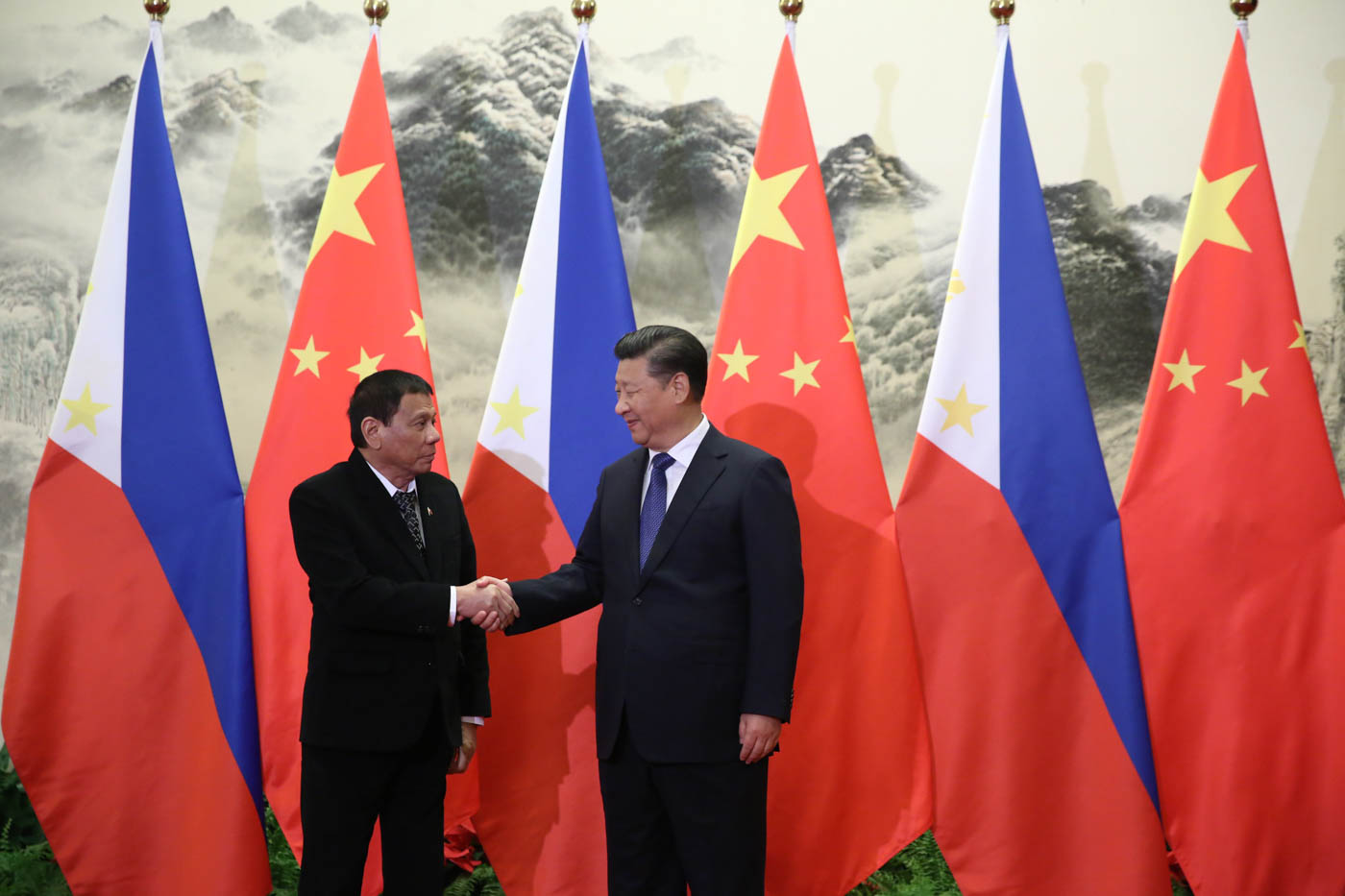
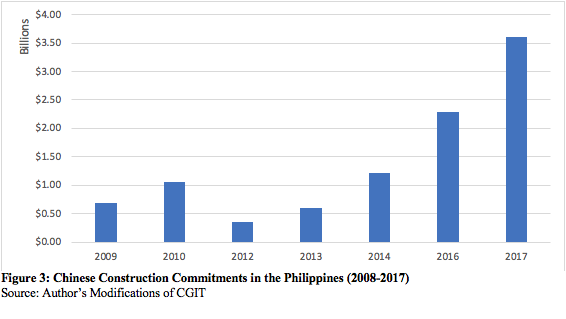
Today Philippine President Rodrigo Duterte is pursuing a new approach with an eye on China’s Belt and Road Initiative (BRI), which aims to centralize investment and aid inflows at crucial geographies and sectors. During Duterte’s 2016 visit to Beijing, he received $24 billion in investment pledges to complement the administration’s massive $183 billion five-year Build Build Build (BBB).

I began my field research in the Philippines in 2014, focusing on Chinese foreign investments in the mining sector. Afterwards, I moved to studying Chinese foreign investment and aid in the Philippines more broadly. As such, I’ve been conducting field research on China’s $24 billion commitment to the Duterte administration and made the following preliminary findings.

First, pundits with alarmist tendencies populate major media and popularized a “debt trap” without ample empirics. There is no doubt that Chinese aid generated debt trap crises that have plagued high risk countries. In a debt trap, a country loses its output to loan payments, costing the country an opportunity to expand its output. Overwhelmed by spiraling debt service and low growth, the host country eventually loses control of collateral assets to the lender. Using credit risk ratings and the International Monetary Fund’s debt sustainability analysis, the Center for Global Development (CGD) finds that 23 out of 56 countries show reasonable levels of risk to China’s BRI.

However, the risk of a debt trap appears to be low in the Philippines largely due to its BBB and BA1 credit ratings. Indeed, the World Bank argues that debt traps are avoided if projects generate output that outpaces debt. There is a strong domestic demand for infrastructures due to internal activities, which will surely generate a multiplier effect for the Philippine economy. A common criticism is that the Philippines could acquire Japanese Infrastructure Construction Agency (JICA) loans at less than one percent.
However, JICA or ADB loans comprise already of more than half of present loans since October 2016 while there are only 3 projects to be funded by China thus far. Additionally, Japan cannot possibly provide loans to all infrastructure projects due to borrowing limitations, expediency, and environmental requirements. While there are some concerns around Chinese loans, these must be assessed against the opportunity cost of not funding the project.

Underpinned by continued strong macroeconomic fundamentals due to structural reforms begun under Aquino, Duterte’s economic team is well-positioned to balance growth and the debt to GDP ratio. The present list of projects does not present concerns of a debt trap. One such project is the Chico River Pump Irrigation Project in Northern Luzon for which in April 2018 the Duterte administration signed a $62 million loan agreement with 2 percent annual interest maturing in 20 years and a 7-year grace period. Two China grants, which are turnkey projects built by Chinese firms and labor for free or, have been signed for two Philippine bridges valued at $73 million. The Kaliwa Dam Project has passed bidding, with stakeholders and Chinese developers currently in consultation. Other projects in the pipeline are under study, including a South PNR Project, the Philippine SAFE, and 12 other bridges.

Other projects further down the line include the renovation of the Clark Airport and the second phase of the Mindanao Rail project. Indeed, the loans of Chico and Kaliwa dam are manageable while the bridge projects are for free. The two train projects and the airport are the riskiest in the list, presenting the strongest case for the debt trap, but these have not even begun yet. However, these risks can be minimized if these projects generate enough output, which could be used to pay for the borrowed loans. Some degree of inflation and deficit spending will increase due to increased import spending. One crucial concern is that the Philippines’ growth or output depends on moderate inflation and fiscal deficits. The “debt to GDP ratio” tends to shrink when inflation goes awry, which could lead to a deficit increase and the conditions of a debt trap. Additionally, aid projects from future commitments that would not generate sufficient output should be a cause of concern. These are issues that the economic managers of Philippine currency and infrastructure projects need to watch.

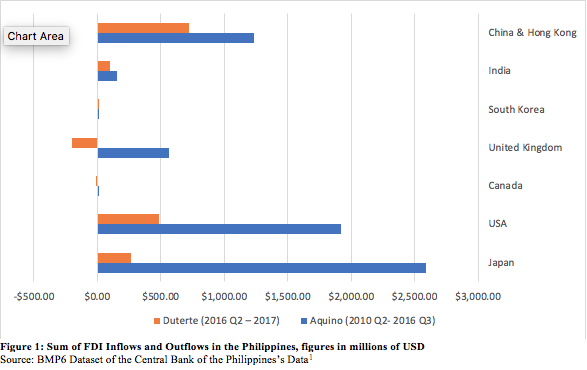
Second, host state factors matter to the completion or cancellation of China’s aid projects. For China, a Palgrave Communications study that finds a 10:1 ratio exists between pledges and actualization of investments. The ratio can be explained by various sending and host state factors, which means that the actualization of the entire pledged amount is highly unlikely. While Chinese FDI failed to reach the $15 billion pledged, between June 2016 and April 2018, Chinese FDI in the Philippines reached US$1.02 billion, amounting to nearly 85 per cent of the total amount registered during the Aquino administration. In other words, media and pundit outrage at the low amounts of Chinese actualized FDI should be taken with a grain of salt given the expected rate of cancellation from foreign commitments. Nonetheless, China should be criticized for the lack of transparency of aid and investment projects, and the Duterte government should be reprimanded for marketing pledged rather than actualized amounts.
On all Chinese and non-Chinese projects in the Philippines, elite competition, regulatory red tape, and local government decisions largely account for investment cancellation and delays. Currently, these host state factors are shaping the outcome of China’s $24 billion pledged. For instance, a hydropower project by Power China Guizhou and Philippines Greenergy Development Corp encountered trouble acquiring funds because of the uncertainty regarding the recently signed Bangsamoro Basic Law (BBL), a law which grants autonomy to the Muslim areas of the Southern Philippines. Most of the major investment projects in Mindanao province have been delayed because of this new terrain as investors are trying to figure out the economic implications of the new law. In another, a deal between Global Ferronickel, the third-largest nickel ore producer in the Philippines, with Baiyin Nonferrous Group, a Chinese copper supplier that was put on hold due to a moratorium on new mining operations, which made investment in mining operations fruitless.

In other cases, the completion of Chinese projects also depends on the preferences and political sway of local elites, which often matter to project implementation, local government regulation, and popular compliance. Projects such as rail networks tend to take a long time to negotiate due to the unequal distributionary impact of the infrastructure, which will concentrate economic activity and political gain on cities with train stops. Other locations, which will only receive the rail tracks, will lose out relative to those receiving the stops. In other words, intense local elite competition typically occurs when rail projects manifest.

The foreign funder and national governments often need to distribute economic or political rent to receive elite compliance to the plans. To some degree, these issues occurred in HSR in Indonesia, the Eastcoast Railway Link in Malaysia, and the Sino-Thai Railway. This is also the reason why the PNR South Rail and Mindanao Rail projects are experiencing delays. Conversely, infrastructure projects that disburse relatively equal benefits to local elites generate compliance and project progression. Roads cut across numerous cities, airports create multiplier effects, and irrigation projects can be built across farms. As such, the road projects, the Kaliwa Dam, and the Chico Irrigation are steadily moving forward with local elite cooperation and have experienced delays on technical matters instead.

Ultimately, the improvement of macroeconomic foundations during Aquino, a high demand for infrastructures due to domestic activities, and a diversified list of funders minimize debt risk. I recommend that the Philippines and other states establish a new and independent BRI Review Board exclusively for Chinese projects. This board should receive support from international organizations and directly report to the most important institutions of the country. In addition, a review of policies by international development banks that aim to expedite the project funding process will make the banks more attractive alternatives for countries seeing infrastructure loans.

Leave a Comment

Filed under China, Economic development, FEATURES, Philippines, Regional Relations, SLIDER

Mahathir looks east. Abe doesn’t look him back.


Just one month after his surprise victory against the scandal-ridden and increasingly-authoritarian incumbent Nazib Razak in May, the new Malaysian Prime Minister Dr.Mahathir bin Mohamad landed in Tokyo for his first foreign visit, where he chatted with Japanese Prime Minister Shinzo Abe. Since then, Mahathir has aggressively courted Japan for investment, aid, and loans, visiting Japan once more in August before even announcing the dates for his much-anticipated first official visit to Beijing. Mahathir calls this Japan-focused approach as part of the New Look East policy, situating it as an attempt to revive the close Japan-Malay relations during the original Look East policy, which Mahathir pursued in his previous 22-year stint as prime minister from 1981 to 2003.

One of the critical priorities of the New Look East policy is to secure Japanese soft loans — preferential credits denominated in yen offered at exceptionally low interest rates and extended maturity periods — to retire higher interest rate loans ballooning the national debt, which has reached 65% of the Malaysian GDP. Reducing the national debt — which far exceeded Nazib administration’s self-imposed debt-ceiling — will go a long way to achieve Mahathir’s top priority of stabilizing the country’s finances.

Unfortunately for Mahathir, Japan doesn’t share Malaysia’s enthusiasm for new soft loans. Dr.Mahathir claims Abe agreed to “study the request” for financial support during their June bilateral summit. On the other hand, Japan’s Ministry of Foreign Affairs in their press release refrained from acknowledging that any discussions of a Japan-backed soft loan took place in the same meeting. A similar discrepancy was seen in the contrasting accounts of the July meeting in Malaysia between the two country’s foreign minister — while the Malaysian foreign ministry press statement said the two ministers discussed “soft credit assistance,” its Japanese counterpart issued a report that did not include such details.

Perhaps sensing Japanese hesitation to commit to concrete aid packages, Mahathir in late July adjusted expectations for Japanese credit assistance, saying he was unsure whether Japan will offer soft loans with low interest rates, but said he was still interested in taking Japanese loans even at higher rates to refinance maturing debt.

With Malaysian national debt ballooning to 65% of GDP, access to Japanese soft loans is key to Mahathir’s goal that aims to lower debt burden by switching existing debt with lower-interest rate loans while simultaneously expanding populist deficit spending to shore up domestic support. Easy Japanese credit also plays a role in the prime minister’s plan to phase out China-backed debt — which funds joint infrastructure projects — out of geopolitical concerns about the nation’s over-reliance on China in its capital accumulations: a Japanese cash infusion will provide funds that could be used to return the principles of Chinese loans.

Thus, Japan’s reluctance to finance soft-loans for Malaysia has severe domestic and geopolitical consequences. Without Japanese cash Mahathir will face difficult choices between enforcing unpopular austerity measures and taking on more debt to finance deficit spending, contradicting his promise to the electorate either way.

Japan’s reluctance may be puzzling from Mahathir’s perspective which appears unchanged from the days of his old Look East policy: why will Japan hesitate to offer soft loans now although it willingly provided them before, as Mahathir repeatedly stresses? In reality, however, what he asks now under his revived Look East policy is entirely different from what he obtained under the original Look East policy in nature and economic magnitude, explaining the divergence in Japanese response between then and now.

First, the purpose of the soft loans Japan offered under Malaysia’s original Look East policy was fundamentally different from that of the loans Malaysia recently seeks. Malaysia obtained development finance during Mahathir’s first tenure; in direct contrast, what Mahathir is requesting Japan today is effectively a bailout loan, since the Japanese funds acquired will be used to make early repayment of loans with higher interest rates and shorter maturity period rather than development projects.

In 1990 and 2000 Japan provided 40-year loans with exceptionally low interest rate (0.75%) in order to fund development projects to build the nation’s economic and social foundations.  Specifically, such loans were used to enhance the nation’s education, public infrastructure, and small businesses — not as refinancing for its debt. Even in the aftermath of Asian financial crisis of 1997, Japan opted to provide Malaysian with liquidity as the funding source of its economic restructuring, not public debt.


While Mahathir says that Malaysia is requesting the loans with the similar terms and conditions as those Japan once willingly extended twenty years ago, applying interest rate on development assistance loans to bail-out loans is not relevant due to the completely different nature and risk profile of these two types of the loans.

Second, Malaysia’s economic profile essentially changed from the day of its original Look East Policy.  Malaysia in 2008 ascended to middle-income country status according to the Japanese foreign ministry, disqualifying the country as a recipient of significant amounts of soft loan as financial aid. Reflecting its enhanced fund-raising capacity, Malaysia actually has not requested any soft loans since 2012: the country today is too developed for Japan to provide subsidized credit within the framework of developmental assistance.  Accordingly, Japan will have to create a new scheme in order to provides bilateral bail-out loans for a middle-income country like Malaysia; otherwise, using tax payers’ money for such loans is considered moral hazard.

Even if Abe wishes to meet Mahathir’s request by providing low-interest bailout loans under the new scheme, justifications of such loans would be the significant challenge both economically and politically.

The first obstacle is economic burden. The cumulative amount of Japan’s soft loans to Malaysia stood at about ¥976 billion ($8 billion as of 2015,) compared to Malaysia’s total debt of 1 trillion riggit ($251 billion as of May 25, 2018).  If Japan were to expand its debt to Malaysia to have meaningful influence as a major lender, additional funding will most likely far exceed its bilateral ODA disbursement to any single country, considering the fact that Japan’s total 2018 ODA annual budget amounts to ¥500 billion ($4.5 billion as of August 18, 2018.)  The Japanese government will face considerable difficulty getting political consensus to mobilize such a larger fund especially because Japan itself has been under significant pressure to reduce its large debt that now represents 251% of GDP.

Diplomatic and political disincentives for providing such loans also hinder Japan’s willingness to actively get involved in Malaysia’s debt finance.  As Japan strives to pursue a more cooperative approach with China in South East Asia, it prefer not to openly move into a vacuum left by Mahathir’s rebuff of Beijing by gaining lending share from China in Malaysia’s debt. Abe will face the risk to lose the public support by potentially abetting China’s and Malaysia’s risk-avert project finance as their financial supporter.  Also, unlike during the late 1990s when ensuring Malaysia’s economic stability was in Japan’s financial interest, it is unclear what economic benefits Japan could gain if they were to provide financial support to Malaysia.

These factors make it abundantly clear that Japan is not in a realistic position to provide the soft loans Mahathir asks. Then why does Tokyo refuse to openly rebuff Malaysia’s request, instead opting for a mysterious absence of all soft loan discussions from official communications?

Mahathir, a seasoned politician with decades of experience working with Japanese counterparts, should know his soft loan request is particularly challenging for Japan to supply. And yet, he pushes forward perhaps because he is aware that rejecting the loan request is just as tricky for Tokyo as accepting it because it is a unique geopolitical opportunity to counter China’s financial reach in South East Asia.

Make no mistake: a Japanese bailout package for Malaysia, if it materializes, will be fundamentally different in character from most bail outs —its purpose will not be to shore-up a nearly-bankrupt country to prevent a financial crisis. With Moody’s credit rating for Malaysia holding steady at the investment-grade A3 and the country’s treasury bond rates well-within historical bounds, Malaysia is a relatively healthy country financially speaking that should not require a multi-billion-dollar bail-out. That Malaysia is seeking Japanese funds anyways is indicative of Mahathir’s intention to diversify the country’s lender profile by adding Japanese loans as he moves to reduce Chinese debt.

Presented with a rare opportunity to earn influence and dilute China’s power in a country that until recently appeared to be sliding into Beijing sphere, Tokyo may not feel comfortable openly rebuffing the Malaysian request — explaining their reserved response.

The story of Sri Lanka, which fell prey to a Chinese debt trap that forced them to sign with China a 99-year port lease in exchange for debt relief, is fresh in Japanese decision makers’ minds, raising concerns if Malaysia could be next if their debt continues to grow. Moreover, despite Mahathir’s skepticism of China, he appears eager to maintain a working economic relationship with them — Malaysia has other countries it can turn to if Japan hesitates, adding to Tokyo’s insecurity.

As is often is the case in these sorts of stories, the debtors actually have the upper hand over the creditors.

Leave a Comment

Filed under Economic development, FEATURES, Malaysia, Regional Relations, SLIDER, Uncategorized