Tag Archives: irrigation

Taking Cambodian Irrigation to the Extremes: The Vaico River Project

In the third and final article of this short series, I highlight the case of a far bigger irrigation project than considered previously, which is quite audacious in its scope and ambitions but has thus far failed to supply any water at all to its target beneficiaries. It exemplifies not just a general lack of commitment to accountability, transparency and sustainability shown by the Cambodian irrigation sector, but takes to an extreme degree a nationwide devotion towards steering publicly-raised capital and other resources towards constructing utopian irrigation schemes, that will cost the nation several times more than their headline cost in the long run. That this scheme has subsequently failed to deliver even a small fraction of the promised benefits to the agricultural end users should not be surprising. That there has not been a bit more of a public outcry against this project speaks not just to the relative lack of publicity surrounding its development, I believe, but also to the potency with which ideologically motivated irrigation development grips large sections of Cambodian society and the development industry in general, indicated by the uptick in hydraulic sector investment in recent years. In such circumstances, it can be hard or even hazardous to criticize such a deeply embedded ideology in the national body politic.


Article 3: Taking irrigation to extremes – the Vaico River Project

“The leaders of the Khmer Rouge were obsessed with canals, embankments and dams. They presided over hundreds of irrigation projects to revive Cambodia’s glorious but perhaps mythical past of an agrarian wonderland.”- Thomas Fuller, International Herald Tribune[1]

Since 2007, China has become an increasingly influential foreign country in Cambodia’s national affairs, in large part through its generous financial support for large-scale infrastructure projects, prominent among which are irrigation and hydropower development schemes. China has been the lead bilateral development partner in several large hydropower schemes in the last five years, including the highly controversial Se San 2 hydropower scheme nearing completion in northeast Cambodia.

Less well publicized than dams in the hydropower sector has been a series of large foreign aid investments in the irrigation development and flood control sector, which have reportedly amounted to nearly a billion US dollars. To get a sense of what Chinese state involvement implied in practice, I was recommended by several people working in the Cambodian water sector to visit the Vaico River[2] Irrigation project, a large scheme located in the east of the country that apparently represented one of the boldest statements of Chinese development aid of recent years.

This project was reported to have a price tag of some $200 million, with construction commencing in early 2013. Curious about its progression, one of the first things that struck me about such an expensive project was the paucity of relevant publicly available information. Internet searches indicated there were just one or two public or media reports available. Initially, I put this phenomenon down to a general unwillingness to announce large infrastructural development projects in the English language press, mixed with a tinge of Chinese inscrutability over certain aid packages. Hence, given the general air of mystery surrounding the Vaico project, the imperative to track it down on the ground seemed that much more intriguing.

An article in the Cambodia Herald stated that the Vaico River project would irrigate a total of 300,000 hectares of land across parts of Prey Veng, Svay Rieng and Kampong Cham provinces, consisting of two phases, each costing $100 million. The project would supposedly divert water from the Mekong River, with the first phase targeting irrigation of 108,300 ha of wet season rice fields and 27,100 ha of dry season rice production. The article hinted that this was a rehabilitation project of existing infrastructure when it reported, “canals will be restored between Koh Sotin district in Kampong Cham and Sithor Kandal district in Prey Veng (13 kms), and between Sithor Kandal and Kamchay Mea district, also in Prey Veng (27 kms)”. The canal design dimensions for the scheme were impressively grand at between 44-55 meters wide and 18-25 meters deep, fulfilling a secondary objective of “navigation”, according to Lim Kean Hor, Cambodia’s Water Resources Minister. This was irrigation on a gargantuan scale and the scheme is comfortably Cambodia’s biggest to date, matching some of the schemes dreamed up in the Democratic Kampuchea period of the late 1970s.

To finance the project, Cambodia would take an ODA-type loan on a concessionary basis from China, extended through the Export-Import Bank of China amounting to $200 million, though few details were available on AidData website concerning the loan, such as interest rate, maturity period and dates involved. It was reported on the Guangdong Foreign Construction Co Ltd’s website that “60 % of VAICO Irrigation Project has been competed with Concessional Loan by China” [sic], not revealing where the other 40 % of funds had materialized from.

The contractor’s website reported that “the main construction contents of VAICO irrigation project includes, construction of two main canal irrigation systems with total length of 78 km, 40 km water survey tunnel, sluice of river flood control dam, irrigation waterway, water drainage tunnel, bridge culverts”, again hinting that there would be a diversion from the Mekong, possibly through a “tunnel” of some sort. The AidData webpage noted that that “As of April 25, 2015, Phase 1 of the project is 91.60 % complete”.

The Vaico River Project main canal, clearly visible running down the centre of the satellite image, runs south from Beung Krapik lake (at the top of image), splitting into two arms after about 9.5 kms. With a planned command area of 300,000 ha, it is considered the largest irrigation scheme in Cambodia.


Relying upon satellite data alone to locate the project, the object of our quest was visible as a large canal-like scar stretching in a sweeping arc across the terrain from a large floodplain lake called Beung Krapik and then splitting into two branch canals, themselves stretching for many miles across relatively flat and featureless landscape. A research assistant and myself set off on motorbike from Phnom Penh across the Mekong River along Route 8 in search of the Vaico River project, reaching Sithor Kandal district in the late morning.

A quick scout around the area revealed evidence of abandoned irrigation infrastructure on the northern side of the small Sithor Kandal township that local people reported was first dug during the Khmer Rouge regime (invariably referred to by Cambodians as the “Pol Pot era”). A former irrigation canal leading perpendicularly away from an artificially widened river was now little more than an unsightly scar etched roughly across a rather barren looking landscape, with evidence of extreme erosion carrying the friable, lateritic soil into a heavily silted canal bed (see picture below). The soil encountered is of a type common in Cambodia that does not hold water well, is often associated with salinity and has low natural fertility, which would suggest that neither the canal nor the fields it was supposed to supply would ever have been remotely feasible for irrigated agriculture without vast expenditure on impermeable canal lining, carefully designed water distribution structures and massive soil amendment – steps which would almost certainly leave such a project economically unviable.

Moreover, it has been recognized for many decades that such soils are severely limiting to rice production and in the main, are classified as “marginally suitable” or “not suitable” for irrigated agriculture investment (Sir William Halcrow and Partners Ltd, 1993). But such willful ignorance of basic hydrological, topographical, geomorphological, ecological and agronomic limits and barriers to irrigation development was one of the less recognized trademarks of the Khmer Rouge reign of terror and ideological brainwashing of the population (see Himel, 2007). However, one might optimistically imagine that subsequent irrigation planners and developers should have learned something from the basic errors of a ghastly past and try to avoid blind repetition in the present context of purportedly more participatory practices, open information sharing and institutional accountability (i.e. drawing on just some of the popular buzzwords of the “good water governance” discourse, as routinely espoused by most multilateral Western institutions involved in the sector in Cambodia).

A New York Times article in 2008 suggested that the Asian Development Bank (ADB), South Korea and Japan were among the forefront of international donors and lenders rehabilitating “Pol Pot’s deadly canals”.  In the light of a string of past patent failures in Cambodian irrigation rehabilitation (ADB’s and Agence Française de Développement’s Stung Chinit scheme, perhaps being the most infamous), I was increasingly curious to discover how contemporary developers interpret and apply water resources management practices, especially when such projects are located in the vicinity of tangible examples of getting it wrong, like the canal we saw not 10 kms away near Sithor Kandal.
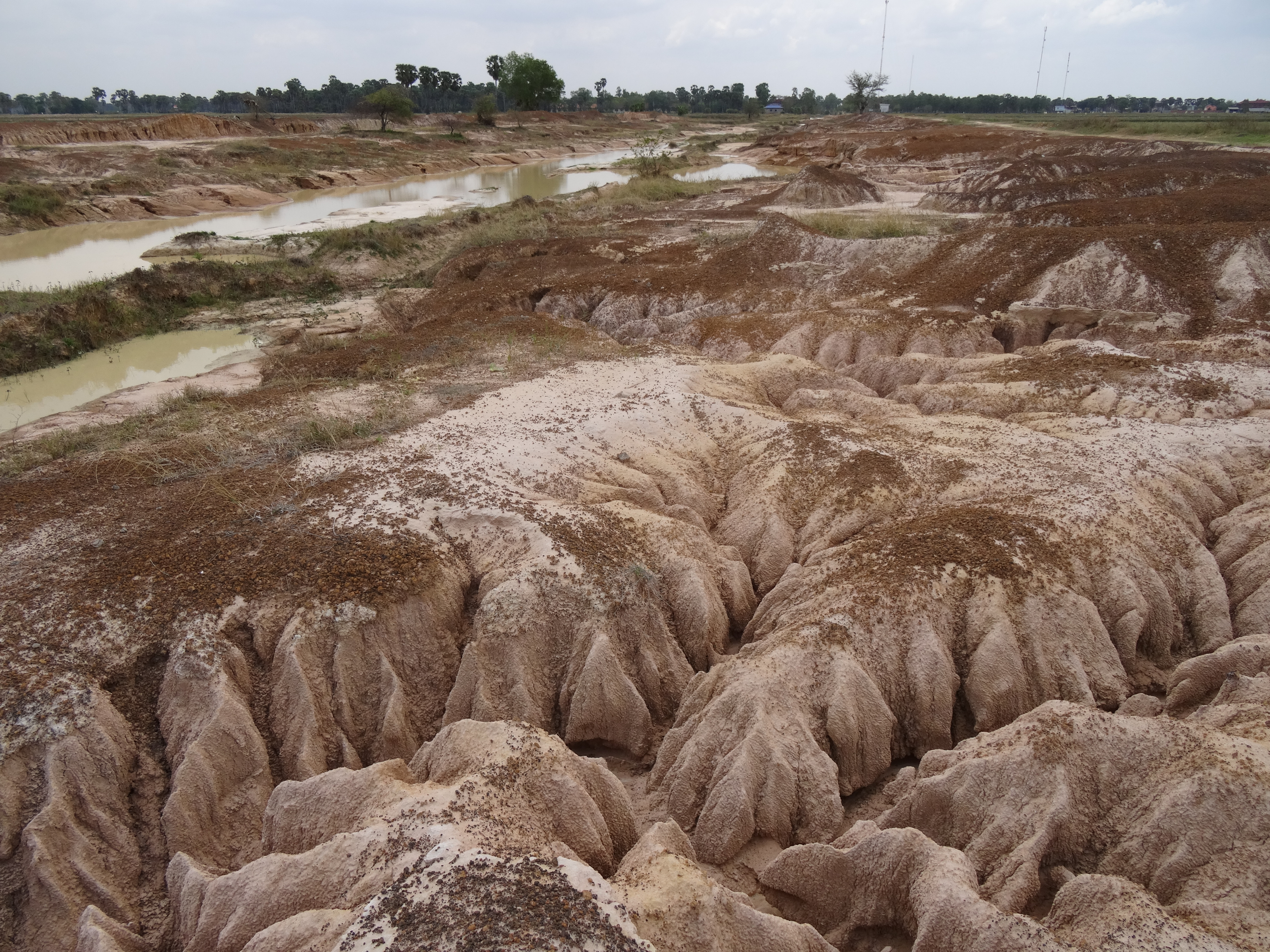
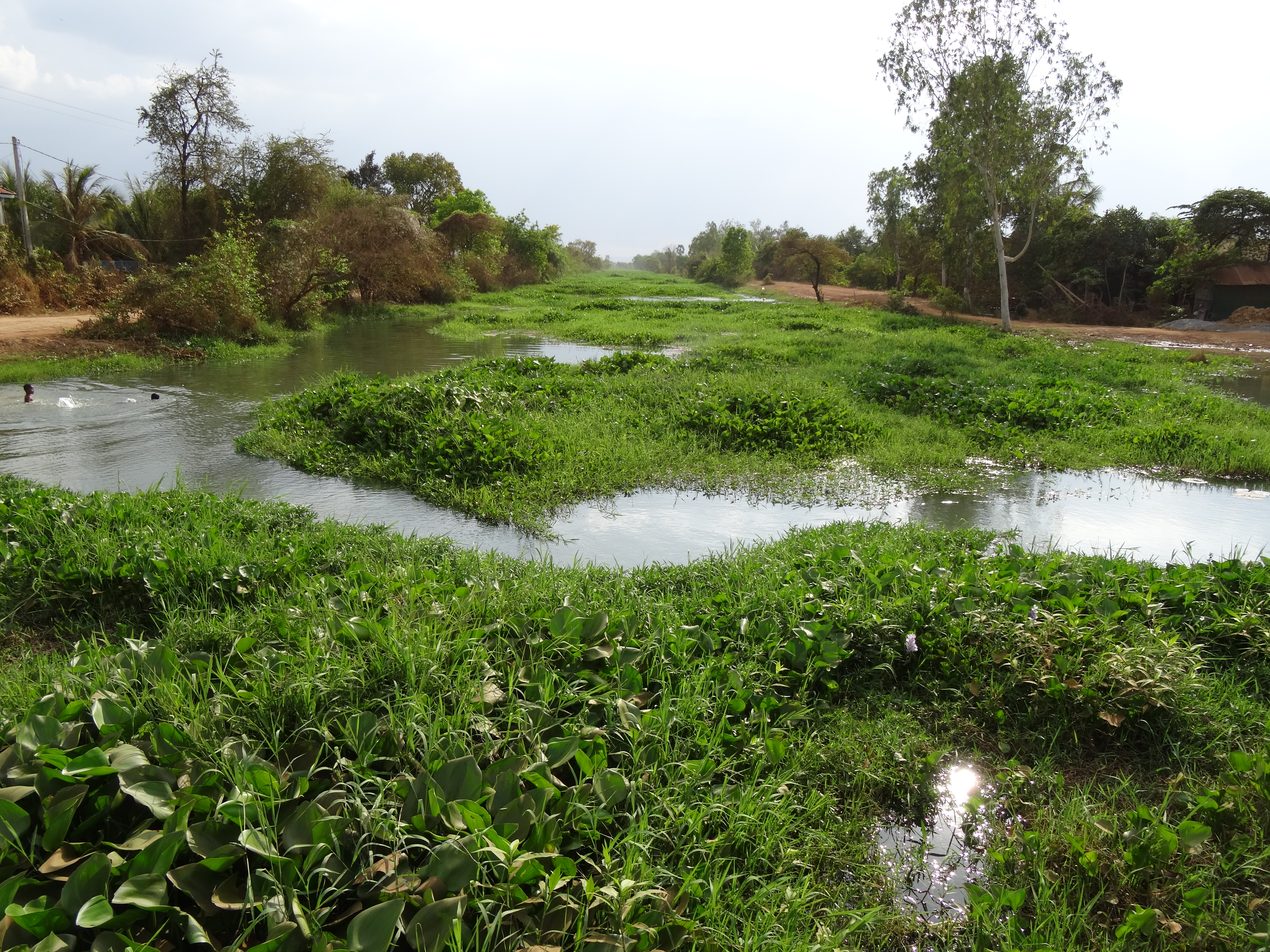
Looking along the route of an irrigation canal dug during Khmer Rouge regime near Sithor Kandal township, but supposedly rehabilitated at some point since and then abandoned. As is apparent from image, the canal has been heavily eroded by rainwater leading to bed siltation and ecological degradation of land

The Vaico River Irrigation project main canal was accessed down a poorly made road from Sithor Kandal district township, comprised of little more than a muddy and rutted track suitable for small tractors across a landscape of a mixture of dry and cultivated paddy fields and scrubby forest that resembled “paa boong paa thaam”, a type of seasonally flooded forest formerly common on riverine floodplains in Northeast Thailand. Just as we thought the road was petering out to nothing and we might have to turn around, we emerged from the scrub right next to the Vaico main canal at a point where it splits into two branches, the left hand (more easterly) arm heading towards Kamchay Mear district and the right hand arm runs more or less due south to cross National Route 8 near Svay Antor district.

At the entrance to this right hand canal stands a substantial, recently-built concrete water-gate structure that is presently inoperable, as there is no power source available to lift the gates. At the time of our visit (March 2017) there was barely more than a puddle of water lying at the bottom of the canal, which was still being worked upon by a small fleet of front-end diggers and lorries, thus calling into question the effectiveness of this project, given that it was pronounced by the developers’ to be over 90% complete, some two years ago.

We drove first to the main inlet of the main canal which juts out into Beung Krapik and quickly realized that judging from its present dry season level and storage capacity of the lake that there would never be sufficient water to irrigate the fields immediately adjacent to the canal, let alone the entire 300,000 ha command area envisaged. To function even at a basic level, the project operators would have to physically lift large quantities of water into the lake and then distribute it down the length of the canal by more pumps (as the project crosses a watershed between the Mekong basin and the Vaico River basin) and regulatory water gates (to maintain a reasonable head of water), which at present are not constructed.

The obvious source of an abundant water supply for such a “megaproject” for planners would be the Mekong River, some five kilometers to the north of Beung Krapik. This prompted a second scan of Googlemaps which revealed that there is some kind of new pumping station built on a tributary of the Mekong in Koh Soutin district and delivery canal constructed linking the river and lake, suggesting this is all part and parcel of the Vaico scheme. However, raising the lake’s level would potentially inundate land of farmers’ already practicing dry season rice cultivation in the absence of the Vaico project. Whether this pumping station is functional or not I cannot say as we did not inspect the other side of the lake, but even if it was, in the absence of more infrastructure to push water into the Vaico project main canal, the project was incapable of delivering water to farmers in the 2017 dry season, never mind addressing the many questions concerning its future social, environmental, technical or economical sustainability.

As things stand under the present configuration, we stared agog at a $200 million behemoth of a dewatered, muddy canal running for mile after mile through an ostensibly flat landscape, lacking any delivery mechanism to farmers’ fields such as water outlets, secondary and tertiary canals, which incises through soil of a type and quality that appeared remarkably similar to the infertile and easily-erodible soils already seen earlier in the day. Indeed, there were already signs of serious and extensive erosion occurring along the banks of the Vaico canals, marked by embankment slumps, gully erosion and shear failures, with notable sediment accumulation on the canal bed. The water was the color of milky tea, suggesting high colloidal suspension and dispersive clay formations. Without massive remedial works to protect the canal banks from erosion or expensive lining, I had a strong sense that before too many years, the canal would look like a scaled-up version of the Khmer Rouge-era failed canal witnessed near Sithor Kandal.

At the Beung Krapik inlet we met a fisherman about to set off in his boat in the lake to check his nets. We asked him about the quality of fishing before and after the Vaico River Irrigation project arrived. He told us that the fish were scarcer and harder to catch since the project started and quite a few villagers had given up this supplementary livelihood activity as it was no longer worth their while. This was not surprising reflecting what has happened elsewhere and it was clear from appraising the scale of the earthworks involved, impacts were not only localized but that serious aquatic and terrestrial ecological disruption continued along the entire length of the canal. Other farmers talked about the decline of frogs, fish and other edible aquatic organisms since the canal was built.

Such grand hydraulic engineering provides strong echoes of the Pol Pot era schemes partially reflected the visions of Chinese state advisers sent by Chairman Mao to help “Brother Number One” act out his “Super Great Leap Forward” plans for the Khmer national economy. The Khmer Rouge had a penchant for designing standardized one square kilometer grid pattern irrigation schemes that were relied upon large, hand-dug canals that ignored the natural topography and hydrology of the landscape, often having the effect of accelerating drainage from higher areas leading to seasonal water scarcity and preventing drainage at the lower lying parts, causing soil water logging and flooding in the rainy season.

Indeed, the Khmer Rouge preferred chessboard-like grid pattern is still visible in satellite imagery as a legacy of the forced labor and mass starvation in the landscape of Prey Veng province, including around the Vaico project area. As a consultant’s report for the Mekong Secretariat observed regarding some of the shortcomings of “Pol Pot systems” in a study of irrigation rehabilitation prospects in the early 1990s, “[e]xcessively long canals have been constructed which cross catchment boundaries. These canals are ineffective because they do not have an adequate water supply and because they often run uphill. Moreover they block natural drainage paths and cause flooding” (Sir William Halcrow and Partners Ltd., 1993, p.12).

Unlike other large-scale foreign-funded infrastructure projects one may observe around Cambodia, there was a curious lack of signboards providing any basic details this project, such as the foreign donor, the implementing agency in the Cambodian government (presumably MOWRAM) and design and construction contractor/s involved. Perhaps the authorities are a little coy about the financial extent of this project and would prefer it if local villagers, curious passer-bys and wider Cambodian tax payers were kept in the dark over its provenance (as after all, they will ultimately be paying back the $200 million loan to the government of China). Or perhaps this is just considered normal practice with public irrigation works paid for by Chinese foreign development aid?
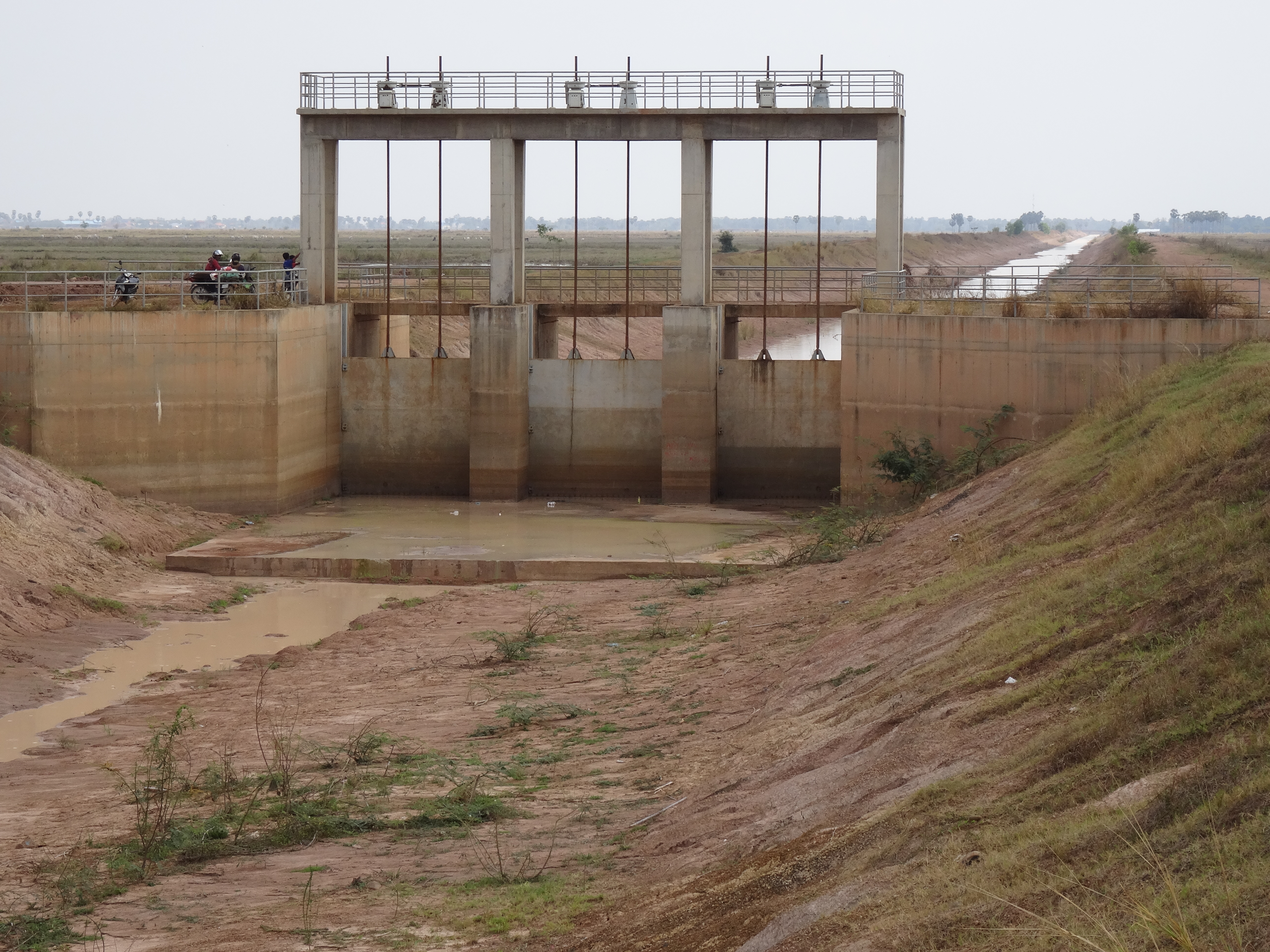
The first water control structure located on the right hand arm of the Chinese-funded, designed and constructed Vaico river irrigation project main canal is presently non-operational. Water from Beung Krapik does make it this far without pumping in the dry season (and there are no pumps at present).

Whatever the reason behind the lack of transparency of the project, the substantial canals dominate the landscape, even if they do not yet provide any irrigation. This crude, but crucial, “success indicator” is one factor that distinguishes the Vaico project from some of the smaller, more carefully planned and constructed projects of CAVAC, like the Wat Thmey scheme covered in the last article, even if both approaches are ultimately likely to be socially, ecologically and economically unsustainable in the long run. At least Wat Thmey is providing some farmers with subsidized irrigation water in the short to medium term and has devoted resources to local institution building, but the Vaico project has been a dismal failure in many regards from the outset.

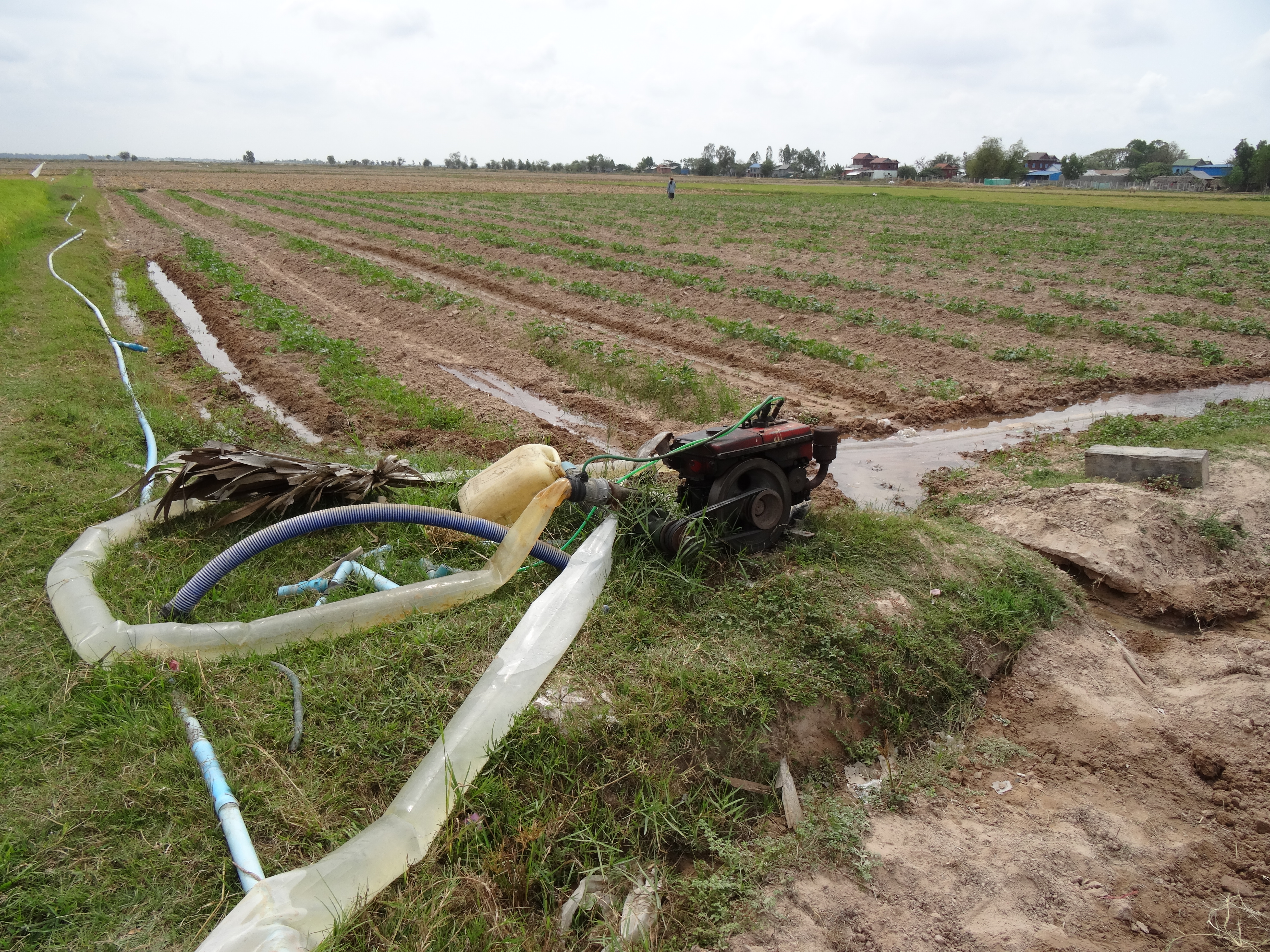
While there was some dry season rice cultivation taking place in fields besides the Vaico main canal towards the Beung Krapik end (see photo below), this was occurring in spite of the canal, not because of it. Some farmers were using surface water sources such as ponds, while others were relying on pumped ground water. Despite there being no functional water outlets from the main canal built to date,  I did count half a dozen or so small diesel pumps drawing water up and over the massive canal bunds to irrigate adjacent paddy fields or lotus lily ponds. What the design arrangement for supplementary water supply to paddies would be in the rainy season, I had no idea, but it was easy to imagine that floodplain movement of surface water run-off would be blocked by the canal alignment and cause local flooding, further disrupting the local socio-ecological context in myriad ways and reducing natural aquatic and agricultural productivity and resilience of the wetland environment it cuts through.

Without a doubt, all empirical evidence on the ground pointed towards the Vaico River Project having serious environmental consequences, with the resulting potential to diminish and threaten the livelihoods of hundreds of families across dozens of villages. One wonders if an Environmental Impact Assessment (EIA) was carried out for this project or is even required for large irrigation projects of this nature under Cambodian legislation? I have my doubts, but given that the Vaico River Project is a transboundary and trans-basin project that will likely impact downstream Vietnam too if fully operational, then perhaps a retrospective EIA and social impact assessment (SIA) should be carried out by a reputable and independent research group, before any more work proceeds on this hydraulic train wreck of a scheme. Perhaps the Mekong River Commission should seek involvement too, which is often criticized for its retroactive and supine stance to new development, as such a project should logically fall within its remit of managing transboundary water resources.
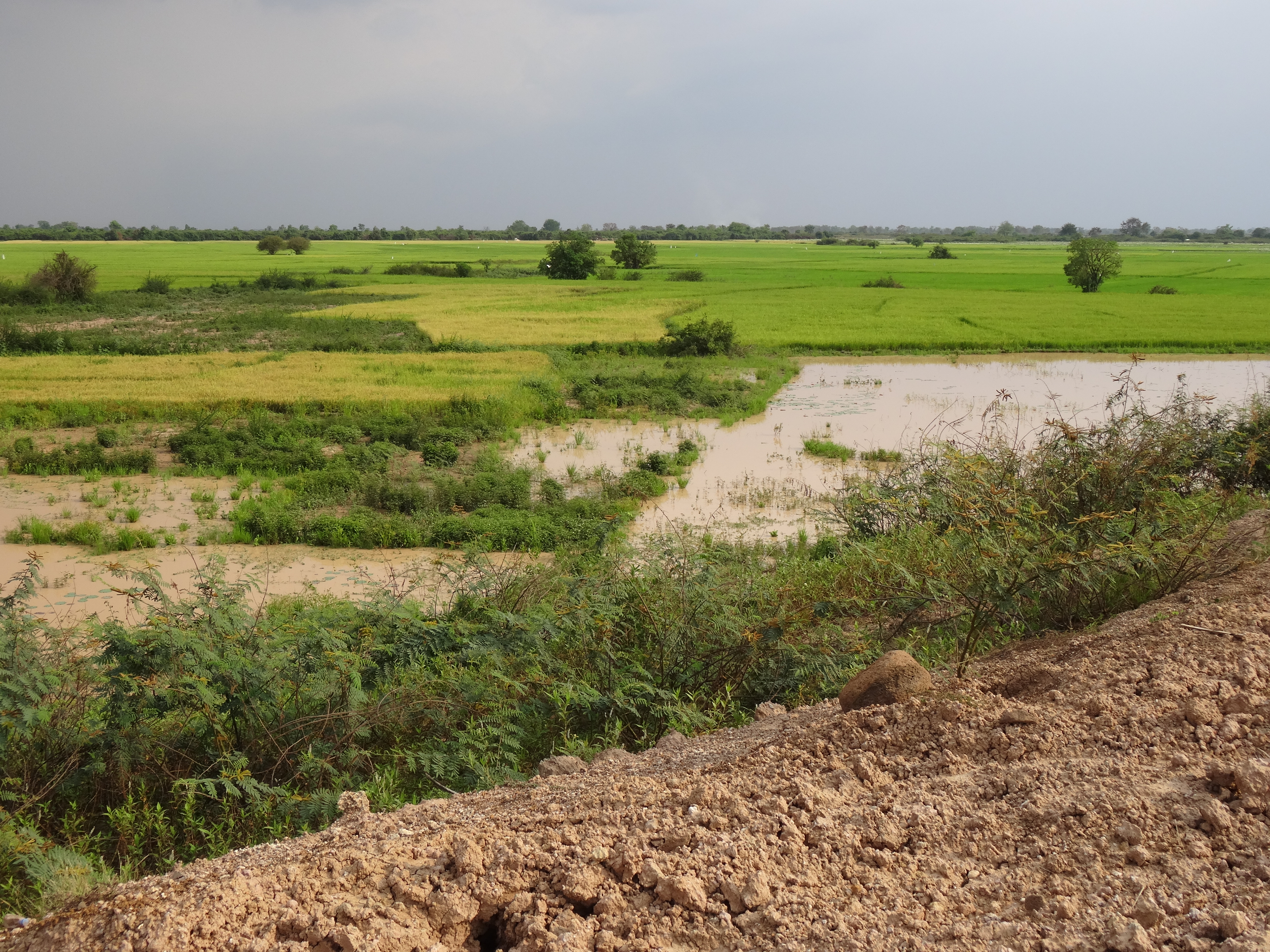
Ripening rice fields not far from Beung Krapik lay beyond the unconsolidated embankment of the Vaico main canal, but are not dependent on it for water supply. In the foreground are stands of the invasive thorny alien, Mimosa pigra, which thrives on disturbed soil and was likely introduced from elsewhere by the project construction traffic.

Another key question that arises is one of responsibility for ongoing operation and maintenance (O & M) costs for the Vaico project. In this case, as there are no apparent beneficiaries and so presumably no water user fee collected, one must thus assume that the Cambodian tax payer will be expected to pick up the tab for any future canal O & M, such as repairs to the rapidly eroding banks. But what is the point of maintaining an irrigation system that does not provide any discernible benefits besides some limited road access, for a $200 million project that will ultimately have to be repaid to the creditor? At least Pol Pot’s crazy schemes did not involve foreign loans, even though they cost the country dearly in terms of blood, sweat and tears.

This does, of course, raise more profound queries about Cambodia’s wider irrigational development strategy and policies. While the Khmer Rouge era of slogans such as “3 tonnes per hectare” (Himel, 2007) and “the Angkar is master of the waters; master of the earth” (Locard, 2004) surely exacted a terrible price in under four years of irrigated “killing fields” construction; the present developmentalist irrigation strategy of Hun Sen supported by a cabal of willing foreign donors and corporate business allies seems to be leading down an equally unsustainable route that is slowly killing whole ecosystems in its wake. Ideologically-driven “irrigationalism” is alive and well in Hun Sen’s Cambodia, a country that increasingly resembles a modern hydraulic society. It seems some contemporary irrigation developers have merely upscaled the Khmer Rouge corvée labor approach, replacing people with backhoes and bulldozers.

REFERENCES

HIMEL, J. (2007) Khmer Rouge Irrigation Development in Cambodia. Searching for the Truth. Special English Edition ed. Phnom Penh, Documentation Center of Cambodia.

LOCARD, H. (2004) Pol Pot’s Little Red Book. The Sayings of Angkar, Chiang Mai, Silkworm Books.

SIR WILLIAM HALCROW & PARTNERS LTD IN ASSOCIATION WITH MANDALA AGRICULTURAL DEVELOPMENT CORPORATION (1993) Irrigation Rehabilitation Study in Cambodia. Ranking Criteria Report. Bangkok, Mekong Secretariat.

[1] December 4, 2008 http://www.nytimes.com/2008/12/05/world/asia/05canals.html

[2] The Vaico River project appears to be named after a relatively small river rising in Kampong Cham province near the project’s eastern canal branch, that flows southwards through Kamchay Mea district towards the northern part of Vietnam’s Mekong Delta, just to the south of Ho Chi Minh City. It is locally known as the “Song Vam Co”, reportedly having an Eastern and Western branch as it drains into the South China Sea.

Leave a Comment

Filed under Cambodia, China, Current Events, FEATURES, SLIDER

Poverty Reduction and Sustainable Water Management via Irrigation Approaches in Cambodia?

In this second of three articles, I consider some of the salient issues surrounding the notion of “sustainability” related to the irrigation sector in Cambodia, particularly with regards to how it has been applied to date in what is considered a “successful” or “model” project implemented by one of the more “progressive” Western development agencies that rhetorically promotes market-based principles in its approach, yet heavily subsidizes an ostensibly state-controlled sector. I then seek to contextualize my field observations within the current water resources development paradigm in Cambodia, questioning whether there may be a culture of routine exaggeration of purported benefits to rural stakeholders, in a sector that is rarely critically examined from the outside.

Irrigation development has seen a veritable boom in bilateral and multilateral development investment over the past decade, financed through both loans and grants, which has been stimulated in no small measure by the short-lived spike in agricultural commodity prices, soon after the 2007 economic crisis (see graph below). This speculative uptick in the global rice price prompted some Middle Eastern and East Asian nations to flock to less developed countries like Cambodia in the expectation that they could take advantage of vast economic disparities, plus supposedly abundant, but under-exploited land and water resources to grow rice on a large-scale for export.

Such a scenario would inevitably have required the development of modern irrigation schemes employing “Green Revolution” technology (i.e. mechanization, high yielding varieties, chemical fertilizer and pesticides) and utilizing long land leases for success, leading to a sudden rush of interest from a range of Asian countries, including Kuwait, South Korea, India and China.

At the same time, several other Western lenders and donors were tempted to follow suit and step into the fray with their own project proposals, but focused more on “technological modernization”, “food security”, “irrigation reform” and “poverty alleviation” narratives, perhaps concerned about losing political goodwill at the highest levels and thus, being excluded from getting continued access to valuable opportunities in other sectors of the expanding economy, such as mining, commerce and banking.

At one point in 2008, hubristic exuberance must have got the better of premier Hun Sen when he declared in a policy speech endorsing increased rice exports that rice was like “white gold”, which by extension would encourage more irrigation investment. In a 2010 official report by the Ministry of Water Resources and Meteorology (MOWRAM) titled “Strategic Development Plan for Water Resources and Meteorology”, the four year plan to 2013 estimated the plan would require over $1.2 billion to expedite in full (Thuon, 2013), mostly based on accessing foreign loans and grants. By 2015, up to a billion US$ had been promised for irrigation development, with the bulk of it promised from China, which was pouring money into developing all infrastructure sectors, particularly roads, bridges, hydropower dams and irrigation schemes.

Prior to the 2007 economic crisis, the Cambodian government had been reportedly spending about 35 % of its total domestic budget on irrigation development (de Silva et al., 2013).

Graph showing trends in irrigation investment by the World Bank (green bars) and more general global growth in area (blue line), the Food Price Index (red line) and biodiversity trends, indicated by the Living Planet Index of freshwater species up the early years of the 21st century (purple line). Note the sudden spike in food prices in 2008. Source: Mukherji et al, 2009)

Between 2000-2013, the “Agriculture” sector in Cambodia reportedly attracted over $455 million investment, of which the two biggest recipients were classified as “agricultural development” ($128 million) and “agricultural water resources” ($99 million) according to figures held by Open Aid Data. However, this broad-brush data could be construed as misleading as it is not clear whether projects that purport to address one of these headings would actually be better reflected by being assigned under another category.

In other words, it seems quite likely that some Cambodian agricultural projects are being classified as “agricultural development” (or placed in another category), when in fact, they would be more accurately classified as “agricultural water resources” projects. More specifically, I would hazard a guess that the “agricultural water resources” category is significantly underestimating actual water resources (read: “irrigation”) development projects, thus providing a misleading picture as to the extent that irrigation is being promoted (and underwritten) by foreign aid donors to Cambodia.

A case in point would be the Cambodian Agricultural Value Chain Program (CAVAC), supported by bilateral Australian Aid (AusAID) to the tune of $45.6 million between 2010-15, which claims its goal is to “reduce poverty through a market systems approach” by aiming to “improve farmers’ incomes by increasing the value of agricultural production”. CAVAC’s promotional literature focuses on two main areas: “agribusiness and information systems” and “irrigation and water management”, claiming it works with “companies and other market actors to improve support to farmers in a systemic way, in close alignment with the Royal Government of Cambodia’s own policies”. CAVAC is executed by an Australian consultancy company, Cardno Emerging Markets (Australia) Pty Ltd, and is run out of executive offices in central Phnom Penh.

The “Market Systems Approach” prescribed by CAVAC believes it can reduce poverty in rural Cambodia by precipitating long-term changes in markets that serve “poor farmers”, which will lead to improved agricultural practices and thus, higher yields and increased production. While it seems that the CAVAC programme is well managed internally and certainly runs a slick public relations department, it has created a considerable paradox by believing it can reduce Cambodian poverty through targeting the bulk of its budget on irrigation hardware investment, thereby trying to succeed in a well-trodden sector where most (possibly all) other donor-funded and government-funded projects have ostensibly failed in the past.

Indeed, CAVAC’s own online promotional literature more-or-less admits these historical failings related to systemic limitations of Cambodian irrigation development interventions, both in terms of project design and institutional reform. Despite a plethora of alternative potential focal areas and issues it could have concentrated resources on to reduce rural poverty and social inequality in contemporary Cambodia, , CAVAC Phase 1 spent some 85 % of its total budget on the irrigation and water management line item (Component 2). And of this amount, the bulk of the sum was spent on hardware with just 10-15 % devoted to operation and management costs. While this is a higher proportion than most other irrigation development projects, it should be remembered that CAVAC was never originally conceived as an irrigation-focused project, but has morphed into this devotion to irrigation system construction and rehabilitation.

CAVAC Phase 2 (2016-21) is anticipating spending about $41 million out of $79 million total budget on irrigation and water management activities, again highlighting irrigation’s privileged status (materially and discursively) within a project that is nominally billed as targeting “agricultural value chain” improvement. On the basis of budget allocation alone, it would be far more accurately allocated as an “agricultural water resources” project in the Open Aid Data database.

A project sign on the side of the main pumphouse of the Wat Thmey irrigation scheme announces the chief project actors, including foreign donor, government partner and private sector implementing agency. Water is lifted by electric pumps up a gradient from a reservoir to supply a main canal, and then drains by gravity through secondary and tertiary canals into surrounding fields.


The CAVAC rationale for development rhetorically prioritizes “sustainability” considerations, claiming “what is required is not a technical approach to the rehabilitation of dysfunctional schemes but rather an approach that puts sustainability at the forefront of program design”. It sees sustainability first and foremost in terms of raising the economic and institutional credentials of each individual scheme, recognizing that to be sustainable, the projects “need to be commercially viable and well-managed” with farmers willing and able to pay a realistic water fee.

By comparison, it places relatively little overt emphasis on the ecological sustainability of its projects, although it does claim in a brochure titled “Achievements and Lessons Learned” (not yet available on the CAVAC website) that “sustainability meant that the key resources for agriculture (fertile land, water, biodiversity and natural crop protection) remain as productive as they currently are” in relation to Phase 1 activities. Issues surrounding practical sustainability of irrigation was a dimension of the program I was particularly interested to investigate further.

Having heard from the previous CAVAC team leader in 2013 about routine political interference that tends to accompany the funding and implementation of donor funded irrigation development projects and already seen firsthand some rather suspect projects under development in Kampong Thom province (which have reportedly run into numerous difficulties since), I was keen to see an example of a “successful” irrigation project during my latest visit to Cambodia. I was directed to the Wat Thmey project in Prey Kabas district of Takeo Province by the programme’s senior irrigation advisor, who suggested it was functioning well, if not “the best” project in the CAVAC portfolio that spreads across three provinces. Interestingly, CAVAC has spent $4.6 million on this single project, mostly on hardware items like pumps, canals and buildings, representing over a tenth of its entire operational budget, so one might reasonably expect it to be a flagship scheme.

On paper, the Wat Thmey project has rehabilitated an existing scheme dating back to the Khmer Rouge era, with a supposed command area of 2,117 ha and 2,311 households benefitting spread across 11 villages in an area on the edge of the Mekong floodplain, bordering an area prone to annual inundation. A so-called “Farmers Water User Community” (FWUC) of elected farmer representatives that manage the scheme had been established in 2014, following the standard “participatory” approach to irrigation institutions found across Cambodian schemes funded by Western donors. It is widely acknowledged among observers that most of the FWUCs nationwide are ostensibly dysfunctional, due to a complex set of socio-political circumstances that mitigate against their institutional effectiveness, social equitability and sustainability (e.g. Chea et al., 2011; de Silva et al, 2013).

On the ground, I found the Wat Thmey project was functioning relatively well in late March 2017, at a time when the dry season rice crop was being harvested for some households and others were preparing fields for the coming wet season. At the time, no water was physically being lifted by the two main project pumps, but a plethora of villagers’ personal surface or groundwater pumps were at work irrigating individual farms. I witnessed an active FWUC overseeing water management duties and liaison with outside entities, including government agencies and CAVAC staff. Farmers that received water from the project for dry season cropping were paying a $55/ha irrigation service fee and had achieved reasonable yields of around 6 tonnes/ha on average.

There were some concerns expressed about the cost of the water fee, which some thought should fluctuate with the market price of rice, and a few others met were not satisfied with the financial transparency of the FWUC leadership, but overall it seemed to be reasonably run. Rice was the predominant crop grown under the CAVAC-supplied water regime, but there were a number of farmers growing cucumbers and melons near the town of Prey Kabas, all relying on their own diesel-powered groundwater pumps (see photos).

While the Wat Thmey scheme may be deemed successful according to CAVAC’s own criteria and there are positive elements evident within this project, the rapid field visit suggested that the project’s socio-economic impact could be exaggerated, while the sustainability credentials may not be as strong as claimed. Of particular note was a lack of attention paid to environmental credentials and a seeming dearth of reliable extension services reported by farmers interviewed, but of greater concern for the medium to long term viability of this project was growing labor shortages, placed in the context of rapid changes apparent in the Cambodian employment market. I shall deal with each of these “deal breakers” for sustainability in turn, starting with the labor question.

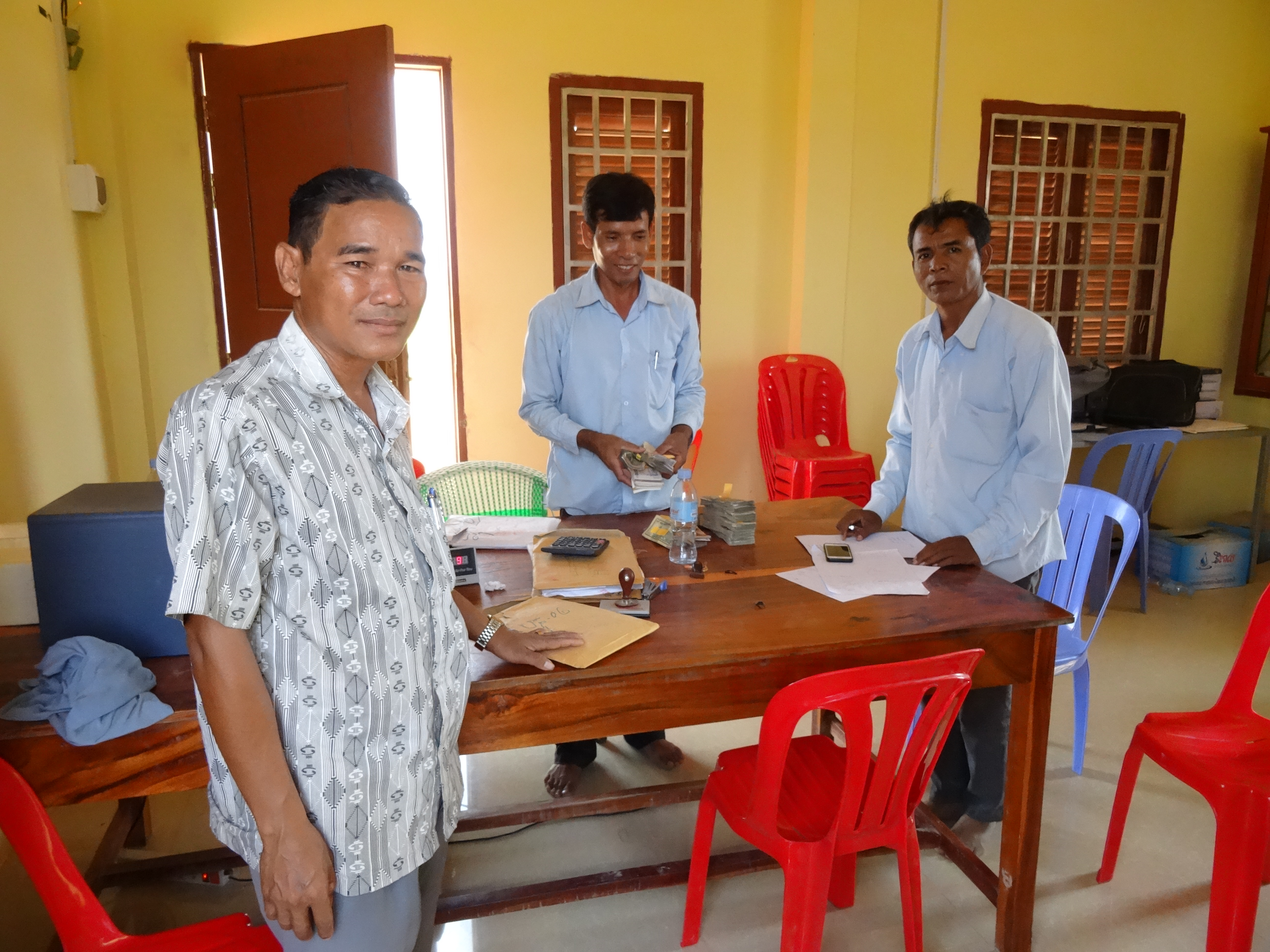
A farmer (left), having recently sold his rice crop delivers his irrigation service fee to the Chairman (right) and finance officer (centre) at the Wat Thmey scheme’s new FWUC office, built with CAVAC funds over the main canal near Prey Kabas district town

Anyone travelling out of Phnom Penh on any of the main roads south, would find it hard not to notice physical evidence of a significant shift underway in the Cambodian labor market. The national highways to Sihanoukville, Kampot and Takeo are flanked either side by one large foreign-owned factory after another, that collectively are employing hundreds of thousands of young workers (mainly women), the vast majority of whom have recently moved out of the agriculture sector. Women reportedly constitute 90 % of the workforce in the rapidly growing garment production industry, with many of the factories unregistered according to Human Rights Watch. At the end of the work shifts, main roads in front of the factories are blocked by a mass exodus of low paid employees streaming out to catch shared transportation back to their villages.

Indeed, a study commissioned by CAVAC itself estimated that during the period 2014-19, between 891,000 to 1,043,000 additional people would join the Cambodian labor force, with most of these working in the textile, tourism and construction industries, plus a significant proportion moving abroad as temporary migrant labor, with Thailand the primary destination. The upshot of this tectonic shift from farm-based to off-farm employment is that labor to carry out agricultural tasks is becoming increasingly scarce and more expensive, thus leading to a shortage at certain times of year and for key tasks. As elsewhere, farming is increasingly becoming an occupation of an aging demographic, who find it a challenge to manage the family landholding and make a living as new external pressures mount on their time and energy, such as demands by migrant workers on grandparents to look after their young children in return for regular remittances.

Yet irrigated agriculture induces a need for extra labor, if it is to succeed as a strategy for achieving higher farm productivity, thus negating a major part of the rationale of the CAVAC project, which claims it is targeting poorer smallholder farmers, i.e. exactly the kind of people most likely to be migrating to the more financially secure and stable jobs in non-farm work. If irrigated agriculture could deliver a higher, more reliable and regular income than off-farm opportunities, then there would be a better chance people would stay at home and farm. Then there are also questions of aspiration – especially of the younger generations being swept up in a gathering maelstrom of urban-driven consumerism, regionalization and globalization.

At the present time, there is little indication that the economics of dry season rice will be sufficient to ensure most adolescents and young adults desire to remain in farming. This aspect of the changing labor market was further underlined through a question put to each farmer encountered regarding their grown-up children’s present main occupation (invariably working in non-farm employment, both locally, in the city or abroad) or what they wanted their school age children to do when they left school in the future (if it was not to study further, most parents wanted them to work in off-farm jobs). Just as in neighboring Thailand and countless nations undergoing a fundamental agrarian shift, there seemed little appetite in Cambodia (especially in areas well connected to the city like Takeo) for preserving the vagaries of smallholder agricultural work, even where new irrigation schemes have been subsidized by foreign aid donors at significant expense.

But there also seems to be little evidence that either AusAID or their agents have adequately internalized the impact of a dwindling labor-base on the future economic sustainability of the prescribed irrigation development model, especially in provinces with easy access to the capital and expanding local non-farm employment opportunities, like Takeo. As was conceded to me by the CAVAC irrigation adviser, a farming household probably needs to have a minimum of 5 ha of land to realistically reap dividends from modern irrigation schemes, thus ruling out the majority of rural smallholders from ever being project beneficiaries. Most households at Wat Thmey were cultivating less than 2 ha of irrigated rice.

Harvesting the 2017 dry season rice crop next to a CAVAC project rehabilitated canal to which no water reaches, due to over-allocation, a recurring problem nationwide. Farmers must still rely on pumped groundwater for irrigation needs.


Receiving regular and relevant agricultural extension services, whether from governmental or non-governmental sources, including agribusiness companies striving to increase their clientele, is an issue recognized in the CAVAC design principles as being important, in a bid to encourage “adaptive management” which “relies on quick feedback loops as a way to speed up learning”. Unfortunately, on the basis of my field-level encounters with farmers I saw little evidence that this claim was being translated into practice on even a limited basis, with most people professing little or no contact with agricultural extension services of any description over the last few years.

Wat Thmey is primarily perceived as a CAVAC and Provincial Department of Meteorology and Water Resources (PDoWRAM) owned project, and while officials may often visit the FWUC, they are not filtering down to the field or farmer level regularly enough, creating a discernible gap between managers and water users. PDoWRAM staff possess minimal skills and experience of practical agriculture in any case, being focused on hydraulic development expansion, while the supposedly more-qualified Ministry of Agriculture, Forestry and Fisheries (MAFF) provincial and district level staff were notable by their absence.

Most agricultural extension in Cambodia seems to be carried out in a self-interested manner by agribusiness firms, a sector which CAVAC claims to have directed a lot of resources towards, but they too did not seem to have a perceivable presence in terms of extension services, at least among the farmers we talked to. Farmers were mostly reliant on merchants and farmer-to-farmer contact for their receipt of knowledge about novel products or techniques, and there were concerns expressed about the former group’s impartiality. Empirically speaking, CAVAC did not seem to be living up to its promise on this front, for all the hubristic claims of promoting sustainability.

The third aspect of the sustainability matrix that I wish to highlight is the environment, having been struck by a number of issues at the flagship Wat Thmey project. It seemed to me that environmental sustainability was not being treated with the seriousness it deserves. CAVAC has rightly identified that pest and disease problems are an issue of high concern among farmers, since they are inherently being encouraged to practice more intensive agriculture through irrigation development investment. It was evident that there was high and regular use of pesticides (applied weekly on dry season rice crops) and chemical fertilizer among farmers, but there was a correspondingly low awareness of public and environmental health dangers and risks.

As noted above, farmers lacked any credible extension support, so ignorance and misuse of pesticides was an unavoidable consequence in a situation where most products are imported from Vietnam (so labels are in Vietnamese language) and functional literacy levels are low among users. In such circumstances, long experienced in neighboring Vietnam, Thailand and Laos, it is almost inevitable that there is going to be acute and chronic impacts on human health, both directly through pesticide (mis-)handling and application, but less directly through soil, water and aquatic organism contamination, as well as multiple negative impacts on the aquatic ecology and the wider environment.

CAVAC appears to have failed in producing any mitigation strategy that would have a tangible impact at the farm level, instead focusing most attention on yield and productivity increases as its key measures of “success”. Unsurprisingly, farmers reported a precipitous decline in fish, frogs and other edible aquatic biodiversity, that formally constituted a significant proportion of local diets.

Finally, I would like to point out a more egregious issue with reporting overall impact within the CAVAC project, a phenomenon not uncommon among peer projects keen to impress donors, host state bureaucrats or politicians, the media and other external parties, but raises questions about accountability and transparency nevertheless. In project literature outlining the fundamentals of the Wat Thmey scheme, it is claimed that the “potential command area” of the entire scheme is 2,117 ha, but for “recession cropping” (i.e. dry season rice) 1,200 ha are cultivated “after rehabilitation” that supposedly benefits 728 households.

My site visit indicated that these figures represent a significant exaggeration of actual irrigation provision by the project, with only farmland located near to the main canals being effectively served by the CAVAC water delivery system. We met farmers that had land located between 500-1,000 m from the primary canals who were not able to access water from the CAVAC project, as available water was insufficient. Often there were secondary or tertiary canals located nearby, but no water reached them. Many farmers were still growing irrigated vegetables or rice in the absence of public irrigation water, but accessed water supplies themselves from groundwater pumps, which while reliable, was invariably more expensive than the CAVAC surface water and reportedly of less good quality, being acidic. Thus the number of households actually benefiting and paying the irrigation service fee, according to the FWUC chairman, was 337 families, some 46 % of the CAVAC claimed figure. The area actually irrigated was likely to be less than 500 ha. It could be assumed that the numbers of beneficiaries were also exaggerated for the “early wet season” crop, thus leading to the conclusion that CAVAC was almost certainly significantly over-stating the scale of project benefits.

A farmer tends a crop of melons. Despite the $4.6 million rehabilitation cost of the Wat Thmey scheme by CAVAC, many farmers like this one with land nearby new canals continue to rely on pumped groundwater for crop irrigation, but are still counted as “project beneficiaries”.

Such over-statement of farmer numbers, land area irrigated, productivity gains, added economic value, etc. for a single project can also be detected in CAVAC brochures produced at the program level. In its “Achievements and Lessons Learned” booklet, CAVAC confidently claims that up to 2015, “at least 19,000 households now have access to year-round water allowing for double or triple cropping each year” from 20 schemes constructed, which will “potentially enable farmers to produce an extra 200,000 tonnes of rice a year”, which would have an estimated value of “around US$ 43 million”.

However, reviewing the available project literature and on the basis of my knowledge of the Cambodian irrigation sector overall, I would have strong reservations about there being adequate justification for such optimistic claims. Given that the “crown in the jewel” scheme at Wat Thmey seems to have overstated actual beneficiaries by 216 %, then I would hazard a guess that the situation is considerably worse at the other schemes, calling into question the whole basis by which CAVAC is claiming to be a successful, sustainable and value for money project for its implicit core component – irrigation development. It is also tempting to question whether the “demand-driven” claims of the project are more reflecting the desires of ruling politicians and bureaucrats in Cambodia than meeting the actual needs of rural Cambodians, especially the professed target demographic of “poor farmers”? I dare say, however, that the on-the-ground situation and level of socio-economic benefit hype is considerably more egregious at other projects supported by different donors, as shall be explored in the next article in the series.

REFERENCES

CHEA, C., NANG, P., WHITEHEAD, I., HIRSCH, P. & THOMPSON, A. (2011) Decentralised Governance of Irrigation Water in Cambodia: Matching Principles to Local Realities. CDRI Working Paper Series. Phnom Penh, Cambodia Development Research Institute.

DE SILVA, S., JOHNSTON, R. AND SELLAMUTU, S.S. (2013) Agriculture, Irrigation and Poverty Reduction in Cambodia: Policy Narratives and Ground Realities Compared. Colombo, Sri Lanka, International Water Management Institute.

MUKHERJI, A., FACON, T., BURKE, J., DE FRAITURE, C., FAURES, J.-M., FULEKI, B., GIORDANO, M., MOLDEN, D. & SHAH, T. (2009) Revitalizing Asia’s Irrigation: To sustainably meet tomorrow’s food needs. Colombo, Sri Lanka, International Water Management Institute and Food and Agriculture Organisation of the United Nations.

THUON, T. (2013) Localizing Development and Irrigation Management in Cambodia. IN DANIEL, R., LEBEL, L. & MANOROM, K. (Eds.) Governing the Mekong: Engaging in the Politics of Knowledge. Selangor, Malaysia, Strategic Information and Research Development Centre.

Leave a Comment

Filed under Cambodia, FEATURES, SLIDER, Sustainability and Resource Management

From Israeli to Indian aid in Cambodia: The Prek Thnot river basin’s hydraulic development paradigm

Overview: Cambodian Irrigation Issues

The entire Mekong Basin is undergoing a period of rapid social and environmental transformation, a large part of which is closely linked to decisions made over water resources development and management. States and non-state actors, both domestic and international, profit and non-profit agencies and institutions, are piling into this sector and competing for their share of the action, making for a highly contested and politicized arena. Often the prior development history and discourse surrounding current developments are overlooked in the headlong rush for constructing more hydraulic infrastructure.

“Water resources management” incorporates a capacious and inclusive umbrella of actors, where few are excluded but in some contexts not all are welcome to contribute as true “stakeholders”, particularly those in civil society that bring a critical eye to the development paradigm or deviate from dominant state-sanctioned narratives. Exclusion and silencing of diverse voices are standard tactics by those that hold the reins of power. After all, there are considerable vested interests at stake, both politically and economically, especially where individual projects can be valued in amounts that run into several billion US dollars.

While hydropower is considered controversial and attracts increasing amounts of critical scrutiny regionally, especially from international media and NGOs, the irrigation sector is considered more benign and end-user friendly, and thus far has largely escaped much critical scrutiny, even though it is often more likely to fail and have wider ecological implications than hydropower. And for a Mekong fish species, it is unlikely to question whether the wall of concrete blocking its migration path is built for irrigation or hydropower purposes, though it may be less likely to survive or thrive in the run-off from the agrichemical-laced water created by irrigation schemes. An irrigation scheme’s ecological footprint may often be far more extensive and profound than that of a hydropower project. Furthermore, there is emerging evidence to suggest that many, if not most, irrigation schemes in the Lower Mekong Basin are failing on both technical and socio-economic grounds to achieve anything like basic standards of sustainability or meet their original development goals.

The following is part one of a three article series that touches upon various issues related to the current state of irrigation and water resources development in Cambodia arose from reflections prompted by a recent field visit by the author. Each article focuses on a different river system or irrigation scheme that I visited on the ground in mid-March 2017 and covers various aspects of the water resources matrix in Cambodia, touching upon some socio-economic and ecological sustainability questions, as well as considering a few of the underlying geo-political issues facing Cambodia and its foreign suitors at this juncture in its history. The discussion is not intended to be comprehensive, but rather touch on some of the more salient observations that arose and perhaps spark some much-needed debate about this sector, given the general reluctance of some key institutions to internally assimilate and not repeat past shortcomings, at both the national and regional levels.


From Israeli to Indian aid:  The Prek Thnot river basin’s hydraulic development paradigm

This article highlights a brief and partial history of a river basin, located not far from the capital Phnom Penh, that has been the subject of numerous bi-lateral and multi-lateral hydraulic development schemes over the decades, stretching back to the post-colonial era of the early 1960s, when Cambodia was the subject of development aid overtures from a range of Western and East Asian actors and institutions, but lacked any real internal capacity to implement the schemes on offer.

Not that this dearth of local capacity was of much concern to the various foreign “experts” that have arrived in Cambodia at various junctures since with a development brief to hydraulically modify its rivers, as it was taken for granted that technology and knowledge transfer was part of the long term task, but in the meantime much of the actual development would be designed and implemented by overseas expertise and companies. It was also inherently assumed that the elites in government knew what the mass of ordinary people required and were the de facto best proxies in the development mission to rid the nation of the triple scourges of interlinked water scarcity (drought), floods and poverty arising from uncontrolled hydrology.

These main assumptions remain the dominant blueprint model of development to the present day, with small legions of foreign consultants sitting in offices worldwide, designing and planning projects that will determine the fate of Cambodia’s river basins and water resources well into the future. However, they are almost universally remiss at glancing backwards to the outcome of earlier interventions or looking laterally to neighboring country’s experiences, even when the exact same institutions have been involved in the same field over a period of several decades.

It is a peculiar “disease” of the international development industry, where there are few genuine incentives to learn valuable lessons from the past (and no real sanctions against repeating mistakes), accountability exists mostly on paper and it is rare to find an individual (let alone an institution) actually being held responsible for the consequences of the policies, strategies or projects implemented, even when they go demonstrably awry. In any case, many involved in the development industry privately acknowledge that much intervention they undertake is little more than a charade to keep the dollars flowing, so why question the value of the hydraulic engineering and managerial gravy train, much less stop it in its tracks?

I digress. Back to the river basin in question, namely the Prek Thnot (meaning “sugar palm”) river, that flows from the eastern Cardamom mountains through Kompong Speu and Kandal provinces, just to the south of Phnom Penh and discharges into the Tonle Bassac arm of the Mekong River. It is a highly seasonal river, with great variance in flow between the wet and dry seasons, making its control and management problematic in a complex and dynamic socio-ecological setting.

The foreign agencies (state and non-state) involved in Prek Thnot at one time or another, reads like a who’s who of development assistance to Cambodia: Australia, Israel, Japan, the Netherlands, Sweden, the United Kingdom were among prominent players over the years. Aside from state-linked institutions, there have been a number of non-government organizations involved in the past, adding a veneer of respectability to rather suspect blueprint “master plans”, including Australian Catholic Relief (ACR) which hired the Snowy Mountain Engineering Corporation Ltd (SMEC) to conduct a “reappraisal report” on the development of a “Prek Thnot Multipurpose Project” in 1991. This study looked at the feasibility of building a number of different project scenarios, to include a large hydropower dam with storage reservoir, flood control component and irrigation provision of up to 34,000 ha, under its most optimistic format.

The first major study and large dam proposal for the Prek Thnot basin was conducted by an Israeli government consultancy (Water Resources Development (International) Ltd) and submitted to the King Sihanouk regime in 1965, which envisaged a 70,000 ha irrigation scheme costing $34 million. The Prek Thnot Irrigation and Drainage Project was initially approved by the Committee for Coordination of Investigations of the Lower Mekong Basin in 1966, with construction of a large storage dam for hydropower and irrigation functions beginning in 1969, but the work had to be stopped a year later due to local fighting related to the escalating Indochina War.

A related diversion weir across the Prek Thnot river upstream of Kampong Speu town at Roleng Chrey was completed in 1973, designed to irrigate just 350 ha of land, but all foreign-funded work on the project halted entirely before the 1975 march into Phnom Penh of the Khmer Rouge, as the country descended into chaos. Some further work on canal extension using forced labor was carried out during the infamous “Pol Pot era” (1975-79), though it is unclear as to the efficacy of these works (the prevailing national narrative is that all irrigation works during this era were a resounding failure, though there is some dispute over the fairness of this general dismissal).

Since 1979, some minor domestic adjustments were made to the Roleng Chrey irrigation scheme but no major rehabilitation was carried out until a series of studies were commissioned in the late 1980s with a view to completion of the original large dam, some 12 kms upstream of the Roleng Chrey diversion weir. It was considered by Australia and other Western donors that a new dam at the old Israeli site would be essential to provide the capital with electricity and that significantly expanding irrigation provision in the downstream Prek Thnot basin would make Cambodia self-sufficient in rice and remove its dependency on foreign food aid. It was hoped that the Prek Thnot Multipurpose Project would be funded via a loan from the World Bank or Asian Development Bank, if the 1991 SMEC studies could be shown to present a financially viable option from three alternatives considered.

The silted up and poorly maintained canal drawing from the Roleng Chrey diversion dam today supplies a fraction of the area it was originally designed to, while some farmers with land next to it still draw water by hand.

Developing the Prek Thnot dam and storage reservoir in the 1990s was complicated by the fact that in the intervening years since the 1979 fall of the Khmer Rouge, many people had moved into the watershed area upstream creating a much greater resettlement component and thus increasing any associated compensation and mitigation costs. In the event and after conducting further studies, the large storage dam and reservoir for hydropower generation option was not financed by Western aid donors, but the downstream irrigation sub-schemes based on “run-of the river” diversions were constructed on an ad hoc basis, seemingly as a way of ingratiating the donor nation with Cambodia’s patrimonial government. Ignoring constraints on development imposed by the hydrology, this created an inevitable situation of severe over-allocation of available water resources and poor management outcome.

However, fast-track the situation to the last few years and over-extraction of water for irrigation is not the river’s only or most severe problem, as pollution from industrial development is effectively wiping out the aquatic health of the Prek Thnot river. In any case, with the rapidly changing macro-economic picture, rural people are now mostly disinterested in the meager returns and hard work that irrigated agriculture demands, even if there was a reliable water supply. Simply put, the local population are now turning away from agriculture to become factory employees and other non-farm work in droves and the Prek Thnot is being turned into an open sewer from unregulated human and industrial discharge.

A satellite image showing National Route 4 (to Sihanoukville) and Route 3 (to Kampot) running out of Phnom Penh city, with recently-built industrial factories located as ribbon development along each road. Many were seen to be releasing untreated waste water, which finds its way by small streams into the Prek Thnot river . NB: Krong Chbar Mon is the provincial capital of Kompong Speu, with the Roleng Chrey dam located about 6 kms upstream

The hydraulic development that has taken place on the Prek Thnot river system over the last four decades or so has been implemented in an ad hoc fashion, that has not fully taken into account the wider socio-ecological context of the river, nor addressed the underlying threats and constraints to its integrity, which are now becoming all too apparent as the river spirals into an increasingly degraded state. Instead, one agency after another has designed and implemented its own hydraulic fantasy project, based on an all-too-common, but fatal, mix of development hubris, flawed assumptions and self-interested guile of foreign consultants and their bureaucratic counterparts in the Cambodian government.

The most influential agency pushing hydraulic engineering solutions has been the Japanese government, principally via its Rehabilitation of the Kandal Stung Irrigation System Project, costing $19.26 million and completed in about 2007. This project aimed to rehabilitate an existing (“Pol Pot era”) irrigation system and supply a “beneficiary area” of 1,950 ha with irrigation. In practice, according to an ex-post facto evaluation of the project by a Japanese consultant in 2012 and based exclusively on Ministry of Water Resources and Meteorology (MoWRAM) data (so not independently verified), the project irrigated 1,593 ha for single cropped rice in the wet season, 339 ha of double cropped rice in the wet season and 294 ha of dry season rice.

Such bland data tends to exaggerate the impacts of a project, as they fail to incorporate an understanding of the degree to which rice can be cultivated in the “command area” due to non-project related hydrology in the rainy season. Some years when rains are plentiful, no additional irrigation is required at all.

However, there were evidently major issues with the project’s performance, reading between the lines of the report, and the report failed to convince this reader that significant extra water had been secured from the project’s low-head hydraulic structures to compensate at critical periods of the year, given the modest inflows to the system from upstream in the dry season. Overall the project was rated as “partially satisfactory” by the consultant, despite being constrained by a narrow terms of reference for project evaluation and thus, the questions that could be posed.

When I visited the project, due to upriver extraction and low natural flows there was extremely limited inflow to the project headworks, matched by a trickle of heavily polluted outfall below the weirs, reflected in a correspondingly small area of irrigated rice being cultivated, suggesting the Kandal Stung project is now largely obsolete and uneconomic for agriculture, just a decade after Japan’s investment. The entire project had the appearance of “abandonment”, with little operation and maintenance carried out and some of the hydraulic infrastructure was on the verge of collapse into the river bed (see picture below).

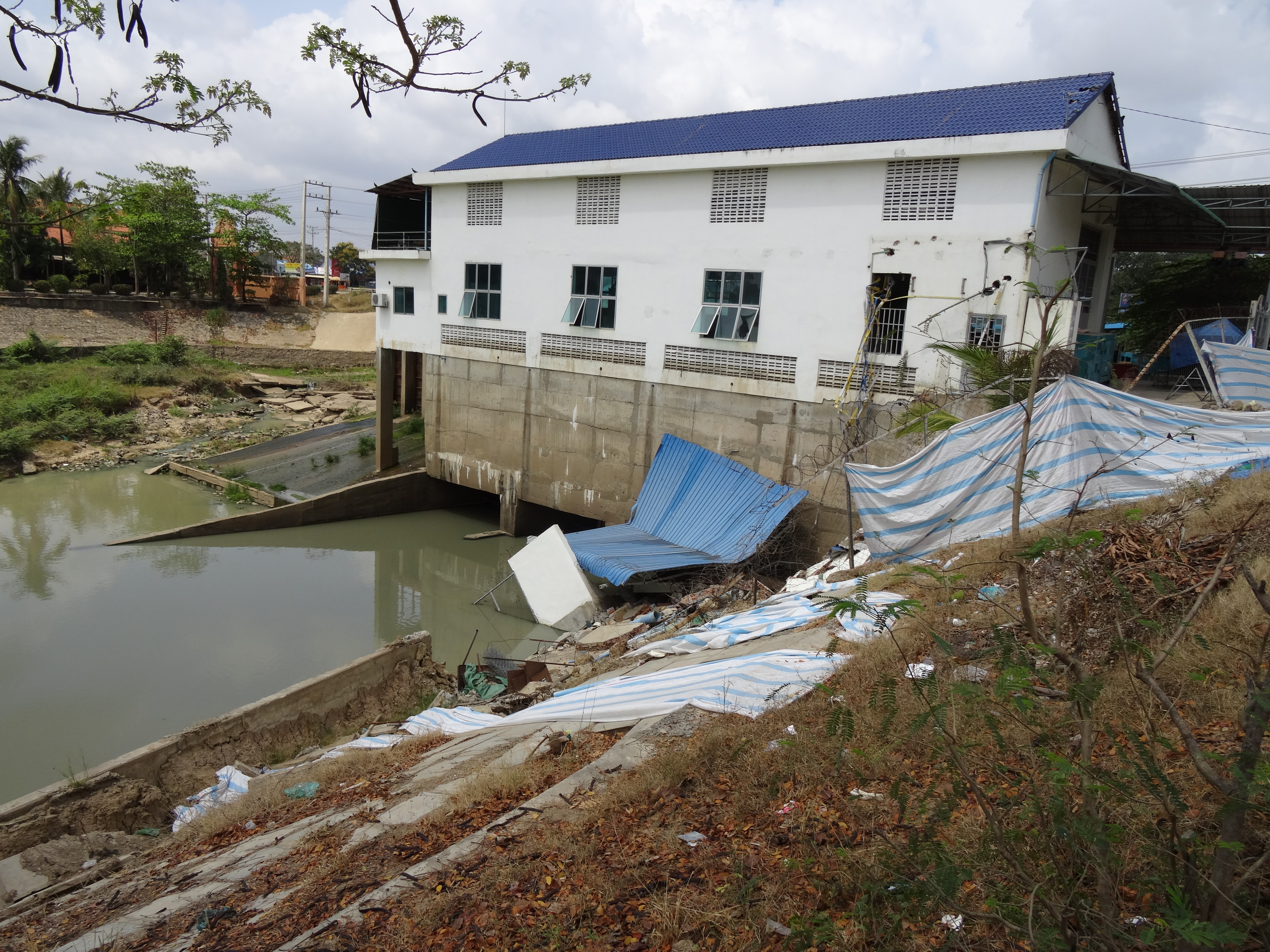
A building, possibly containing power turbines, built at the headworks of the Tuk Thla weir on the Prek Thnot river next to Route 3 showing downstream bank erosion and subsidence, which could lead to the collapse of the entire structure in the coming rainy season. Unknown aid donor, but quite possibly built under Japanese Kandal Stung Rehabilitation Project.


While the middle and lower Prek Thnot river basin has had one foreign-aided irrigation scheme after another superimposed on it over the course of the last three decades, none of which are economically feasible or ecologically rational, thus inevitably disappointing end users (while no doubt pleasing political elites – the true beneficiaries). The original target users – impoverished villagers –  have been voting with their feet for years, leaving the land en masse to work in non-farm employment, both domestically and abroad, meaning there is declining demand for irrigation services and agricultural livelihoods in any case, making the rationale for the aid projects largely obsolete.

Those that remain in the villages are increasingly dependent on off-farm remittances and while they might rhetorically profess to want to practice irrigated rice cultivation, in reality are severely restricted by lack of labor, lack of capital, insufficient water allocation (temporally and spatially) and generally poor economic returns available from the sector, vis à vis non-farm livelihood options. Thus, rural families with suitable land tend to stick to growing a single crop of rice in the wet season to provide a measure of food security, which is not entirely reliant on poorly managed and maintained public irrigation schemes, and spurn dry season cropping.

Yet despite this rather obvious socio-economic reality that has emerged in parts of Cambodia that are becoming more closely tied into nearby urban and wider regional and global markets, international aid donors still cling to old school irrigational approaches. For example, the government of India decided a few years ago to belatedly enter into the melange of existing hydraulic interests in the Prek Thnot basin, by constructing a large storage dam on the upper river in Aoral District, Kampong Speu, completed in 2015.

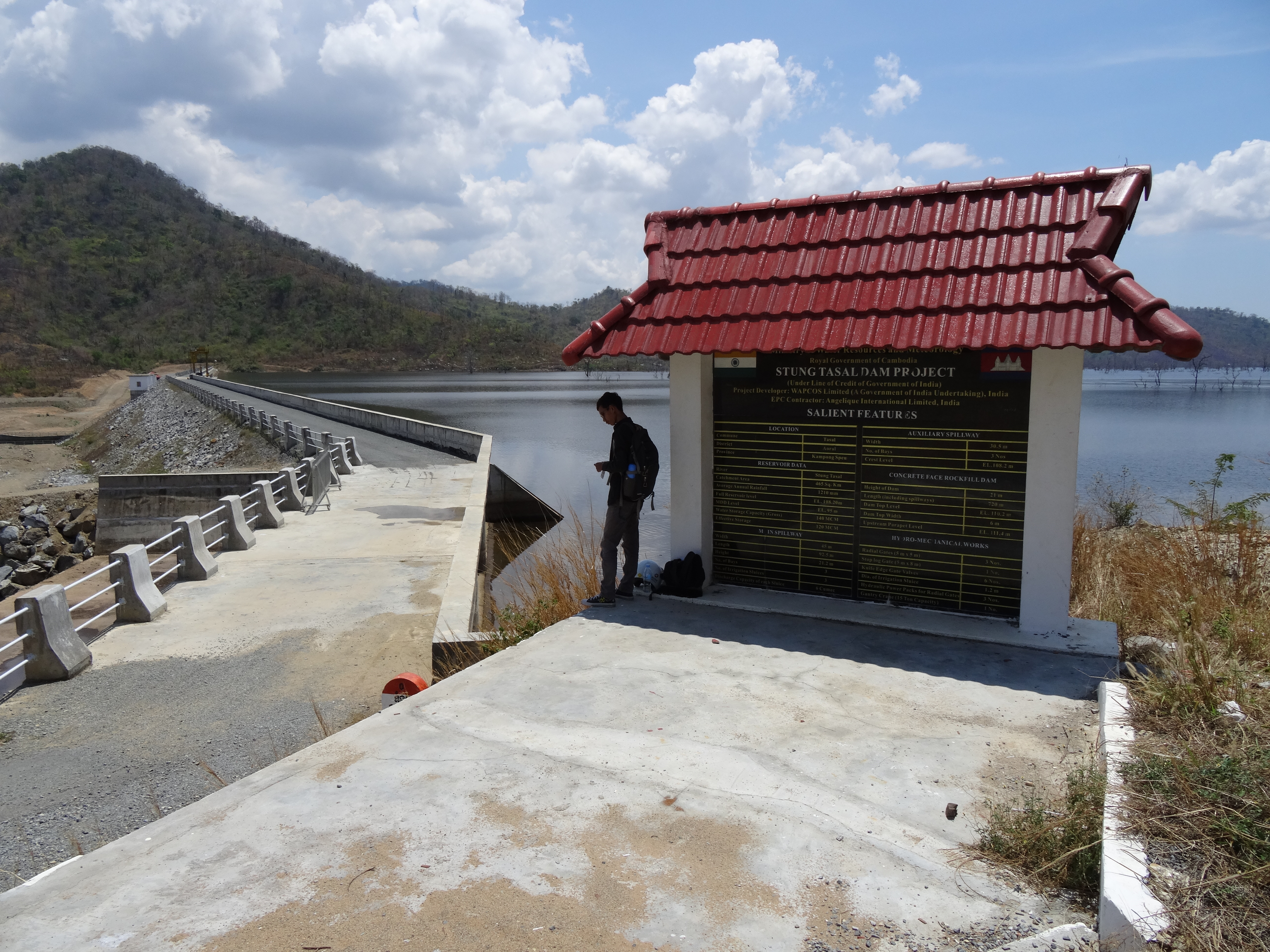
Described as being built by “state of the art technical expertise” from WAPCOS Limited (an Indian governmental enterprise under the aegis of the Indian Ministry of Water Resources, River Development and Ganga Rejuventation), the dam is a concrete-faced rockfill structure 21 m high and with a total storage capacity of 140 MCM, that supposedly benefits an irrigation command area of 10,000 ha. The project was reputedly implemented via a $30 million loan from the Indian to the Cambodian government, which supposedly will involve canal-building for irrigation provision in a Phase 2.

However, when I visited the site towards the end of the dry season, there was no evidence that this dam was benefitting a single hectare of land. Instead it was discharging foul-smelling water into the Prek Thnot river, a product no doubt related to the uncleared biomass left in its shallow reservoir, but also may be exacerbated by water releases from a sugar cane factory located near the reservoir inlet. The polluted water being released from the dam would almost certainly be harming aquatic life for many kilometers downstream. To all intents and purposes the Stung Talas dam (as it has been named) appeared to be a project without a purpose.

There were no government officials stationed at the dam and it gave an impression of abandonment, reinforced by locals living just a few kilometers away in Aoral district who were largely ignorant of its existence. It did not put food on their tables, water in their taps, irrigate their fields or homes nor benefit them in any way, so why should they care? It was clear that this was a dam built as a political device to improve economic relations between India and Cambodia, under a process showing a bare minimum of good governance credentials, but reflecting the new geo-political realities of the nation and wider region.

The Talas Dam located on the upper Prek Thnot river, Aoral District, Kampong Speu. It was completed in 2015, without clearing trees and other vegetation from reservoir bed, which is now slowly rotting. In March 2017, the water quality was very poor beneath the dam as a result.

The case of the Talas Dam, the Stung Kandal scheme, the Prek Thnot Multipurpose Project and other ill-fated plans and projects to hydraulically transform the Prek Thnot river basin for irrigational purposes over the past four decades are emblematic of a more general paradigm seen across the Lower Mekong Basin, yet scarcely acknowledged by the agencies and institutions that continue to seek to exercise their visions of “development” alongside those of authoritarian governments and despotic leaders.

The failure to study and learn the empirical lessons represented by the changing in-basin circumstances, past development interventions and resulting rapid degradation in the ecological health of the Prek Thnot river, especially given its proximity to Phnom Penh, should be a source of deep embarassment by the many “experts” involved in the national water resources development and management sector. It seems like a wonderful opportunity to study a near-at-hand case study and take seriously the much-abused notion of “sustainability” has been missed. Instead, there remains scarce interest in performing such detailed post-facto evaluative exercises of hydraulic development pathways, but an appetite for endlessly replicating past failures to serve narrow political agendas stays strong, ironically often among some of the very agencies that pressed for the utopian “multi-purpose development” schemes in the first place.

Leave a Comment

Filed under Cambodia, Environment and sustainability, FEATURES, SLIDER, water