
Comment: China’s relations with Malaysia
Prime Minister of Malaysia Mahathir Mohamad’s recent decision to suspend several Belt and Road projects in Malaysia is just the latest chapter in the colored history between China and Malaysia. After the foundation of modern Malaysia, China supported the Malaysian communist insurgency. After China ceased support to the insurgents, Malaysia established official relations with China in 1974. Since then Malaysia has become a key trade partner for China. However, for Malaysia there are tensions with China regarding the South China Sea dispute and growing anxiety about Chinese economic influence in the country. Within Malaysia there is a large minority of ethnic Chinese in Malaysia, which currently makes up approximately 24% of the population. Ethnic Chinese began settling in Malaysia during the 1400’s when the Sultanate of Malacca was a vassal state of the Ming Dynasty. ~Kevin Rutigliano
EXSE FOCUS
Clouds over massive Chinese infrastructure projects but China and Malaysia ‘can weather change’ –South China Morning Post Beijing’s ties with Kuala Lumpur can withstand change and uncertainty, China said on Wednesday, despite massive infrastructure projects hanging in the balance in Malaysia. In talks with Tun Daim Zainuddin, a special envoy of Malaysian Prime Minister Mahathir Mohamad, Chinese Foreign Minister Wang Yi said China would advance cooperation on the “Belt and Road Initiative”, a massive plan by Beijing to boost infrastructure links throughout Asia to Africa and Europe.
China’s Cooling Economy Spells Trouble Ahead for Global Growth –Bloomberg Confirmation that China’s economy is slowing amid an escalating trade war is a worrying omen for global growth. Data released since Friday has affirmed what’s been expected for some time: That an ongoing campaign to curtail credit is putting the brakes on the world’s second-largest economy. Given that China generates as much as a third of global growth, that’s adding to signs that the best world expansion in years is plateauing. //Countries that are relying upon Chinese loans could especially suffer during a Chinese economic downturn or a turndown in their own country.
‘Single-minded determination’: China’s global infrastructure spree rings alarm bells –Mongabay
As governments in Southeast Asia target economic growth through infrastructure development, China, the world’s second-largest economy, has emerged as a ready funder for some of the most ambitious and expensive projects. Regional leaders have been quick to seize the opportunity offered by Beijing, but environmental experts warn that many of these projects could cause irreversible environmental damage in highly biodiverse areas.
Thai soccer team opens up about dramatic cave rescue –CBS The 12 members of a soccer team and their coach rescued from a flooded cave in northern Thailand finally regained their full freedom on Wednesday, walking out of a hospital a week after they emerged from 18 days trapped underground. The Wild Boars team members, who range in age from 11 to 16, and their 25-year-old assistant coach spent at least eight days at the hospital in Chiang Rai being tested and treated for relatively minor ailments, given their ordeal.
Full Steam Ahead for Indonesia’s Low-Carbon Future –ADB Developing sustainable energy sources is critical to meet Indonesia’s increasing power demand. The country has 40% of the world’s geothermal resources. Development of these resources will help diversify the country’s energy mix to meet the demand and its commitment to reduce 30% of its carbon dioxide emissions by 2030.
REGIONAL RELATIONS
US-Philippines Maritime Security Cooperation in the Spotlight with Expanded Exercise– The Diplomat
Last week, the United States and the Philippines carried out the latest iteration of a new maritime training activity between the two sides that has taken place under Philippine President Rodrigo Duterte. The interaction highlights the continuing cooperation between the two longtime treaty allies despite the challenges the relationship has faced thus far under Duterte.
Mahathir hosts Duterte in anti-terrorism push– Nikkei Asian Review Malaysian Prime Minister Mahathir Mohamad is stepping up diplomacy with Southeast Asian neighbors, inviting Philippine President Rodrigo Duterte to discuss anti-terrorism measures, a strategy that will test his ability to unite the region against China’s rise. Mahathir proposed Monday’s summit with Duterte, according to the Philippine side. The day before, the two leaders watched a boxing match featuring popular Philippine politician and professional boxer Manny Pacquiao — an unusual event for Mahathir, who is said to shun violent spectacles like that. //Cooperation between both of these countries is needed in order to reduce terrorism in the region because terrorist networks have transnational operations in both countries
Japan to provide peacekeeper training for ASEAN nations in bid to counter China’s growing presence –Japan Times Japan will help train personnel in member states of the Association of Southeast Asian Nations taking part in U.N. peacekeeping operations, sources said Monday. The government has been providing training in Africa on how to operate heavy machinery, and plans to expand the program to cover ASEAN nations, according to the sources.
Maritime ‘blue economy’ key focus of India-Asean cooperation –The Straits Times Maritime cooperation has emerged as a key area of engagement between India and Asean as New Delhi steps up its links with South-east Asia under Prime Minister Narendra Modi’s Act East Policy. At the heart of this so-called “blue economy” lies the Indian government’s commitment to enhance connectivity between its north-eastern region and neighbouring Asean cities. Ms Preeti Saran, secretary (East) in India’s External Affairs Ministry, highlighted the importance New Delhi attaches to Asean-Indian cooperation in the maritime domain in her opening address at the 10th Delhi Dialogue on Thursday (July 19).
Related: India, ASEAN cooperation will be key facilitator for growth of Indo-Pacific region –Times of India
The Quadrilateral conundrum: Can Asean be persuaded? –Khmer Times The revival of the ‘Indo-Pacific’ as a geostrategic region for the United States was perhaps less surprising than the revival of the Quadrilateral Security Dialogue, better known as the ‘Quad’, with Australia, India, Japan, and the US negotiating to restart the forum on the sidelines of the 2017 Asean Summit. The first Quad collapsed when China expressed opposition, and despite protestations that it was not a Chinese containment strategy, Australia dropped out.
EU and ASEAN to restart FTA process: PM Lee –Channel NewsAsia The European Union (EU) and ASEAN have agreed to restart the process of establishing a Free Trade Agreement (FTA) between them, said Singapore Prime Minister Lee Hsien Loong on Saturday (Jul 14). And as the ASEAN coordinator for ASEAN-EU relations after this August, he said that Singapore hopes to establish a framework to identify areas with potential to work out deals. Mr Lee was speaking to the media after attending France’s National Day Parade in Paris, where he was the guest of honour – the first Singaporean leader to receive the distinction.
US pledges $26.5M to Philippines for counterterrorism – Philippine Star The United States government has vowed to provide $26.5 million to assist the Philippines’ counterterrorism efforts. The US Embassy said that the assistance will be given to Philippine law enforcement agencies over the next two years. “The assistance will include training, equipment, and other support to build comprehensive law enforcement capacity within a rule of law framework to deny terrorist operations, funding, and movement,” the US Embassy said in a statement. //The United States has given counter-terrorism aid to the Philippines since the War on Terror began in 2001.
SUSTAINABILITY AND RESOURCE MANAGEMENT
Southeast Asia’s Tigers Show Slight Revival But Remain Under Pressure– Radio Free Asia According to the best estimates, some 100,000 tigers used to roam through parts of Asia. But that was more than a century ago. Today, experts estimate that worldwide only some 3,800 tigers have survived in the wild. This marks a slight improvement for the big cats over a low point of some 3,200 five years ago. According to Ravi Velloor, a veteran editor at The Straits Times of Singapore, more than two thirds of tigers surviving in the wild can be found on the Indian subcontinent, where India and Nepal, he says, have recently made “impressive strides in conservation.”
The ‘billionaires’ waste recycling village is seriously polluted –Mekong Eye The air is full of the smell of burning plastic in Minh Khai hamlet in Nhu Quynh town of Van Lam district, Hung Yen province, called the ‘billionaires’ waste recycling village’. Soon after crossing the Hanoi-Hung Yen border, visitors enter the Hung Yen area. At the entrance gate to Minh Khai hamlet, a rusty signboard catches the eye. It says ‘Please don’t leave litter, build houses and grow plants on irrigation works.
From Cloud Seeding to Vehicle Curbs, Indonesia Fights Pollution Ahead of Asian Games –The Irrawaddy As Indonesia prepares to host thousands of competitors and fans at next month’s Asian Games, pollution concerns have flared following a spell of unhealthy air in Jakarta and forest fire hotspots near the second venue, Palembang, in South Sumatra. Traffic congestion in Indonesia’s sprawling capital of 10 million consistently ranks among the world’s worst, and it has long struggled to boost air quality, regularly rated as unsafe by the World Health Organization (WHO).
Indonesia accelerates use of B30 biodiesel fuels –Jakarta Post The government plans to accelerate the use of fuel with 30 percent biodiesel content (B30 biofuel) in the transportation sector by next year from the initial plan of 2020, an official has said. The Energy and Mineral Resources Ministry’s renewable energy and energy conservation director general, Rida Mulyana, said the government had studied the use of B30, which was produced from palm oil as its raw material, as part of efforts to improve energy self-sufficiency.
CHINA
China challenges fairness of U.S. tariffs and asks World Trade Organization to intervene –Los Angeles Times China on Monday presented itself as a bastion of international order and global rules on trade while announcing its filing of a World Trade Organization challenge against a threat of $200 billion more in tariffs by the United States. A Chinese government spokeswoman said fair trade called for international rules that were made collectively. The U.S., however, had helped shape WTO rules for its own benefit, she said.
China’s BRI Bet in the Middle East – The Diplomat During the China-Arab States Cooperation Forum (CASCF) held on July 10 in Beijing, China announced that it would loan several Arab countries in the Middle East $20 billion, adding aid packages worth over $100 million to the Palestinians, Yemen, Lebanon, Jordan, and Syria. The announcement, which came from President Xi Jinping in his opening remarks to the Forum, offered few details, but was heralded as financing for “economic reconstruction” in transportation infrastructure, oil and gas, finance, high-tech fields, the digital economy, and artificial intelligence (AI) projects, according to Chinese news sources.
China Looks to Stronger EU Trade Ties Against Threat of US Tariffs –VOA China bolstered ties with the European Union this week with more large markets in the pipeline to keep its exports healthy as the United States levies import tariffs, analysts say. At the 20th China-EU leaders’ meeting Monday in Beijing, Chinese President Xi Jinping said his country stands ready to promote bilateral economic development. Premier Li Keqiang noted at the summit China had recently cut import tariffs on autos, medicine and consumer goods from the EU.
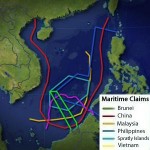
China Is Winning in the South China Sea –Wall Street Journal Two years after an international tribunal rejected expansive Chinese claims to the South China Sea, Beijing is consolidating control over the area and its resources. While the U.S. defends the right to freedom of navigation, it has failed to support the rights of neighboring countries under the tribunal’s ruling. As a result, Southeast Asian countries are bowing to Beijing’s demands.
SOUTHEAST ASIA
How Worried Should Laos Be About Its Debt Problems? –The Diplomat Why is Thongloun Sisoulith so confident about Laos’ debt problems? The Lao prime minister, speaking recently to Nikkei Asian Review, said that he is “not concerned much about the burden of debt” that his country has taken on in recent years, much spent on infrastructure projects related to China’s Belt and Road Initiative (BRI) scheme. There are in fact no shortage of concerns – ones which Lao economists and politicians, including Thongloun himself, no doubt recognize. // Laos’ debt situation may get worse if there is an economic slowdown in the region.
Unstoppable worker outflow dims Cambodia’s future prospects –Nikkei Asian Review Despite Thailand’s latest effort to stem the flow of migrants, workers from Cambodia continue to cross the border, as they try to flee an economy that offers little reward for their work. The massive outflow is leaving another problem. The hollowed-out workforce back home could rob the Khmer economy of the productivity it needs to keep growing over the long term.
Strategy plans ‘ready in 60 days’ –Bangkok Post The six master plans to accompany the 20-year national strategy will be discussed and fleshed out in the next two months, according to a government source. The master plans cover six essential areas of national administration: security, national competitiveness, human resource development, social equality, quality of life enhancement and environment, and government sector improvements.
Cambodia and World Bank Join Forces to Improve Higher Education and Connectivity –The Financial
The government of Cambodia and the World Bank 0n July 13 signed agreements signaling the start of the implementation of two key investment projects, one seeking to improve higher education for industrial development, and the other one focused on enhancing road linkages from the economic center of the country—Phnom Penh—to the only deep-see port in Preah Sihanouk province. “I would like to commend and acknowledge the excellent cooperation between the World Bank and Royal government of Cambodia, as we work together in the spirit of mutual understanding to make it possible for the two projects to come to fruit,” said H.E. Dr. Aun Pornmoniroth, Senior Minister, Minister of Economy and Finance.
First geospatial industry centre in Southeast Asia launches in Singapore –Channel NewsAsia Food delivery apps, ride-hailing firms and drone-flight programming platforms all have one thing in common: They use geospatial technology, which deals with location-based data. Firms that use such technology are now getting a leg up, as Southeast Asia’s first geospatial industry centre, GeoWorks, was launched in Singapore on Monday (Jul 16). Developed by the Singapore Land Authority (SLA), the 15,000 sq ft centre houses 22 international geotech start-ups, and aims to connect them with sectoral users and government agencies.
Government of Laos Responds to US Visa Restrictions –Laotian Times The Government of Laos has issued a response to the recent visa restrictions placed upon a number of citizens of Laos, which has caused confusion among Lao communities. The Trump administration has ordered suspension of the issuance of visas to certain citizens of Laos after the country refused to take back its persons deported from the United States.
Southeast Asia’s widening inequalities –ASEAN Post The richest one percent in Thailand controls 58 percent of the country’s wealth and the top 10 percent earned 35 times more than the bottom 10 percent. In Indonesia, the four richest men there have more wealth than the poorest 100 million people, and about 50 percent of the country’s wealth is in the hands of the top one percent. In Vietnam, 210 of the country’s super-rich earn more than enough in a year to lift 3.2 million people out of poverty.
YUNNAN
Yunnan to add more air routes to South, SE Asia –Xinhua Southwest China’s Yunnan Province plans to add 25 new air routes to Southeast Asia and South Asia before 2020 as part of an initiative to develop Yunnan into a regional air hub, the province’s development and reform commission said Monday. Of the 25 new routes, 17 are passenger air routes, linking Kunming, the provincial capital, to cities including Islamabad, Jakarta, and Haiphong. The other eight cargo routes will connect Kunming with cities such as Calcutta, Rangoon, and Ho Chi Minh City.
Yunnan once again pivot of Southeast Asia –Mekong Eye While geographical proximity is certainly an advantage, the Chinese government is actively capitalizing on it by increasing connectivities between Yunnan and neighboring countries, in order to turn its southern province into a gateway to a larger economic hinterland. The first kind of connectivity in this respect relates to economic integration initiatives that bring Yunnan province together with countries in not only Southeast Asia but also South Asia.//Yunnan indeed continues to play a critical role in China’s economic integration with Southeast Asia. In the mid-90s when the Asian Development Bank’s Greater Mekong Subregion (GMS) program took off, China’s Beijing government delegated much of the decision making power for China’s involvement in the GMS program to Yunnan provincial government departments. These officials and Yunnan’s academics began to envision ways in which Yunnan could be connected to mainland Southeast Asia given the lack of physical infrastructure linkages. They also began to act on how to utilize the physical space and borderlands of Yunnan to demonstrate China’s peaceful rise. The result of this action was mixed and colored with failures that contributed widely to a poor reputation of Chinese government stakeholders and private firms in mainland Southeast Asia. When Xi Jinping took power, he cleaned house in Yunnan’s provincial government to try and regain control of Yunnan’s relations with Southeast Asia. That didn’t work so he cleaned house once again and removed most policy making authority from Yunnan officials, giving it back to Beijing in a recentralization push. Today Yunnan decision makers are largely cast aside as Beijing is redressing its relational architecture with Southeast Asian countries. One manifestation of this is the Lancang Mekong Cooperation Mechanism launched in 2016. Yunnan’s stakeholders are now marginalized and left on the outside looking in. For two decades Yunnan has been a pivot of Southeast Asia – what’s worth watching is the ways in which Beijing now dictates relations with mainland Southeast Asia and how Yunnanese officials try to claw their way back into the game. ~Brian Eyler
This week’s news digest was curated by Kevin Rutigliano.
 The Code of Conduct for the South China Sea: A Waiting Game
 Regional Roundup for Week of 10.5.2013
 Regional Roundup for Week of 6.16.16


