Category Archives: Laos

China’s Bridgehead Strategy and Yunnan Province

Editor’s note: Liu Jinxin wrote this essay to debunk the myth that China’s bridgehead strategy is militaristic or expansionary in nature.  As a chief architect of this strategy, he seeks to demonstrate that developing Yunnan province into a bridgehead will increase international trade flows and deliver long-term regional security.  This translated essay currently guides top-level foreign policy makers in China in implementing economic strategies along its borders with Southeast Asia.  


Yunnan province's border crossing with Vietnam at Hekou/Lao Cai

Yunnan province’s border crossing with Vietnam at Hekou/Lao Cai

The definition of a bridgehead?

According to the Modern Chinese Dictionary, a bridgehead (桥头堡) is a military term that refers to a strategic chokepoint on the field of battle and particularly refers to a fortified structure that defends and controls a bridge or ferry crossing. In economic terms, bridgehead refers to a strategic forward position on a political or economic front line. The term bridgehead appeared for the first time in an official national level Chinese policy document called “Eastern Bridgeheads” in July 1994 which confirmed the Shandong cities of Rizhao and Lianyugang as the bridgehead terminus of the Eurasian landbridge.

In the economic research of landbridges, a bridgehead is a key concept that acts as a port and facilitates the ease of transportation. Bridgeheads are also international centers of shipping, finance, and information which together form an integrated international center of trade. From a logistical and supply chain system perspective, a bridgehead serves basic support to the Eurasian landmass. It is a city or a region that sits on a strategic position on the logistical and supply chain and serves the specific purpose of controlling the flow of resources along international trade routes. The basic characteristics of a bridgehead are its powers to control, develop, and influence.

The power to control

The power to control suggests capabilities levels of secure logistical flows. This can be understood in narrow and broad senses. From a narrow sense, secure logistical flows are conditional to the degree of market openness.  The survival and development of logistical flows must not be threatened by the power of a government to regulate or control it. From a broad sense, a state’s security and international security are guaranteed by engaging in logistical activities. The capability of a state’s secure logistic flows is determined by its capacity to control strategic resources, logistics routes, linkages, and its industrial supply chain.

Linking with the similar strategic logistic routes, resources, and supply chain structures of neighboring states, a concerted logistics system can deliver harmony and mutual trust as well as a collective security that realizes long term stability. Fostering mutual trust, mutual benefit, and equality work together to form a new worldview for security and protects the security of individual states as well as respects the security concerns of other states.  Mutual trust also promotes collective security.


The power to develop 

Developmental power is preconditioned by the construction of logistic routes, linkages and supply chain structures, the developmental needs of economic corridors, and mutual benefit and cooperation. This power can help states share development trajectories, share prosperity and harmonious development, and eliminate security threats at their root. States should place the promotion of shared development as the method for solving global development imbalances and fostering sustainable development. To revolutionize international financial systems, oppose trade protectionism, and promote regional economic cooperation, developing countries should establish development modes that foster interdependence, deliver effective beneficial outcomes, and seek to erase poverty. Developing countries should expand trade with each other, open markets to each other, and increase the level of south-south cooperation.


The power to influence

Influential capabilities rely on a state’s degree of openness and tolerance, strengthening of the construction of a national culture, making positive contributions in international cooperation, solidification of geo-cultural space, promotion of geo-cultural integration, ability to cooperate harmoniously, and mutual progress with its neighbors. States should respect the rights of other states to determining their own development paths by admitting differences in cultural traditions, social systems, and value systems. States should actively promote and provide guarantees to human rights, and increase dialogue to eliminate misunderstandings. States should initiate a spirit of openness and tolerance, make use of the development modes of other states in a comparative and competitive fashion, and seek collective development despite differences.


The functionality of China’s bridgeheads

The central government has required Xinjiang Uyghur Autonomous Zone, Yunnan province, and other frontier provinces and zones to open the construction bridgeheads along national borders to implement a stable and prosperous frontier region. To deliver prosperity, the bridgeheads should:

1) Be a foundation of protecting border security and stability

2) Take measures under the conditions of high technology to serve as a front line in partial wars and non-traditional security issues

3) Support efforts to rapidly develop ethnic and national zones through new economic modeling

4) Expand the promotion of international/regional cooperation with neighboring states and extend degrees of openness by forging ahead as zones of experimentation.

5) Serve as a transit and storage point for national energy resources.

From a spatial perspective, Xinjiang acts as a bridge between the East and the West; it is the new Eurasian landbridge’s thoroughfare, and as a “west gate,” it serves the opening of China’s northwest region to Central Asia and Europe.

Yunnan opens China to the Southwest connecting two oceans, the Pacific and the Indian as well as East Asia, Southeast Asia, and South Asia. It is the linkage point between China’s southwest, the Southeast Asian peninsula, and the South Asian Subcontinent, and is the starting point of the Yangtze River Delta economic zone as well as the Pearl River Delta economic zone. Yunnan acts as the core belt of the China-South Asia Economic Circle and the China-Southeast Asia economic circle. It is the main connective channel between China and the Indian Ocean and is China’s core zone in the Greater Mekong Subregion. More importantly the province serves as a key trade passageway for goods and services passing from China to South Asia and the Southeast Asian peninsula.

gms_map_large

Core Values

China’s bridgeheads are a result of major changes in geo-strategic international structure. The concept is part of China’s key diplomatic principles which pledge to be a good neighbor, a prosperous neighbor, and a secure neighbor. It is also reflective of China’s active pursuit of being a responsible world power. The core values of the bridgehead strategy are:

1) To foster an infrastructure development strategy that expands participation in the world market and establishes interdependence, while constructing mutually beneficial win-win relations with its neighbors

2) To highly prioritize unity among ethnic peoples and social stability by promoting cultural diversity and shared developmental progress

3) To respect  public opinion and the will of peoples in neighboring countries, and respect their value systems by promoting cooperation and exchange between peoples and democratic equality

4) To acknowledge the guidance of international voices and place equal importance on China’s international image and economic benefit

5) To safeguard the benefit of overseas Chinese and Chinese businessmen abroad

6) To value strategic resources, strategic routes, the shared security of strategic industrial supply line

7) To promote the construction of low carbon footprint urban areas and the use of clean energy by promoting an economic society that delivers harmonious, stable, and secure sustainable development

8) To promote the construction of a harmonious new world order and the active promotion of new kinds of partnerships with neighboring countries

9) To resolutely protect free and fair global trade and investment climates, and maintain the free flow of products, investment and services

10) In the long term, to promote sustainable growth, coordinated concerns, advocate tolerance to total adjustment, and promote balanced growth

Global economic balances can only be reached through sharing benefits and needs between developing and developed states.


Yunnan province as China’s southwest bridgehead

The southwest bridgehead is the front line of China’s interaction with the Indian Ocean, and its purpose is to construct a series of overland pathways given China’s southwest connects to South Asia and Southeast Asia trade routes. The bridgehead’s purpose is also to construct a base facing South Asia and Southeast Asia that supports export processing and the facilitation of international and domestic production, and the Kunming international land port economic zone.

Establishing Kunming as an inland economic zone will strengthen logistical flows coming from South Asia and Southeast Asia, create a tourism base for national culture, a commerce base, export processing base, and modern agriculture base as well as an information platform. This platform will come together through the increased progress of the yearly Kunming trade fair, China-South Asia fair, and the creation of different cooperation forums. The central objective is to turn Yunnan province into China’s platform for communicating with Southeast Asia and South Asia. Through creating this window, Yunnan can facilitate the building of trust between China and South Asia and Southeast Asia, and demonstrate the fruits of reform as well as Chinese culture by promoting mutual understanding and friendship. Yunnan can become a demonstration zone for how China can open to its neighbors.

The influence of a bridgehead extends outwards and is continuously stretching its limits. In China this includes two major regions.


A bridgehead to Southeast Asia

Southeast Asia includes the 10 ASEAN states of Malaysia, Philippines, Singapore, Thailand, Indonesia, Brunei, Vietnam, Lao PDR, Cambodia, and Myanmar and the non-ASEAN state of East Timor. In total this region covers 4.5 million square kilometers, supports a population of 580 million, has a combined GDP of $1.9 trillion USD and a total trade of approximately 2 trillion USD. The creation of the ASEAN-China Free Trade Zone in 2010 created a free trade area of 13 million square kilometers and a combined population of 1.9 billion. It is the largest populated free trade zone in the world and the largest free trade zone among developing countries.

China and ASEAN states are linked by mountains and rivers and share advantages by having varied distribution of resources, differences in specialization of industrial processes, complementary strengths, and an enormous potential for cooperation. As trade between China and ASEAN states increases at a rapid rate so are rates of investment. China is ASEAN’s 4th largest trading partner and ASEAN is China’s 5th largest trading partner. ASEAN has been established as a priority zone for attracting Chinese FDI and is one of the outward investment zones for Chinese industries. ASEAN is also a major market for Chinese labor, and China is winning an increasing amount of engineering contracts in ASEAN.

To date China and ASEAN trade relations have already entered a “Golden Era” and as China and ASEAN open their markets to each other, the ASEAN-China Free Trade Zone will enter a substantive phase. These contributions will bring robust commercial opportunities as the Southeast Asian peninsula is a major global agricultural production area and a critical zone of emerging industries.


A bridgehead to South Asia

The South Asian subcontinent (by way of the BCIM economic zone which includes Bangladesh, China, India, and Myanmar) is the geo-strategic fulcrum between the Indian Ocean and the Arabian Sea. At the same time, it is zone of choice for the secure channeling of China’s energy resources. The South Asian Subcontinent is also known as the Indian Subcontinent and is comprised of the Indian peninsula, the Indus river plateau, and the downstream plains of the Ganges and Brahmaputra rivers covering an area of 4.3 million square kilometers. It supports a population of 1.2 billion on 10% of the Asian continent. Its northern reaches are formed by the Himalayan and Karakoram mountain ranges and its southern limits are the Arabian Sea and the Bay of Bengal. Its western borders are limited by the Iranian plateau, and its eastern frontiers are the mountainous eastern regions of India, Bangladesh, and Myanmar.

The severity of South Asia’s natural landscape has prevented integration and the historically its cultures have been relatively closed-off to each other. This has produced divergent sentiments of independence in the region. The South Asian subcontinent includes India, Pakistan, Bangladesh, Nepal, Bhutan and does not include Sri Lanka or the Maldives. Its major rivers are the Indus, Ganges, and the Brahmaputra. Major agricultural products are wheat, rice, cotton, hemp, cane sugar and tea. Resource endowments include coal, mica, zinc, and gold.

An international pathway can be built from Yunnan through Myanmar to give China direct access to the Indian Ocean and its benefits will promote good neighborliness and the strengthening of border areas. Frontiers serve the specific functions of national defense and economic and cultural exchange. Sharing borders with Myanmar, Lao PDR, and Vietnam, Yunnan province serves as the connective link between China, South Asia, and Southeast Asia. It offers an alternate route to the passage of goods through the Straits of Malacca and is the fastest land route for goods to travel from China to South Asia, the Indian Ocean, Europe, and Africa.

Due to its advantageous geographical position, the province can facilitate huge market potential with partners in South Asia, Southeast Asia, and the Middle East. Lastly, because of its history of friendly exchange with its neighbors, Yunnan province serves as the ideal representative for diplomatic connections.

The construction of international pathways will do much to improve the state of transportation and shipping and can only expand and deepen the political, economic, and cultural cooperation between China and Southeast Asian states. Building these pathways and supporting the bridgehead strategy will develop regional economic cooperation between China, Southeast Asian, and South Asian states, strengthen the relationship of good neighborliness, and bring stability and peace to China’s border areas.

4 Comments

Filed under ASEAN, China, DOCUMENTS, Economic development, GMS, Laos, Mekong River, Myanmar/Burma, Regional Relations, SLIDER, Thailand, Vietnam

Mekong study tour update: 7.19.2013

Other than top-notch commentary on China and SE Asia, ExSE isn’t known for too much and it’s quite clear now that keeping promises isn’t a strongpoint of ours. If you were expecting regular updates on our excursion to Thailand and Laos, we deeply apologize for not delivering. However, if there’s any worthy excuse, it’s that Brian, Dequn, Tai and I have been too busy learning. The following is simply a recap of what’s been going on so far; the true implications of the things that we’ve learned are too much for me to explore in any one post.

Our first two days were spent rather relaxingly, and thankfully far away from a 3G or broadband connection, taking a cruise down the Chao Praya River with Traidhos Three Generations Barges. On the cruise, we learned the river’s watershed, conservation efforts on the river and its significance to Thailand. It was a wonderful introduction to the country through its principal waterway.

The next morning, we met with Pete Cutter at the World Wide Fund for Nature Greater Mekong Office in Bangkok. The WWF Bangkok Office is involved in some very important efforts to preserve more than a half-dozen endangered species in the region and coordinates often with other NGO’s and governments in the GMS.

Our two days in Chiang Mai, where I’m writing from now, have been our most fruitful. Thanks to our friend and ExSE team member Tom Fawrthrop, we were able to meet with many of the top journalists, NGO heads and scholars in northern Thailand. On the 16th we had a lunch talk with Tom himself and learned a ton on the region in general, and specifically the dangers of the 1250MW Xayabouri Dam in the Lao Mekong and the movement to resist its completion. We then two lectures by Professor Narut and Professor Panuwat from the Chiang Mai University Political Science Department on Thailand’s economic role in the GMS and democracy in Thailand, respectively. Afterwards, we met with the Forest Restoration Research Unit at Doi Suthep National Park and learned about their groundbreaking research on tropical forest care. Continue reading

Leave a Comment

Filed under ASEAN, Culture, Economic development, Energy, GMS, Governance, Laos, Mekong River, Myanmar/Burma, Thailand, water

China needs to change its energy strategy in the Mekong region

This op-ed was first published at ChinaDialogue and thethirdpole.net on 7/16.

 Mekong bridge

At the end of this year cars and container trucks loaded with goods from China and Thailand will finally be able to drive across a multi-lane bridge spanning the Mekong River (known as the Lancang in China). The bridge will connect Chiang Rai province in Thailand to Bokeo province in Laos, effectively linking China’s highways stretching south from Beijing and Shanghai to those coming north from Singapore, Kuala Lumpur and Bangkok.

Funded by equal investment from the Chinese and Thai government, the completion of the bridge, which took ten years of planning and two years to build, is not without controversy. For many years Thailand held back investment due to an uneven distribution of benefits between China, Laos and Thailand. Also on the Thai side, the NGO Rak Chiang Khong claim the bridge negatively impacts the local Golden Triangle economy and will ruin Mekong fisheries.

The Golden Triangle Bridge serves to highlight the challenges facing China, as the country’s new leadership attempts to balance its slowing and volatile economy and deliver domestic stability by maintaining peaceful economic relations with its neighbours.

China’s regional strategy

“In 2012 China’s growth in trade and outward investment with the five other Mekong countries of Myanmar, Laos, Thailand, Cambodia, and Vietnam surpassed its trade and investment growth in ASEANcountries,” said Xu Ningning, chairman of the Greater Mekong Subregion (GMS) Business Council. “Greater growth rates will continue with increases in regional cooperation and win-win investment opportunities.”

For the past three years China’s GMS provinces of Yunnan and Guangxi have posted growth rates of 12-15%, the highest of China’s localities, and arguably China’s economic rise has also helped deliver high growth rates among Mekong countries.

The end of the Cold War in the 1990s created a favourable environment for China to develop its economic cooperation strategies toward the Mekong region. The blurring and opening of once inviolable borders encouraged traders on both sides of the China-Southeast Asia frontier to appeal to local and national governments for better conditions for trade and migration. The Chinese government responded with twenty years of state-led trade liberalisation and investment policies to promote regional cooperation in state and private sectors.

China’s economic cooperation strategies towards its four Mekong neighbours has dovetailed nicely into a strategy that fits China’s current development needs. Liu Jinxin, a policy analyst and logistics expert says, “Unlike the US which leads the world in finance and IT, both high-value service-oriented industries, China is the world’s factory, producing goods to drive the growth of its growing middle class and serving export markets around the world. To survive, the Chinese ‘factory’ needs inputs like energy and raw materials.” Continue reading

1 Comment

Filed under ASEAN, China, Current Events, Economic development, Energy, Environment and sustainability, Food, Foreign policy, GMS, Governance, Laos, Mekong River, Myanmar/Burma, Sustainability and Resource Management, Thailand, Vietnam, water

The Code of Conduct for the South China Sea: A Waiting Game

On June 30, 2013, following the China-ASEAN Foreign Ministers’ Meeting held in Bandar Seri Begawan, capital of Brunei, China released a joint-statement with ASEAN in a post-meeting press conference, indicating that they have agreed to hold “official consultations” on a proposed Code of Conduct (CoC) to govern South China Sea “naval actions”. All parties agreed to move forward with consultations in upcoming meetings to be held in China during September later this year.

Misleadingly or mistakenly billed as a significant paradigm shift by many English language news outlets, this development should not have come as a surprise to anyone. As early as November 2012, China already issued a joint statement with ASEAN at the 15th ASEAN-China Summit in Phnom Penh, Cambodia, marking the 10th anniversary of the Declaration on the Conduct of Parties in the South China Sea (DOC) and agreeing to “keep momentum of dialogue” in moving towards a formal Code of Conduct (COC).  China also reiterated this commitment in April this year, following the 19th China-ASEAN Senior Officials’ Consultation.

For the casual observer, keeping track of the ins-and-outs of numerous ASEAN-China agreements and cryptic diplomatic sparring over South China Sea (SCS) disputes can be daunting. News reporting differs greatly depending on its country of origin and the same story can be told in a hundred different ways leaving entirely different impressions of what happened. The following is a breakdown of the important historical, political, and legal considerations necessary to understand what the Code of Conduct for the SCS is, why it is important, and how it may eventually come about. Continue reading

2 Comments

Filed under ASEAN, Brunei, Cambodia, China, Current Events, Energy, Foreign policy, Indonesia, Laos, Malaysia, Myanmar/Burma, Philippines, Regional Relations, Singapore, Thailand, Vietnam, water

Burmese Teak: Turning a New Leaf

It’s prized the world over for its durability and beauty and has long been a status symbol; to own something made from teak really means something. But what is teak and why does it matter today?

Teak, or Tectona Grandis, is a large, deciduous, hardwood species found throughout Southeast Asia in environments under 900m in elevation that receive over 500mm of annual rainfall. Teak is known is primarily known for its durability; it is naturally water-resistant and contains resins that repel and termites and slows rot. Because of these qualities, teak wood is valued for its ability to resist the natural elements and is often used in outdoor furniture and yacht and sailboat building.

Teak is native only to India, Indonesia, Lao PDR, Malaysia, Myanmar and Thailand. Of the estimated 29 million hectares of naturally occurring teak forests, almost half are found in Myanmar. It is important to note that only Myanmar does not enforce a logging or export ban on teak, so all legally-harvested natural teak on today’s market is Burmese. The cost of this Burmese teak can be quite high – the market price for some wood can reach than $4,000/m3. This represents the most expensive teak, as natural teak is valued higher than its planted counterpart. There are several reasons for this disparity. First, plantation teak has smaller dimensions than natural teak and rarely reaches the size of a natural tree. Secondly, there is a perception among many buyers that plantation teak is less dense than natural timber and thus is of a lower quality. In addition, natural teak is a rare resource. As mentioned, Myanmar is currently the only country exporting natural teak and its forests are decreasing every year, making prized Burmese wood rarer and more expensive.

teak 1 Continue reading

2 Comments

Filed under China, Economic development, Environment and sustainability, Indonesia, Laos, Malaysia, Myanmar/Burma, Sustainability and Resource Management, Thailand

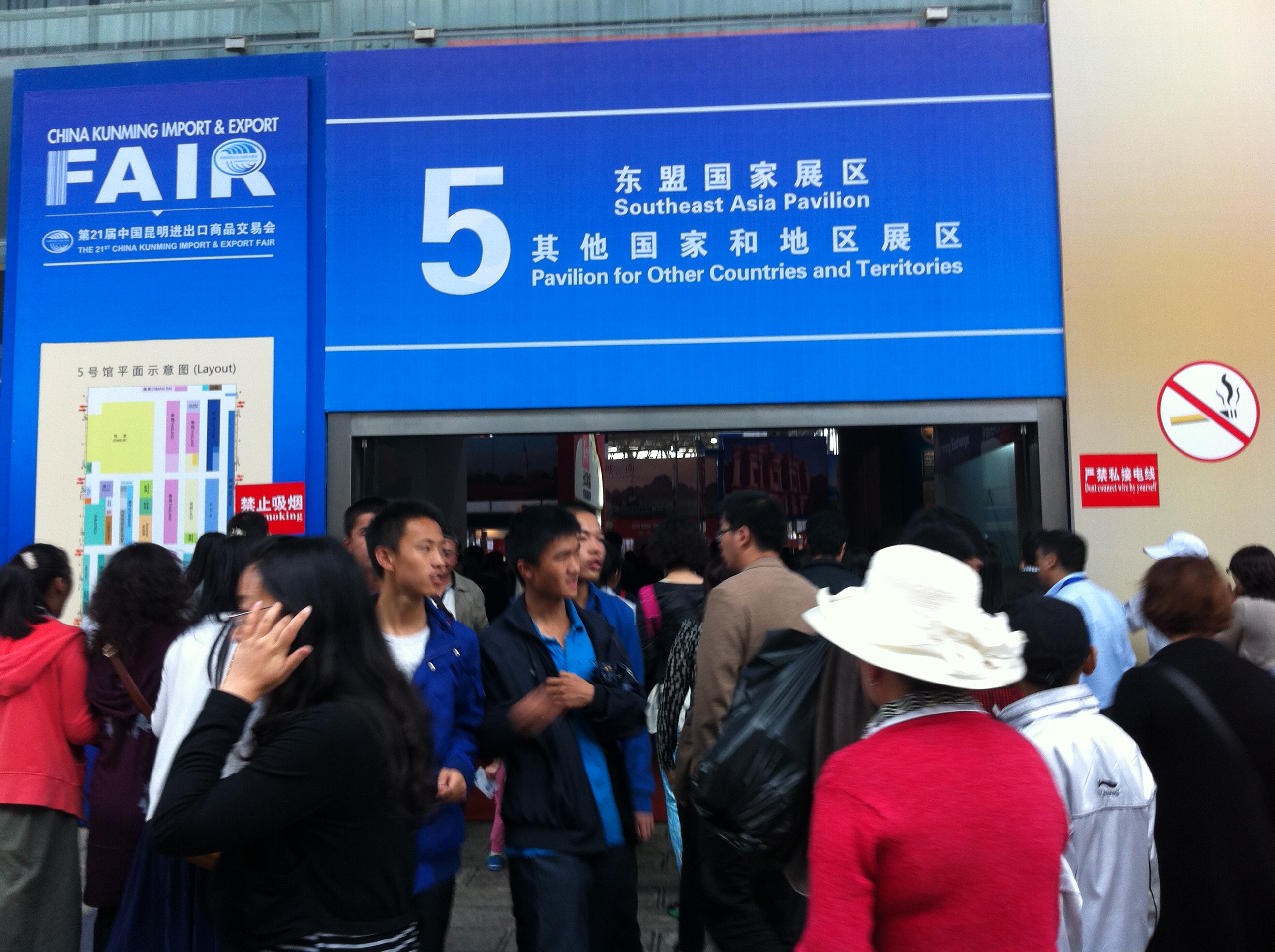
A Day at the Fair: Impressions from the China-South Asia Expo

IMG_6432

After much excitement on the part of merchants and nervous anticipation on the part of the local authorities, Kunming’s 1st Annual China-South Asia Expo came to a close on Monday. By all accounts the Expo was a great success and went off without a hitch. Fellow ExSE blogger Brian Eyler and I both attended the trade expo on Monday afternoon; the following is a record of our visit.

Monday was not only our most ideal time to attend the Expo, but it also was perfect for most other Kunmingers as they had the day off in honor of Dragon Boat Festival. Therefore, the lines were long and pavilions packed, and it took us more than 45 minutes to finally enter the Expo itself. Our first stop was the Main Hall, where the opening ceremonies were held. Flags from every country represented at the Expo and throngs of visitors taking a rest on the floor. A looped video promoting China-South Asia ties was playing in English with Chinese subtitles. However the English was worded awkwardly and sounded like it was copied directly from Google Translate. Both Brian and I agreed that future consideration towards the translation of materials might make a better impression on international visitors to the Expo given English is designated as the normative language communication between China and South Asia.  In the Main Hall we were stopped by a friendly group of local Expo volunteers who wanted us to be part of their souvenir photo collection. Continue reading

Leave a Comment

Filed under ASEAN, Brunei, Cambodia, China, Culture, Current Events, Laos, Myanmar/Burma, Yunnan Province

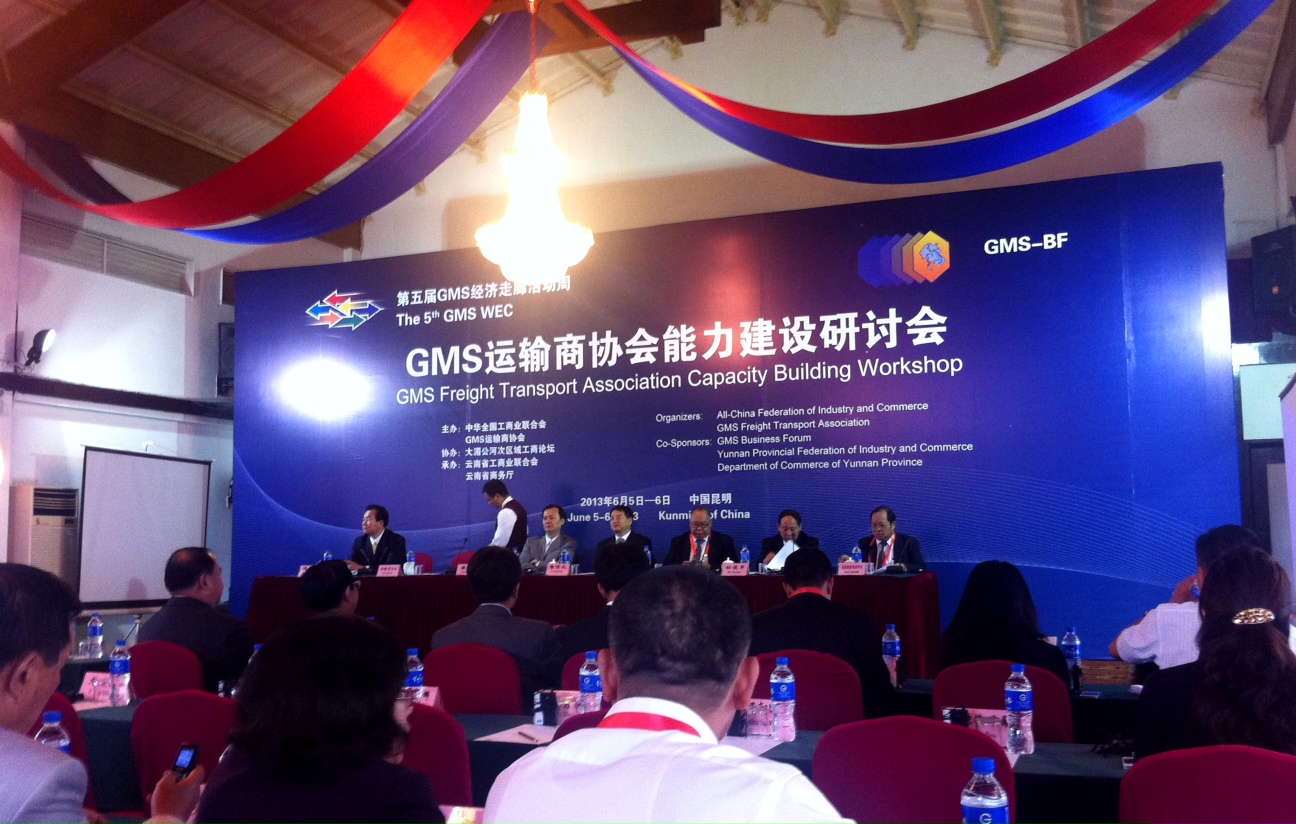
Remarks: Strengthening Cooperation & Promoting Cross-border Transport Logistics

GMS workshop

NOTE: The following is the English language transcription of a speech by Yang Shiji, Vice Director of the Yunnan Provincial Government’s Research Office, presented on June 5, 2013 at a workshop on GMS (Greater Mekong Subregion) Freight Transport Association Capacity Building.  The first part contains an interesting portrayal of connectivity potentials and a brief history of transportation linkages between China and Southeast Asia.  The reader should keep in mind that the area in discussion contains some of the most difficult terrain in the world, but the speaker’s main concerns are inter-government cooperation and the harmonization of customs and trade procedures throughout the region.   The final portion of the speech provides a framework to improve connectivity and upgrade logistical services within the region. 

For reference, a map of the Greater Mekong Subregion is linked here

“Strengthening Cooperation and Promoting Cross-border Transport Logistics in the Greater Mekong Subregion”

Cross-border logistics is an emerging industry combining several composite services such as transport, warehousing, and information.  Connecting production with consumption and linking countries to the outside world, the industry is composed of tangible and intangible factors and covers the entire process from product manufacturing to commodity flow.  Therefore, giving full play to the function and role of transport and upgrading the efficiency of cross-border logistic transport will have significant impact on all aspects of the economic and social lives of the countries in the GMS.  With the maturation of China’s market economy, a professional and efficient logistic system has been an indispensible factor for upgrading the quality of its economic functions, the income of its enterprises, and an accelerator for its entire national economy.

Located at the junction of China and Southeast Asia, the South Asian Subcontinent, Yunnan borders with Laos, Vietnam, and Myanmar, and shares with them a 4060 km national boundary line, about one-fifth of China’s total land border.  It has 25 frontier counties, 23 national entry ports, and over 100 trading channels for border residents.  To its east Yunnan is linked to the Zhujiang River delta and the Yangtze River delta economic circles, and to its south it has direct access from three routes, east, central, and west, to Hanoi, Bangkok, Singapore, and Rangoon via the Kunming-Bangkok highway and the Pan-Asia Railway, currently under construction.  It is the gateway to the vast western hinterland of China to its north.  To its west, it has access to the Indian Ocean via Myanmar.  In a word, the province enjoys the locational advantage in “connecting with two oceans, the Pacific Ocean and Indian Ocean, and linking with three major markets in East Asia, Southeast Asia, and South Asia.” Continue reading

Leave a Comment

Filed under China, DOCUMENTS, Economic development, GMS, Laos, Mekong River, Myanmar/Burma, Regional Relations, Technology, Thailand, Vietnam

What’s at Stake for the China-South Asia Expo?

expo

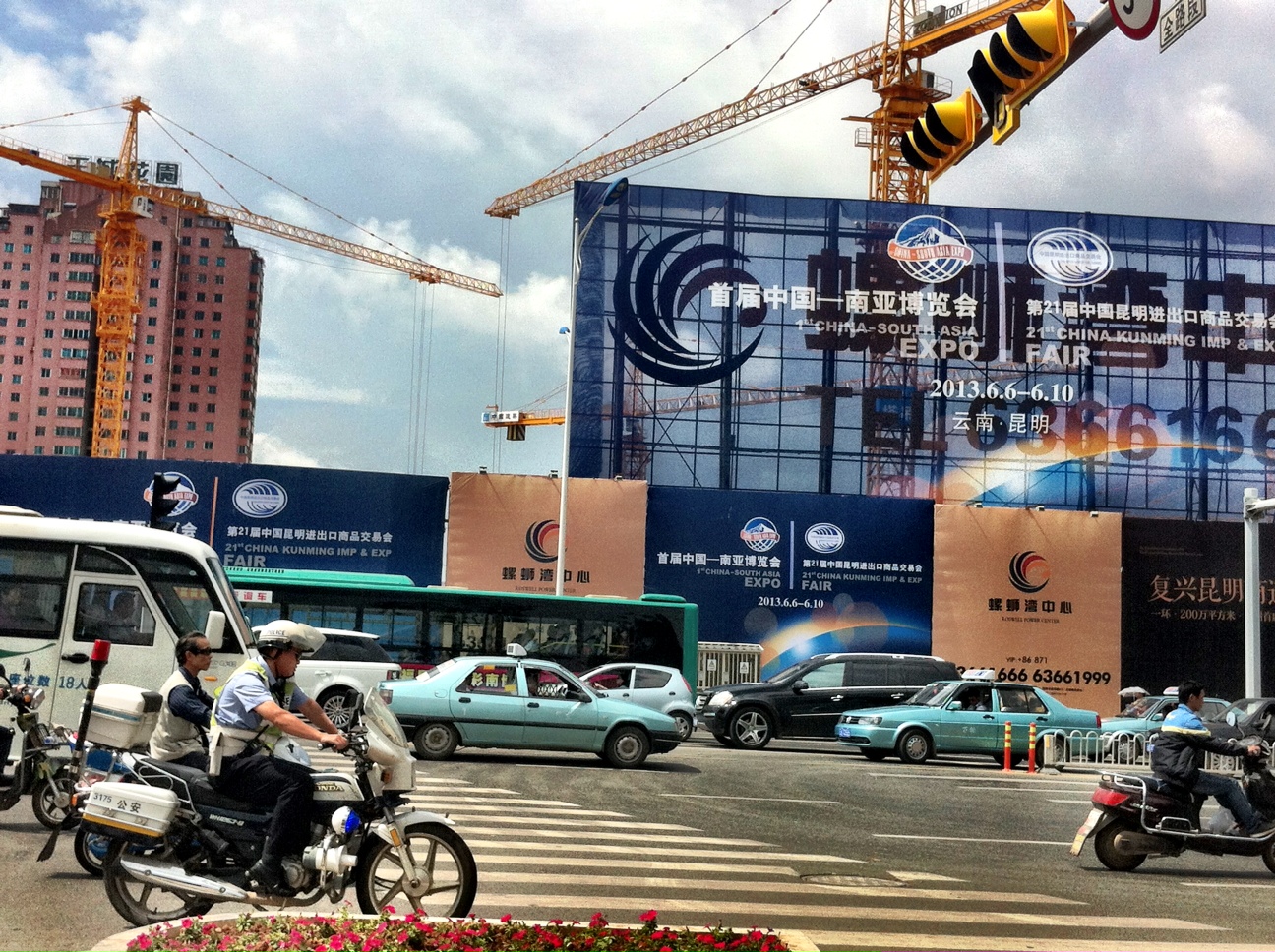
The China-South Asia Expo opened without a hitch yesterday in Kunming despite online calls for a continuation of environmental protests outside of the Expo’s opening ceremony site.  It seems protesters decided to stay home due to a combination of sticks and carrots offered by local authorities.  On June 3, Kunming’s mayor announced the release of key environmental impact assessment data concerning the construction of a PetroChina oil refinery and PX chemical plant side project scheduled for construction 40 km from the city’s downtown area.  Also, the excessive presence of armed and unarmed public security officers lining the city’s streets and manning the Expo site also likely turned protesters away.

What is the rationale behind the excessive security measures?  What’s really at stake at the 1st China-South Asia Expo?

The Expo, a combination trade fair and high level forum for investment and trade promotion discussions between China, Southeast Asia, and now South Asia, is part of China’s Bridgehead Construction strategy to establish Kunming and Yunnan province as a gateway between China and its neighbors to the south and west.  A smoothly running Expo not only will seal multilateral agreements and high-value business deals that will streamline regional trade and investment, but it will also guarantee the continuation of soft-budget infrastructure development projects sponsored by Beijing to Kunming and Yunnan province that are part and parcel of the “Bridgehead” strategy.

Continue reading

3 Comments

Filed under China, Current Events, Economic development, Energy, Environment and sustainability, Foreign policy, GMS, Laos, Myanmar/Burma, Vietnam

Where have all the fish gone? Killing the Mekong dam by dam

The Mekong, a river of wildly majestic fast-flowing currents flowing through six countries, has long enchanted explorers with its rich biodiversity second only to the Amazon.

It is home to the Giant Catfish, and at least 877 fish species sustaining food security for around 65 million people which make the Mekong the world’s most important centre of freshwater fisheries.

“For the people born on the Mekong, the river is like their blood—the principle of life,” says Dorn Bouttasing, a Lao environmental researcher.

Surely it is unthinkable that man would want to endanger or destroy the basis of such extraordinary natural wealth? Such invaluable natural resources, their infinite value defies any attempt to measure with a crude price tag.

My documentary Where Have All the Fish Gone? (Eureka Films) looks at the four Chinese hydropower dams that have been already built on the Lancang (The Chinese name for the upper Mekong), but its main focus is on the Lower Mekong basin shared by Laos, Myanmar, Thailand, Cambodia and Vietnam.

Continue reading

Leave a Comment

Filed under Cambodia, China, Current Events, Economic development, Energy, Environment and sustainability, Food, Foreign policy, GMS, Governance, Laos, Mekong River, Sustainability and Resource Management, Thailand, Vietnam, water

Regional Roundup for Week of 4.18.2013

Just the news this week. Continue reading

Leave a Comment

Filed under ASEAN, China, Cold War, Current Events, Economic development, Energy, Environment and sustainability, Foreign policy, Governance, Health, Laos, Mekong River, Myanmar/Burma, NEWS DIGEST, Thailand, Vietnam, water