Category Archives: Governance

Kaiser Kuo: On Radicalization and Chinese Policy

I get that some people trying to make sense of the attacks in Kunming want to take the opportunity to discuss how Chinese policy contributed to radicalization. And while I’ve noted elsewhere how it bothers me profoundly that many Anglophone commentators offer a merely perfunctory nod to the monstrousness of the knife attacks that claimed 29 innocent lives and sent 160 or more people to the hospital with stab and slash wounds before moving on to the “real” issue of Chinese repression of Uyghur rights, I do believe the desire on the part of some people to use the Kunming massacre to talk about underlying issues is well-intentioned and appropriate.

What troubles me, though, is that too often in that ensuing discussion, this attack as well as all the recent attacks—whether or not they cross our (still somewhat blurred) definitional line into terror—are seen simply as responses to Chinese repression. Is there repression and bad policy? Yes, absolutely. Has it contributed to radicalization? Sure.

But is it the only factor that has contributed to radicalization?

Of course not. The weird part is that while it should be stunningly obvious that the whole context, the whole relationship between Islam and the secular, industrialized world, the whole discourse on the way Islamic peoples are situated in the modern world—all this has dramatically changed, but this barely enters conversation. There are myriad alternative responses, loci of identity, causes, leaders, and movements on offer now that just weren’t there pre-September 11. The Internet barely existed in the oasis cities of the Tarim before 2001.

But people are for the most part writing and talking about the situation as though it’s happening in complete isolation, as though the rise of radical Islam in the rest of the world since the 1980s doesn’t figure in. It somehow doesn’t merit a paragraph or two alongside the context paragraphs that most of the Anglophone outlets see fit to include about repressive policies in restive Xinjiang. People can’t see beyond the simple narrative of Chinese repression.

Any serious effort to look at what’s happened and where things might go from here has to look at Chinese policy, and I’m sure that there’s plenty of blame to be laid there. But it should also factor in—and this is a far from comprehensive list—the rise of Wahhabism and other fundamentalist sects much further to the west; the Mujahedin in the aftermath of the Soviet withdrawal; Bin Laden and AQ; their bloody work; the whole idiotic enterprise of the GWoT; networks like the Islamic Movement of Uzbekistan; the Afghan training camps (where let’s not forget there were many Uyghurs); the wars in Afghanistan and Iraq; and the Arab Spring in more recent years. It has to look critically at the WUC and the pared-down, simplistic narrative it’s managed to sell, and on and on.

It’s depressing that instead people are quibbling over how well organized ETIM is, with some even denying that any organizations like it exist at all. Or they quibble over whether scare-quotes should be used with the word terrorism. (Yes, I’ve been quibbling over that, but I think it’s important: Like many people, I find that the word’s been badly abused, mostly at the hands of the Bush 43 Administration, and is deeply problematic, but dropping our use of it now, or deploying it only with the scare-quotes, is too loaded a statement and sends very wrong messages).

But to my main point: Yes, let’s talk about the underlying problems. But let’s not for a second believe that if only the Chinese would be nicer all the nasty, violent radicalism would just disappear.

This post was originally published on Kaiser Kuo’s Facebook page on 3/3/14. It received so much attention that we reached out to Kaiser for a repost on ExSE.  This is posted with the permission of the author. Comments and discussion welcome.  

7 Comments

Filed under Current Events, ethnic policy, Governance, Kunming Train Station Attack, Regional Relations, SLIDER, Uncategorized

In Cambodia Racist Rhetoric Brings Death Threats to Human Rights Activist

Opposition protesters from Cambodia's National Rescue Party gather in downtown Phnom Penh, December 2013.  Image: Vicky Han

Opposition protesters from Cambodia’s National Rescue Party gather in downtown Phnom Penh, December 2013. Image: Vicky Han

PHNOM PENH – Cambodia, a nation once traumatised by the ‘Killing Fields’ of the Pol Pot regime in the 1970s, has come a long way since then in rebuilding  the nation from year zero including the holding of elections, and the  creation of a multi-party system.

But the recent flood of hate-mail and death-threats sent to Mr Ou Virak, the president of CCHR (The Cambodian Centre for Human Rights) in the capital Phnom Penh, points to a society still dangerously divided over ethnic and racial issues.

 Attacks on human rights activists in Cambodia and around the world mostly come from the agents and the guardians of the status quo – the police, army, militias, and from private security companies deployed by major corporations seeking to block workers rights. Continue reading

1 Comment

Filed under Cambodia, Current Events, Foreign policy, GMS, Governance, SLIDER, Vietnam

Space and Spectacle in the Bangkok Protests

Part of the spectacle at Democracy Monument.


Bangkok has been rocked with the largest political demonstrations since 2010, with protests escalating into isolated pockets of violence.

Yesterday’s D-Day is part of the “final battle” by the anti-government protesters, with morning marches from all major rally sites converging at Government House. Prime Minister Yingluck announced that she would dissolve the lower house of Parliament, as a reported 100,000-150,000 protesters flooded the streets of Bangkok and members of the Democrat party resigned.

Clashes on so-called V-Day last Sunday left a reported five people dead and 64 injured in the confrontation between anti-government and pro-government protesters, including one who died when a bus was attacked.

Over the last two weeks, anti-government protesters occupied key ministries, government complexes and police headquarters.

The police attempted to alleviate tensions after the worst of the clashes, as they opened up barricades to major government offices – even offering roses to protesters in a symbolic gesture just days after taunting protesters and firing tear gas at crowds.

These protests showcase the complicated intersection of history, social changes, and legitimacy in current Thai politics.

And the very spaces of the rallies themselves become entry points into these deep, complex waters. What do the protests and occupied sites in the city reveal about the myriad of claims and competing political aims among the factions? What can the symbols and aesthetics of this protest tell us about what is happening and why? Continue reading

Leave a Comment

Filed under Culture, Current Events, Governance, SLIDER, Thailand

The 3rd Annual ICIRD Conference, Part II

Previously, I introduced ICIRD 2013, a Bangkok-based conference exploring issues of development, greater economic integration, and the idea of the regional commons. This blog post will delve more deeply into the background of the commons, an alternative way of organizing public goods that circumvents the hungry advance of neoliberal globalization. 

By way of illustrating, one of the most pressing current issues surrounds the Mekong River, the classic example of a regional – and transboundary – commons in Southeast Asia. Crossing six countries, laden with social and historical significance, and layered with overlapping claims and uses, millions depend on its shared resources, while growing hydropower development threatens large-scale devastation and destruction of riparian ecosystems. But forms of the commons can range in scale from municipal parks and shared community fishing sites along river banks, to oceans and digital commons on the far end.

The Commons as Social and Historical

Certainly in the context of greater regional integration augured by the ASEAN Economic Community (AEC), the concept of the commons becomes an increasingly important, if imperiled, way of organizing assets and resources within communities. Introducing the Focus on the Global South Round Table I, Shalmali Guttal offered the following definition of the commons: it is a collection of assets that are actively managed for the good of the collective and should be accessible by everyone. They include not only natural and physical resources, but social, cultural, political (e.g., concepts like justice) and intellectual wealth as well.

But that’s not all that the concept offers: there can be no commons without a certain type of social relations based on sharing. It’s important to remember that the commons are entwined within the history of Southeast Asia, just as its growing commodification is embedded within the larger context of globalization. As Dr. Victor Savage (National University of Singapore) mentioned in an earlier panel, historically the Southeast Asian region has lacked traditional notions of private land ownership. Here, instead, usufruct rights guaranteed the rights of access for communities, and the commons functioned as safety net and social insurance.

But over time, as  Dr. Walden Bello (Member of the Philippines’ House of Representatives) reviewed, the transition to capitalism became inextricable from the plunder of non-Western societies, in a process that continues even now. He argued, for example, that the ADB and World Bank are central in enforcing ideologies of private property and codes to delegitimize communal traditions.

The tension between these divergent worldviews, one based upon the primacy of private property and the other upon the social relations upholding the commons, is ultimately not about choosing between a given set of choices, but rather about entire ideological frameworks brought together in one current, historically-informed confrontation.

Resistance and Alternatives

Pervasive throughout the ICIRD panels was the idea that everywhere the commons are being threatened by a neoliberal logic that seeks its enclosure and commercialization. The growing commodification of nature makes itself readily felt in the rise of issues like land grabbing, water privatization, and rampant hydropower development in the region, all of which were repeatedly raised in the course of the conference.

Neoliberalism, in Dr. Bello’s account, lost much of its legitimacy, due in part to the role of research organizations and scholars who documented its high human costs, as well as the internal crises of neoliberalism, erupting spectacularly in the Asian financial crisis of 1997 and the global crisis in 2008. He argues that while neoliberalism has been largely discredited, the lack of alternative paradigms means that it remains a source of default strategies for technocrats.

It may be partially true that business as usual continues for lack of other competing visions. But power also incentivizes its own perpetuation. And raising alternative possibilities is one way to counter the naturalization and legitimacy of dominant neoliberal globalization as it is taking place.

In seeking alternative forms of state-community relationships, it makes sense to step back from the lens of the nation-state. Yong Ming Li’s presentation (subtitled “Seeing like a chao baan/neak tonle,” in reference to James C. Scott’s seminal tome) offers one such narrative. By shifting down to the scale of the local, social-natural relations take on a new centrality that includes “a multiplicity of grounded perspectives and practices from the chao baan (villagers) of Chiang Khong, Thailand and the neak tonle (villagers living on the Tonle Sap lake)” (from ICIRD paper abstract). These social-natural relationships defy conceptualization based solely on market relations with nature.

The role of the research and academic communities seems clear – to keep giving voice to critical analyses of the changes taking place in the region and what’s at stake. To illustrate, the “Encouraging Green Growth in Thailand” forum was based on the appealing premise that “green economies will lead to higher resource efficiency, and investments in green innovation will benefit green pioneers with new markets, higher productivity, and human capital development” (from panel summary). Yet the forum ended in a robust debate about whether green growth (with its undeniable focus on growth) represents merely another reconfiguration of capitalism being pushed towards a new frontier.

Ultimately, as former Philippines Senator Dr. Orlando S. Mercado (who holds the distinction of being the first permanent representative of the country to ASEAN) told me after the Focus panel:

“We have to struggle to have our voices heard. But we should not only just be making our voices heard. We have to be able to move within the system to affect changes by taking advantage of various crises that erupt. To me, as a scholar interested in disaster mis-management, I feel that the cause of protecting the commons is served very well by making sure that each crisis, each disaster, each calamity, is taken advantage of to show that there must be people championing the cause of those who are adversely affected by its lack of management and the privatization that is ongoing as a consequence of economic development – all on the altar of creating a community that is ‘prosperous’.”

2 Comments

Filed under ASEAN, China, Current Events, Economic development, Environment and sustainability, Governance, Mekong River, Reviews, SLIDER, Thailand, water

The 3rd Annual ICIRD Conference, Part I

With the ASEAN Economic Community set to launch in 2015, it’s not surprising to see a heightened level of uncertainty, concern, and even apprehension about what this enhanced sphere of regional integration will mean for Southeast Asian nations.

Holding this backdrop firmly in mind, the 3rd Annual International Conference on International Relations and Development (ICIRD) recently commenced at Chulalongkorn University in Bangkok, on August 22-23, 2013. This year’s timely theme, “Beyond Borders: Building a Regional Commons in SE Asia,” showcased established voices, civil society organizations, and a new generation of scholars rising to the challenges of this historical moment. Over forty panels traversed diverse but interrelated topics from environmental justice and human rights, to sustainable economic growth.

While few would deny the problems of development in Asia as they have manifested so far (e.g., environmental degradation, growing income disparity, and resettlement), finding a consensus on a way forward proves much more difficult. As Dr. Siriporn Wajjwalku (Assoc. Prof., Thammasat University) noted with some urgency in the opening remarks, “2015 for us in the region is approaching… It’s extremely important for us to think about the commons and go beyond the borders that we are facing now.”

Dialogue and discussion are a good place to start. Thus Dr. Carl Middleton (Lect., Chulalongkorn University), a member of the ICIRD Executive Committee that organized the event, proclaimed the conference “a success in that there was plenty of sharing of knowledge, experience and ideas amongst the participants, and a wide range of examples of the commons and how they support peoples well-being and create public space were discussed.” Continue reading

1 Comment

Filed under ASEAN, China, Current Events, Economic development, Environment and sustainability, Governance, Mekong River, Thailand, water

China & Southeast Asia: Unbalanced Development in the Greater Mekong Subregion

By Xiangming Chen and Curtis Stone

Integrating with Southeast Asia is a key component of China’s multi-pronged regionalisation around its borders as its global rise continues. Below, Xiangming Chen and Curtis Stone consider the ambition of China’s ‘Go Southwest’ strategy to extend its economic interests and influence into Southeast Asia, and explore how China’s regional assertion reinforces the larger trend of new spatial configurations in light of increasing globalisation. The authors show how simultaneous globalisation and regionalisation unleashes a dual process of de-bordering and re-bordering where the traditional barrier role of borders is yielding more to that of bridges, as small, marginal, and remote border cities and towns become larger centers of trade and tourism. This article examines China’s effort to engage Southeast Asia and many of China’s footprints within and beyond the cities of the Greater Mekong Subregion (GMS). Inter-country and intra-regional trade provides the starting point for examining the extent of economic integration in the GMS, and also its unbalanced development.

Going Southwest

In a coffee shop in central Vientiane on a hot summer day in 2012, two young Chinese businessmen from northwestern China, sipping ice-cold Latte, talked about the prospect of a new venture to explore copper in the mountains of northern Laos: ‘If we make $100 and they [Laotians] get $5, they should be happy’. On the outskirts of Yunnan’s capital city of Kunming, China’s fourth largest airport behind Beijing, Shanghai, and Guangzhou (also the world’s fifth largest airport in occupied area), Changshui International Airport, which is expected to have flown 38 million passengers by 2020 and 65 million by 2040, was opened with much fanfare in June 2012. While seemingly disparate, this pair of anecdotes reveals the ambition of China’s ‘Go Southwest’ strategy to extend its economic interests and influence into Southeast Asia.

Integrating with Southeast Asia is a key component of China’s multi-pronged regionalisation around its borders as its global rise continues. China’s regional assertion reinforces a larger trend of new spatial configuration as an inherent part of increasing globalisation driven by China. This simultaneous globalisation and regionalisation unleashes a dual process of de-bordering and re-bordering where the traditional barrier role of borders is yielding more to that of bridges (Chen). As a result, once small, marginal, and remote border cities and towns have become larger and lively centers of trade, tourism, and other flows. China’s effort to engage Southeast Asia leaves many striking footprints within and beyond the cities of the Asian Development Bank (ADB) facilitated Greater Mekong Subregion (GMS), which was launched in 1992 and consists of China’s Yunnan Province (with the later addition of Guangxi Zhuang Auto-nomous Region), Cambodia, Laos, Myanmar, Thailand, and Vietnam.

Trade with the GMS Countries

Inter-country and intra-regional trade provides the starting point for examining the extent of economic integration in the GMS as well as its unbalanced development. China’s trade with each of the GMS countries has grown since 1990, most rapidly since 2000 (see Figure 1). Given the size of their economies, Thailand, followed by Vietnam, led the smaller GMS countries in trade with China. However, the total volume of China-Myanmar trade rose by $5.9 billion from 2001 to 2011, while China-Laos trade increased by $1.2 billion (Figure 1). Much of China’s growing trade with Myanmar and Laos occurred through cooperation across international boundaries. The role of Yunnan and its capital city of Kunming in China-GMS trade cannot be understated. Yunnan’s GDP skyrocketed from $33 billion in 2000 to $160 billion in 2012, and the province aims to double that to $320 billion by 2017 through even stronger cross-border economic and trade ties. Kunming acts as the origin and core of economic activities that reach into the bordering countries of Laos, Myanmar, Vietnam, and beyond.

Table

Continue reading

1 Comment

Filed under ASEAN, Cambodia, China, Current Events, Economic development, Energy, Foreign policy, GMS, Governance, Mekong River, Myanmar/Burma, Regional Relations, Thailand, Uncategorized, Vietnam, water

Is there state complicity in the attacks on Myanmar Muslims communities?

The government of Myanmar’s President Thein Sein, so active in its efforts to assure Western audiences that the new Myanmar will never return to the dark days of the previous ruling military junta, has so far failed to display any commitment to ending the brutal spiral of attacks on Muslim communities, carried out in town after town by suspiciously well-organized Buddhist gangs.

Thein Sein’s periodic appeals for ”an end to communal violence” are less than convincing given the absence of any government measures or plan to stem the flood anti-Muslim propaganda being freely disseminated under the noses of the authorities.

Leaflets and magazines denigrating Muslims are being churned out every day across the country.

The monk Wirathu has spread a perniciously xenophobic version of Theravada Buddhism through inflammatory sermons directed against a Muslim minority that comprises only 5% of the population in this predominantly Buddhist nation of 60 million

Extremist Buddhist monks led by the publicity hungry U Wirathu, are preaching a brand of pure Buddhist nation-state and hatred of Islam, that cause consternation and disgust  among the true devotees of peace non-violence and the path of the Lord Buddha.
Muslim shops and homes in Lashio in Shan state were the most recent victims of a Buddhist motorbike gang in June. Shan researcher Sai Latt commented  “the government and the police are not doing anything at all to clamp down on extremist hate propaganda against Muslims.” Continue reading

2 Comments

Filed under Current Events, Economic development, Foreign policy, Governance, Myanmar/Burma, Regional Relations

Mekong study tour update: 7.19.2013

Other than top-notch commentary on China and SE Asia, ExSE isn’t known for too much and it’s quite clear now that keeping promises isn’t a strongpoint of ours. If you were expecting regular updates on our excursion to Thailand and Laos, we deeply apologize for not delivering. However, if there’s any worthy excuse, it’s that Brian, Dequn, Tai and I have been too busy learning. The following is simply a recap of what’s been going on so far; the true implications of the things that we’ve learned are too much for me to explore in any one post.

Our first two days were spent rather relaxingly, and thankfully far away from a 3G or broadband connection, taking a cruise down the Chao Praya River with Traidhos Three Generations Barges. On the cruise, we learned the river’s watershed, conservation efforts on the river and its significance to Thailand. It was a wonderful introduction to the country through its principal waterway.

The next morning, we met with Pete Cutter at the World Wide Fund for Nature Greater Mekong Office in Bangkok. The WWF Bangkok Office is involved in some very important efforts to preserve more than a half-dozen endangered species in the region and coordinates often with other NGO’s and governments in the GMS.

Our two days in Chiang Mai, where I’m writing from now, have been our most fruitful. Thanks to our friend and ExSE team member Tom Fawrthrop, we were able to meet with many of the top journalists, NGO heads and scholars in northern Thailand. On the 16th we had a lunch talk with Tom himself and learned a ton on the region in general, and specifically the dangers of the 1250MW Xayabouri Dam in the Lao Mekong and the movement to resist its completion. We then two lectures by Professor Narut and Professor Panuwat from the Chiang Mai University Political Science Department on Thailand’s economic role in the GMS and democracy in Thailand, respectively. Afterwards, we met with the Forest Restoration Research Unit at Doi Suthep National Park and learned about their groundbreaking research on tropical forest care. Continue reading

Leave a Comment

Filed under ASEAN, Culture, Economic development, Energy, GMS, Governance, Laos, Mekong River, Myanmar/Burma, Thailand, water

China needs to change its energy strategy in the Mekong region

This op-ed was first published at ChinaDialogue and thethirdpole.net on 7/16.

 Mekong bridge

At the end of this year cars and container trucks loaded with goods from China and Thailand will finally be able to drive across a multi-lane bridge spanning the Mekong River (known as the Lancang in China). The bridge will connect Chiang Rai province in Thailand to Bokeo province in Laos, effectively linking China’s highways stretching south from Beijing and Shanghai to those coming north from Singapore, Kuala Lumpur and Bangkok.

Funded by equal investment from the Chinese and Thai government, the completion of the bridge, which took ten years of planning and two years to build, is not without controversy. For many years Thailand held back investment due to an uneven distribution of benefits between China, Laos and Thailand. Also on the Thai side, the NGO Rak Chiang Khong claim the bridge negatively impacts the local Golden Triangle economy and will ruin Mekong fisheries.

The Golden Triangle Bridge serves to highlight the challenges facing China, as the country’s new leadership attempts to balance its slowing and volatile economy and deliver domestic stability by maintaining peaceful economic relations with its neighbours.

China’s regional strategy

“In 2012 China’s growth in trade and outward investment with the five other Mekong countries of Myanmar, Laos, Thailand, Cambodia, and Vietnam surpassed its trade and investment growth in ASEANcountries,” said Xu Ningning, chairman of the Greater Mekong Subregion (GMS) Business Council. “Greater growth rates will continue with increases in regional cooperation and win-win investment opportunities.”

For the past three years China’s GMS provinces of Yunnan and Guangxi have posted growth rates of 12-15%, the highest of China’s localities, and arguably China’s economic rise has also helped deliver high growth rates among Mekong countries.

The end of the Cold War in the 1990s created a favourable environment for China to develop its economic cooperation strategies toward the Mekong region. The blurring and opening of once inviolable borders encouraged traders on both sides of the China-Southeast Asia frontier to appeal to local and national governments for better conditions for trade and migration. The Chinese government responded with twenty years of state-led trade liberalisation and investment policies to promote regional cooperation in state and private sectors.

China’s economic cooperation strategies towards its four Mekong neighbours has dovetailed nicely into a strategy that fits China’s current development needs. Liu Jinxin, a policy analyst and logistics expert says, “Unlike the US which leads the world in finance and IT, both high-value service-oriented industries, China is the world’s factory, producing goods to drive the growth of its growing middle class and serving export markets around the world. To survive, the Chinese ‘factory’ needs inputs like energy and raw materials.” Continue reading

1 Comment

Filed under ASEAN, China, Current Events, Economic development, Energy, Environment and sustainability, Food, Foreign policy, GMS, Governance, Laos, Mekong River, Myanmar/Burma, Sustainability and Resource Management, Thailand, Vietnam, water

Nowhere to Kowtow in Barren Fields

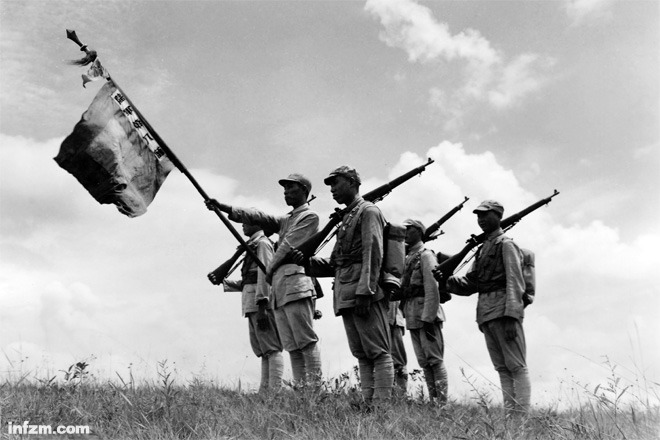
ExSE Commentary: Below is a translated feature from the Thursday, June 13  Southern Weekend, a Chinese newspaper known for its excellence in reporting and pushing the envelope on key social and political issues in China. 

The article calls for the need to officially memorialize and add to the historical record the sacrifice of 100,000 fallen soldiers of the Chinese Expeditionary Force (CEF), one of two Chinese military excursions outside of sovereign Chinese territory sent to repel Japanese forces occupying Burma during World War II. But this is not a simple task for the PRC government who currently proclaims its military forces have never operated across borders; the fact that the CEF troops were later identified with the Nationalist army and persecuted during the Cultural Revolution only complicates the cause. The author cites the lack of Chinese government participation in recognizing its own history and respecting China’s war veterans through a comparison of Britain and Japan’s official treatment of soldiers killed in action and veterans still living.

 In addition, the article stokes nationalist sentiments, by reminding the reader of China’s history of crushing Japanese aggression abroad (although the victory at the Battle of Myitkyina was a result of Sino-US military cooperation, a factor the article fails to mention).  Lastly, this feature, which pits China as positive and contributory force in the creation of a modern Myanmar, is interestingly published at a tenuous time for China-Myanmar relations.   

Photos, maps, and details on the CEF can be found here

 69045


“Nowhere to Kowtow in Barren Fields: Chinese Citizens Erect Monuments to China’s WWII Expeditionary Forces in Burma. ” By Zeng Ming

During the 2013 Qingming Grave Sweeping Festival, 17 Chinese citizens arrived in the border town of Myitkyina, Burma. While walking under the war-torn clouds of the capital of the Kachin state, they stopped at a plot of barren farmland and laid chrysanthemums on the ground.

This movement called “Return to the Burmese Battlefield” is the first large scale non-government organized movement of its kind to memorialize the remains of the 100,000 fallen soldiers of the China Expeditionary Force (CEF). It was here that the CEF initiated the most intense battle of World War II outside of Chinese soil and achieved the first victory of Chinese expeditionary forces since the Sino-Japanese war of 1894-1895.

However, the historical record of this battle is dim and pallid.  Standing on this desolate ground, they pay respect to too many things unknown and gauche that have sunken into the ground. They do not know for whom they cry, and they do not know the faces or names of those buried here.

In more than half a century the skeletons of 10,000 soldiers of the China expeditionary force have been brushed over by history, destroyed by human forces, and sent into oblivion in the forests of northern Burma.  With the exception of the little that has sunken into the historical record, for their entire journey, the participants of this movement are shaken by a single fact: The British and Japanese have erected grand cemeteries to their fallen soldiers.  Each of these soldiers has received the highest degree of respect, and even the names of war horses are carved in stone.

Presently the Burmese know more about the distant victories of colonials and invaders than they do of the CEF even though the latter made a great sacrifice for the sake of peace.  This is a competition to reveal the true events of the last century that have since fallen silently off the historical record.  This group of volunteers believes China cannot again be left out of the history of this battle.  They have decided to do something – to erect a monument to the war of their fathers’ generation. Continue reading

1 Comment

Filed under China, Governance, Myanmar/Burma