Category Archives: Environment and sustainability

World’s largest solar maker invests in Yunnan

solar

Solar power is shining a renewed spotlight on Yunnan. Last week, Trina Solar announced an agreement with Yunnan Electric Power Design Institute to supply solar cells capable of producing 51 megawatts of electricity. These panels will be the first installment of a larger plan to populate some tea-growing areas in Xishuangbanna with photovoltaic generators.

The proposed solar farm will eventually reach a capacity of 100 megawatts (MW), enough to power roughly 36,000 homes annually. Despite its tremendous size, all of the electricity has been reserved exclusively for large tea plantations within the prefecture. The power will be utilized to run well-water pumps and irrigation systems already in place within the farms.

The Yunnan Electric Power Design Institute (YEPDI), according to an industry press release, will supply “engineering, procurement and construction services for the project”. Representatives from both companies expressed hope the collaboration will revolutionize renewable energy projects in the region. Chang Jichun, deputy manger of YEDPI, congratulated Trina Solar as “an industry leader with a vision to build a greener world…[building] a pioneer project in China to put solar power to work on the tea plantations.” As a result of the endeavor, Chang continued, Yunnan’s “tea plantations can be more efficient with increas[ed] self-reliance and less pollution.”

In the first stage of the multi-pronged project, Trina Solar will deliver approximately 43,000 TSM-255 modules and 154,000 TSM-260 versions. Extremely durable and designed to withstand exposure to pesticides and herbicides, the glass panels represent only half of the solar farm’s eventual size. With each panel measuring one meter by 1.65 meters, the 190,000 panels eventually covering the farm will take up an area of 660,000 square meters.

Put in perspective, that corresponds to 120 American football fields worth of solar modules placed side-by-side — a sea of glittering black. Each TSM-260 panel comes with a 25-year performance guarantee. Tea farmers in the area are thus assured a long-term source of renewable electricity, with each panel replaceable and upgradeable. Already underway, shipments and installation are expected to be completed by the third quarter of 2015.

Trina Solar has proved itself the most lucrative and successful businesses of its kind, often promising shareholders five percent returns on investment. Founded in 1997, Trina Solar today operates mostly in Africa, China and North America and explosive demand for solar energy has allowed the company to grow exponentially since its founding. Last year, the company sold solar panels able to generate 3.66 gigawatts of electricity. With such success, Trina Solar may well push further into the Yunnan market as the BBC reports Beijing has pledged to introduce programs to significantly expand the nation’s solar and wind power industries.

Yunnan province is already home to some of the largest photovoltaic power stations in Asia. Just 70 kilometers southeast of Kunming on the outskirts of the Stone Forest, a 166 MW solar farmis expected to complete construction this year. Once fully underway, the project will generate 188 million kilowatts of energy per hour, eliminating 175,000 tons of carbon dioxide emissions each year. The 9.1 billion yuan (US$1.45billion) project is just one of many reasons Kunming carries the unofficial title of China’s ‘Solar City‘.

Outside of Yunnan, massive endeavors throughout China are underway to reinforce the importance of wind and solar energy while tackling the country’s crippling pollution issues. Although often overlooked, China already leads the world in terms of renewable electricity production, currently spending more than US$80 billion annually on enhancing its green energy sector — funding which has facilitated a 100-fold increase in the country’s use of solar cells since 2005.

This article written by Richard Diehl Martinez, was originally published here on the Gokunming.com website.

Leave a Comment

Filed under China, Current Events, Economic development, Energy, Environment and sustainability, Sustainability and Resource Management, Yunnan Province

New Research: Rubber Expansion Threatens Biodiversity and Livelihoods

hike

Xishuangbanna prefecture in China’s Yunnan province has seen an explosion of rubber cultivation in the past 15 years.

Increasing amounts of environmentally valuable and protected land are being cleared for rubber plantations that are economically unsustainable, new research suggests. More widespread monitoring is vital to design policy that protects livelihoods and environments.

The research was recently published in Global Environmental Change and constitutes a joint effort by scientists at the World Agroforestry Centre (ICRAF) East and Central Asia office, the Chinese Academy of Sciences, the Royal Botanic Garden Edinburgh, the University of Singapore and the East-West Center.

Although global natural rubber prices have fluctuated strongly in the last fifteen years, they are likely to continue rising as synthetic alternatives are no match for natural latex. This financial incentive, as well as the expansion of oil palm, an even more lucrative rival, has caused rubber plantations to expand beyond their tropical comfort zone in Indonesia and into the margins of continental south-east Asia.

This has brought wealth to some, but not all, say the researchers. As marginal lands are often too dry, too slanted, too high, too wet, too cold, too windy, or a combination of the above, rubber plantations require increasing amounts of input in the form of fertilizer, pesticides, and labour in order to maintain yield levels – and even then may not be profitable.

The research also suggests that climate change will render 70% of current and another 55% of future plantation areas environmentally poorly suited for rubber. Smallholder farmers’ livelihoods face additional threat from price fluctuations, loss of food security, and the narrowing of income sources.

The environment also suffers. The surge in rubber demand saw valuable and even protected lands being converted into rubber plantations, drastically reducing carbon stocks, soil productivity, water availability, and biodiversity. This is particularly tragic given the high chance of failure.

“There is clear potential for loss-loss scenarios when forest is being cleared for rubber plantations that are not economically sustainable, and that have negative impacts on soils and water balance,” says lead researcher Antje Ahrends from the Royal Botanic Garden Edinburgh and the World Agroforestry Centre.

Widespread monitoring of rubber expansion and its economic sustainability will prove vital for land-use planning and policy interventions. The team argue that carefully formulated payment for ecosystem services programmes, and a certification scheme for “environmentally friendly rubber” have potential to reduce the environmental impact of rubber expansion while ensuring the supply.

“Oil palm has received much more global attention than rubber, but in fact environmental and social impacts are comparable and the dynamics of the two are related. It may be time for a roundtable on sustainable rubber where the private sector, public parties and scientists can try to bridge the various interests and agree on standards,” says Meine Van Noordwijk, chief science advisor at the World Agroforestry Centre.

This article was authored by Sander Van de Moortel and originally published on the World Agroforestry Centre website. The article is republished, in its entirety, with full permission from the author. 

Leave a Comment

Filed under Agriculture, Environment and sustainability, SLIDER, Sustainability and Resource Management

Bright City Lights: Urban Trends and Futures in Southeast Asia

Traffic congestion in Bangkok

Traffic congestion in Bangkok

This year, Jakarta earned the unsavory title of “World’s Worst Gridlock.” The city of 23 million is now reputed for having to most congested streets in the world. Another Indonesian city, Surabaya, took the number four spot. If you continue down the rankings to number eight, you will find yet another Southeast Asian metropolis – Bangkok.

The tendency for gridlock in these cities is more than a daily inconvenience for residents. These levels of traffic congestion are indicators of a trend in the wider Southeast Asian region. In this part of the world, urban populations are growing faster than municipal and national governments can handle.  When managed sustainably, cities can be a valuable vehicle for economic development and socio-demographic transition. For example, cities can facilitate productive trans-border connections and slow birthrates, which enables more women to enter the workforce. Nevertheless, urbanization is a double-edged sword.

Rapid, unplanned growth results in unsustainable development that threatens social, economic, and environmental stability.  In a landmark report that analyzes 10 years of urbanization data from East Asia, the World Bank suggests that urbanization in East and Southeast Asia will have “long-lasting effects on the region’s social, economic, and environmental future.” Understanding the growth trends in Southeast Asia will boost the region’s ability to avoid the pitfalls associated with the rapid type of urbanization that has been observed over the past decade.  In other words, the region needs to pay attention to these changes if they don’t want to spend the rest of their down time stuck in traffic.

Dominant Urbanization Trends

Between 1990 and 2010, Southeast Asia increased its urban population by at least 12%, per United Nations estimates. The fact that Asian cities are growing is not a fresh realization, but few observers of these phenomena have questioned how these cities are growing, instead of just how big.

Screen Shot 2015-04-10 at 5.50.38 PM

For example, in the past 10 years, East Asia has experienced more urban growth in small- and mid-sized cities than in major metropolitan areas. This has several more nuanced implications for the region. Successful development in smaller metropolitan areas could relieve much of the pressure put on high-population areas. For example, a Thai development strategy used tax breaks to encourage people to take up residence in the regions outside of Bangkok . Unfortunately, the government failed to provide infrastructure and facilities to support business development in outlying regions. Bangkok remained the prime area for investment, and the program floundered.

Megacities like Bangkok often gain international reputations that afford them opportunities to advertise for foreign direct investment.Small and mid-sized cities, on the other hand, have to fight for attention and funding from national governments and lack the resources necessary to advertise to a wider range of investors. Take the case of Ho Chi Minh City and Da Nang, two metro areas in Vietnam. Ho Chi Minh City is the country’s largest city and Da Nang was only about an eighth of HCMC’s size in 2011. However, the rate of urban population change in Da Nang was 4.5% as of 2010 and HCMC was 3.9%. While this may appear to be a narrow margin between two cities, imagine the national impact when every mid-sized city in a country grows at this rate. The need for infrastructure would surely outpace the investment available to these smaller metropolitan areas.

laos.vte

In addition to major growth in small- and mid-sized cities, the fastest growth of urban population was experienced in East Asia’s low- and middle-income countries, namely Laos, Cambodia, and Vietnam. Japan, South Korea, and even Thailand place far behind these countries in their rates of urban land and urban population increase.

Screen Shot 2015-04-10 at 7.20.26 PM

The less developed countries in the region face administrative and financial challenges on a national level, which creates an environment where a single city in the country, often times the capital city, experiences the majority of the urbanization. The massive, resource-hogging cities that result are known as “primate cities” in the vernacular of urban studies scholars. Concentrating an entire country’s political, cultural, and economic capital in one area creates national vulnerability if there is a crisis in that single city.

Urban primacy is especially detrimental for a country when there is massive migration to the core and a development lag in the country’s periphery. This phenomenon plays out the same way in developing countries across the globe: Rural poor migrate to urban areas in search of better economic opportunities, but financially and administratively inept governments cannot provide migrants with adequate resources for finding jobs and homes. Densely populated and amenity-poor settlements result as migrants join the informal economy of the city.

Bangkok, Yangon, Phnom Penh, Vientiane, Jakarta, Manila, and Kuala Lumpur have all reached primacy within their respective countries. As previously mentioned, Bangkok is one city that has acknowledged its primate city status and attempted to reduce its dominance of Thailand’s geography. Countries such as Cambodia and Myanmar will also need to take steps to ensure that Phnom Penh and Yangon do not morph into unsustainable networks of unplanned settlements. The challenge lies in the fact that countries like Cambodia and Myanmar lack the administrative and financial capacity to shift rural to urban migration trends. However, it is promising that smaller cities in the region are doing most of the growth, even if they have a long way to go before they can compete with these metro areas.

Screen Shot 2015-04-10 at 5.24.48 PM

Finally, Southeast Asia’s urban populations are growing faster than the region’s urban land. At present, the main reason for dense urban growth in the region can be attributed to the lack infrastructure available on the periphery – a far cry from the smart growth policies that many cities implement to promote compact growth. Even so, high-density urban growth is associated with many positive outcomes when it is effectively provided for. Namely, high-density development tends to have fewer negative environmental consequences than urban sprawl. Kuala Lumpur is actually an exception to this trend in Southeast Asia, and has been criticized for failing to compact its urban growth. A heavy reliance on automobiles has been detrimental to the city, but other emerging urban areas in the region have the chance to get ahead of the car craze and promote smart growth that emphasizes efficient land use and practical transportation.

By and large, dense urban growth still has a number of caveats. As mentioned, the reason density in the region is high is due to a lack of amenities outside of core cities. If population growth outpaces the ability of the core to provide services, the quality of life in many cities will quickly degrade. Overcrowding is also a serious challenge that many cities in the developing world are faced with, and Southeast Asia is no exception. Comprehensive urban planning will be necessary to prevent overcrowding from becoming another major trend in the region.

Urban Planning and Governance: Missing Links

When you combine all of the formulas for urban growth in Southeast Asia, the results are two-sided: There is potential for inclusive, sustainable urban areas, but there is also a chance for the region to mushroom into a clutter of poorly planned development. When planning is neglected, poverty, environmental degradation, and land use conflicts ensure. For Southeast Asian cities to avoid falling victim to, say, the level of air quality degradation that many Chinese cities now face, spatial planning and good governance are crucial.

A 2009 assessment of urban governance prepared for UN Habitat is grim: the report asserts that the capacity of both local and national governments in the region is fragmented and weak, with a serious lack of simple management skills and adequate budgeting for necessary infrastructure. “Good” urban governance requires transparency, political will, and funding, but many Southeast Asian governments underperform in all three categories. There is always a propensity for countries to urbanize, regardless of political stability. With that being said, Southeast Asia’s urbanization trends alone illustrate that not all growth is good growth. A solid political environment at least ensures that there is a structure for discussing urban needs when they arise, although definitive actions need to be taken if there is going to be any change.

Administrative fragmentation is another burgeoning obstacle for Southeast Asian boomtowns. This term refers to the spillover of growth from one municipality into neighboring jurisdictions. One example is Manila’s urban area, which spans 85 municipalities and seven provinces. The World Bank predicts that many of the growing small- and medium-sized cities will soon experience this type of administrative challenge, if they are not experiencing it already.  Different jurisdictions often struggle to coordinate plans for infrastructure development and management, leaving many areas underserved.

The ecosystems impact of such trans-boundary urban areas is also notable because rivers, lakes, and forests require cooperative management.  Overcoming administrative fragmentation appears daunting in a region where political stability is scarce, but regional planning associations have proved to be an effective way to manage fragmented urban areas. The Metro Manila Development Authority (MMDA) is one such organization tasked with monitoring urban development, but it struggles with a low budget and limited regulatory power. Even so, the future of many urban agglomerations in the region would look brighter if such organizations were widely utilized. Urban management organizations have the ability to pull multiple institutional actors together when questions arise about different stakeholders’ opinions.

 Screen Shot 2015-04-10 at 7.26.18 PM

Urban Futures

Southeast Asia’s urban population has not yet reached 50% of total population, an indicator that more urban growth is still to come. The future of the region’s urban areas will in part be dictated by the trends that have been observed in the past decade, but also by events that remain to be seen. Climate change is one of the foremost worries in the region, but political stability and economic productivity will also play roles in the ability of the region’s cities to develop sustainably. Metropolitan areas in the region need to get ahead of urban growth and expansion in order to take some of the uncertainty out of the future.

Climatology experts maintain that no part of the world will remain unaffected by climate change, but Southeast Asia is actually a particularly high-risk area. A number of Southeast Asia’s urban centers falter in climate change scenarios that involve sea level rise, drought, saltwater intrusion, and severe weather events, and famine. As metropolitan areas in the region continue to develop, resilience is a topic that needs to be kept in mind. Cities like Bangkok and Ho Chi Minh need to have planes in place for flooding and typhoon events. Manila needs to ask itself how to feed a metropolitan area of 16 million if crop productivity plummets due to droughts or heat waves.

Besides the need for climate change adaptation measures, Southeast Asia also represents a large market for mitigation efforts. By reducing dependency on cars and carbon-based energy sources, the region can bypass being a part of the carbon problem. China and the West used coal to fuel their urban expansion, but Southeast Asia has the opportunity to exclude GHG heavy industries and develop using environmentally sound technologies. As new attempts at international climate treaties are rolled out, it will be interesting to see where many Southeast Asian nations fall on the spectrum of mitigation requirements.

Historically, developing countries have been held to lower emission reduction standards than countries in the developed world, but countries like Malaysia and Thailand have potentially reached a threshold where they will be counted among the world’s more developed countries, and thus required to reduced their emissions further. In any case, climate mitigation is good for Southeast Asia if it means that the impacts of climate change on the region will be softer than current predictions.

Political stability is also a recurring obstacle for a number of Southeast Asian countries. Years of stability and growth have been punctuated by sudden regime changes that have reduced the level of confidence both Southeast Asian nationals and outsiders have in the region’s governance. Urban planning is an intensely political process, so the status of a country’s national government directly effects urban development. If establishing effective national governments proves to be too much of a challenge for parts of the region, how can we expect urban management to get the attention that it requires?  Metropolitan development authorities and NGOs could potentially help cities weather the storm if political institutions fail, but finding consistent, effective governance is critical for the future of Southeast Asia’s cities.

Future economic development in Southeast Asia will also continue to shape urban areas in the region. Low-cost manufacturing has played a significant role in growing many of the region’s largest cities, but that may change as smaller urban areas take up lower-technology manufacturing as well. Some suggest that economic outcomes are better in regions where the largest cities take on service industries and high-tech manufacturing and the smaller cities concentrate low-tech industries. However, this is impossible if the infrastructure needs of smaller cities remain unmet. Investment in Southeast Asia’s small- and mid- sized cities is an important step that the region can take to move towards greater economic output.

Urbanization in Southeast Asia has reached a clear bottom line: In order to reap the benefits of healthy, innovative urban areas, the region needs to raise its expectations for planning and governance. If current regional urbanization trends continue to play out, there is potential for Southeast Asia to be the home of several highly productive urban areas. Investing in small and mid-sized cities will create robust national economies and capitalizing on dense growth will keep the environmental impact of cities to a minimum. However, if planning and coordination are left on the wayside, the region will be set on a course for vulnerability to any sort of crisis that should arise.


Leave a Comment

Filed under ASEAN, Cambodia, China, Current Events, Economic development, Environment and sustainability, Governance, Indonesia, Laos, Malaysia, Myanmar/Burma, Philippines, Sustainability and Resource Management, Thailand, Vietnam

Thinking Outside the Dome

The meteoric popularity of Chai Jing’s “Under the Dome,” attests to the Chinese public’s readiness for stronger environmental policies to tackle air pollution. Despite its banning last Friday, the documentary’s apparent support from certain branches of the bureaucracy, and increasing pro-environment rhetoric coming into this year’s hosting of the National People’s Congress and the Chinese People’s Political Consultative Conference (also referred to as the Lianghui) seem to suggest that change may be in the air when it comes to tackling China’s smog. What is less clear is what the hidden consequences of these efforts to combat urban air pollution will be.

A fresh shipment of coal from western China.

In September 2013, the State Council promulgated the Action Plan for Air Pollution Prevention and Control (APPC), which contained directives addressing China’s air crisis. These included a reduction in coal’s share in China’s energy profile to 65% by 2017, reduced capacity in high polluting industries like steel and cement production, and improved fuel quality standards.[i] The next year, Premier Li Keqiang famously declared “war on pollution,” spotlighting the issue as a top-tier policy concern.

Regionally, the government has banned new construction of highly-polluting industrial projects such as coal power plants and steel factories in key cities on the east coast. However, the push to curb air pollution in Beijing is driving the coal industry westward, where massive coal bases are being established to feed China’s need for energy. Environmental activists are concerned that because of the massive quantities of water needed for coal processing — up to 20% of China’s water resources are used to produce energy from coal[ii]— the additional strain of a larger western coal industry may wreak havoc on water tables and food resources in a region already plagued by desertification.

Distribution of coal reserves in China.

Air pollution activists also have good reasons to be concerned about this trend. Northern China not only suffers from air quality problems arising from pollutants, but also from periodic dust storms that roll in from China’s northwest.  Relocating coal plants, especially coal-to-chemical projects, and other water intensive polluters to these regions is an invitation for ecological disaster. Worse, Inter-governmental Panel on Climate Change (IPCC) projections show a potential for increased desertification in China due to global warming. Increased coal capacity will continue to threaten the ecosystems of northwestern China and thus the health of China’s citizens elsewhere. The specter of intensified dust storms descending on Beijing each spring should give those concerned about air pollution reason to demand strict controls on heavy industry and coal processing in northwestern China, not just in Beijing and its direct environs.

The upshot of the energy development story in China’s northwest is that many of the same areas endowed with rich coal reserves are also blessed with massive wind resources. In the last decade, the central government has actively pushed for the development of wind power, resulting in a 73-fold increase in wind capacity since 2006.[iii] Moreover, the same electricity corridors built to accommodate China’s new coal bases will also serve large wind farms. Much, however, is still up in the air. Will wind power be given priority in power transmission eastward? Will wind power have the funding and support it needs? And what will be the consequences of China’s massive coal development in the west? These are questions that a concerned Chinese citizenry will need to address in order to breathe free.

Charles Vest is a freelance translator and environmental activist based in Beijing. He researches climate change and environmental policy in China

[i] Cornot-Gandolphe, Sylvie, “China’s Coal Market: Can Beijing Tame ‘King Coal’?” Oxford Institute for Energy Studies, http://www.oxfordenergy.org/2014/12/chinas-coal-market-can-beijing-tame-king-coal-2/

[ii] China’s Water-Energy-Food Roadmap, accessible from http://www.wilsoncenter.org/publication/global-choke-point-report-chinas-water-energy-food-roadmap

[iii] Li Xin, “Decarbonizing China’s Power System with Wind Power — The Past and the Future,” Oxford Institute for Energy Studies, http://www.oxfordenergy.org/2015/01/decarbonizing-chinas-power-system-wind-power-past-future/

Leave a Comment

Filed under China, Current Events, Energy, Environment and sustainability, SLIDER, Sustainability and Resource Management, Technology, water

Review: Great Gamble on the Mekong documentary

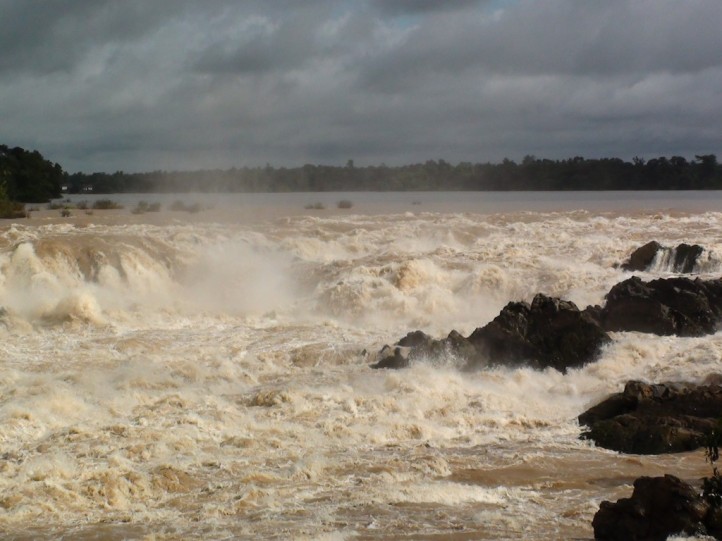
Khone Phapeng falls in southern Laos; photo by Tom Fawthrop

Khone Phapeng falls in southern Laos; photo by Tom Fawthrop

Fishers and farmers have for some time tried to block a proposed dam on the Mekong River in southern Lao People’s Democratic Republic (Lao PDR). Most recently, they made their views known at a public consultation on the Don Sahong dam. In all likelihood, however, they will lose and the dam will be built. Great Gamble on the Mekong, a new documentary from filmmaker and journalist Tom Fawthrop, insightfully details the probable dire consequences of this dam, and the failure this represents for a once-promising extra-legal cooperative structure, the Mekong River Commission.

The Mekong runs from the Himalayas in Tibet through China, Burma, Thailand, Lao PDR, Cambodia, and Vietnam—the latter five forming the Lower Mekong Basin (LMB)—where it empties into the South China Sea. According to Fawthrop, it provides protein and food security for 65 million people in the form of fish for food and trade, and water and nutrients for home gardens and commercial farms. At the same time, the Mekong has long represented a potential source of renewable energy. China has already built six dams on the Upper Mekong, and plans to build at least 14 more.

Dams have been discussed and rejected on the Lower Mekong mainstream since the 1950s, though they have gone up on its tributaries in that time.  In 1995 Thailand, Lao PDR, Cambodia and Vietnam signed the Mekong Agreement and formed the Mekong River Commission (MRC). The goal of the MRC is to facilitate cooperation in managing the resources of the Lower Mekong, but it has no final decision-making power.

The proposed Don Sahong dam at the center of this film would sit squarely across the main channel that migratory fish use to bypass the massive Khone Falls near the Lao border with Cambodia. It would be the second dam begun on the mainstream of the Lower Mekong—construction began on Xayaburi, another controversial dam, in 2012—with as many as 10 more to follow.


Cost-Benefit Analysis

The Lao government and the Finnish company Poyry it hired to oversee construction of Xayaburi claim that dam will provide clean energy to three million people in Thailand and one million in Lao PDR. The MRC claims dams on the Lower Mekong mainstream have the potential to reduce the severity of floods and droughts, and thatbuilding all 12 would generate $15 billion in economic activity, create 400,000 jobs, and reduce greenhouse gas emmissions by 50 Mtons CO2/yr by 2030. A study commissioned by the MRC, and completed by the International Centre for Environmental Management (ICEM) in 2010, concluded that the 12 dams could meet 8 percent of the region’s energy needs by 2025.

The ICEM study is clear however that benefits will not be disbursed equally: “Mainstream hydropower generation projects would contribute to a growing inequality in the LMB countries. Benefits of hydropower would accrue to electricity consumers using national grids, developers, financiers and host governments, whereas most costs would be borne by poor and vulnerable riparian communities and some economic sectors…In the short to medium term poverty would be made worse….”  Lao PDR does plan to use the revenues from selling the energy produced by its dams for rural roads, health care, and education, though during the “concession period” (estimated by ICEM at 25 years) after dam completion, the bulk of revenues would go to the dams’ financiers and developers.

According to the academics and nonprofit workers that Fawthrop interviews in Great Gamble on the Mekong, the exact impacts of the dams are impossible to predict, but they will likely be severe. “The Don Sahong dam will only push Cambodia and Vietnam closer to a food crisis,” says Chhith Sam Ath, an employee of the World Wildlife Fund in Cambodia. In addition to flooding gardens along the river, and diminishing the fish stock, they predict that the entrapment of nutrients by the dams will hurt rice production in Vietnam, leading to higher global food prices.

The 2010 ICEM study concluded that building the 11 mainstream dams on the Lower Mekong would reduced “capture” (non-farmed) fisheries by 16 percent. Combined with the built and proposed dams on the Upper Mekong, and on tributaries in the Lower Mekong Basin, this number rises to 26-42 percent. New aquaculture associated with dams would only replace at most 10 percent of this loss. Lao PDR and its developers claim they can mitigate the losses of fish–Poyry claims fish gates will allow 80 percent of migratory fish to pass up and down streams, while MegaFirst, the Malaysian company planning to dam Hou Sahong, claims making adjacent channels wider and deeper will provide fish with a detour route.

Yet the fish gates Poyry plans to use have never been tested on the varieties of fish found in the Mekong, and fish passes need to be designed to take into account individual species’ behavior and sensitivity to factors such as oxygen and nutrient levels. AsPoyry’s senior project manager conceded, “whether the fish get across [the dam], you’ll only see when it is built.” Faulting Lao PDR for not testing the fish gates in the Mekong before building a dam, when you need a dam to test the gates seems unfair. But they could test the technology on a smaller, less impactful dam on a tributary.


The Political Process

In the face of this uncertainty, the ICEM report recommended putting off any mainstream dam construction until 2020, using the intervening years to more fully study the impacts of the dams on the Upper Mekong and on the tributaries of the Lower Mekong. In a five-year strategic plan issued in March 2011, the MRC Council also recommended more study, as well as a thorough Procedure of Notification, Prior Consultation and Agreement (PNPCA), the internal procedure of the MRC for member countries to consider and offer feedback on the proposals of other countries. Yet eight months later, Poyry announced that Lao PDR had met its obligations under the 1995 agreement and could proceed with construction of Xayaburi. A year after that, in November 2012, Poyry received an eight-year contract to supervise Xayaburi’’s construction and engineering, and construction began. Poyry claimed at the time that it had updated designs to take into account the concerns of downstream nations. Yet in January 2013, Cambodia and Vietnam vigorously protested that their concerns had not been addressed, and demanded a halt to construction. They were unsuccessful.

A similar drama unfolded around the Don Sahong Dam. Last September, Lao PDR announced the start of the Don Sahong Dam, this time avoiding the PNPCA by claiming the project was not on the mainstream. After diplomatic outrage, the Lao government consented to a PNCPA, which began last July and is only required to run six months. Despite opposition from the governments and civil society in Vietnam and Cambodia, the Lao government has signaled its intention to proceed with the dam.

These dams are the first major test of the MRC’s ability to handle conflict among its members. The MRC tasks members with “aiming at arriving at agreement” on projects that significantly impact water quality or flow but has no voting mechanism or penalties for not reaching agreement. The CEO of the MRC Secretariat, Hans Guttman, states in Great Gamble that if the parties don’t arrive at an agreement, the country proposing such a project can still go ahead with it.


Resistance

Citizens of Cambodia, Thailand, and Vietnam have lobbied their respective governments to halt the dam. Hundreds of NGOs, both local and international (including World Wildlife Fund and International Rivers) have been trying to mobilize the opposition. Thai villagers filed a lawsuit against EGAT, the National Energy Policy Council, and three other government agencies in 2012, challenging the power-purchasing agreement they entered into with the Lao PDR government for electricity from Xayaburi. In June 2014, the Thai Supreme Administrative Court agreed to hear the case.

The international response, outside of the press, has been muted. MRC’s international donors issued a joint statement in January 2013 urging further study before beginning dam construction, but have said little else. The UN and heads of state have been notably silent.

Fawthrop’s film does not address how concerned Westerners can respond. The answer certainly feels fraught, given Laos’ historical experience of French colonialism and U.S.military aggression, including the unexploded ordinance that still affects the country. Then there’s the region’s very real need for clean energy as well as the standard argument about the hypocrisy of industrialized nations telling any country to sacrifice growth for environmental protection.

This is the progressive’s dilemma when it comes to foreign policy. Certainly any intervention should come in the form of carrots and not sticks: money and/or technology to develop less destructive sources of renewable energy; promotion of tourism to the region; UNESCO World Heritage Site recognition for Kohne falls, and so on, conditioned on implementing the ICEM report’s recommendations.What Great Gamble on the Mekong makes clear, and what studies of other massive dam projects have proved is that this is a humanitarian issue, and that the poorest will likely suffer the most.

Great Gamble on the Mekong has some distracting elements. The claim that the Thai banks funding Xayaburi are “getting nervous” as a result of letters sent to them by anti-dam activists seems like wishful thinking. For the sake of their own credibility, the filmmakers shouldn’t have included a cartoon set to Pink Panther music. Finally, the filmmakers should have addressed how some species got to be endangered before any dams were built. For example a WWF report says that overfishing was partly responsible for the decline of the great catfish. These critiques aside, this is an important and stirring film.

Nathaniel Eisen is a freelance author interested in the intersections of trade, human rights, security policy, and the environment. Information about the documentary Great Gamble on the Mekong can be found at www.tomfawthropmedia.com. Copies of the DVD can be ordered from eurekacuba@gmail.com.  This post was first published on the Foreign Policy in Focus blog on 12/26/2014.  It is reposted here with the permission of the author.

Leave a Comment

Filed under China, Current Events, Energy, Environment and sustainability, Foreign policy, GMS, Mekong River, Reviews, SLIDER, water

Meet the Salween

salween

I heard the name “Salween” before. I didn’t know exactly where it is. I knew it was somewhere close.

Somehow its name portrays a feeling of fearless turbulence. Perhaps, it’s the sound of “S” and the rhyme between “ween” and a Thai word “wian” from the word “wonwian” meaning lingering and wandering which makes me think of the word “namwon” meaning whirlpool.

There is a legend about the two great sister rivers of Southeast Asia: the Salween and the Mekong.

And this is how the story goes:

One day, the two rivers decided to go to sea. They agreed to travel through the mountains together and stopped whenever they wanted to. The Mekong slowly spanned its waterline through the landscape while the Salween hurried its way to claim the frontline.

After rushing ahead, the Salween decided to stop for a quick nap to wait for the Mekong. Days passed and the Mekong was still absent. The Salween thought the Mekong took a chance when it was sleeping to get ahead—to be the first to see the ocean. Angry and feeling betrayed, the Salween rushed through the channels and aimed to destroy any rock that stood in its way. Its wild speed was felt by those living nearby. The Mekong, on the other end, finally arrived at where the Salween was napping. Not seeing its younger sibling did not push it to move any faster. The Mekong continued to crawl and collect waters along the way; it even went off-route to carry fish and water into Tonle Sap before it finally reached the sea.

It is said that many communities believe in this story, though I have only heard it from two people. The anecdote may vary. Though it does resemble the turtle and the hare tale, but stories and legends are much better tools to narrate and describe the difference between the two.

Perhaps, it is the Salween’s anger that makes it the last free flowing river in China and Southeast Asia until 2015.

The Salween is originated from the marshland in the Himalayan Plateau—the same glacial area where the Mekong and the Brahmaputra start their mightiness. It travels over 2,200 kilometres through southwest China, Thailand, and Myanmar. Most of the areas it nourishes are occupied by ethnic indigenous communities. In Yunnan alone, the Nu River  (as the Chinese called the upper Salween) feeds at least 22 ethnic groups. The same reality applies to downstream communities at the border between Thailand and Myanmar and major ethnic states in Myanmar (where Burmese names it “Thanlwin”). I remember someone told me that the Salween’s turbulence is reflected by perpetual ethnic tension in the most recent open country of ASEAN.

The plan to dam the free flowing Salween is not new. 13 cascade dams for the Nu River were proposed in 2003 as part of China’s 10th Five Year Plan. Chinese environmentalists immediately called the government to halt the project. Their voices were listened, but the hiatus is now over and the proposed 13 hydropower projects are back on the table.

Thailand’s eyes on damming Myanmar’s Thanlwin/Salween is also not new. Nearly ten years ago, Thai environmentalists became aware of 7,110 MW Ta Sang Hydropower Project, a Thai national dam at the cost of Burmese environment. The news of Ta Sang Dam has been silent but a recent loosely done EIA report and signed MOA for the 1,360 MW Hat Gyi Dam prove that the intention isn’t going away.

7 is the number of proposed dams on the Thanlwin/Salween. Over 20,700 MW will be generated to Thailand and China. The newly built transmission lines that would come with the new dams would gracefully pass over the electricity and wealth to Myanmar’s neighboring countries. Its people would have to look up to the electricity they are not entitled to use while watching their houses and livelihoods inundated by the reservoir.

But the real battle has only started. In June, 2014 Myanmar government switched on the green light for Chinese Hanergy Holding Group Company to tackle its hydropower project in Shan State. Kunlong Dam will stand tall to hold back the Salween while producing 1,400 MW of electricity to be sent back to China.

Large-scale hydropower projects—along with many other environmentally and socially detrimental projects—never prove beneficial to local communities. “The few should sacrifice for the many” is the excuse project proponents always use to dignify their grand prize. However, in this case, “the few” we’re talking here isn’t small in number but their political voice and power to decide how and who would control the river they rely on.

“We call the Thanlwin, ‘the River of Peace’” said Ko Ye, an activist from Dawei who has been fighting against Thailand-proposed mega development project in his hometown. “Because if this river is dammed or falls under one group’s control, the ethnic war in Myanmar will never stop.

2 Comments

Filed under China, Current Events, Economic development, Energy, Environment and sustainability, ethnic policy, Mekong River, Myanmar/Burma, SLIDER, Sustainability and Resource Management, Thailand, water, Yunnan Province

Bottlenecks to Development: Challenges in the Mekong Delta

Last week, ExSE took a hard look at the environmental challenges facing the Mekong Delta region and found that the prospects are not good. Due to unenviable geography and global warming, rising sea levels, higher average temperatures and irregular precipitation patterns will all converge in the next 50 years to change the face of the Mekong Delta (MKD). That’s to say nothing of salinity intrusion, flooding and tropical storms. However, the MKD’s problems are not only environmental in nature; the region’s economy also faces a host of challenges, many of them tied to the Delta’s environmental changes.

Issues in the Mekong Delta are of course significant for its residents, but they also carry great importance for those outside the region because of the MKD’s role in national and regional food security. The statistics on the Delta are incredible. In an area taking up just 36,000 square kilometers (12 % of Vietnam’s total area), the Delta’s 22 million inhabitants plant 2.6 rice crops per year totaling 25 million tons of rice. The MKD’s rice production accounts for over half of Vietnam’s total and the seven million tons rice that the Delta exports has helped Vietnam become the world’s second largest rice exporter after Thailand. In addition, the Delta accounts for 70% of Vietnam’s fruit production and three-quarters of its fish catch.

The Delta’s massive agricultural output is no accident. The region is perfectly situated to receive large amounts of water and sediment from the three main stems of the Mekong Delta and the many thousands of canals that intersect them and a tropical temperature allows for farming year-round. What’s more, concerted efforts in the past 30 years to improve the region’s water infrastructure have doubled arable land in the MKD. Combined with advances in genetically modified rice strains, yields in the Delta have increased by 30% and total production has doubled, all within the past 20 years.

Incomes have also increased. According to the General Statistics Office of Vietnam (GSO), the average income of Delta residents has gone from 50 cents USD/day in 1999 to $2/day in 2010 and the region reached it Millennium Development Goals in 2006. However, despite impressive improvements in agricultural output and per capita income, the Delta has lost ground to other regions of Vietnam and now lags behind in important measurements of human and economic development.

Source: Dr. Ho Long Phi, processed from data of General Statistics Office of Vietnam.

Source: Dr. Ho Long Phi, processed from data of General Statistics Office of Vietnam.

In the late 1990’s, the Delta was actually 20% above the national average in per capita income. However more than 10 years later, the number stands at a little more than 80%. In the first decade of the new millennium, Vietnam underwent a period of intense economic growth through industrialization and people all over the country got richer as a result. The benefits of economic growth were not felt equally by everyone, however. Due to development bottlenecks, some regions, including the Mekong Delta, did not industrialize like others

One of these bottlenecks is a lack of infrastructure. The proportion of waterways, intra-provincial roads and inter-provincial roads per thousand people are all behind the national average. Of these three measures, the proportion of inter-provincial roads stands out. For one, there are only 0.34km of them per 1000 people in the Delta, standing at only half of the national average. This is especially important because of the nature of the Delta’s economy. The MKD, because its economy is so heavily concentrated in agriculture, lacks many necessary products and thus has a long history of importing and exporting nearly everything. While this may be good for enterprising middlemen, it is not good for the region’s economic development. With so few avenues for importing and exporting goods, the logisitical cost rises and because the MKD lacks so many raw materials, industrial development becomes disadvantageous. In fact, unless an investor is interested in agricultural processing, building a factory closer to Ho Chi Minh City is probably a better business plan in many cases.

Source: Dr. Ho Long Phi, processed from data of General Statistics Office of Vietnam

Measure of waterway, inter-provincial roads and intra-provincial roads in the Delta. Source: Dr. Ho Long Phi, processed from data of General Statistics Office of Vietnam

A second bottleneck, and another reason a potential investor might not consider the Delta, is a lack of skilled labor. Like the region’s road density, the MKD’s percentage of trained labor lags behind the national average; according to data collected by GSO (General Statistics Office of Vietnam) the Delta’s percentage of trained labor stood at just over half of the national average. In addition, the proportion of Delta residents with some sort of higher education stood at less than 1%, or in other words, just a fifth of the national average. With a workforce that is so poorly trained and educated, the Delta becomes an even less attractive region for investment, especially when compared to the populations near the Red River Delta (Hanoi and its environs) or Ho Chi Minh City.

What’s more, those Delta residents that have some technical training and/or higher education do not stay in the Delta for long. As the region’s economy falls farther behind the rest of Vietnam, more and more Delta residents are moving to urban centers to look for work. One of the main destinations for these people is Ho Chi Minh City, where over half of the city’s migrant workers come from the Mekong Delta. What trained labor the MKD might have ends up leaving the region for greener pastures, thus widening the gap between the Delta and places like Ho Chi Minh City.

Source: Dr. Ho Long Phi, processed from data of General Statistics Office of Vietnam

Source: Dr. Ho Long Phi, processed from data of General Statistics Office of Vietnam

One reason that the MKD has such a low percentages of trained labor and educated inhabitants is that in the past there was no need for supplementary education of any form. In an environment where the annual rice yields are stable and prices are good enough, investing time and money for a new career is an unnecessary risk and one that Delta residents have not taken. Paddy rice cultivation requires little technical skill yet provides a modest, usually stable income. However, the income provided from rice is rarely enough to invest in the expansion of other industries and in the Delta’s case, the lack of infrastructure makes such an investment an even more expensive proposition.Unfortunately for the farmers of the Mekong Delta, rice cultivation is becoming a less and less stable enterprise. For one, the price of rice has dropped in the past decade. As more and more rice is produced worldwide, the seven tons of rice the Delta exports annually decreases in value and farmers lose out.

However, shifts in the world rice market are nothing compared to problems farmers face due to global warming. As detailed here, rising temperatures, sea level rise, an erratic precipitation and flood schedule and more frequent tropical storms all threaten to radically alter the Mekong Delta in the next century. The region already has enough impediments to development with its lack of infrastructure and trained labor; its environmental issues only add to the severity of the situation. The Delta, now more than ever, is in acute need of solutions. However, who’s coming up with these solutions, if there are any to begin with, is another question unto itself and one that needs to be answered before any future for the Mekong Delta can be imagined.

Leave a Comment

Filed under Agriculture, Economic development, Environment and sustainability, Mekong River, SLIDER, Sustainability and Resource Management, Vietnam

Yunnan to Spend 70 Billion on Infrastructure Development

8420

Yunnan lawmakers were busy over the past seven days, earmarking billions of yuan for building projects across the province. The vast majority of the money will be used to fund the ongoing construction of 26 major highways. Other money has been set aside for waterway maintenance and “disaster mitigation” projects.

The Provincial Highway Bureau expects to initiate or continue work on 1,500 kilometers of highways in the next two years, it announced in a July 14 press release. In total, the new roadways will cost 100 billion yuan (US$16.1 billion), spaced out in annual 50 billion increments over the next two years.

Stretches of road scheduled for completion this year include highways connecting Lijiang toShangri-LaRuili to Longling and Huaping to Lijiang — which is a segment of the road linking Lijiang to Chengdu.

Obtaining loans for massive infrastructure ventures has become increasingly difficult as China’s once-humming economy continues to slow. Statistics published by news outlet Kunming Information Hub show that in 2011, the province experienced a two billion yuan shortfallbetween toll road revenue and what it owed in loans for highway construction.

To avoid a repeat of that deficit, provincial planners voted to implement tolls on many of the new roads, effectually passing the bill on to automobile owners. People traveling by bus will also pay a share of the costs. Currently, a 0.5 yuan surcharge is attached to the price of every long-distance bus ticket purchased in Yunnan. That fee will now be raised to 0.9 yuan to help fund highway expansion. Long-distance transport trucks will also face higher fees based on load tonnage and distance traveled.

An additional twenty billion was pledged for waterway upgrades. Details have not been fully disclosed, but some monetary allocations will fund canals connecting rivers to reservoirs as well as maintenance on dams and hydropower stations across the province.

Although highways and water infrastructure projects comprise the lion’s share of the recently allocated money, two billion yuan (US$322 million) was also designated for the prevention of ecological disasters. Surveyors have identified thousands of “hazard points” in Yunnan — places where roadside cliffs are prone to rockslides or where villages are threatened by mudslides due to deforestation. Over the past fifteen years, Yunnan has suffered a reported 17,258 geological disasters. These claimed the lives of 1,394 people and led to more than seven billion yuan in economic losses.

This article written by Patrick Scally was first published here on 7/15 on GoKunming.

Leave a Comment

Filed under China, Economic development, Environment and sustainability, Governance, SLIDER, Yunnan Province

Burmese Hardwoods Logged to the Brink of Extinction

burmese logging

While swaths of virgin rainforests have been cleared to feed China’s growing appetite for luxury wood, there are some regions, like Myanmar’s remote northern forests, that have remained heretofore intact. This is about to change, predicts a new study, as loggers advance on the “final frontier” for tropical hardwoods in Southeast Asia.

A report from the Environmental Investigation Agency (EIA), published July 4, warns that soaring demand in China for valuable, endangered rosewood trees — known in Chinese as hongmu (红木) — is “completely unsustainable”. Based on current trends, the two most coveted rosewood species in Myanmar — Dalbergia oliveri/bariensis and Pterocarpus macrocarpus — could be “logged to commercial extinction in as little as three years”.

Recent demand for hongmu timber has spiked due to its use in high-value reproduction Qing and Ming Dynasty furniture. In 2013, China imported 237,000 cubic meters of rosewood logs from Myanmar at a value of two billion yuan (US$324 million), tripling the intake from the previous year. “Virtually overnight,” reports the EIA, “Myanmar has become the biggest log supplier to China worldwide.”

Seventy-eight percent of China’s hongmu imports come through Yunnan, although Myanmar has banned land-border exports of raw timber. Illegal logging, however, reportedly accounts for nearly three-fourths of the country’s wood exports. Financial rewards for smuggling the timber dwarf traditional incomes, and one trip, carrying up to 15 tons of timber, can reportedly earn a truck driver as much as nine million Burmese kyat (US$300,000).

hongmu-made tea table can fetch 30,000 yuan (US$5,000) in China, where rumors of stricter import bans have led to sizable price spikes. In Kunming, where four-fifths of hongmu timber arrives from Myanmar, prices for the raw wood have risen 90 percent since this time last year. Interpreting Myanmar’s export ban as an economic move, commercial website Huaxia explained:

There is an important reason why Myanmar restricts the export of raw hongmu — they are asking foreign companies to invest in Myanmar, build wood-processing factories in the country, and export finished goods, thus adding value to their timber industry.

The EIA report urges the Convention on International Trade in Endangered Species (CITES) to assist Myanmar in protecting its remaining hongmu forests. An international treaty tasked with protecting more than 35,000 plants and animals, CITES enjoys some legitimacy with the Chinese government. To save the hongmu from imminent depletion, the EIA advises CITES to take action, and upgrade the species’ status to reflect that they “may become threatened with extinction unless trade is regulated”.

This article by Cissy Yu, was first published here on the GoKunming website  on 7/9/2014.

Leave a Comment

Filed under China, Environment and sustainability, Myanmar/Burma, Regional Relations, SLIDER, Sustainability and Resource Management, Yunnan Province

A Flood of Challenges: Climate Change and the Mekong Delta

As loyal readers of ExSE have probably noticed by now, this site, at its core, is dedicated to Mekong River and the people who are connected to it. Thus it seems odd that so little attention has been given to the Mekong Delta on ExSE. As is the case with most international coverage of the Mekong, the upper and lower reaches of the river are largely ignored in favor of stories about hydropower projects and the livelihoods they will affect. However, the challenges that the Mekong Delta (MKD) is currently facing and will face in the future are also serious. These challenges are directly related to global warming and are shared with other deltas, though the unique geography and ecology of the Mekong makes the consequences of climate change here even graver. Continue reading

2 Comments

Filed under Agriculture, Environment and sustainability, Mekong River, SLIDER, Sustainability and Resource Management, Vietnam, water