Tag Archives: hydropower

Large dams are not the answer to climate change in the Mekong Region

1_riverbankgarden-e1440581528453

Some may say it is too early to conclude that the changing weather patterns in the Mekong region – be it a longer dry season, unexpected river water level fluctuation, or cold days in early summer – are a result of climate change. Even if we could summarize the large number of expert debates and long list of research papers, it’s unlikely that a clear answer to the simple question “Is climate change happening in the Mekong?” would emerge.

But if instead we look on the ground, local communities along the Mekong River in Thailand will tell you that something is happening to the climate and that it’s not what it used to be.

A study1 just published by local Thai communities who live along the Mekong River, titled “Ecology, Economics, Cultures of the Mekong Basin: From Kaeng Kood Koo to Pha Chan in a Changing Current” reports that weather patterns have been fluctuating oddly over the past several years. In addition, the water level in the Mekong River rises and ebbs unpredictably and unlike the past. These changes have greatly affected these communities who still rely on nature to make their living as fishers and farmers (see also video here).

Cold spells and heavy rains: The case of 2011

As an example, we can look back to 2011 when two incidents occurred that appeared odd to many Thai river-side communities and are still recalled now: a highly abnormal cold spell in March 2011 when Thailand is usually warming up ready for the hot season, and then a prolonged period of heavy rainfall that lasted much of 9 months in 2011.

In the Mekong Region, the hottest2 time of the year usually falls in April. It is the same month when Thailand, Cambodia, Myanmar, and Laos celebrate the water festival, which practically speaking is a great way to cool off as the temperature becomes sweltering hot. But back in 2011, a month before this large festive event, the average temperature in Thailand cut to almost half its normal rate to 18 degrees Celsius (°C)3 in Bangkok. In Ubon Ratchatani Province in northeastern Thailand next to the Mekong River, the temperature dropped to around 15 °C.

Basic CMYK

Meanwhile, as the average temperature seemed to struggle to go beyond 25 °C for the whole month of March, the monsoon brought in at least 4 large storms swelling the Mekong River.

To the communities living alongside the river, the most apparent effect of the chill and increased water volume was on the fishery. Local fisher folks hold an intimateknowledge5 of the Mekong fisheries that is passed on from generation to generation. They understand the seasonality of the Mekong River, including how the river’s ecosystems relate to the different types of fish migration, breeding habits, and behaviors. The fishers’ observed that the change in weather pattern and water level in March 2011caused many fish to become dull6 to find food and instead the fish started hiding behind rocks and in pools. As there were less fish swimming in the river, it affected the fish catch of fishers, such that many fishers gave up fishing during the period as it was uneconomical to spend money on diesel fuel when they knew they could find no fish.

The heavy rainfall that started in March continued on for another nine months. In July 2011, Tropical Storm Nock-ten made land fall, bringing severe flooding to North, Northeastern and central Thailand. Large swathes of farmland, as well as Thailand’s capital city Bangkok, were left under water.

2011’s rainy season added so much water to the Mekong River and made the current so unusually turbulent that many riverbanks and riverbank gardens were flooded or even washed away. Many riverbank farmers lost their crops and therefore their income. Assistance and financial help from the local authorities made their way to some communities, but many admitted that they still had to pay for another round of seeds and sprouts by themselves7 hoping that the river water would not flood their land a second time.

Fish and agriculture are the most basic foundation of the livelihoods and economy of the Thai communities along the Mekong River. Fish are a key source of protein. Riverbank gardens are the people’s homemade salad bar. They are both a steady source of income for many communities. The changing weather and its impact on the Mekong River have impacted both.

A Thai fisher with a fish caught from the Mekong River in Baan Muang, Nongkhai Province, February 2013. (Photo by TERRA.)

A Thai fisher with a fish caught from the Mekong River in Baan Muang, Nongkhai Province, February 2013. (Photo by TERRA.)

Climate change as experts (and greenhouse gas emitters) see it

According to studies done by the International Panel on Climate Change (IPCC) and theMekong River Commission (MRC), climate change will affect and change the Mekong River in the coming years. And there’s no guarantee that locals are ready to face those challenges. IPCC8 and MRC‘s data point out three things that would result from climate change:

1. Increasing temperature across the basin: One consequence of this is that there will be accelerated glacial melt in the Mekong headwaters, which in the long term will reduce the dry season water released from the glaciers
2. More rain in the rainy season; less rain in the dry season: this will greatly affect both agriculture and fisheries across the basin
3. Longer summers and shorter winters: this could lead to warmer water temperatures and could change fish behaviors, especially related to breeding and migration

To alleviate the impacts of climate change, many governments who ratified the Kyoto Protocol – created under the United Nations Framework Convention on Climate Change (UNFCCC) treaty to reduce greenhouse gases emissions – came up with an idea to create mechanisms to meet their carbon emission reduction goals. One of the mechanisms is the Clean Development Mechanism (CDM)9 which provides a long list of projects like renewable energy, methane capture, and reforestation as options to seek carbon credits. Though it sounds like a good mechanism, CDM was never designed to pressure emitters to reduce emissions, but simply to help emitters to “trade-off” carbon emission.

Hydropower development is included in the list of CDM projects. Water is supposed to be a great source of renewable energy to generate electricity as it was at first assumed that dams don’t emit carbon. Yet, recent research10 has revealed this idea to be profoundly wrong and in fact large hydropower dams can have significant carbon footprints.

In 2002, Singapore researchers reminded scientists that greenhouse gas emissions from hydropower reservoirs are under-estimated11. Another report12 published in Nature Climate Change points out that hydropower is not as low-carbon as assumed; instead dams produce emissions as they trap sediments and vegetation in the reservoir, which then decay and release methane and carbon dioxide. An academic study by Marco Aurelio dos Santos13 and his team in 2006 indicated that greenhouse gas emissions from hydropower per megawatt could in some cases be as high as fossil-fueled plants, especially in tropical areas. In a letter in Nature Geoscience in 2011, a group of researchers14 called for significant consideration to be given to hydropower dams’ carbon footprint.

But it is not only a dam’s “carbon footprint” that should be of concern. The process of dam construction can wipe out carbon sinks by triggering deforestation within and beyond reservoir areas, as has happened at the Lower Sesan 2 dam15 site in northeast Cambodia. Dams also block sediments and nutrients from making their way downstream to replenish soils, as well as to rebuild the delta areas and avoid excessive river bank erosion. With less nutrients feeding the soil, farmers may opt for chemical fertilizers to replace the missing nutrients, but in the long term this destroys the soil health and creates a cycle of agrochemical dependency – as well as potentially farmer debt.

Climate justice not climate change

Treaties like the Kyoto Protocol should be designed to pressure high emitters of greenhouse gases to reduce their greenhouse gas contribution that lead to detrimental impacts on the earth and on communities, many of whom are being left in an increasingly vulnerable situation. But at the moment it appears designed to find a means to help these emitters’ behavior appear acceptable before the global community by skewing the climate change debate towards carbon credits instead of true reductions.

The Mekong River basin is home to over 65 million people. The ecological diversity16within the basin sustains the region’s food security17. The Mekong River is second to none when it comes to the amount and diversity18 of fish species which provide both food and income sources in Southeast Asia. But climate change is affecting many people now and it is not stopping. If high emitters of greenhouse gases are serious about addressing climate change, it is time that they started learning about climate justice. They need to learn about the myriad impacts of dams on people19 and the environment, which are already well known to millions of dam affected people globally.
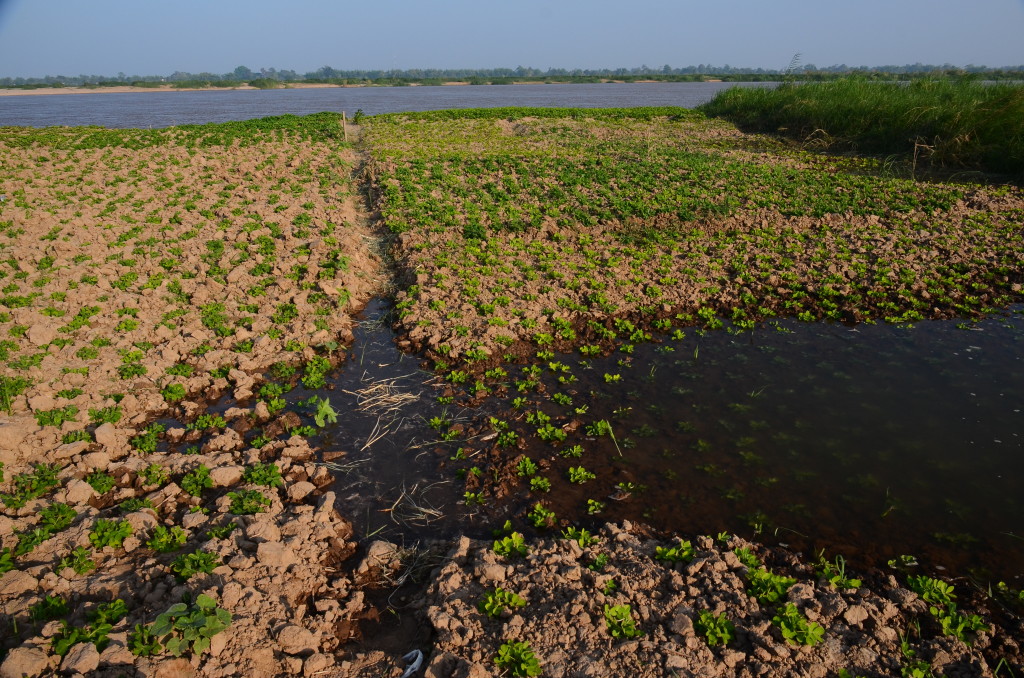
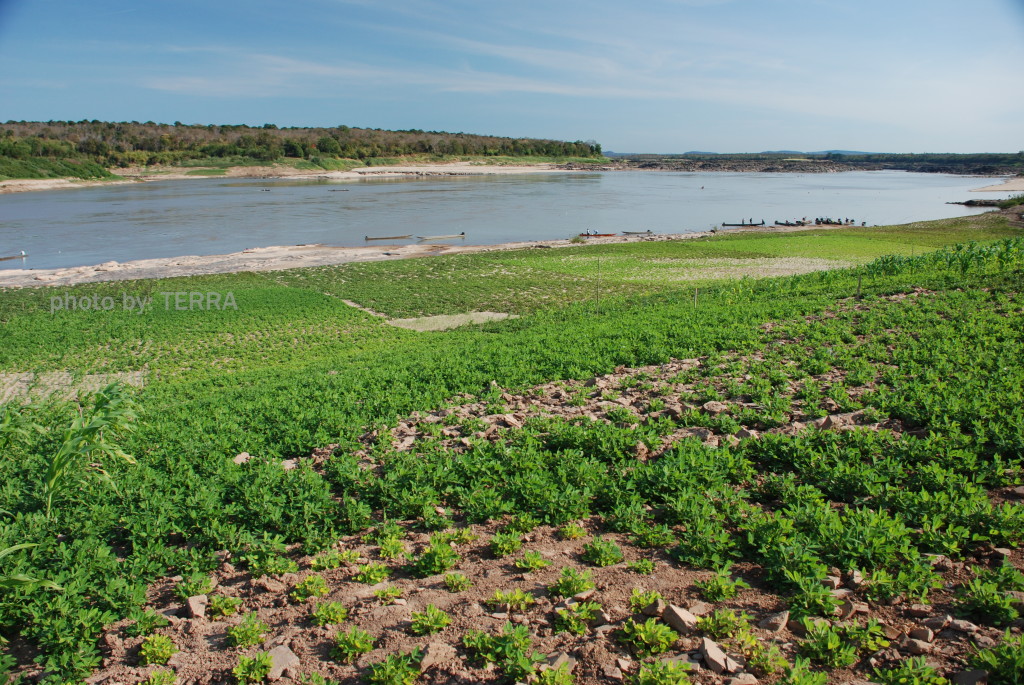
Flooding of a riverbank garden in Phra Klang Toong village, Nakhon Phanom Province, Thailand in December 2013. (Photo by TERRA.)

Flooding of a riverbank garden in Phra Klang Toong village, Nakhon Phanom Province, Thailand in December 2013. (Photo by TERRA.)

The lower Mekong River is already feeling the impact of a series of dams built upstream in China. Thai riparian communities faced another flooding20 in the dry season that spanned between the end of 2013 and early 2014 when the Mekong River unprecedentedly and unexpectedly rose between one and two meters, which lasted for approximately a week before receding. Affected riverside communities lost21 their boats, crops, fish stocks and income as a result of the rapid rise in river level. There was no warning and no government officials reacted to the situation promptly. Locals were left to cope with the situation by their own means. Though no government came forward to confirm if the exceptional water rise and quick ebb were caused by China’s dams, local communities22 stood firm to point to upstream dams for the loss and damages.

With the waning of fossil fuels like coal that are also gaining a bad reputation for releasing large amounts of carbon and creating pollution, some developers and governments are proposing a turn towards hydropower projects and apparently with the support of the CDM. Yet such an approach will never tackle the problem at its root as the current development model champions industrialization and urbanization and still prioritizes high GDP pursued through the use of dirty and unsustainable electricity sources. Large dams are false solutions23 to climate change as they fragment free-flowing rivers and devastate24 local natural resources and communities. Instead a more radical rethinking of development is required, including how we relate to our rivers and the wider ecosystems that could sustain us for the present and future generations.

 This article was originally printed here on the Mekong Commons site.  It is reprinted with permission of the author.
Footnotes
  1. Chantawong et al. (2015) Ecology, Economics, Cultures of the Mekong Basin: From Kaeng Kood Koo to Pha Chan in a Changing Current. Published by Foundation for Ecological Recovery (Thai language).
  2. The Nation (2011) “More cold weather coming“. 29 March 2011.
  3. James Hookway and Wilawan Watcharasakwet. The Wall Street Journal. 19 March 2011. Thailand Braces for Tsunami, Then Cold Snap.
  4. Chantawong et al. (2015) Ecology, Economics, Cultures of the Mekong Basin: From Kaeng Kood Koo to Pha Chan in a Changing Current. p 184 Published by Foundation for Ecological Recovery (Thai language).
  5. A River, Its Fish and Its People: Local Knowledge of the Natural Environment at the Mouth of the Mun River. Mekong Watch. May 2004.
  6. Chantawong et al. (2015) Ecology, Economics, Cultures of the Mekong Basin: From Kaeng Kood Koo to Pha Chan in a Changing Current. Published by Foundation for Ecological Recovery (Thai language).
  7. Chantawong, Montree. “The Shifting Mekong and Damages to Downstream: Who’s Responsible?“. 19 March 2014.
  8.  IPCC (2000). IPCC Special Report – Emission Scenarios. Summary for Policymakers. A Special Report of IPCC Working Group III Published for the Intergovernmental Panel on Climate Change (IPCC).
  9. Mira Käkönen. CDM and challenges in delivering to the poor: case study from Cambodia. Finland Futures Research Centre, University of Turku. 28 February 2012.
  10. Roberts, Kale. Mother Earth News (2015). “Renewable Energy Is Not Always ‘Green’: Greenhouse Gas Emissions from Hydroelectric Reservoirs“. 2 July 2015.
  11. Li, Siyue and Lu, X. X. (2012). Uncertainties of Carbon Emission from Hydroelectric Reservoirs. Nat Hazards. 24 March 2012.
  12. Butler, Rhett. Mongabay (2012). “Tropical Dams Are A False Solution to Climate Change“. 27 May 2012.
  13. dos Santos, Marco Aurelio. et al. Gross Greenhouse Gas Fluxes from Hydro-power Reservoir compared to Thermo-power Plants. Energy Policy. (2006)
  14. Barros, Nathan. et al. Carbon Emission From Hydroelectric Reservoirs Linked to Reservoir Age and Latitude. Nature Geoscience. (2011).
  15. Titthara, May. Phnom Penh Post. “Call for Sesan 2 Logging Halt“. 1 July 2015.
  16. The Guardian. “Thorny frog and dementor wasp among new species discovered in Mekong“. 27 May 2015.
  17. International Rivers (2015). “The Mekong Feeds Millions: Dams Threaten Southeast Asia’s Vital Lifeline“.
  18. VietnamNet Bridge. “Hydropower plants likely to affect Mekong River’s fishery resources: experts“. 27 December 2014.
  19. Zaffos, Joshua. “Life on Mekong Faces Threats As Major Dams Begin to Rise“. 20 February 2014.
  20. International Rivers (2014). “Mekong Floods: The Dampening of the Wintery Suffering“. 8 January 2014.
  21. Chantawong, Montree. “The Shifting Mekong and Damages to Downstream: Who’s Responsible?”. 19 March 2014.
  22. Clark, Pilita. Financial Times. “Troubled Waters: the Mekong River Crisis“. 18 July 2014.
  23. TERRA (2013). “The False Solutions to Climate Change: A Case Study on Hydropower in the Mekong River Basin“.
  24. Cronin, Richard P. World Politics Review (2015). “International Pressure Could Still Turn the Tide on Mekong Dams“. 25 March 2015.


Leave a Comment

Filed under Agriculture, Cambodia, China, Energy, Laos, Mekong River, SLIDER, water

The Salween River is Not for Sale

TAUNGGYI, Shan state, Myanmar

It is billed to become the biggest dam in SE Asia. The Mong Ton dam project on the Salween River will flood a vast area, with a reservoir extending 380 km upstream over an area home to thousands of Shan and other ethnic groups in a region of important biodiversity.

It could well become Myanmar’s most controversial dam project since the Myitsone on the Irrawaddy. (This dam was suspended by President Thein Sein in 2010).

Sinohydro, The Three Gorges and Southern Power grid form a Chinese consortium with a 40 % stake in partnership with EGAT Thailand’s Electricity Authority (40%) and local partners IGE.

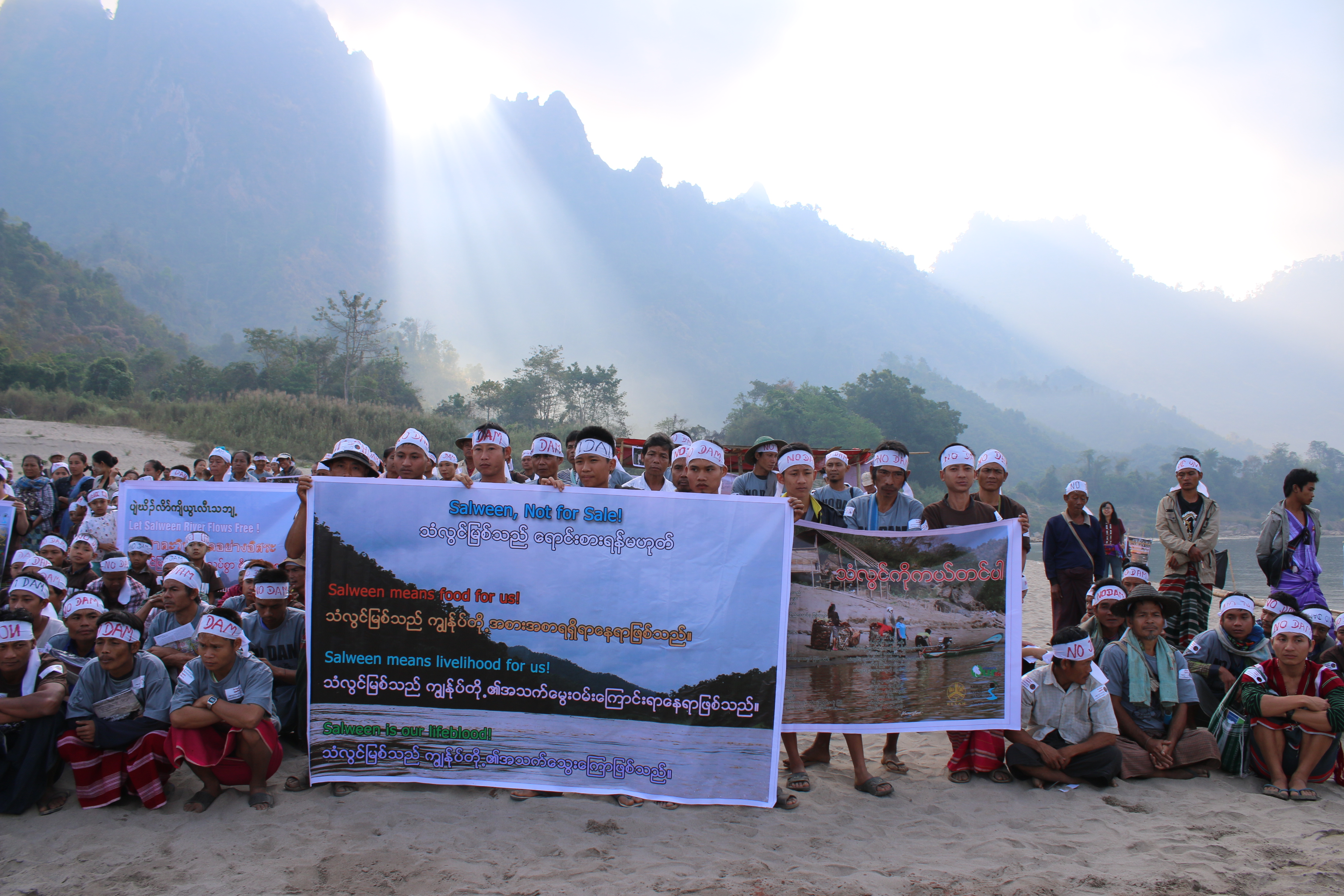
Kunhing villagers protest against Mong Ton Dam, April 30, 2015.

Kunhing villagers protest against Mong Ton Dam, April 30, 2015.

Thousands of villagers supported by civil society in the Shan state are angry that their Salween –the last undammed river of size and importance in the region- is being dragged into the nexus of ever expanding hydro-power and big business.

The strength of anti-dam sentiments took the EIA consultants by surprise at a recent public meetings in Shan state conducted by SMEC (The Snowy Mountain Engineering Corporation from Australia).

The Australian consultants have been engaged by the developers to conduct EIA and SIA – Environmental and Social Impact Assessments.

They received a hostile reception from hundreds of Shan people crammed into a small hall many of them sporting “No Dam “bandalas and placards.

The Smec consultants were told the assessment period was too short.The villagers have been told very little by the government and these corporations.

The recent protest against the gigantic Mong Ton dam project on Salween River is only one part of a growing anti- dam movement struggling to protect the culture and livelihoods of millions stretched across three ethnic states in Myanmar -Shan, Karen, and Kayah comprising diverse minority peoples.

Hundreds of kilometers to the south, Kesan – (the Karen Environmental Network) organized a Salween day to mark the global protection of rivers day March 14th 2015, to celebrate the river’s beauty and vital importance to ethnic peoples.

Up north the Mong Ton dam would flood pristine teak forests; the planned Hatgyi dam in Karen state would flood two wildlife north sanctuaries. Cultural and religious heritage sites will be inundated.

Banners defiantly proclaimed on the Thanlwin River/Salween in Myanmar: NO DAMS! THE SALWEEN IS NOT FOR SALE! On International Rivers Day of Protest celebrated on rivers around the world from the Amazon to the Mekong.

Ms Hsa Moo, a Kesan media coordinator addressed a crowd of several hundred Karen villagers. “When the government in Nay Pyidaw looks at the Salween River and other rivers in Burma, they don’t see its beauty: they only see Thai Baht, Chinese Yuan, US dollars and Indian Rupees. For them, the rivers flowing through the lands of our ethnic communities are nothing more than a potential source of revenue. Not revenue for local people, but for the central government:

They want to dam our rivers, sell most of the energy they generate to neighboring countries, and keep the money for themselves.’ She concluded “Our rivers are not for sale.”

Statements from the Naypidaw parliament indicate the government‘s prime concern is not with the potentially disastrous impacts, but with the country’s energy shortages.

In February 2013 the Deputy Minister of Power Myint Zaw told parliament that six hydropower dams had been approved for the Salween River, one of the region’s longest flowing for 2800 kms from the snow-capped mountains of Tibet, through China and Myanmar.

The projects in Shan State include the Kunlon, with a capacity of 1400 megawatts, Naungpha (1000MW), Mann Thaung (200MW) and Mong Ton(aka Tasang dam)   (7110MW). Other dams include Ywarthit (4000MW) in Kayah State and Hatgyi (1360MW) in Karen State.

Professor Maung Maung Aye chief advisor to the MEI –Myanmar Environment Institute speaking in a panel discussion in Yangon commented; “today damming the rivers is the government’s first principle for developing more energy, instead of being the last option for the nation.”.

The NGO Renewable Energy Association of Myanmar (REAM) also strongly criticized the government’s failure to adopt an energy policy that would include investment in solar power, wind power and other clean and green energy solutions that have recently dropped in price, and become far more affordable..

Upstream from Myanmar the Salween( Nujiang) in China had been the target for 13 dams in 2004. However in a dramatic reversal for Chinese hydropower, former premier Wen Jiabao declared a moratorium on dam construction on the River Nujang in response to a strong environmental campaign led by Green Watershed, supported by several Chinese geologists.

The Mong Ton (aka Tasang) dam will be by far the largest on the Salween River in Burma, producing 7,100 megawatts of electricity, 90 percent of which will be exported to China and Thailand.

The massive reservoir will stretch across almost the entire length of Shan State flooding huge areas and deluging hugely important areas of biodiversity and forest. Villagers who attended the recent SMEC –run consultation in early April, held up anti-dam placards and handed out a statement to the Australian staff, raising concerns about how the dam would threaten their livelihoods and trigger renewed armed conflict.

HYDRO- DAMS FUELLING CONFLICT

Nang Wah Nu, a representative from Shan State in Parliament reported last year that preparation work has already begun on monster Mong Ton dam designed to deliver 7000 mw of power, but only 15% for the Myanmar.

The Shan parliamentarian lamented “no information had been provided to residents who fear their homes, rice fields and pagodas will be flooded”. She warned   “Fighting could break out if the government does not discuss the project.”

Indeed fighting has broken out in the proximity of dam projects with more than 50 clashes recorded between armed ethnic groups and the army during the current period of peace talks according to the Burma Rivers Network coalition.

Fresh fighting has erupted in southern Shan State in March 2013, after the army launched an offensive against the Shan State Army-North to force its troops out of bases along the Thanlwin (Salween) located near dam sites in Nona Pha and Mong Tong. This forced the displacement of 2000 villagers in Tangyan township.

A spokesperson for Karen Rivers Watch reported that the army’s border guard force attacked the Democratic Karen Buddhist Army in May in an attempt to drive them away from the Hatgyi dam site. The villagers fled to refugee camps on the Thai border.”

Sai Khur Hseng, director of Sapwawa a Shan environmental network declared: “These conflicts have broken out despite the ceasefires. It is very clear that the Thanlwin (Salween) dams are fuelling war. If President U Thein Sein really wants peace, he should stop the dams immediately,”

The Myanmar government plans to sell electricity produced from the hydropower projects on the basis of agreements with five Chinese companies, one Thai company and three Myanmar companies. The ministry says Myanmar will get 15 percent of the electricity from the projects and the right to buy a further 25%.

These very serious and well- documented allegations have been raised in peace talks with the government.

Karen people protest against the Hat Gyi Dam and other dams on the Salween.

Karen people protest against the Hat Gyi Dam and other dams on the Salween.

THE HYDROPOWER DEBATE: The World Bank versus the World Commission on Dams and the Oxford Study.

In January 2015 the World Bank and its financial arm the IFC-International Finance Corporation organised a conference in Yangon to promote hydropower as an engine for economic growth, and as a solution for dealing with the nation’s energy problems held in Naypidaw.

The event was clearly aimed at tapping the huge influx of foreign investor’s rich eager to grab a stake in exploiting the nation’s rich natural resources.

Although heavily outnumbered by businessmen and bankers, a few ngos were allowed to raise serious challenges to the overwhelming pro-dam spirit of the conference. John Saw Bright a representative of Kesan –(the Karen environmental & social action network )made it clear to the conference , mega-dam projects like the controversial Myitsone dam have given dams a bad reputation in Myanmar.

A representative from Myanmar Peace Support similalrly observed “dams and hydropower do not have a beautiful name in Burma…”

THE WORLD BANK AND HYDROWER

At the Naypidaw conference in January 2015, the World Bank Group tried to counter the negative image of large-scale dams, with the simple mantra of “sustainable hydropower ““a slogan that has come to permeate all international discourse on dams.

Kate Lazarus from the IFC the financial arm of the World Bank commented, “a sustainable hydropower sector will help mitigate environmental and social risks, while realizing Myanmar’s huge energy potential, contributing to economic growth and shared prosperity.”(The Nation newspaper in Thailand)

Karin Finkelston, IFC’s vice president for global partnerships argued that “electricity is fundamental to reducing poverty and improving living standards for Myanmar’s people and hydropower is an important part of Myanmar’s energy future – but it has to be done in an environmentally and socially sustainable way.”

But all this begs the question of what is sustainable and does mitigation work? The World Bank and the IFC neglect to define the limits of sustainability. The test of unsustainability and the grounds for rejecting a dam-project cannot be found anywhere in their literature. It has also never been clarified by the Mekong River Commission.

Rhetoric and assurances do not guarantee that millions of people living on Burma’s great rivers, and their fisheries, farm crops, and their livelihoods, can be adequately protected from destruction, which normally follows in the wake of mega-dam operations.

In fact here the work of fisheries experts and scientists clearly demonstrates that World Bank policy runs counter to the conclusions of recent scientific reports including the World Commission on Dams and subsequent studies.

The most comprehensive study of hydropower dam impacts around the world concluded that most mega-projects had unleashed many problems and that the losses suffered usually outweighed the benefits.

The World Commission on Dams (2000) concluded ´Decentralised, small-scale options (micro hydro, home-scale solar electric systems, and wind and biomass system) based on local renewable sources offer an important near-term, and possibly long-term, potential particularly in rural areas far away from centralised supply networks.”

Renewable Energy Association of Myanmar (REAM), a civil society group, pointed out that most of the population in Burma lives in remote and off-grid areas. If the government and the World Bank Group genuinely aim to bring electricity to the local population, decentralized off-grid solutions are the best option, not large-scale hydropower dams for export.

International Rivers ngo view sustainable hydropower as a formula not for examining all energy options and defining criteria for stopping  a deeply flawed dam from being built, but rather a recipe for building ” better nicer dams” based on unproved technologies of mitigation.

Pai Deetes of International Rivers blogged “It is clear that the myth of “sustainable hydropower”, as it is being sold by the World Bank will simply not be accepted in Burma.

Just recently an Oxford University research study corroborated these conclusions. “The evidence is conclusive: Large dams in a vast majority of cases are not economically viable. Instead of obtaining hoped-for riches, emerging economies risk drowning their fragile economies in debt owing to ill-advised construction of large dams,” they said in a statement attached to the study, which was published on March 10: 2014 in the Energy Policy journal.

“The World Bank‘s claim that hydropower is “clean affordable, and reliable” is clearly contradicted by this study.

Bent Flyvbjerg, principal investigator for the Oxford University dam study, says dams “are not carbon neutral, and they’re not greenhouse neutral”. The vast quantities of concrete required to construct leave an enormous carbon footprint, he says.

Furthermore flooded vegetation under the reservoirs produces methane, a greenhouse gas roughly 20 times more potent than carbon dioxide, he says.

Co-author Bent Flyvbjerg, the founding chair of Major Programme Management at the school, said the findings against mega dams were so conclusive that only “fools” or “liars” would advocate for them.

Kunhing villagers protest against Mong Ton Dam. April 2015.

Kunhing villagers protest against Mong Ton Dam. April 2015.

CONCLUSION

Before the government and civil society consider following the World Bank neo-liberal model of development they should also heed the latest revelations from a global media investigation.

“Dams, power plants and other projects sponsored by the World Bank have pushed millions of people out of their homes or off their lands or threatened their livelihoods” the investigation found

The UK Guardian, the Huffington Post and other media, are currently    publishing a series of these investigation reports from the ICIJ (International Centre of Investigative journalism).

The ICIJ report concluded “The World Bank regularly fails to enforce its own rules protecting people in the path of the projects it bankrolls, with devastating consequences for some of the poorest and most vulnerable people on the planet.”

Many of the poorest and most vulnerable people constantly subject to military harassment, and enforced resettlement are the ethnic peoples of the Salween River.

If the Myanmar government is serious about bringing peace to the ethnic regions and ending civil war in the country, they have to think again about imposing mega-projects on the ethnic states without providing them any benefits or compensation.

Building or not building dams is about far more than foreign investment, selling energy to neighbouring countries and protecting the environment. It is intimately connected with a more equitable sharing of political power and natural resources between the central government and its impoverished ethnic regions.

This article was originally published in the May 14th issue of MIZZIMA Weekly. It is reprinted here, in its entirety, with full permission from its author.

Leave a Comment

Filed under Environment and sustainability, Myanmar/Burma, SLIDER, Sustainability and Resource Management

Review: Great Gamble on the Mekong documentary

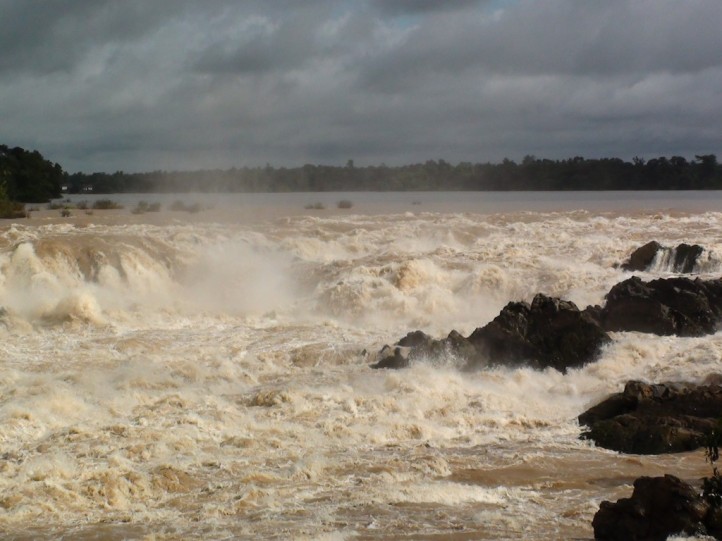
Khone Phapeng falls in southern Laos; photo by Tom Fawthrop

Khone Phapeng falls in southern Laos; photo by Tom Fawthrop

Fishers and farmers have for some time tried to block a proposed dam on the Mekong River in southern Lao People’s Democratic Republic (Lao PDR). Most recently, they made their views known at a public consultation on the Don Sahong dam. In all likelihood, however, they will lose and the dam will be built. Great Gamble on the Mekong, a new documentary from filmmaker and journalist Tom Fawthrop, insightfully details the probable dire consequences of this dam, and the failure this represents for a once-promising extra-legal cooperative structure, the Mekong River Commission.

The Mekong runs from the Himalayas in Tibet through China, Burma, Thailand, Lao PDR, Cambodia, and Vietnam—the latter five forming the Lower Mekong Basin (LMB)—where it empties into the South China Sea. According to Fawthrop, it provides protein and food security for 65 million people in the form of fish for food and trade, and water and nutrients for home gardens and commercial farms. At the same time, the Mekong has long represented a potential source of renewable energy. China has already built six dams on the Upper Mekong, and plans to build at least 14 more.

Dams have been discussed and rejected on the Lower Mekong mainstream since the 1950s, though they have gone up on its tributaries in that time.  In 1995 Thailand, Lao PDR, Cambodia and Vietnam signed the Mekong Agreement and formed the Mekong River Commission (MRC). The goal of the MRC is to facilitate cooperation in managing the resources of the Lower Mekong, but it has no final decision-making power.

The proposed Don Sahong dam at the center of this film would sit squarely across the main channel that migratory fish use to bypass the massive Khone Falls near the Lao border with Cambodia. It would be the second dam begun on the mainstream of the Lower Mekong—construction began on Xayaburi, another controversial dam, in 2012—with as many as 10 more to follow.


Cost-Benefit Analysis

The Lao government and the Finnish company Poyry it hired to oversee construction of Xayaburi claim that dam will provide clean energy to three million people in Thailand and one million in Lao PDR. The MRC claims dams on the Lower Mekong mainstream have the potential to reduce the severity of floods and droughts, and thatbuilding all 12 would generate $15 billion in economic activity, create 400,000 jobs, and reduce greenhouse gas emmissions by 50 Mtons CO2/yr by 2030. A study commissioned by the MRC, and completed by the International Centre for Environmental Management (ICEM) in 2010, concluded that the 12 dams could meet 8 percent of the region’s energy needs by 2025.

The ICEM study is clear however that benefits will not be disbursed equally: “Mainstream hydropower generation projects would contribute to a growing inequality in the LMB countries. Benefits of hydropower would accrue to electricity consumers using national grids, developers, financiers and host governments, whereas most costs would be borne by poor and vulnerable riparian communities and some economic sectors…In the short to medium term poverty would be made worse….”  Lao PDR does plan to use the revenues from selling the energy produced by its dams for rural roads, health care, and education, though during the “concession period” (estimated by ICEM at 25 years) after dam completion, the bulk of revenues would go to the dams’ financiers and developers.

According to the academics and nonprofit workers that Fawthrop interviews in Great Gamble on the Mekong, the exact impacts of the dams are impossible to predict, but they will likely be severe. “The Don Sahong dam will only push Cambodia and Vietnam closer to a food crisis,” says Chhith Sam Ath, an employee of the World Wildlife Fund in Cambodia. In addition to flooding gardens along the river, and diminishing the fish stock, they predict that the entrapment of nutrients by the dams will hurt rice production in Vietnam, leading to higher global food prices.

The 2010 ICEM study concluded that building the 11 mainstream dams on the Lower Mekong would reduced “capture” (non-farmed) fisheries by 16 percent. Combined with the built and proposed dams on the Upper Mekong, and on tributaries in the Lower Mekong Basin, this number rises to 26-42 percent. New aquaculture associated with dams would only replace at most 10 percent of this loss. Lao PDR and its developers claim they can mitigate the losses of fish–Poyry claims fish gates will allow 80 percent of migratory fish to pass up and down streams, while MegaFirst, the Malaysian company planning to dam Hou Sahong, claims making adjacent channels wider and deeper will provide fish with a detour route.

Yet the fish gates Poyry plans to use have never been tested on the varieties of fish found in the Mekong, and fish passes need to be designed to take into account individual species’ behavior and sensitivity to factors such as oxygen and nutrient levels. AsPoyry’s senior project manager conceded, “whether the fish get across [the dam], you’ll only see when it is built.” Faulting Lao PDR for not testing the fish gates in the Mekong before building a dam, when you need a dam to test the gates seems unfair. But they could test the technology on a smaller, less impactful dam on a tributary.


The Political Process

In the face of this uncertainty, the ICEM report recommended putting off any mainstream dam construction until 2020, using the intervening years to more fully study the impacts of the dams on the Upper Mekong and on the tributaries of the Lower Mekong. In a five-year strategic plan issued in March 2011, the MRC Council also recommended more study, as well as a thorough Procedure of Notification, Prior Consultation and Agreement (PNPCA), the internal procedure of the MRC for member countries to consider and offer feedback on the proposals of other countries. Yet eight months later, Poyry announced that Lao PDR had met its obligations under the 1995 agreement and could proceed with construction of Xayaburi. A year after that, in November 2012, Poyry received an eight-year contract to supervise Xayaburi’’s construction and engineering, and construction began. Poyry claimed at the time that it had updated designs to take into account the concerns of downstream nations. Yet in January 2013, Cambodia and Vietnam vigorously protested that their concerns had not been addressed, and demanded a halt to construction. They were unsuccessful.

A similar drama unfolded around the Don Sahong Dam. Last September, Lao PDR announced the start of the Don Sahong Dam, this time avoiding the PNPCA by claiming the project was not on the mainstream. After diplomatic outrage, the Lao government consented to a PNCPA, which began last July and is only required to run six months. Despite opposition from the governments and civil society in Vietnam and Cambodia, the Lao government has signaled its intention to proceed with the dam.

These dams are the first major test of the MRC’s ability to handle conflict among its members. The MRC tasks members with “aiming at arriving at agreement” on projects that significantly impact water quality or flow but has no voting mechanism or penalties for not reaching agreement. The CEO of the MRC Secretariat, Hans Guttman, states in Great Gamble that if the parties don’t arrive at an agreement, the country proposing such a project can still go ahead with it.


Resistance

Citizens of Cambodia, Thailand, and Vietnam have lobbied their respective governments to halt the dam. Hundreds of NGOs, both local and international (including World Wildlife Fund and International Rivers) have been trying to mobilize the opposition. Thai villagers filed a lawsuit against EGAT, the National Energy Policy Council, and three other government agencies in 2012, challenging the power-purchasing agreement they entered into with the Lao PDR government for electricity from Xayaburi. In June 2014, the Thai Supreme Administrative Court agreed to hear the case.

The international response, outside of the press, has been muted. MRC’s international donors issued a joint statement in January 2013 urging further study before beginning dam construction, but have said little else. The UN and heads of state have been notably silent.

Fawthrop’s film does not address how concerned Westerners can respond. The answer certainly feels fraught, given Laos’ historical experience of French colonialism and U.S.military aggression, including the unexploded ordinance that still affects the country. Then there’s the region’s very real need for clean energy as well as the standard argument about the hypocrisy of industrialized nations telling any country to sacrifice growth for environmental protection.

This is the progressive’s dilemma when it comes to foreign policy. Certainly any intervention should come in the form of carrots and not sticks: money and/or technology to develop less destructive sources of renewable energy; promotion of tourism to the region; UNESCO World Heritage Site recognition for Kohne falls, and so on, conditioned on implementing the ICEM report’s recommendations.What Great Gamble on the Mekong makes clear, and what studies of other massive dam projects have proved is that this is a humanitarian issue, and that the poorest will likely suffer the most.

Great Gamble on the Mekong has some distracting elements. The claim that the Thai banks funding Xayaburi are “getting nervous” as a result of letters sent to them by anti-dam activists seems like wishful thinking. For the sake of their own credibility, the filmmakers shouldn’t have included a cartoon set to Pink Panther music. Finally, the filmmakers should have addressed how some species got to be endangered before any dams were built. For example a WWF report says that overfishing was partly responsible for the decline of the great catfish. These critiques aside, this is an important and stirring film.

Nathaniel Eisen is a freelance author interested in the intersections of trade, human rights, security policy, and the environment. Information about the documentary Great Gamble on the Mekong can be found at www.tomfawthropmedia.com. Copies of the DVD can be ordered from eurekacuba@gmail.com.  This post was first published on the Foreign Policy in Focus blog on 12/26/2014.  It is reposted here with the permission of the author.

Leave a Comment

Filed under China, Current Events, Energy, Environment and sustainability, Foreign policy, GMS, Mekong River, Reviews, SLIDER, water

Meet the Salween

salween

I heard the name “Salween” before. I didn’t know exactly where it is. I knew it was somewhere close.

Somehow its name portrays a feeling of fearless turbulence. Perhaps, it’s the sound of “S” and the rhyme between “ween” and a Thai word “wian” from the word “wonwian” meaning lingering and wandering which makes me think of the word “namwon” meaning whirlpool.

There is a legend about the two great sister rivers of Southeast Asia: the Salween and the Mekong.

And this is how the story goes:

One day, the two rivers decided to go to sea. They agreed to travel through the mountains together and stopped whenever they wanted to. The Mekong slowly spanned its waterline through the landscape while the Salween hurried its way to claim the frontline.

After rushing ahead, the Salween decided to stop for a quick nap to wait for the Mekong. Days passed and the Mekong was still absent. The Salween thought the Mekong took a chance when it was sleeping to get ahead—to be the first to see the ocean. Angry and feeling betrayed, the Salween rushed through the channels and aimed to destroy any rock that stood in its way. Its wild speed was felt by those living nearby. The Mekong, on the other end, finally arrived at where the Salween was napping. Not seeing its younger sibling did not push it to move any faster. The Mekong continued to crawl and collect waters along the way; it even went off-route to carry fish and water into Tonle Sap before it finally reached the sea.

It is said that many communities believe in this story, though I have only heard it from two people. The anecdote may vary. Though it does resemble the turtle and the hare tale, but stories and legends are much better tools to narrate and describe the difference between the two.

Perhaps, it is the Salween’s anger that makes it the last free flowing river in China and Southeast Asia until 2015.

The Salween is originated from the marshland in the Himalayan Plateau—the same glacial area where the Mekong and the Brahmaputra start their mightiness. It travels over 2,200 kilometres through southwest China, Thailand, and Myanmar. Most of the areas it nourishes are occupied by ethnic indigenous communities. In Yunnan alone, the Nu River  (as the Chinese called the upper Salween) feeds at least 22 ethnic groups. The same reality applies to downstream communities at the border between Thailand and Myanmar and major ethnic states in Myanmar (where Burmese names it “Thanlwin”). I remember someone told me that the Salween’s turbulence is reflected by perpetual ethnic tension in the most recent open country of ASEAN.

The plan to dam the free flowing Salween is not new. 13 cascade dams for the Nu River were proposed in 2003 as part of China’s 10th Five Year Plan. Chinese environmentalists immediately called the government to halt the project. Their voices were listened, but the hiatus is now over and the proposed 13 hydropower projects are back on the table.

Thailand’s eyes on damming Myanmar’s Thanlwin/Salween is also not new. Nearly ten years ago, Thai environmentalists became aware of 7,110 MW Ta Sang Hydropower Project, a Thai national dam at the cost of Burmese environment. The news of Ta Sang Dam has been silent but a recent loosely done EIA report and signed MOA for the 1,360 MW Hat Gyi Dam prove that the intention isn’t going away.

7 is the number of proposed dams on the Thanlwin/Salween. Over 20,700 MW will be generated to Thailand and China. The newly built transmission lines that would come with the new dams would gracefully pass over the electricity and wealth to Myanmar’s neighboring countries. Its people would have to look up to the electricity they are not entitled to use while watching their houses and livelihoods inundated by the reservoir.

But the real battle has only started. In June, 2014 Myanmar government switched on the green light for Chinese Hanergy Holding Group Company to tackle its hydropower project in Shan State. Kunlong Dam will stand tall to hold back the Salween while producing 1,400 MW of electricity to be sent back to China.

Large-scale hydropower projects—along with many other environmentally and socially detrimental projects—never prove beneficial to local communities. “The few should sacrifice for the many” is the excuse project proponents always use to dignify their grand prize. However, in this case, “the few” we’re talking here isn’t small in number but their political voice and power to decide how and who would control the river they rely on.

“We call the Thanlwin, ‘the River of Peace’” said Ko Ye, an activist from Dawei who has been fighting against Thailand-proposed mega development project in his hometown. “Because if this river is dammed or falls under one group’s control, the ethnic war in Myanmar will never stop.

2 Comments

Filed under China, Current Events, Economic development, Energy, Environment and sustainability, ethnic policy, Mekong River, Myanmar/Burma, SLIDER, Sustainability and Resource Management, Thailand, water, Yunnan Province

Letter to the Mekong River Commission on the Don Sahong Dam

The following is a letter written by Mekong river expert and conservationist Alan Potkin submitted today to the Mekong River Commission’s online stakeholder consultation concerning the Don Sahong dam.  The construction of the Don Sahong dam on the Mekong’s Hou Sahong channel in Siphandon, Laos is a project sparking extreme controversy in the Mekong region.  Despite Vietnam’s and Cambodia’s condemnation of the dam along with a massively successful petition campaign gaining more than 250,000 signatures and increasing local and international coverage of the controversial project, construction for the dam is likely to begin by the end of the year.

Indeed “now is the time to separate fact from fiction”…

Notwithstanding his Googleable scientific publications being exclusively in quantitative algology, rather than in any aspect of ichthyology (not  least fish taxonomy, physiology, and reproductive or migratory behaviors), I had consistently argued that we should accept that Dr Peter Hawkins, Don Sahong’s Environmental Manager, was speaking and acting in good faith until proven otherwise…

Until this latest announcement by him that the altered dry season hydrology above and below Siphandone, following the new release regime
from the Lançang Jiang cascade of hydropower dams in Yunnan PRC, will now make it “easier for fish to migrate” through alternate channels other than Hou Sahong during the dry season.

Well, maybe yes and maybe no.

According to years of fieldwork conducted there by Dr Tyson Roberts and Profs. Ian Baird and Water Rainboth, amongst others,
no less than 150 species of fish transit through, or are resident, in Siphandone. Other than their basic taxonomy, almost nothing is known in
sufficient empirical detail about any ofthem to understand exactly what ecological and behavioral cues initiate bi-directional migration and successful reproduction: Water temperature? Current velocity and/or stream stage? Phases of the moon? Subtle chemical alterations? Angle of the sun in the sky/polarization of insolation?

How much change in elevation per unit of lineal distance could be encompassed within a particular species’ genetically-determined
metabolic parameters and swimming musculature to still be a manageable pathway?

All essentially unknown!

The planet’s best understood migratory fishes are the salmonidae of the northern hemisphere, which in any given inland waterway probably never exceed four or five different species having themselves much in common. Yet even now ichthyologists are far from certain over exactly how salmonids are capable of navigating to, and infallibly identifying, precisely that reach of river/tributary wherein they were originally spawned, perhaps even a decade earlier, with most of those intervening years as adults spent offshore in the oceans.

And if any or all of that that were known in exact and correct detail about one or two or three of the most economically and nutritionally
important Mekong species, there would yet be another 140 species, at least, which might be responding to completely different sets of stimulae and environmental cues.

I would be delighted to have these assertions proven false by aquatic ecologists holding credible expertise far greater than my own.

Once again, I would note that available to whomever might successfully navigate far upstream into several of our interactive eBooks, notably
“Mekong-Orwell” —mostly about the Pak Mun debate Xayaboury and Don Sahong— there are linked online videos showing the
rather underdeveloped state-of-the-art of “fish friendly” turbines, and showing the general impassibility of even a 70cm artificial obstruction erected across the migratory pathways of one of the most robust and powerful N. American fish species, but one which lacks any evolutionary history of jumping.

Thanks as always, for all due consideration.

Access the interactive media links below to learn more about Alan Potkin’s work on Mekong issues.
http://www.sethathirath.com/mekong_actual_outcomes1.final_cfp.pdf
http://www.sethathirath.com/nam_phit/digital_mekong_planning.pdf
http://www.sethathirath.com/mekong_orwell_eBook/pak_mun_homepages.pdf
http://www.sethathirath.com/mekong_fish_atlas_4.1/welcome.pdf
http://sethathirath.com/EFDNW_UNESCO_1.4.1/nongchanh%20interactive/EFDNW_poster/nongchanh_poster_homepage.pdf
http://vimeo.com/86935784

Leave a Comment

Filed under Cambodia, Current Events, Laos, Malaysia, Mekong River, SLIDER, Sustainability and Resource Management, Vietnam, water

Jinggu Earthquake – 1 dead, 324 injured in Yunnan; are hydropower dams in danger?

Earthquake damage in Jinggu County, Yunnan

A major earthquake has struck China’s Yunnan province for the second time in just over two months. Last night at 9:49pm (Beijing time), a 6.0-magnitude quake occurred in Jinggu County, Pu’er Prefecture. According to Xinhua News Agency, the current death toll stands at 1, with a further 324 people injured.

The epicenter of the quake was 22 km west-southwest from Weiyuan Township and it struck at a focal depth of 10.9 km beneath the surface. Luckily, the earthquake occurred in a sparsely populated area of the province, and there have a relatively few casualties as a result. However, according to local authorities, a total of 92,700 people were affected by the quake, with 56, 880 of them being relocated. Within hours of the earthquake,  thousands of search and rescue personnel had been transported to the county and were undertaking operations.

Aftershocks were felt in the area for hours after the initial quake, and the largest registered at 4.2 on the Richter scale. Tremors were also felt throughout the province, with friends of East by Southeast feeling the earthquake in Kunming, almost 400 km away from the epicenter.

Closer to the center of the earthquake are a number of major hydropower dams. According to ExSE’s research, a total of 10 hydropower stations are in a 200 km radius of Weiyuan Township, some of them high-wall dams with installed capacities of over 1000 MW. The closest is the 1,350 MW Dachaoshan Dam (大朝山大坝), located just 60 km from the earthquake’s epicenter and . Yayangshan Dam (崖羊山大坝), the first in a 1,300 MW, seven-dam cascade on Yunnan’s Black River (墨江) is 85 km away and  The third closest, the Nuozhadu Dam (糯扎渡大坝), is located 118 km from the earthquake’s epicenter.

Southwest China is a seismic hotbed where earthquakes are quite common and in the past 6 years alone, there have been a number of major earthquakes in the region. The Wenchuan Earthquake (2008) killed more than 70,00 people while more recently, earthquakes in Ya’an, Sichuan (2013) and Ludian, Yunnan (August 2014), killed 220 people and 617 people, respectively. At the same time, Southwest China’s mountainous geography and wealth of major rivers makes it ideal for hydropower development.

In the past 30 years, hundreds of dams have been built in the region, however their placement in a such a seismically active area is problematic. First, there is evidence to suggest that major hydropower dams can be a factor in seismic activity. In the aftermath of the 2008 Wechuan Earthquake, a number of scientists found that the placement of a dam and its large reservoir over an active fault line could have caused the quake. Secondly, dams and reservoirs can sustain major damage in the event of a large earthquake in its vicinity. Following the 8.0-magnitude  Wenchuan Earthquake, the Chinese Ministry of Water Resources found that 2,380 dams were damaged.

Yesterday’s quake was of a smaller magnitude than the Wenchuan Earthquake so the potential for damage is smaller and at the time of publication, there have not been any reports of any of the 10 dams in Jinggu County’s vicinity sustaining damage. However, ExSE will continue to cover the aftermath of the Jinggu Earthquake and the recovery and rescue efforts undertaken.

Leave a Comment

Filed under China, Current Events, SLIDER, Yunnan Province

Water release at Yunnan dam sparks SE Asian alarm

Manwan Dam, Yunnan

A huge hydroelectric facility in southern Yunnan is causing tension between China and several of its downstream Southeast Asian neighbors. The Jinghong dam (景洪大坝), which stretches across the Mekong River, is currently discharging water in an effort to lower reservoir levels, raising the specter of flash flooding further south along the riverway.

On September 1, the Chinese government informed flood control authorities in Cambodia, Laos and Thailand that the dam would begin to release large amounts of excess water. The facility partially opened its floodgates September 5, releasing 535 cubic meters of water per second. Such activity is expected to continue through the end of the month.

Although this amount of water has yet to cause flooding in Laos or Thailand, both countries have issued public warnings as a precaution. Officials in both countries fear any further increase in outflow from the dam — which has the capacity to release up to 9,000 cubic meters of water per second — could have disastrous consequences. An unnamed official in Laos told website RFA river levels in the city of Houayxay — 200 kilometers south of the Jinghong dam — had risen noticeably but had so far not approached flood levels.

Thailand, which makes up more than 800 kilometers of the country’s northern border, is currently in the grips of its annual flood season. At least 28 provinces in the country’s north are already experiencing widespread inundations. Because of this, Thai flood control authorities are particularly wary of any increased flow along the river. Channel News Asia is reporting “the situation at the Chao Phraya dam, the main water gateway between the mountainous north and the central plains [of Thailand], are at a critical level”.

Further downstream in Cambodia and Vietnam, officials appear less concerned. No flood warnings related to the Jinghong dam water release have yet been issued in either country. However, a spokesman for Cambodian water conservancy group 3S Rivers Protection Network told reporters, “We know when an upstream dam opening its gates to release reservoir water combines with the heavy rains of wet season, it’s a high threat.”

The 1,750-megawatt hydropower plant, located roughly five kilometers north of the city ofJinghong, first went into operation 2008 following more than five years of construction. Power generated at the facility is used in Yunnan but is also often sent to energy-hungry Guangzhou or exported to Thailand.

Exemplified by the current situation in Jinghong, cross-border management of the Mekong — called the Lancang River (澜沧江) while flowing through China — is often a contentious issue. Mekong countries have, in the past, expressed frustration over how the river is handled inside China. Such concerns largely revolve around the wellbeing of the 48 million people who rely directly on the waterway for their food and livelihoods in Southeast Asia.

This article was written by Patrick Scally and originally posted on GoKunming.

Leave a Comment

Filed under ASEAN, China, Energy, Mekong River, Regional Relations, SLIDER, water, Yunnan Province

Laos Agrees to Discuss Dam Project with Neighbors

Representatives pose for a photo at the June 26 meeting of the Mekong River Commission

Representatives pose for a photo at the June 26 meeting of the Mekong River Commission

Laos has agreed to open a discussion with neighboring countries on the Don Sahong dam, but stopped short of saying it would delay construction on the controversial project.

In agreeing to the prior consultation, Laos is allowing input from the farmers and fishermen who depend on the Mekong River for their livelihood. It would also provide time for neighboring countries and opponents of the project to conduct a more comprehensive environmental impact study.

The announcement was made on Thursday during a meeting of the Mekong River Commission in Bangkok. Representatives from Thailand, Laos, Vietnam and Cambodia — all members of the commission — participated in the meeting. The agreement provided no provision for delaying the project before an adequate environmental study could be completed.

“Prior consultation does not stipulate any condition on continuing or not continuing” construction of the dam, Hans Guttman, the commission’s chief executive officer, told reporters. Guttman said the prior consultation should begin in July, with the process expected to take about six months. He said Laos did not offer to delay construction on the dam, nor did neighboring countries ask for a delay during the consultation period.

The Laos delegation did not release a statement or meet with reporters following the daylong meeting. Laos has begun preliminary construction on infrastructure at the dam site, despite strong opposition from Vietnam and Cambodia, who requested a 10-year moratorium on dam construction on the Mekong mainstream until further studies could be completed.

Earlier, Vietnam, Cambodia and Thailand stated that the dam must undergo prior consultation, as required under the 1995 Mekong agreement, to which Laos is a signatory. The Don Sahong dam is being constructed in the mainstream part of the Mekong River in the southern province of Champasak, nearly two kilometers upstream from the Laos-Cambodia border.

Opponents of the project fear the dam will block the migration of fish and cause a steep drop in the flow of water to those living downstream. Nonn Panitvong, an adviser to the Green World Foundation, said plans to build several dams along the Mekong, would transform the river, the world’s second-most biodiverse river after the Amazon, “into a giant freshwater pond”.

“That would be the end of the Mekong River,” he said.

Ame Trandem, Southeast Asia program director for International Rivers, called on neighboring countries to pressure Laos to delay construction until prior consultation is completed. “Neighboring countries must articulate to Laos their own intentions in what this process means, otherwise, the prior consultation process is likely to have missed the point entirely,” Trandem told ucanews.com.

Trandem said she hopes Laos proceeds with good faith rather than issue an “empty political statement”. “All construction should stop on the Don Sahong dam until a transboundary impact assessment is carried out and meaningful consultation takes place,” she said.

This article by Stephen Steele was originally posted here on June 27, 2014 on the UCA News website.

Leave a Comment

Filed under Cambodia, Current Events, Economic development, Energy, Laos, Mekong River, Regional Relations, SLIDER, Thailand, Vietnam, water

Monsters in the Mekong

Construction of the Xayaburi Dam in Laos

Construction of the Xayaburi Dam in Laos

It will be a giant, stretching across the mighty Mekong River. Standing 32.6 metres tall and 820m wide, the $3.8 billion Xayaburi dam in Laos could supply electricity to more than three quarters of a million homes in Thailand. And when it’s completed in 2019, it will be the most controversial power project in the region.

Since the plan was released in 2010 to construct the hydroelectric plant, geologists and environmentalists have voiced concerns about safety and the effects the mega-dam will have on neighbours Cambodia, Vietnam and Thailand. They have highlighted the risks of seismic activity in the area and the threat to the fishing industry on the 3,100-mile long (4,900 kilometres) Mekong River, which flows from the Tibetan steppes into southern China on its way to Myanmar, Laos, Thailand, Cambodia and Vietnam. Continue reading

1 Comment

Filed under China, Current Events, Laos, Mekong River, Regional Relations, SLIDER, Thailand, water

The weak vs. the strong: Ethnic villagers, the government, and hydropower firms

As China increases its hydropower development plans into the 21st century, an estimated 8 million ethnic people in southwest China, many of them Tibetan, Miao, and Yi will be forced to leave their remote mountain homes. My previous posts this week focused on unjust and inappropriate compensation ethnic villagers in the Yalong River valley have received during the relocation process.  During this process, local government and hydropower development firms give very little consideration to the rights of ethnic villagers.  They also give very little consideration to  existing laws protecting these marginalized people.

In the valley between the Kala and Yangfanggou dam sites, two large billboards sport eye-catching slogans.  One says, “Maximize people’s benefits within the limits of law and policy” and the other “Crack down swiftly with the heavy hand of the law against illegal acts disturbing public affairs.”

牌 打击阻工扰工

To address the second billboard, in the eyes of the law there are two kinds of illegal acts.  One kind is simply a violation of the law.  The other constitutes a crime punishable by swift and heavy measures.  Legal expert Zhou Yong of Norway University, Oslo questions the legal grounds for the Public Security Bureau to erect this billboard.  Specifically, which law is the billboard referring to?  And to what extent do swift and heavy measures apply? He continues his critique of the local public security bureau’s abuse of the law by adding that the final judicial organ deciding cases are courts, not the public security bureau.

Citizens have the right to act and react to changes going on around them especially in ethnic areas where China’s Law of Ethnic Autonomous Areas applies.  Citizens should be aware of their rights and enjoy their rights. The role of NGOs should be to ensure that people can be protected by certain laws and regulations in ethnic areas.  In addition, basic rights of personal safety and right of property should be guaranteed.

Yang Lin, an expert in social impact assessment adds that the billboards are very thought provoking.  Reading them together seems to suggest that the government will provide you with what you need, so there’s nothing to worry about.  But on the flipside, the sign indicates that if the government does not give you what it has promised, you shouldn’t ask for it again.  This kind of ex-post behavior by relocated villagers is illegal and will be punished.

Article 27 of the UN Declaration on the Rights of Indigenous People declares:

States shall establish and implement, in conjunction with indigenous peoples concerned, a fair, independent, impartial, open and transparent process, giving due recognition to indigenous peoples’ laws, traditions, customs and land tenure systems, to recognize and adjudicate the rights of indigenous peoples pertaining to their lands, territories and resources,  including those which were traditionally owned or otherwise occupied or used. Indigenous peoples shall have the right to participate in this process.

Today China is the building more hydropower projects than any other country in the world.  In the new energy development plan, over 60 major hydropower dams and several hundred small and medium sized ones will be built along the Jinsha River (Yangtze), Lancang River (Mekong), Nu River (Salween), Yalong River, Min River Brahmaputra river, and the main stem of The number of ethnic minority people resettled will soon reach eight million. This will be the largest-scale involuntary resettlement in China’s history.

A promotional film for the Ertan dam says that all Chinese people will benefit from hydropower and that China will reach through to new heights from which all mankind will benefit.

A local villager from Danbo disagrees.

“We had to go away for seven days to attend the review and assessment process.  Each family had to send a representative.  We are uneducated and had no idea who might be in charge of the assessment.  All we got were review forms.”  During our meeting she produced a thin stack of official looking forms.  “My husband became mentally ill because of this.  He is still taking medicine to control the illness.”

As a country, China has a plan for the development of the national economy and will try its best to realize the goal of energy security and sustainable resource development.  But hydropower development firms only seek to maximize profits.  The country has power, and the firms have money.  When power and money come together they will inevitably put a third party at disadvantage.

When “weak” individuals face a “strong” government and hydropower firm, the interests and needs of these individuals usually cannot be protected or heard. The Chinese government should fulfill its obligations by exercising its administrative powers within the framework of law. It should solve this issue according to the current laws, regulations, and the international conventions that China has approved.  For example the UN Human Rights Convention requires that China follow related international law and assume international obligations. When solving conflicts between three parties, the most important thing is to make sure that concerns of the people can be heard. Throughout this process, people should be able to make use of various channels and platforms to raise their concerns.

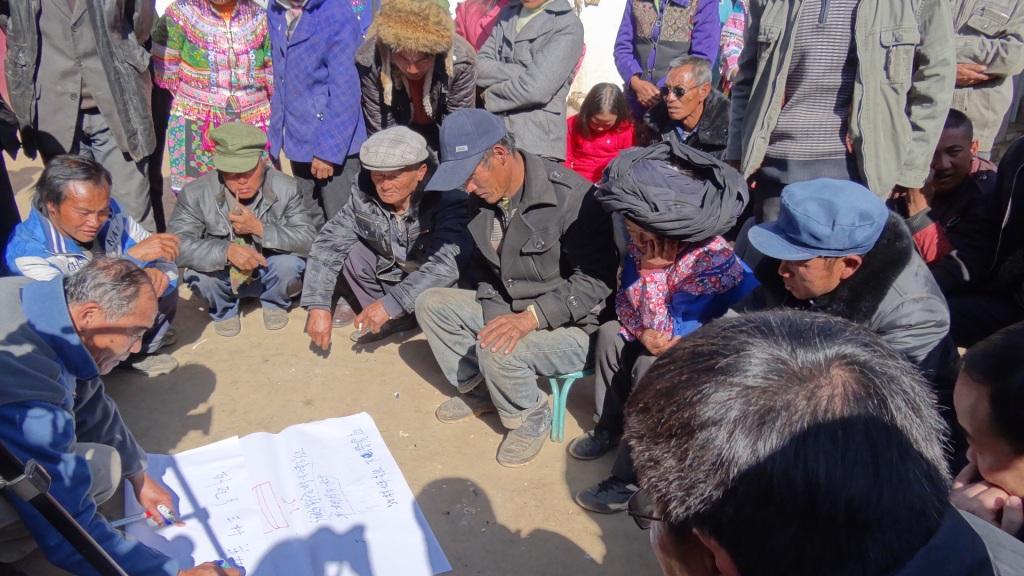
Yu Xiaogang surveys a group of relocated villagers in the Yalong River Valley

Yu Xiaogang surveys a group of relocated villagers in the Yalong River Valley

During our surveying, countless villagers vented their frustration to my research team. “We can’t sleep at night.  We can’t concentrate on our work during the day, and why is that? Back then, though we were poor, we had enough food and warm clothes.  If we move to a new place, we will lose these.”

Another shared, “We can’t afford to leave, but we can’t afford to stay.  We are sorry to cause such troubles for the Party, but this is a really big problem.”

“They used dynamite this time.  The gods of the mountains and the Buddhist spirits all left.  Some people will die now.  Some will fall ill.  Some will go crazy.”

This is the 2nd in a five part series on ethnic resettlement and the impacts of hydropower development by Yu Xiaogang.  Link here to part 5 and here to link back to part 1.


Leave a Comment

Filed under China, Current Events, Economic development, Energy, Environment and sustainability, ethnic policy, Governance, Hydropower & Ethnic Resettlement in China's Yalong River Valley, SLIDER, water